The National Football League has long-term leases with the stadiums in major cities.
Control of these stadiums is an entry barrier to a potential new football league.
When a business is set up as partnership, the owner of the business faces unlimited
liability.
The household survey asks adults about their employment status and is used to compile
the monthly unemployment rate.
Any output combination inside a production possibility frontier is associated with
unused or underutilized resources.
The costs to firms of changing prices are called menu costs.
Joe Santos owns the only pizza parlor in a small town that is also home to a
McDonald’s, a Taco Bell and a Kentucky Fried Chicken. Using a broad definition of a
monopoly, Joe has a monopoly.
The rising cost of malpractice insurance is one of the leading causes of the increase in
health care spending as a percentage of GDP in the United States.
If the marginal propensity to save is 0.4, the multiplier is 2.5.
In an economy with money, as opposed to barter, people are more likely to specialize in
the production of goods and services.
Suppose that to increase sales of hybrid vehicles, auto manufacturers are offering large
cash incentives. This is an example of a macroeconomics topic.
Figure 26-7
Suppose the economy is in a recession and no policy is pursued. Using the static AD–AS
model in the figure above, this situation would be depicted as a movement from
A) A to B.
B) B to A.
C) C to B.
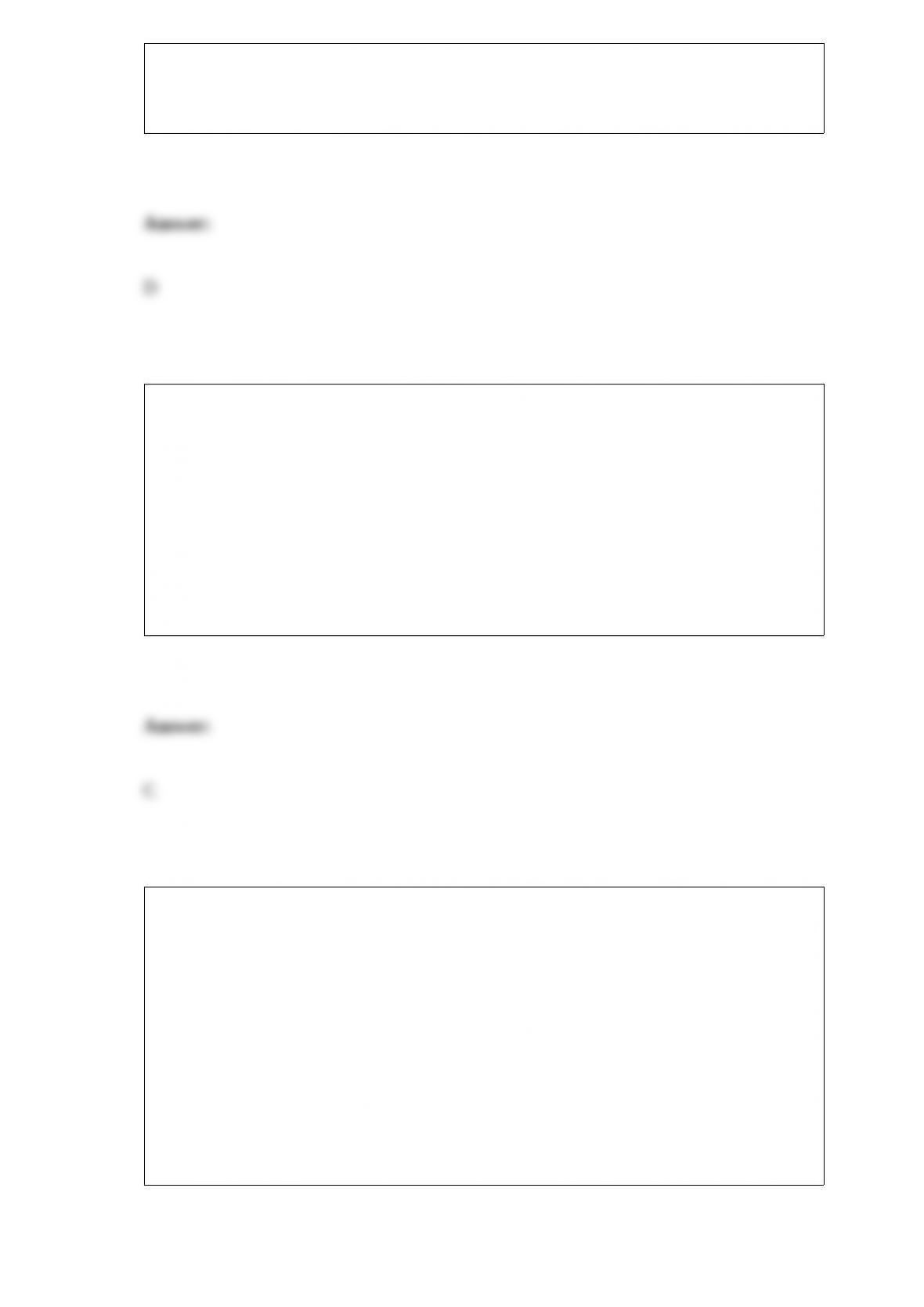
D) A to E.
E) C to D.
If an increase in investment spending of $20 million results in a $200 million increase
in equilibrium real GDP, then
A) the multiplier is 0.1.
B) the multiplier is 1.
C) the multiplier is 10.
D) the multiplier is 100.
Which of the following describes two-part tariff pricing?
A) A firm charges two different prices for the same good.
B) An importer has to pay a tax at the nation’s borders, and a sales tax when the good is
sold.
C) A buyer pays an initial price for entrance to the market and an additional fee for each
unit of the product purchased.
D) A buyer must pay a down payment and monthly payments to buy big-ticket items
such as a car, a plasma television or a suite of furniture.
A decrease in aggregate demand will
A) cause inflation.
B) decrease unemployment.
C) move the economy to a lower point on the short-run Phillips curve.
D) cause the short-run Phillips curve to shift to the right.
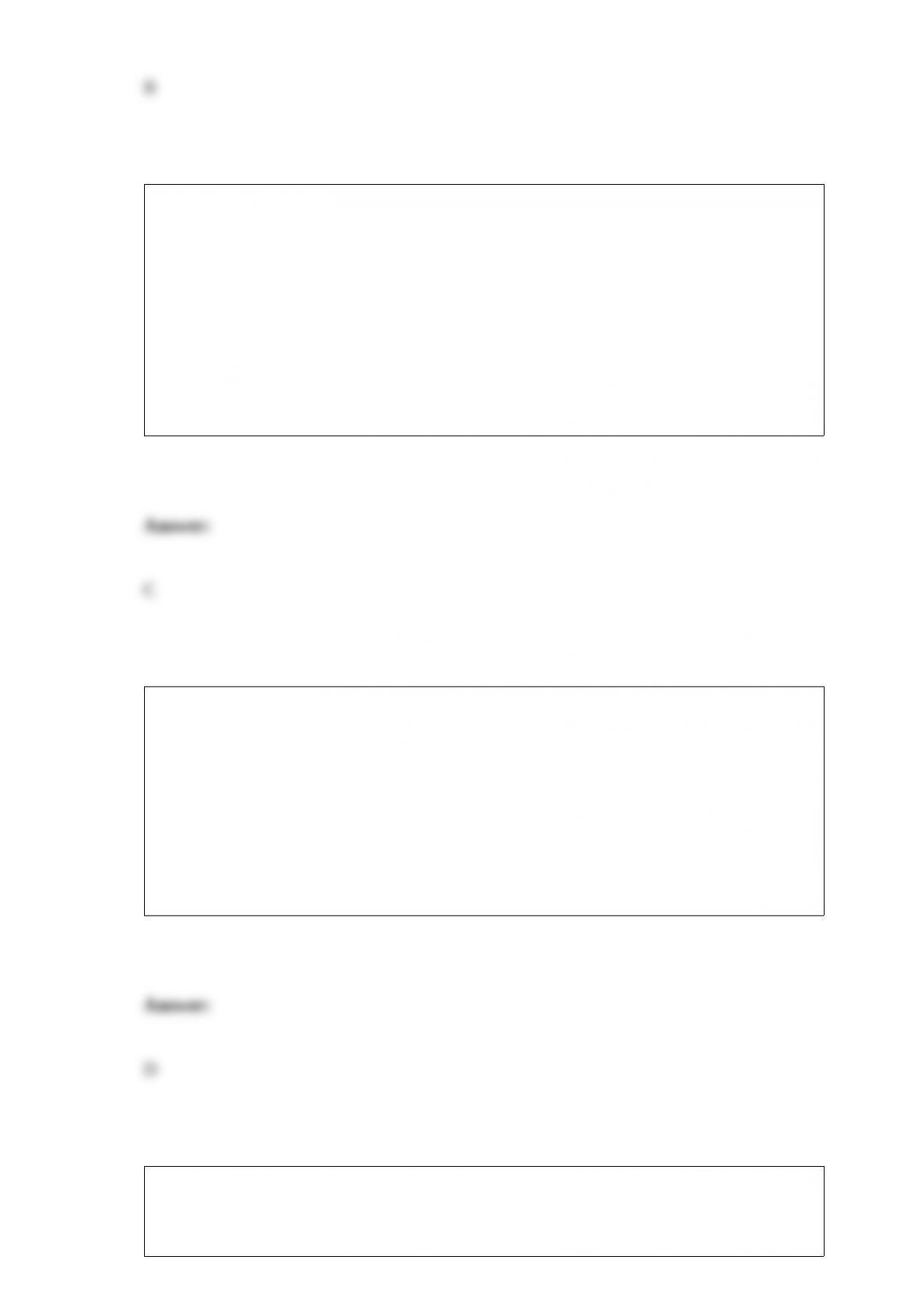
Table 4-12
The equations above describe the demand and supply for Bubba’s Fried Jellybeans. The
equilibrium price and quantity for Bubba’s Fried Jellybeans are $40 and 5 thousand
units. What is the value of producer surplus?
A) $5 thousand
B) $12.5 thousand
C) $25 thousand
D) $37.5 thousand
The ________ model focuses on the relationship between total spending and real GDP
in the short run, assuming the price level is constant.
A) supply and demand
B) national income
C) aggregate expenditure
D) business cycle
The Federal Open Market Committee consists of
A) the seven member Board of Governors of the Federal Reserve.
B) the 12 Federal Reserve Bank Presidents.
C) five of the Federal Reserve Bank Presidents.
D) the Board of Governors plus five of the Federal Reserve Bank Presidents.
Suppose the demand curve for a product is horizontal and the supply curve is upward
sloping. If a unit tax is imposed in the market for this product
A) sellers bear the entire burden of the tax.
B) the tax burden will be shared among the government, buyers and sellers.
C) buyers bear the entire burden of the tax.
D) the tax burden will be shared by buyers and sellers.
China runs a current account surplus with the United States. Which of the following
must be true about China’s balance of payments with the United States?
A) It must run a financial account deficit.
B) Its balance of trade must be in deficit.
C) Its net exports must be negative.
D) Its balance of payments must run a deficit.
The experience of Paul Volcker’s fight against inflation during the late 1970s and early
1980s indicates that firms and workers
A) had adaptive expectations.
B) had rational expectations and that they trusted Fed announcements.
C) preferred high unemployment to high inflation.
D) Both A and B are correct answers.
In regulating a natural monopoly, the price strategy that ensures the highest possible
output and zero profit is one that sets price
A) equal to average total cost where it intersects the demand curve.
B) equal to marginal cost where it intersects the demand curve.
C) equal to average variable cost where it intersects the demand curve.
D) corresponding to the demand curve where marginal revenue equals zero.
The level of saving in the United States has historically been low relative to the level of
domestic investment. Based on this information, we would expect that
A) U.S. net foreign investment has been relatively high.
B) U.S. net exports have been relatively low.
C) U.S. capital inflows are negative.
D) U.S. private saving is less than its public saving.
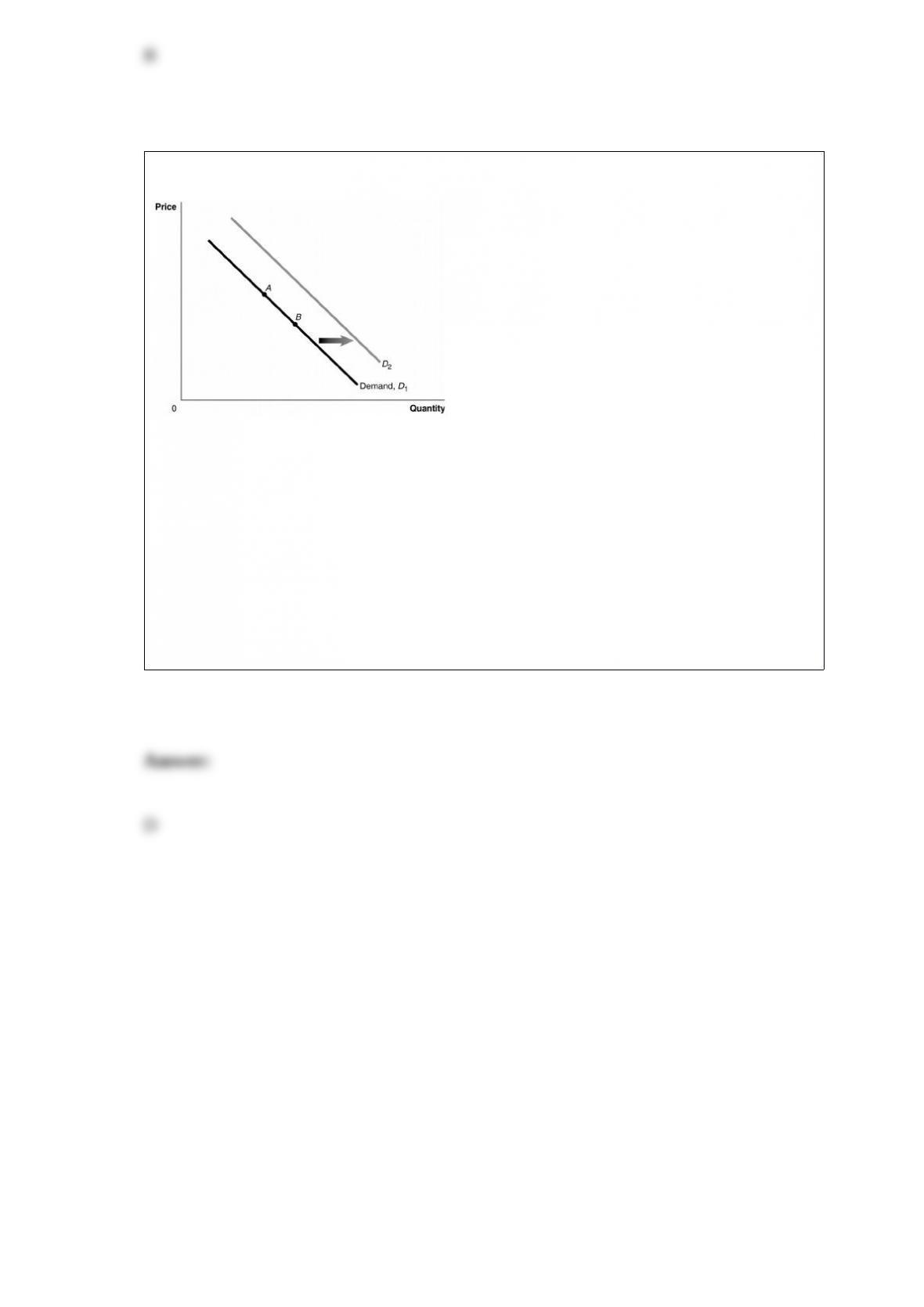
Figure 3-1
A decrease in the price of a substitute good would be represented by a movement from
A) A to B.
B) B to A.
C) D1 to D2.
D) D2 to D1.
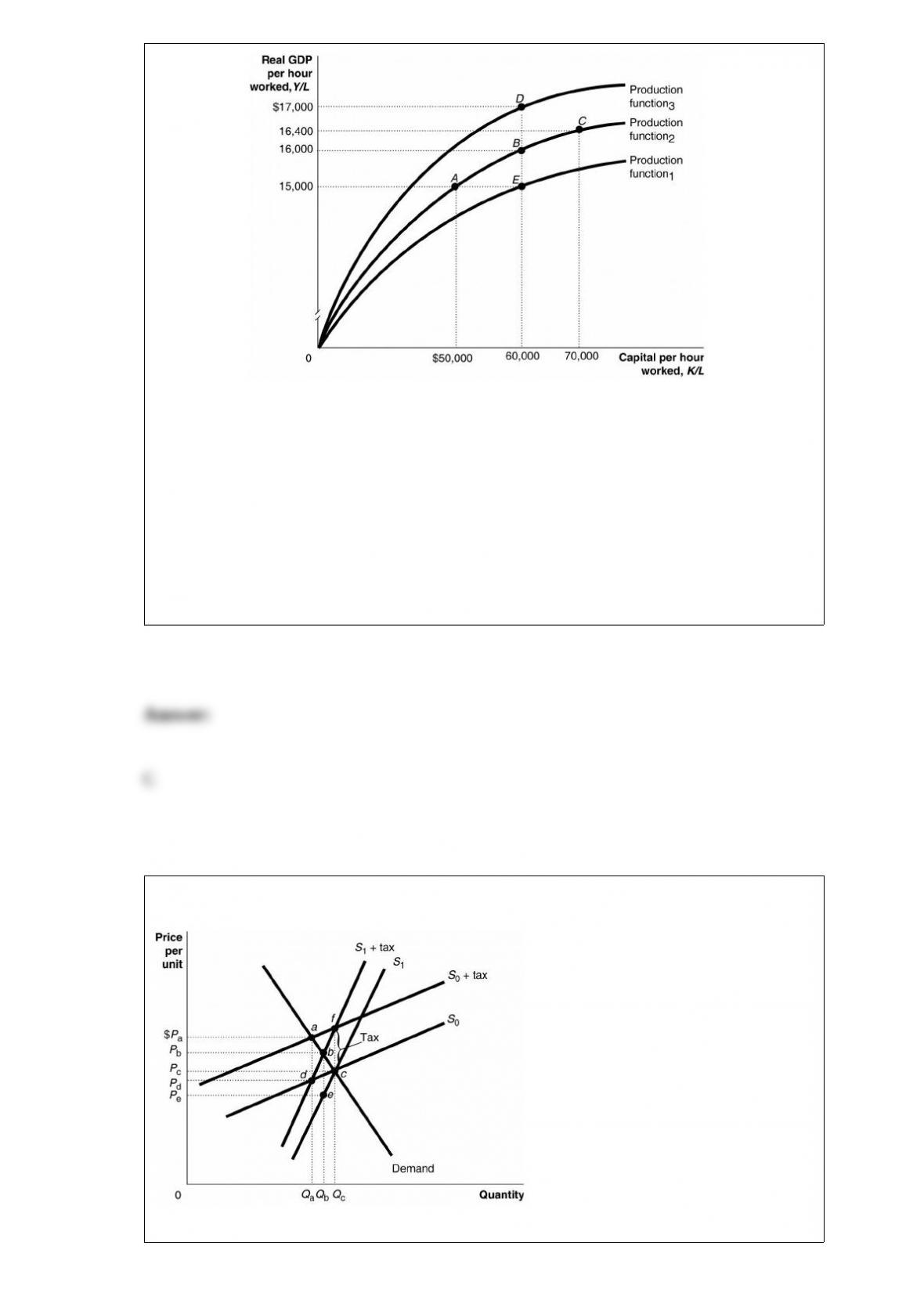
Figure 11-4
The movement from A to B to C illustrates
A) an improvement in technology.
B) a decline in capital per worker.
C) diminishing returns to capital.
D) diminishing returns to labor.
Figure 18-2
Figure 18-2 shows a demand curve
and two sets of supply curves, one set more elastic than the other. If the government
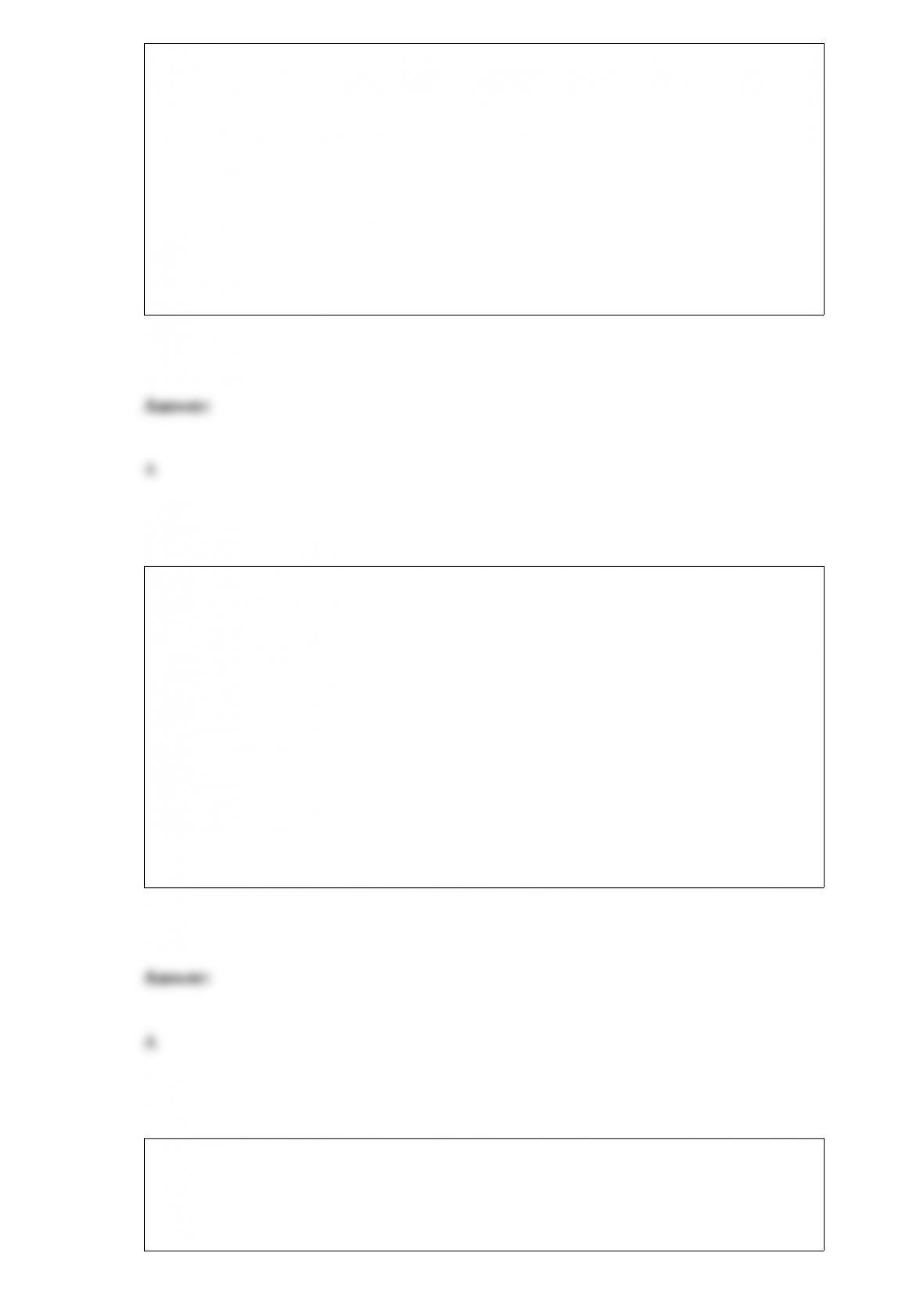
imposes an excise tax of $1.00 on every unit sold, the consumer’s burden of the tax
A) is greater under the more elastic supply curve S0.
B) is greater under the less elastic supply curve S0.
C) is greater under the less elastic supply curve S1.
D) is the same under either supply curve because there is a single demand curve that
captures buyers’ market behavior.
If workers and firms have rational expectations, they understand that ________
monetary policy will raise the inflation rate, so actual inflation ________ expected
inflation.
A) expansionary; will be equal to
B) expansionary; will be greater than
C) contractionary; will be equal to
D) contractionary; will be less than
E) expansionary; will be less than
If another worker adds 9 units of output to a group of workers who had an average
product of 7 units, then the average product of labor
A) will remain the same.
B) will increase.
C) will decrease.
D) and what will happen to it cannot be determined.
Mr. Peabody chooses to invest in companies that produce goods and services based on
consumer preferences. Mr. Peabody is investing in companies that are attempting to be
A) allocatively efficient.
B) productively efficient.
C) guaranteed to make a profit.
D) all of the above.
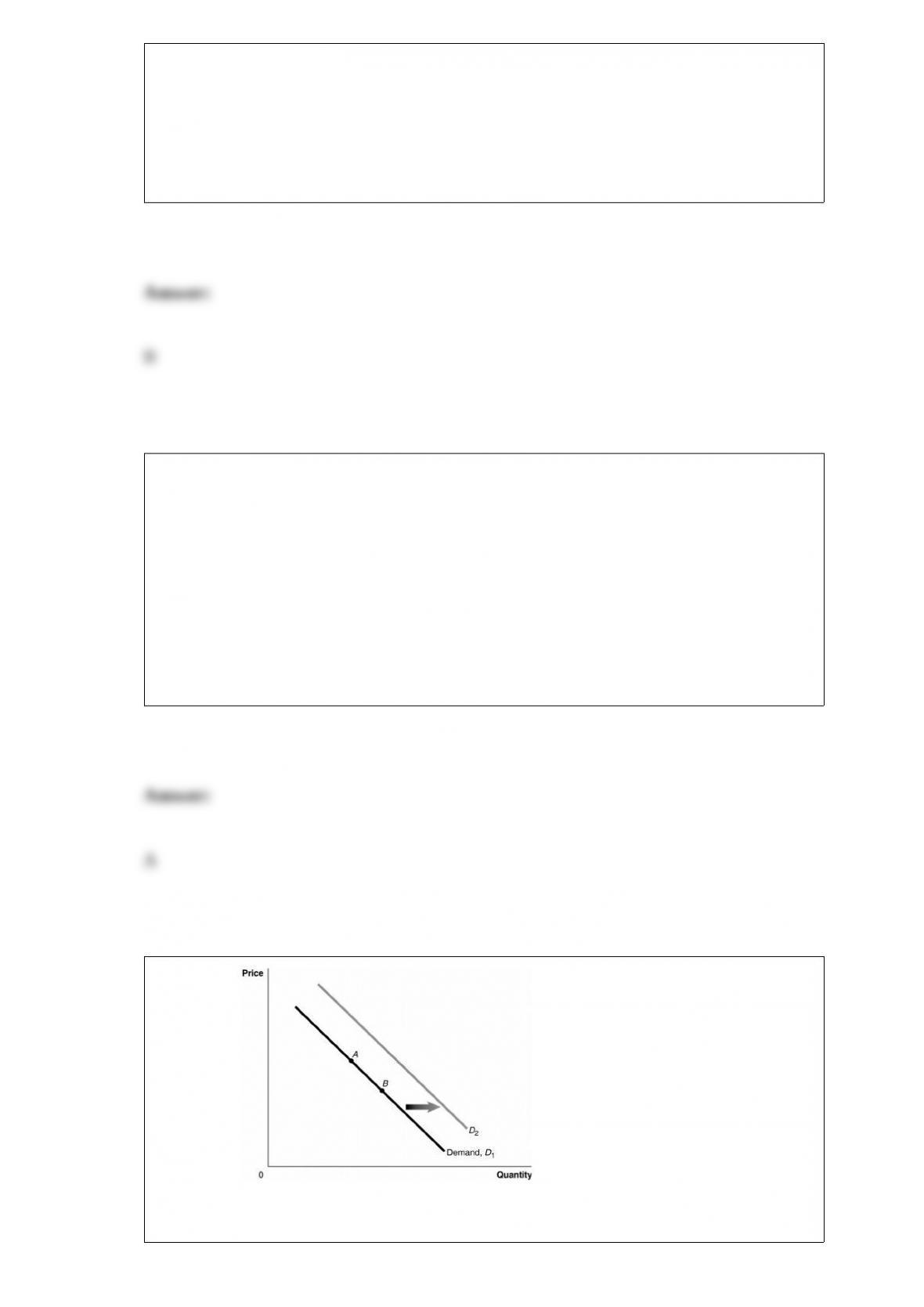
Figure 3-1
If the product represented is an inferior good, a decrease in income would be
represented by a movement from
A) A to B.
B) B to A.
C) D1 to D2.
D) D2 to D1.
As the recession persisted into 2009, the unemployment rate in the United States rose to
________, the highest rate since the recession of 2001-2002 and the second highest
since the Great Depression.
A) 5.5 percent
B) 9.3 percent
C) 17.6 percent
D) 25.1 percent
What is a supply shock, and why might a supply shock lead to stagflation?
What actions should the Fed take if it believes the economy is about to fall into
recession?
How have government policies and programs affected the volatility of the business
cycle in the United States since 1950? Explain and provide at least two specific
examples of policies or programs that may have had an impact.
What is minimum efficient scale? What is likely to happen in the long run to firms that
do not reach minimum efficient scale?
Article Summary. In a letter to Congress, Treasury Secretary Jacob Lew stated that
the United States will run out of borrowed money by Thursday, October 17 unless
the $16.7 trillion debt ceiling was raised. Every Thursday, the Treasury typically
rolls over $100 billion in debt as bonds mature and investors use the proceeds to
buy new bonds, and Lew was concerned that without an increase in the debt
ceiling, a crisis could emerge from a massive bond sell-off. Since the government
had reached its current debt limit, it would only be able to use daily on-hand
revenue to pay its bills without the increase in the ceiling. The Treasury expected
the government to have only $30 billion per day in cash on hand by October 17,
while its typical daily expenses were $60 billion. “If we have insufficient cash on
hand, it would be impossible for the United States of America to meet all of its
obligations for the first time in our history,” Lew said. Source: Gregory Korte,
“Treasury will run out of borrowed money by Oct. 17,” USA Today, September 25,
2013.
When does the Treasury Department borrow? Why would the Treasury have to borrow
more than it estimated, as was indicated by its letter to Congress to raise the debt
ceiling? When would the Treasury repay what it borrowed, and who is it repaying?
What are the key differences between how we illustrate an expansionary fiscal policy in
the basic aggregate demand and aggregate supply model and in the dynamic aggregate
demand and aggregate supply model?