1) if the equilibrium exchange rate changes so that it takes more dollars to buy a british
pound, then:
a.the dollar has appreciated in value.
b.americans will import more british goods.
c.the british will buy fewer u.s. goods.
d.the dollar has depreciated in value.
2)
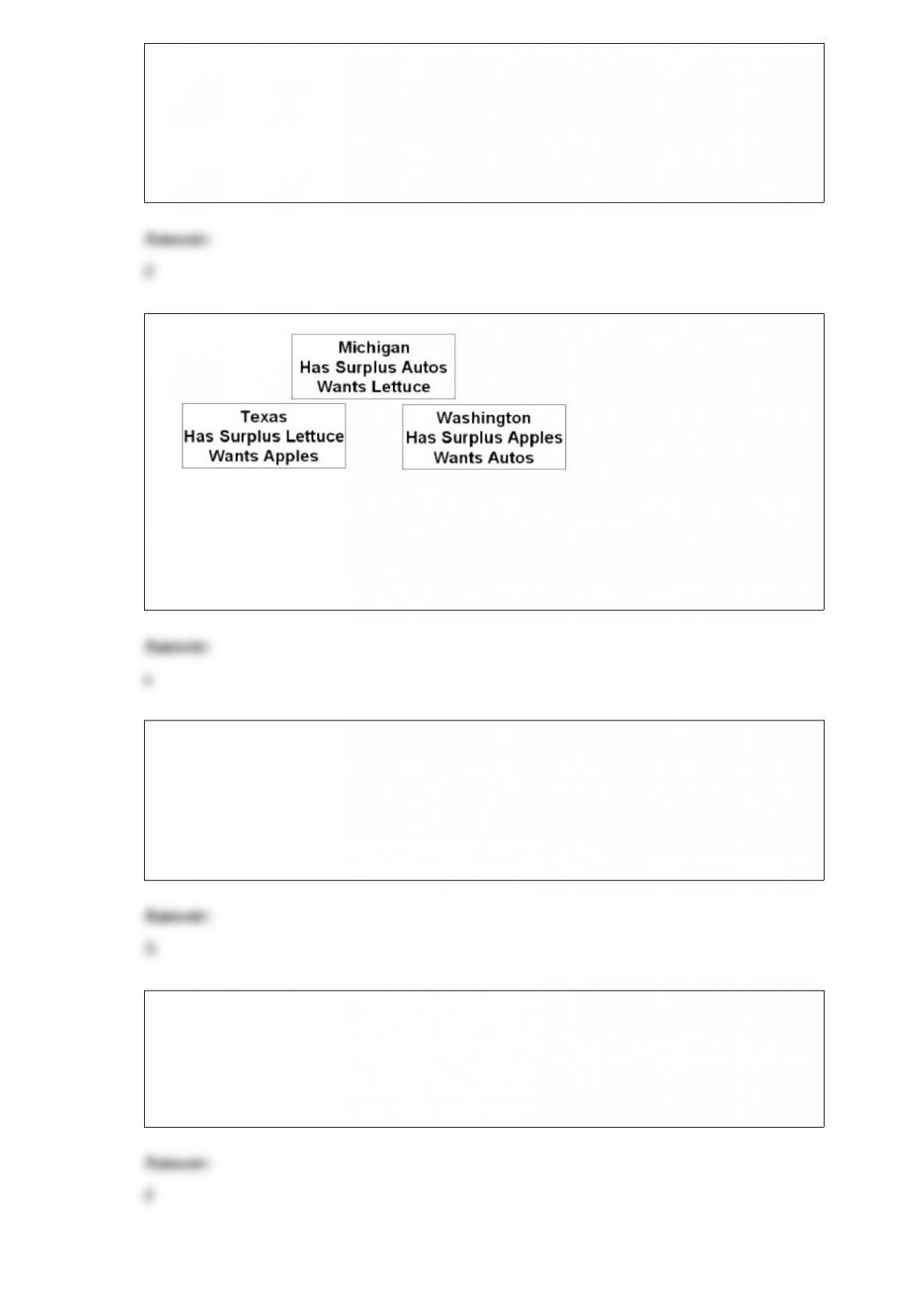
on the basis of the above information it can be said that:
a.no coincidence of wants exists between any two states.
b.a coincidence of wants exists between michigan and washington.
c.a coincidence of wants exists between texas and washington.
d.a coincidence of wants exists between michigan and texas.
3) Which of the following is a public assistance or welfare program as opposed to a
social insurance program?
A.Supplemental Security Income (SSI)
B.unemployment compensation
C.Medicare
D.Social Security
4) most output in the united states is produced by:
a.cooperatives.
b.partnerships.
c.sole proprietorships.
d.corporations.
5) (Consider This) Which of the following is not part of the M2 money supply?
A.currency in circulation.
B.credit card balances.
C.small time deposits of less than $100,000.
D.checkable deposits.
6)
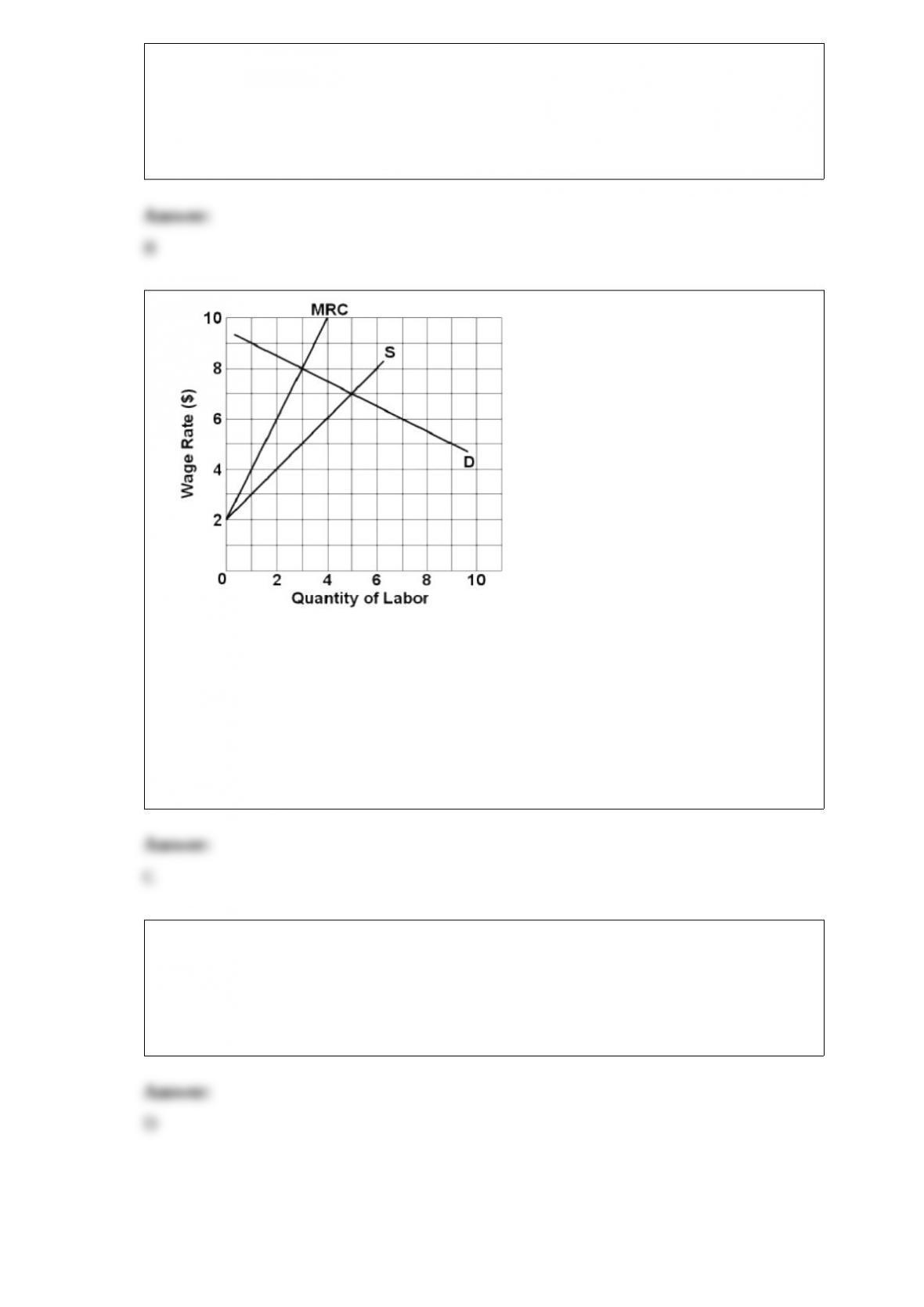
Refer to the above labor market diagram where D is the labor demand curve, S is the
labor supply curve, and MRC is the marginal resource (labor) cost curve. If an inclusive
union was formed and was able to get the monopsonist to agree to a $7 wage rate, then
the monopsonist would:
A.reduce employment from 5 to 3 workers.
B.reduce employment from 5 to 2 workers.
C.increase employment from 3 to 5 workers.
D.not alter its level of employment.
7) (Consider This) The U.S. government’s ethanol program:
A.imposed tariffs on imported ethanol.
B.provided subsidies to oil refineries to purchase ethanol.
C.mandated that U.S. industries increase their use of alternative fuels.
D.included all of these features.
8)
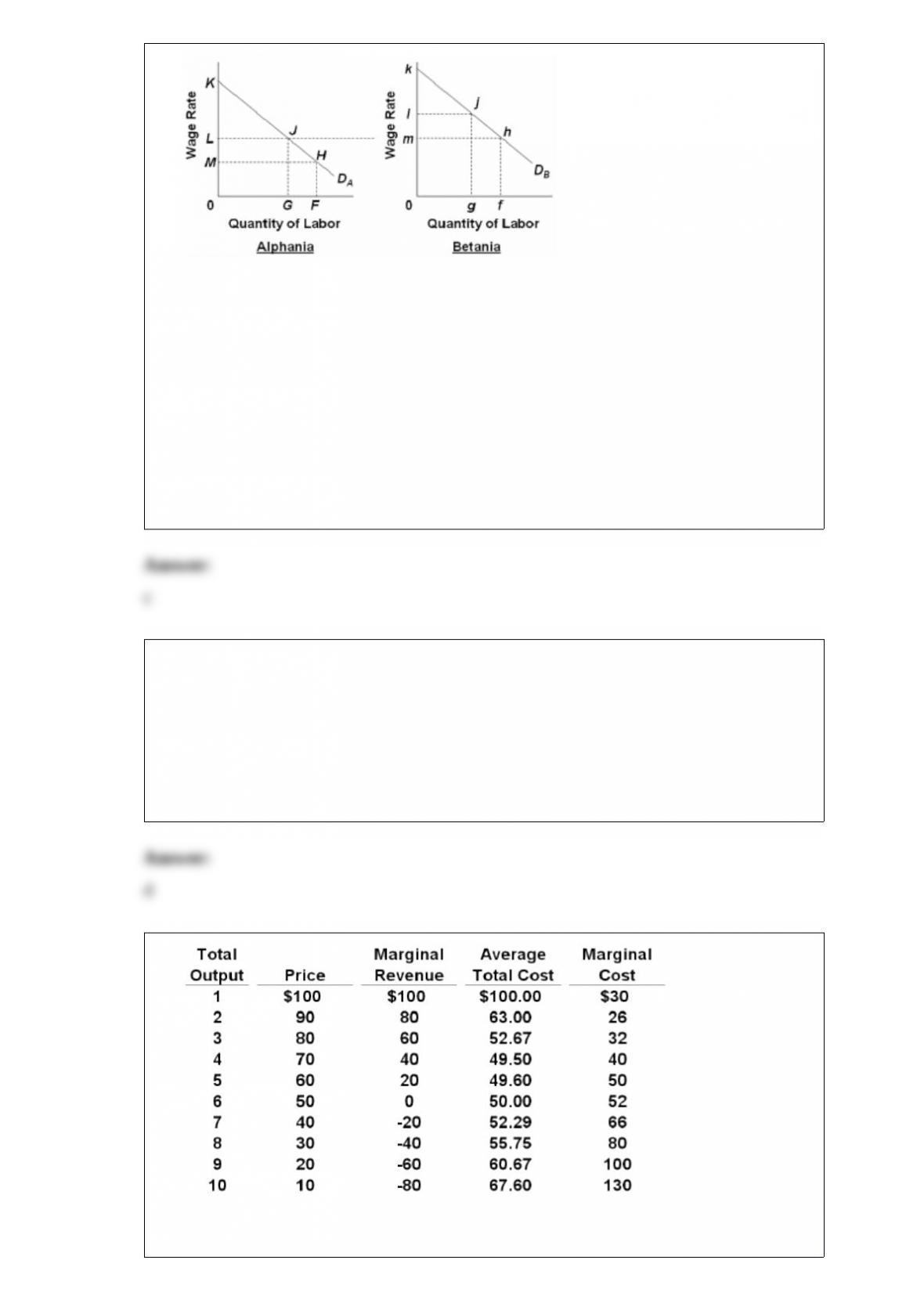
assumptions: (1) the demand for labor in alphania and betania are as shown by da and
db, respectively; (2) alphania’s native labor force is f and that of betania is g; (3) wage l
in alphania is equal to wage m in betania; and (4) full employment exists in both
countries.
refer to the above diagram and assumptions. after migration has ceased:
a.world output will have increased by mljh – mljh.
b.betania’s output will have increased and alphania’s output will have decreased, but
world output will not have changed.
c.world output will have increased by gjhf – gjhf.
d.world output will have decreased by gjhf – gjhf.
9) gdp differs from ndp in that:
a.gdp is based on gross exports, while ndp is based on net exports.
b.gdp includes, but ndp excludes, taxes on production and imports.
c.net investment is used in calculating gdp and gross investment is used in calculating
ndp.
d.gross investment is used in calculating gdp and net investment is used in calculating
ndp.
10)
refer to the above data. at its profit-maximizing output, this firm’s total revenue will be:
a.$300.
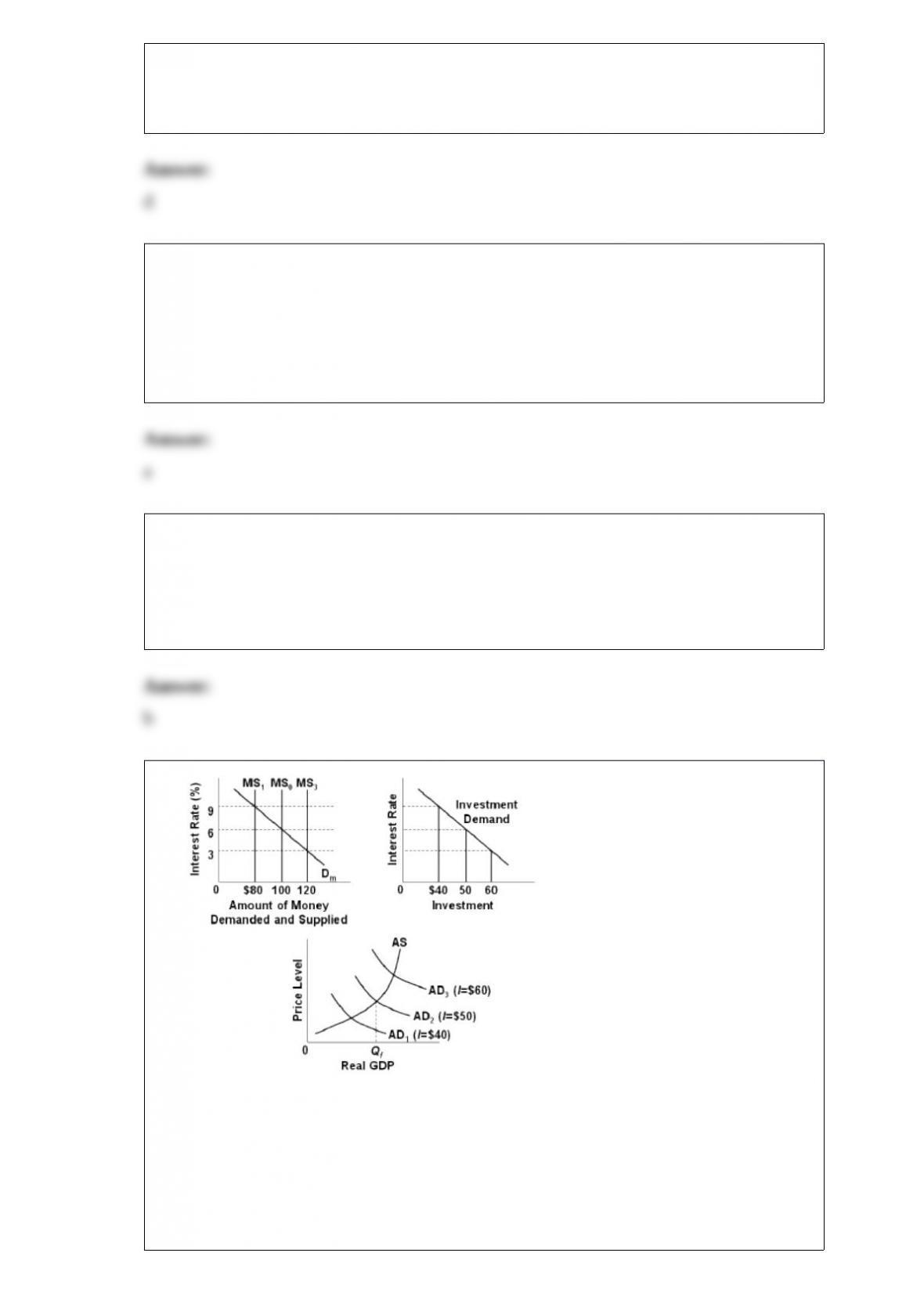
b.$198.
c.$180.
d.$280.
11) the theory of consumer behavior assumes that:
a.consumers behave rationally, attempting to maximize their satisfaction.
b.consumers have unlimited money incomes.
c.consumers do not know how much marginal utility they obtain from successive units
of various products.
d.marginal utility is constant.
12) which of the following is not correct?
a.where marginal product is greater than average product, average product is rising.
b.where total product is at a maximum, average product is also at a maximum.
c.where marginal product is zero, total product is at a maximum.
d.marginal product becomes negative before average product becomes negative.
13)
Refer to the above diagrams. The numbers in parentheses after the AD1, AD2, and AD3
labels indicate the levels of investment spending associated with each curve. All figures
are in billions. If aggregate demand is AD3 and the monetary authorities desire to
reduce it to AD2, they should:
A.increase the interest rate from 3 percent to 9 percent.
B.increase the money supply from $100 to $120.
C.decrease the money supply from $120 to $100.
D.decrease the interest rate from 3 percent to 9 percent.
14) assume that the demand schedule for product c is downsloping. if the price of c falls
from $2.00 to $1.75:
a.a smaller quantity of c will be demanded.
b.a larger quantity of c will be demanded.
c.the demand for c will increase.
d.the demand for c will decrease.
15) Which of the following tools of monetary policy has not been used since 1992?
A.the term auction facility
B.the reserve ratio
C.open market operations
D.the Federal funds rate
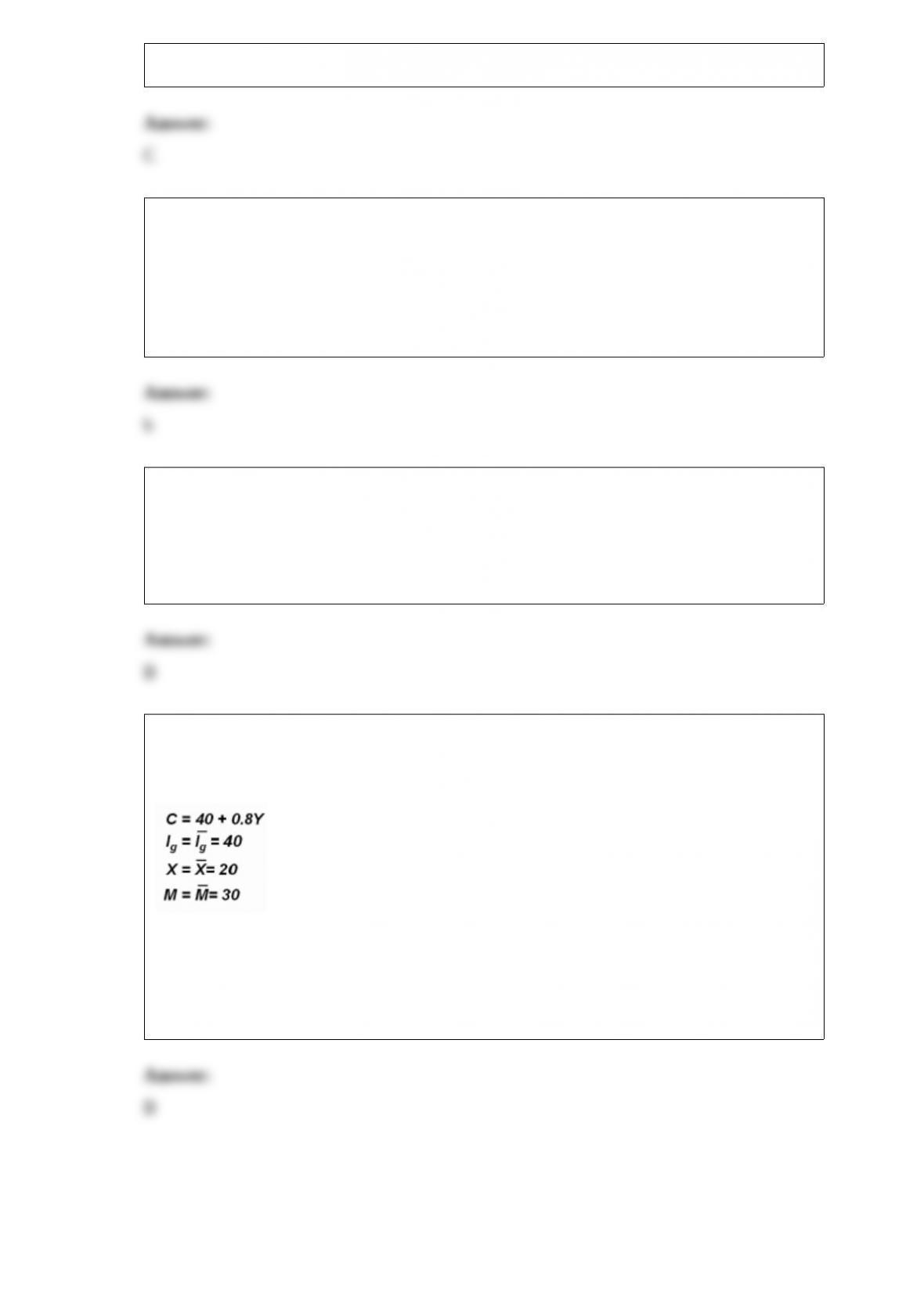
16) (Advanced analysis) Answer the next question(s) on the basis of the following
information for a private open economy:
Refer to the above information. International trade in this case:
A.has an expansionary effect on GDP.
B.has a contractionary effect on GDP.
C.has no effect on GDP.
D.is causing inflation in this economy.