
When the economy enters a recessionary phase of the business cycle, unemployment
tends to
A) decrease.
B) increase.
C) be unchanged.
D) change in the same direction as the rate of inflation.
Some economists argue that the federal government should normally run a deficit at
potential GDP, with the borrowed funds applied to
A) consumption goods.
B) investment goods.
C) social security benefits.
D) health care costs.
The argument advanced by Milton Friedman for adopting a monetary growth rule is
that
A) active monetary policy potentially destabilizes the economy.
B) the Fed can control the money supply, but not the level of interest rates.
C) a constant rate of growth in the money supply would eliminate the booms and

recessions that make up the business cycle.
D) the growth rate of M1 has been unstable.
One reason why, in the last four decades, the number of new auto makers in the world
has been very small compared to the past is that
A) the automobile cannot be improved upon in any way by new producers.
B) new auto makers cannot obtain necessary inputs to produce new cars.
C) governments restrict who can produce automobiles.
D) new producers cannot match the economies of scale of existing auto makers.
A contract under which a buyer agrees to make payments in exchange for the provider
agreeing to pay some or all of the buyer’s medical bills is referred to as
A) a fee-for-service plan.
B) the Affordable Care Act.
C) a deductible.
D) health insurance.
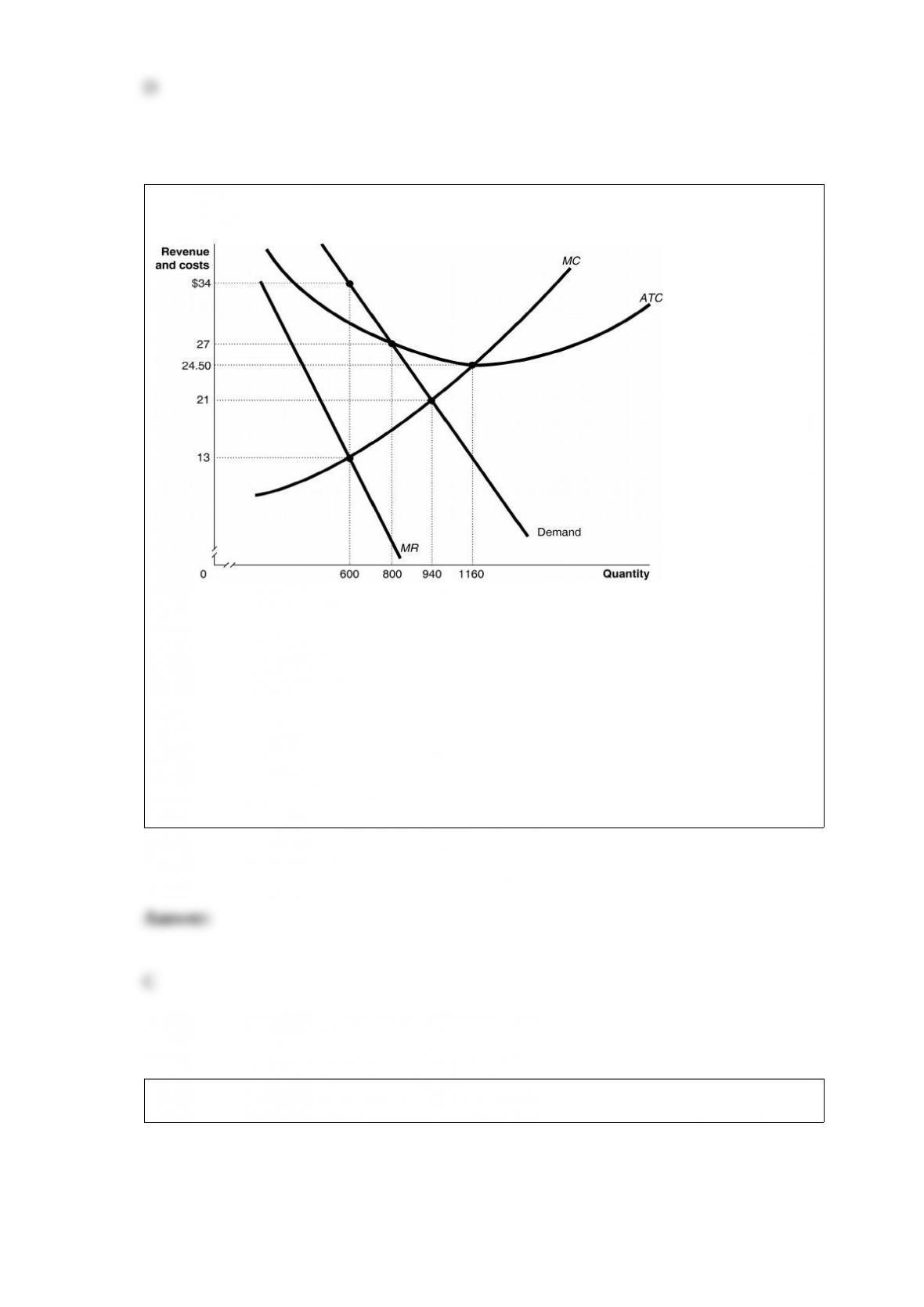
Figure 15-9
Figure 15-9 shows
the demand and cost curves for a monopolist. What is the economically efficient output
level?
A) 600 units
B) 800 units
C) 940 units
D) 1160 units
Table 8-28

Based on the table above, what is national income for this economy?
A) $1,950 billion
B) $2,250 billion
C) $2,950 billion
D) $3,550 billion
For a firm that is a price taker in the market for labor, the marginal revenue product of
labor equals the
A) marginal product of labor multiplied by the wage rate.
B) marginal product of labor multiplied by the product price.
C) marginal product of labor divided by the wage rate.
D) marginal product of labor multiplied by the marginal cost of production.

The Taylor rule links the Federal Reserve’s target for the
A) money supply to shifts in money demand.
B) money supply to changes in interest rates.
C) federal funds rate to economic variables.
D) federal funds rate to the money supply.
Hyperinflation can be caused by
A) the government selling bonds to the central bank.
B) the central bank selling bonds to the public.
C) the government selling bonds to the public.
D) the central bank selling bonds to the government.
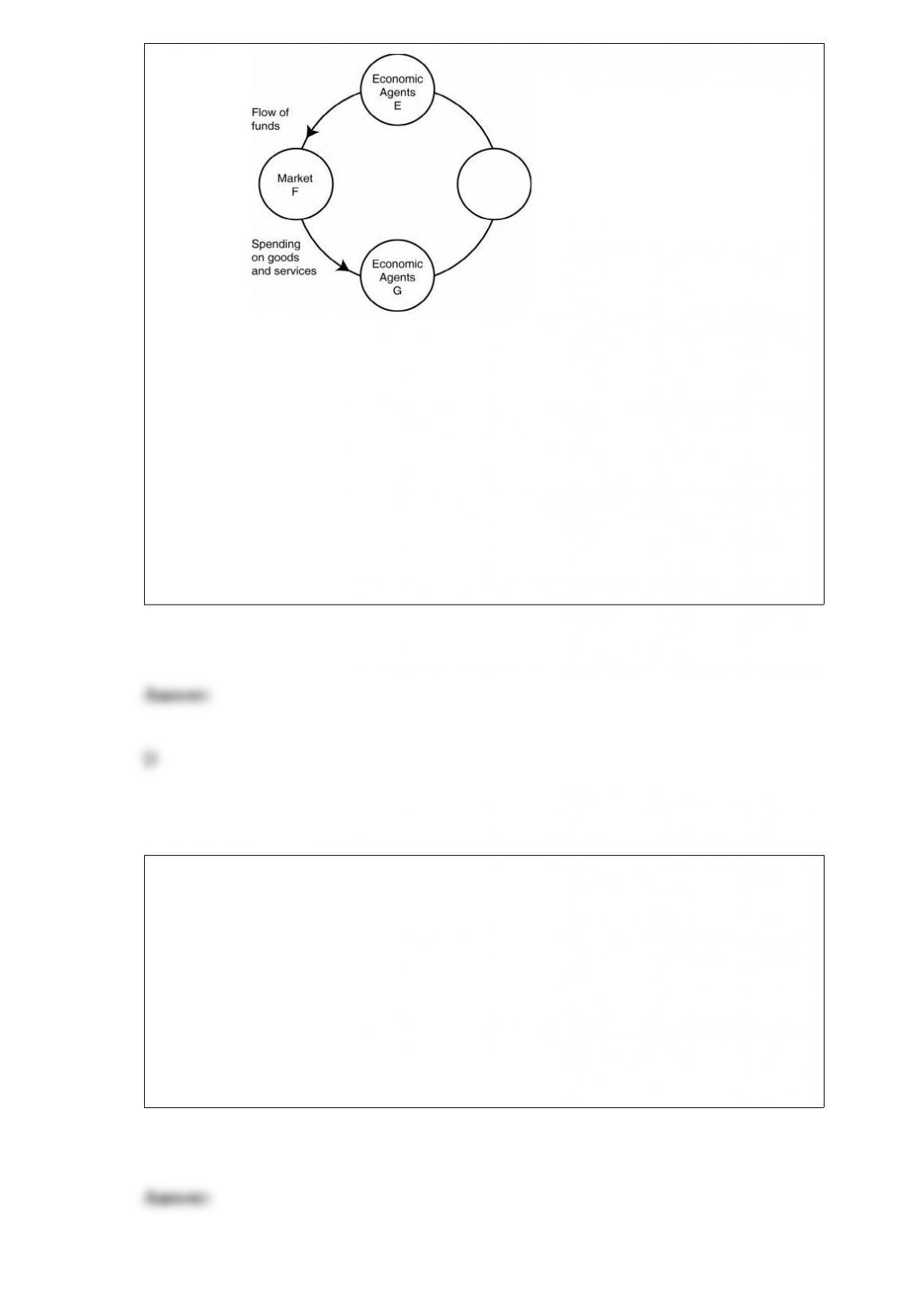
Figure 2-12
One segment of the circular flow diagram in the Figure shows the flow of funds from
market F to economic agents G. The funds represent spending on goods and services.
What is market F and who are economic agents G?
A) F = factor markets; G = households
B) F = product markets; G = households
C) F = factor markets; G = firms
D) F = product markets; G = firms
According to economists Robert Lucas and Thomas Sargent, when are the gains to
accurately forecasting inflation highest?
A) when inflation is high and unstable
B) when inflation is low
C) when inflation is moderate but stable
D) when inflation is high and stable
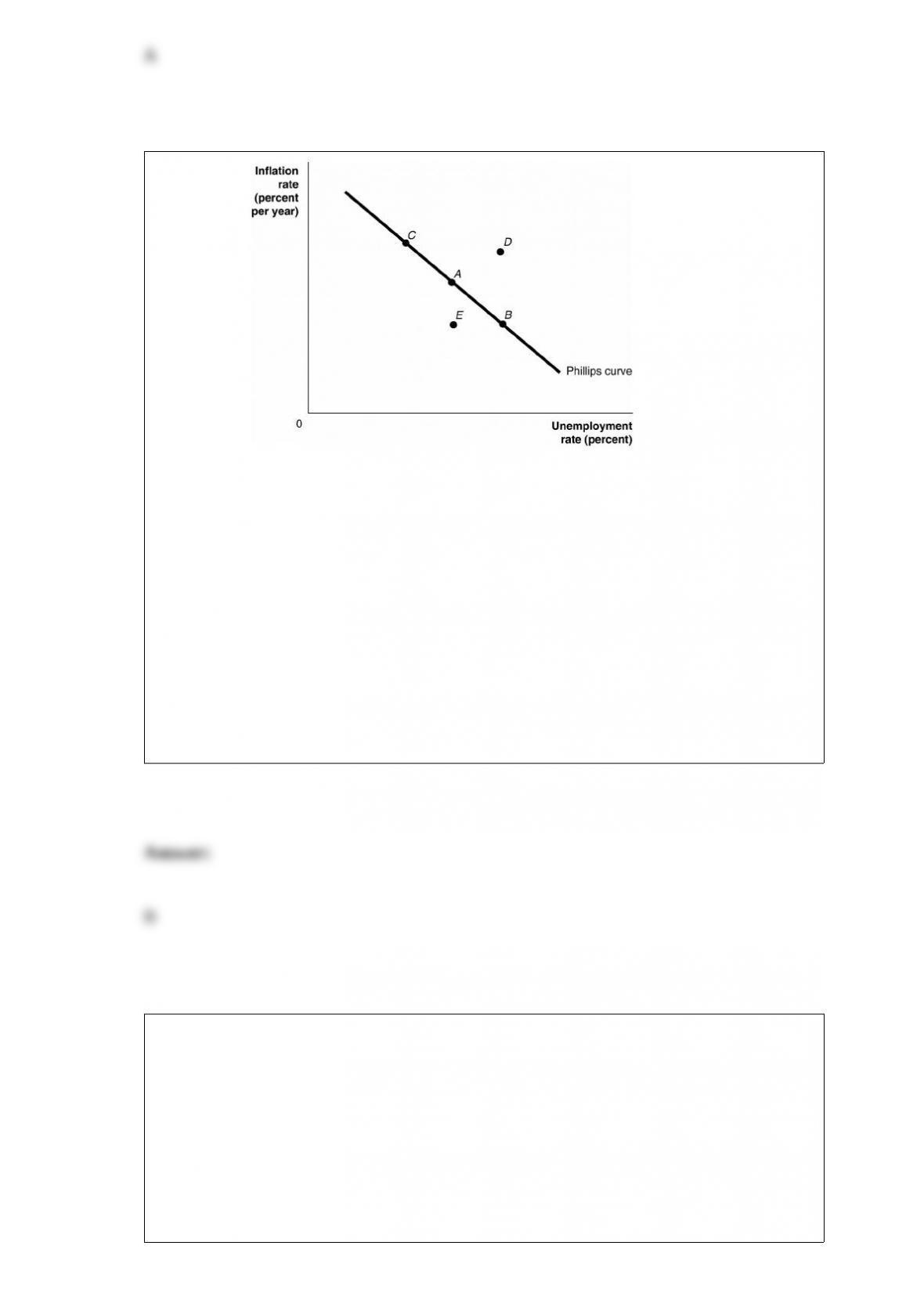
Figure 17-1
What should the Federal Reserve do if it wants to move from point A to point B in the
short-run Phillips curve depicted in the figure above?
A) buy treasury bills
B) sell treasury bills
C) lower the discount rate
D) increase the money supply
E) lower taxes
Aggregate expenditure includes spending on
A) C + I + G.
B) C + I + G – NX.
C) C + I + G + NX.
D) C + I + depreciation – NX.
Assume that a monopolist practices perfect price discrimination. The firm will produce
an output rate
A) that is less than the efficient level of output.
B) that is greater than the efficient level of output.
C) that is equal to the efficient level of output.
D) that converts consumers surplus into a deadweight loss.
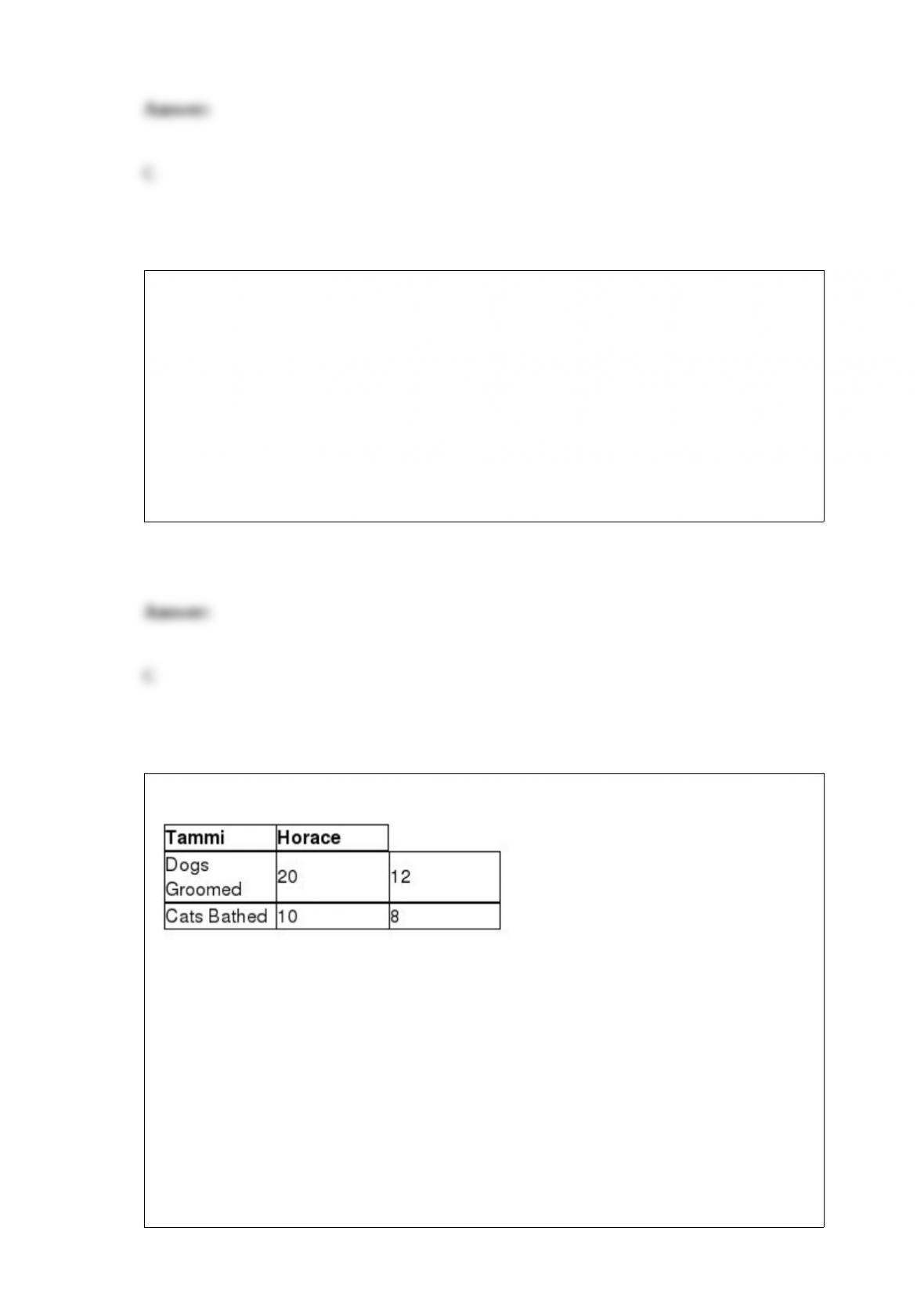
Table 2-13
Table 2-13 shows the output per day of two pet groomers, Tammi and Horace. They can
either devote their time to grooming dogs or bathing cats.
What is Horace’s opportunity cost of grooming a dog?
A) half a bathed cat
B) two bathed cats
C) two-thirds of a bathed cat
D) one and a half bathed cats

In the United States, total health care spending per person has been ________, and
out-of-pocket spending on health care per person has been ________.
A) rising; rising
B) rising; falling
C) falling; rising
D) falling; falling