
1) Dictators/proposers tend act more self-interested when playing the dictator game
versus the ultimatum game.
2) In a two-nation two-good world, if one nation is more efficient in producing both
goods than the other nation, then the more-efficient nation cannot gain from trading
with the other nation.
3) When a competitive firm sees losses because the product falls below the minimum
average cost of production at its current plant, it may decide to expand if there are
economies of scale.
4) According to the simple extended AD-AS model, demand-pull inflation and
cost-push inflation have the same effect on output in the long run.
5) If falling gasoline prices are good for the consumers, then it must be good everyone
in the economy.
6) Regulatory capture in government often happens because the people who are most
qualified to supervise and regulate an industry oftentimes are or have been the leaders
of the industry.
7) The fundamental economic question regarding the distribution of output in the
economy is equivalent to the question of who will produce the output.
8) The bail-out money given to the car companies GM and Chrysler came from the Fed
acting in its role as “lender of last resort”.
9) When a company declares bankruptcy, stockholders are the first to be paid when
company assets are sold.
10) In the short run, firms are more likely to respond to demand shocks by altering
inventory levels than by changing how much they produce.
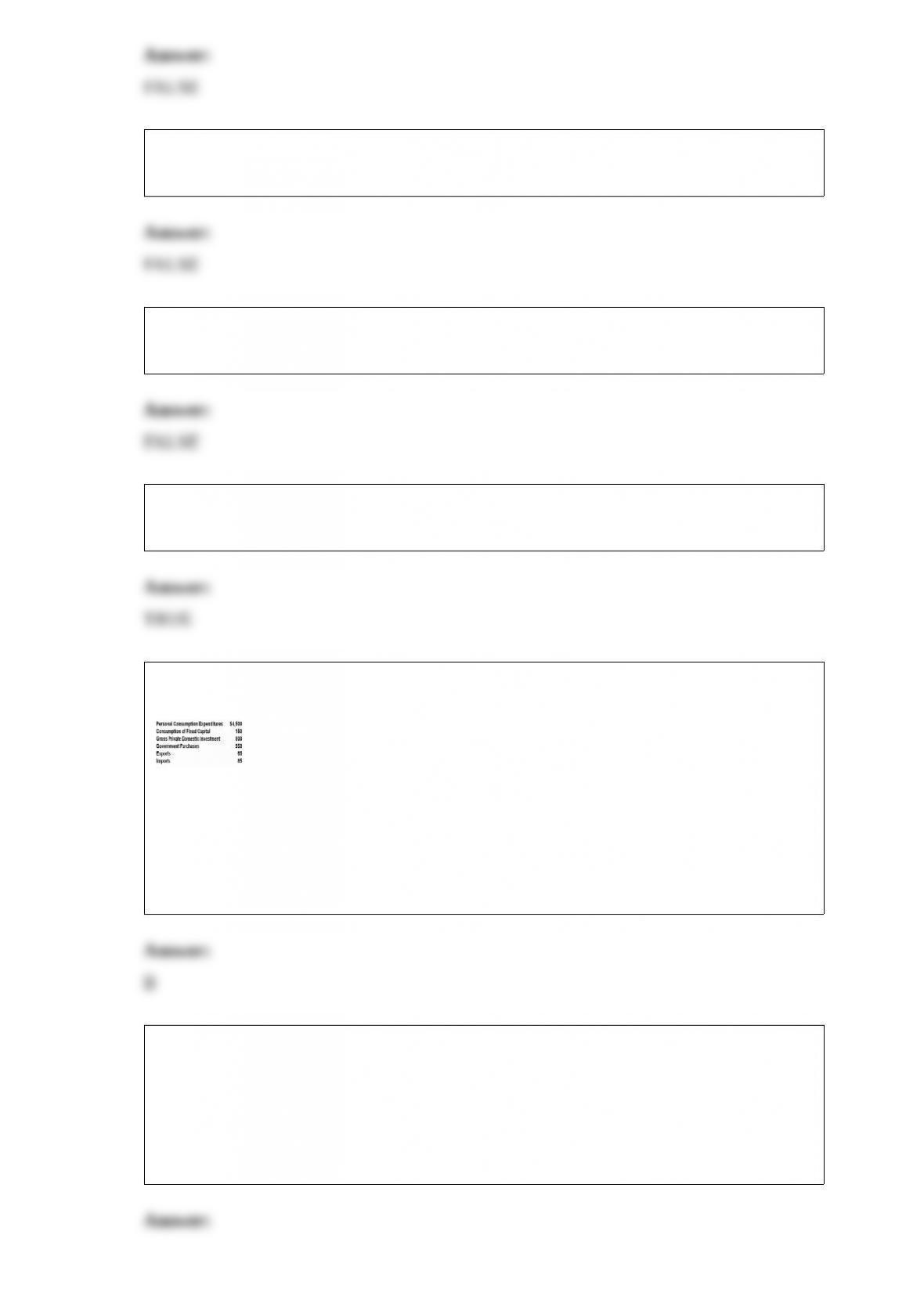
11) The following data about a hypothetical economy are in billions of dollars.
Refer to the above data. How much are net exports of this economy?
A.+$150 billion
B.-$20 billion
C.+$20 billion
D.-$65 billion
12) Marginal revenue product describes the:
A.Output produced by the last unit of labor employed
B.Revenue received for the last unit of output produced
C.Price a consumer paid for the last unit of output produced
D.Revenue received for the additional output produced by the last unit of labor
employed
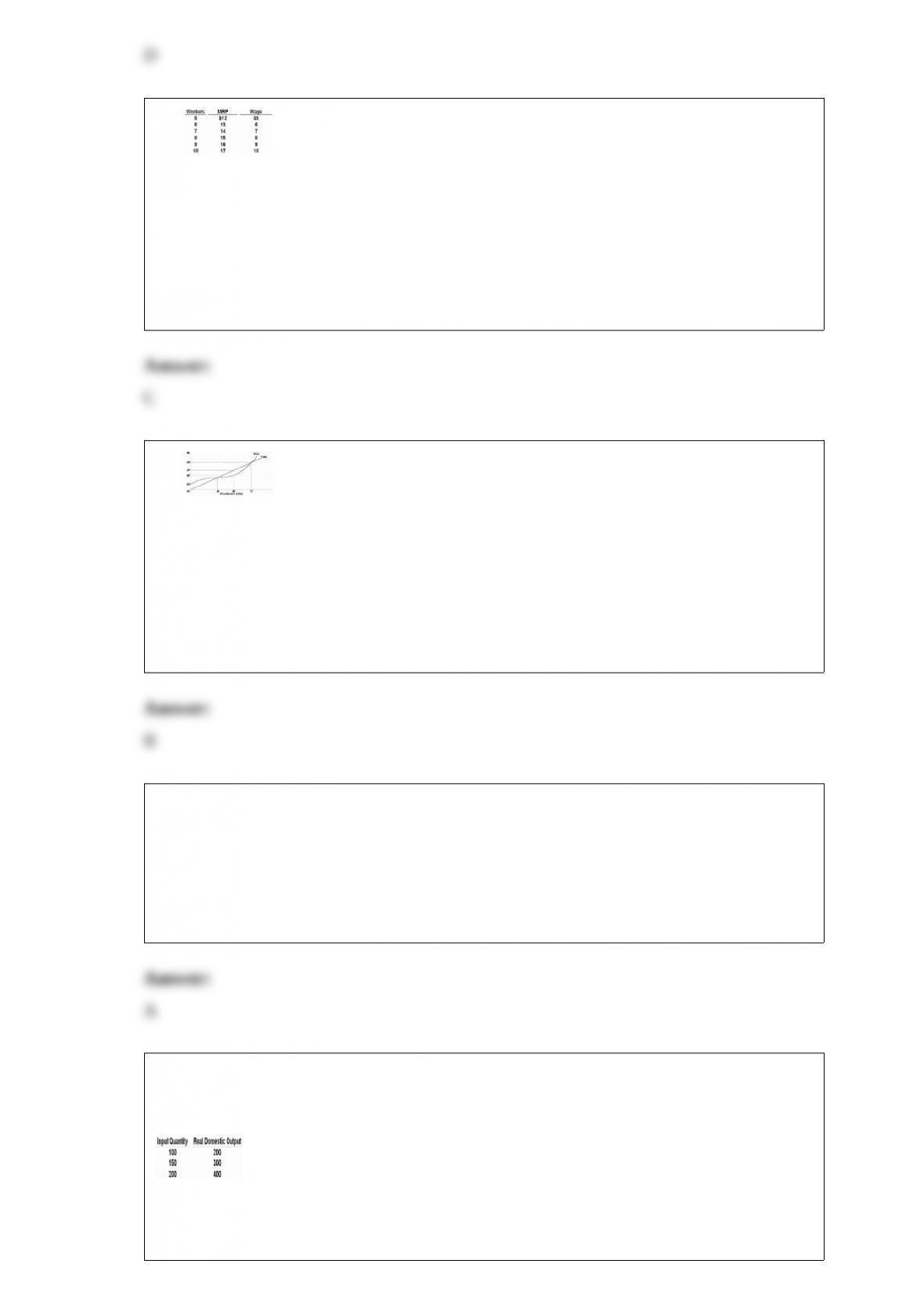
13)
A firm faces the labor productivity and cost schedule in the table above. How many
workers will this profit-maximizing firm employ?
A.6
B.7
C.8
D.9
14)
Refer to the above graph for a purely competitive firm in the short run. Profits would be
maximized if the firm produces which level of output?
A.A
B.B
C.C
D.Greater than C
15) Resources are efficiently allocated when production occurs at that output level
where price:
A.Equals marginal cost
B.Equals marginal revenue
C.Is greatest over average cost
D.Is equal to average total cost
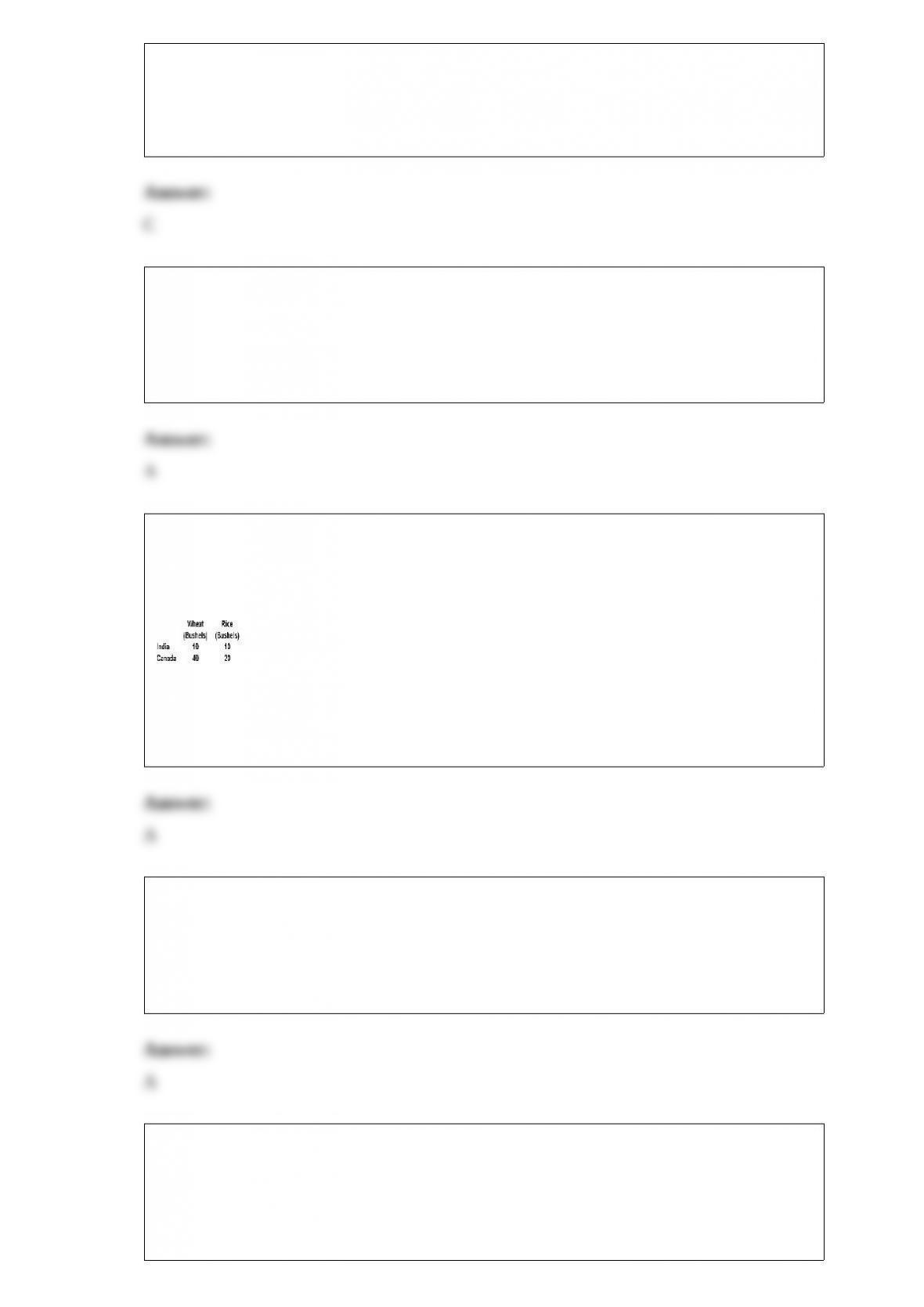
16) Answer the question on the basis of the following information about the relationship
between input quantities and real domestic output in a hypothetical economy:
Refer to the table. If the price of each input is $5, the per-unit cost of production in the
economy is:
A.$5.
B.$2.75.
C.$2.50.
D.$.40.
17) A $1 billion increase in investment will cause a:
A.(1/MPS) billion increase in GDP.
B.(MPS) billion increase in GDP.
C.(1 – MPC) billion increase in GDP.
D.(MPC – MPS) billion increase in GDP.
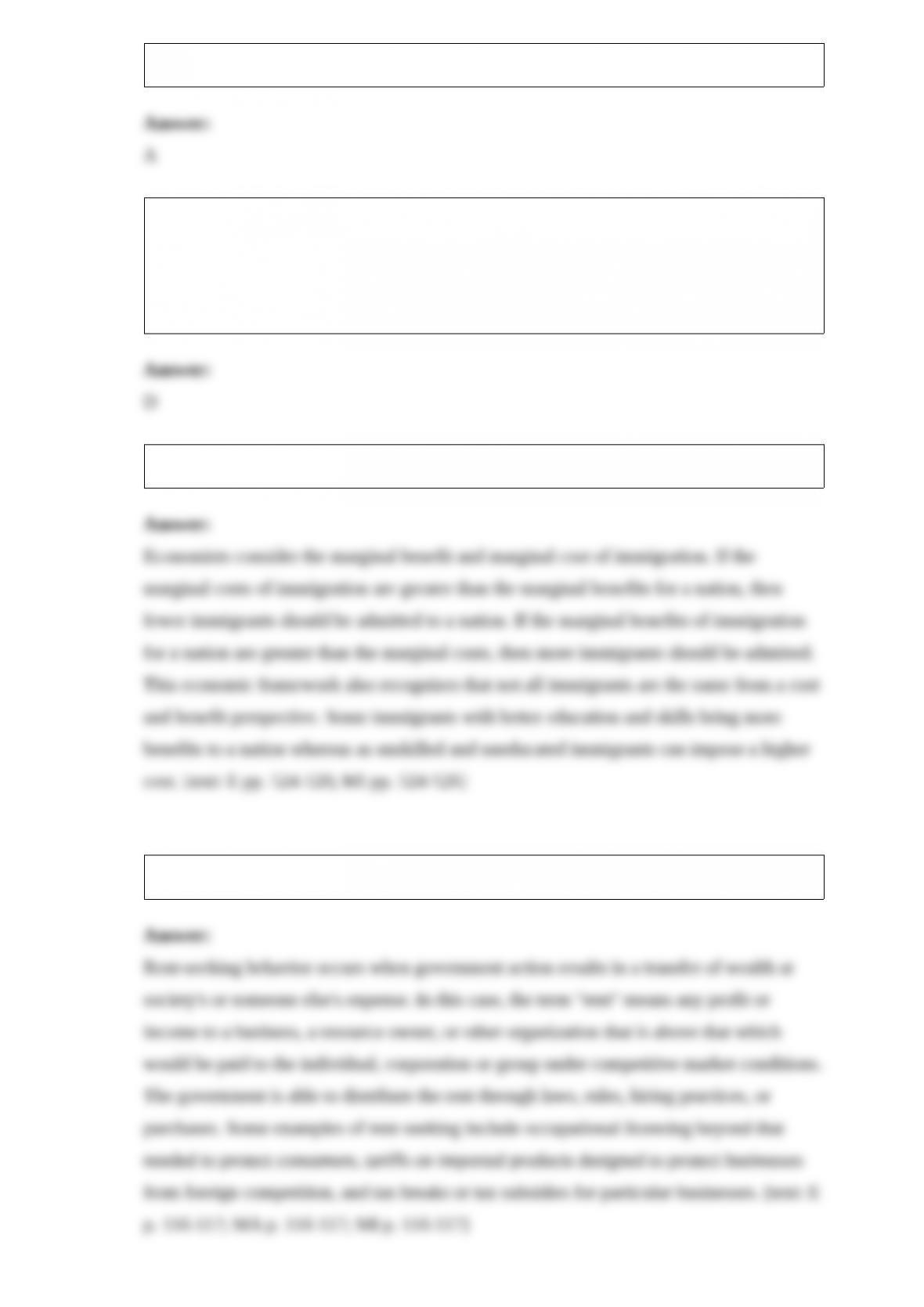
18) The productivity table given below shows how many bushels of either wheat or rice
can be produced in India and Canada with 1 unit of input. To achieve gains from
specialization and trade:
A.India should export rice to Canada and import Canadian wheat
B.India should export wheat to Canada and import Canadian rice
C.Canada should produce both wheat and rice and not trade with India
D.India cannot offer any benefits to Canada from trading with her
19) Insurance companies facilitate the transfer of risk from:
A.Those who have a low-risk tolerance to those with high risk-tolerance
B.Those who have a high-risk tolerance to those with low risk-tolerance
C.The insurance companies’ owners to the insurance-policy holders
D.Insurance policyholders to the bankers who lend money to the companies
20) The crowding model of occupational discrimination suggests that occupational
segregation results in:
A.A lower domestic output than would otherwise be the case
B.Higher levels of total employment than would otherwise be the case
C.Higher interest rates in the private sector than would otherwise be the case
D.A higher rate of inflation than would otherwise be the case
21) The main function of the Federal Reserve System is to:
A.Serve as the fiscal agent for the Federal government
B.Set reserve requirements of banks
C.Clear checks from member banks
D.Control the money supply
22) What economic framework can inform the debate on immigration?
23) Describe how rent-seeking behavior works.
24) What are the so-called Five Fundamental Questions that every economy must
answer?
25) Explain how network effects have helped Google gain a monopoly over internet
searches.
26) Give one example of a positive economic statement and one example of a
normative economic statement.
27) What are some of the sources of cost savings for business start-ups in the U.S.
economy such as Google, Intel, Starbucks, and Microsoft?
28) What is core inflation? Why is it used?
29) Other than the incentive for the federal government to accrue debt, what other
problems are associated with the Fed keeping interest rates low.