Which would indicate that a firm is operating under conditions of pure competition and
is being productively efficient?
A. It is making economic profits in the long run.
B. Marginal cost equals average variable cost.
C. It produces at the minimum average total cost.
D. Its marginal revenue is less than average revenue.
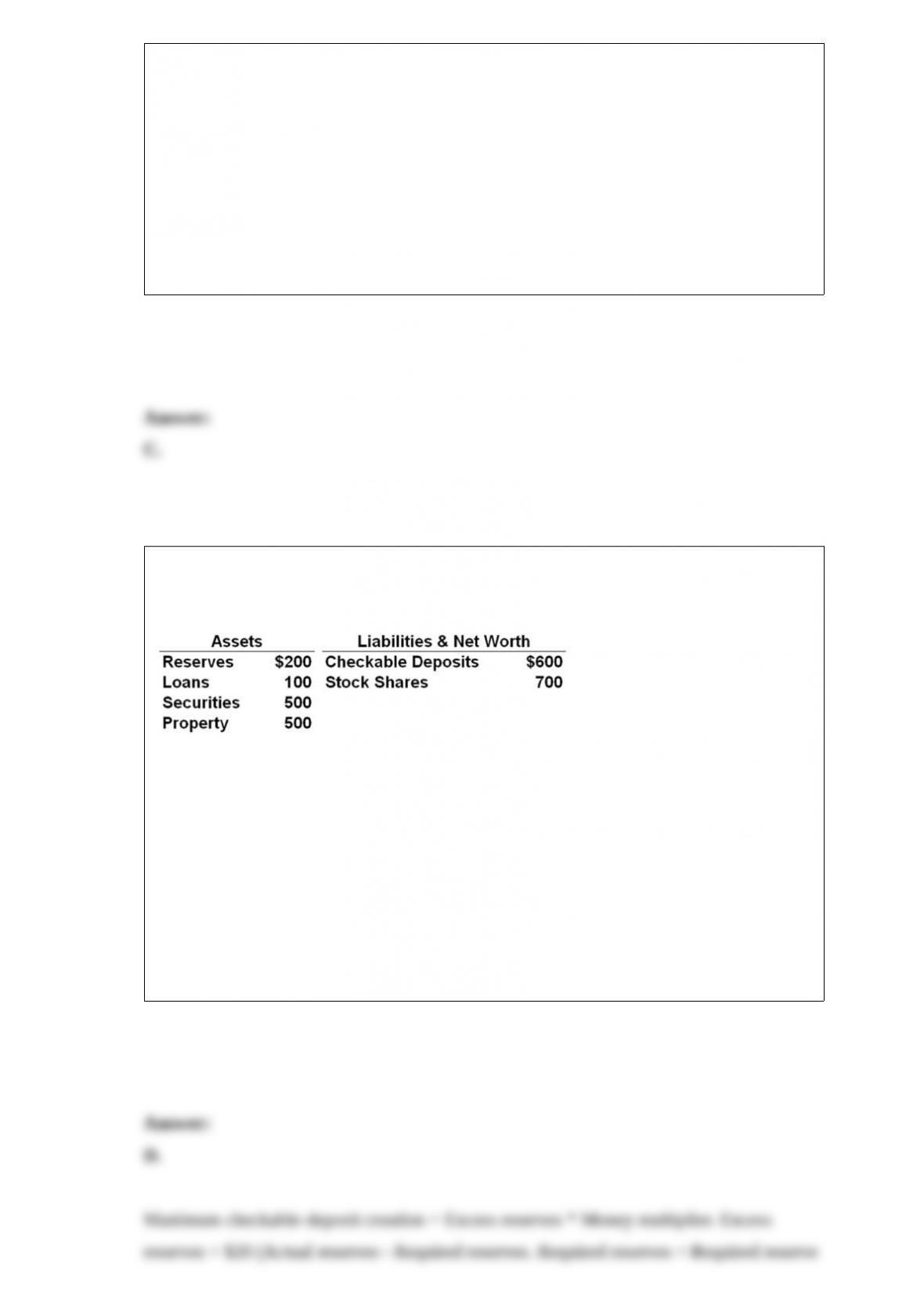
Answer the next question based on the following consolidated balance sheet for the
commercial banking system. Assume the required reserve ratio is 30 percent. All figures
are in millions of dollars.
Refer to the above data. The commercial banking system can expand the supply of
money by a maximum of:
A. $23.5 million.
B. $36.5 million.
C. $51.9 million.
D. $66.67 million.

Which industry would be considered to be monopolistically competitive?
A. Electronic computers.
B. Electric light bulbs.
C. Local dry cleaners.
D. Men’s slacks and jeans.
One difference between monopolistic competition and pure competition is that:
A. products can be standardized or differentiated in pure competition.
B. there is some control over price in monopolistic competition.
C. monopolistic competition has significant barriers to entry.
D. firms differentiate their products in pure competition.
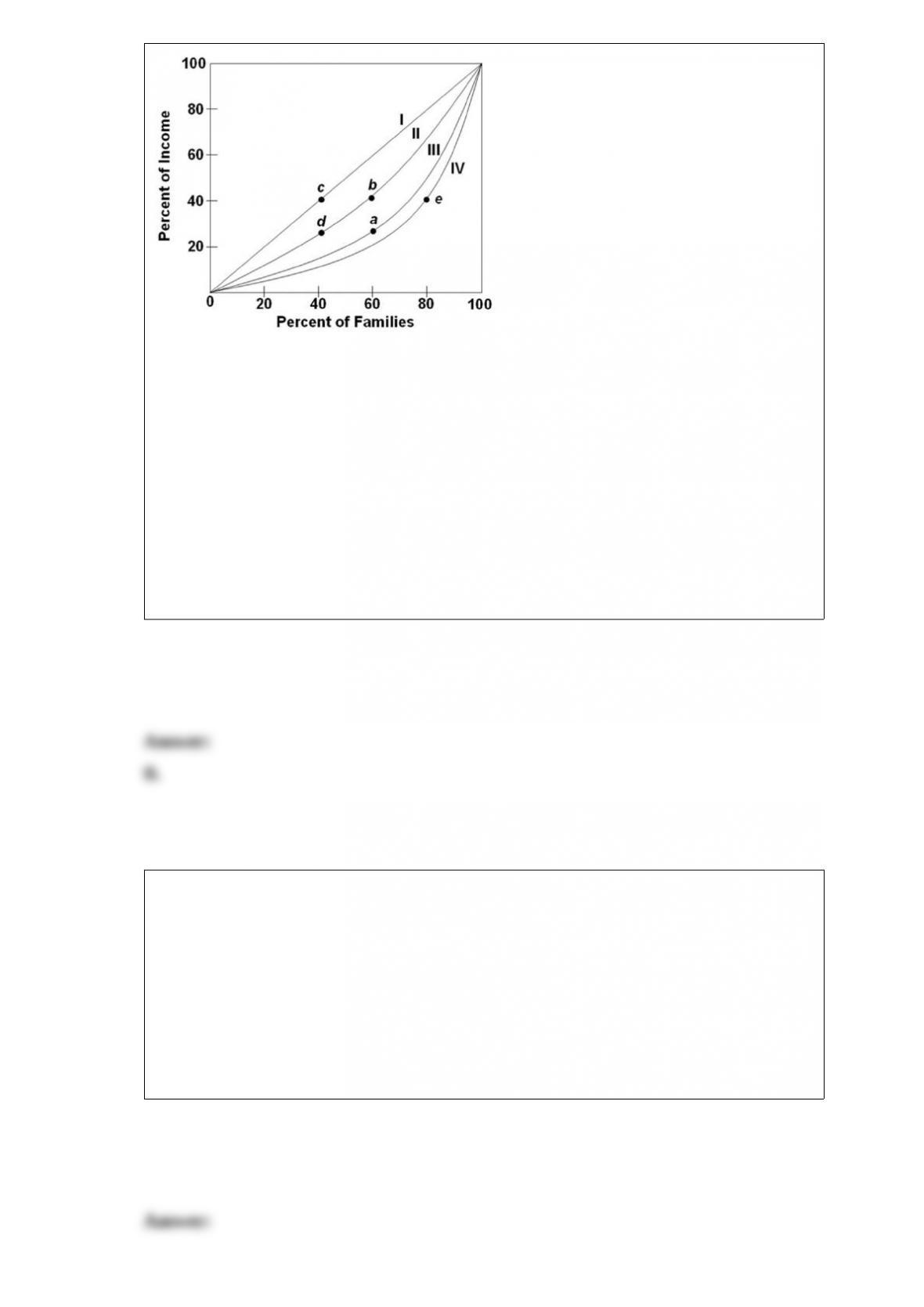
Refer to the above graph, which shows four different Lorenz curves (I, II, III, and IV).
The greatest increase in income inequality would occur with a shift in a Lorenz curve
from:
A. II to III.
B. II to IV.
C. IV to III.
D. IV to I.
If the prices of imported resources decrease, then this event would most likely:
A. decrease aggregate supply.
B. increase aggregate supply.
C. increase aggregate demand.
D. decrease aggregate demand.
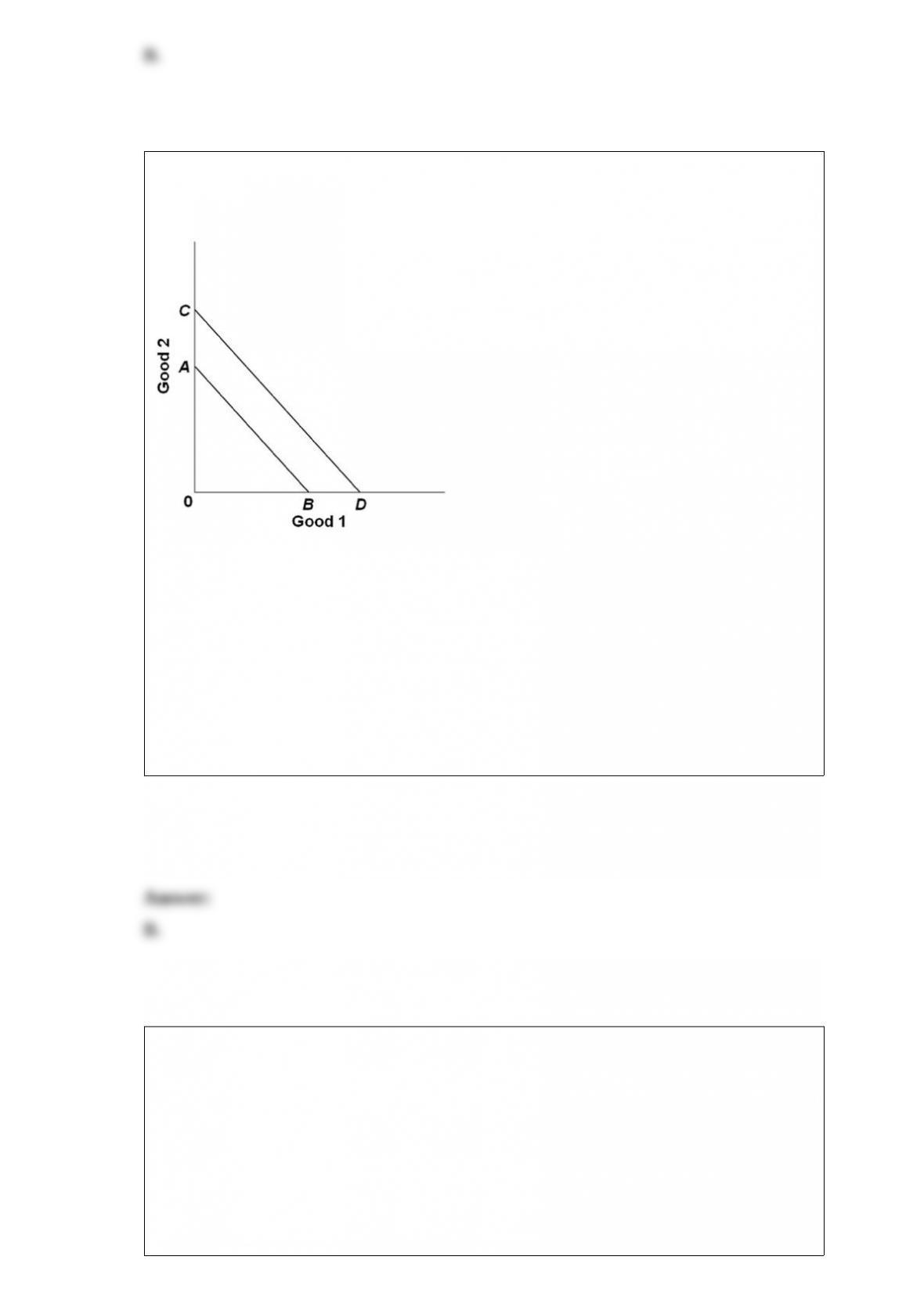
Refer to the above graph. The shift of the budget line from AB to CD is consistent with:
A. a decrease in money income.
B. an increase in money income.
C. an increase in the price of Good 1 and no change in the price of Good 2.
D. a decrease in the price of Good 2 and no change in the price of Good 1.
“In the corn market, demand often exceeds supply and supply sometimes exceeds
demand.” “The price of corn rises and falls in response to changes in supply and
demand.” In which of these two statements are the terms demand and supply being used
correctly?
A. In neither statement
B. In the second statement

C. In the first statement
D. In both statements
An exclusive right granted by government for a number of years to an inventor of a
product is a:
A. copyright.
B. franchise.
C. patent.
D. license.
The conduct of monetary policy in the United States is the main responsibility of the:
A. U.S. Treasury.
B. Federal Reserve.
C. Bureau of the Public Debt.
D. Bureau of Economic Analysis.

Currency and checkable deposits are:
A. debts of the Federal Reserve Banks or of financial institutions.
B. redeemable for gold and silver from the Federal Reserve System.
C. of intrinsic value that determines the relative worth of money.
D. the major components of the M3 definition of the money supply.
If a legal price ceiling is set above the equilibrium price:
A. a shortage of the product will occur.
B. a surplus of the product will occur.
C. a black market will evolve.
D. neither the equilibrium price nor the equilibrium quantity will be affected.
A recession is defined as:
A. a fall in the natural rate of unemployment.
B. a rise in the natural rate of unemployment.

C. a fall in real GDP that lasts six months or longer.
D. the minimum point in the business cycle before the recovery phase.
Assume the market for ball bearings is purely competitive. Currently, each of the firms
in this market is making a positive level of economic profits. In the long run, we can
expect the market:
A. supply to increase.
B. demand to increase.
C. supply to decrease.
D. demand to decrease.
The sales tax is a regressive tax because the:
A. percentage of income paid as taxes falls as income rises.
B. administrative costs associated with the collection of the tax are relatively high.
C. percentage of income paid as taxes is constant as income rises.
D. tax tends to reduce the total volume of consumption expenditures.

Ticket scalping refers to:
A. the surplus of tickets that occurs when price is set below equilibrium.
B. the shortage of tickets that occurs when price is set above equilibrium.
C. pricing tickets so high that an athletic or artistic event will not be sold out.
D. reselling a ticket at a price above its original purchase price.
Inflation that occurs when total spending is greater than the economy’s ability to
produce output at the existing price level is:
A. anticipated inflation.
B. demand-pull inflation.
C. cost-push inflation.
D. unanticipated inflation.
Assuming the total population is 200 million, the labor force is 100 million, and 92
million workers are employed, the unemployment rate is:
A. 4 percent.
B. 6 percent.
C. 8 percent.
D. 10 percent.
In imperfectly competitive industries, producers’ agreements to restrict output tend to be
unstable because each firm has an incentive to:
A. produce more than its output quota.
B. lower both its price and its output.
C. raise prices above the cooperative price.
D. establish competitive price and output levels.
Other things equal, if the wage rates paid to a firm’s labor inputs were to rise, we would
expect the:

A. AFC, AVC, ATC, and MC to rise.
B. AVC, ATC, and MC to rise.
C. AFC and ATC to fall.
D. MP to fall.
The transactions demand for money is least likely to be a function of the:
A. price level.
B. interest rate.
C. level of national income.
D. frequency of wage and salary payments.
Suppose Rita obtains 10 units of utility from the last dollar of income she receives and
David obtains 6 units of utility from his last dollar of income. Assume both David and
Rita have the same capacity to derive utility from income with identical
marginal-utility-of-income-curves. Those who favor an equal distribution of income
would:
A. advocate redistributing income from David to Rita.
B. advocate redistributing income from Rita to David.
C. be content with this distribution of income between Rita and David.

D. argue that any redistribution of income between them would increase total utility.
The economic incentive for price discrimination depends on:
A. prejudices of business managers.
B. differences among sellers’ costs.
C. a desire to evade antitrust legislation.
D. differences among buyers’ demand elasticities.
The process of developing hypotheses, testing them against facts, and using the results
to construct theories is called:
A. opportunity cost calculation.
B. the scientific method.
C. marginal analysis.
D. microeconomics.
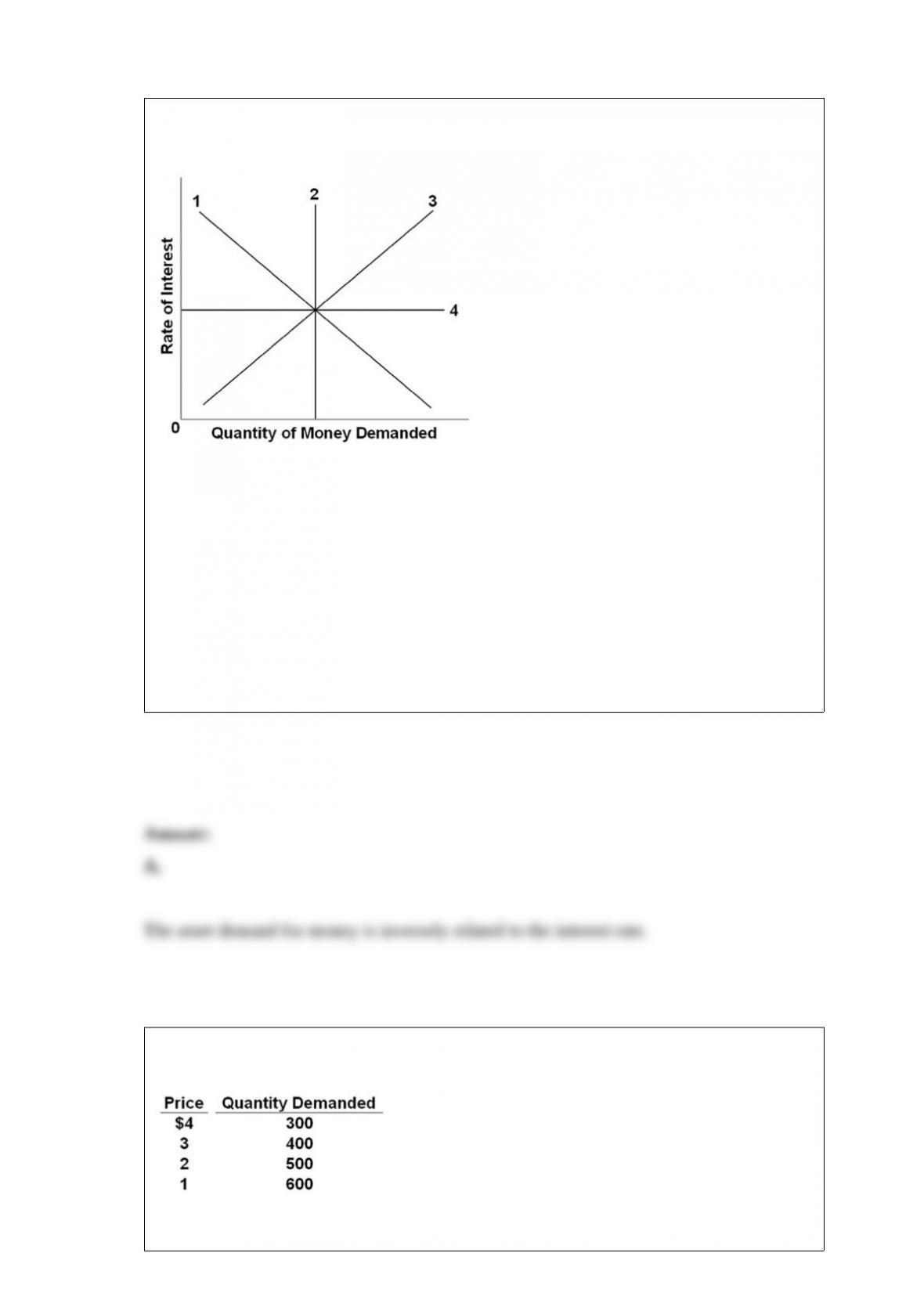
Which line in the above graph would best reflect the slope of the asset demand for
money curve?
A. Line 1.
B. Line 2.
C. Line 3.
D. Line 4.
Refer to the above data. What is the elasticity of demand between the prices of $4 and
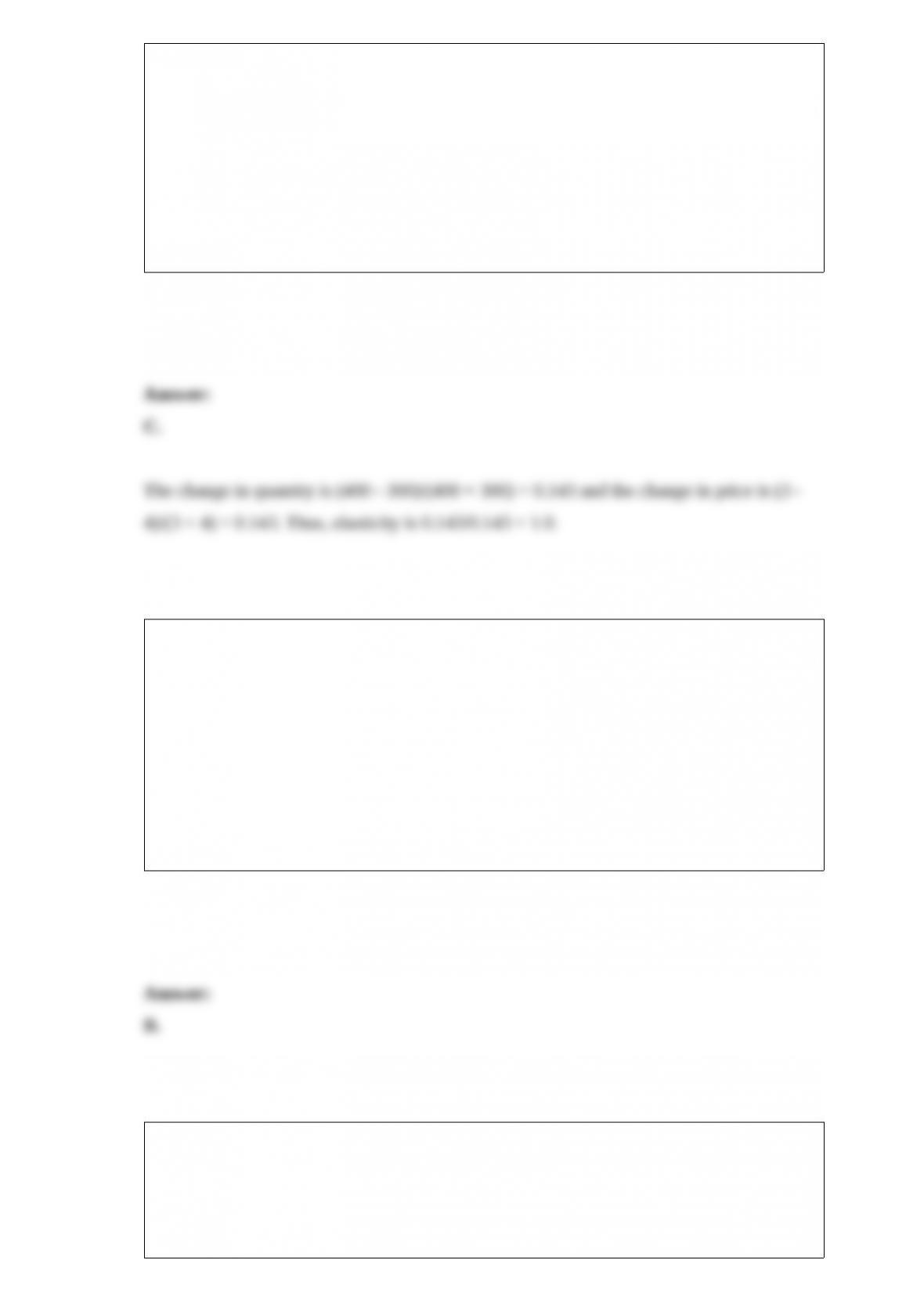
$3?
A. 0.2
B. 0.5
C. 1
D. 2
The basic characteristic of the short run is that:
A. barriers to entry prevent new firms from entering the industry.
B. the firm does not have sufficient time to change the size of its plant.
C. the firm does not have sufficient time to cut its rate of output to zero.
D. a firm does not have sufficient time to change the amounts of any of the resources it
employs.
Under oligopoly, if one firm in an industry significantly increases advertising
expenditures in order to capture a greater market share, it is most likely that other firms
in that industry will:
A. pursue a strategy to reduce advertising expenditures to maintain profits.

B. decide to increase advertising expenditures even if it means a reduction in profits.
C. make no changes in advertising expenditures because advertising is effective in the
short run, but not the long run.
D. increase the price of the product to improve profits and then increase advertising
expenditures.
The seven members of the Board of Governors of the Federal Reserve System are:
A. appointed by the president with the confirmation of the Senate.
B. elected by Congress from a slate of nominees provided by the president.
C. appointed by the Senate Finance Committee.
D. appointed by the presidents of the 12 Federal Reserve Banks.
Monopolistically competitive firms are productively inefficient because production
occurs where:
A. marginal cost is greater than marginal revenue.
B. marginal cost is less than marginal revenue.
C. average total cost is greater than the minimum average total cost.
D. average total cost is less than the difference between average total cost and average
variable cost.
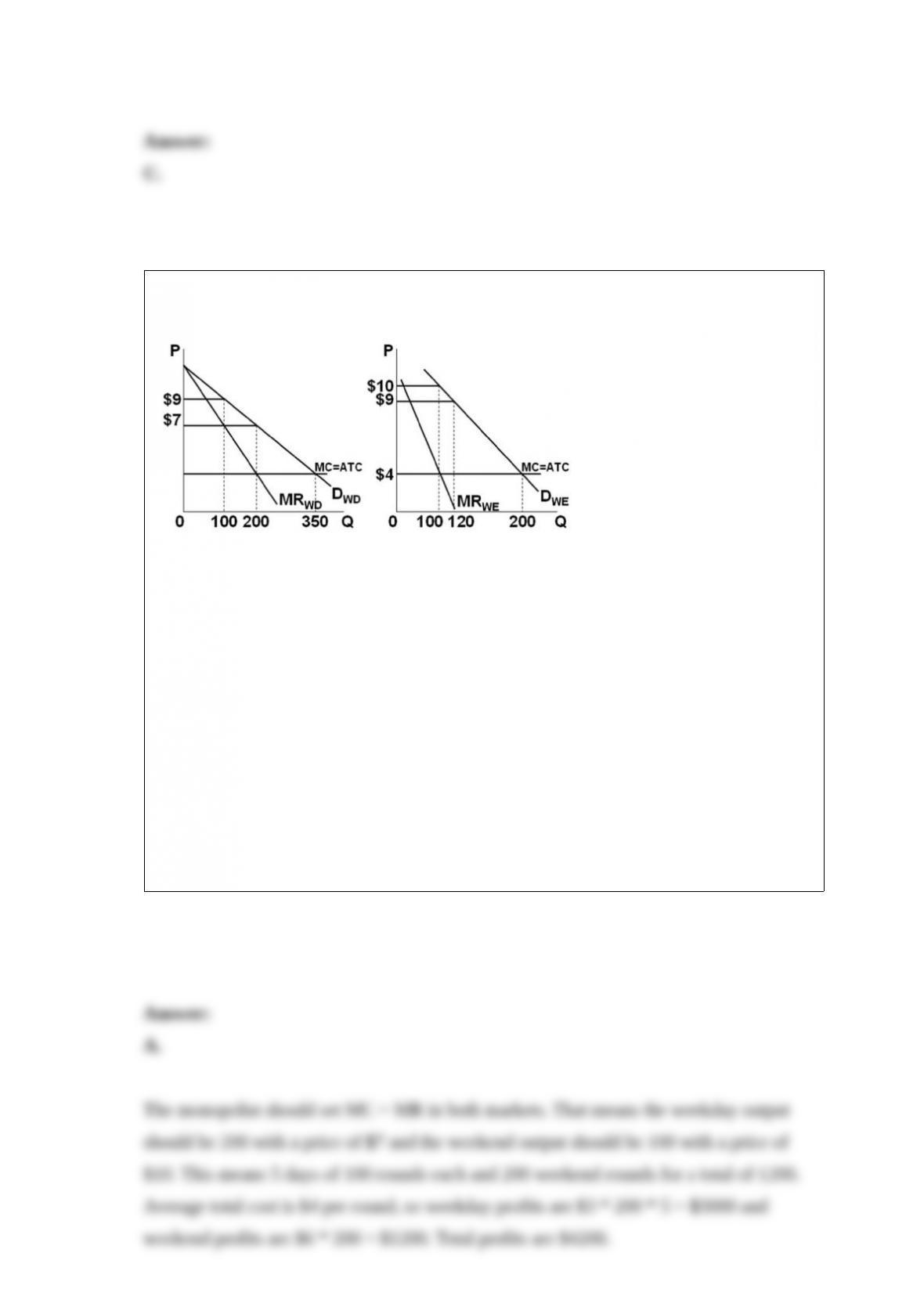
Refer to the figures above. Suppose the graphs represent the demand for use of a local
golf course for which there is no significant competition (it has a local monopoly). P
denotes the price of a round of golf and Q is the quantity of rounds sold each day. If the
left graph represents the demand during weekdays and the right graph the weekend
demand, how much economic profit will this profit-maximizing golf course earn over
the course of a full seven-day week?
A. $4200
B. $3700
C. $3400
D. $2700