In the classical model, a falling demand for labor will
a. not cause unemployment because the labor market always clears
b. cause a recession with lower employment and a lower real wage
c. cause a recession with lower employment and an increasing real wage
d. cause a recession with lower unemployment and a lower real wage
e. cause a recession with higher employment and an increasing real wage
Which of the following does not usually occur when there is an increase in government
spending?
a. Government purchases crowd out private-sector spending.
b. Total spending decreases.
c. The interest rate increases.
d. Investment spending declines.
e. Household saving increases.
The federal funds rate is
a. determined in a market but targeted by the Fed.
b. chosen by the Fed and enforced on the banks.
c. chosen by Congress and enforced on the Fed.
d. chosen by Congress and enforced on the banks.
e. determined in the market and beyond the control of the Fed.

If the Consumer Price Index (CPI) increases from 100 to 125 and the nominal wage
increases from $125 to $300, what is the change in the real wage?
a. +$175
b. +$300
c. +$125
d. +$115
e. -$175
Which of the following is correct with regard to the supply of money?
a. The money supply is inversely related to the interest rate.
b. The money supply is independent of the interest rate.
c. The money supply is positively related to the interest rate with a relatively flat slope.
d. The money supply curve is horizontal.
e. The money supply is positively related to the interest rate with a relatively steep
slope.
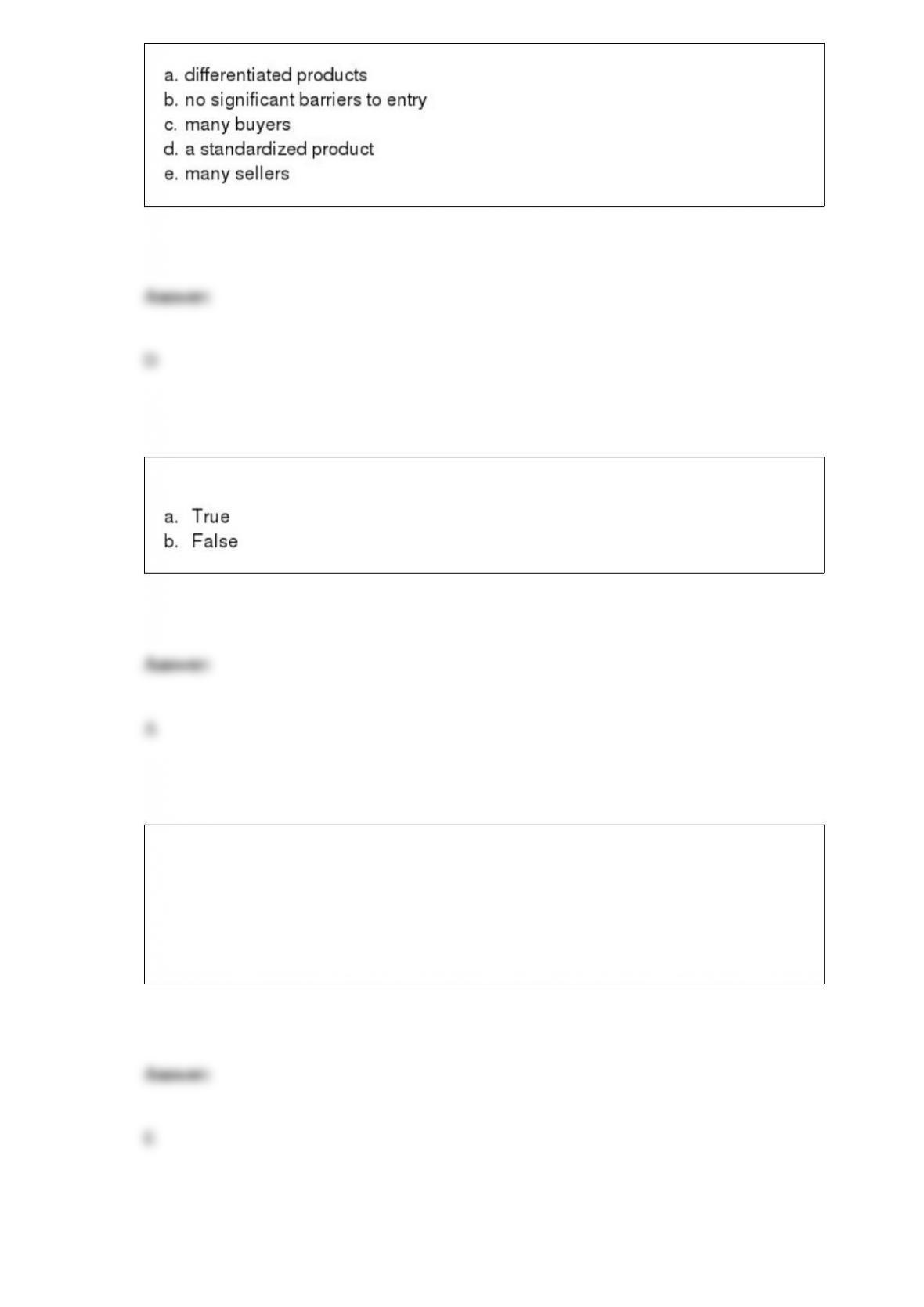
Each of the following, except one, is a characteristic of a monopolistically competitive
market. Which is the exception?
Contracts tend to increase the level of specialization in an economy.
Output per person rises when
a. the population increases faster than real GDP
b. real GDP rises faster than the number of employed workers
c. real GDP increases at the same rate as the population
d. real GDP rises slower than the population
e. real GDP rises faster than the population
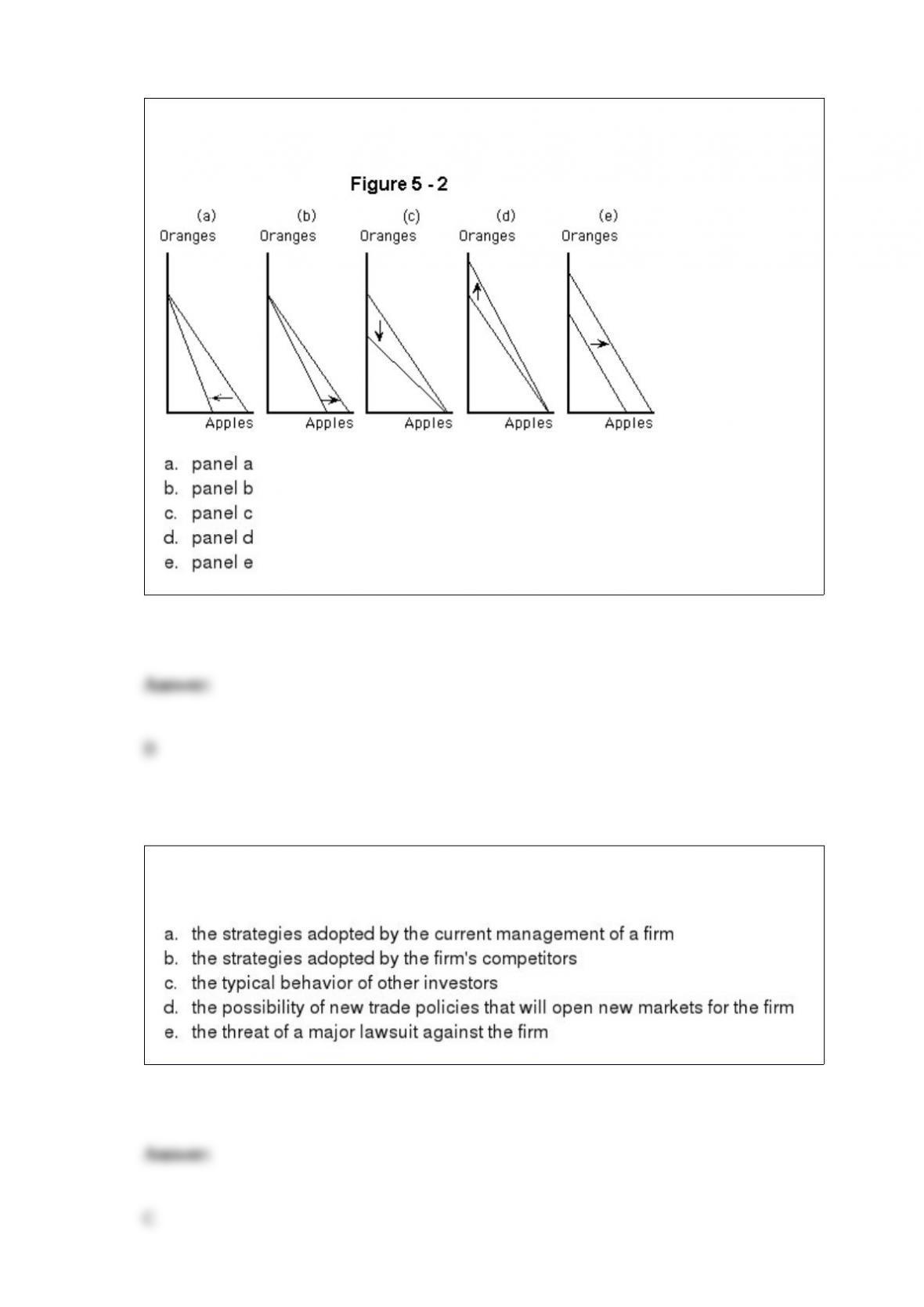
Which panel in Figure 5-2 shows the effect of a decrease in the price of apples, other
things constant?
Which of the following factors would be considered by a technical analyst when
predicting a firm’s stock price?

As of 2009, the U.S. federal deficit had reached nearly __________ of GDP.
a. -3.0 percent
b. -6.0 percent
c. -12.0 percent
d. -5.0 percent
e. -7.0 percent
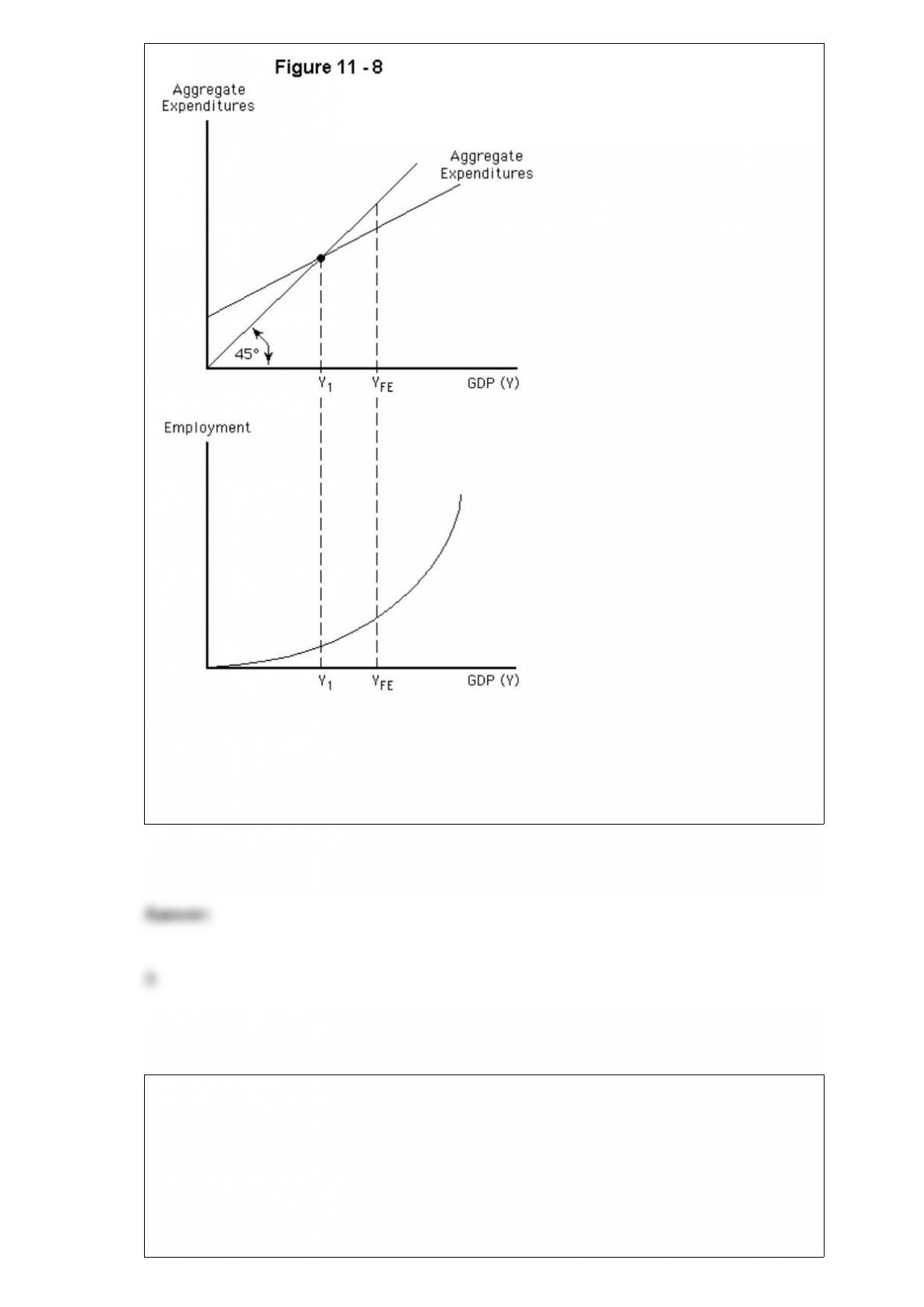
Refer to Figure 11-8. If YFErepresents the full-employment level of output, what can
we say about the state of the economy at Y1?
a. It is in recession.
b. It is in expansion.
c. It is in equilibrium, but above full employment.
d. It is not in equilibrium, and output will increase.
e. It is not in equilibrium, and output will fall.
If Mexico’s GDP drops, which of the following will happen in the market for pesos?
a. A rightward shift of the supply curve, a depreciation of the peso, and a larger number
of pesos traded
b. A rightward shift of the demand curve, a depreciation of the peso, and a smaller
number of pesos traded
c. A rightward shift of the demand curve, an appreciation of the peso, and a larger
number of pesos traded
d. A leftward shift of the demand curve, a depreciation of the peso, and a smaller
number of pesos traded
e. A leftward shift of the supply curve, an appreciation of the peso, and a smaller
number of pesos traded.
Suppose the MPC is 0.9. If autonomous consumption spending increases by $20 billion,
equilibrium output will
a. increase by $22.2 billion
b. increase by $200 billion
c. not change because the MPC only changes consumption when income changes
d. not change because the expenditures multiplier only applies to changes in investment
spending and government purchases
e. increase by $18 billion
If an employer begins to pay higher wages to white workers, then in the short run
A price elasticity of demand of 2 for a specific cola means that if the price increases 1
percent, the quantity demanded of the cola will decrease by 2 percent.
In an economy with 4,000 unemployed people and 8,000 employed people, the
unemployment rate is
a. 50.0 percent
b. 40.0 percent
c. 33.3 percent
d. 60.0 percent
e. 25.0 percent
Where is the monopoly supply curve located?