1) foreign currency exchanges and interest payments on foreign debt are examples of:
a.financial flows.
b.trade flows.
c.capital flows.
d.technology flows.
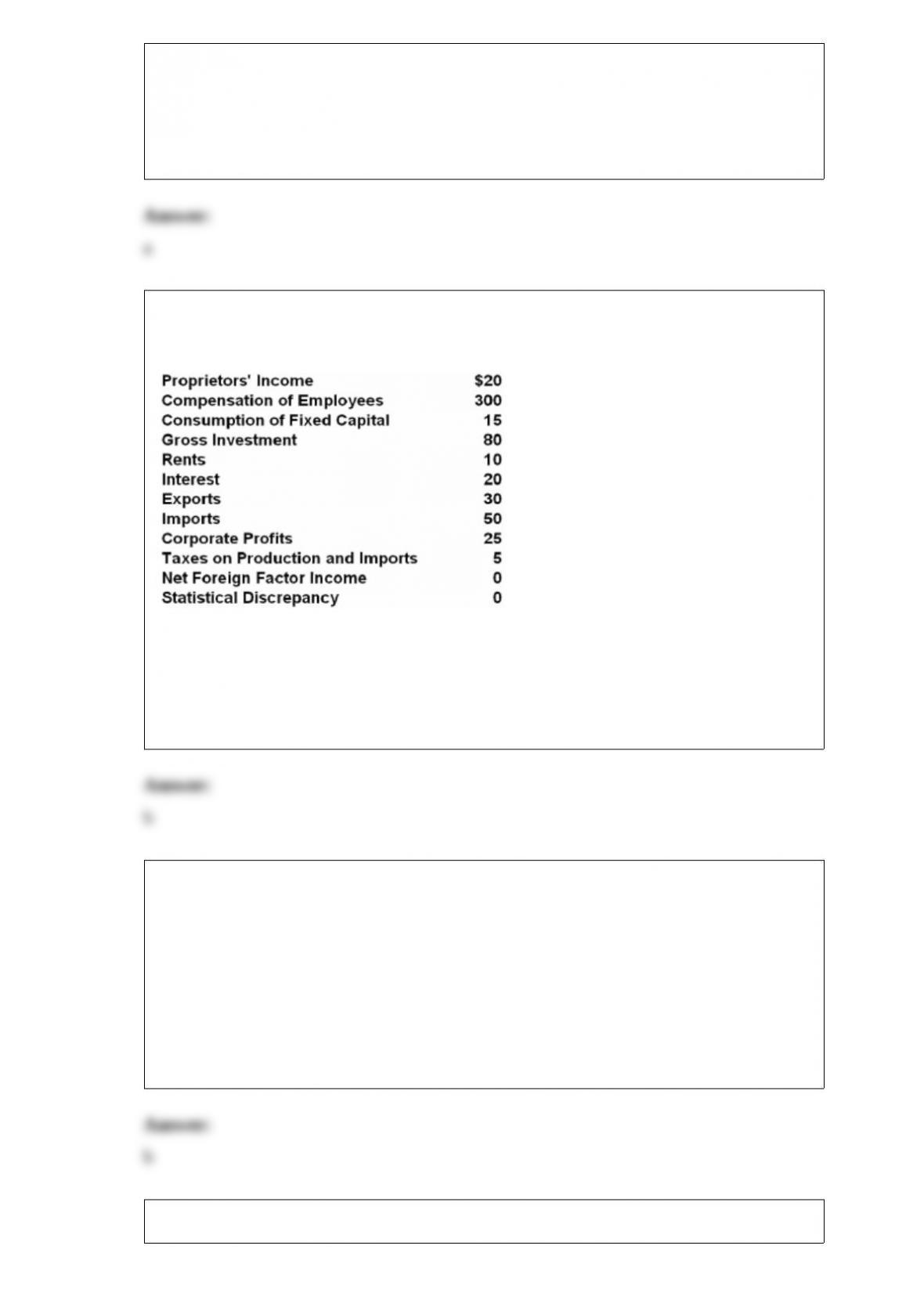
2) answer the next question(s) on the basis of the following data. all figures are in
billions of dollars.
refer to the above data. net domestic product is:
a.$395.
b.$380.
c.$375.
d.$360.
3) which of the following statements, if any, is correct for a nation that is producing
only consumer and capital goods?
a.other things equal, the more consumer goods a nation produces, the greater will be its
future growth rate.
b.other things equal, the more capital goods a nation produces, the greater will be its
future growth rate.
c.there is no general relationship between the current division of output between
consumer and capital goods and the future growth rate.
d.none of these statements is correct.
4) the following information:
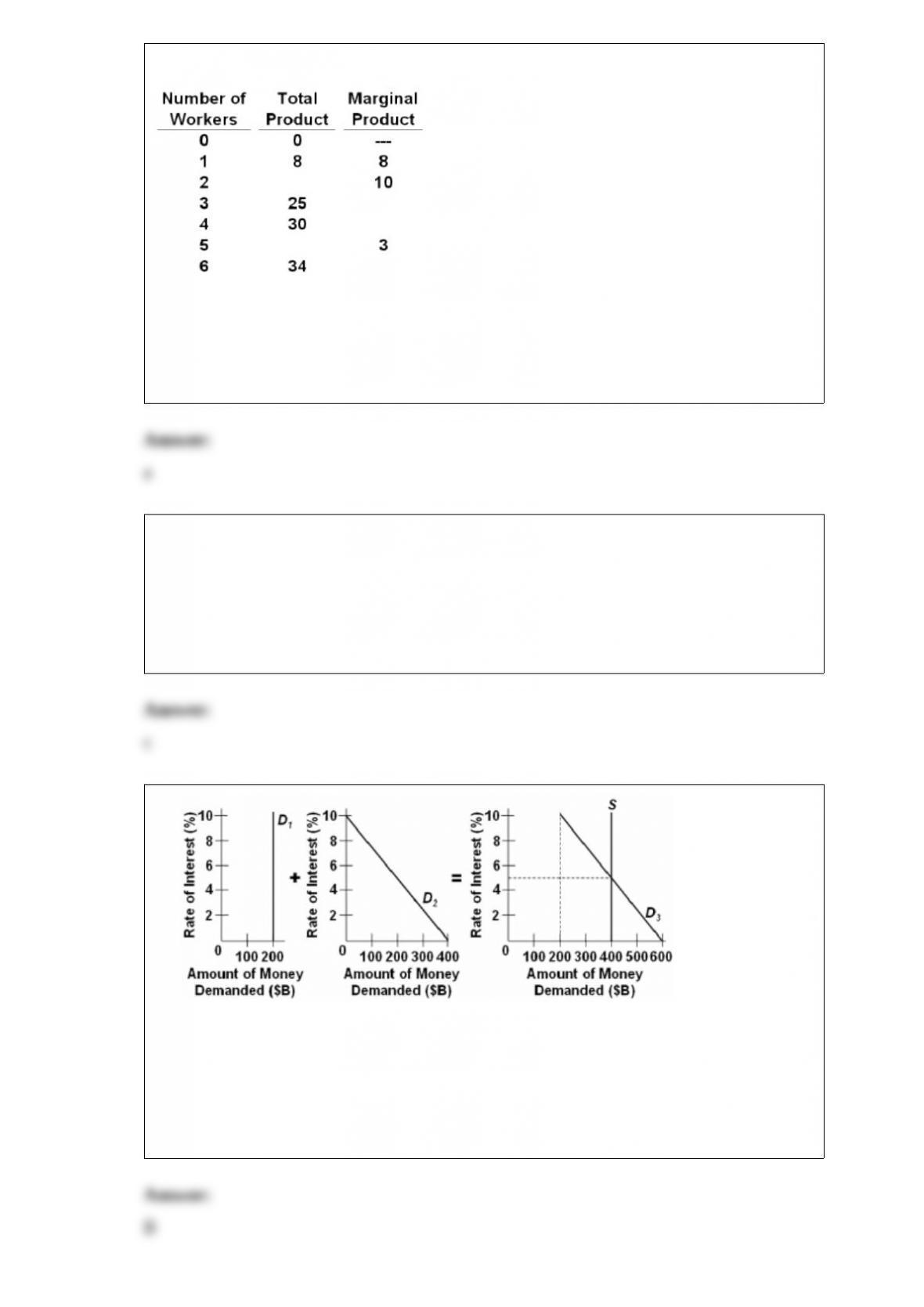
refer to the above data. the marginal product of the fourth worker:
a.is 5
b.is 7
c.is 71/2
d.cannot be calculated from the information given.
5) other things equal, a rapid rise in profits relative to other types of income would
affect:
a.the functional distribution of income only.
b.the personal distribution of income only.
c.both the functional and personal distributions of income.
d.the relative size of the public sector.
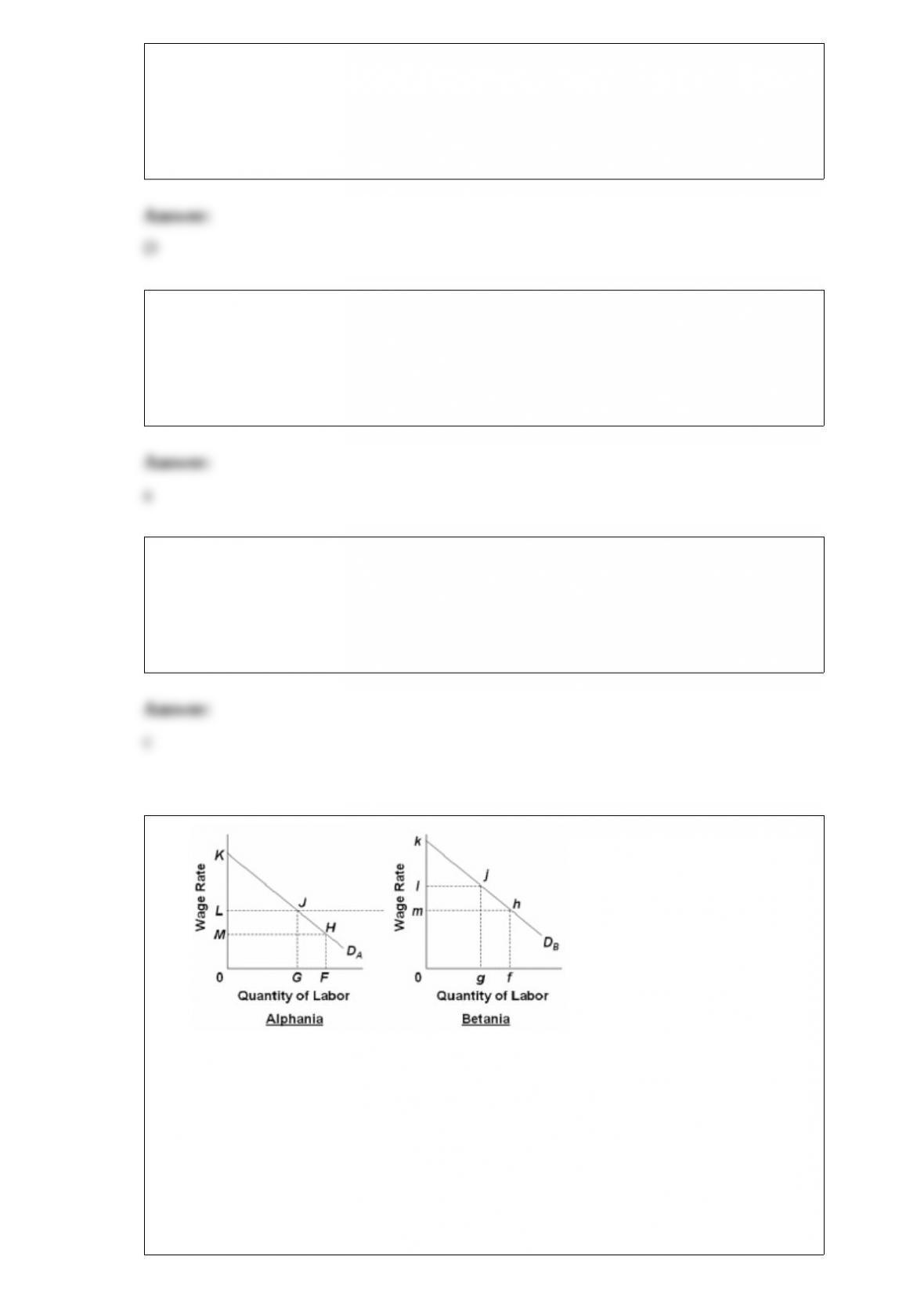
6)
Refer to the above market for money diagrams. If the Federal Reserve increased the
stock of money, the:
A.S curve would shift leftward and the equilibrium interest rate would rise.
B.S curve would shift rightward and the equilibrium interest rate would fall.
C.D3would shift leftward and the equilibrium interest rate would fall.
D.D3curve would shift leftward and the equilibrium interest rate would rise.
7) Effective usury laws:
A.subsidize lenders.
B.penalize those who borrow at the below-market interest rate.
C.improve efficiency in investing.
D.keep some low-income people from obtaining credit and loans.
8) government lotteries are:
a.used by a large number of states to supplement their tax revenues.
b.illegal in the united states, but are a common source of revenue in other countries.
c.used by local governments, but not by state governments.
d.a form of progressive taxation.
9) allocative efficiency occurs only at that output where:
a.marginal benefit exceeds marginal cost the by the greatest amount.
b.consumer surplus exceeds producer surplus by the greatest amount.
c.the combined amounts of consumer surplus and producer surplus are maximized.
d.the areas of consumer and producer surplus are equal.
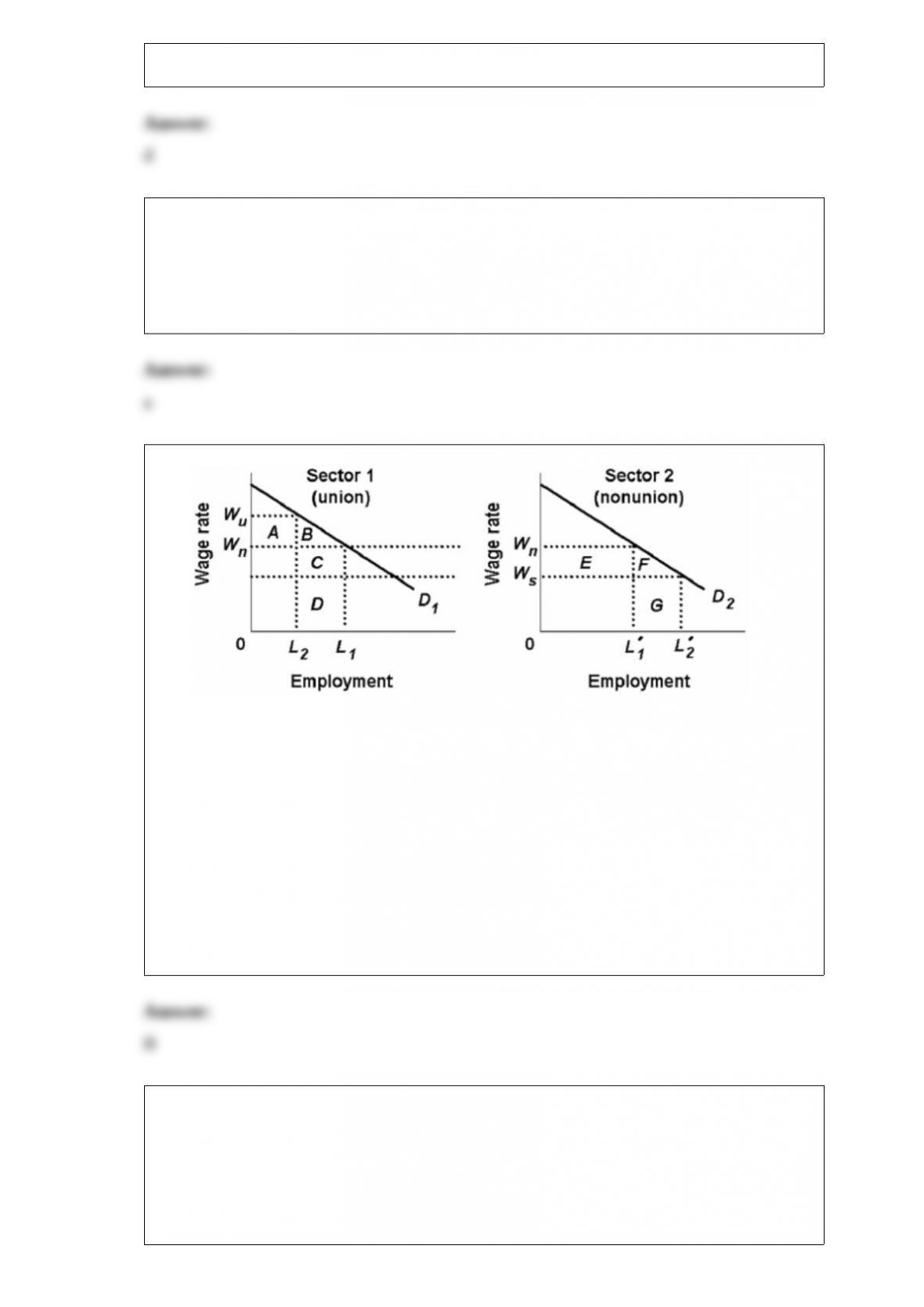
10)
assumptions: (1) the demand for labor in alphania and betania are as shown by da and
db, respectively; (2) alphania’s native labor force is f and that of betania is g; (3) wage l
in alphania is equal to wage m in betania; and (4) full employment exists in both
countries.
refer to the above diagram and assumptions. if migration is costless and unimpeded:
a.migration will cause the average level of wages to fall in alphania.
b.no migration will occur.
c.fg workers will move from betania to alphania.
d.gf workers will move from alphania to betania.
11) as a proportion of domestic output, taxes in the united states:
a.are lower than in most other industrially advanced countries.
b.are higher than in most other industrially advanced countries.
c.are approximately the same as in most other industrially advanced countries.
d.doubled in the 1990s.
12)
Assumptions: These two graphs show two sectors of the labor market for a particular
kind of labor. Relevant product markets are competitive. The two labor demand curves
are identical and initially the quantities of labor employed in the two sectors are L1and
L’1and the wage rate in each sector is Wn.
Refer to the above diagrams and assumptions. This analysis suggests that a union wage
advantage of Wuminus Ws causes a net efficiency:
A.loss equal to E – A.
B.loss equal to C.
C.gain equal to C.
D.gain equal to B.
13) total governmental purchasesfederal, state, and local combinedaccount for about
what percentage of domestic output?
a.30 percent
b.19 percent
c.10 percent
d.5 percent
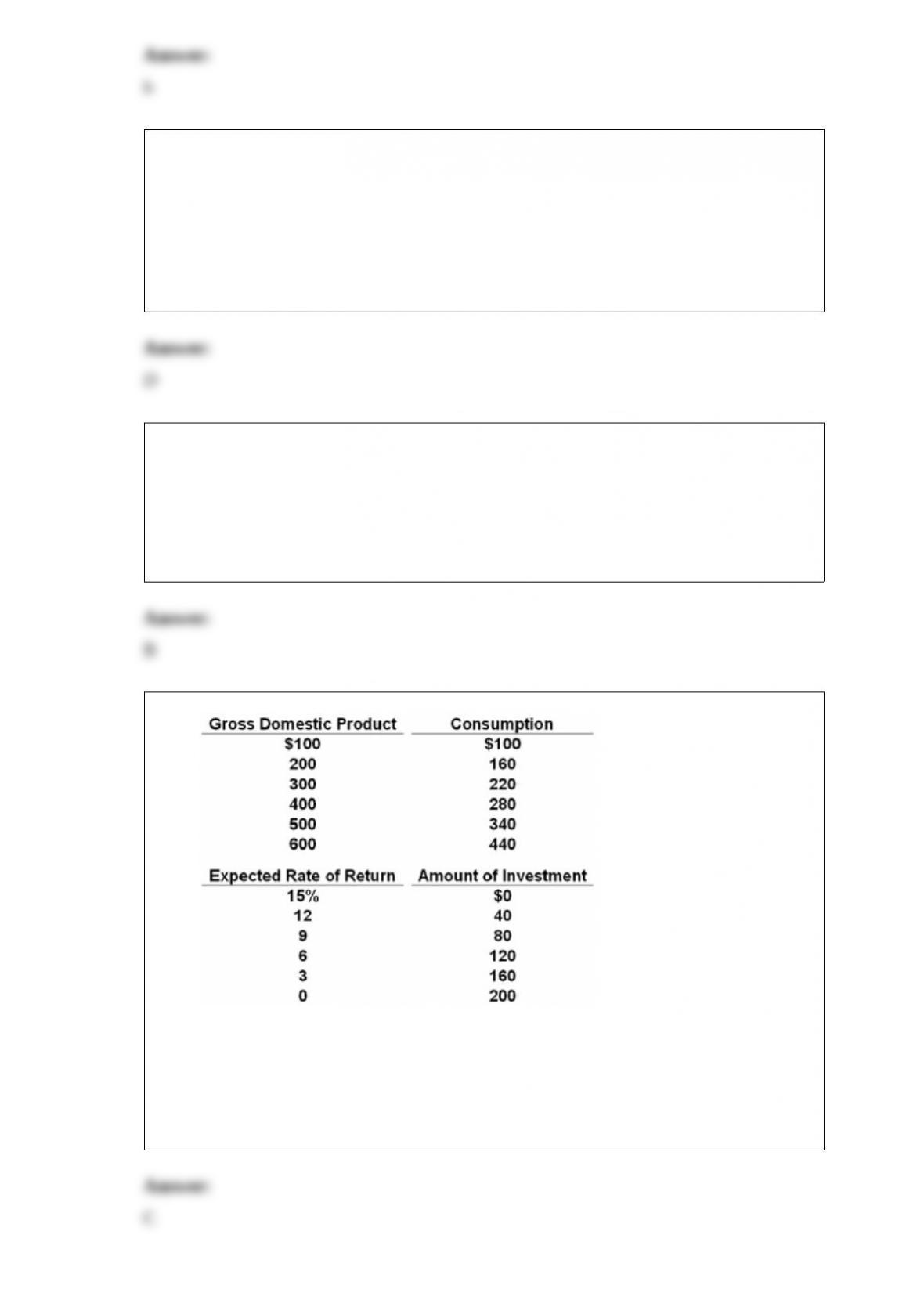
14) Investment in kind refers to the possibility that:
A.DVCs will invest for the purpose of becoming less dependent on world markets.
B.a DVC will overinvest in industries in which it has a comparative advantage,
disrupting its development program.
C.newly established manufacturing firms may expand by reinvesting their profits.
D.surplus labor in, say, agriculture can be diverted to the production of simple capital
goods such as earthen dams.
15) A consumer will buy a new product rather than an existing product:
A.when the MU/P of the new product is less than the MU/P of the existing product.
B.when the substitution of the new product for the old product increases the consumer’s
total utility.
C.only if the new product has a lower price than the existing product.
D.only if the MU of the new product exceeds the MU of the existing product.
16)
Refer to the above information. The multiplier in this economy is:
A.4.
B.5.
C.2.5.
D.3.5.