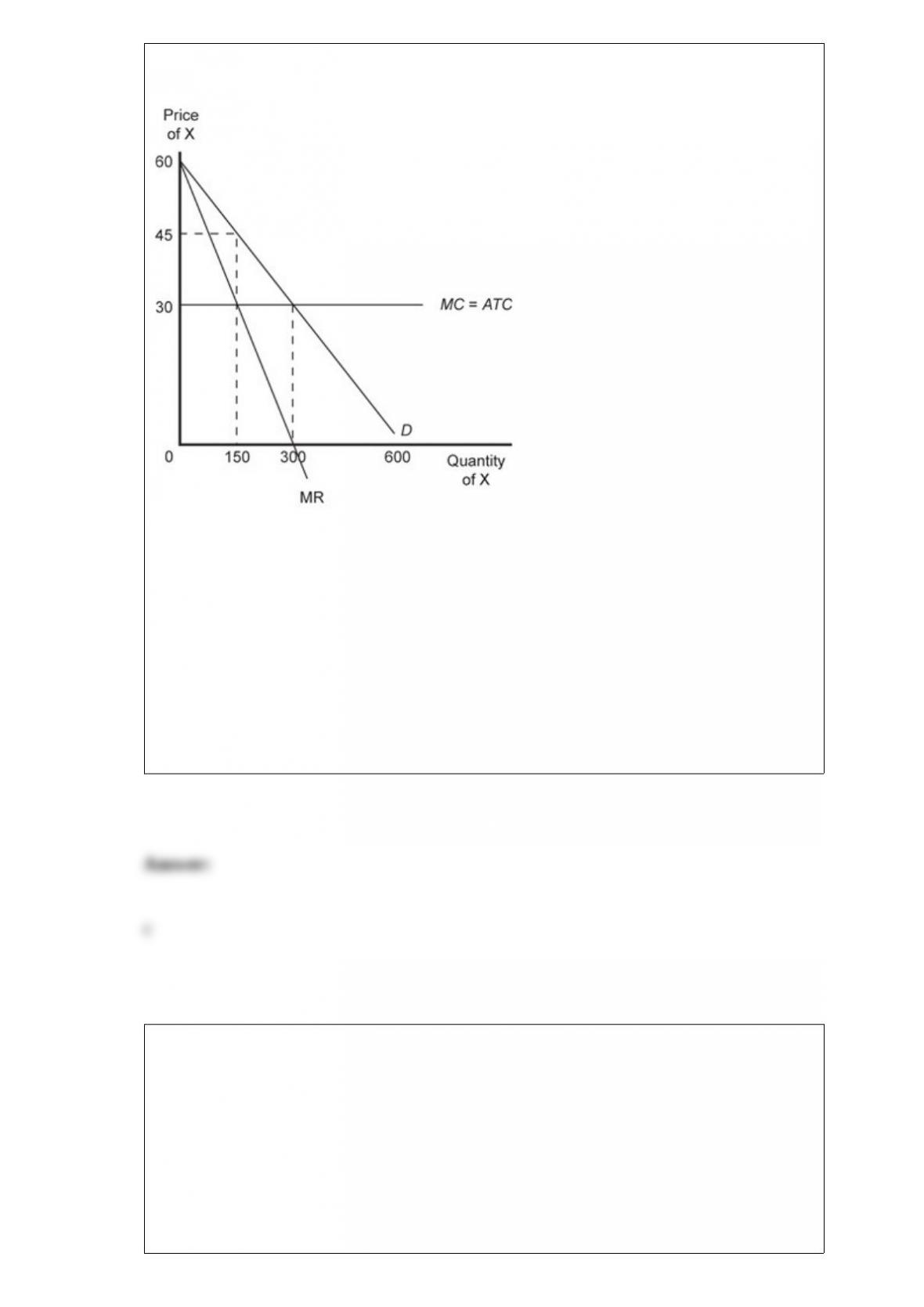
Exhibit 24-7
Let D be the demand curve facing a perfectly price-discriminating monopolist. The
lowest price this monopolist will charge is
a. $60.
b. $45.
c. $30.
d. $0.
A public good is
a. a good that government provides to the public, such as roads, education, etc.
b. a good that is consumed in public, such as at a restaurant or ball park.
c. a good that if consumed by one person can be consumed by other persons to the same
degree and the consumption of which cannot be denied to anyone.

d. a good that benefits the public more than it costs the public.
e. none of the above
Let X be the number of hours you spend studying for an exam on Wednesday afternoon
and Y be your chances of winning the Wednesday night state lottery. What kind of a
relationship do you most likely expect between X and Y?
a. direct
b. inverse
c. linear
d. 45-degree line
e. independent
A firm that is the sole buyer in a factor market is known as a
a. monopolist.
b. public employee union.
c. monopsonist.
d. perfect competitor.

Several years ago, a bookstore chain extended its closing time from 9 p.m. to 10 p.m.
Now it is considering a further extension to 11 p.m. In making this marginal decision,
the results of having gone from 9 p.m. to 10 p.m. are
a. no longer relevant to the current decision.
b. relevant if the marginal costs and benefits were unequal.
c. relevant since they are part of the calculation of total costs and benefits.
d. relevant if the marginal costs and benefits were equal.
The longer the period of time allowed for the ___________ of a good to adjust to a
change in the price of the good, the ___________ the price elasticity of supply will
be.This statement assumes that the quantity supplied __________ be altered with time.
a. producer; higher; can
b. consumer; higher; can
c. producer; lower; can
d. producer; lower; cannot
Why do societies need rationing devices?
a. Because people have too many needs and not enough wants.
b. Because price exists.
c. Because scarcity exists.
d. Because people have opportunity costs.
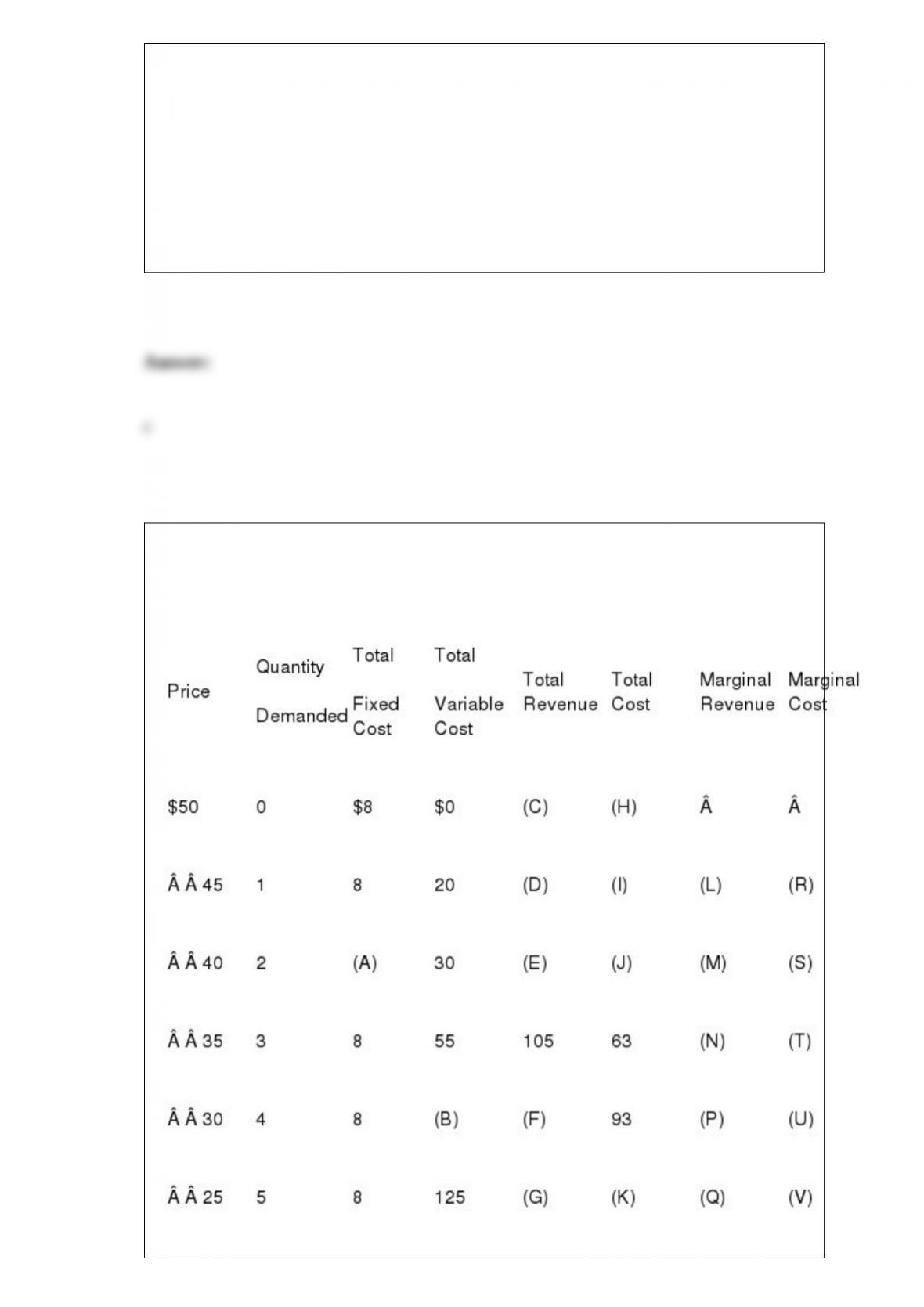
Exhibit 24-4

What dollar amounts go in blanks (F), (G), (H), (I), and (J), respectively?
a. $120; $125; $8; $28; and $38
b. $9; $70; $50; $30; and $10
c. $250; $15; $10; $30; and $50
d. $100; $90; $8; $28; and $48
If the minimum wage is set above the equilibrium wage, then
a. more people will work than at the equilibrium wage.
b. the same number of people will work as at the equilibrium wage.
c. fewer people will want to work than at the equilibrium wage.
d. there will be fewer labor hours purchased by employers than at the equilibrium wage.
e. none of the above
Exhibit 25-3
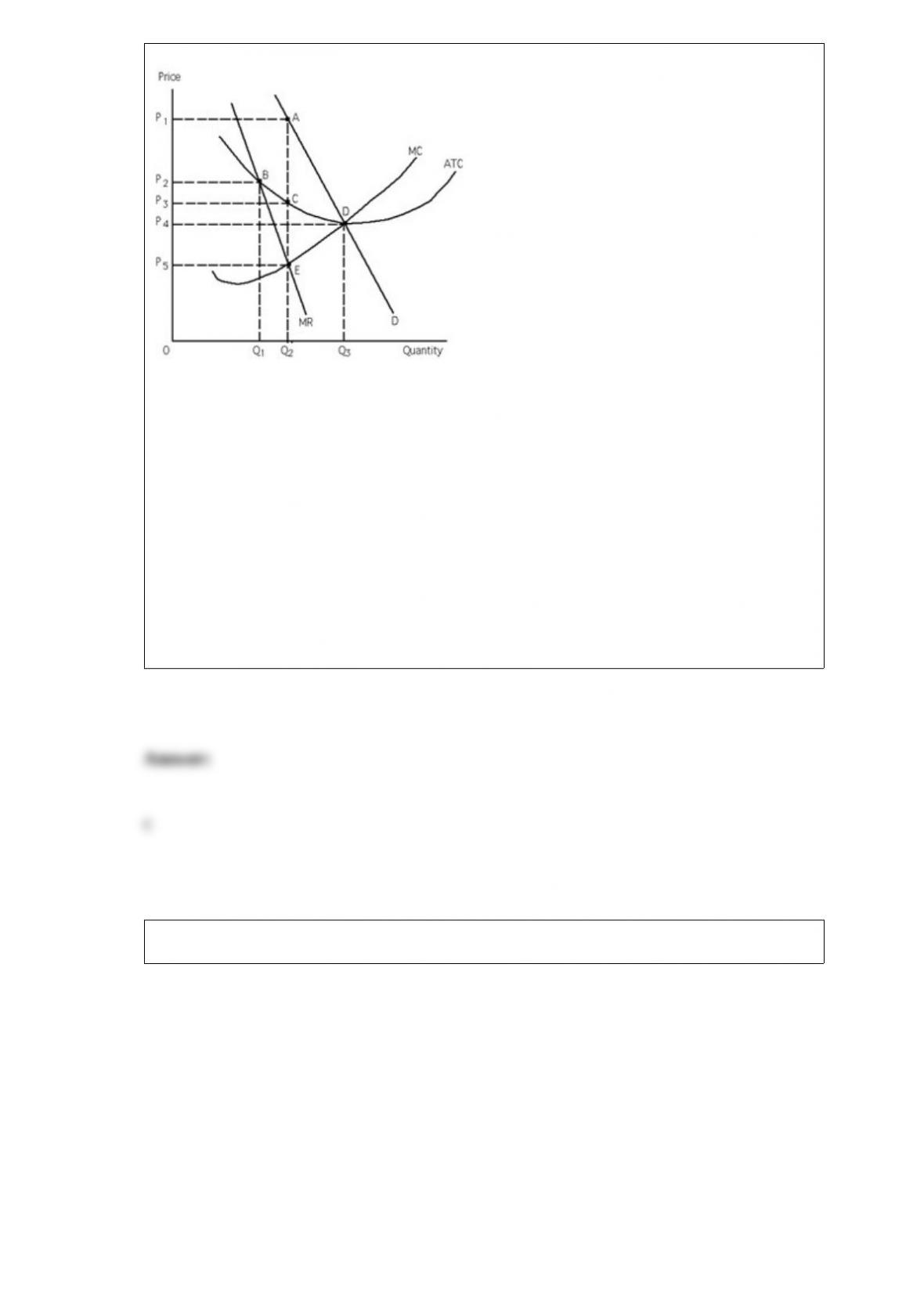
What level of output is productively efficient?
a. Q1
b. Q2
c. Q3
d. It is not labeled on the diagram.
e. It is not determinable without more information.
Exhibit 24-10
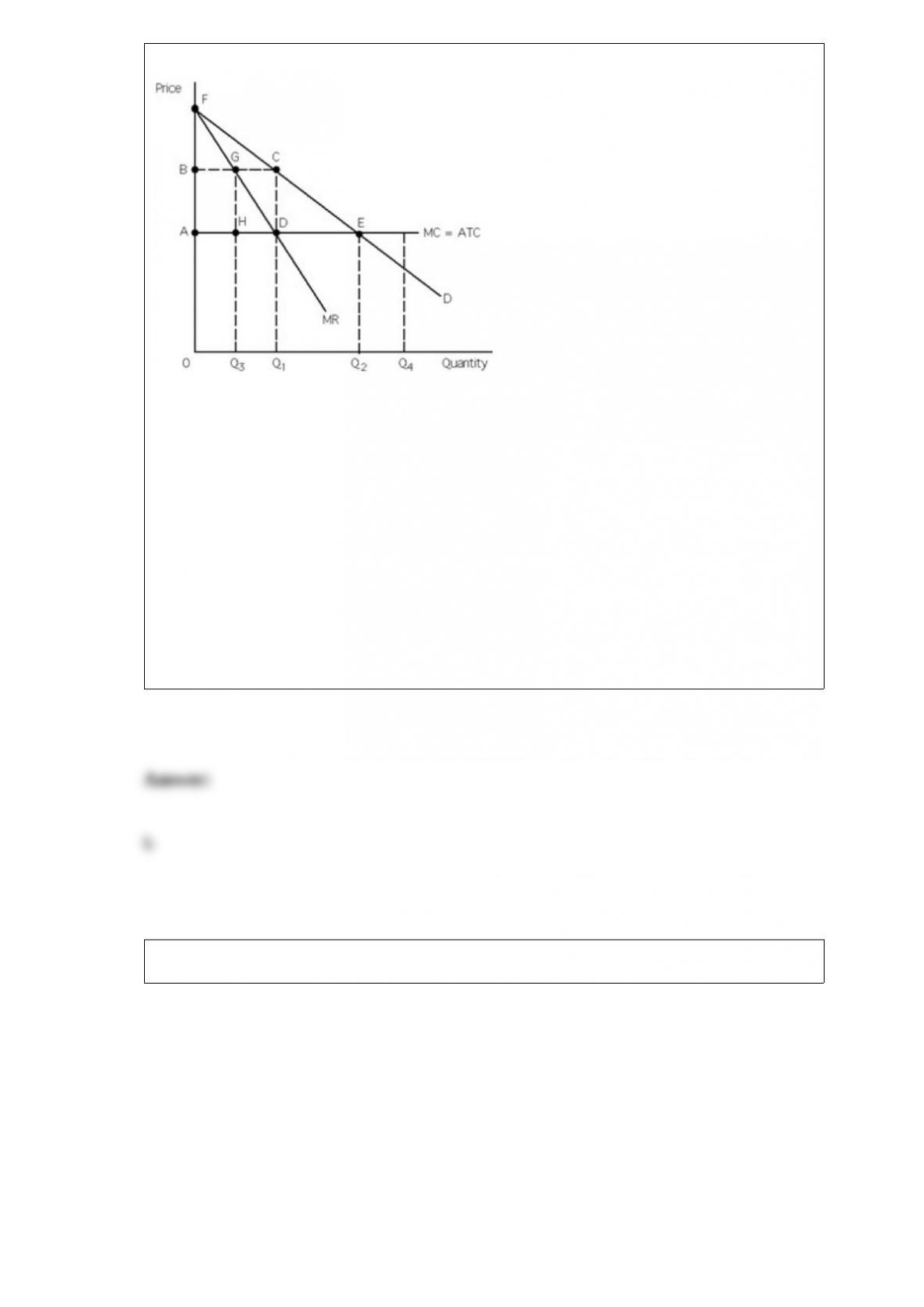
The profit-maximizing single-price monopolist will produce which quantity of output?
a. Q2
b. Q1
c. Q3
d. Q4
e. none of the above
Exhibit 24-10
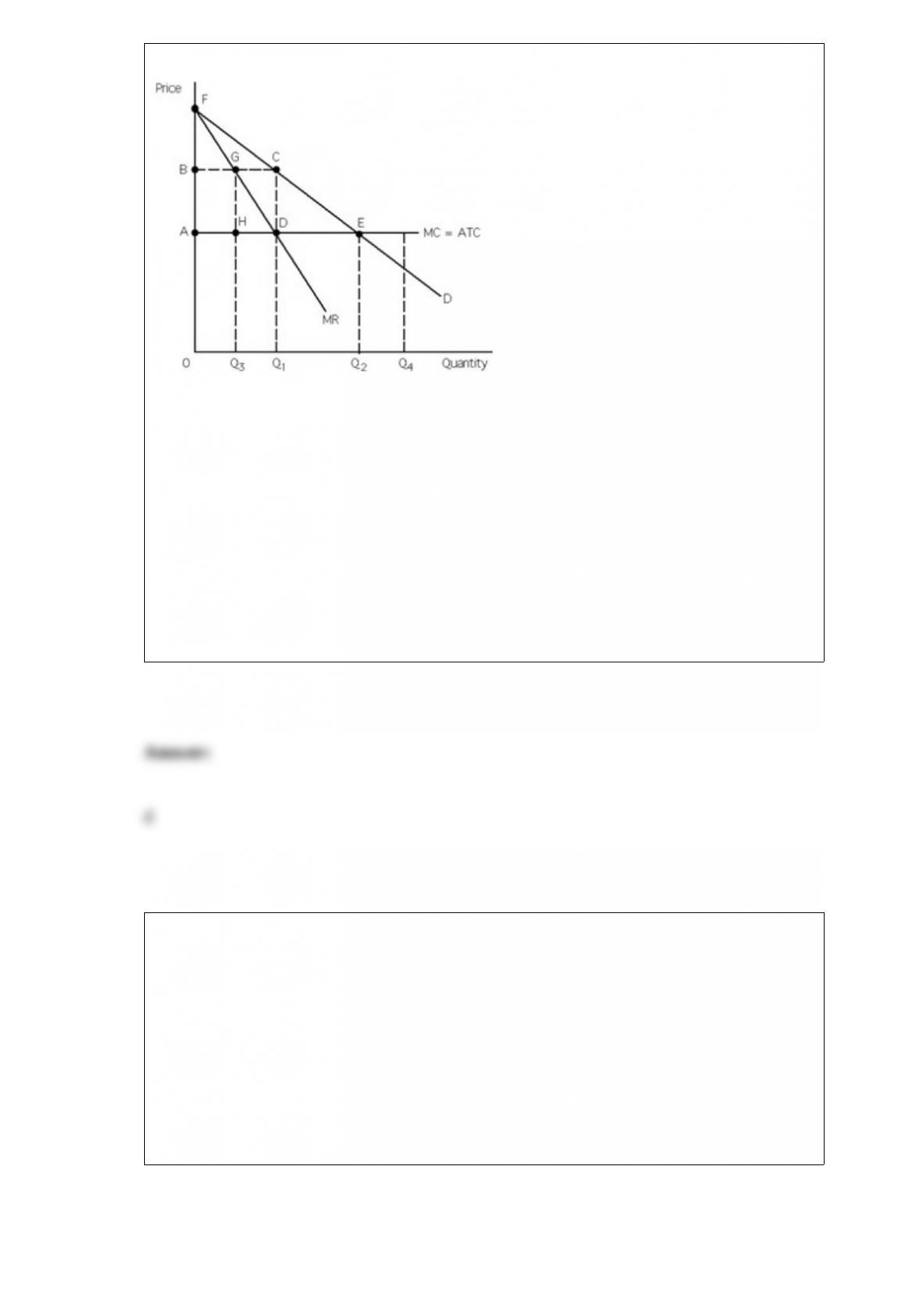
The profit-maximizing single-price monopolist earns profits equal to what area?
a. ABGH
b. HGCD
c. DCE
d. ABCD
e. GFC
The nonmoney benefits a person may receive in a job are sometimes referred to by
economists as
a. nonpayment benefits.
b. pecuniary benefits.
c. nonpecuniary benefits.
d. internal payments.
Which of the following companies was part of the original Dow Jones Industrial
Average?
a. Chicago Gas Company
b. National Lead Company
c. General Motors Corp.
d. AT&T Inc.
e. a and b
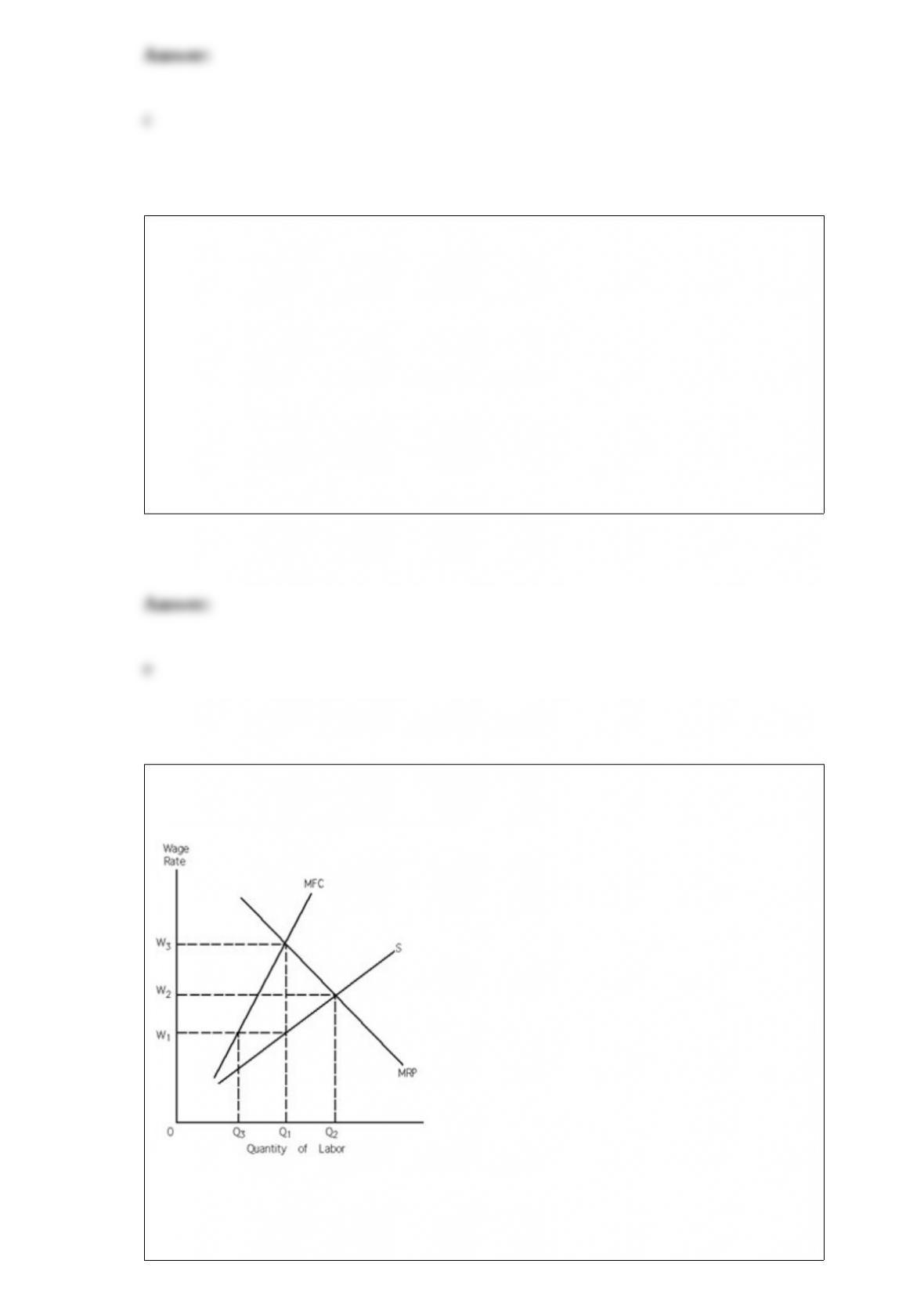
Exhibit 28-3
In the absence of collective bargaining, if the profit-maximizing monopsonist were to
pay workers what their services were worth to it, it would pay

a. W1.
b. W2.
c. W3.
d. some wage rate between W2 and W3.
Which of the following statements represents a correct and sequentially accurate
economic explanation?
a. Goods X and Y are substitutes. The price of X falls, the quantity demanded of X
rises, and the demand for Y rises.
b. Goods X and Y are substitutes. The price of X rises, the demand for X falls, and the
demand for Y rises.
c. Goods X and Y are substitutes. The price of X falls, the demand for X rises, and the
quantity demanded of Y rises.
d. Goods X and Y are substitutes. The price of X falls, the quantity demanded of X
rises, and the demand for Y falls.
e. Goods X and Y are complements. The price of X falls, the quantity demanded of X
rises, and the demand for Y falls.