Marginal analysis involves undertaking an activity
A) until its marginal costs start declining.
B) only when its marginal benefits are positive.
C) until its marginal benefits equal marginal costs.
D) only if its marginal costs are greater than its marginal benefits.
If the price of gasoline was $3.25 a gallon and it is now $3.75 a gallon, what is the
percentage change in price?
A) 7.1 percent
B) 13.3 percent
C) 15.4 percent
D) 33.3 percent
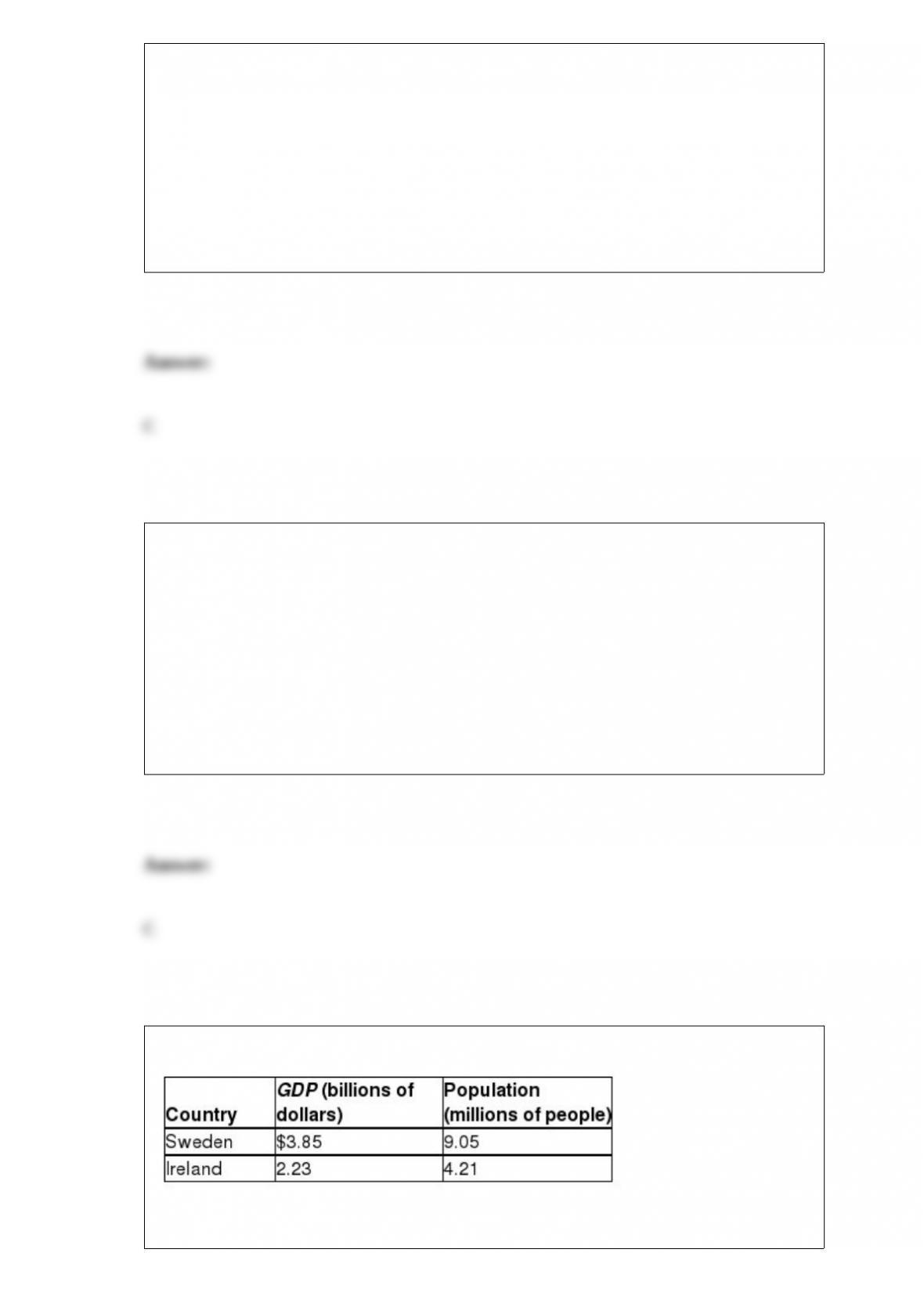
Table 22-1
Based on the table above, which country has a higher standard of living and why?

A) Sweden has a higher standard of living because their GDP is higher.
B) Ireland has a higher standard of living because their GDP per capita is higher.
C) Sweden has a higher standard of living because their GDP per capita is higher.
D) Ireland has a higher standard of living because growth in GDP is greater in Ireland
than in Sweden.
The ________ the reserve ratio, the ________ the money multiplier.
A) smaller; smaller
B) smaller; larger
C) larger; larger
D) None of the above are correct.
Fiat money
A) has no or very little value except as money.
B) is rarely used in modern economies.
C) functions well only if can be redeemed for gold or other precious metals.
D) serves well as a medium of exchange, but not as a store of value.
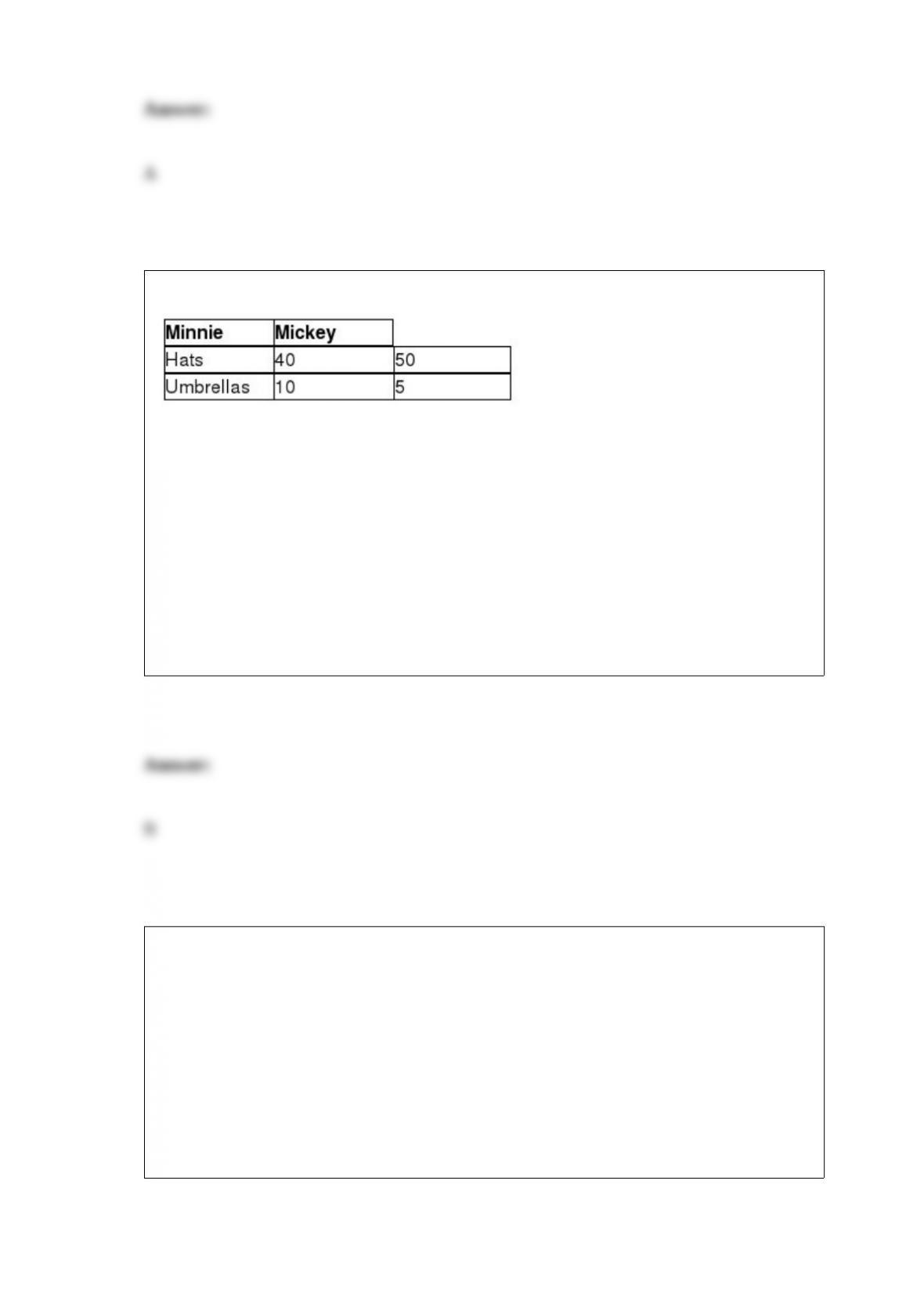
Table 2-18
Table 2-18 shows the output per week of two people, Minnie and Mickey. They can
either devote their time to making hats or making umbrellas. What is Minnie’s
opportunity cost of making a hat?
A) 1/5 of an umbrella
B) 1/4 of an umbrella
C) 4 umbrellas
D) 10 umbrellas
If, in response to an increase in the price of pineapples, the quantity demanded of
pineapples decreases, economists would describe this as
A) an decrease in demand.
B) a decrease in quantity demanded.
C) a change in consumer income.
D) a decrease in consumers’ taste for coffee.

The “tragedy of the commons” refers to the phenomenon where
A) individuals are free riders.
B) people overuse a common resource.
C) people do not internalize an externality.
D) there is rivalry in consumption.
Which of the following would be most likely to induce Congress and the president to
conduct contractionary fiscal policy? A significant
A) decrease in oil prices.
B) decrease in real GDP.
C) increase in inflation.
D) increase in labor productivity.
Scenario 10-1 Consider the following data for a closed economy: Y = $12 trillion
C = $8 trillion
I= $2 trillion
G = $2 trillion
TR = $2 trillion
T = $3 trillion
Based on the information above, what is the level of private saving in the economy?
A) $3 trillion
B) $4 trillion
C) $5 trillion
D) $8 trillion
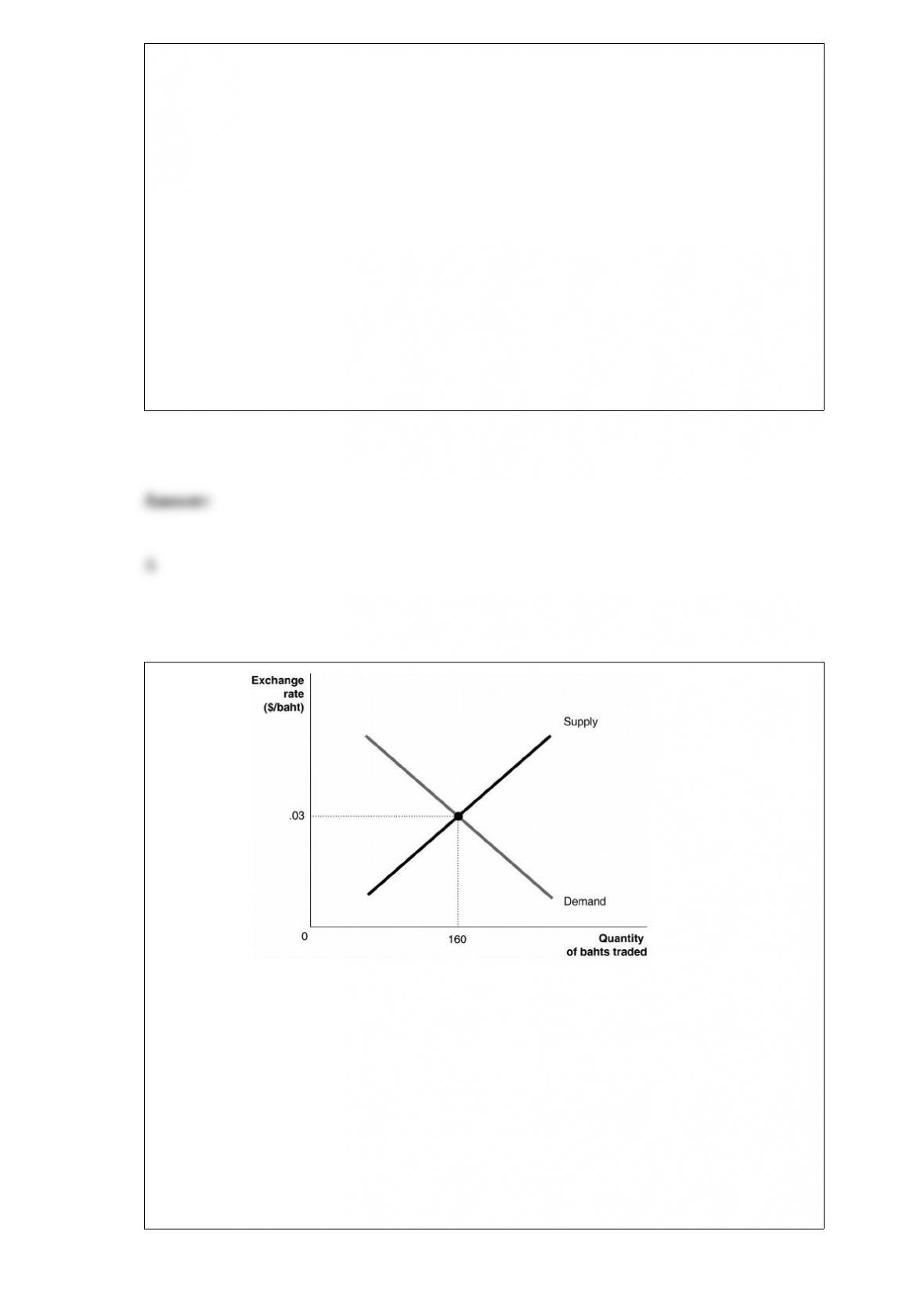
Figure 30-3
At what level should the Thai government peg its currency to the dollar to make Thai
exports cheaper to the United States?
A) greater than $.03/baht
B) less than $.03/baht
C) equal to $.03/baht
D) $1/baht

Suppose that you deposit $2,000 in your bank and the required reserve ratio is 10
percent. The maximum loan your bank can made as a direct result of your deposit is
A) $200.
B) $1,800.
C) $2,000.
D) $20,000.
In the long run, most economists agree that a permanent increase in government
spending leads to ________ crowding out of private spending.
A) no
B) partial
C) complete
D) more than complete
Which of the following is not an option for a perfectly competitive firm that suffers
short-run losses?
A) shutting down
B) reducing production
C) reducing the use of variable factors
D) raising price
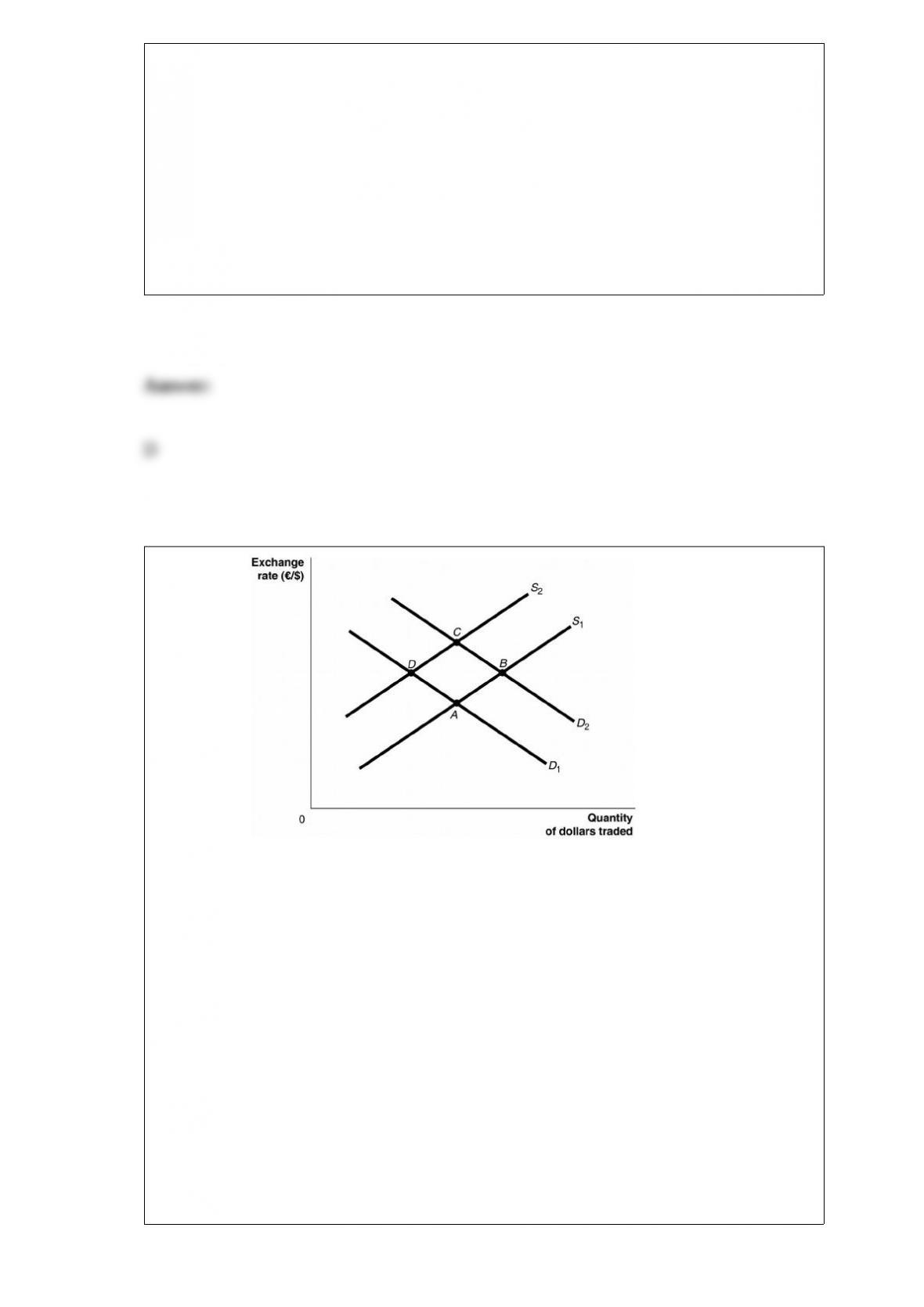
Figure 29-1
Suppose that the U.S. government deficit decreases, causing interest rates in the United
States to fall relative to those in the European Union. Assuming all else remains
constant, how would this be represented?
A) Supply would decrease, demand would decrease and the economy moves from B to
C to D.
B) Supply would increase, demand would decrease and the economy moves from C to
B to A.
C) Supply would decrease, demand would increase and the economy moves from A to
D to C.
D) Supply would increase, demand would increase and the economy moves from D to
A to B.

If the absolute value of the tax multiplier equals 1.6, real GDP is $13 trillion, and
potential real GDP is $13.4 trillion, then taxes would need to be cut by ________ to
restore the economy to potential real GDP.
A) $250 billion
B) $400 billion
C) $640 billion
D) None of the above are correct. Taxes should be increased in this case.