1) a debt buyback is a debt-reduction technique in which a government of a debtor
nation buys loans from commercial banks at a discount.
a.true
b.false
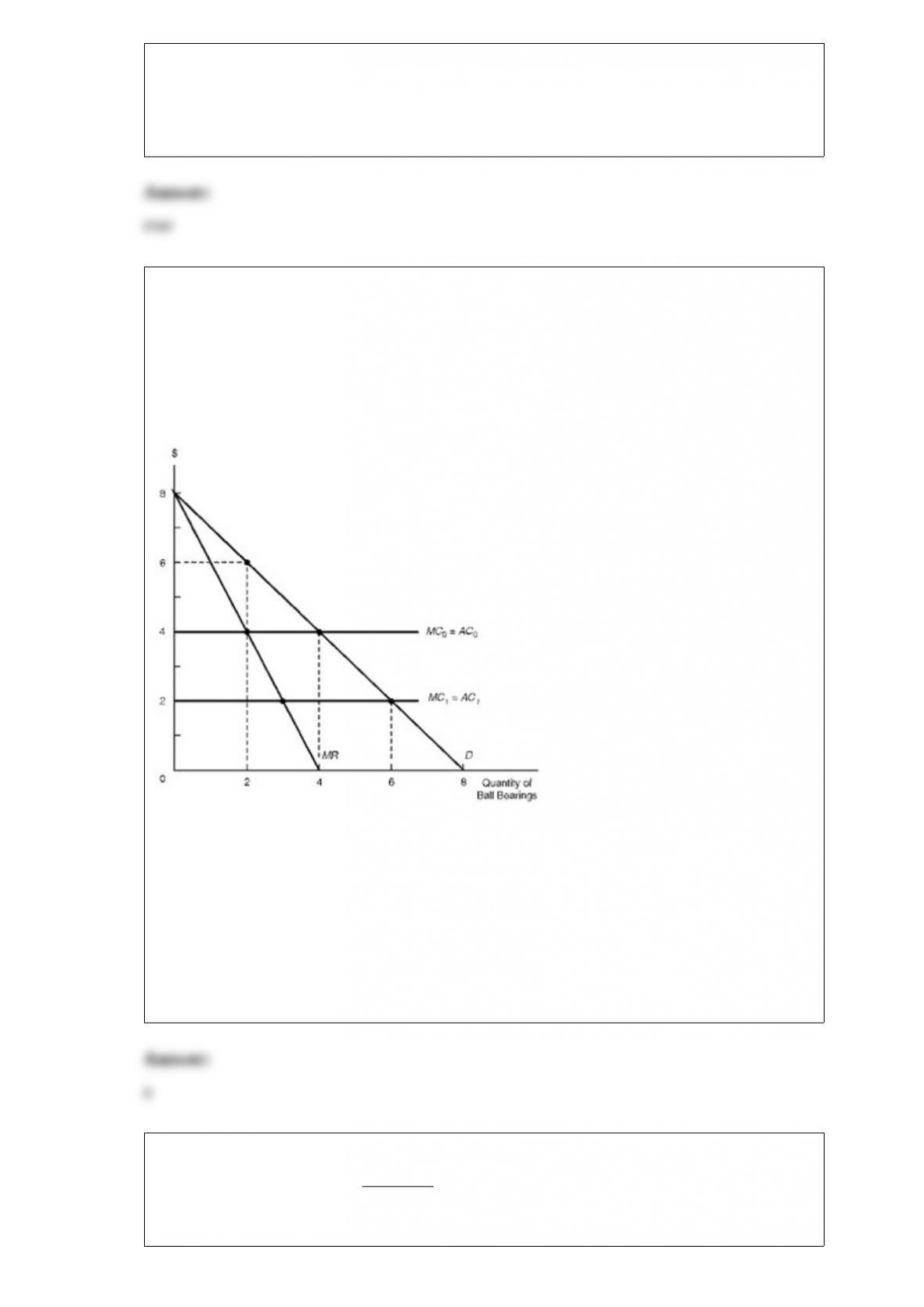
2) figure 9.1 illustrates the market conditions facing sony company and american
company initially operating as competitors in the domestic ball bearing market. each
firm realizes constant long-run costs, mc0=ac0.
figure 9.1. international joint venture
consider figure 9.1. suppose that sony company and american company jointly form a
new firm, venture company, whose ball bearings replace the output sold by the parents
in the domestic market. assuming that venture company operates as a monopoly and
that its costs equal mc0=ac0, the firm’s price, output, and total profit would respectively
equal:
a.$6, 2 units, $4
b.$4, 2 units, $2
c.$6, 4 units, $4
d.$4, 4 units, $2
3) given an initial equilibrium in the money market and foreign exchange market,
suppose the federal reserve decreases the money supply of the united states. under a
floating exchange rate system, the dollar would:
a.appreciate in value relative to other currencies
b.depreciate in value relative to other currencies
c.be officially devalued by the government
d.be officially revalued by the government
4) the imposition of tariffs on imports results in deadweight welfare losses for the home
economy. these losses consist of the:
a.protective effect plus consumption effect
b.redistribution effect plus revenue effect
c.revenue effect plus protective effect
d.consumption effect plus redistribution effect
5) with a fixed exchange rate system, internal balance is most effectively achieved by
using
a.expansionary monetary policy to combat recession
b.expansionary fiscal policy to combat inflation
c.contractionary monetary policy to combat recession
d.contractionary fiscal policy to combat recession
6) according to the theory of optimum currency areas, a currency area has the least
chance for success when:
a.countries of the currency area have differing business cycles
b.workers have a high degree of mobility across borders of the currency area
c.prices and wages can be adjusted in response to economic disturbances
d.a single monetary policy affects all member countries in the same manner
7) figure 13.2. australian economy under a fixed exchange rate system
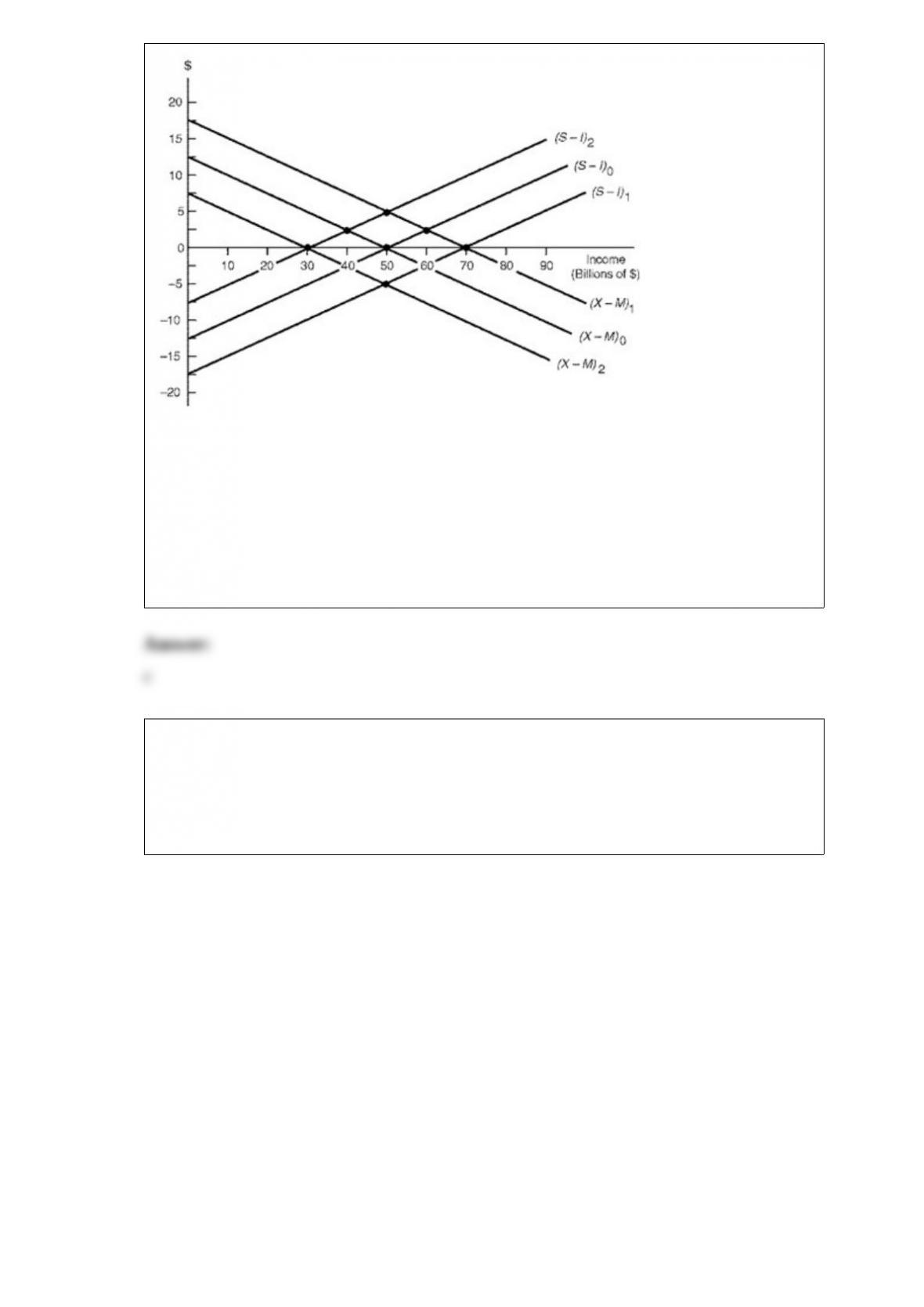
refer to figure 13.2. starting at equilibrium income $50 billion, where (s- i)0 intersects
(x-m)0, suppose that worsening economic conditions abroad lead to an autonomous
decrease in australian exports of $5 billion. australian income thus ____ which leads to
australia’s trade account moving to a ____.
a.rises to $60 billion, surplus of $2.5 billion
b.rises to $60 billion, surplus of $5 billion
c.falls to $40 billion, deficit of $2.5 billion
d.falls to $40 billion, deficit of $5 billion
8) figure 4.1 illustrates the demand and supply schedules for pocket calculators in
mexico, a ‘small” nation that is unable to affect the world price.
figure 4.1. import tariff levied by a ‘small” country
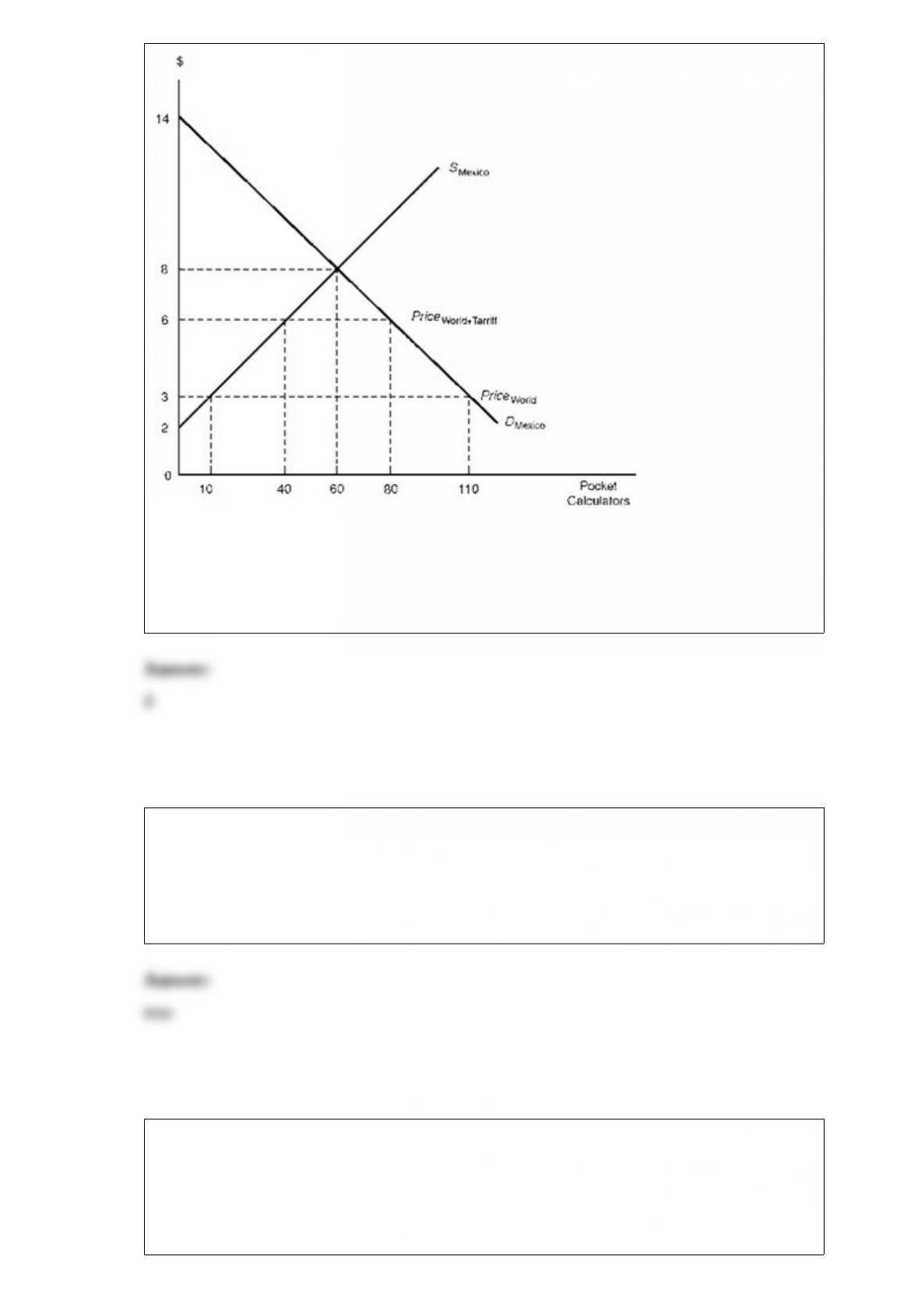
consider figure 4.1. with free trade, mexico imports:
a.40 calculators
b.60 calculators
c.80 calculators
d.100 calculators
9) a tariff can increase the welfare of a “large” levying country if the favorable
terms-of-trade effect more than offsets the unfavorable protective effect and
consumption effect.
a.true
b.false
10) under u.s. commercial policy, the escape clause results in:
a.temporary quotas granted to firms injured by import competition
b.tariffs that offset export subsidies granted to foreign producers
c.tax advantages extended to minority-owned exporting firms
d.duties which offset commercial dumping on the part of foreign firms
11) economic sanctions are most effective in causing the target nation to modify its
behavior when the:
a.target nation had negligible economic relationships with the imposing nation prior to
the sanctions
b.people of the target nation have weak cultural ties to the people of the imposing
nation
c.sanctions are levied by a large number of nations
d.target government is supported by the majority of its people
12) if the japanese yen depreciates against other currencies in the exchange markets,
this will:
a.have no effect on the japanese balance of trade
b.tend to worsen the japanese balance of trade
c.tend to improve the japanese balance of trade
d.none of the above
13) the bid rate refers to the price at which a bank is willing to sell a unit of foreign
currency; the offer rate is the price at which a bank is willing to buy a unit of foreign
currency.
a.true
b.false
14) which exchange-rate mechanism is intended to insulate the balance of payments
from short-term capital movements while providing exchange rate stability for
commercial transactions?
a.dual exchange rates
b.managed floating exchange rates
c.adjustable pegged exchange rates
d.crawling pegged exchange rates

15) forming a free-trade agreement with the united states provided canadian producers a
danger and an opportunity. the danger was that u.s. producers might be more price
competitive than canadian producers; the opportunity was that longer production runs
for canadian producers, made possible by a free-trade agreement, would result in cost
reductions due to economies of scale.
a.true
b.false