Globalization and advances in information technology are primary reasons why supply
chain management has become a competitive priority for companies.
The most widely used decision-making criterion for situations with risk is expected
value.
The basic objective of the facility layout decision is to ensure a smooth flow of
inventory through the system.
As the level of service improves in a waiting line system the cost of service usually
increases.
Almost all consumer products consist of some combination of facilitating goods and
facilitating services.
General purpose machines are an example of flexible resources in lean production.
China has reshaped the way firms compete globally.
The house of quality, the most popular quality function deployment (QFD) matrix,
converts product design specifications into customer requirements.
The concept of cellular layouts was developed by a U.S. engineer in the 1920s.
A matrix is used to organize and display the information generated by the MRP process.
_____________ is what the firm does better than anyone else.
a. Primary task
b. Core competency
c. Positioning
d. Deploying
With ________________, some of the manufacturing activities are moved into the
warehouse or distribution center.
a. postponement
b. vendor managed inventories
c. cross docking
d. None of these answer choices is correct.
American workers implementing lean prefer
a. the slow pace of continuous improvement.
b. the fast pace of kaizen blitzes.
c. to never participate.
d. to disrupt the process.
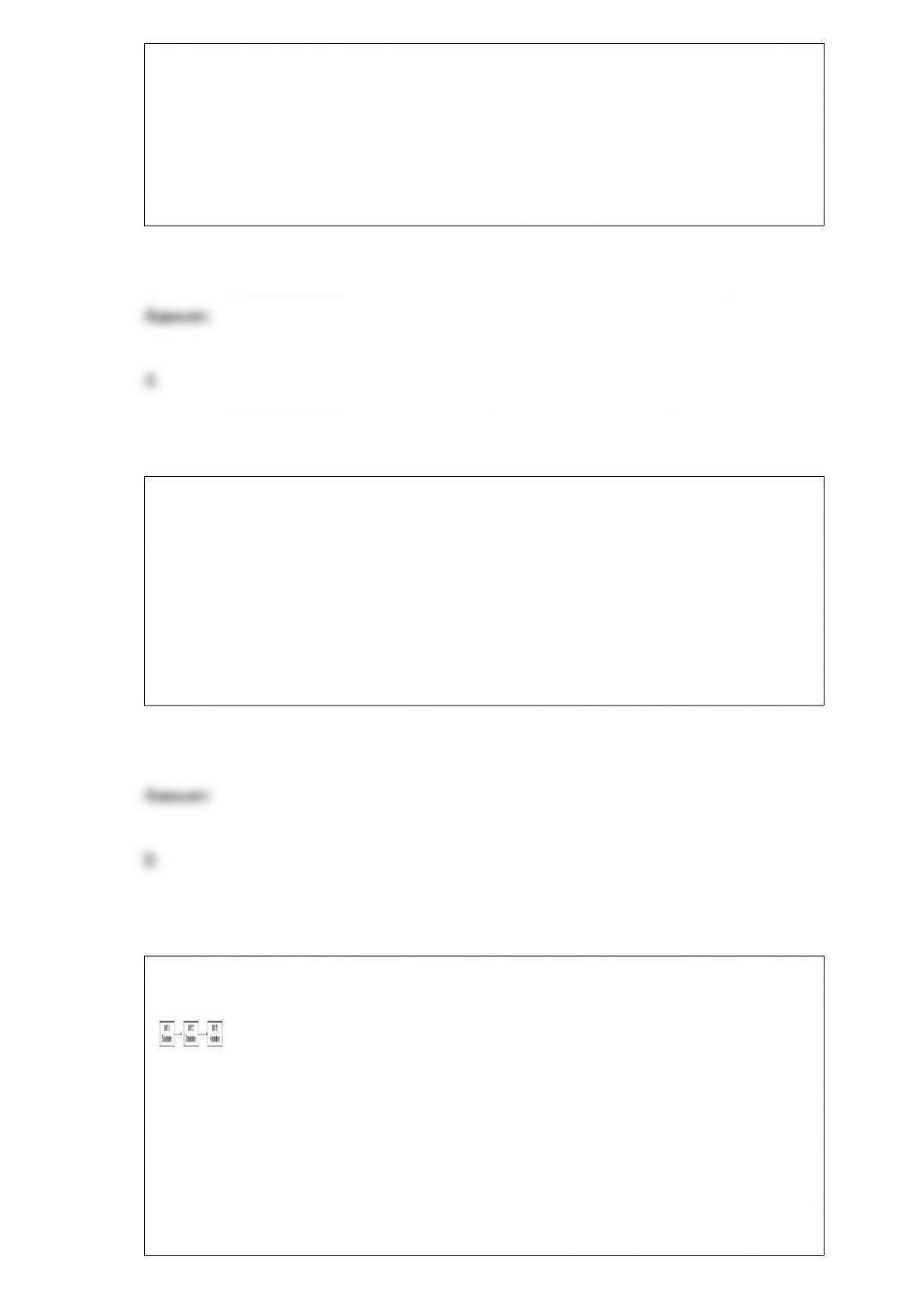
An assembly line consists of three workstations (WS) with each station’s activity time
as shown.
The flow time for items on this line would be
a. 5 minutes.
b. 3 minutes.
c. 4 minutes.
d. 12 minutes.
Which of the following is not a primary factor in location decisions for manufacturing
plants?
a. proximity to raw materials
b. proximity to customers
c. proximity to different modes of transportation
d. proximity to significant labor pools
The class of software, with libraries of algorithms and heuristics from which to choose,
has become known as
a. product life cycle (PLC).
b. genetic algorithms.
c. Advanced planning and scheduling (APS).
d. None of these answer choices is correct.
The ______________________ is the percent of demand held in reserve for unexpected
occurrences.
a. best operating level
b. capacity cushion
c. diseconomies of scale
d. economies of scale
In general, the latest finish time for an activity is equal to
a. latest finish time minus the activity time estimate.
b. the minimum of the latest start times for the activities that immediately follow.
c. the maximum of the latest start times for the activities that immediately follow.
d. the average of the latest start times for the activities that immediately follow.
For a quantity discount problem, the order quantity selected is the one that minimizes
the total annual _________ cost.
a. inventory
b. carrying
c. ordering
d. purchase
In general, as the number of servers in a waiting line system increases,
a. service cost increases and waiting cost decreases.
b. service cost decreases and waiting cost increases.
c. both service cost and waiting cost increase.
d. both service cost and waiting cost decrease.
_____________ is the characteristic of a product that wins the order in the marketplace.
a. Order winners
b. Order qualifiers
c. Core competency
d. Positioning
Which of the following is not typically considered an objective of scheduling?
a. minimizing job lateness
b. maximizing time in the system
c. minimizing overtime
d. maximizing machine utilization
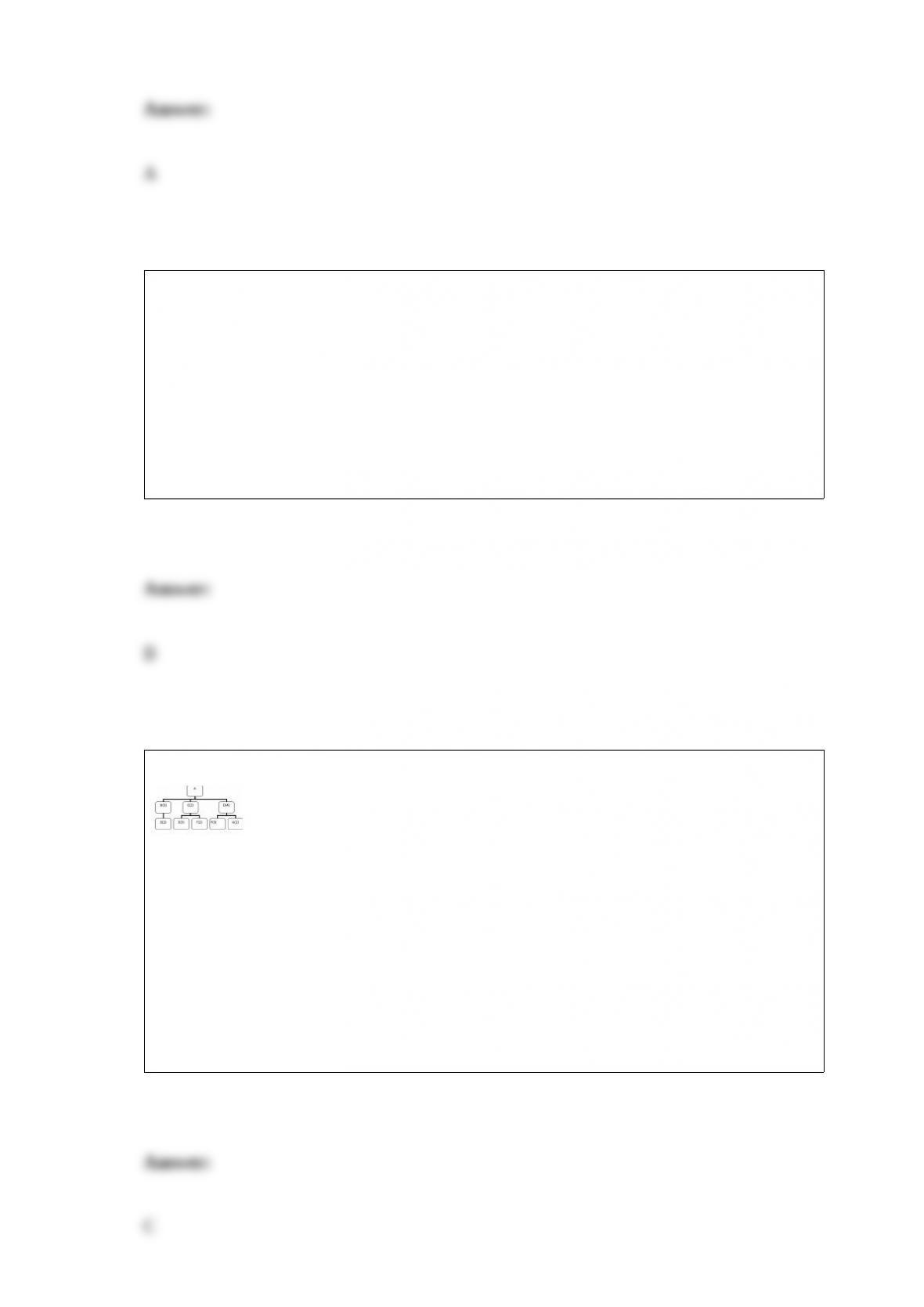
Given the following Product Structure Record
The number of E’s required for each A is
a. 3.
b. 6.
c. 12.
d. 24.
___________ demand items are used in the process of producing a final product.
a. Dependent
b. Independent
c. Seasonal
d. Cyclical
A service level of 95% means there is a 0.95 probability
a. of a stockout.
b. that supply will exceed demand.
c. that demand will be met during the lead time.
d. None of these answer choices is correct.
The most prevalent applications of lean include all the following except
a. retailing.
b. health care.
c. food services.
d. banking.