1) Independent unions:
A.have greater combined membership than the AFL-CIO.
B.are not affiliated with the AFL-CIO.
C.include the United Autoworkers and United Steelworkers.
D.have about the same combined membership as the AFL-CIO.
2) Consider the following situations. Explain how prices and output will adjust
according to the classical view of self-correction and the rational expectation theory.
(a)Development of a new microchip improves computer efficiency and causes a boom
in investment in the technology.
(b)Congress approves a large tax rate increase for personal taxes. Consumers expect
prices to decline as a result.
(c)A recent political conflict causes a rise in anti-American sentiment and demand for
U.S. goods abroad declines.
3) Suppose the domestic price (no-international-trade price) of wheat is $3.50 a bushel
in the United States while the world price is $4.00 a bushel. Assuming no transportation
costs, the United States will:
A.have a domestic shortage of wheat.
B.export wheat.
C.import wheat.
D.neither export nor import wheat.
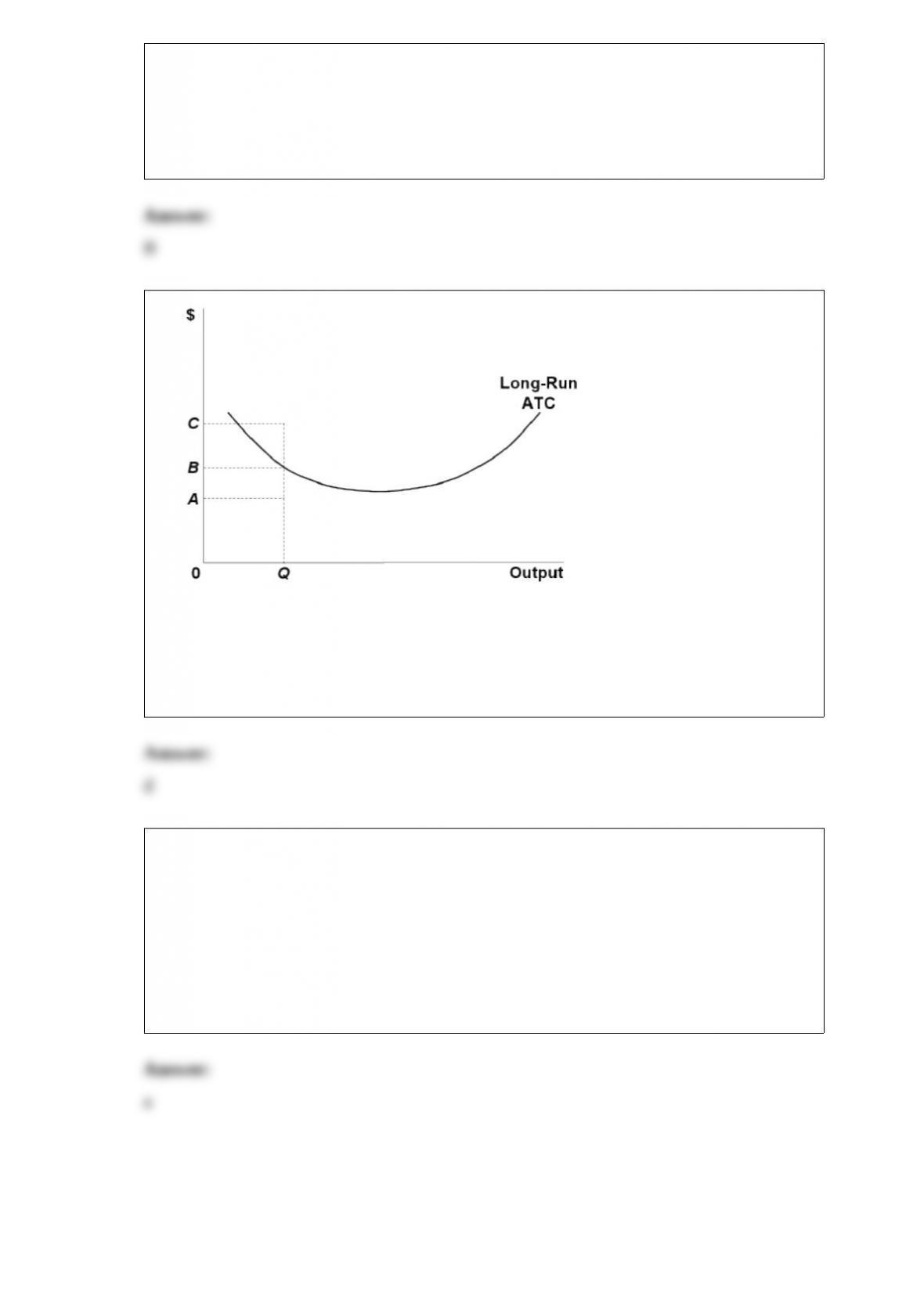
4)
refer to the above diagram. for output level q, per unit costs of b are:
a.unattainable and imply the inefficient use of resources.
b.unattainable, given resource prices and the current state of technology.
c.attainable, but imply the inefficient use of resources.
d.attainable and imply least-cost production of this level of output.
5) (last word) “z visas” in the proposed immigration reform of 2007:
a.would have allowed nearly 12 million illegal immigrants to live and work legally in
the united states.
b.are required of all new immigrants to the united states.
c.are issued to refugees and those seeking political asylum, allowing immigration
quotas to be exceeded.
d. would have been issued primarily to guest workers seeking short-term employment
in the united states.
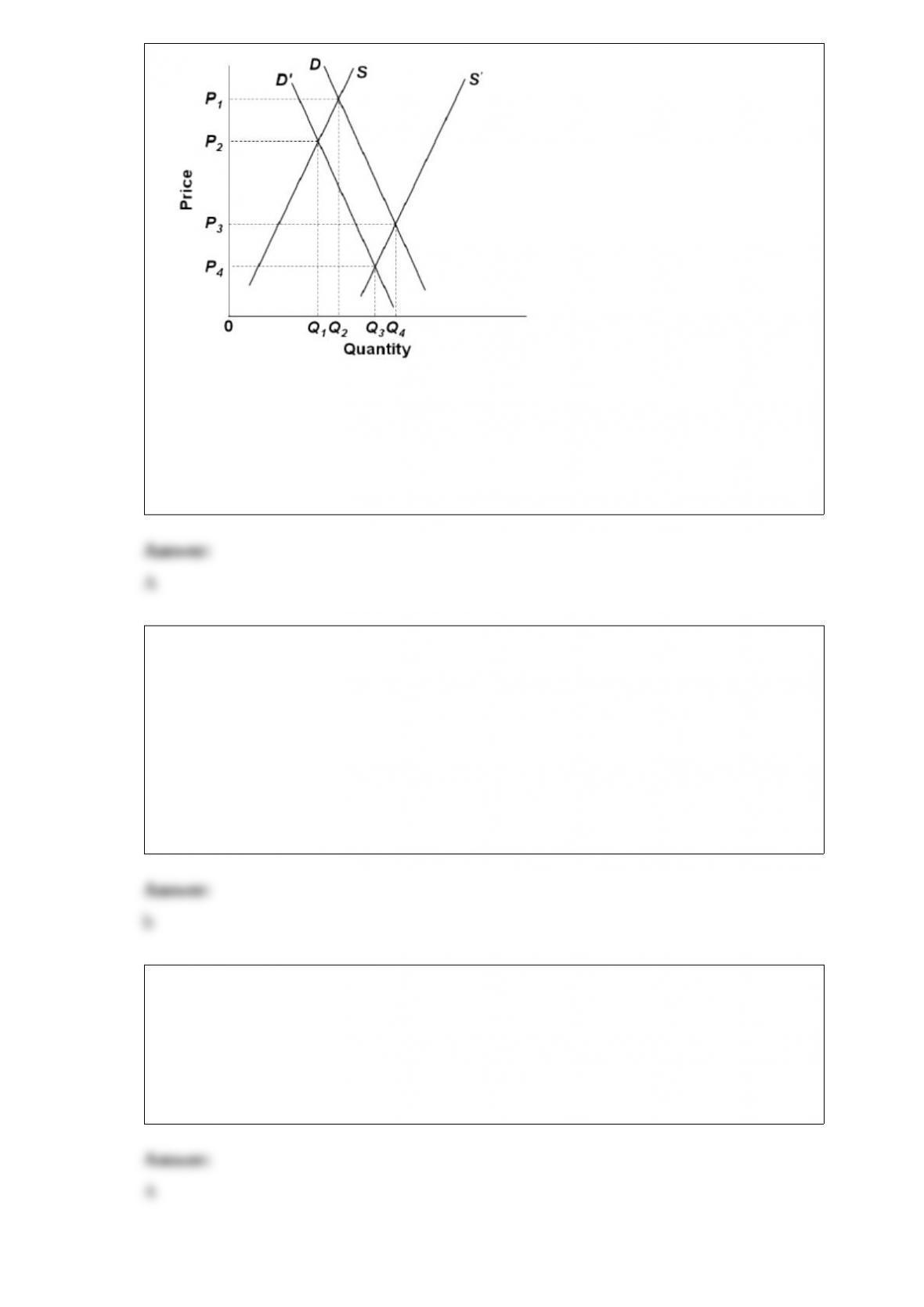
6)
The problem faced by farms in the long run as portrayed in the above diagram would
involve price and quantity changes from:
A.P2 to P3 and Q1 to Q4.
B.P1 to P4 and Q1 to Q4.
C.P2 to P1 and Q1 to Q2.
D.P4 to P1 and Q4 to Q1.
7) which of the following formulas is correct? percentage change in:
a.price level approximates percentage change in real income minus percentage change
in nominal income.
b.real income approximates percentage change in nominal income minus percentage
change in price level.
c.nominal income approximates percentage change in price level minus percentage
change in real income.
d.real income approximates percentage change in price level minus percentage change
in nominal income.
8) The marginal revenue product (MRP) of land declines as more land is brought into
use. As a result the:
A.demand curve for land is downsloping.
B.demand curve for land is upsloping.
C.supply curve for land is downsloping.
D.supply curve for land is upsloping.
9) (Last Word) The U.S. sugar program:
A.decreases the domestic price of sugar.
B.requires import quotas or tariffs on foreign sugar.
C.increases the export earnings of other sugar-producing countries.
D.aids developing countries that produce sugar.
10) Rational expectations theory assumes that:
A.people behave rationally and that all product and resource prices are flexible both
upward and downward.
B.firms pay above-market wages to elicit work effort.
C.markets fail to coordinate the actions of households and businesses.
D.markets are dominated by monopolistic firms.
11) the slope of a budget line reflects the:
a.desirability of the two products.
b.price ratio of the two products.
c.amount of the consumer’s income.
d.utility ratio of the two products.
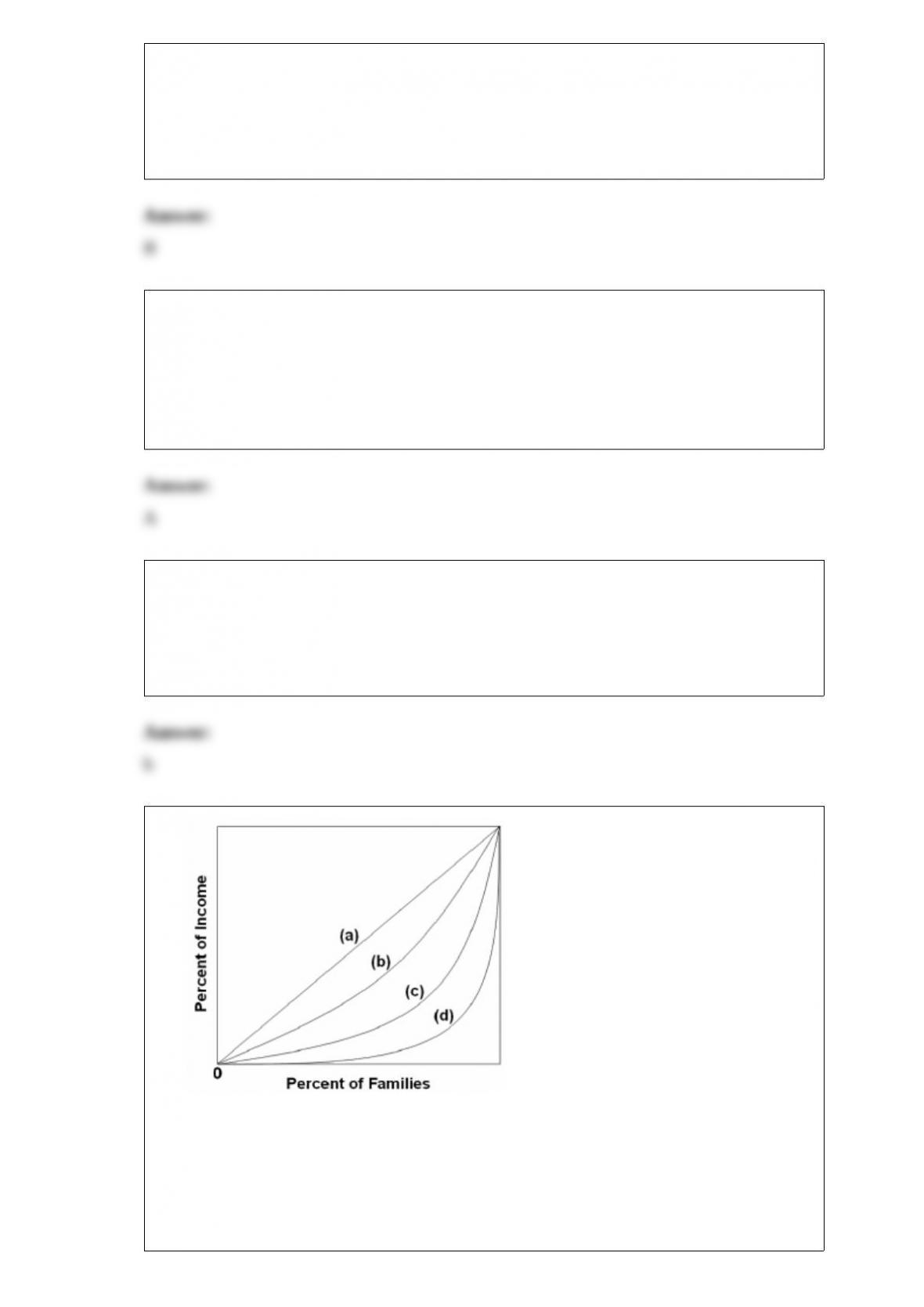
12)
Refer to the above diagram. If line b represents the pretax and transfer distribution of
income in the United States, we would expect the post-tax and transfer distribution to
be:
A.line a.
B.line b, because taxes and transfers have no effect on income distribution.
C.line c.

D.line d.
13) if competitive industry y is incurring substantial losses, output will:
a.expand as resources move toward industry y.
b.contract as resources move toward industry y.
c.contract as resources move away from industry y.
d.expand as resources move away from industry y.
14) In which of the following U.S. cities is one of the twelve Federal Reserve Banks
located?
A.Miami
B.New Orleans
C.San Francisco
D.Denver
15) A contraction of the money supply:
A.increases the interest rate and decreases aggregate demand.
B.increases both the interest rate and aggregate demand.
C.lowers the interest rate and increases aggregate demand.
D. lowers both the interest rate and aggregate demand.
16) the demand curve for a product might shift as the result of a change in:
a.consumer tastes.
b.consumer incomes.
c.the prices of related goods.
d.all of these.