
A monopolistically competitive firm can increase its profits beyond the long-run
equilibrium break-even level by deliberately lowering its price to force some of its
competitors out of the market.
The aggregate demand curve shows the relationship between the price level and the
level of planned aggregate expenditure in the economy.
Economists have not found a way to predict when recessions will begin and end.
A series of bank runs in a country should have no effect on M1 as money simply moves
from checking deposits to currency.

Long lags associated with the legislative process in implementing fiscal policy make it
more difficult to use than monetary policy.
A decrease in the price of inputs will cause the supply curve for a product to shift to the
right.
For a monopolistically competitive firm, price equals average revenue.
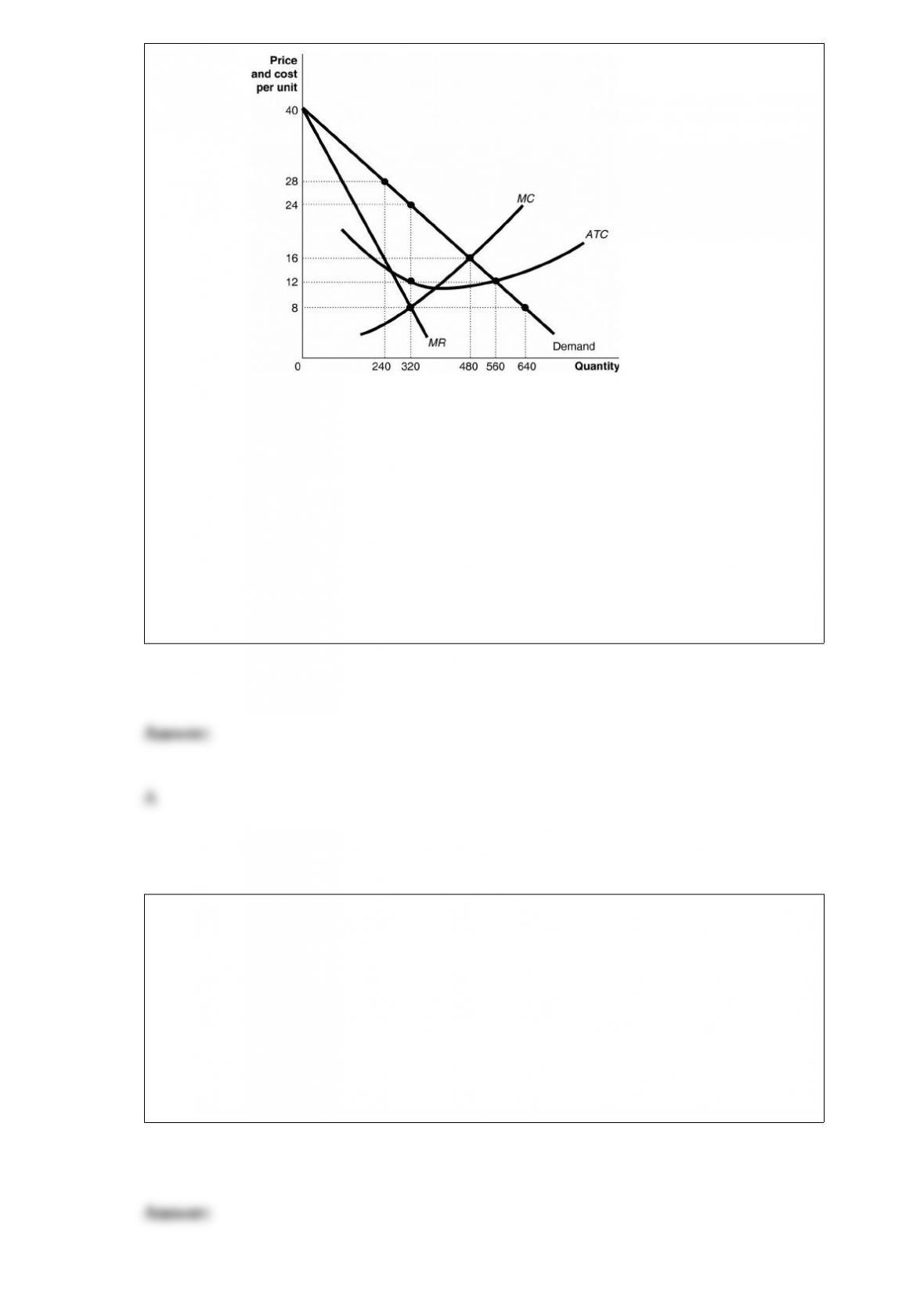
Figure 16-5
Suppose the firm represented in the diagram decides to practice perfect price
discrimination. What is the profit-maximizing price it will charge?
A) It should charge a range of prices from $40 to $16.
B) It should charge a range of prices from $40 to $12.
C) $2
D) $8
What takes place in the indirect finance market?
A) Part ownership of corporations is sold in the form of stocks.
B) Corporate and government bonds are sold to savers.
C) Deposits of savers are accepted and loans made to borrowers.
D) Government purchases of buildings and equipment are sold to the highest bidder.

High-income countries are also referred to as
A) developing countries.
B) industrial countries.
C) growing countries.
D) agrarian countries.
When the price of tortilla chips rose by 10 percent, the quantity of tortilla chips sold fell
4 percent, and the sale of dips (like salsa and bean dip) fell 8 percent. This set of facts
indicates that
A) the cross-price elasticity between tortilla chips and dips is 0.8, so the two are
substitutes.
B) the cross-price elasticity between tortilla chips and dips is -0.4, so the two are
complements.
C) the cross-price elasticity between tortilla chips and dips is -0.8, so the two are
complements.
D) the cross-price elasticity between tortilla chips and dips is 0.4, so the two are
substitutes.

A bank’s assets are
A) things owned by or owed to the bank.
B) things the bank owes to someone else.
C) a measure of the bank’s net worth.
D) always greater than the bank’s liabilities.
Suppose the marginal utilities for the first three cans of soda are 100, 80 and 60,
respectively. The total utility received from consuming 2 cans is
A) 20.
B) 80.
C) 90.
D) 180.
Until the early 1980s, The Walt Disney Company used a pricing strategy in which
visitors to its theme parks paid a low admission fee and also paid for rides. This pricing
strategy is an example of
A) perfect price discrimination.
B) cost-plus pricing.
C) a two-part tariff.

D) monopoly pricing.
In Porter’s Five Competitive Forces model, “competition from substitute goods or
services” refers to
A) substitute products that come from outside the industry.
B) substitute products that come from domestic competitors in the same industry.
C) substitute products that come from foreign competitors in the same industry.
D) competition from producers of substitutes who outsource their production.
A patent grants an inventor exclusive rights to a product for how long?
A) 14 years
B) 17 years
C) 20 years
D) the lifetime of the product

In an open economy, expansionary monetary policy will cause
A) consumption, investment, and net exports to rise.
B) consumption and investment to rise, but net exports will fall.
C) consumption to rise, but investment and net exports will fall.
D) consumption to fall, but investment and net exports will rise.
Commodity money is a good
A) used as money that has no secondary use.
B) that is designated as money by law.
C) used as money that also has value independent of its use as money.
D) used as money that has no intrinsic value.
According to new growth theory, the accumulation of ________ capital is subject to
diminishing returns at the ________ level, but not at the level of the economy as a
whole.
A) physical; firm
B) technological; personal
C) knowledge; firm
D) physical; production
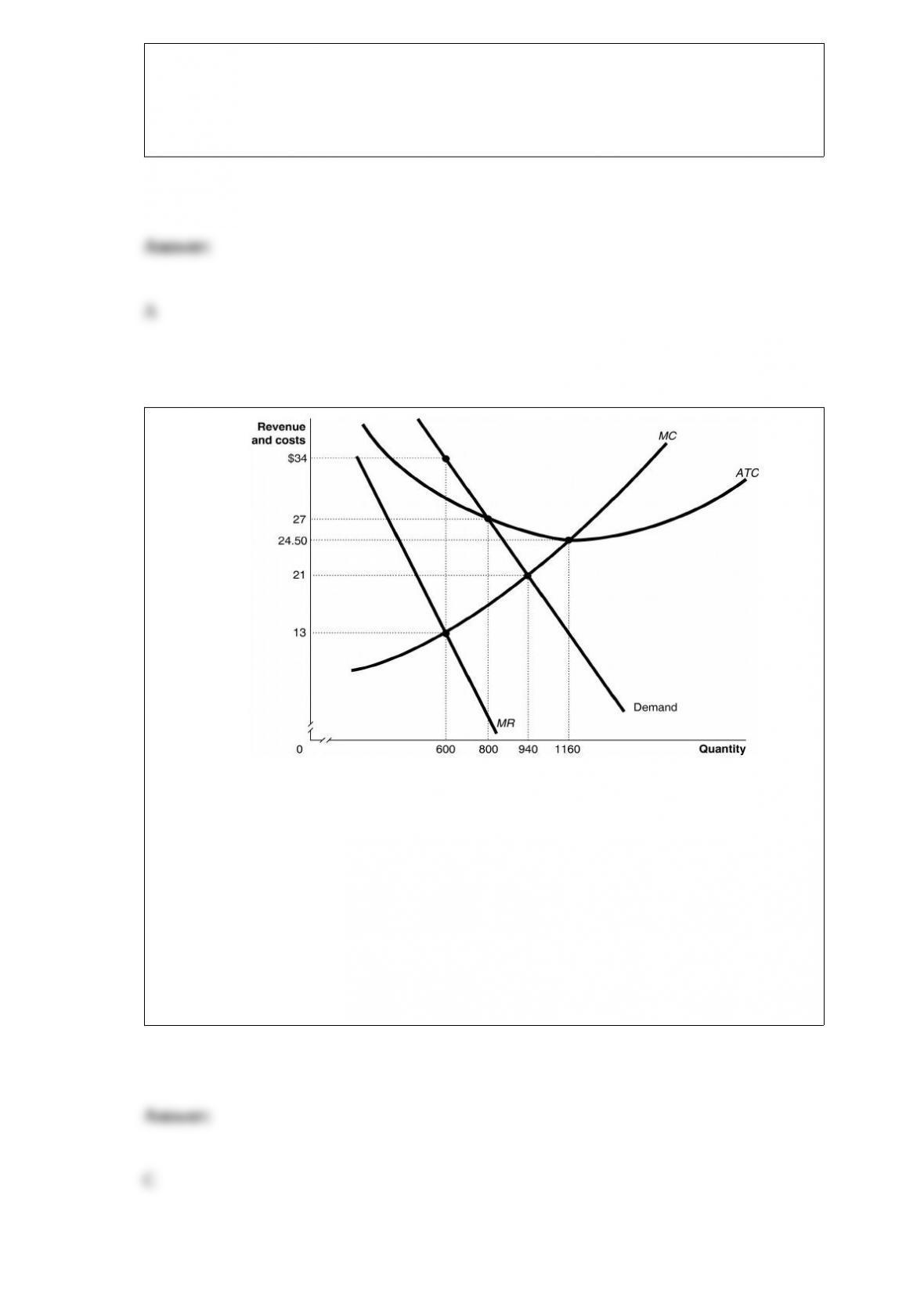
Figure 15-9
At the profit-maximizing quantity, what is the difference between the monopoly’s price
and the marginal cost of production?
A) $8
B) $11.50
C) $21
D) There is no difference.

Which of the following would not occur as a result of a monopolistically competitive
firm suffering a short-run economic loss?
A) The firm could exit the industry in the long run.
B) If the firm does not exit the industry in the long run its demand curve will shift to the
left.
C) If the firm does not exit the industry in the long run its demand curve will shift to the
right.
D) If the firm remains in the industry in the long run it will break even.
Because consumers who have insurance provided by their employers usually only pay a
deductible for a visit to the doctor’s office
A) employers have more incentive to allow employees time off for doctor visits.
B) doctors have less incentive to control their costs.
C) insurance companies have more incentive to approve medical procedures for their
policy holders.
D) consumers have less incentive to visit the doctor’s office on a more frequent basis.
Jeremy is thinking of starting up a small business selling NASCAR memorabilia. He is
considering setting up his business as a sole proprietorship. What is one advantage to
Jeremy of setting up his business as a sole proprietorship?
A) As a sole proprietor, Jeremy would face limited liability.

B) As a sole proprietor, Jeremy would have the ability to share risk with shareholders.
C) As a sole proprietor, Jeremy would have both ownership and control over the
business.
D) All of the above would be advantages of setting up his business as a sole
proprietorship.
The small group of East Asian countries that experienced high rates of growth in the
1980s and 1990s are referred to as
A) newly industrializing countries.
B) countries with low standards of living.
C) education-deprived countries.
D) industrial countries.
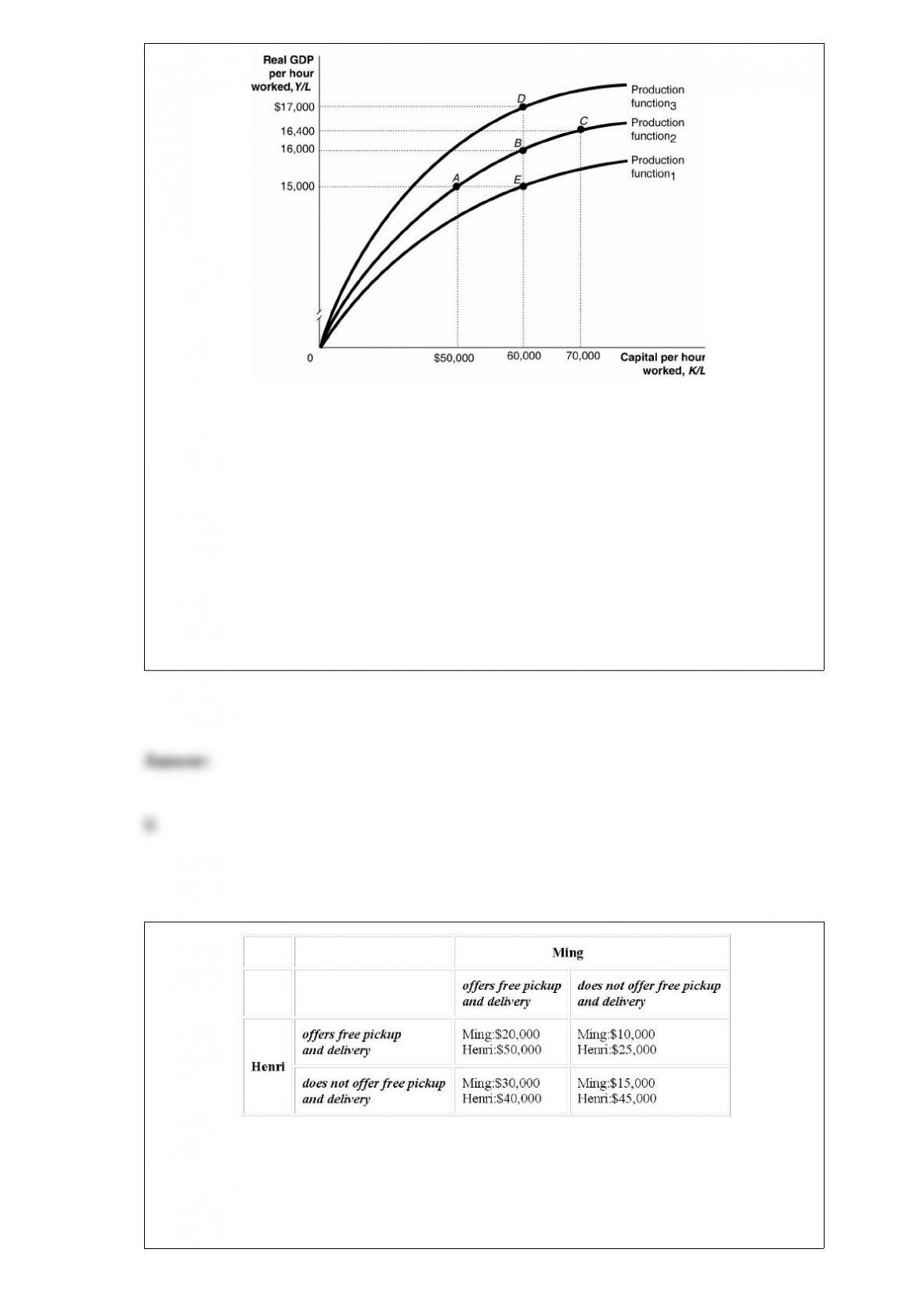
Figure 22-4
Suppose the per-worker production function in the figure above represents the
production function for the U.S. economy. If the United States decided to cut its support
of university research in half, this would cause a movement from
A) B to A.
B) B to E.
C) B to C.
D) B to D.
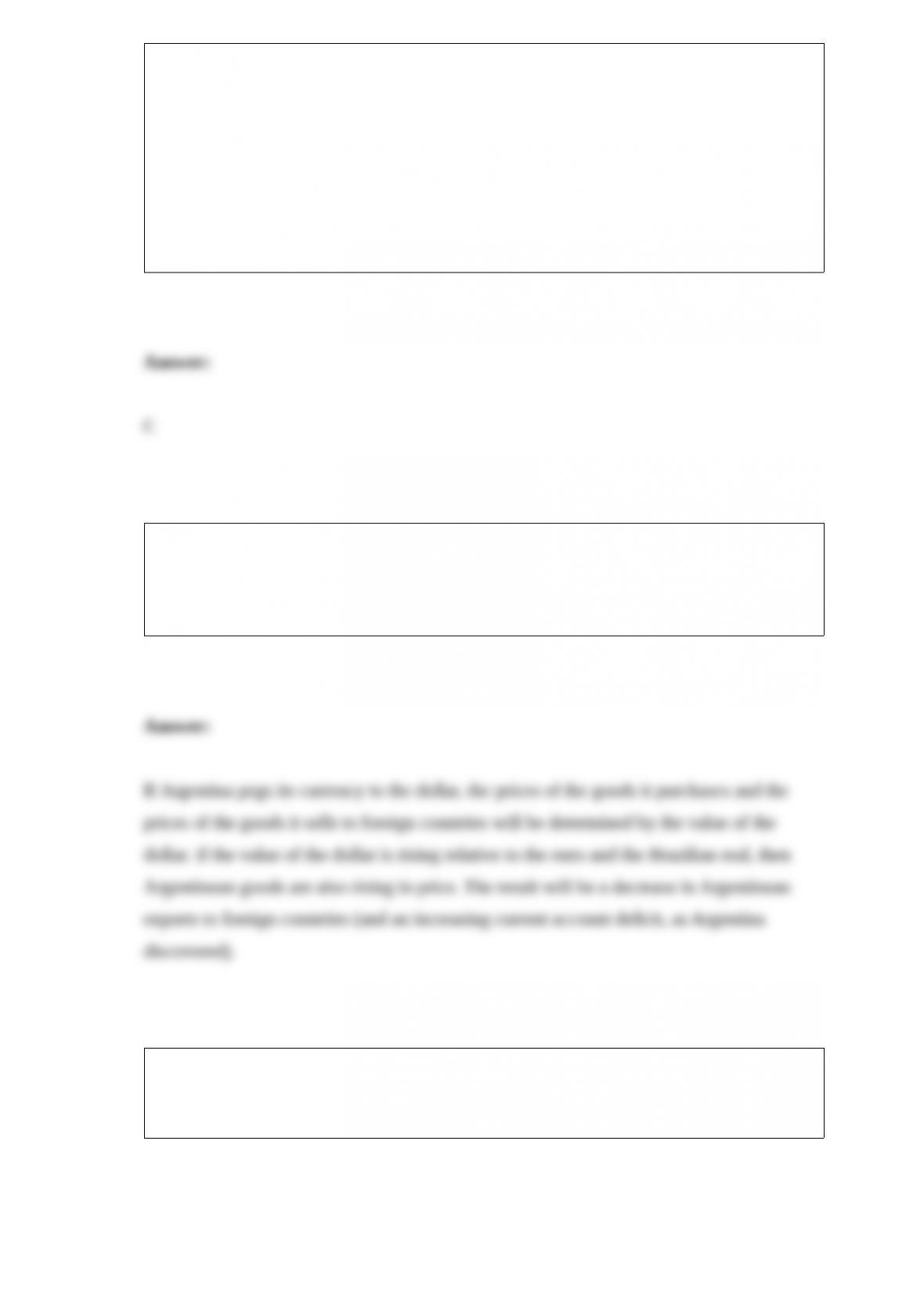
Table 14-5 Ming and
Henri each run one of the two dry cleaning facilities in the town of Scaraby. Both
consider offering free pickup and delivery services. Table 14-5 shows the payoff matrix
containing the expected quarterly profits for each firm.
Does Henri have a dominant strategy? If yes, what is it?
A) Yes, Henri’s dominant strategy is to not offer free pickup and delivery.
B) Yes, Henri’s dominant strategy is to offer free pickup and delivery.
C) No, Henri does not have a dominant strategy€his best outcome depends on what
Ming does.
D) Yes, Henri’s dominant strategy is to wait and see what Ming does first.
In 1991, Argentina decided to peg its currency (the Argentinean peso) to the U.S. dollar.
Most of Argentina’s trading, however, was with Brazil and Europe, not the United
States. What result would pegging the Argentinean peso to the U.S. dollar have on the
cost of imports from and exports to Brazil and Europe?
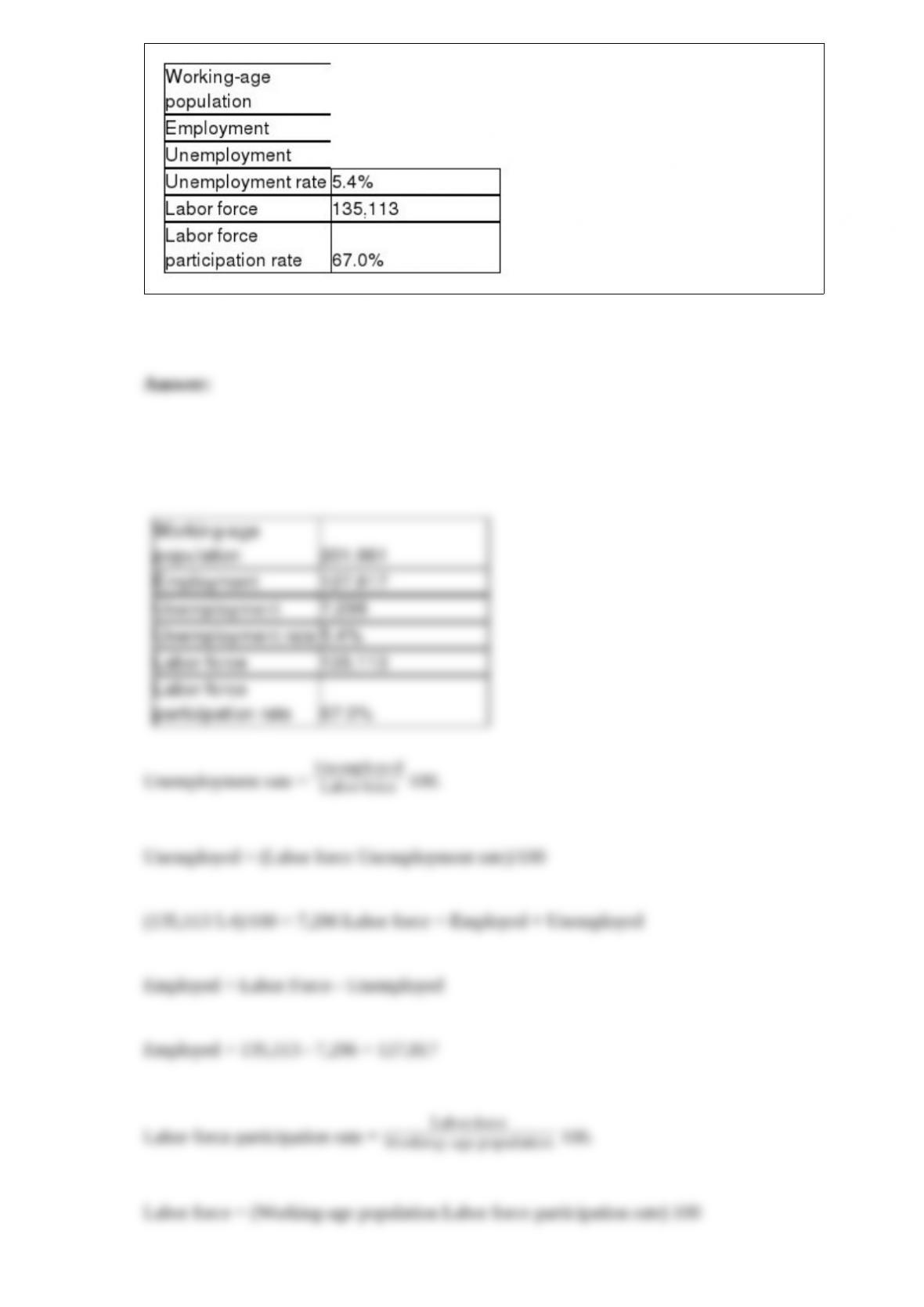
Fill in the missing values in the table of data collected in the household survey for
December, 1996. The working-age population, employment, unemployment, and labor
force are measured in thousands. Show your work.
If the price of a product is above equilibrium, what forces it down?
In September of 2007, the Federal Reserve Board Open Market Committee voted to
lower interest rates for the first time that year. Explain how lower interest rates affect
the aggregate demand curve.
If grocery stores were legally required to charge a 10-cent fee for disposable grocery
bags, who would bear the largest burden of this fee?

President Obama has discussed raising income taxes for individuals earning over
$250,000 in income. Explain how these higher income taxes will affect the aggregate
demand curve.