1)
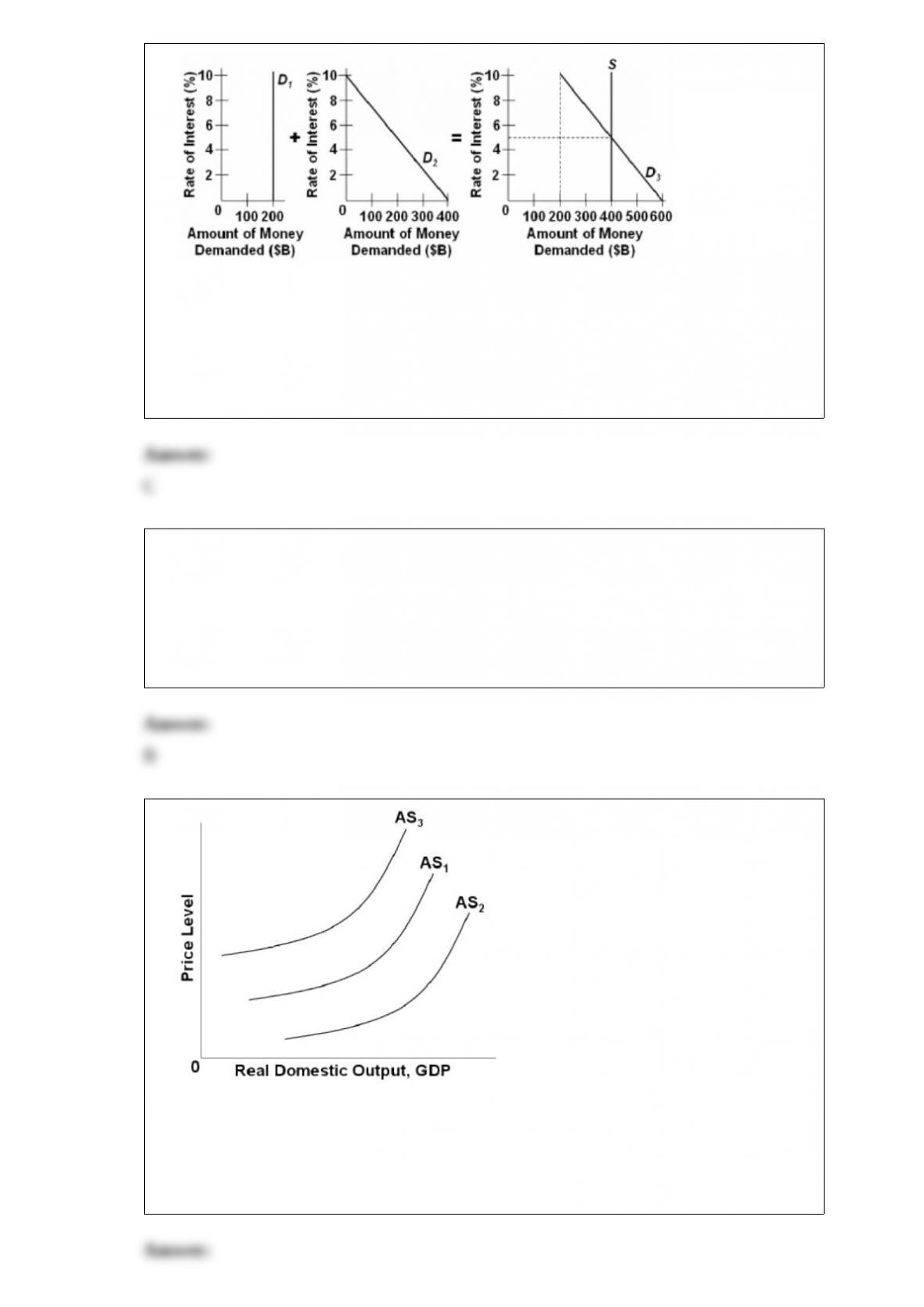
Refer to the above market for money diagrams. The total demand for money is shown
by:
A.D1.
B.D2.
C.D3.
D.S.
2) Suppose the firms in a five-firm industry have market shares of 30, 30, 20, 10, and
10 percent, respectively. The Herfindahl index for the industry is:
A.1,900
B.2,400
C.90
D.10,000
3)
In the above diagram, a shift from AS1 to AS3might be caused by a(n):
A.increase in productivity.
B.increase in the prices of imported resources.
C.decrease in the prices of domestic resources.
D.decrease in business taxes.
4) proponents of the wto argue that free international trade and investment will:
a.reduce economic growth rates in the industrial economies.
b.reduce employment in developing nations.
c.eliminate world poverty.
d.increase living standards of all trading nations.
5) which of the following activities is excluded from gdp, causing gdp to understate a
nation’s well-being?
a.the services of used-car dealers
b.the child-care services provided by stay-at-home parents
c.the construction of new houses
d.government expenditures on military equipment
6)
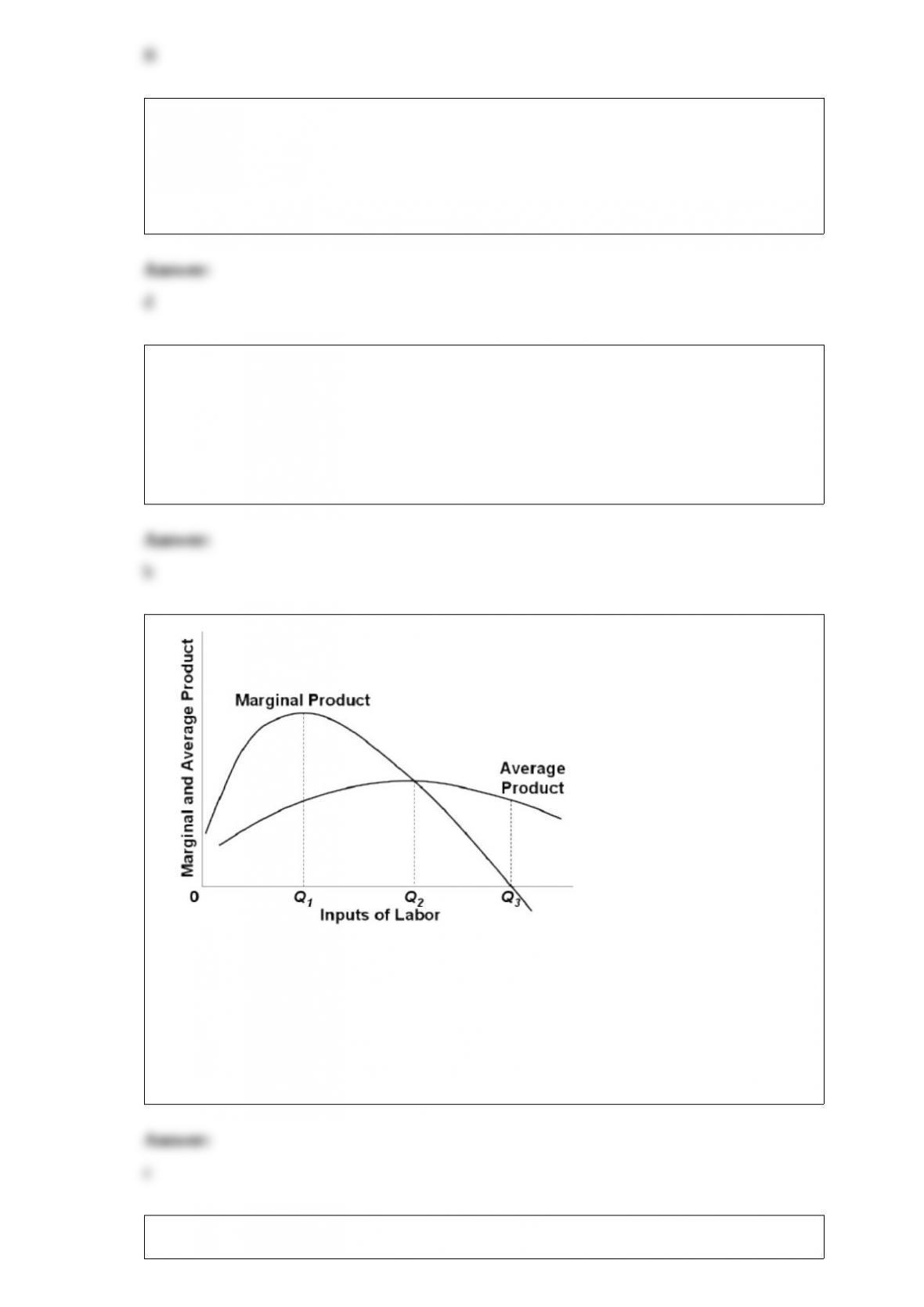
refer to the above diagram, where variable inputs of labor are being added to a constant
amount of property resources. marginal cost will be at a minimum for this firm when it
is hiring:
a.q3 workers.
b.q2 workers.
c.q1 workers.
d.more than q3 workers.
7) the larger the coefficient of price elasticity of demand for a product, the:

a.larger the resulting price change for an increase in supply.
b.more rapid the rate at which the marginal utility of that product diminishes.
c.less competitive will be the industry supplying that product.
d.smaller the resulting price change for an increase in supply.
8) Suppose that technological advancements stimulate $20 billion in additional
investment spending. If the MPC = 0.6, how much will the change in investment
increase aggregate demand?
A.$12 billion.
B.$20 billion.
C.$33.3 billion.
D.$50 billion.
9) assume the demand curve for product x shifts to the right. this might be caused by:
a.a decline in income if x is an inferior good.
b.a decline in the price of z if x and z are substitute goods.
c.a change in consumer tastes that is unfavorable to x.
d.an increase in the price of y if x and y are complementary goods.
10) refer to above data. marginal utility becomes negative beginning with the:
a.first unit.
b.second unit.
c.third unit.
d.fourth unit.