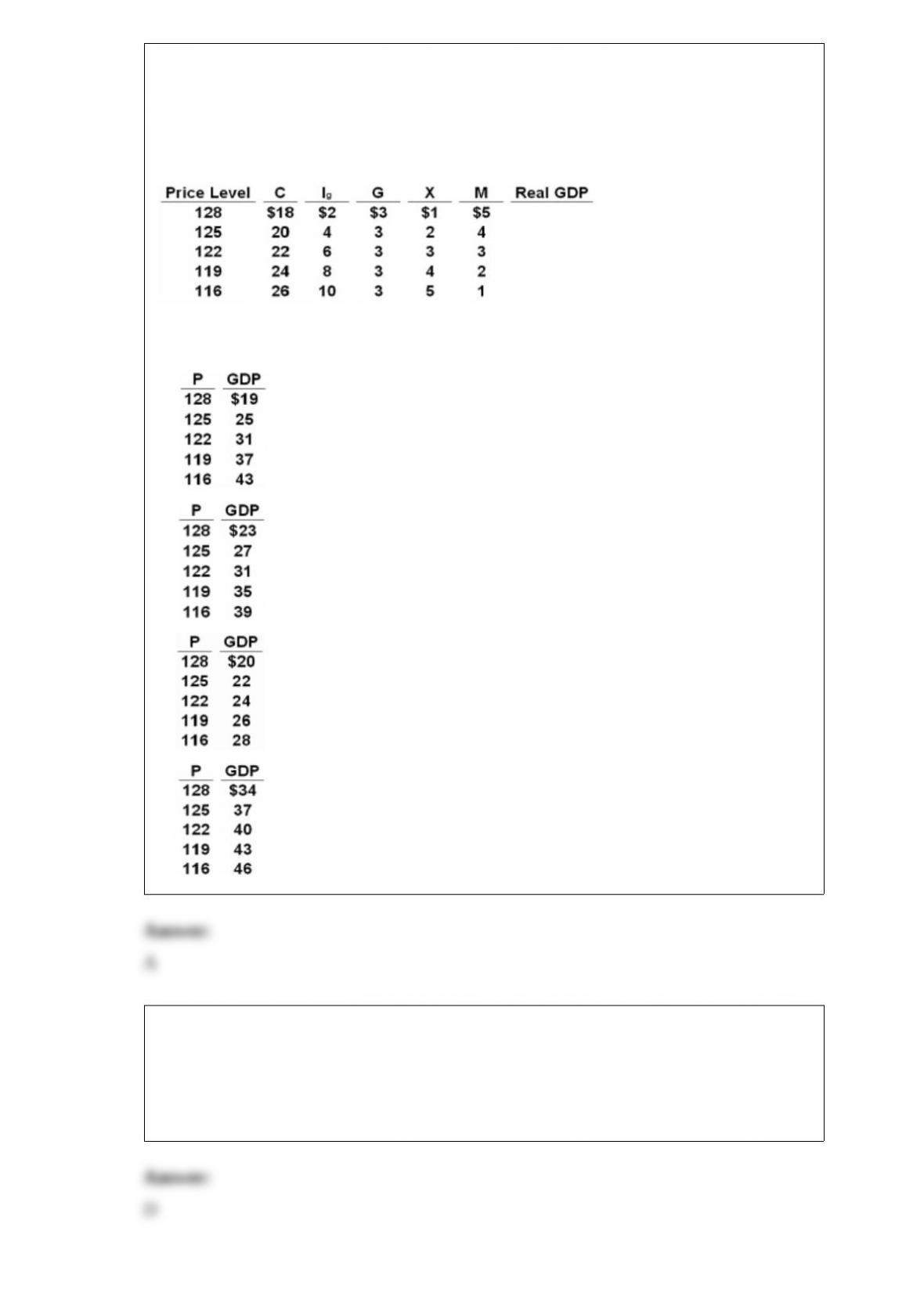
1) Answer the next question(s) on the basis of the following table for a particular
country in which C is consumption expenditures, Ig is gross investment expenditures, G
is government expenditures, X is exports, and M is imports. All figures are in billions of
dollars. Each question is independent of the other questions.
Refer to the above table. Which of the following schedules constitutes aggregate
demand in this country?
A.
B.
C.
D.
2) An appropriate fiscal policy for severe demand-pull inflation is:
A.an increase in government spending.
B.depreciation of the dollar.
C.a reduction in interest rates.
D.a tax rate increase.
3) unimpeded immigration between two nations tends to:
a.increase business income in both nations.
b.increase business income in the nation receiving immigrants, but reduce it in the
nation experiencing emigration.
c.reduce business income in the nation receiving immigrants, but increase it in the
nation experiencing emigration.
d.reduce business income in both nations.
4)
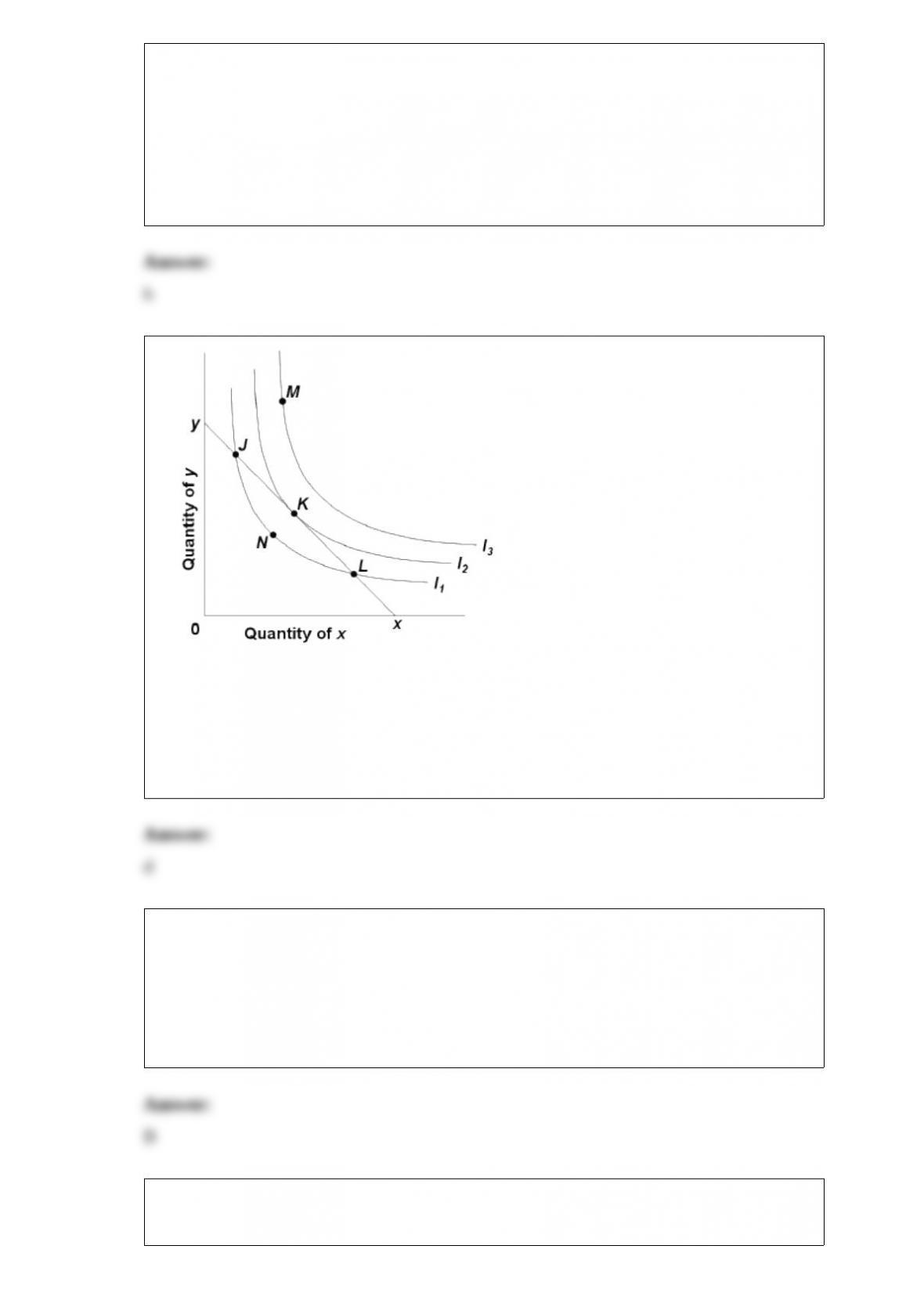
refer to the above diagram where xy is the relevant budget line and i1, i2, and i3 are
indifference curves. if the consumer is initially at point l, he or she should:
a.strive for point n by obtaining a larger money income.
b.purchase more of x and less of y
c.remain at that point to maximize utility.
d.purchase more of y and less of x
5) Which of the following helps explain growing income inequality in the United States
in recent years?
A.reduced immigration
B.increased demand for highly skilled workers
C.the falling labor force participation rate of women
D.increased power of unions
6) Resource demand has grown over time:
A.because of population growth only.
B.because of increased consumption per person only.
C.because of both increased population and greater consumption per person.
D.despite decreases in population and consumption per person.
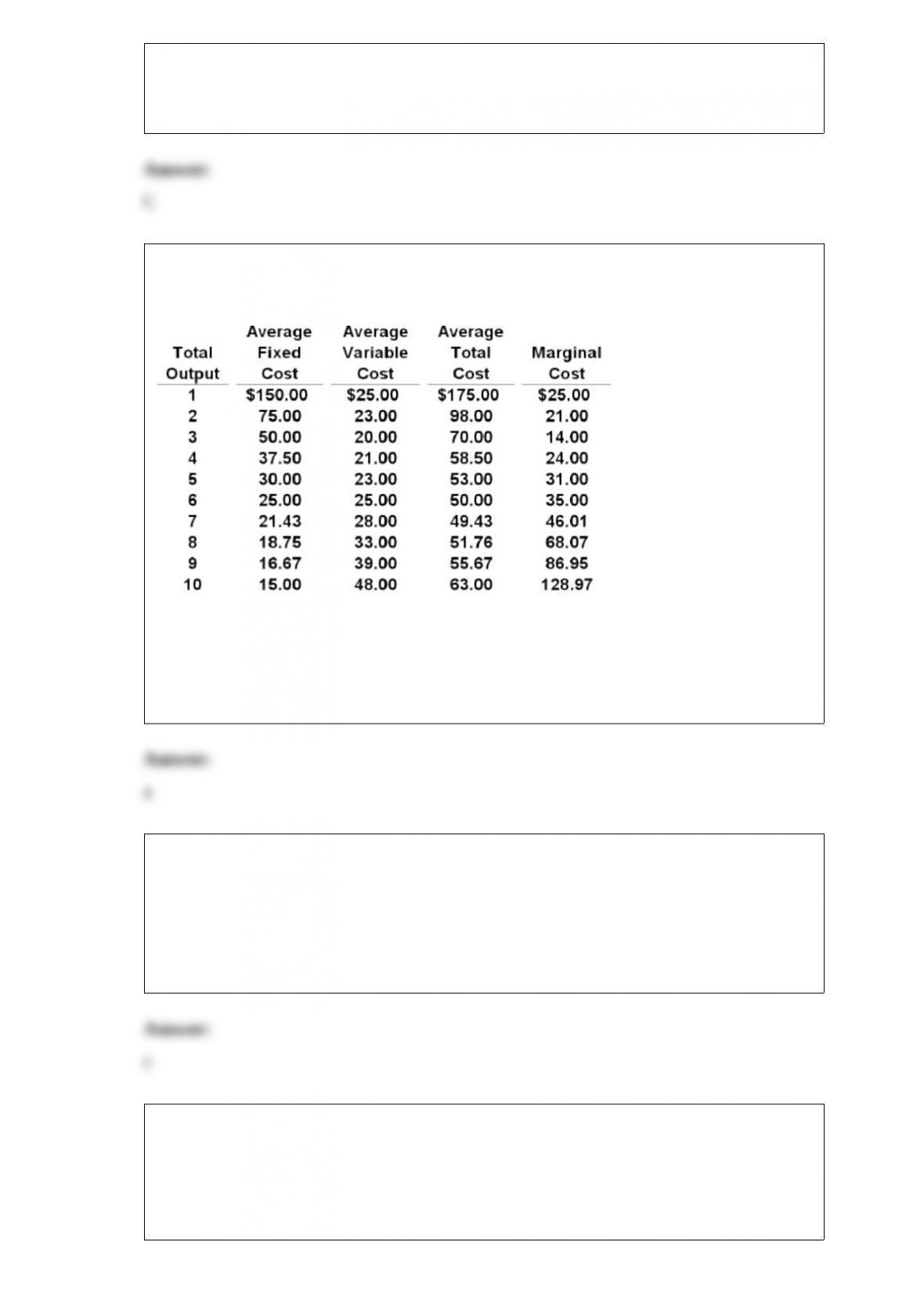
7) the following cost data for a firm that is selling in a purely competitive market.
refer to the above data. if the market price for this firm’s product is $14, it will produce:
a.0 units at a loss of $150.
b.3 units at a loss of $168.
c.3 units at an economic profit of zero.
d.4 units at a loss of $138.
8) other things equal, which of the following would increase the rate of economic
growth, as measured by changes in real gdp?
a.a decline in the average length of the work week.
b.a decrease in the labor force participation rate.
c.an increase in the size of the working age population.
d.a decline in the amount of capital per worker.
9) the demand for a product is inelastic with respect to price if:
a.consumers are largely unresponsive to a per unit price change.
b.the elasticity coefficient is greater than 1.
c.a drop in price is accompanied by a decrease in the quantity demanded.
d.a drop in price is accompanied by an increase in the quantity demanded.
10) the short-run supply curve for a purely competitive industry can be found by:
a.multiplying the avc curve of the representative firm by the number of firms in the
industry.
b.adding horizontally the avc curves of all firms.
c.summing horizontally the segments of the mc curves lying above the avc curve for all
firms.
d.adding horizontally the immediate market period supply curves of each firm.
11) as it relates to corporations, the principal-agent problem is that:
a.the goals of the corporate managers (the principals) may not match the goals of the
corporate owners (the agents).
b.the goals of the corporate managers (the agents) may not match the goals of the
corporate owners (the principals).
c.the federal government (the agent) taxes both corporate profits and the dividends paid
to stockholders (the principals).
d.it is costly for the corporate owners (the principals) to obtain a corporate charter from
government (the agent).
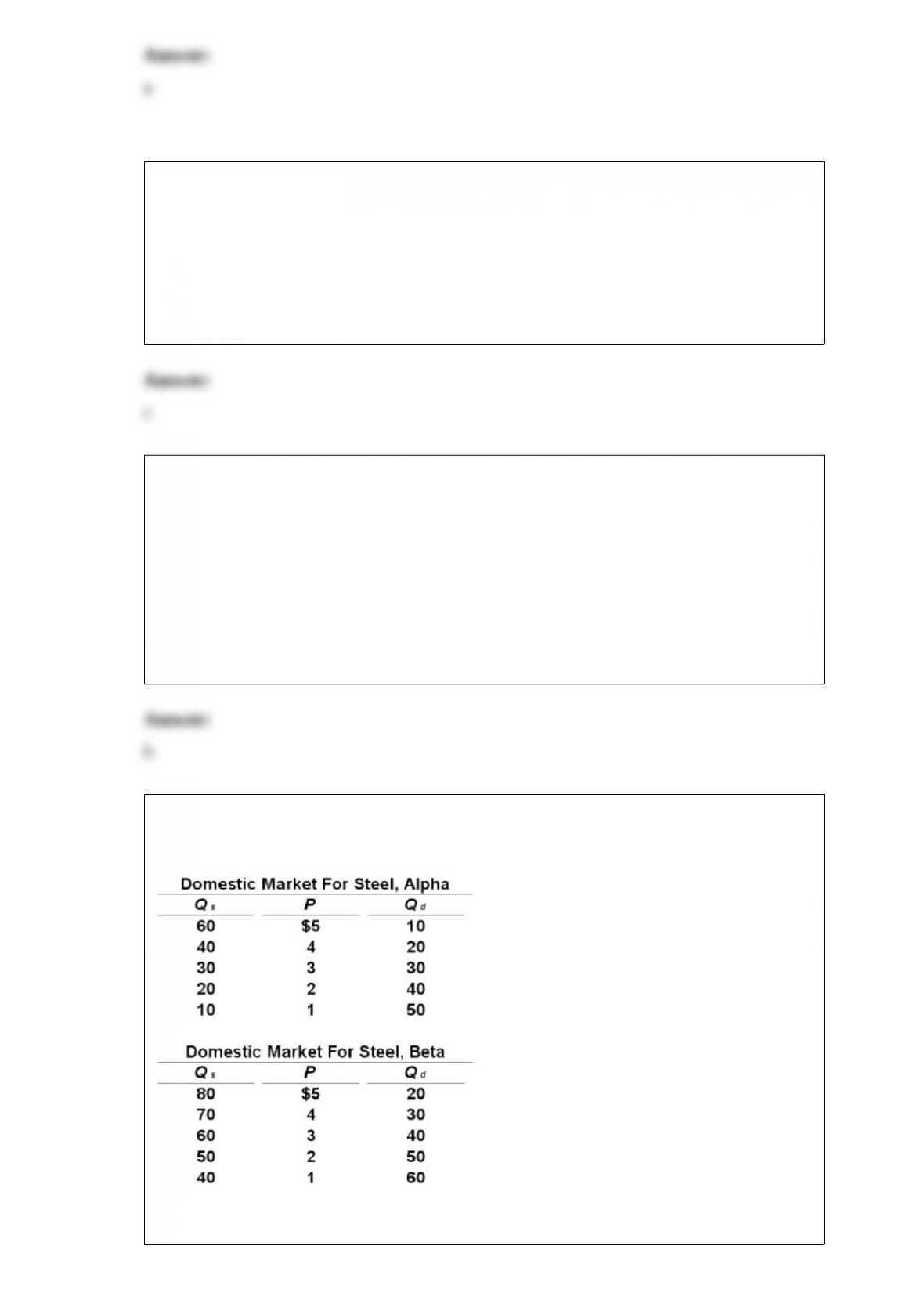
12) The following data for the hypothetical nations of Alpha and Beta. Qs is domestic
quantity supplied and Qd is domestic quantity demanded.
Refer to the above data. At a world price of $2:
A.Alpha will want to import 20 units of steel.

B.Beta will want to export 20 units of steel.
C.Alpha will want to export 20 units of steel.
D.neither country will want to import steel.
13) (Advanced analysis) Assume the saving schedule for a private closed economy is S
= -20 + 0.2Y, where S is saving and Y is gross domestic product. The multiplier for this
economy is:
A.3.
B.4.
C.5.
D.10.
14) If two nations have different per capita income levels and their rates of economic
growth are identical, then the absolute per capita income differential:
A.will remain constant.
B.may either widen or diminish.
C.will diminish.
D.will widen.