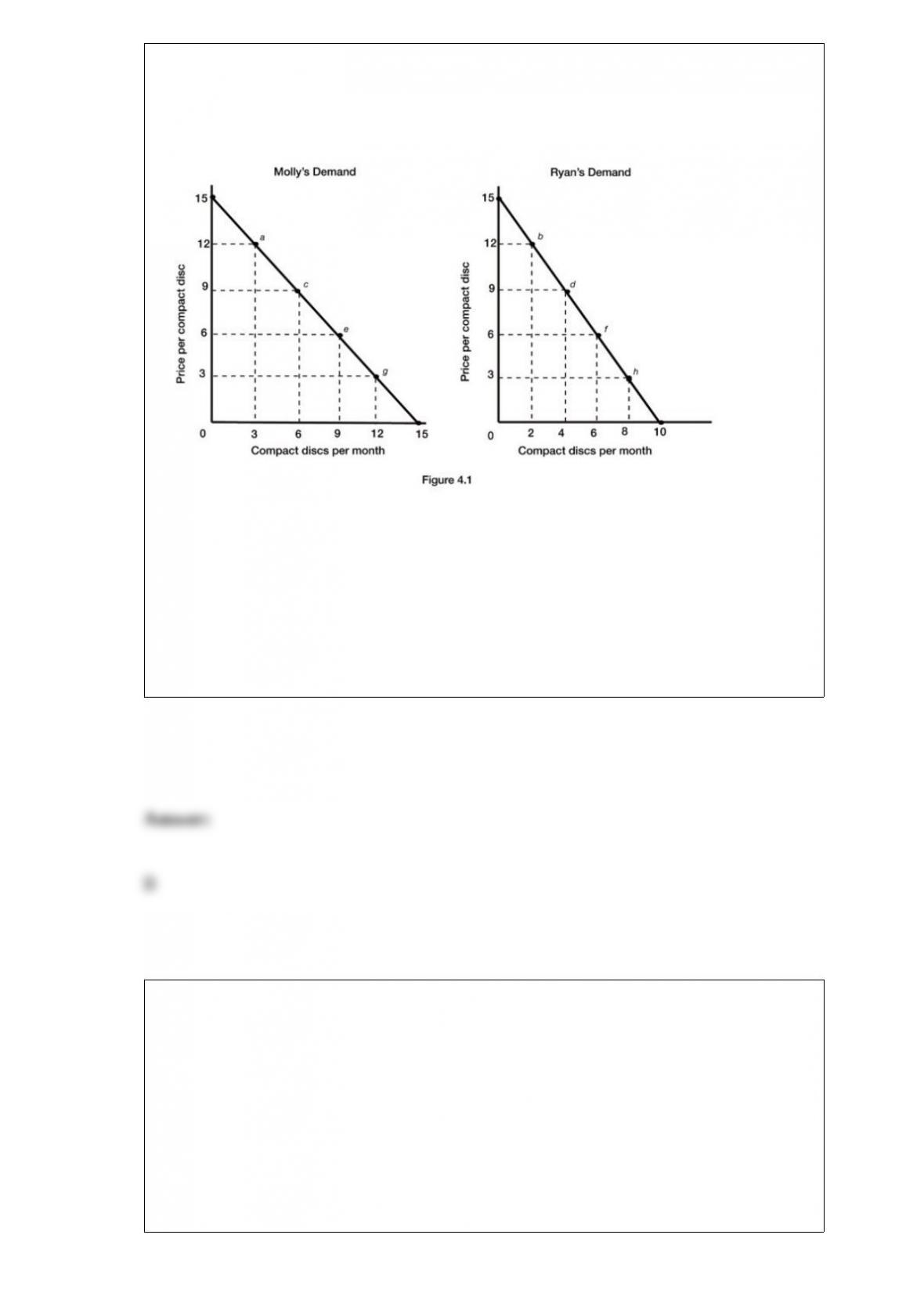
Refer to Figure 4.1, which shows Molly’s and Ryan’s individual demand curves for
compact discs per month. Assuming Molly and Ryan are the only consumers in the
market, if the market quantity demanded is 15, the price must be:
A) $0.
B) $6.
C) $9.
D) $15.
“By how much should the Fed increase the money supply to get the economy out of a
recession?” is:
A) a microeconomic question.
B) both a microeconomic and macroeconomic question.
C) a macroeconomic question.
D) neither a microeconomic nor a macroeconomic question.

Which of the following statements is false?
A) The production possibilities curve shows the combinations of goods that can be
consumed by a nation before trade begins.
B) The production possibilities curve shows the combinations of goods that can be
consumed by a nation after trade and specialization begins.
C) The production possibilities curve shows the combinations of goods that can be
produced by a nation before trading begins.
D) The production possibilities curve shows the combinations of goods that can be
produced by a nation after trade and specialization begins.
Suppose it costs a firm $200 million to produce and promote a sequel. If the firm
follows the marginal principle and decides not to produce the movie, which of the
following must be true?
A) The firm believes that the marginal benefit is less than $200 billion.
B) The firm believes that the marginal cost is larger than $200 billion.
C) The firm believes that the marginal benefit is larger than $200 billion.
D) The firm believes that the marginal cost is less than $200 billion.

When a monopoly is inevitable, the government often:
A) forces it to break into smaller firms.
B) sets a minimum price for the monopolist.
C) sets a maximum price for the monopolist.
D) None of the above; monopoly is never inevitable.
All else equal, when the supply of workers is plentiful, we can expect market wages to
be:
A) relatively high.
B) demand-determined.
C) relatively low.
D) above the equilibrium wage.
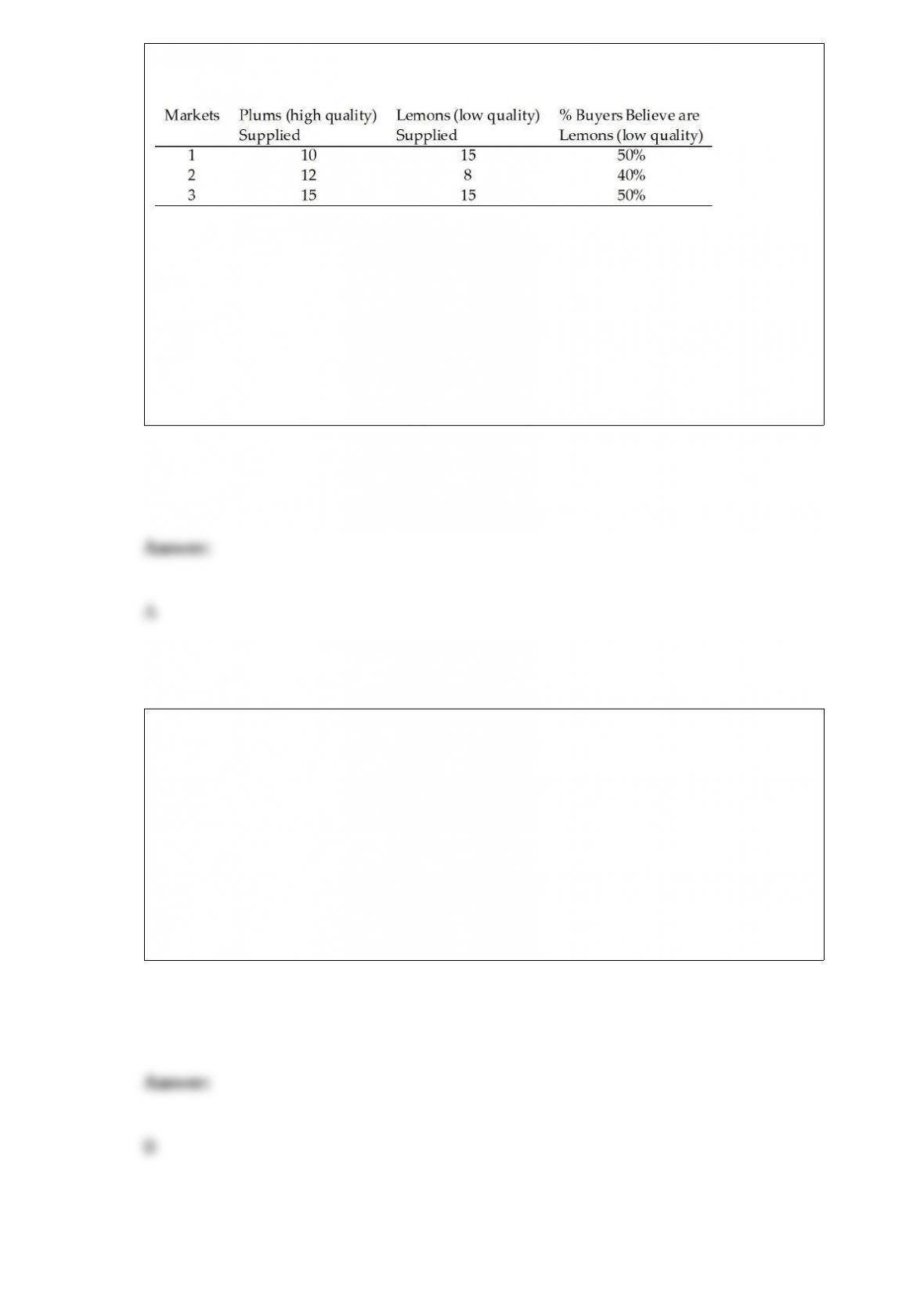
Table 14.1 represents 3 markets for used computers. Which of the markets in Table 14.1
are NOT in equilibrium?
Table 14.1
A) 1 only
B) 2 only
C) 3 only
D) 1 and 3
The ability of one person or nation to produce a good at a lower opportunity cost than
another is called a(n):
A) market advantage.
B) comparative advantage.
C) absolute advantage.
D) specialization advantage.
Which of the following statements about the gender gap in income is correct?
A) The typical woman in the U.S. earns about 75% as much as the typical man.
B) In higher education, women are under-represented in more lucrative majors such as
physics and chemistry.
C) The gender discrimination against women resulted in the excess supply of female
workers in the female-dominated occupations.
D) all of the above
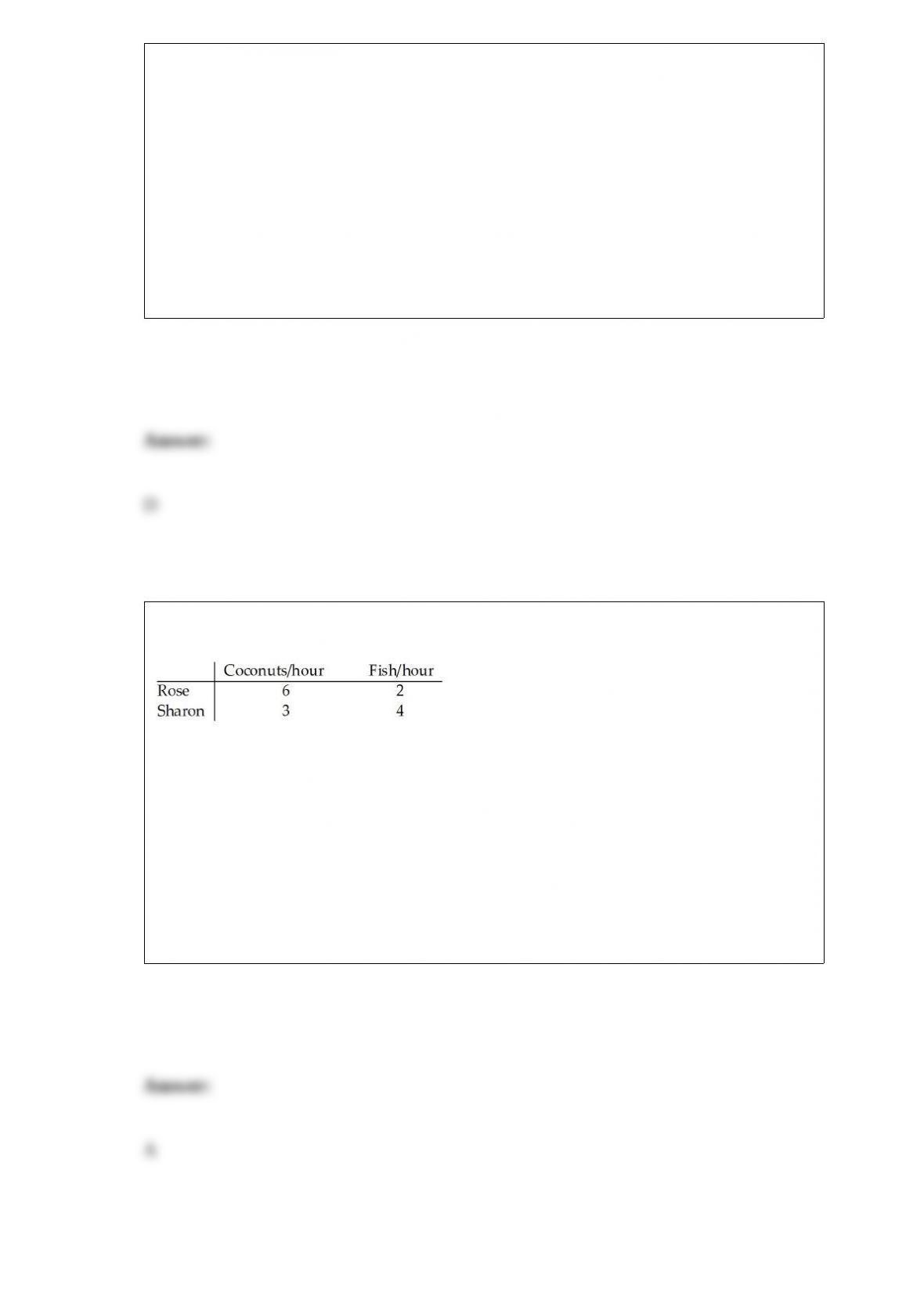
Consider two individuals, Rose and Sharon, who produce fish and coconuts. Rose and
Sharon’s hourly productivity are shown in Table 3.2. Which of the following is true?
Table 3.2
A) Rose has both an absolute and comparative advantage in coconut production.
B) Rose has both an absolute and comparative advantage in fish production.
C) Rose has neither an absolute nor comparative advantage in coconut production.
D) Rose has neither an absolute nor a comparative advantage in fish production.
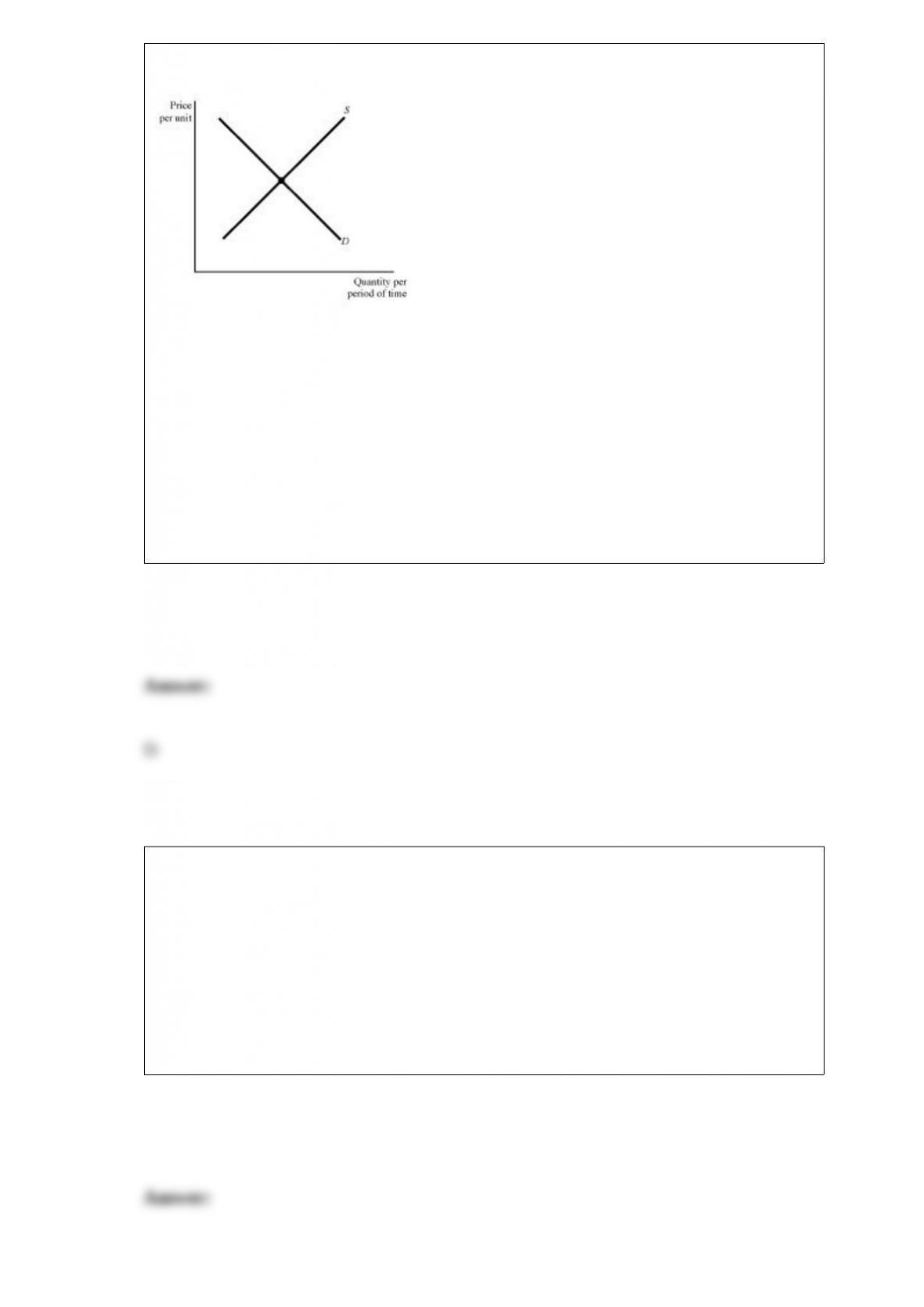
If demand and supply decrease in Figure 4.7, then the equilibrium:
Figure 4.7
A) price rises.
B) price falls.
C) quantity rises.
D) quantity falls.
A constant cost industry is one in which:
A) input prices do not change as output changes in the long run.
B) supply is highly inelastic.
C) short-run supply is horizontal.
D) all of the above

A market in which there are many firms each selling differentiated products is most
likely a ________ market.
A) perfectly competitive
B) monopoly
C) monopolistically competitive
D) natural monopoly
Governments require immunizations of school children and offer immunization shots
for free to low income people. An external benefit associated with immunization is:
A) the immunized staying well.
B) one person being immunized does not prevent another from being immunized.
C) a lower chance of epidemics.
D) all of the above.

Typically, a demand curve will represent what relationship?
A) the current desire for purchases of fad products as opposed to other products
B) how much the products costs and the quantity of it produced
C) how many people are willing to buy and the quantities each will purchase
D) the price and the quantity demanded by the buyers
A firm charges a price so low that it prevents other firms from entering the market. This
is an example of:
A) a tying contract.
B) limit pricing.
C) price discrimination.
D) predatory pricing.
________ is a situation in which resources are limited in quantity and can be used in
different ways.
A) Choice
B) Scarcity
C) Economics
D) Supply and demand
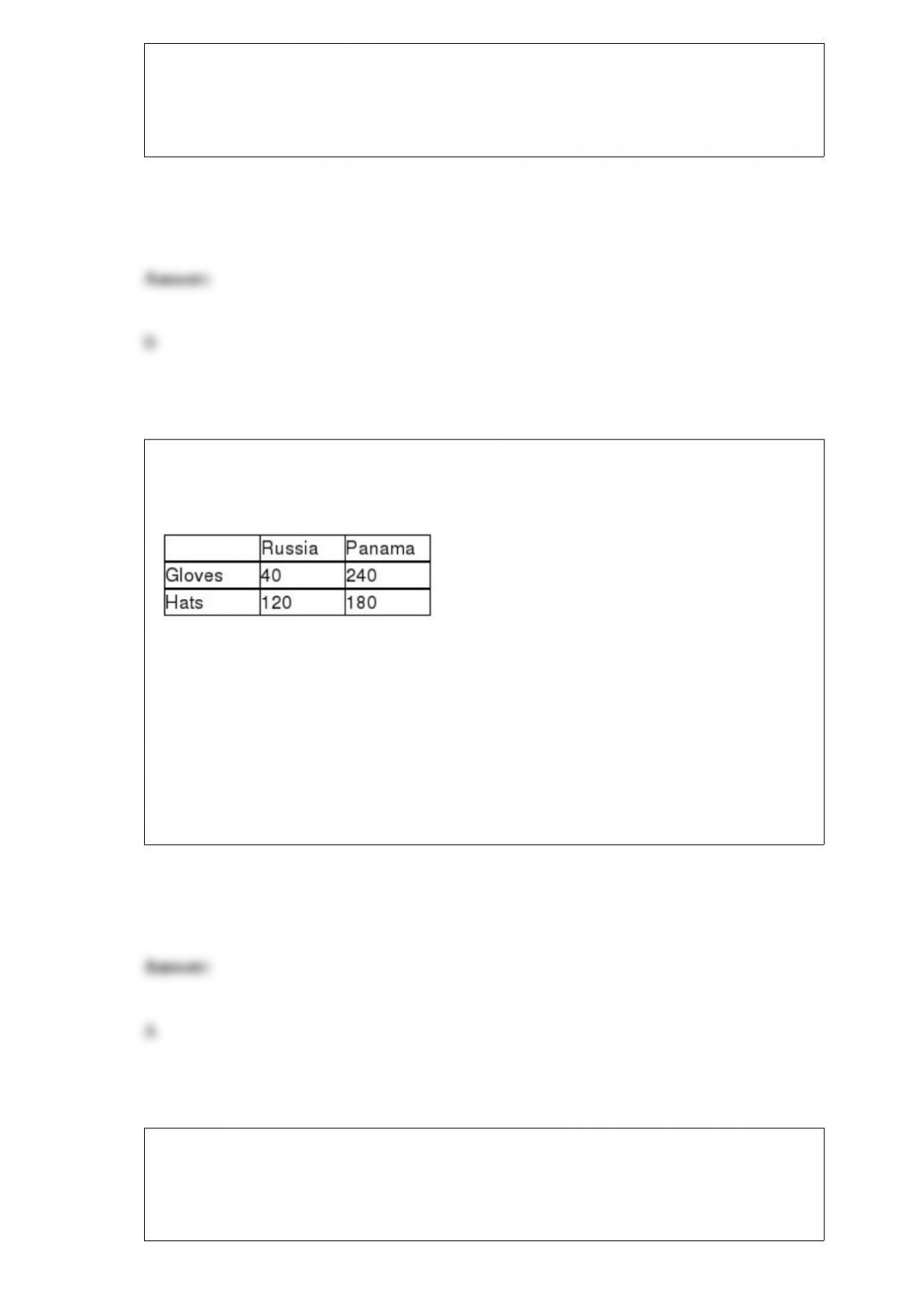
Refer to Table 18.1. The opportunity cost of a hat in Russia is:
Daily Output of Russia and Panama
Table 18.1
A) 1/3 of a glove.
B) 1/2 of a glove.
C) 2 gloves.
D) 3 gloves.
When the price of one product decreases, what does it do to the demand of its
complementary product?
A) It decreases.

B) It increases.
C) They balance each other.
D) none of the above
Hops are used to produce beer. If the price of hops decreases:
A) the demand for beer increases.
B) the demand for beer decreases.
C) the supply of beer increases.
D) the supply of beer decreases.
Neuroscientists have developed techniques to do the following:
A) map activity involved in the valuation of the benefits and costs of various actions,
including a consumer’s product choice.
B) discover the ways to learn about the opportunity costs.
C) learn how people react when they are better off.
D) observe the responsiveness to discounts.

If the percentage change in price is 10 and the percentage change in quantity supplied is
10, supply is:
A) unaffected by price changes.
B) inelastic.
C) unitary elastic.
D) elastic.
When a profit-maximizing firm in monopolistic competition is producing its long-run
equilibrium quantity:
A) it will be earning economic profit.
B) its marginal revenue will exceed its marginal cost.
C) its price will equal its marginal cost.
D) its price will be equal to its average total cost.

A market served by only one firm is called a(n):
A) perfectly competitive market.
B) monopoly.
C) oligopoly.
D) Any of the above could be correct.
Facebook is a social networking Web site that is used by a growing number of
individuals. Because of its popularity, it is now more difficult for new networking
websites to enter and compete with Facebook. Facebook enjoys ________ as a barrier
for others to enter the market.
A) a network externality
B) price discrimination
C) a negative externality
D) economies of scale

Bananas and apples are substitutes. When the price of bananas rises, the equilibrium
quantity of apples will ________ and the equilibrium price of apples will ________.
A) increase; increase
B) increase; decrease
C) decrease; increase
D) decrease; decrease
Demand for low budget items, such as candy, is generally ________ than demand for
large budget items, such as automobiles.
A) higher
B) lower
C) more elastic
D) less elastic
Which of the following statements is correct?
A) For the United States, union workers earn 10 to 20 percent more than nonunion
workers doing the same work.

B) Most other industrialized countries have a larger union markup.
C) The union markup is relatively small for unionized firms in a competitive market.
D) none of the above
During World War II before there was trade among camps, items not consumed by the
majority of the camp (such as coffee in British camps and beef in Sikh camps) were:
A) more expensive than in other camps.
B) scarcer than in other camps.
C) cheaper than in other camps.
D) not provided to the prisoners.
Since people generally know that celebrities are paid to endorse products, celebrity
endorsements signal to consumers that:
A) the celebrity loves the product.
B) the product is appealing.
C) only rich people can afford the product.
D) all of the above