
What is the name of the organization that defines business cycle peaks and troughs in
the United States?
A) the Bureau of Labor Statistics
B) the Federal Reserve
C) the National Bureau of Economic Research
D) the National Peak and Trough Committee
Equations for C, I, G, and NX are given below. If the equilibrium level of GDP is
$32,000, what is the marginal propensity to consume? C = 5,000 + (MPC)Y
I = 1,500
G = 2,000
NX = -500 A) 0.67
B) 0.75
C) 0.8
D) 0.9
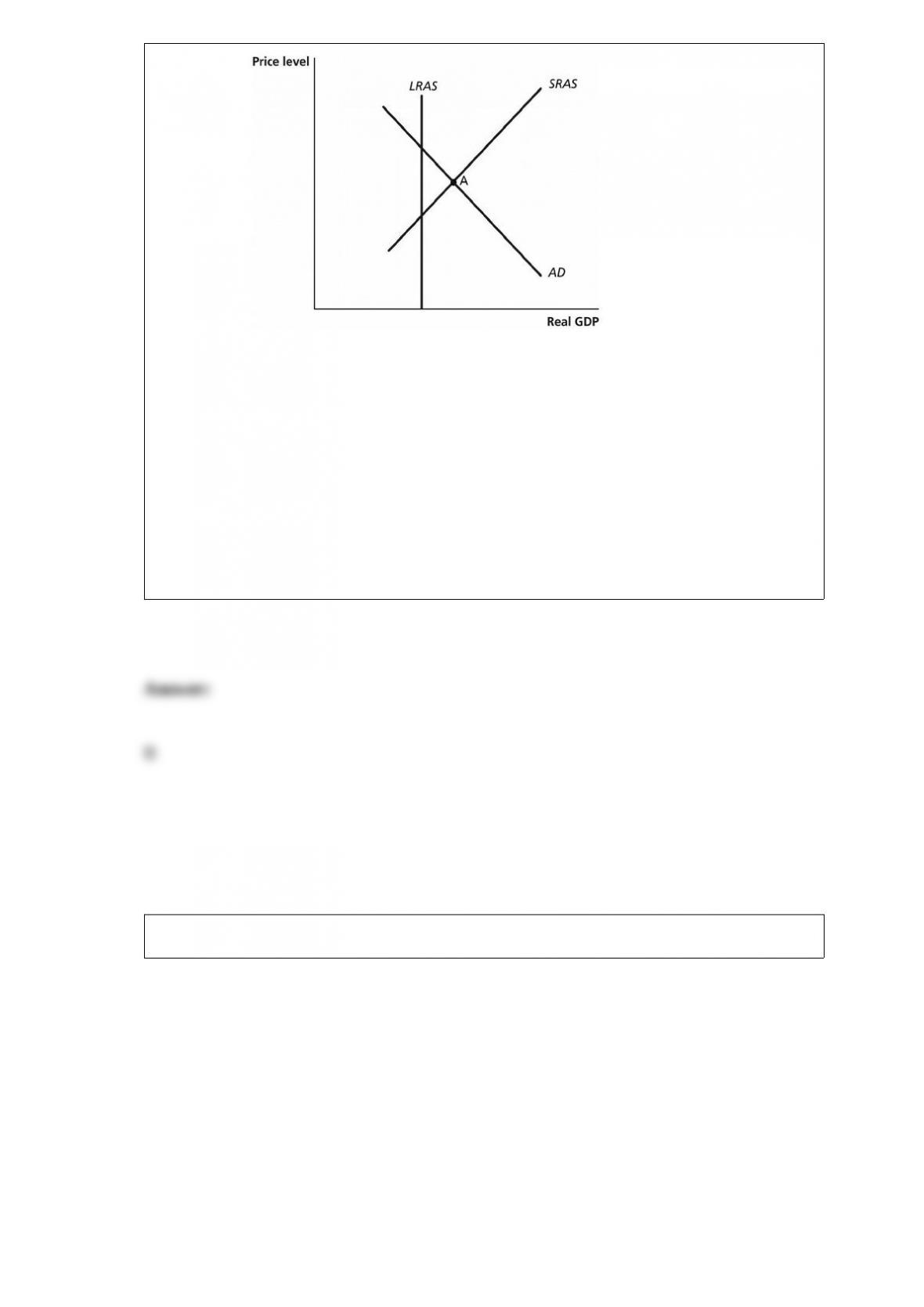
Figure 26-8
In the figure above, if the economy is at point A, the appropriate monetary policy by the
Federal Reserve would be to
A) lower interest rates.
B) raise interest rates.
C) lower income taxes.
D) raise income taxes.
Figure 5-7
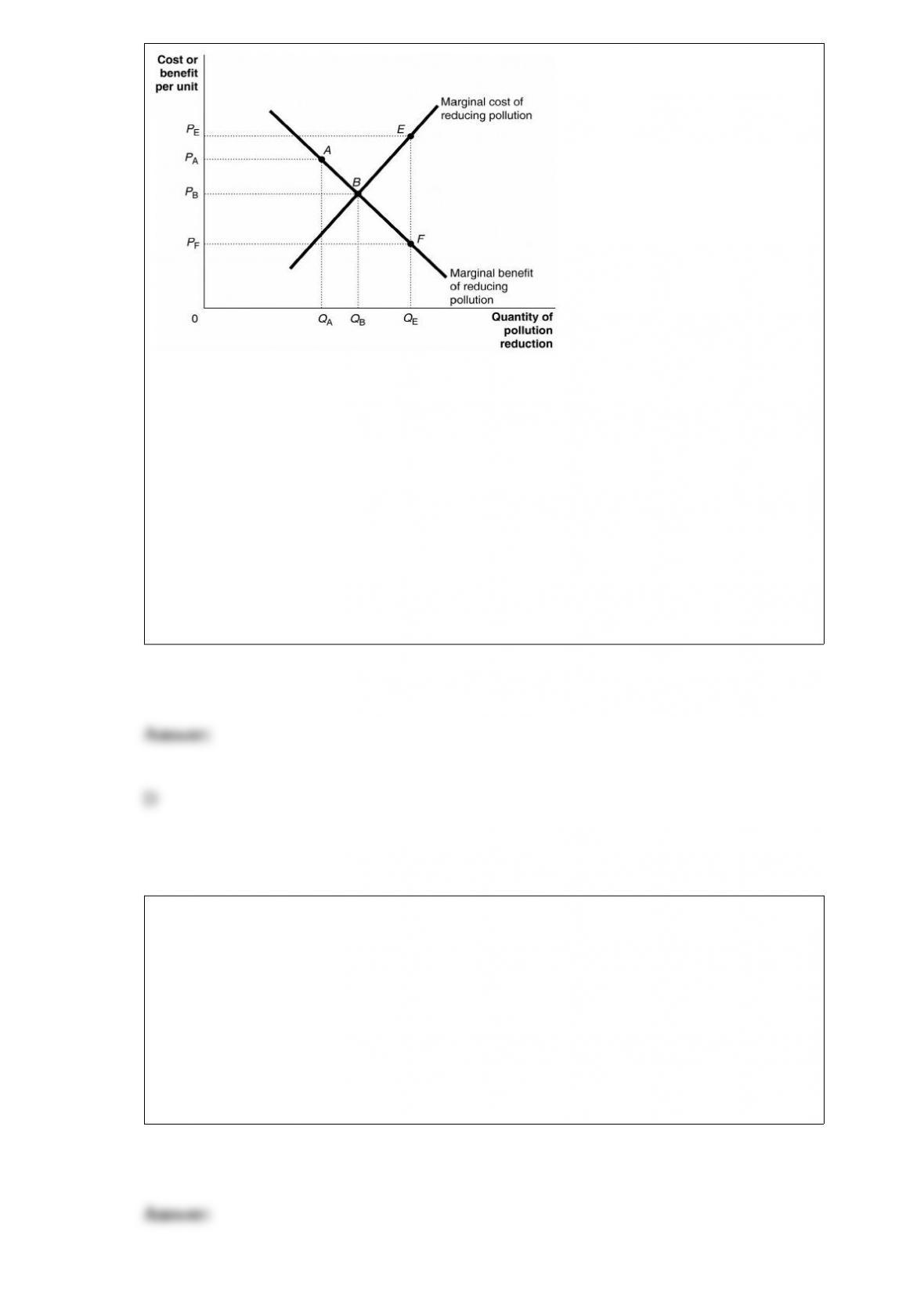
What is the incremental benefit of increasing the quantity of pollution reduction from
QBto QE units?
A) PF
B) PFQE
C) the value of the area BEF
D) the value of the area QBBFQE
The revenue received from the sale of an additional unit of a product
A) is a marginal benefit to the firm.
B) is called profit.
C) is called gross sales.
D) is called a net gain.

Prices of commercial airline tickets (assume that this is a normal good) have fallen in
recent months. Over this same period, the price of jet fuel has risen and consumer
incomes have fallen. Which of the following best explains the falling prices of airline
tickets?
A) The supply curve for airline tickets has shifted to the left while the demand curve for
airline tickets has shifted to the left.
B) The demand curve for airline tickets has shifted to the left more than the supply
curve has shifted to the left.
C) The demand curve and the supply curve for airline tickets have both shifted to the
right.
D) The supply curve for airline tickets has shifted to the left more than the demand
curve has shifted to the left.
In the long run, firms in both monopolistically competitive markets and perfectly
competitive markets earn zero economic profits, but unlike perfectly competitive firms
in the long run, monopolistically competitive firms
A) charge a price that is greater than average revenue.
B) charge a price that is equal to marginal cost.
C) do not produce at minimum average total cost.
D) charge a price that is equal to average total cost.

When Americans decrease their demand for Japanese goods,
A) the demand for dollars will rise, and the demand for yen will rise.
B) the demand for dollars will fall, and the demand for yen will rise.
C) the supply of dollars will rise, and the demand for yen will rise.
D) the supply of dollars will fall, and the demand for yen will fall.
If, when you consume another piece of candy, your marginal utility is zero, then
A) you want more candy.
B) you have maximized your total utility from consuming candy.
C) you have not yet reached the point of diminishing marginal utility.
D) you should consume less candy.
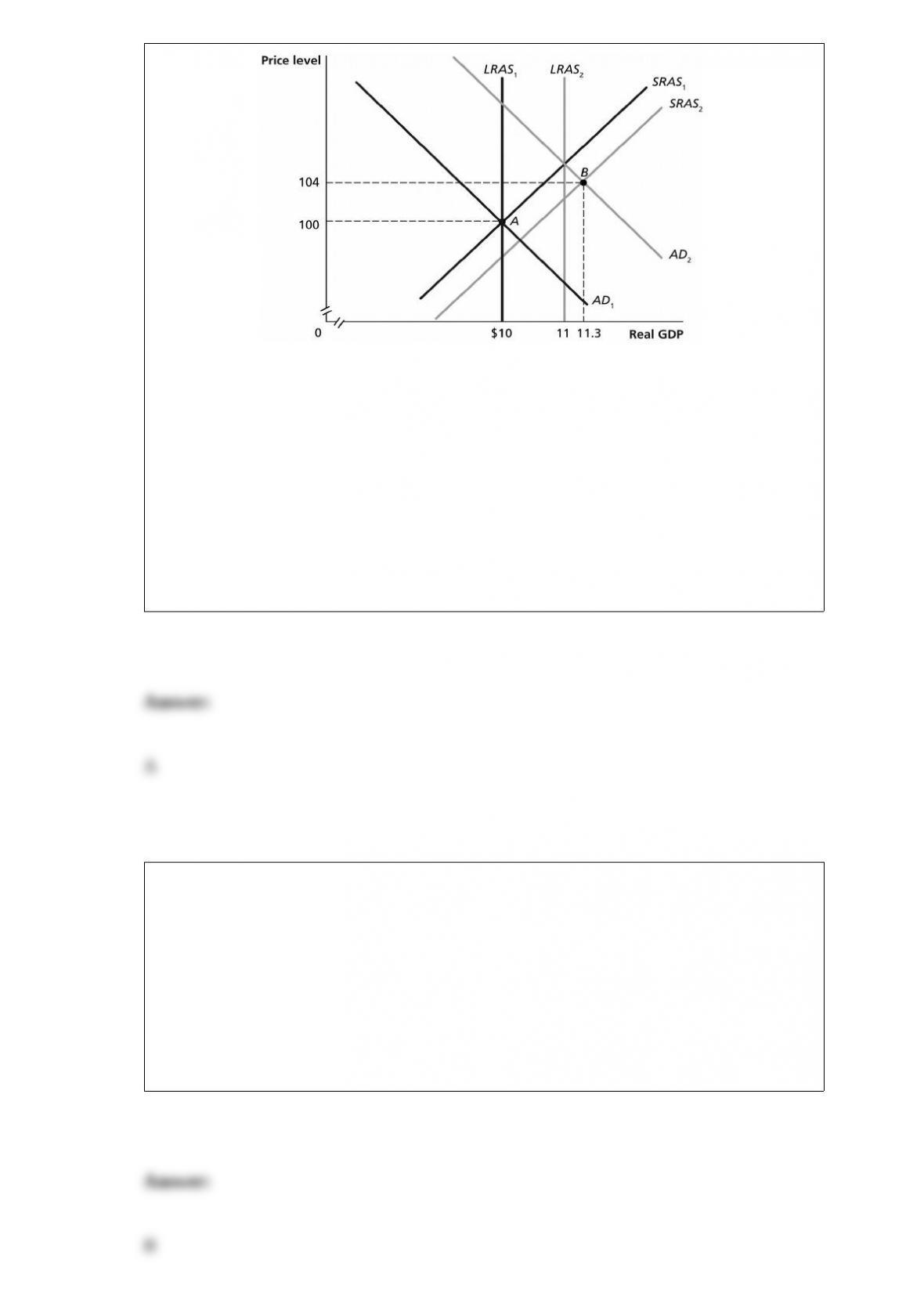
Figure 26-12
In the dynamic AD–AS model, if the economy is at point A in year 1 and is expected to
go to point B in year 2, and the Federal Reserve pursues no policy, then at point B
A) firms are producing above capacity.
B) there is pressure on wages and prices to fall.
C) the unemployment rate is greater than the natural rate of unemployment.
D) incomes and profits are falling.
If the slope of a demand curve is equal to -0.1 then
A) demand is inelastic.
B) we don’t know whether the demand is elastic or inelastic.
C) the demand is elastic at low prices and inelastic at high prices.
D) as price increases by 10 percent quantity demanded decreases by 1 percent.
Bubba’s Hula Shack bar and bistro has begun giving customers who can show proof
that they arrived at the establishment by public transportation a 10 percent discount on
their total bill. All else equal, customers who arrive by public transportation to take
advantage of Bubba’s Hula Shack discount have a ________ for the services of the
establishment than customers who drive to the establishment.
A) higher price elasticity of demand
B) lower price elasticity of demand
C) higher price elasticity of supply
D) lower price elasticity of supply
If firms sell what they expected to sell, which of the following will be true?
A) Aggregate expenditure will be greater than GDP.
B) There is no unplanned change in inventories.
C) Inventories will rise, and GDP and employment will fall.
D) Aggregate expenditure will be less than GDP.
An inflation rate of 5% between 2013 and 2014 would be implied by a change in the
GDP deflator from ________ in 2013 to ________ in 2014.

A) 105; 115
B) 200; 205
C) 400; 420
D) 375; 390