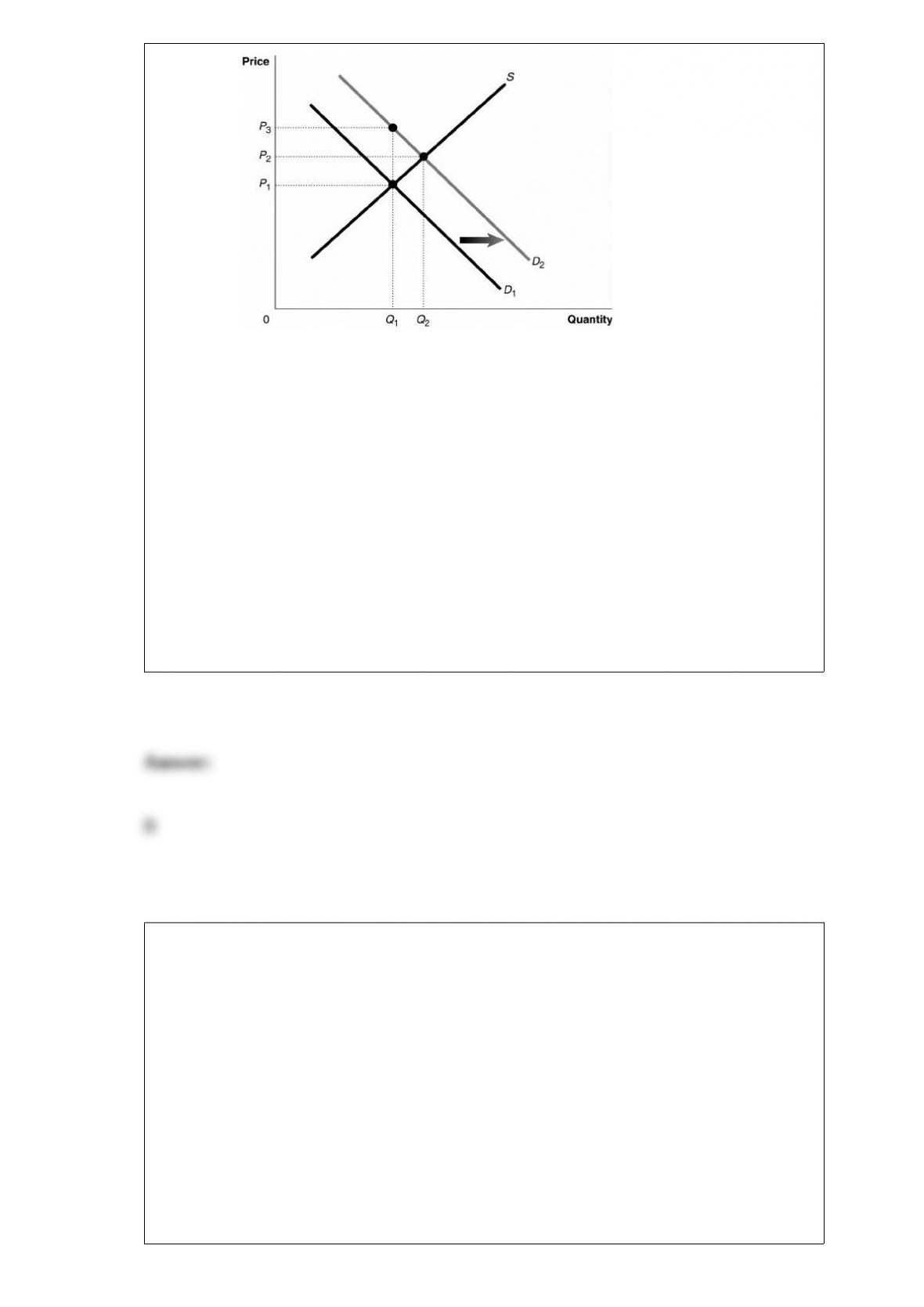
Figure 5-5 Figure 5-5 shows a
market with an externality. The current market equilibrium output of Q1 is not the
economically efficient output. The economically efficient output is Q2.
If, because of an externality, the economically efficient output is Q2 and not the current
equilibrium output of Q1, what does D2 represent?
A) the demand curve reflecting external benefits
B) the demand curve reflecting social benefits
C) the demand curve reflecting private benefits
D) the demand curve reflecting the sum of social and external benefits
According to two economists, George Ackerlof and William Dickens, how can
cognitive dissonance affect workers’ perceptions of their jobs?
A) Cognitive dissonance makes workers believe that measures to improve their health
and safety in the workplace are ineffective.
B) Cognitive dissonance causes workers to perceive they are victims of discrimination
when, in fact, they are not.
C) Cognitive dissonance might cause workers to underestimate the true risks of their
jobs.
D) Cognitive dissonance causes a worker to believe his marginal revenue product is
greater than it really is.
Most people would prefer to drive a luxury car that has all the options, but more people
buy less expensive cars even though they could afford the luxury car because
A) car buyers are irrational.
B) the total utility of less expensive cars is greater than that of luxury cars.
C) the marginal utility per dollar spent on the less expensive car is higher than that
spent on luxury cars.
D) luxury cars cost a lot more than non-luxury cars.
Figure 12-1
At point J in the figure above, which of the following is true?
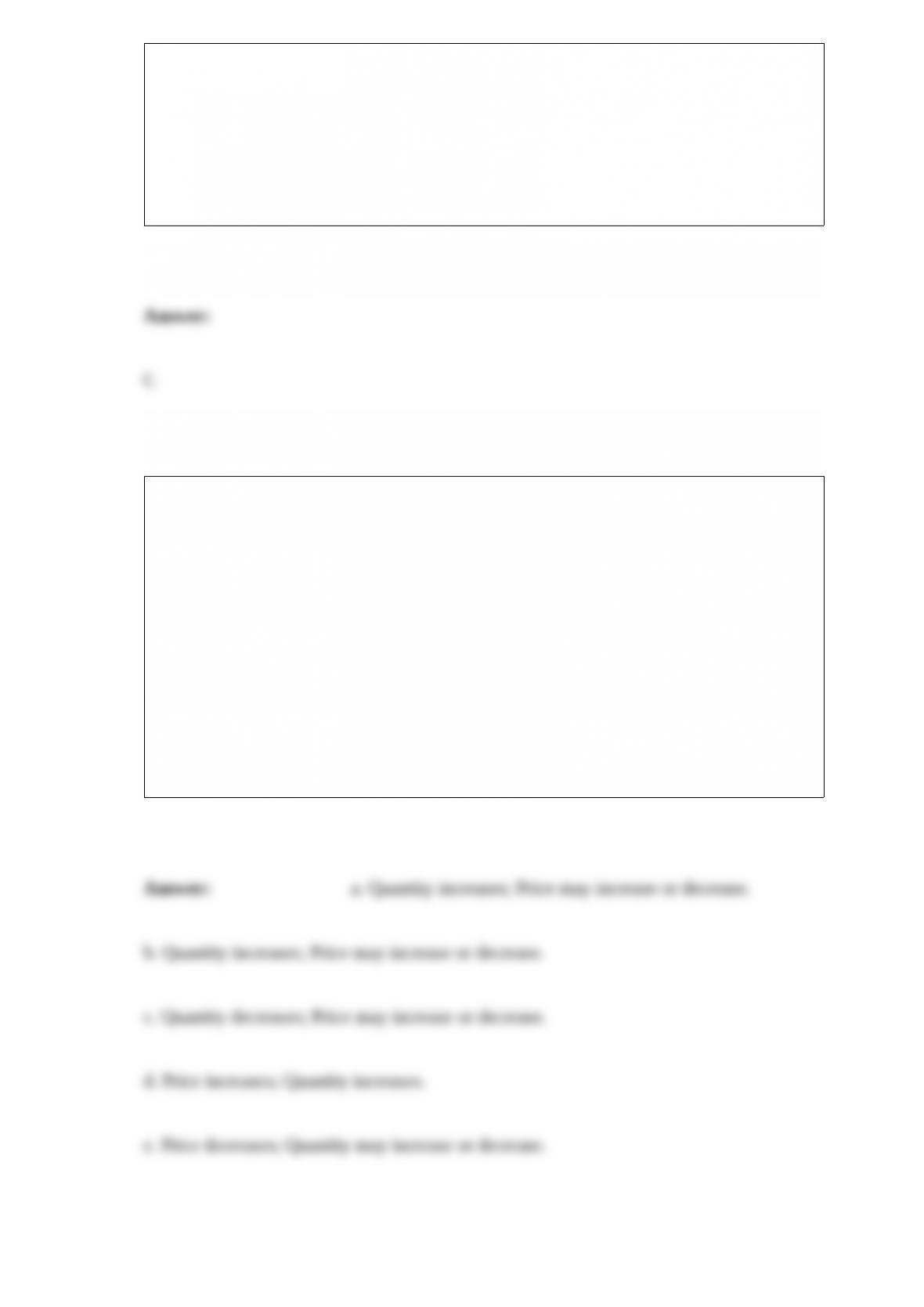
A) Aggregate expenditure is less than GDP.
B) The economy has achieved macroeconomic equilibrium.
C) Actual inventories are less than planned inventories.
D) GDP will be decreasing.
In each of the following situations, list what will happen to the equilibrium price and
the equilibrium quantity for a particular product, which is an inferior good.
a. The population increases and productivity increases.
b. The income increases and the price of inputs decrease.
c. The number of firms in the market decreases and income increases.
d. Consumer preference increases and the price of a complement decreases.
e. The price of a substitute in consumption decreases and the price of a substitute in
production decreases.
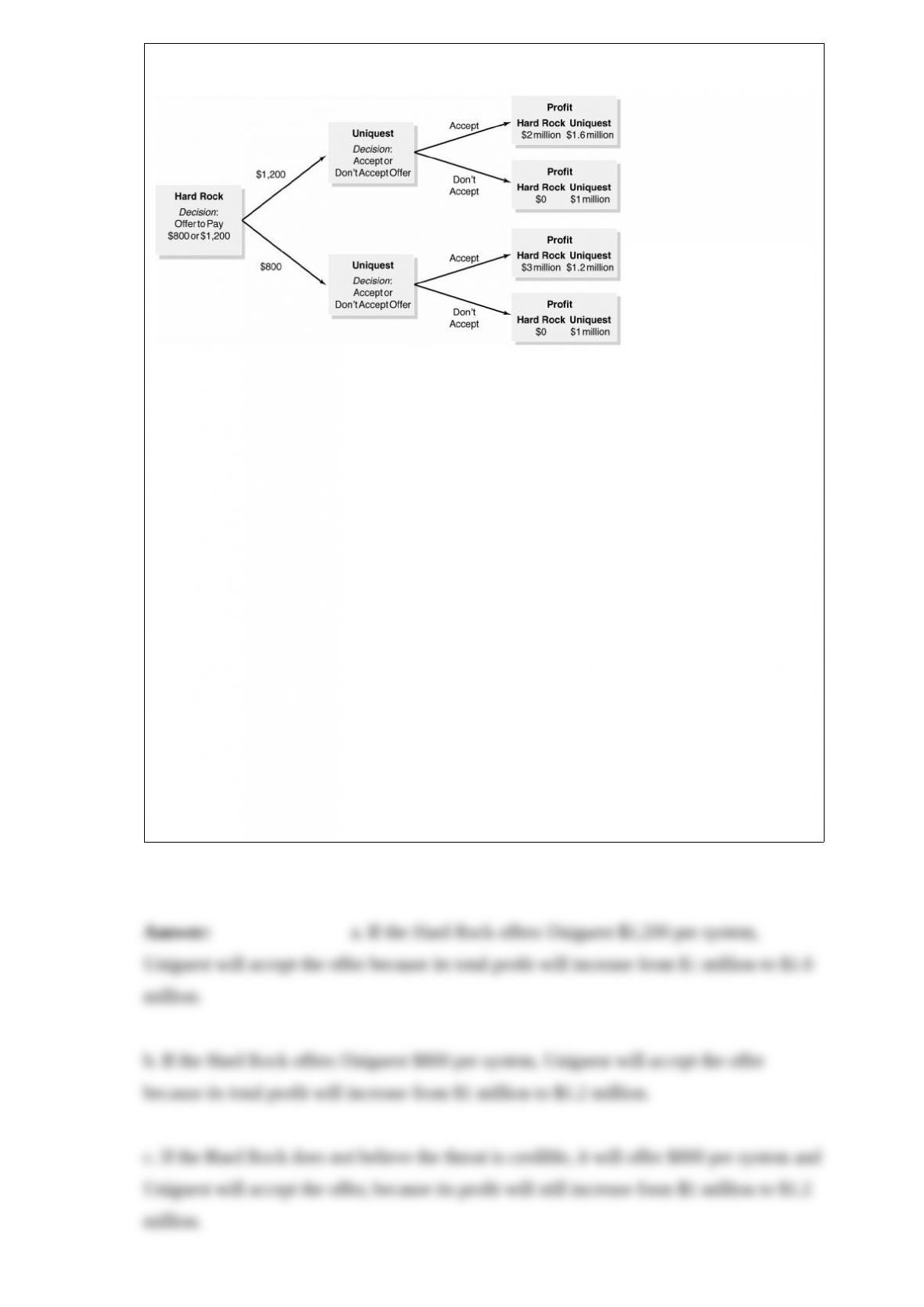
Figure 14-9
Uniguest, Inc. is a company that provides PCs with internet access and touch-sensitive
screens to hotels. Suppose the Hard Rock Hotel and Casino in Las Vegas informs
Uniguest that it is considering installing these systems in its hotel rooms. The Hard
Rock expects to be able to charge higher prices for these rooms if it installs Uniguest’s
systems in its rooms. The two companies begin bargaining over what price the Hard
Rock will pay Uniguest for its systems, and the decision tree shown above illustrates
this bargaining game. Note that the profit figures listed in the decision tree are
additional profits for the Hard Rock and total profits for Uniguest.
a. Suppose the Hard Rock offers Uniguest $1,200 per system. Will Uniguest accept or
reject this offer? Why?
b. Suppose the Hard Rock offers Uniguest $800 per system. Will Uniguest accept or
reject this offer? Why?
c. Suppose Uniguest attempts to obtain a favorable outcome from the bargaining by
telling the Hard Rock it will reject an $800-per-system offer. If the Hard Rock does not
believe the threat is credible, what will it do? Why? What will Uniguest do? Why?
d. Is there a sub-game perfect equilibrium in this situation? Explain.
Suppose the economy is at a short-run equilibrium GDP that lies above potential GDP.
Which of the following will occur because of the automatic mechanism adjusting the
economy back to potential GDP?
A) Output will increase.
B) Prices will decline.
C) Unemployment will decline.
D) Short-run aggregate supply will shift to the left.
Banks can continue to make loans until their
A) actual reserves equal their required reserves.
B) excess reserves equal their required reserves.
C) actual reserves equal their excess reserves.
D) actual reserves equal their checking account balances.

A firm that has the ability to control to some degree the price of the product it sells
A) is also able to dictate the quantity purchased.
B) faces a demand curve that is inelastic throughout the range of market demand.
C) is a price maker.
D) faces a perfectly inelastic demand curve.
Stagflation occurs when inflation ________ and GDP ________.
A) rises; rises
B) rises; falls
C) falls; rises
D) falls; falls
A relationship that depends on the basic behavior of consumers and firms and remains
unchanged over long periods is called a ________ relationship.
A) frictional
B) structural
C) cyclical
D) dynamic
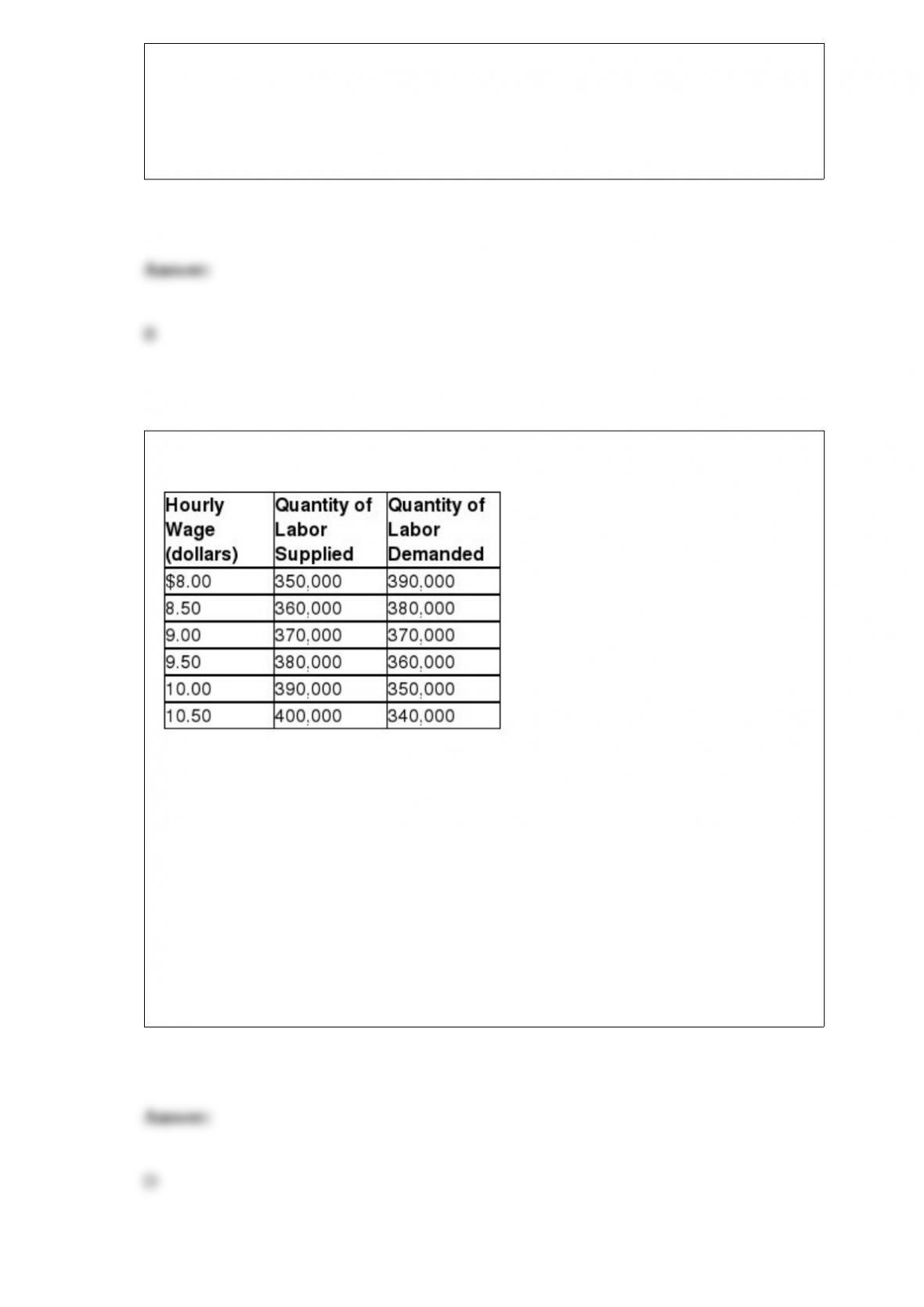
Table 4-4
Table 4-4 shows the demand and supply schedules for the low-skilled labor market in
the city of Westover.
If a minimum wage of $10.00 is mandated there will be a
A) shortage of 20,000 units of labor.
B) surplus of 20,000 units of labor.
C) shortage of 40,000 units of labor.
D) surplus of 40,000 units of labor.

Which of the following is used to argue that the self-interest of public policymakers will
often lead to actions that are inconsistent with the preferences of the voters they
represent?
A) the voting paradox
B) the median voter theorem
C) rent seeking
D) transitivity of voters’ preferences
What happens in the primary market?
A) primary inputs like electricity are sold
B) a corporate financial manager will resell previously issued shares of stock
C) newly issued claims are sold by the borrowing firm to the initial buyer
D) already issued claims are sold from one investor to another
Table 3-2
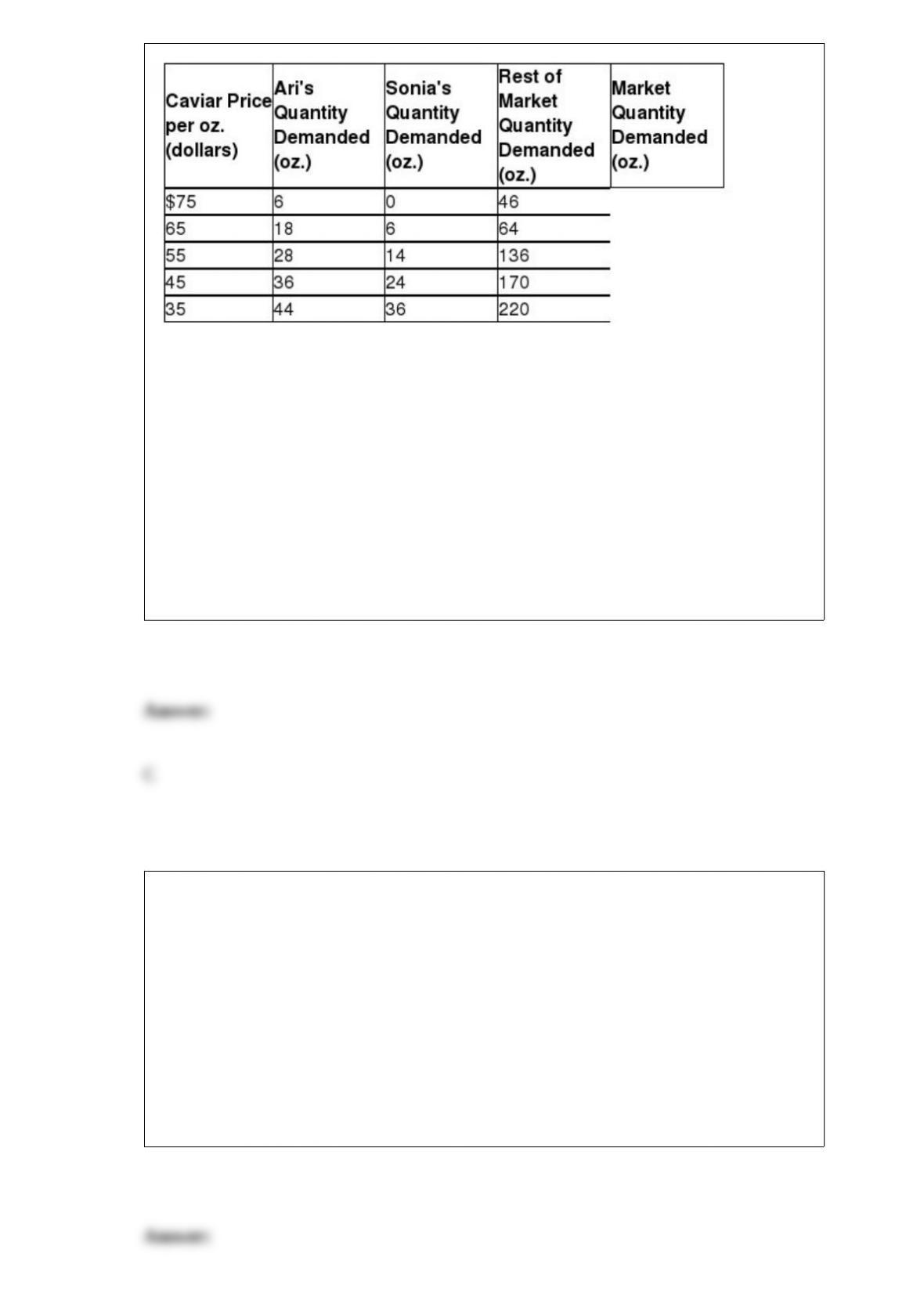
The table above shows the demand schedules for caviar of two individuals (Ari and
Sonia) and the rest of the market. At a price of $55, the quantity demanded in the
market would be
A) 42 oz.
B) 136 oz.
C) 178 oz.
D) 233 oz.
Suppose that Congress allocates $1 billion to clean up after the hurricanes of 2005. It
also raises taxes by $1 billion to keep the deficit from growing. If the marginal
propensity to consume is 0.9, what is the effect on equilibrium GDP?
A) GDP does not change.
B) GDP increases by $10 billion.
C) GDP increases by $900,000.
D) GDP increases by $1 billion.