
1) Suppose that everyone prefers to live in a society without poverty. Further suppose
that some private charities are successful in reducing poverty. People who do not
contribute to the charities
a.receive no external benefit from private antipoverty programs.
b.decrease the reliance of individuals on antipoverty programs.
c.can free ride on the generosity of others.
d.are most likely to be in favor of government-sponsored programs.
2) In a two-person repeated game, a tit-for-tat strategy starts with
a.cooperation and then each player mimics the other player’s last move.
b.cooperation and then each player is unresponsive to the strategic moves of the other
player.
c.noncooperation and then each player pursues his or her own self-interest.
d.noncooperation and then each player cooperates when the other player demonstrates a
desire for the cooperative solution.
3) Assume there are nine voters in a certain small town and let x = the preferred number
of dollars spent per person per month on garbage collection. For Voters 1, 2, and 3, x =
$10; for Voter 4, x = $15; for Voter 5, x = $18; and for Voters 6, 7, 8 and 9, x = $20.
Based on these preferences, which of these dollar amounts will win over any one of the
others?
a.$10.
b.$15.
c.$18
d.$20.
4) Table 18-6
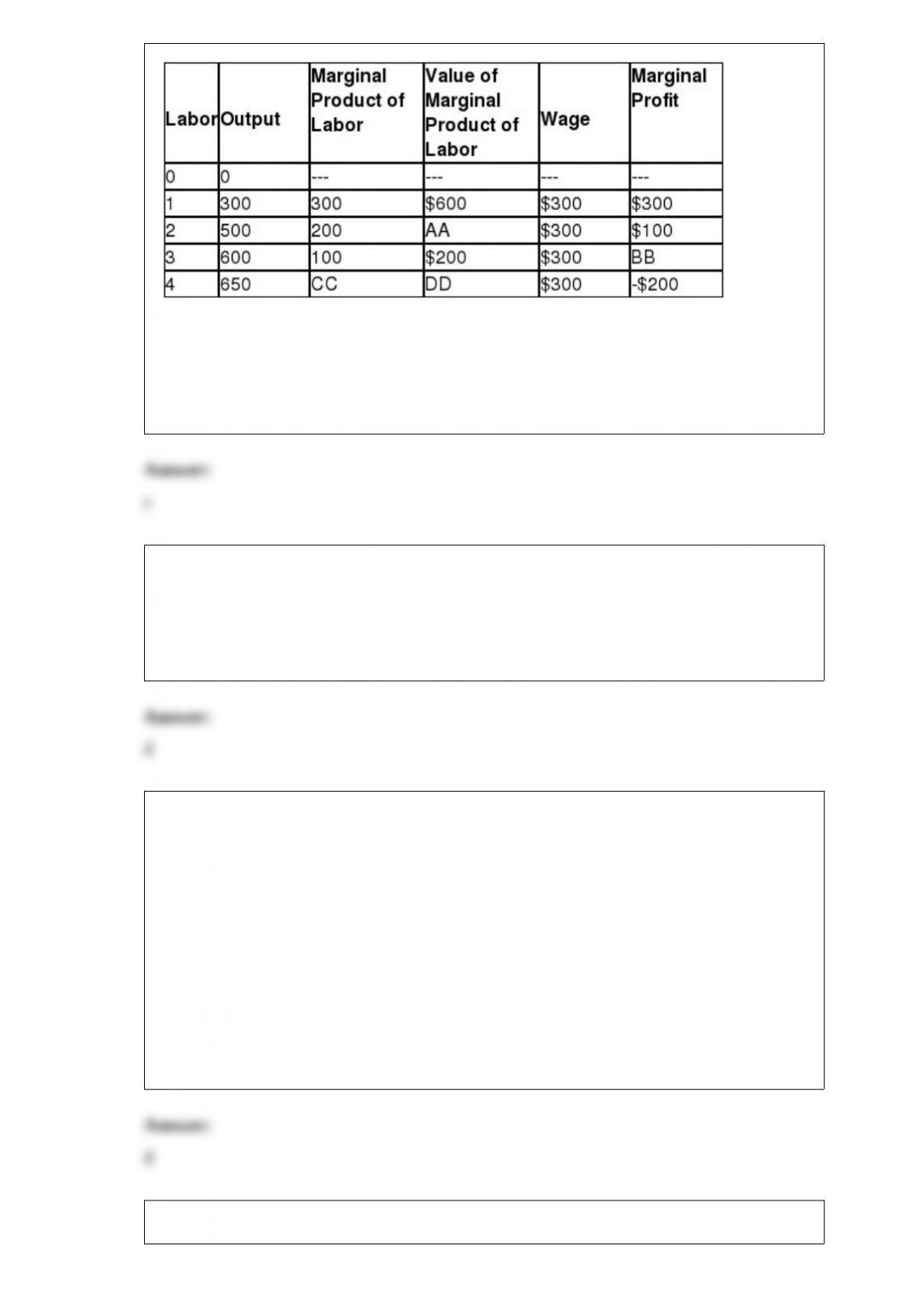
Refer to Table 18-6. What is the value for the cell labeled AA?
a.$600
b.$500
c.$400
d.$300
5) hich of the following industries has the highest concentration ratio?
a.dresses
b.apples
c.books
d.cigarettes
6) Black men earn an average of 21% less than white men. A labor economist who
wants to investigate whether the differences in earnings indicate labor-market
discrimination against black men should consider whether black and white men have
similar
(i)years of work experience.
(ii)years of education.
(iii)occupations.
(iv)quality of education.
a.(i) and (ii) only
b.(iii) and (iv) only
c.(ii) only
d.(i), (ii), (iii), and (iv)
7) Trade can benefit everyone in society because it allows people to specialize in
activities in which they have a comparative advantage.
a.True
b.False
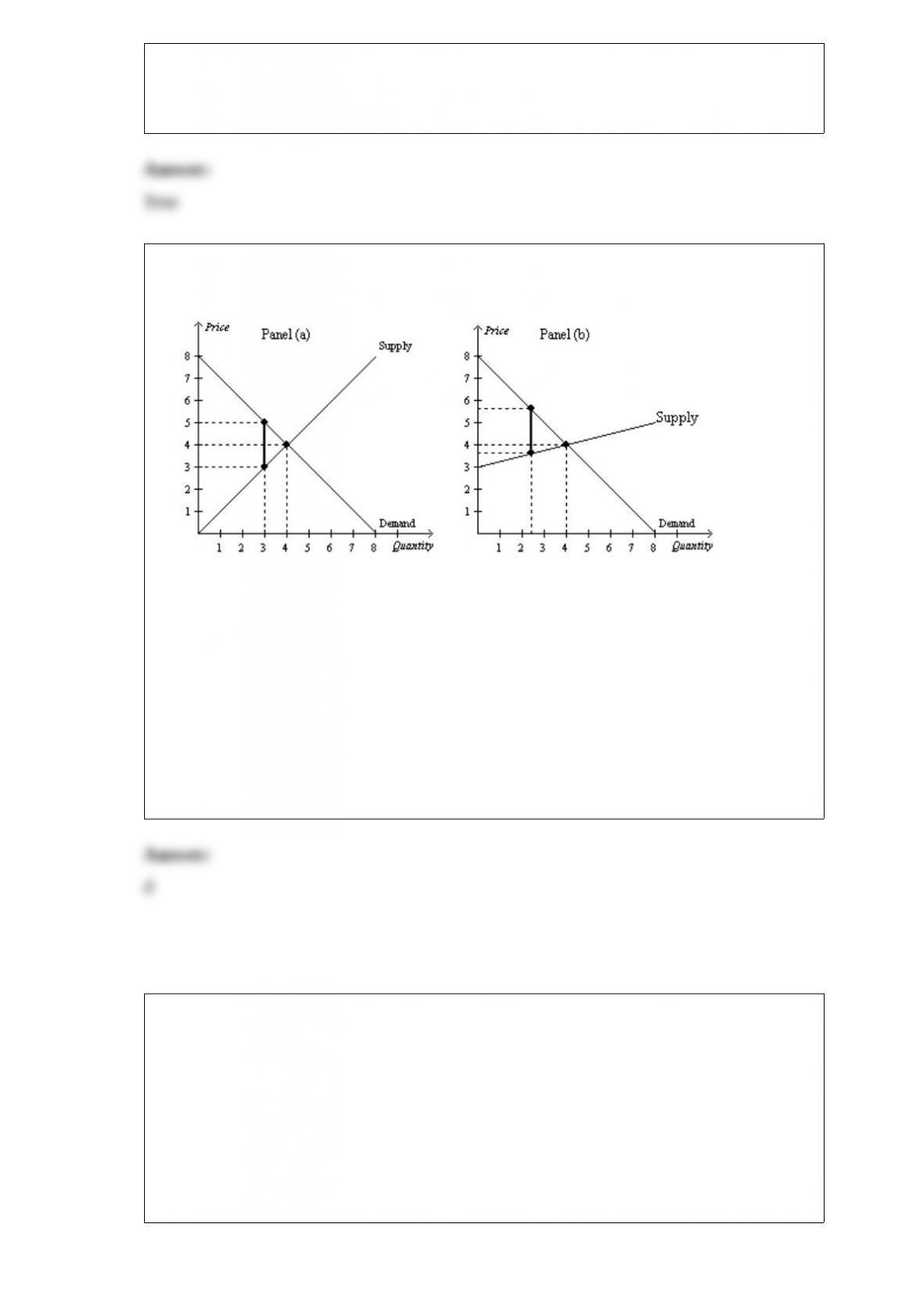
8)
Figure 8-16
Panel (a) and Panel (b) each illustrate a $2 tax placed on a market. In comparison to
Panel (a), Panel (b) illustrates which of the following statements?
a.When demand is relatively inelastic, the deadweight loss of a tax is smaller than when
demand is relatively elastic.
b.When demand is relatively elastic, the deadweight loss of a tax is larger than when
demand is relatively inelastic.
c.When supply is relatively inelastic, the deadweight loss of a tax is smaller than when
supply is relatively elastic.
d.When supply is relatively elastic, the deadweight loss of a tax is larger than when
supply is relatively inelastic.
9) Two bottles of over-the-counter pain reliever sit side-by-side in a grocery store: Advil
(a brand name) sells for $5.00, while Feel Better (not a brand name) sells for $2.50. In a
typical day the store sells some of each type of pain reliever, which suggests that
a.no rational consumer would spend twice as much for Advil as he would for Feel
Better.
b.some consumers must perceive that Advil is a higher quality product.
c.Advil has no incentive to maintain the quality of its product just because of the Advil
brand name.
d.Advil spends money on advertising to reduce competition in the market.
10) Assume a certain firm regards the number of workers it employs as variable but
regards the size of its factory as fixed. This assumption is often realistic
a.in the short run but not in the long run.
b.in the long run but not in the short run.
c.both in the short run and in the long run.
d.neither in the short run nor in the long run.
11) Which markets are represented in the simple circular-flow diagram?
a.markets for goods and services and markets for financial assets
b.markets for factors of production and markets for financial assets
c.markets for goods and services and markets for factors of production
d.markets for goods and services and markets for imports and exports
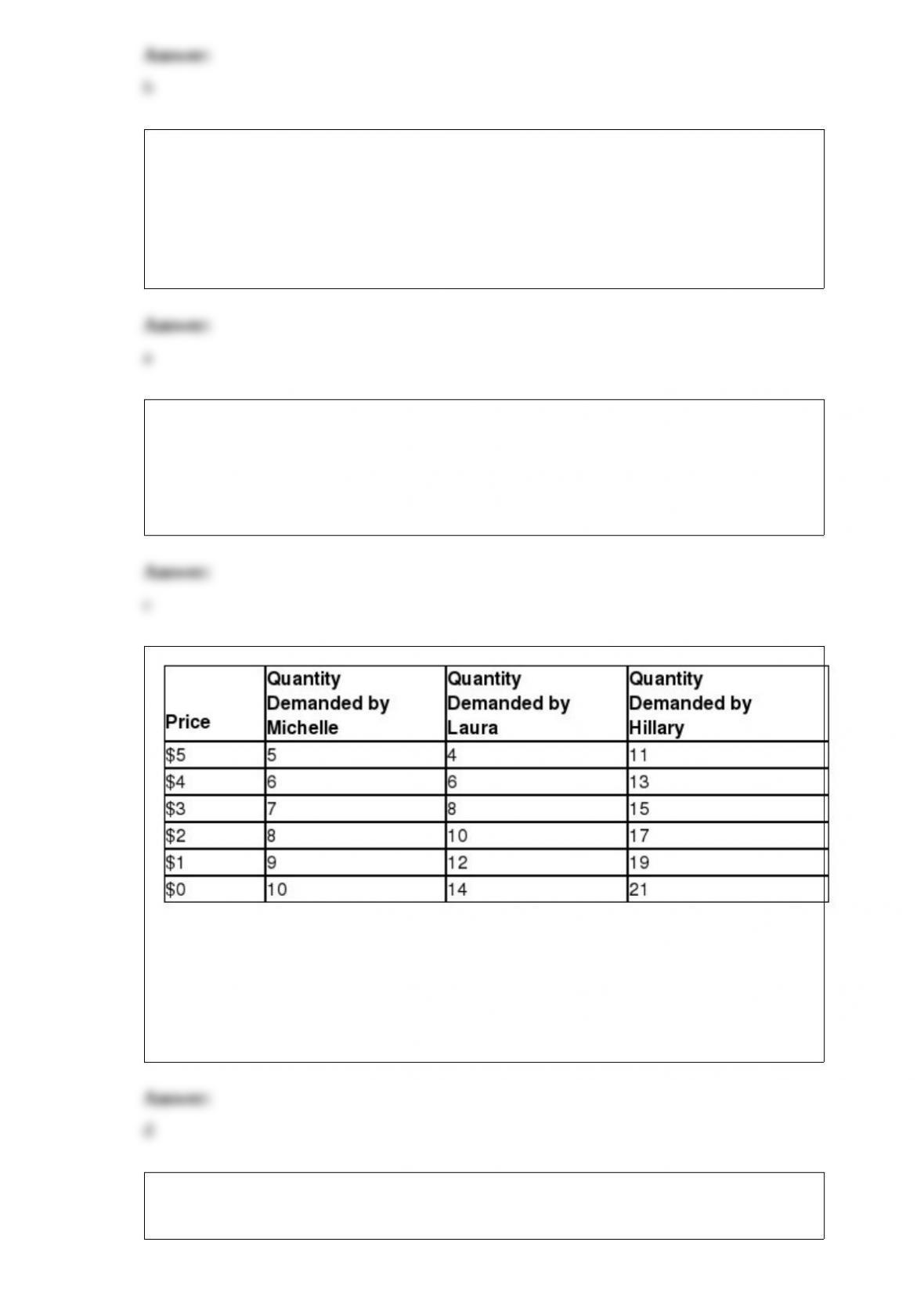
12) If the market consists of Michelle, Laura, and Hillary and the price falls by $1, the
quantity demanded in the market increases by
a.2 units.
b.3 units.
c.4 units.
d.5 units.
13) If the output effect from increased production is larger than the price effect, then an
oligopolist would increase production.
a.True
b.False
14) Narrative 22-1
Katie owns a boutique that sells highend women’s clothing and accessories. Shana
works part-time at the boutique and frequently is the only employee in this small store.
Katie pays Shana a wage that is higher than the market wage for this type of job. When
the store is not full of customers, Shana diligently works on displays and cleans to keep
the store looking its best. Magda is a customer in the store who asks Shana’s opinion on
the quality of some jeans she is considering purchasing. Even though she’s had several
other customers return them due to flaws, Shana tells Magda the quality is great.
Belinda is another customer who is returning a necklace without revealing that she lost
a gem from it while wearing it.
Refer to Narrative 22-1. Which of the ladies is an agent?
a.Shana
b.Katie
c.Belinda
d.Magda
15) Figure 8-22
Suppose the government initially imposes a $3 per-unit tax on this good. Now suppose
the government is deciding whether to lower the tax to $1.50 or raise it to $4.50. Which
of the following statements is correct?
a.Compared to the original tax, the smaller tax will decrease both tax revenue and
deadweight loss.
b.Compared to the original tax, the larger tax will increase both tax revenue and
deadweight loss.
c.Compared to the original tax, the larger tax will decrease tax revenue and increase
deadweight loss.
d.Both a and b are correct.
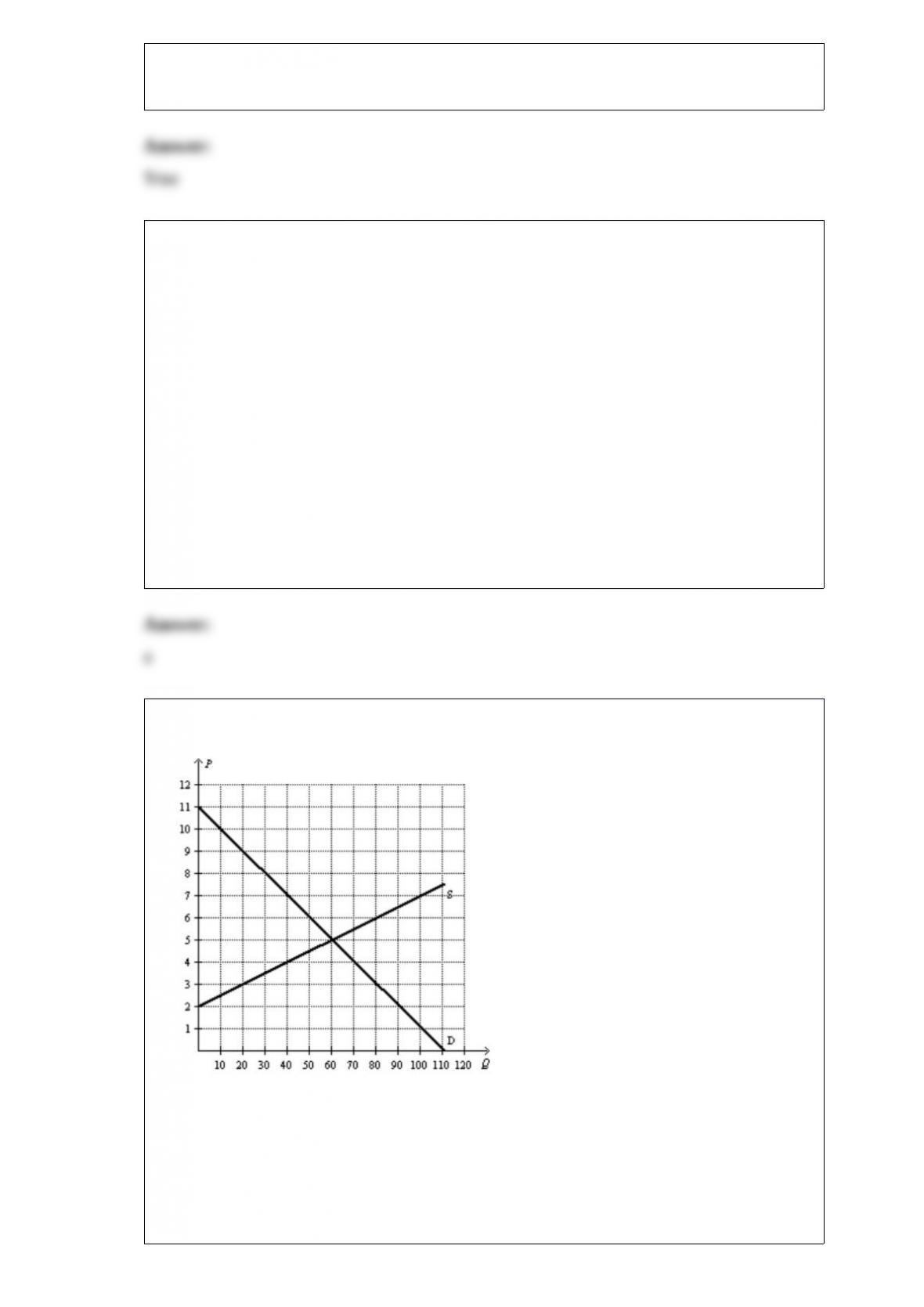
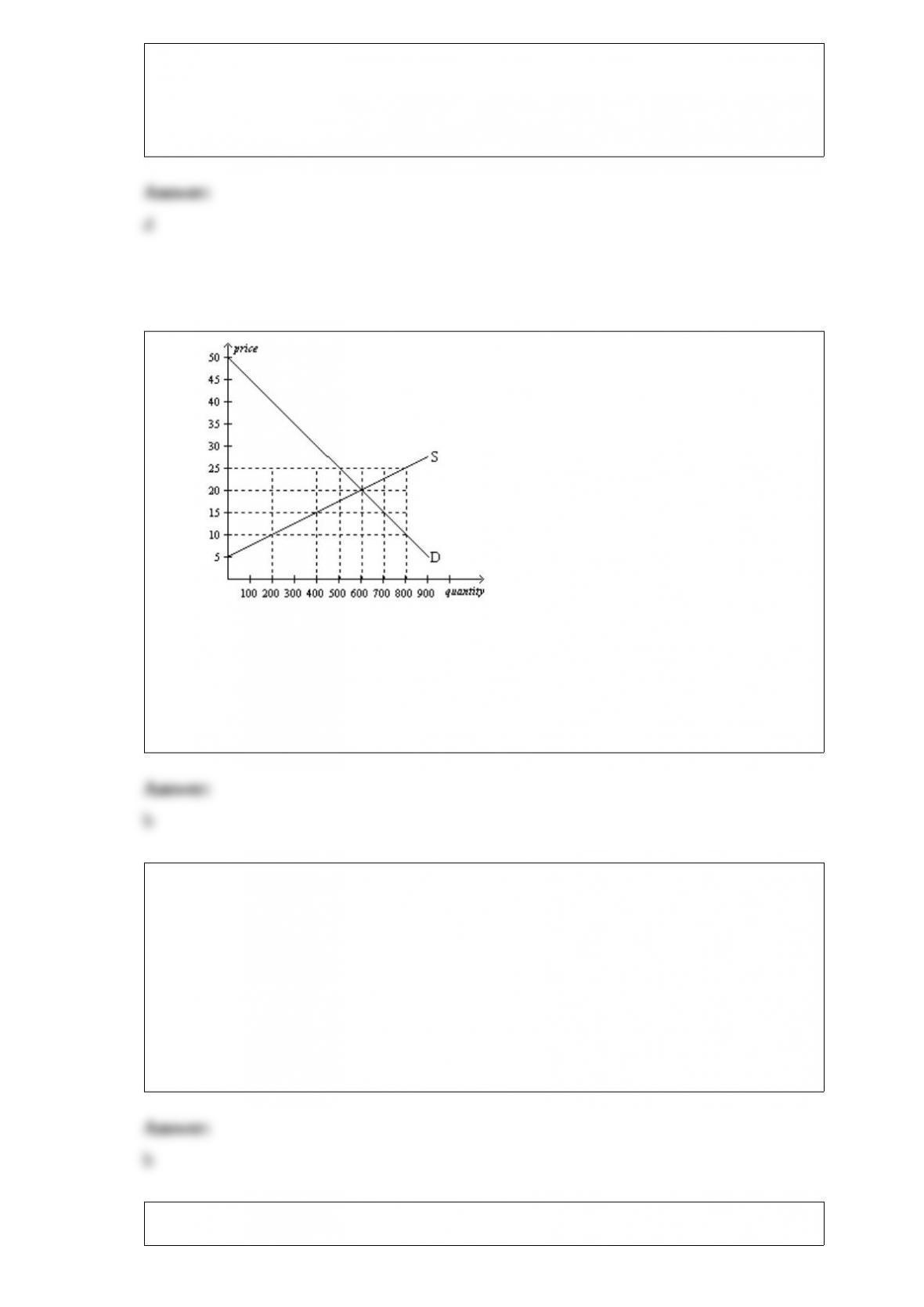
16) If the price is $25, then there would be an
excess
a.supply of 100 units, and price would fall.
b.supply of 300 units, and price would fall.
c.demand of 100 units, and price would fall.
d.demand of 300 units, and price would fall.
17) Which of the following statements is correct for a monopolist?
(i)The firm maximizes profits by equating marginal revenue with marginal cost.
(ii)The firm maximizes profits by equating price with marginal cost.
(iii)Demand equals marginal revenue.
(iv)Average revenue equals price.
a.(i), (iii), and (iv) only
b.(i) and (iv) only
c.(i), (ii), and (iv) only
d.(i), (ii), (iii), and (iv)
18) Suppose Country A has a high average wage level and a high level of output per
person, while Country B has a low average wage level and a low level of output per
person. Which country can benefit from trade?
a.Only Country A can benefit.
b.Only Country B can benefit.
c.Both Country A and Country B can benefit.
d.Neither Country A nor Country B can benefit.
19) “A $1,000 tax paid by a poor person may be a larger sacrifice than a $10,000 tax
paid by a wealthy person” is an argument in favor of
a.the horizontal equity principle.
b.the benefits principle.
c.a regressive tax argument.
d.the ability-to-pay principle.
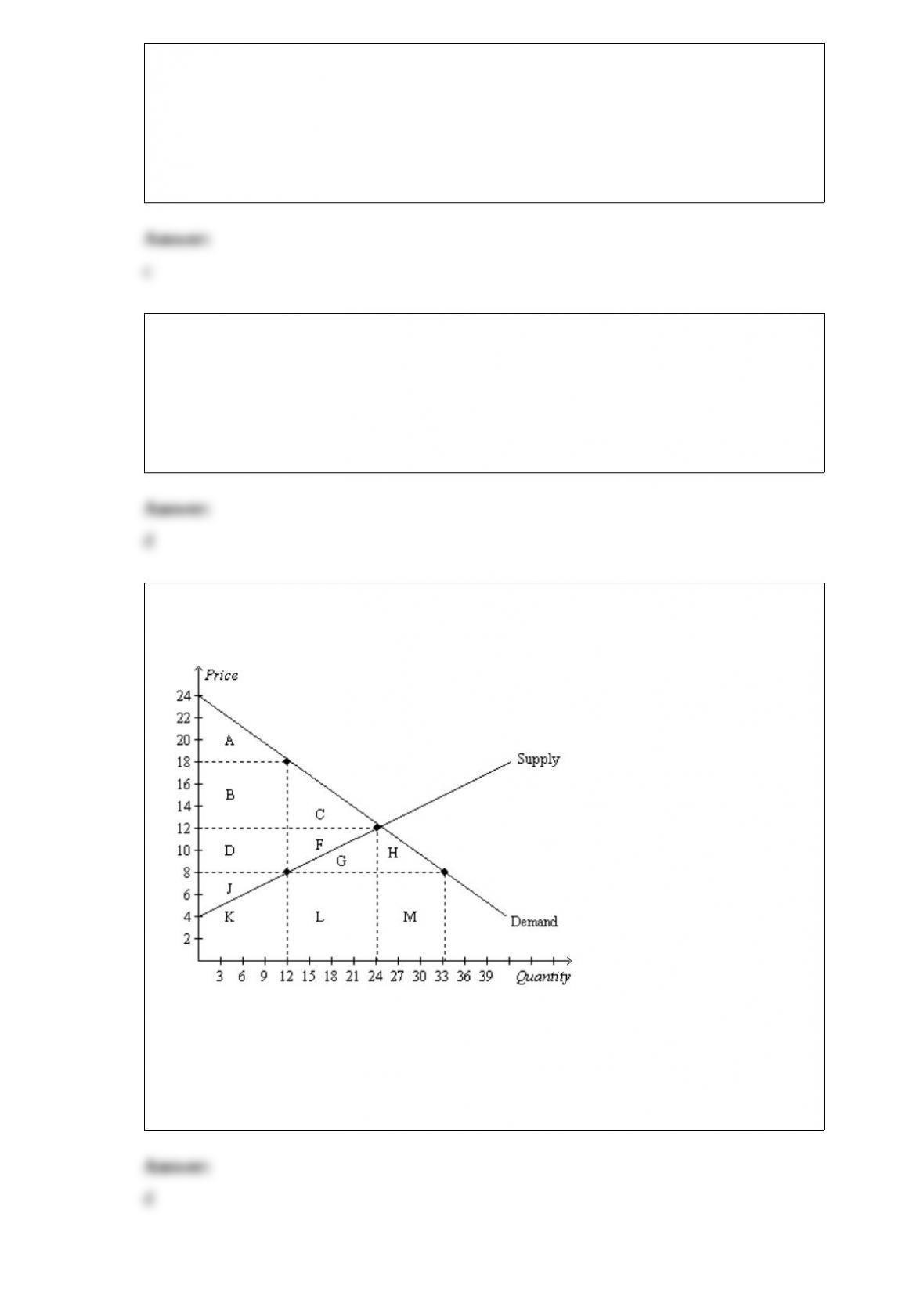
20) Figure 8-8
Suppose the government imposes a $10 per unit tax on a good.
After the tax goes into effect, producer surplus is the area
a.D+F+G+H+J.
b.D+F+G+H.
c.D+F+J.
d.J.