1) The supply curve of loanable funds is upsloping because:
A.businesses find more investments to be profitable at low interest rates than at high
interest rates.
B.households are willing to save more at high interest rates than they are at low interest
rates.
C.government budget deficits vary inversely with the equilibrium interest rate.
D.banks lend more at low interest rates than they do at high interest rates.
2) the world trade organization (wto)
a.sets tariffs to balance international trade among nations.
b.is the successor to nafta.
c.hears and rules on trade disputes between nations.
d.sets exchange rates to balance international trade among nations.
3) (last word) the “after this, therefore because of this” fallacy states that:
a.because event a precedes event b, a is necessarily the cause of b.
b.the very attempt to accomplish a certain objective may create conditions that prohibit
the achievement of that goal.
c.events may drastically alter plans; one’s intentions and actual accomplishments may
differ considerably.
d.generalizations that are accurate at the level of microeconomics may be inaccurate at
the level of macroeconomics.
4)
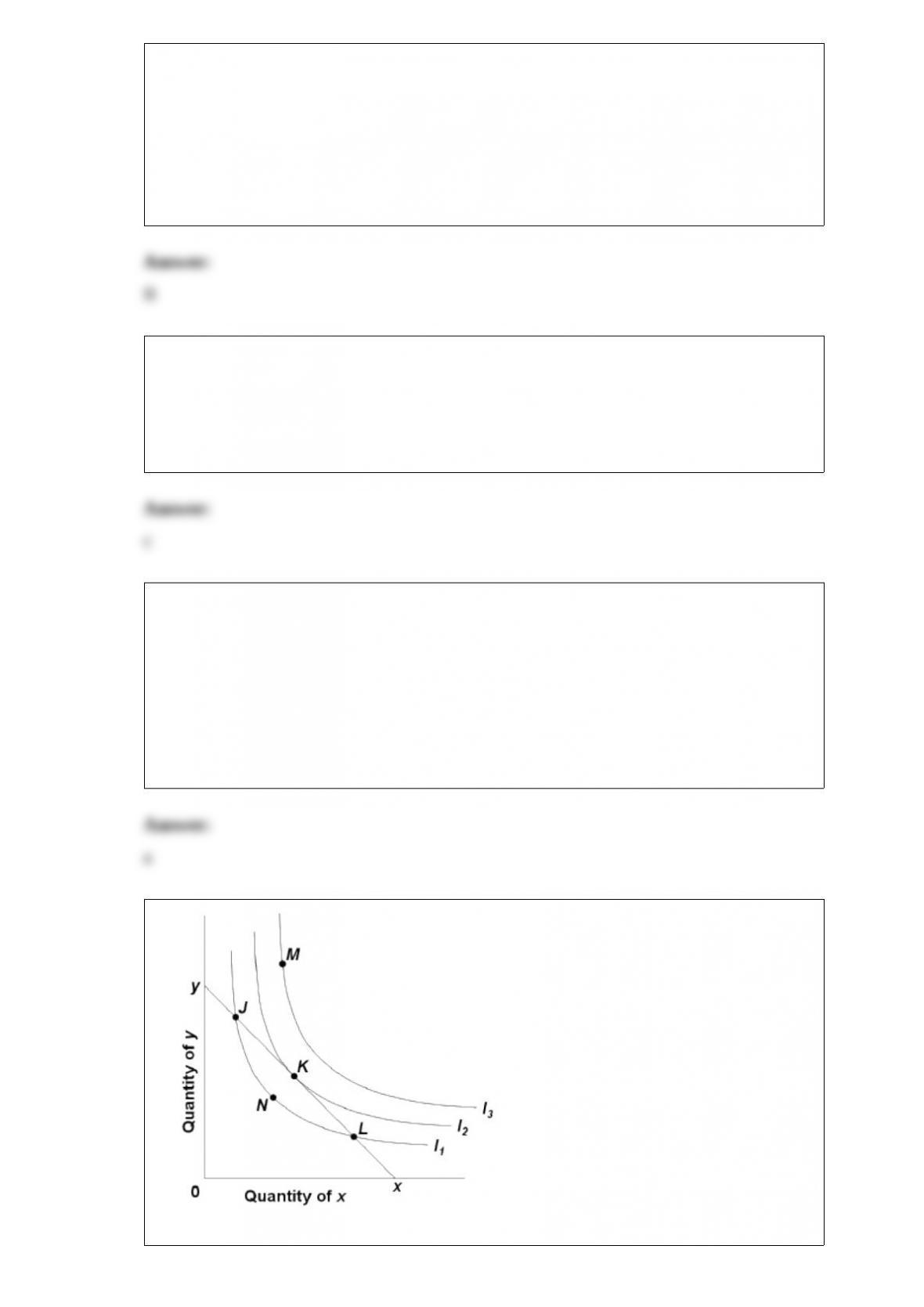
refer to the above diagram where xy is the relevant budget line and i1, i2, and i3 are
indifference curves. point m:
a.is the consumer’s equilibrium position.
b.is unattainable.
c.is inferior to point n.
d.entails the highest attainable level of total utility.
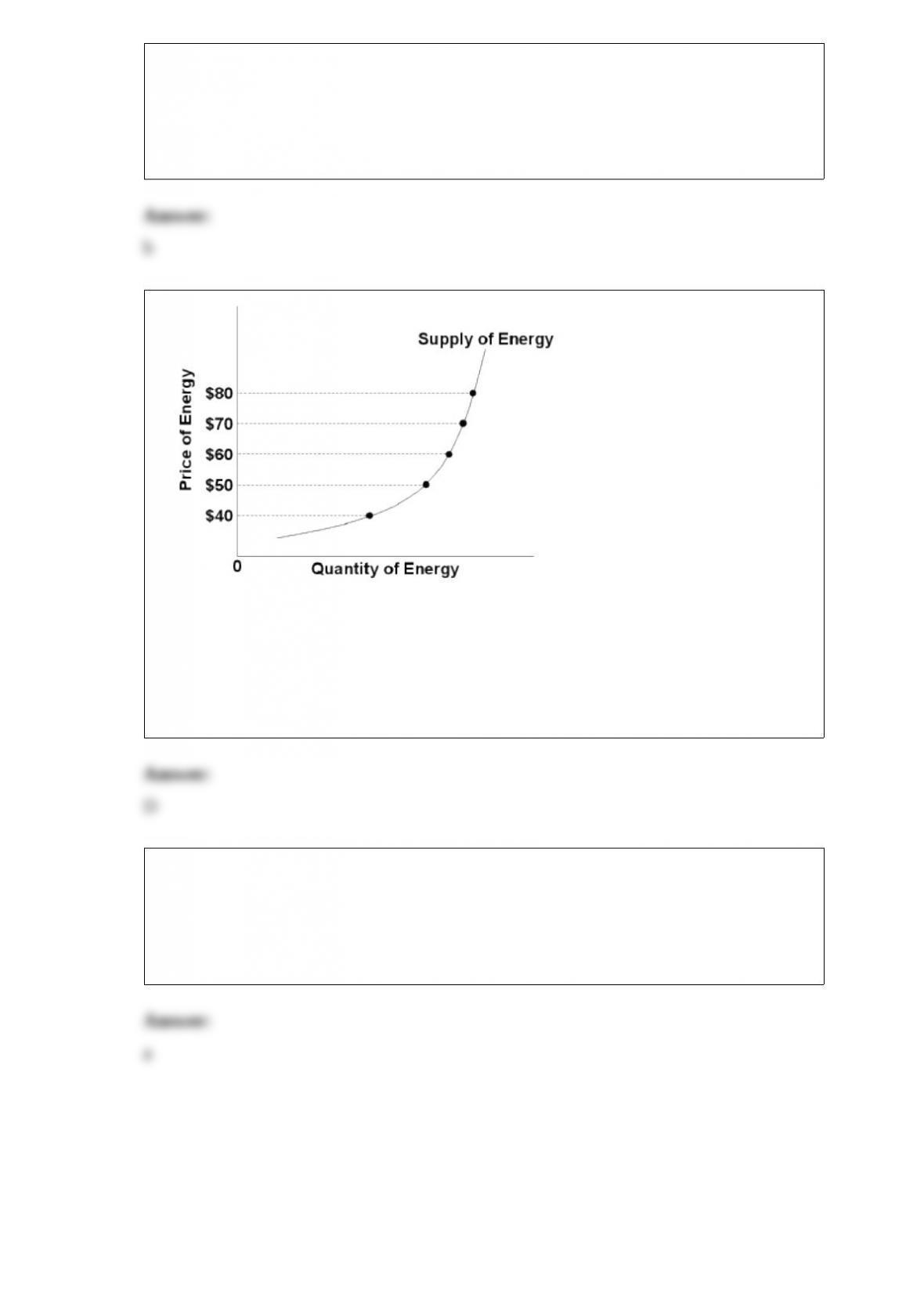
5)
Refer to the diagram above. Assuming it represents the overall supply of energy, at what
per barrel price of oil does the production of biodiesel become economically viable?
A.$50.
B.$60.
C.$70.
D.$80.
6) in determining one’s personal income tax, taxable income is:
a.total income less deductions and exemptions.
b.earned income less property income.
c.all income other than wages and salaries.
d.wage and salary income only.
7)
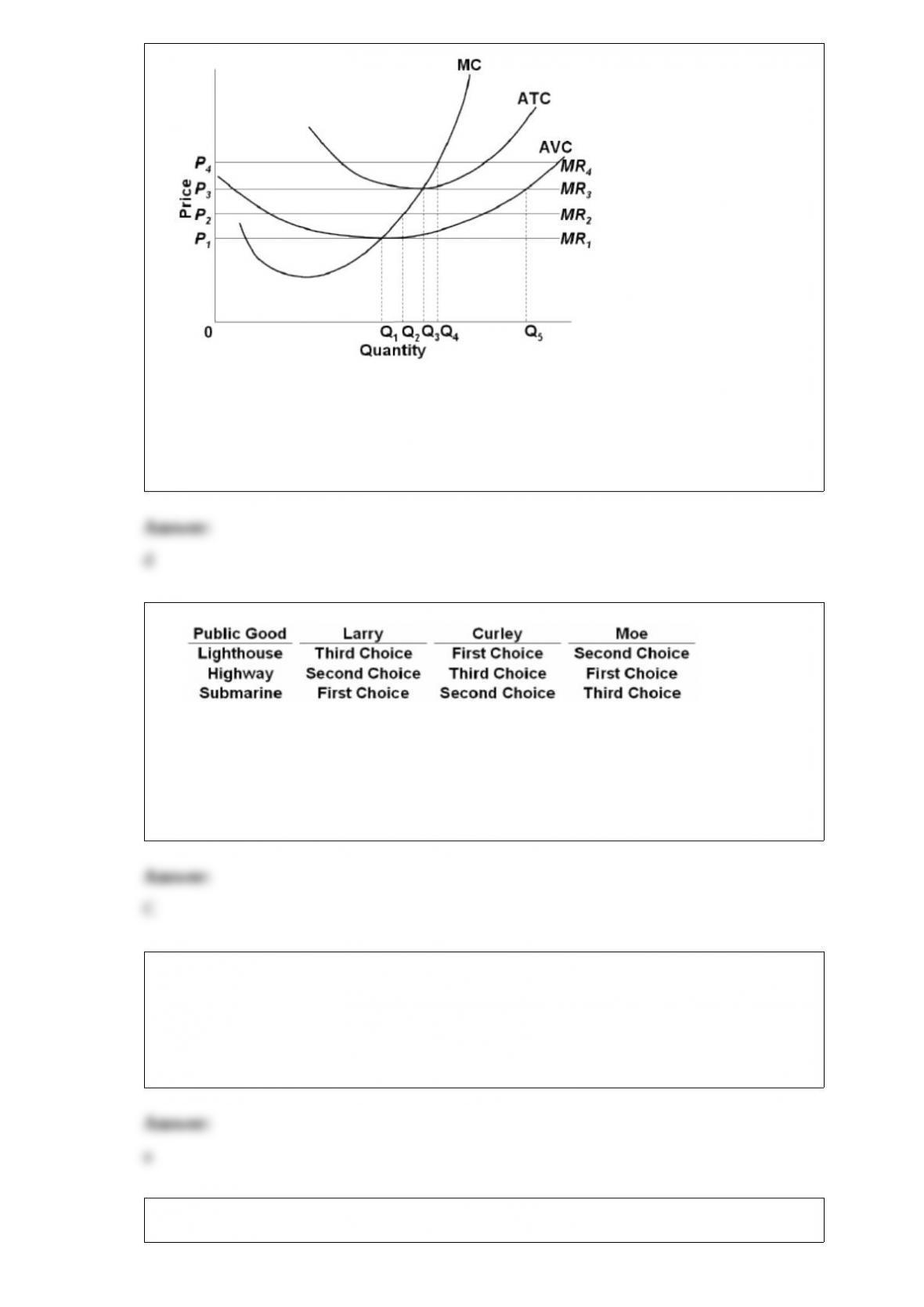
refer to the above diagram. the firm will realize an economic profit if price is:
a.p1
b.p2
c.p3
d.p4
8)
The information contained in the above table illustrates:
A.political logrolling.
B.the median-voter model.
C.the paradox of voting.
D.the Coase theorem.
9) a competitive market will:
a.achieve an equilibrium price.
b.produce shortages.
c.produce surpluses.
d.create disorder.
10) Which of the following is least likely to be a problem for monetary policy?
A.The recognition lag.
B.The operational lag.
C.The administrative lag.
D.Cyclical asymmetry.
11) Fiscal policy is carried out primarily by:
A.the Federal government.
B.state and local governments working together.
C.state governments alone.
D.local governments alone.
12) Suppose the balance on the financial account is +$200 billion and the balance on
the capital account is +$2 billion. The size of the current account is:
A.+$200 billion.
B.-$202 billion.
C.-$198 billion.
D.+$2 billion.