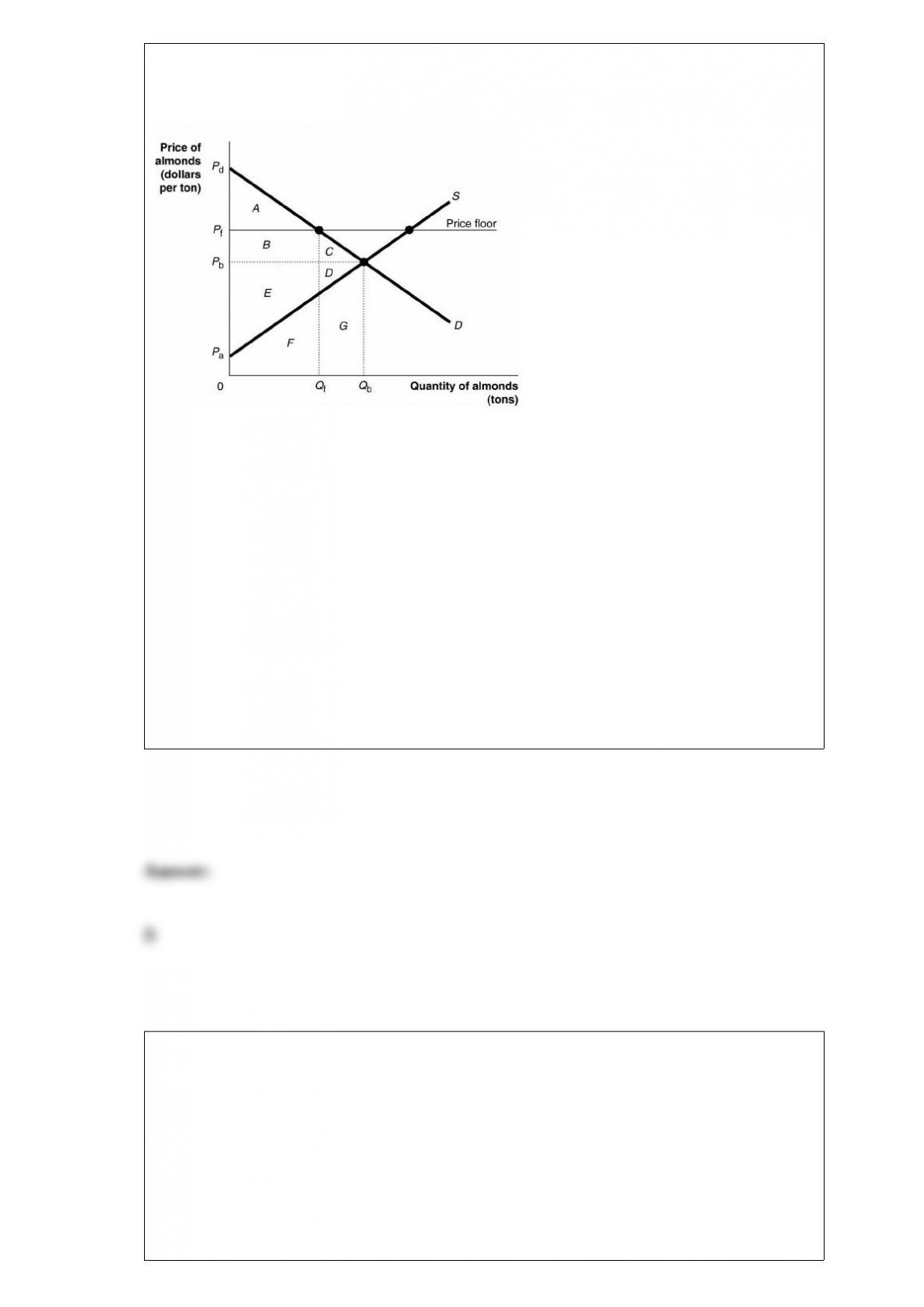
Figure 4-6
Figure 4-6 shows the demand and supply curves for the almond market. The
government believes that the equilibrium price is too low and tries to help almond
growers by setting a price floor at Pf.
Refer to Figure 4-6. What is the area that represents producer surplus after the
imposition of the price floor?
A) A + B + E
B) B + E
C) B + E + F
D) B + C + D + E
When a competitive equilibrium is achieved in a market
A) all individuals are better off than they would be if a price ceiling or price floor was
imposed by government.
B) the total net benefit to society is maximized.
C) the total benefits to consumers are equal to the total benefits to producers.

D) economic surplus equals the deadweight loss.
The De Beers diamond mining and marketing company of South Africa became one of
the most profitable and longest-lived monopolies in history. Which of the following has
always threatened De Beers’ control of the diamond market?
A) Since few diamonds are ever destroyed, De Beers has constantly faced possible
competition from other firms reselling diamonds.
B) Competition from imitation diamonds. Technology has made it possible to make
fake diamonds look exactly like real diamonds.
C) Competition from other gemstones, including rubies and emeralds, that have become
more popular over time.
D) At different times in the past some countries have banned the importation of
diamonds from South Africa for political reasons.
Table 9-6
Production and
Consumption Production
Without Trade With Trade
Denmark and Belize can produce both clocks and hats. Table 9-6 shows the production
and consumption quantities without trade, and the production numbers with trade.
Refer to Table 9-6. If the actual terms of trade are 1 hat for 1.8 clocks and 150 hats are
traded, how many clocks will Denmark consume?
A) 270
B) 900
C) 930
D) 1,200
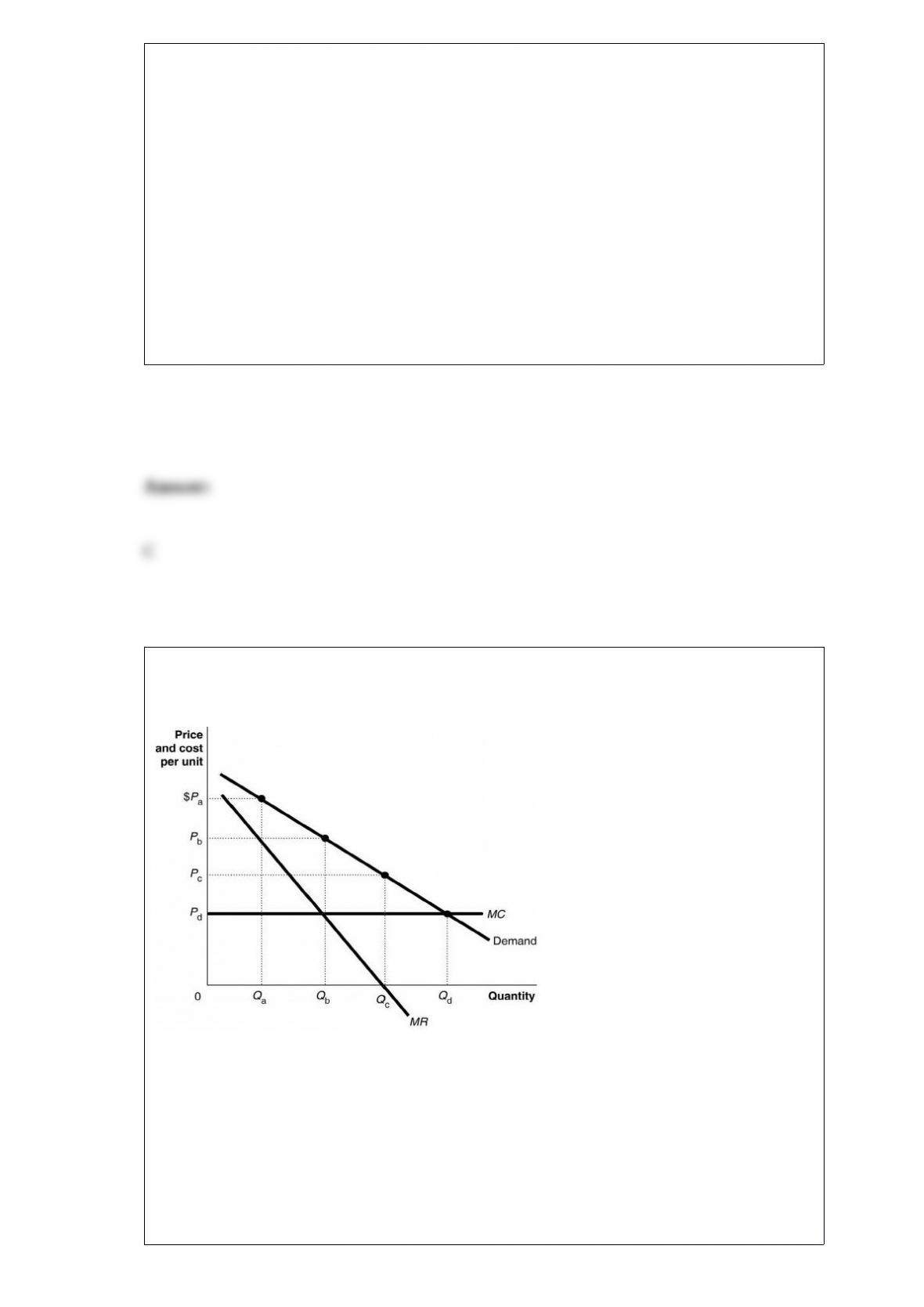
Figure 13-5
Refer to Figure 13-5. The candy store represented in the diagram is currently selling Qa
units of candy at a price of Pa. Is this candy store maximizing its profit and if it is not,
what would you recommend to the firm?
A) Yes, it is maximizing its profit by charging the highest price possible.
B) No, it is not; since its marginal cost is constant, it should produce and sell as much
candy as it can. It should sell Qd units at a price of Pd.
C) No, it is not; it should lower its price to Pc and sell Qc units.
D) No, it is not; it should lower its price to Pb and sell Qb units.
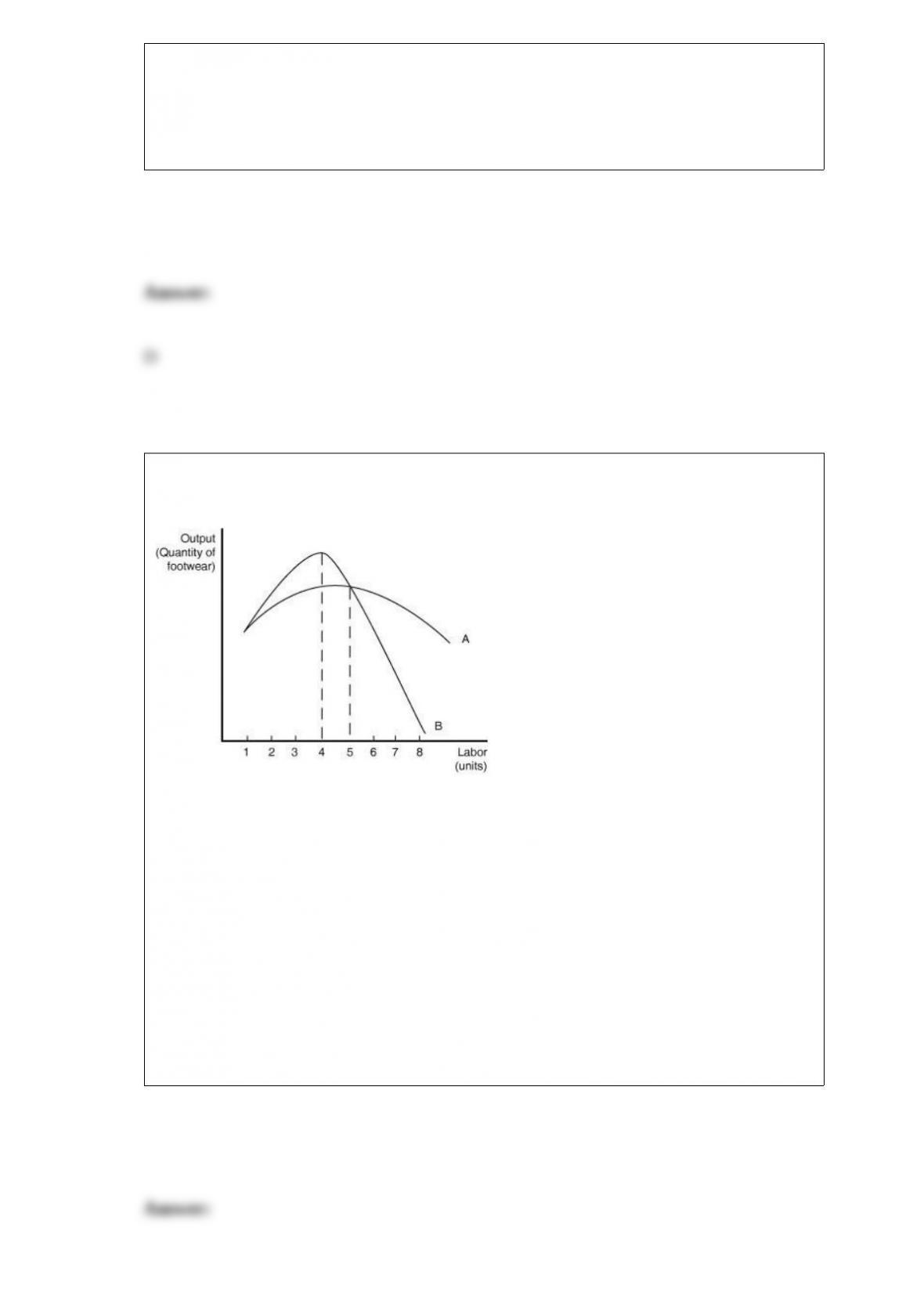
Figure 11-3
Fancy Footwear manufactures shoes. Figure 11-3 shows Fancy Footwear’s marginal
product of labor and average product of labor curves in the short run.
Refer to Figure 11-3. For what quantity of labor does production display diminishing
returns?
A) for more than 1 units of labor
B) for more than 4 unit of labor
C) for more than 5 units of labor
D) for more than 8 units of labor

The total value to society of having garbage removed is greater than the value of
baseball games. Why, then, are baseball players paid more than garbage collectors?
A) Although the total value of garbage removal is greater than the total value of
baseball, wages are determined by average values.
B) Garbage removal results in significant external benefits that are not captured in the
price paid for garbage removal. As a result, wages of garbage collectors do not reflect
their social benefits.
C) There is greater competition in the garbage collection industry than there is in Major
League Baseball.
D) Wages do not depend on total values but marginal values. The marginal revenue
product of baseball players exceeds the marginal revenue product of garbage collectors.
Trade unions claim that by permitting international firms to continually move to nations
with ________, globalization reduces labor’s bargaining power and forces overall labor
standards lower.
A) better factory facilities
B) higher resource accessibility
C) lower labor standards
D) lower labor density

Molly Sharp is producing a documentary about the plight of the six-toed ferrets of Sri
Lanka. Molly has spent $125,000 of her own money on this project and the
documentary is now complete. Molly just found out that no studio is willing to release
her documentary and she must now shop it to cable television networks, where she
knows she will not be able to recoup her investment. Which of the following statements
regarding Molly Sharp’s documentary is true?
A) She should not try to have her documentary aired on television because she cannot
recoup her $125,000 investment.
B) Since the $125,000 is a sunk cost, she should still try to have her documentary aired
on television even though she will not see a profit.
C) The $125,000 is a variable cost, so will not be incurred if she chooses not to have her
documentary aired.
D) The $125,000 investment is an economic cost, and she will still make an accounting
profit even if the television network willing to air her documentary pays her less than
$125,000.
Figure 16-6
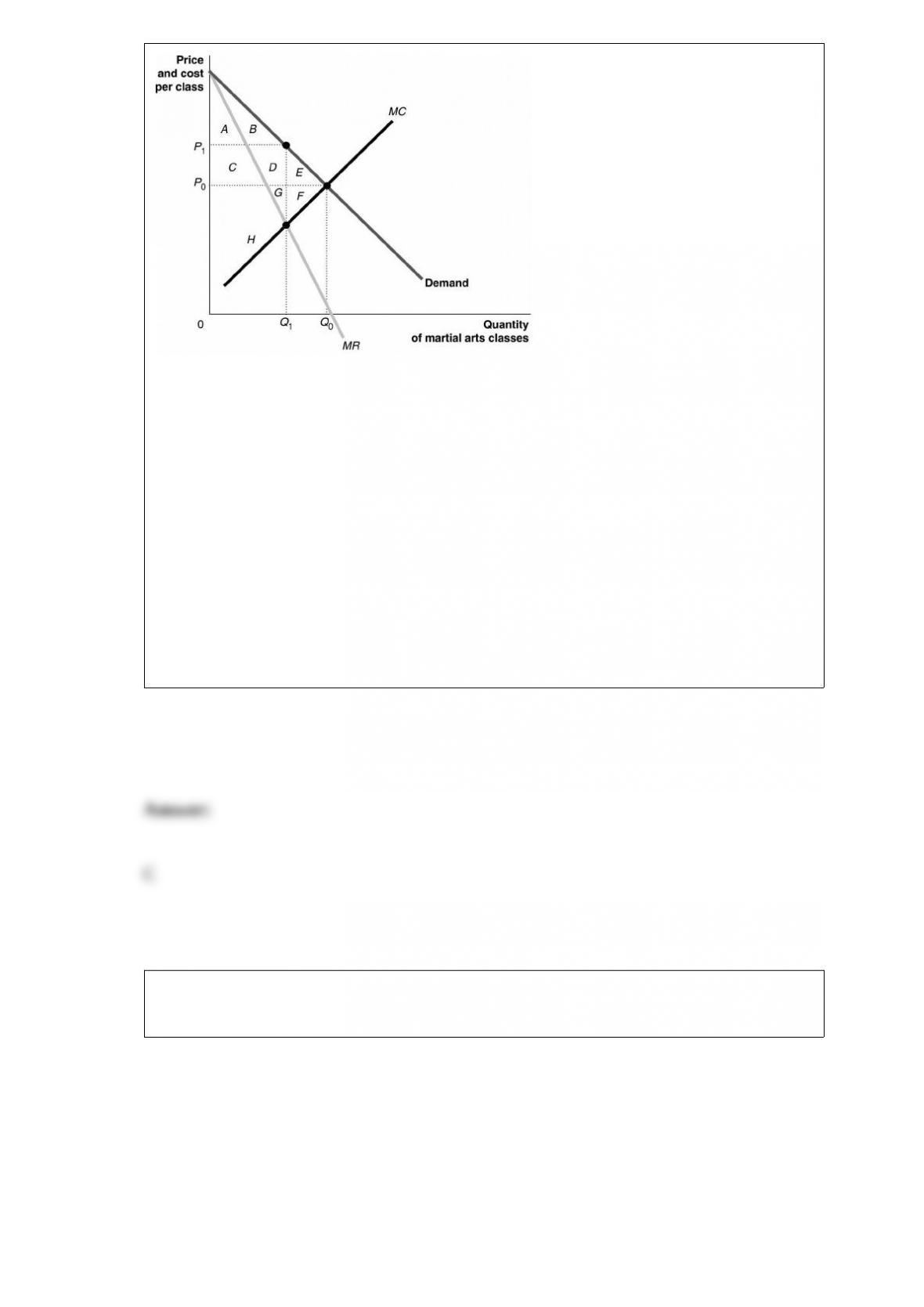
Watanabe Sensei operates the only martial arts school in Hartfield. For simplicity,
assume that consumers have identical demand curves and that Sensei knows what this
demand curve is. Figure 16-6 shows this demand curve.
Refer to Figure 16-6. If Sensei acts as a monopolist and charges the profit-maximizing
price, what is his producer surplus?
A) the area B + D + G
B) the area A + B + C + D + H + G
C) the area C + D + H + G
D) the area A + C + H
Figure 18-6
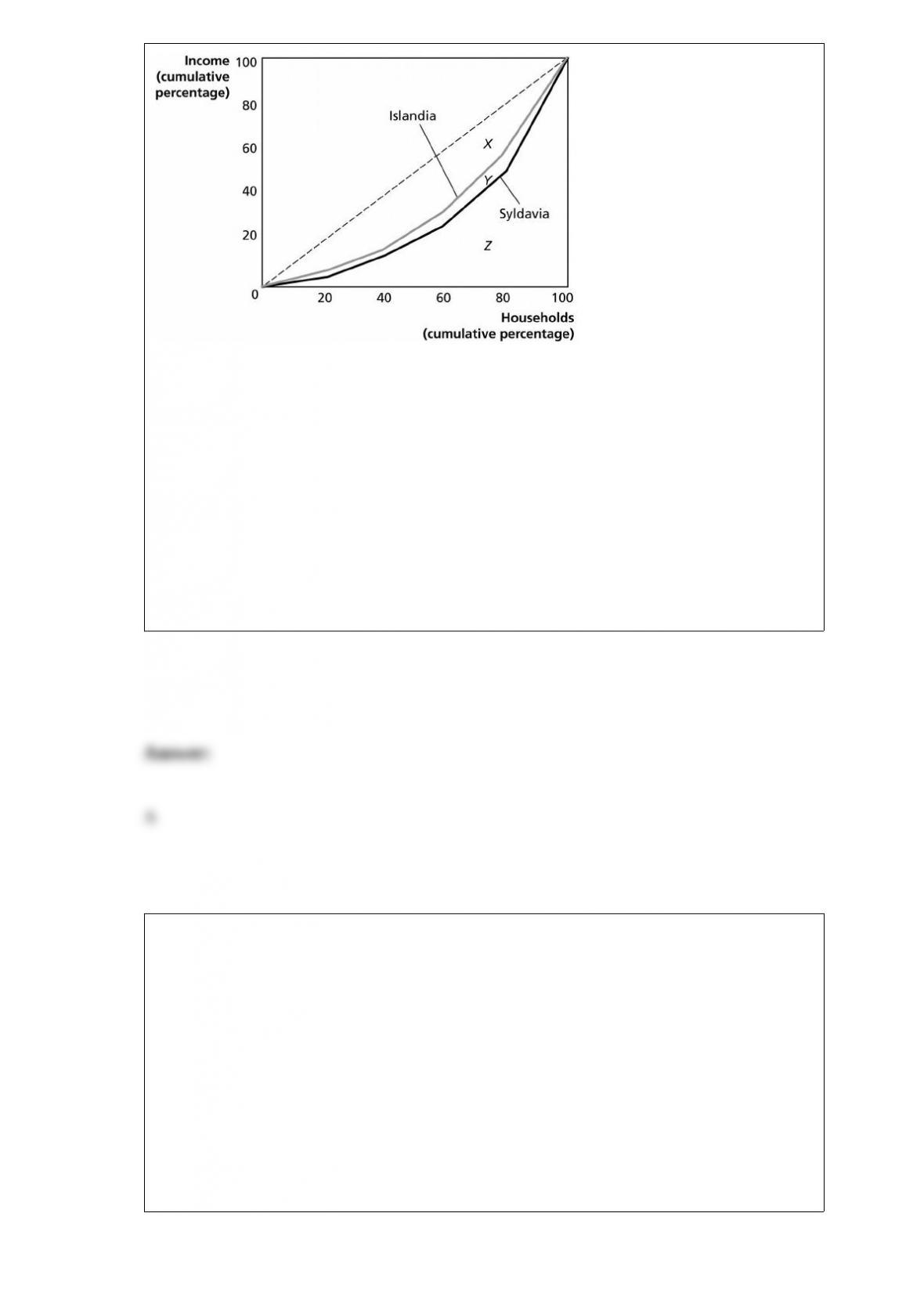
Figure 18-6 shows the Lorenz curves for Islandia and Syldavia.
Refer to Figure 18-6. If area X = 2,060, area Y = 240, and area Z = 2,700, calculate the
Gini coefficient for Islandia.
A) 0.41
B) 0.45
C) 0.70
D) 0.76
The United States is a leading exporter of wheat. What explains the comparative
advantage of the United States in wheat production?
A) positive externalities
B) investment by multinational firms such as Archer-Daniels-Midland and the Tyson
Foods Inc.
C) climate and soil conditions in the United States which are well-suited for wheat
production
D) a large supply of unskilled labor
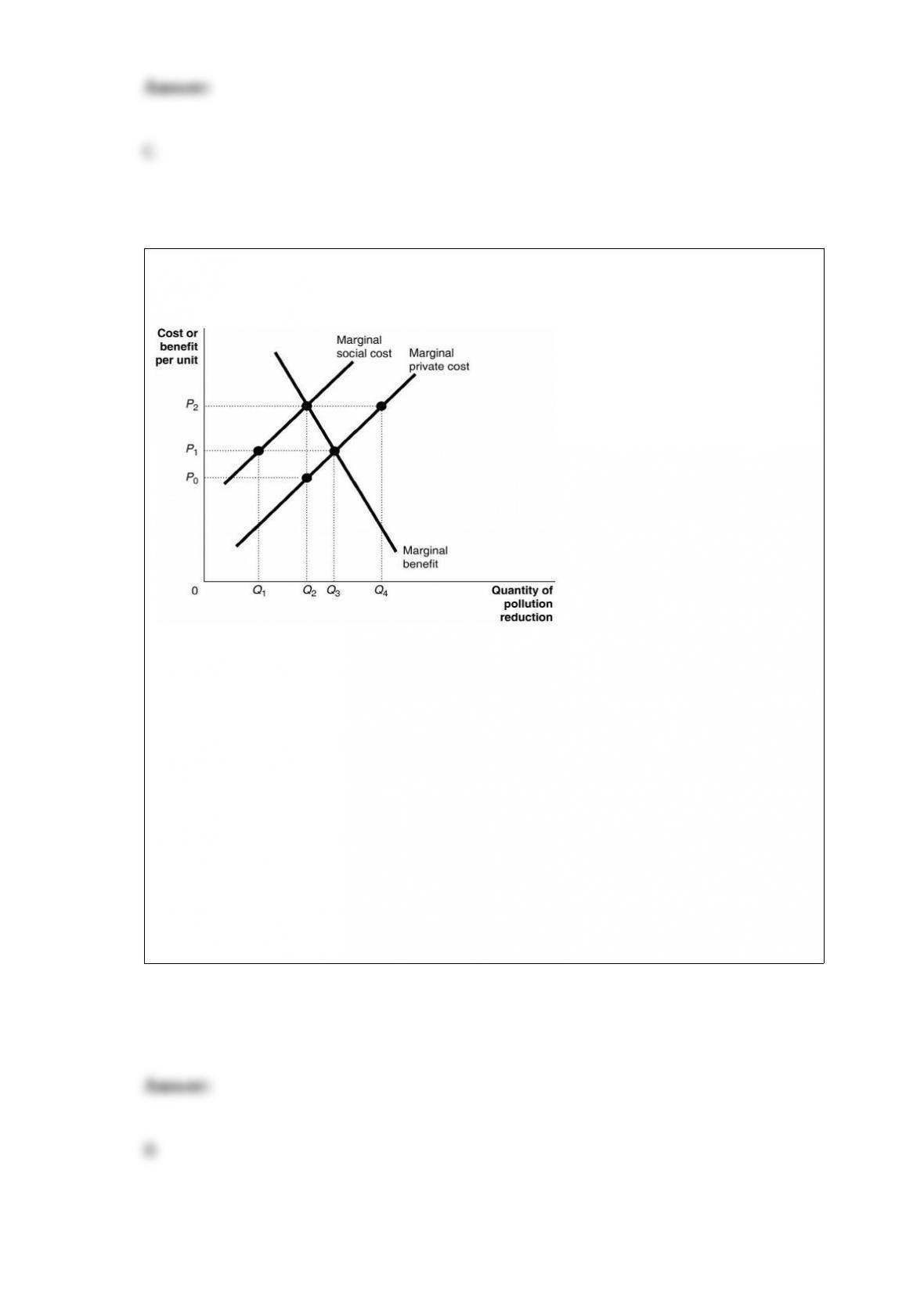
Figure 5-9
Companies producing toilet paper bleach the paper to make it white. The bleach is
discharged into rivers and lakes and causes substantial environmental damage. Figure
5-9 illustrates the situation in the toilet paper market.
Refer to Figure 5-9. The efficient output is
A) Q1.
B) Q2.
C) Q3.
D) Q4.

In general, a “big ticket item” such as a house or new car will
A) tend to have a more elastic demand than a lower priced good.
B) tend to have an inelastic demand because spending on the item takes up a large share
of the average consumer’s budget.
C) tend to have an inelastic demand because it has many substitutes.
D) tend to have a more inelastic demand the more time that passes.
The most profitable price for a monopolist is
A) the highest price a consumer is willing to pay for the monopolist’s product.
B) the price at which demand is unit-elastic.
C) a price that maximizes the quantity sold.
D) the price for which marginal revenue equals marginal cost.
Of the following industries, which are perfectly competitive? For those that are not
perfectly competitive, explain why.
a. Restaurants
b. Corn

c. College education
d. Local radio and television
The Buda Agri Corporation is the sole employer in rural Hungary. In the labor market,
Buda Agri is a
A) monopolistic competitor.
B) monopsony.
C) monopoly.
D) perfect competitor.

Suppose the labor market is in equilibrium. Which of the following statements is false?
A) The equilibrium wage rate is equal to the marginal revenue product of labor.
B) At the equilibrium wage, the quantity of labor demanded equals the quantity of labor
supplied.
C) Some workers will earn more than the equilibrium wage.
D) At the equilibrium wage, the demand for labor is equal to the supply of labor.
All centrally planned economies
A) have been political dictatorships.
B) started out as market economies.
C) began as mixed economies.
D) have become mixed economies.

Why is a typical person likely to gather more information when buying a new car than
when voting for a member of Congress?
A) because a person’s preferences are more likely to be met with little effort in the
political sphere but this is not the case when buying a car in the private marketplace
B) because it is less costly to acquire information about consumer items than it is about
political candidates
C) because buying a new car affects a person more immediately and personally
compared to voting for a member of Congress; in the latter, a person’s vote is only one
of many voters and therefore, not likely to have a large impact on the outcome
D) because the effects of buying a car are long term while a member of Congress has a
relatively short tenure
If a perfectly competitive apple farm’s marginal revenue exceeds the marginal cost of
the last bushel of apples sold, what should the farm do to maximize its profit?
A) determine what the total revenue and total cost of production are
B) increase output
C) decrease output
D) lower its price to sell more

Some nations encourage ________ because of recent resistance to worldwide trade
agreements.
A) regional pacts
B) homogeneous markets
C) product standardization
D) domestic manufacturing
State and local governments subsidize college students with grants and low-interest
loans. The loans and subsidies are examples of
A) positive externalities.
B) Coase subsidies.
C) Pigovian subsidies.
D) emission allowances.
Table 1-1

Lydia runs a small nail salon in the town of New Hope. She is debating whether she
should extend her hours of operation. Lydia figures that her sales revenue will depend
on the number of hours the nail salon is open as shown in the table above. She would
have to hire a worker for those hours at a wage rate of $10 per hour.
Refer to Table 1-1. What is Lydia’s marginal benefit if she decides to stay open for two
hours instead of one hour?
A) $25
B) $50
C) $75
D) $125
Which of the following factors help to explain the sustained increases in health care
spending in the United States, and which do not?
a. the additional paperwork, duplication, and waste generated in the U.S. health care
system compared to systems in other countries
b. the increasing costs of malpractice insurance and malpractice lawsuit settlements
c. the number of uninsured patients receiving hospital treatment that could have been
preformed at a lower cost in doctors’ offices
d. the slow growth in labor productivity in health care compared to that in the economy
as a whole
e. the aging population

f. increases in the cost of providing health care
Table 9-6
Production and
Consumption Production
Without Trade With Trade
Denmark and Belize can produce both clocks and hats. Table 9-6 shows the production
and consumption quantities without trade, and the production numbers with trade.
Refer to Table 9-6. Which country has a comparative advantage in producing hats?
A) Denmark
B) Belize
C) both countries
D) neither country

Which of the following goods would have the most inelastic demand?
A) ski vacations
B) bread
C) luxury cars
D) big screen TVs
Article Summary
In an August 2013 speech from the Lincoln Memorial, President Obama was expected
to emphasize that increased economic equality is needed to improve racial equality.
Economic gaps based on race have endured for 50 years, with the differences in
unemployment rates between blacks and whites remaining virtually unchanged and the
gap in wealth actually increasing. “If you look at 50 years after the 1960s civil rights
movement, the most stubborn and persistent challenge when it comes to the nation’s
racial challenge remains in the areas of economics and wealth,” said Marc Morial,
president of the National Urban League.
Source: Zachary A. Goldfarb, “For Obama, 50 years after historic march, economic
equality the path to racial justice,” Washington Post, August 17, 2013.
Refer to the Article Summary. The article mentions increased economic equality is
needed in terms of wealth, and for some people this means a more equitable distribution
of wealth. What is meant by a more equitable distribution of wealth?
A) a more allocatively efficient distribution of wealth
B) a more productively efficient distribution of wealth
C) a more fair distribution of wealth
D) wealth distributed based on income levels
A reason why there is more competition among restaurants than among large discount
department stores is that restaurants
A) have to cater to a variety of consumer tastes while department stores do not.
B) unlike department stores, have to abide by government sanitation rules.
C) unlike department stores, do not have significant economies of scale.
D) have more elastic demand for their product compared to department stores.
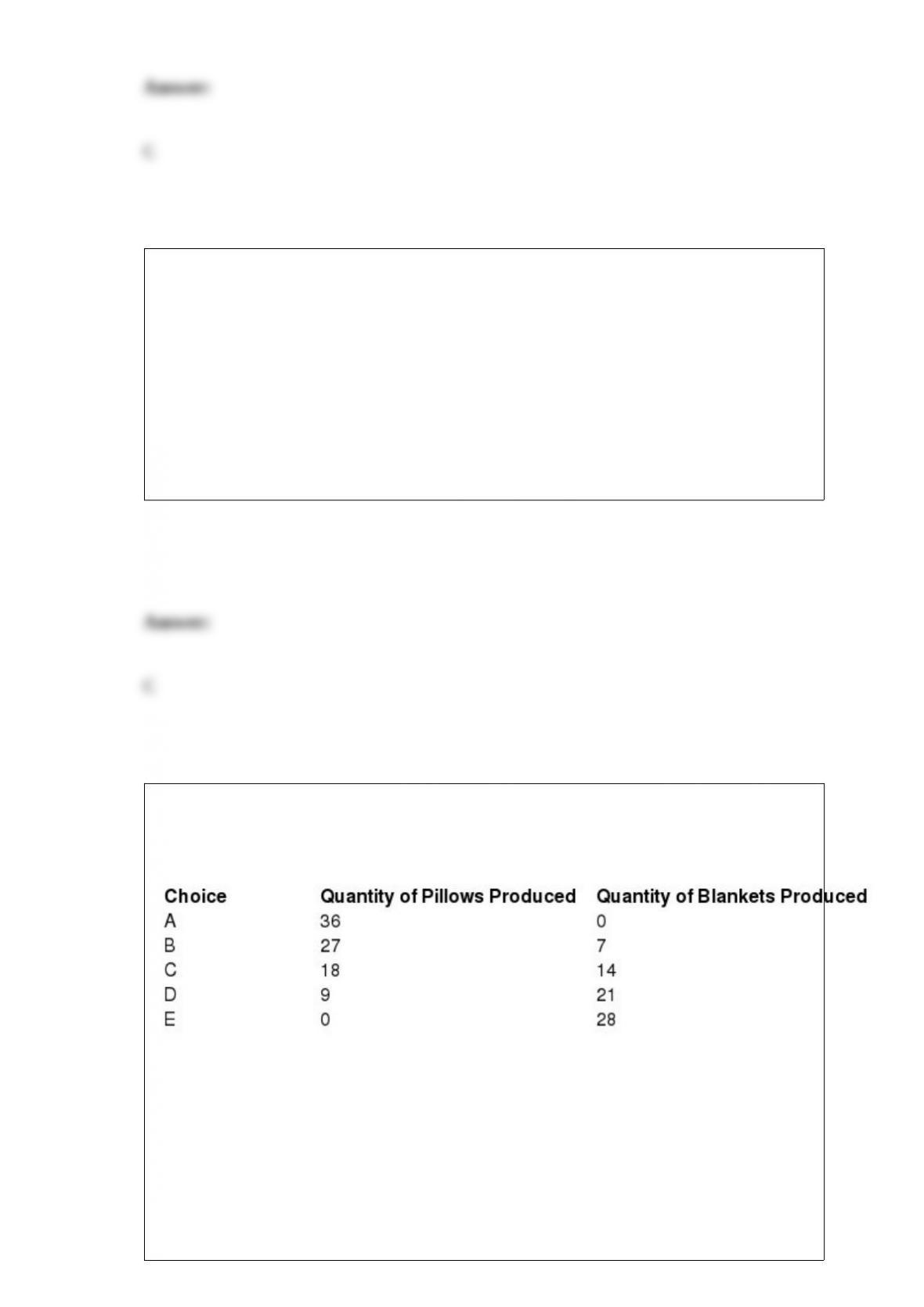
Table 2-2
Production choices for Billie’s Bedroom Shop
Refer to Table 2-2. Assume Billie’s Bedroom Shop only produces pillows and blankets.
A combination of 9 pillows and 21 blankets would appear
A) along Billie’s production possibilities frontier.
B) inside Billie’s production possibilities frontier.
C) outside Billie’s production possibilities frontier.

D) at the vertical intercept of Billie’s production possibilities frontier.
Table 9-1
Linda and Sandy own The Preppy Puppy, a dog grooming business. Table 9-1 lists the
number of dogs Linda and Sandy can each bathe and groom in one week.
Refer to Table 9-1. Select the statement that accurately interprets the data in the table.
A) Linda has an absolute advantage in dog bathing and Sandy has an absolute
advantage in dog grooming.
B) Sandy has an absolute advantage in dog bathing and Linda has an absolute
advantage in dog grooming.
C) Sandy has an absolute advantage in dog bathing and dog grooming.
D) Linda has an absolute advantage in dog bathing and dog grooming.
Table 9-6
Production and
Consumption Production

Without Trade With Trade
Denmark and Belize can produce both clocks and hats. Table 9-6 shows the production
and consumption quantities without trade, and the production numbers with trade.
Refer to Table 9-6. All of the following are terms of trade that could possibly benefit
both countries except
A) 1/5 of a hat : 1 clock
B) 1/3 of a hat : 1 clock
C) 1/2 of a hat : 1 clock
D) 3/4 of a hat : 1 clock
Which of the following is not a requirement for a successful price discrimination
strategy?
A) A firm must have market power.
B) The firm must be able to prevent consumers who buy a product at a low price from
reselling it to other consumers at a high price.
C) Managers must practice yield management.
D) Some consumers must have greater willingness to pay for the product than other
consumers, and the firm must be able to know what prices consumers are willing to pay.