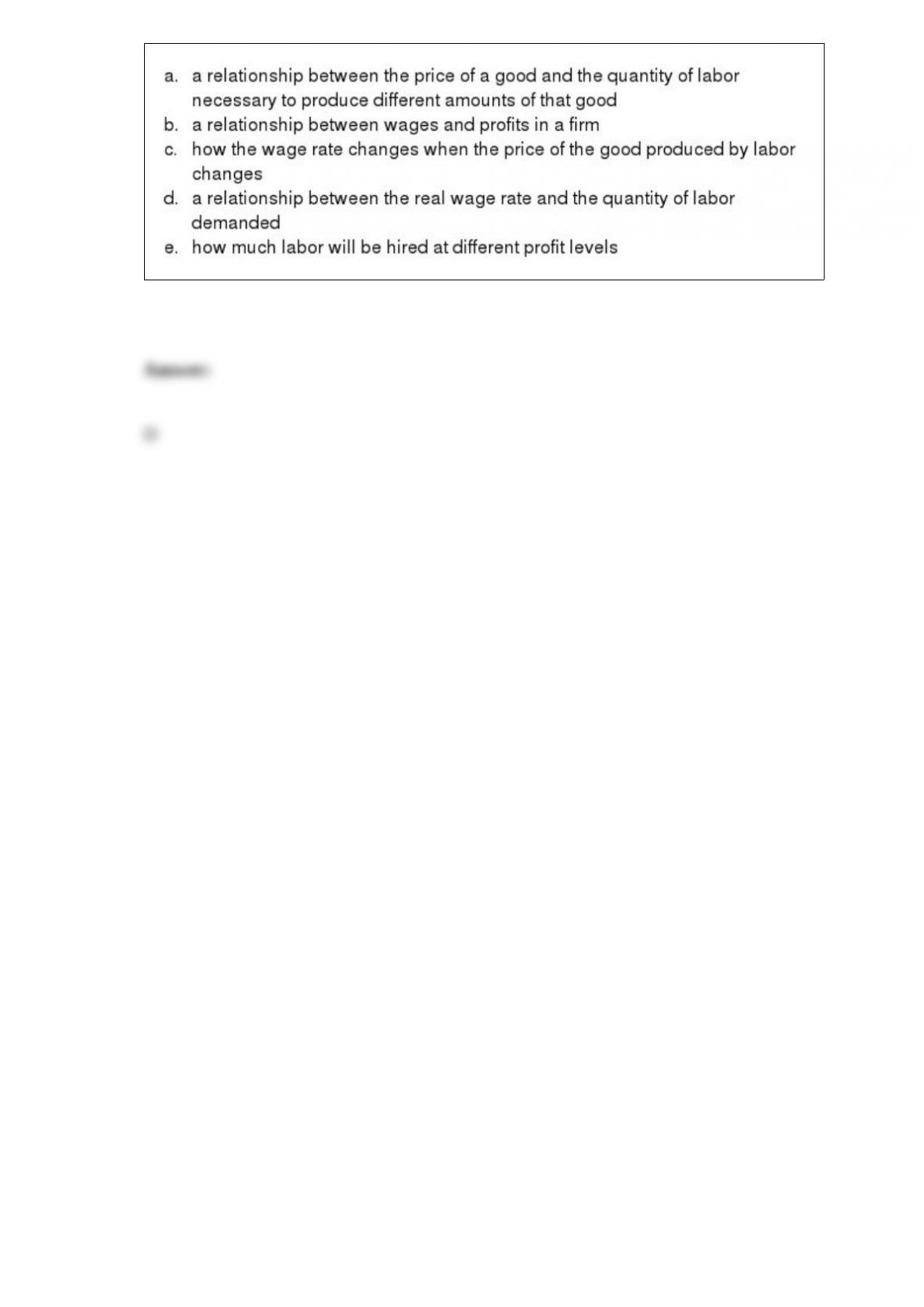
The concern of economists with respect to the trade deficit is whether it is
a. sustainable at current levels.
b. desirable at current levels.
c. under-specified.
d. overestimated.
e. the result of the financial crisis.
]Which of the following would not cause the AD curve to shift?
a. A change in the money supply
b. The public’s expectations of a fall in the interest rate
c. A change in aggregate expenditure caused by a change in the price level
d. A change in fiscal policy
e. A change in autonomous consumption spending
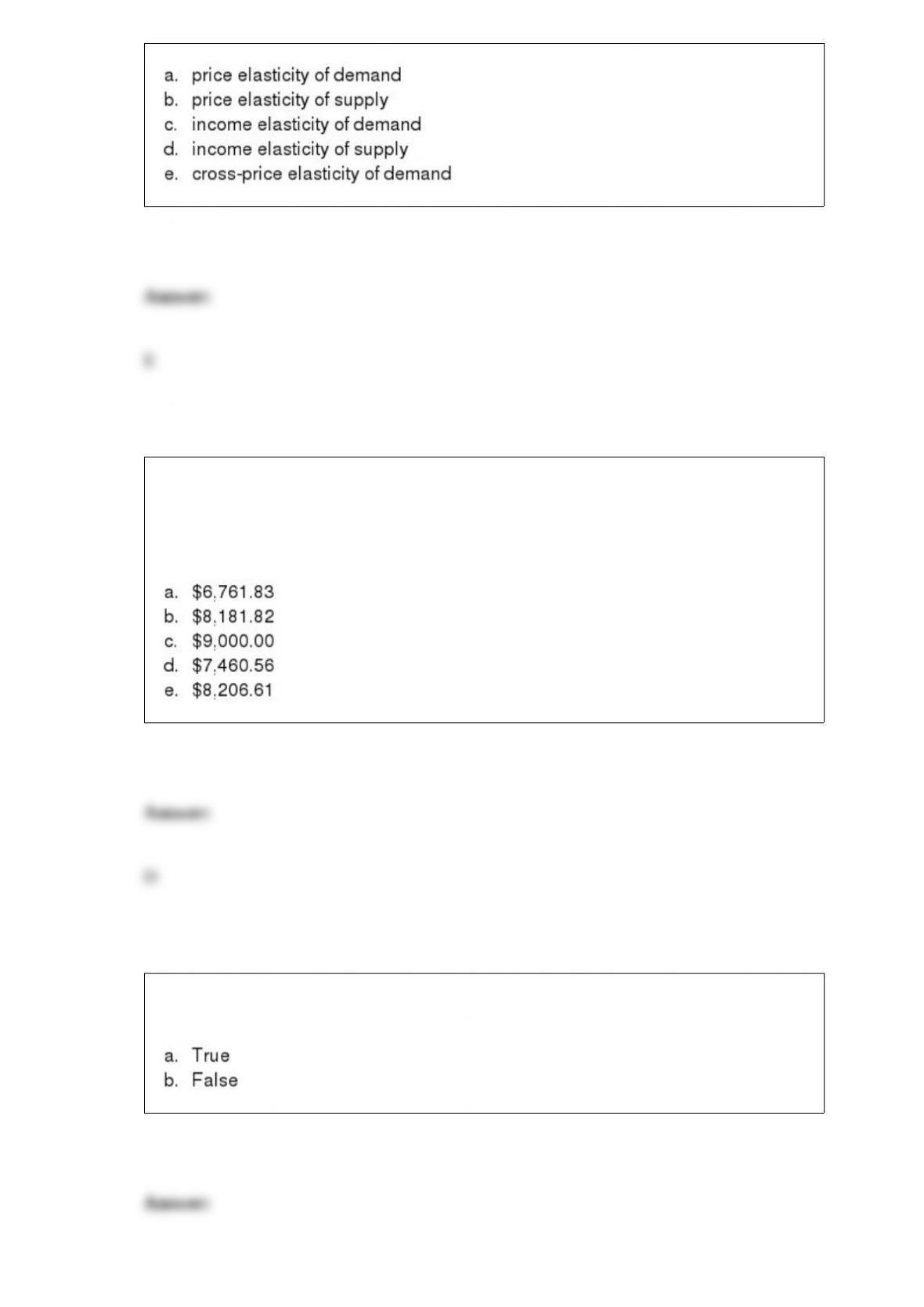
The percent change in the quantity of one commodity demanded divided by the percent
change in the price of another commodity is the
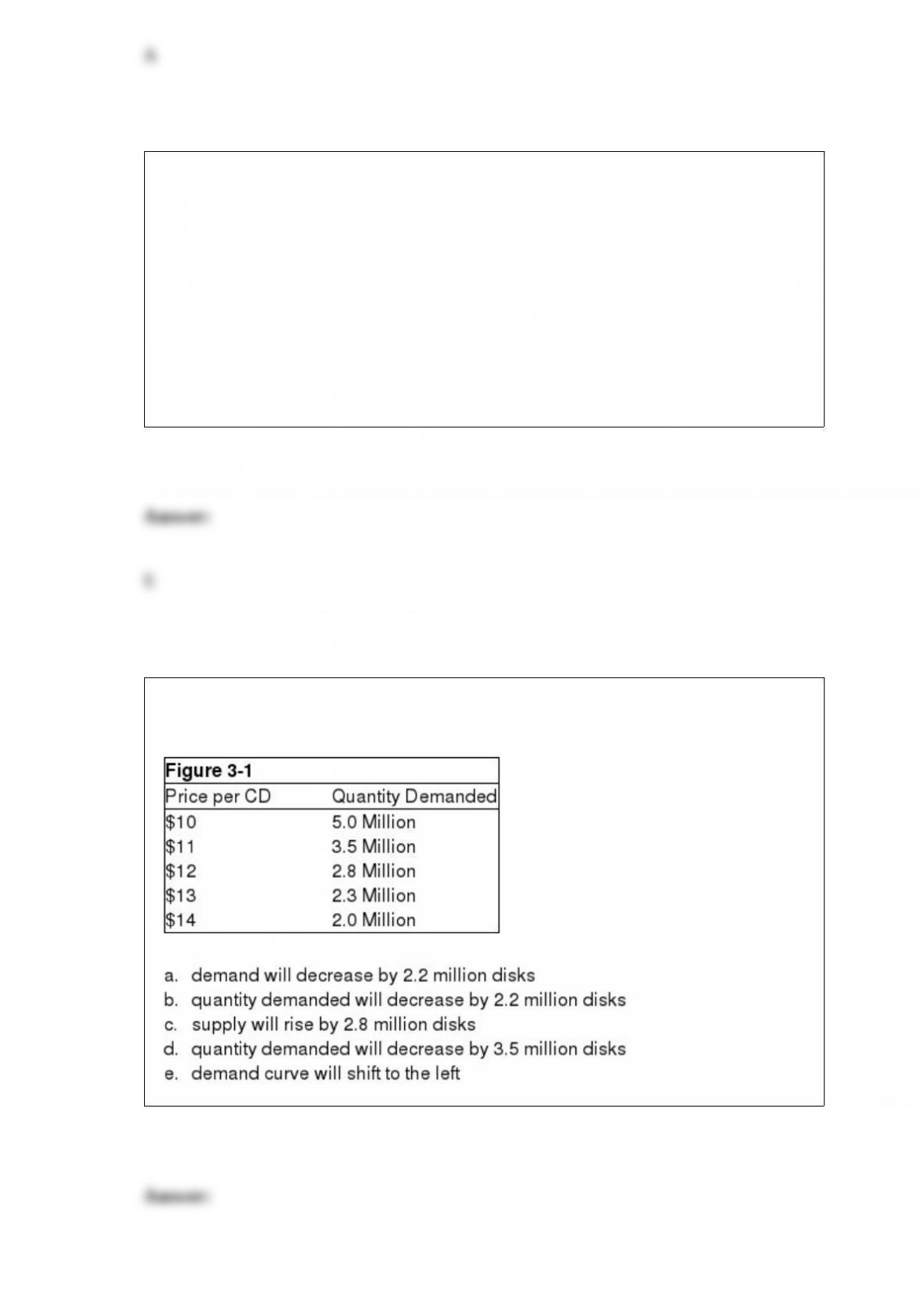
A new pinball machine will generate $3,000 in additional revenue each year for a game
arcade. It has a useful life of three years. Assume that each year’s income is received at
the end of the year. If the interest rate is 10 percent (0.10) per year,, what is the present
value of a new pinball machine to the arcade?
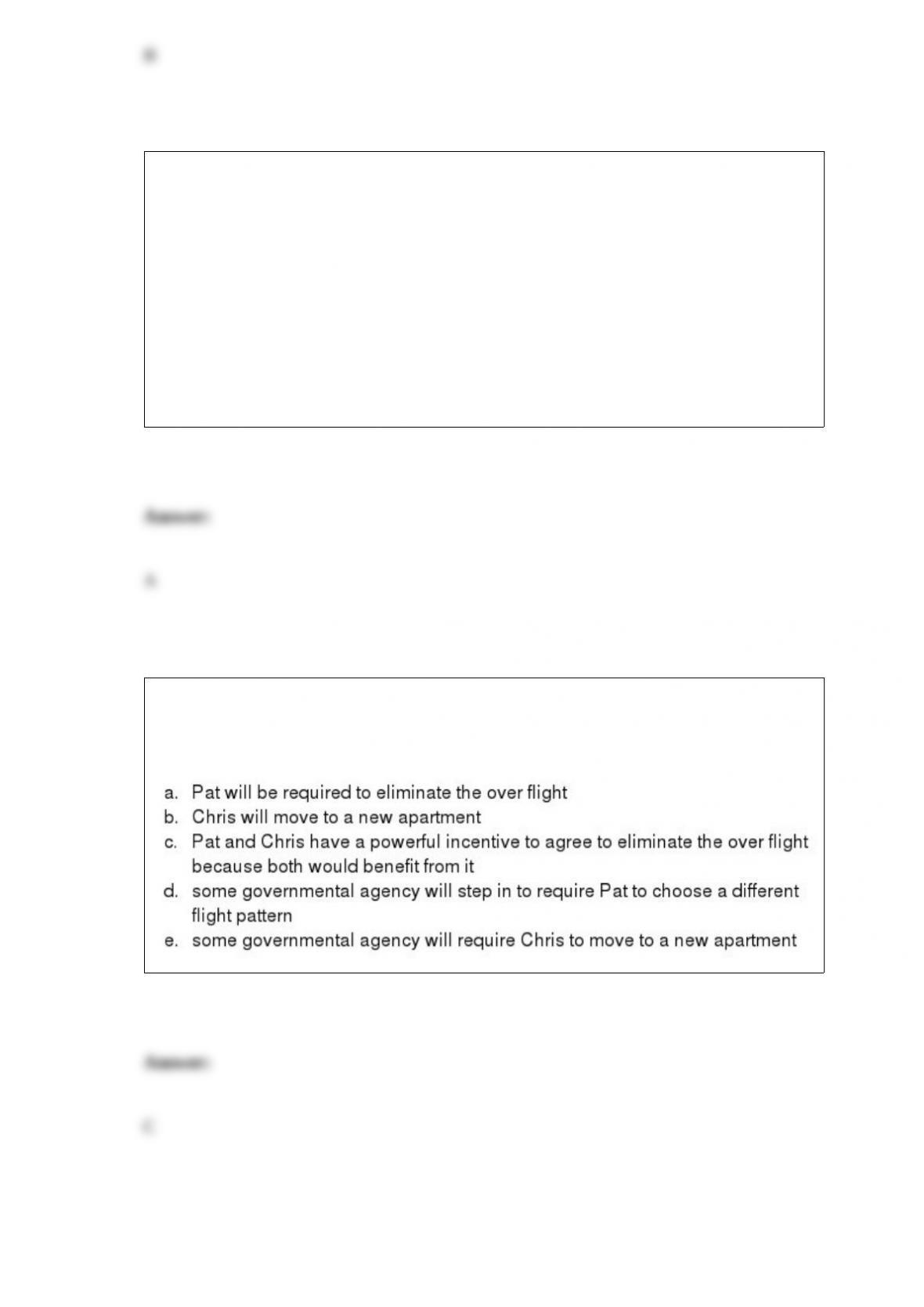
If the demand curve is a straight line with a negative slope, then demand is more elastic
at higher prices than lower prices.
A real variable is
a. measured in terms of after-tax dollars
b. measured in terms of dollars and not foreign currency
c. measured in nominal terms
d. measured in terms of current dollars
e. measured in terms of purchasing power
Figure 3-1 shows the market demand schedule for compact disks. If the price per disk
rises from $10 to $12, the
As of 2009, M2 had a value of more than ______ dollars.
a. $8 trillion.
b. $1 trillion.
c. $5 trillion.
d. $3 trillion.
e. $14 trillion.
Suppose that Pat has the legal right to fly an extremely noisy airplane over Chris’s
apartment and that he values that right at $1,000 per year. Chris would be willing to pay
$1,200 per year to avoid the noise. In that case
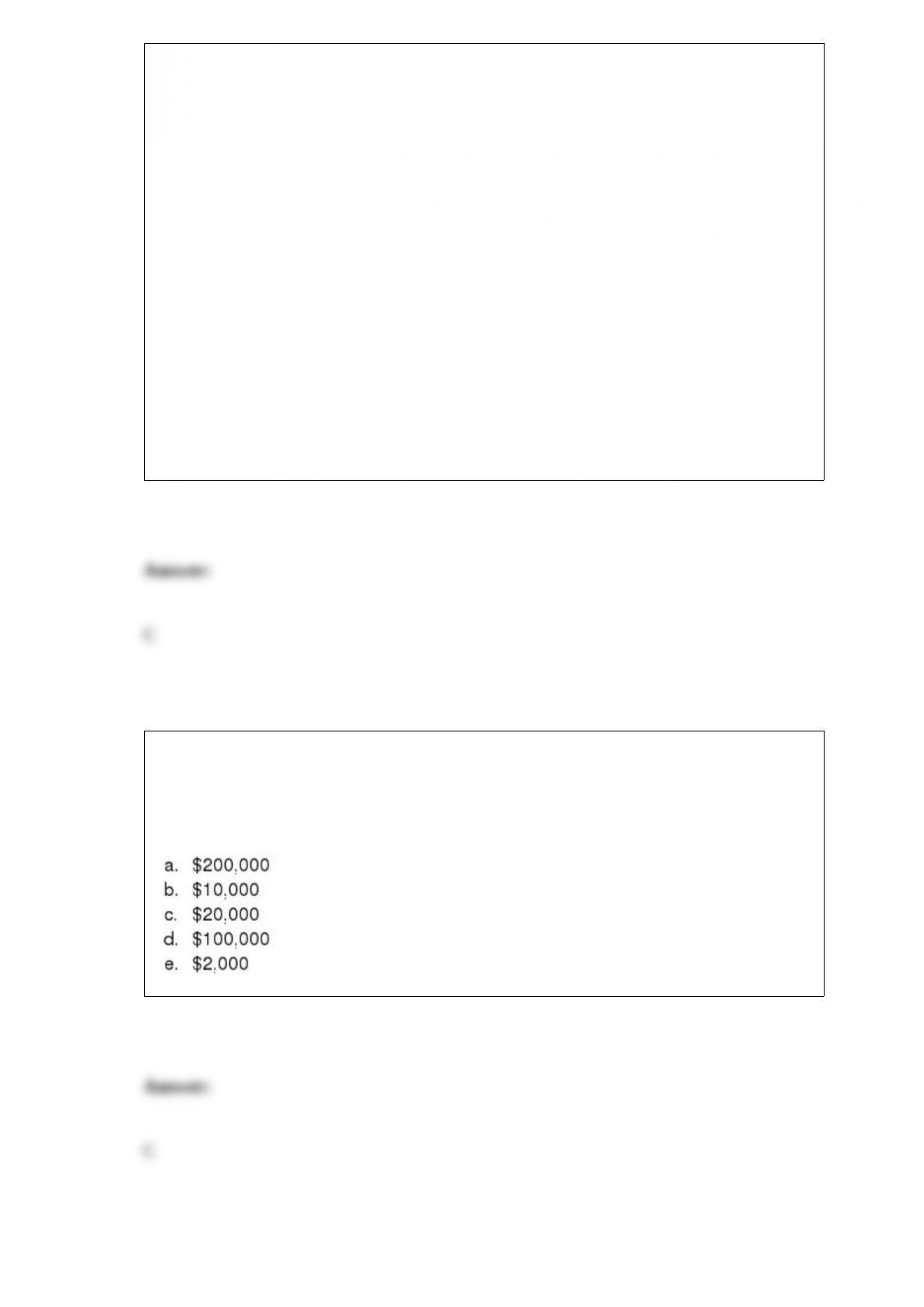
Parvez is trying to decide whether or not he should lend $1,000 to Eli for a year. Eli
would pay a fixed nominal interest rate of 8 percent. Parvez expects the inflation rate to
be 4 percent for the year. If he does not lend the $1,000 to Eli, Parvez will purchase an
indexed savings bond that pays an interest rate of 4 percent, or he will put the money in
a (nonindexed) savings account earning 6 percent. Parvez
a. will earn 4 percent in real terms if he loans Eli the money, 0 percent in real terms if
he buys the bond, and 6 percent in real terms if he puts the money into a savings
account
b. is better off holding his money as cash
c. is indifferent between lending the money to Eli and buying the bond because the real
interest rate is the same in either case
d. should purchase the bond because it earns the highest real rate of interest
e. earns the highest real rate of interest if he puts his $1,000 into a savings account
Elena Johnson owns 100 shares of Funky Foods, which has 100,000 shares of stock
outstanding. Funky Foods is expected to earn $1 million in after-tax profits every year
forever. The interest rate is 5 percent (0.05) per year. According to the principle of asset
valuation, what is the value of Elena’s shares?
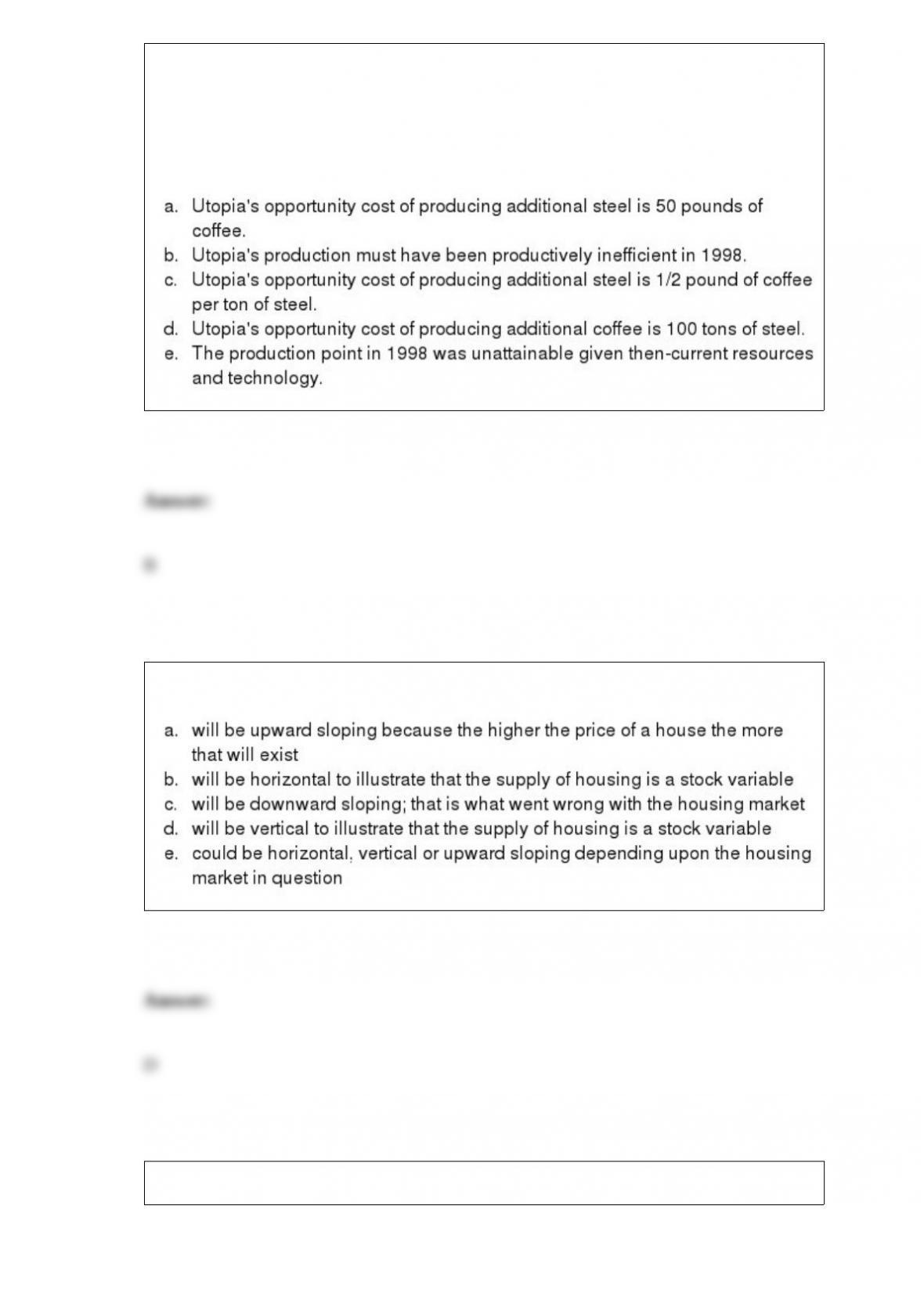
Suppose that the country of Utopia produces only steel and coffee. In 1998, Utopia
produced 900 tons of steel and 500 pounds of coffee, while in 1999, it produced 1,000
tons of steel and 550 pounds of coffee. Assume that no technological changes occurred
in the production of either good and the resource endowment of Utopia did not change.
Which of the following is true?
When analyzing the housing market, the supply curve
The demand for labor curve depicts