
Julianne runs a business and needs to decide how many hours to stay open. Table 2.2
illustrates her marginal costs of staying open for each additional hour. Suppose that
Julianne’s marginal benefit of staying open per hour is $3. If she is following the
marginal principle, how many hours should Julianne stay open?
Table 2.2
A) 1 hour
B) 3 hours
C) 6 hours
D) none of the above
Because pollution taxes raise the costs of production for firms, firms:
A) will lower prices to consumers.
B) must receive a higher price at every level of output.
C) will increase the quantity produced at every price.
D) will quit producing goods that generate pollution.
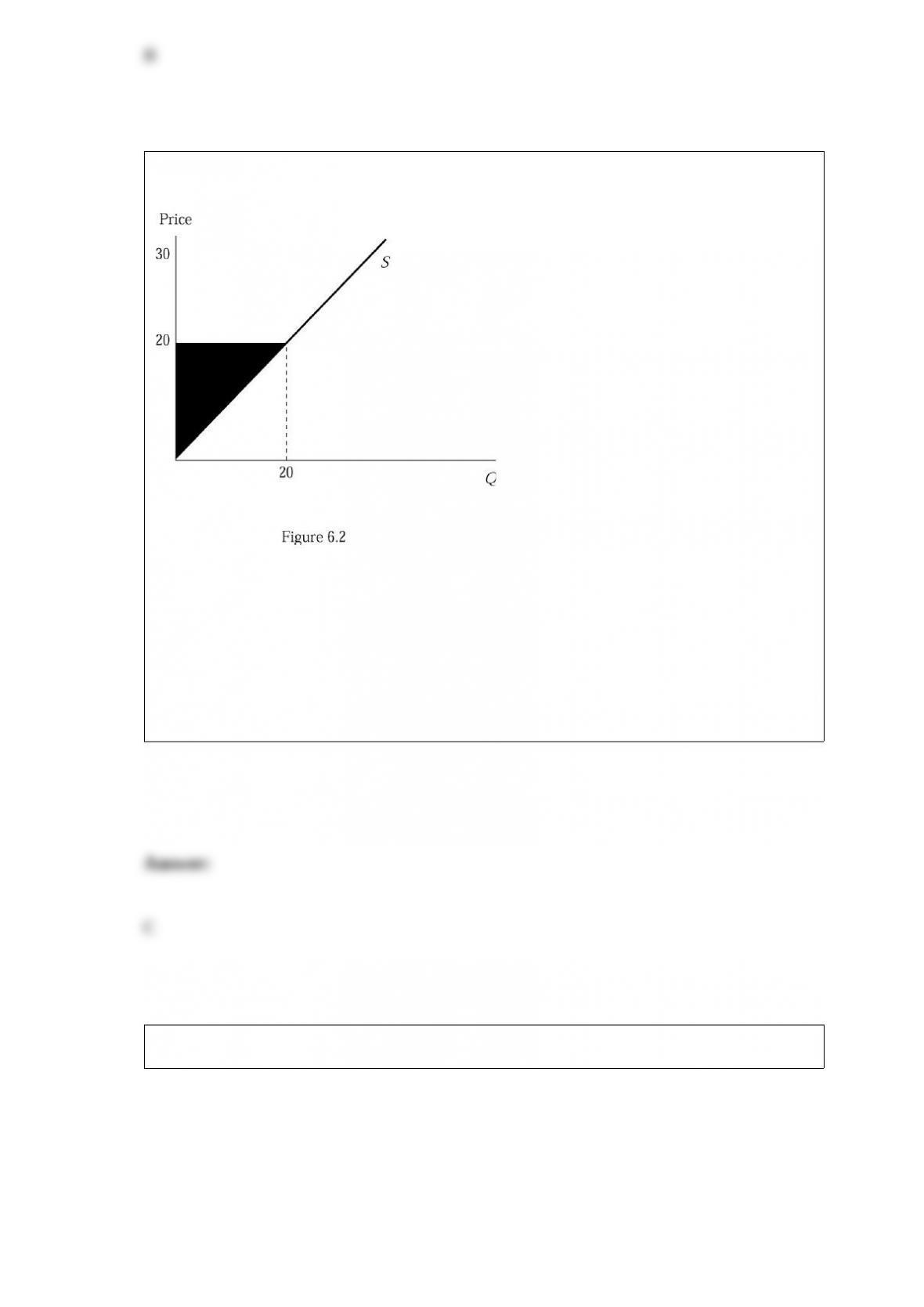
In Figure 6.2, the producer surplus is:
A) $400.
B) $300.
C) $200.
D) $100.
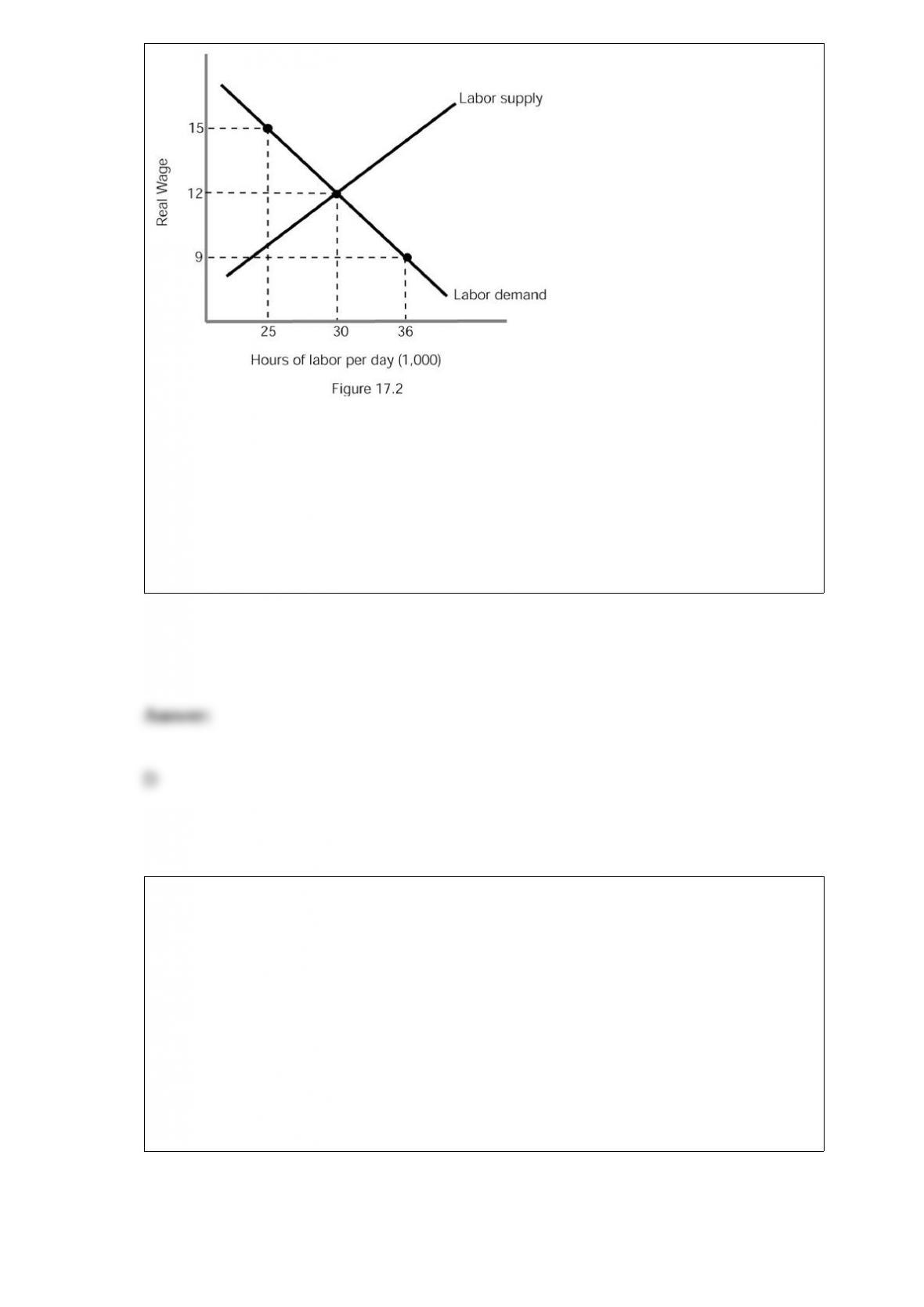
Refer to Figure 17.2. If the hourly wage is $15, then:
A) supply for labor will increase.
B) quantity supplied of labor is 25,000 hours.
C) demand for labor will increase.
D) quantity demanded for labor is 25,000 hours.
The Rare Bird Company has a monopoly in the sale of macaws in Iowa. When the Rare
Bird Company sells three macaws its marginal revenue is $30. When the Rare Bird
Company sells four macaws its marginal revenue will be:
A) less than $30.
B) greater than $30.
C) equal to $30.
D) greater than $30 if demand is elastic and less than $30 if demand is inelastic.

A pollution tax:
A) is a method used to internalize external costs.
B) will not affect the price of the good being produced.
C) does not affect the quantity of a good demanded.
D) is a method used to externalize internal costs.
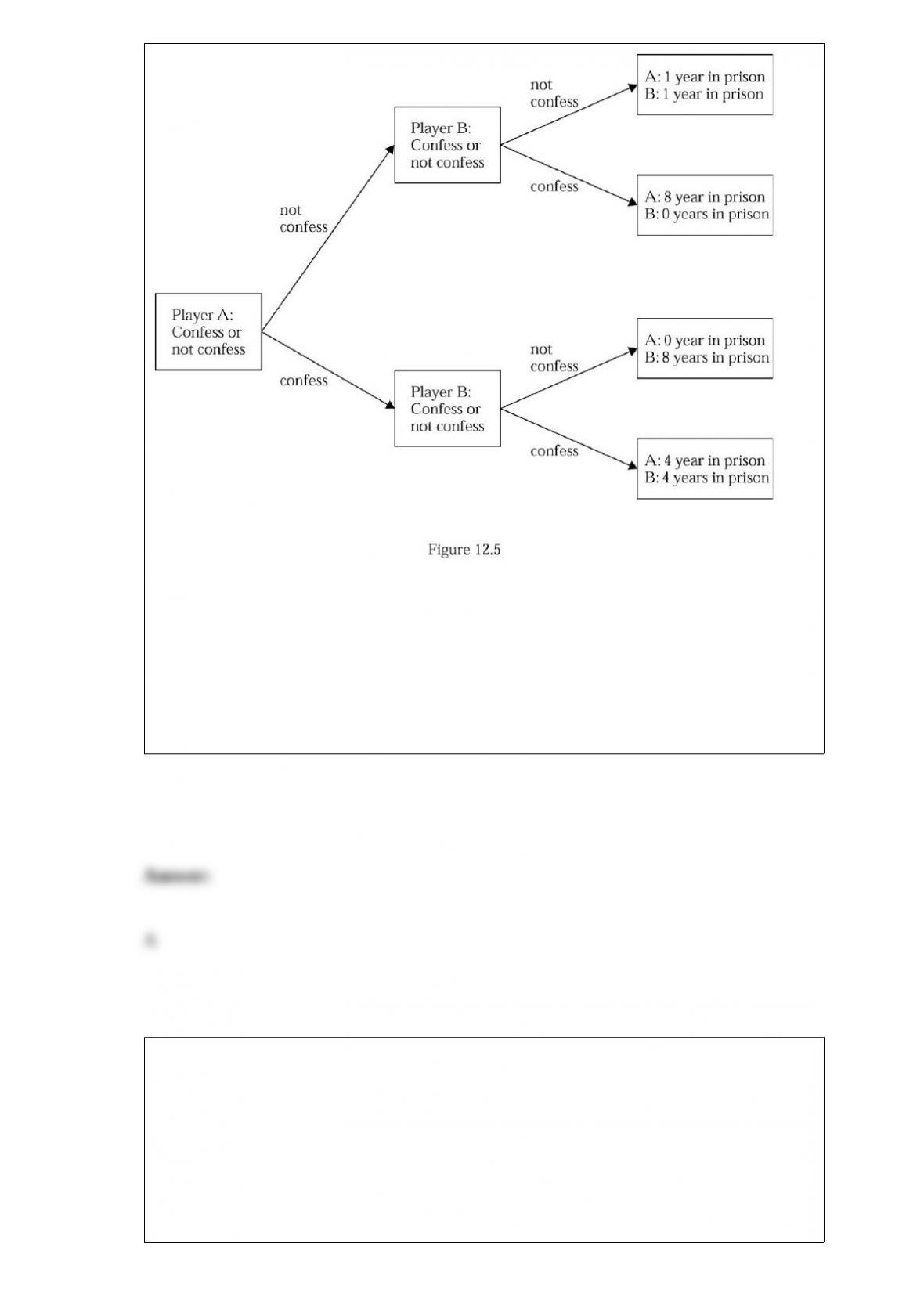
Consider Figure 12.5. The outcome of the game is:
A) both confess.
B) neither confesses.
C) A confesses and B does not.
D) B confesses and A does not.
According to the signaling effect, college education:
A) enhances productivity.
B) signals productivity.
C) is an investment.

D) increases the intelligence of the student.
The price of compact discs has fallen dramatically. Which of the following is likely to
happen?
A) The quantity supplied of compact discs will decrease.
B) The quantity supplied of compact discs will increase.
C) The supply of compact discs will decrease.
D) The supply of compact discs players will increase.
There is a negative relationship between two variables if the two variables:
A) are positive.
B) move in opposite directions.
C) move in the same direction.
D) are negative.

Since the 1980s, the proportion of income received by the poorest 20 percent of U.S.
income earners has:
A) almost doubled.
B) has increased steadily.
C) has decreased steadily.
D) held relatively steady.
Which of the following is a possible benefit of labor unions?
A) It may facilitate a smooth relationship between labor and management.
B) It may provide workers an intermediary to discuss job issues with managers.
C) It may lead to an increase in productivity.
D) all of the above

Which of the following statements about minimum-wage laws is FALSE?
A) Minimum-wage laws tend to lower teenage employment.
B) Minimum-wage laws have eliminated poverty in the United States.
C) Increases in the minimum wage can lead to increased unemployment.
D) All of the above are false.
Kevin’s Golf-a-Rama sells golf balls in a perfectly competitive market. At its current
level of golf ball production, Kevin has marginal costs equal to $2. If the market price
of golf balls is $1, Kevin should:
A) decrease the level of golf ball production.
B) continue producing the current level of production.
C) increase the production of golf balls.
D) raise the price of its golf balls.
A perfectly competitive firm is producing a good at a level where P = $30 and MC =
$30. The firm will continue to produce in the short run as long as:
A) AVC is less than $30.

B) AFC is less than $30.
C) price does not increase.
D) ATC is greater than $30.
The example of the VCRs from Korea illustrates dumping due to:
A) predatory pricing.
B) avoidance of environmental laws.
C) price discrimination.
D) retaliatory trade practices.
A charity that used to arrange matching charitable contributions, but no longer does, is
likely to ________ the free-rider problem and lead to a ________ level of contribution
to the public good.
A) reduce; smaller
B) reduce; larger
C) increase; smaller
D) increase; larger

Suppose at the start of an election season two candidates with extreme positions are
running against each other. The median voter model predicts that each candidate will
become more moderate because:
A) voters with extreme views will not switch loyalties, but voters in the middle will
vote for the candidate whose views are closest to his or her own views.
B) median voters will refuse to vote for a candidate who holds extreme views.
C) the debates convince each candidate that the other position has some good points.
D) voters with extreme views are less likely to vote than are voters with moderate
views.
Figure 11.2 shows demand and costs for a monopolistically competitive firm. In the
long run we expect:
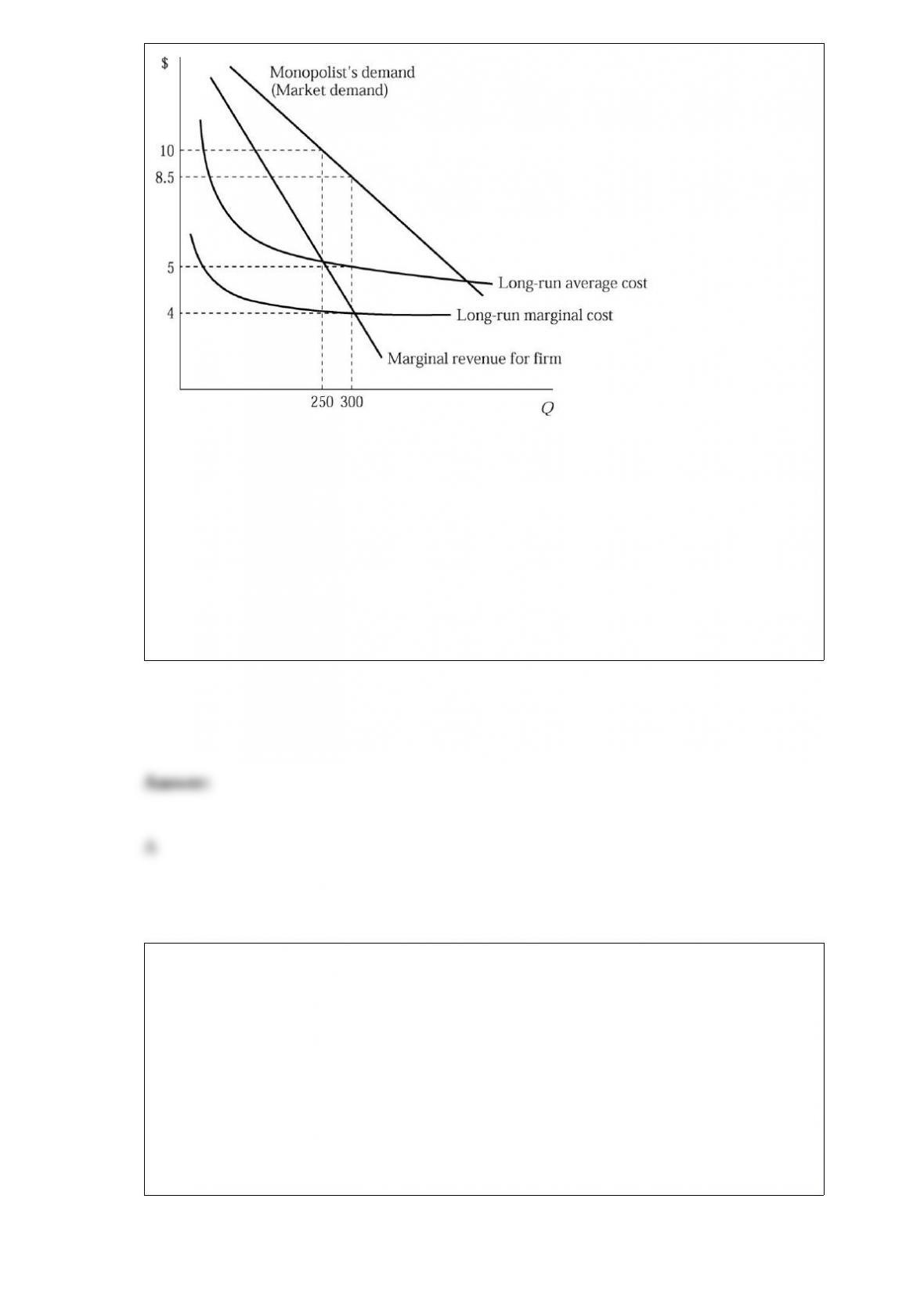
Figure 11.2
A) more firms to enter the market.
B) the firm’s demand curve to shift to the right.
C) the price of the good to increase.
D) the average cost of production to decrease.
Deciding if a company will produce automobiles by robotics or manual labor answers
the economic question of:
A) who consumes the products produced.
B) what products will be produced.
C) where will the products be consumed.
D) how will the products be produced.

How does the firm-specific demand curve in a perfectly competitive market compare to
that in a monopoly?
A) The firm-specific demand curve in a perfectly competitive market is horizontal. The
demand curve in a monopoly is downward sloping.
B) They are the same.
C) The firm-specific demand curve in a perfectly competitive market is horizontal. The
demand curve in a monopoly is upward sloping.
D) The firm-specific demand curve in a perfectly competitive market is vertical. The
demand curve in a monopoly is horizontal.
If the firm is producing in the long run, then the firm’s average total cost curve:
A) equals the average variable cost curve.
B) is less than the average variable cost curve.
C) exceeds the average variable cost curve.
D) equals zero.
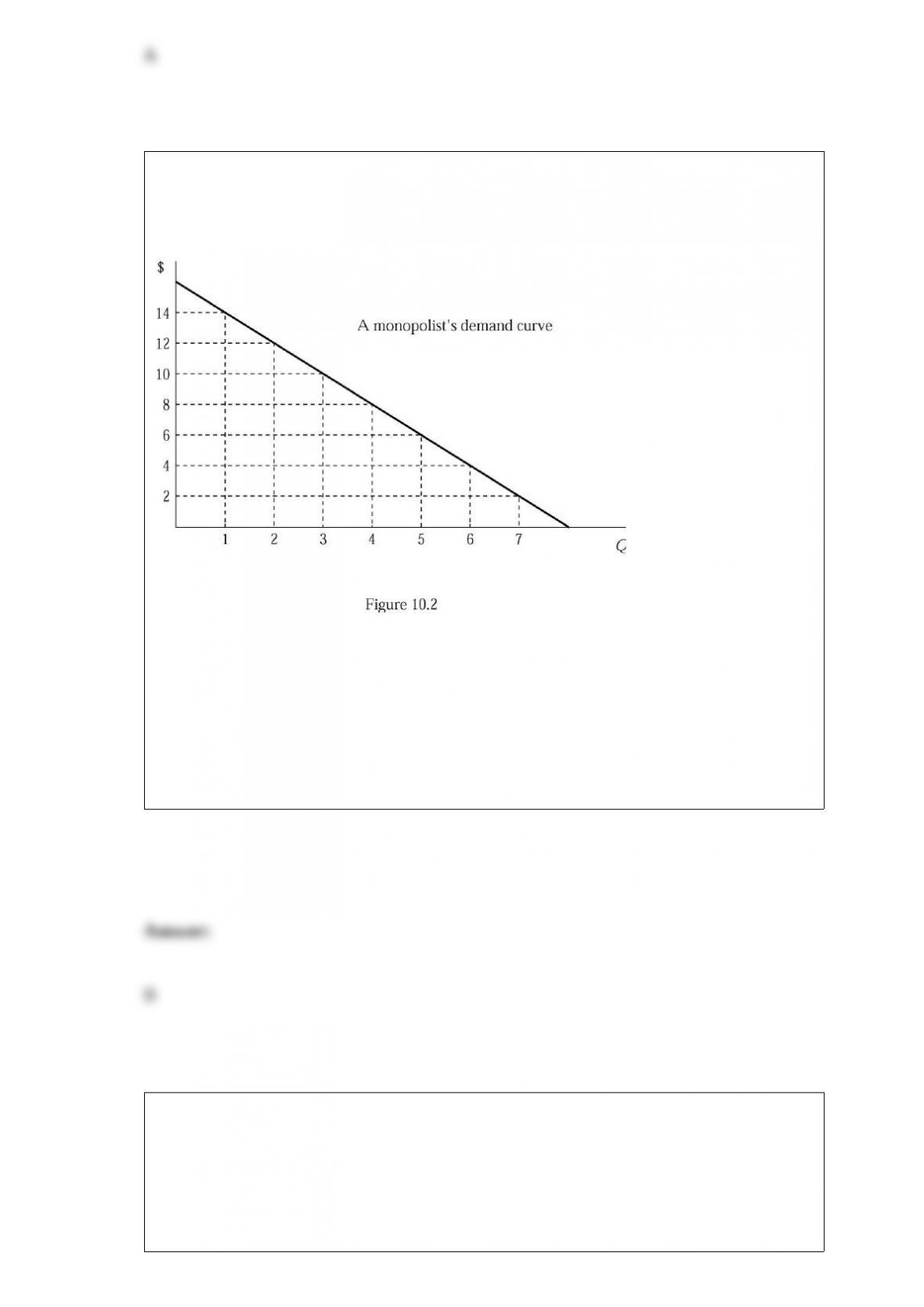
Figure 10.2 shows a monopolist’s demand curve. Suppose that the marginal cost is $6
for all units and the current output level is 4 units. Then what would you recommend to
the firm?
A) Lower the price to sell more units.
B) Raise the price and sell fewer units.
C) Maintain the current price and output level.
D) There is not sufficient information.
According to the principle “as one input increases while the other inputs are held fixed,
output increases at a decreasing rate”, if all factors of production but one are held
constant and if that one factor is doubled, then eventually output will most likely:
A) double too.

B) less than double.
C) more than double.
D) remain unchanged.
Recall the application about low-price guarantee with tire prices in Florida, what
happen to the prices of the tires after the low-price guarantee advertising was included
in the newspaper ad?
A) The prices soar.
B) The prices decrease
C) The prices stayed the same.
D) Some tire companies exit the market.
Consider two individuals, Rose and Sharon, who produce fish and coconuts. Rose and
Sharon’s hourly productivity are shown in Table 3.2. Which of the following is true?
Table 3.2
A) Rose has an absolute advantage in producing coconuts but not fish.

B) Rose has an absolute advantage in producing fish but not coconuts.
C) Rose has an absolute advantage in producing both goods.
D) Rose does not have an absolute advantage in producing either good.
Offering contributors private goods such as coffee mugs, books, or magazine
subscriptions will ________ the free-rider problem and lead to a ________ level of
contribution to the public good.
A) reduce; smaller
B) reduce; larger
C) increase; smaller
D) increase; larger
A quantity restriction leads to a quantity traded ________ the equilibrium quantity.
A) at
B) above
C) below

D) Either A or C is correct.
The short run price elasticity of demand for gasoline is 0.5, and the long run price
elasticity of demand for gasoline is 1.1. Demand for gasoline is ________ in the short
run and ________ in the long run.
A) elastic; inelastic
B) inelastic; elastic
C) elastic; unitarily elastic
D) inelastic; unitarily inelastic
Which of the following is NOT a key economic question?
A) What products to produce?
B) Who produces the products?
C) How to produce the products?
D) Who gets the produced products?