It is possible to have a comparative advantage in producing a good or service without
having an absolute advantage.
Firms are more likely to find themselves in a prisoner’s dilemma in sequential games as
opposed to simultaneous games.
An argument in favor of the Federal Reserve adopting inflation targeting is that in the
long run, the Fed can have an impact on inflation but not on real GDP.
The Fed has more control over open market operations as compared to discount policy.

If planned investment is equal to actual investment, then aggregate expenditure is equal
to GDP.
Bringing oil to the market is a relatively long and costly process. The whole process
from exploration to pumping significant amounts of oil can take years. What does this
indicate about the price elasticity of supply for oil?
A) The elasticity coefficient is likely to be very high and supply is inelastic.
B) The elasticity coefficient is likely to be close to zero and supply is perfectly elastic.
C) The elasticity coefficient is likely to be low and supply is highly inelastic.
D) The elasticity coefficient is likely to be low and supply is highly elastic.
Scenario 1-3 Suppose a t-shirt manufacturer currently sells 5,000 t-shirts per week and
makes a profit of $10,000 per week. A manager at the plant observes, “Although the last
400 t-shirts we produced and sold increased our revenue by $4,000 and our costs by
$4,800, we are still making an overall profit of $10,000 per week so I think we’re on the
right track. We are producing the optimal number of t-shirts.”
Had the firm not produced and sold the last 400 t-shirts, would its profit be higher or
lower, and if so by how much?
A) Its profit will be $4,800 higher.
B) Its profit will be $800 higher.
C) Its profit will be $800 lower.
D) Its profit will be $4,000 lower.
The absolute value of the slope of an isocost line equals the ratio of
A) the marginal productivities of the two inputs.
B) the prices of the two inputs.
C) the marginal utilities of the two inputs.
D) the quantities of the two inputs.
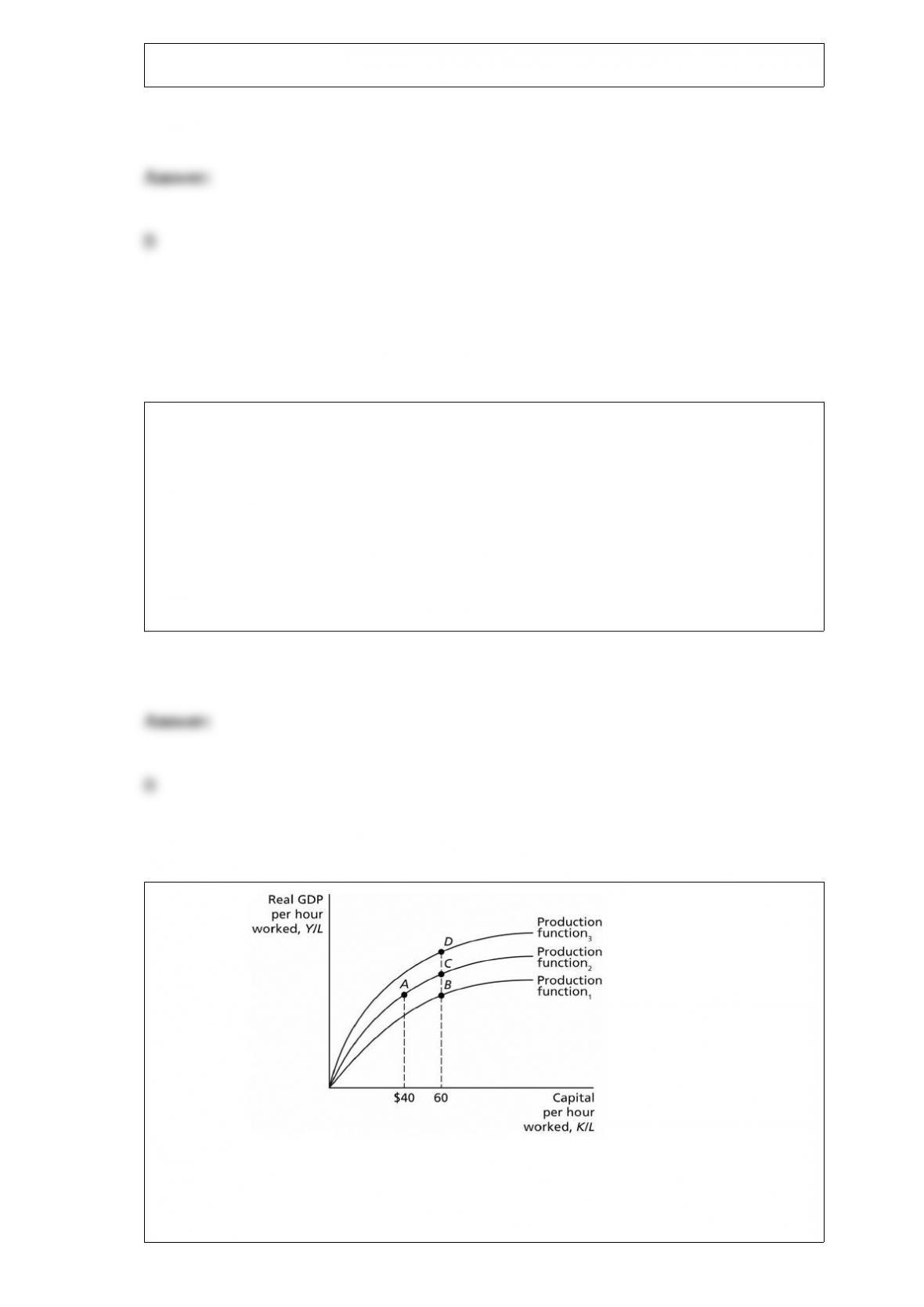
Figure 22-1
Diminishing marginal returns is illustrated in the per-worker production function in the
figure above by a movement from

A) A to C.
B) B to C.
C) C to D.
D) D to C.
Due to slowing growth in China and other developing countries, Caterpillar ________
the number of persons it employed in 2013 and this ________ the total number of
persons unemployed in the economy.
A) decreased; increased
B) decreased; decreased
C) increased; decreased
D) increased; increased
Some economists argue that the short-run Phillips curve is not vertical, and that
monetary policy can be effective in the short run. Which one of the following is not one
of the reasons for this skepticism?
A) Empirical evidence shows workers and firms have rational expectations.
B) Contracts with workers and suppliers may hinder firms’ abilities to adjust to price
changes.
C) Wages and prices may not adjust rapidly enough to keep the short-run Phillips curve

vertical.
D) Individuals may not be able to use information of Fed Policy to make a reliable
forecast of inflation.
When inflation is very low, how do workers and firms adjust their expectations of
inflation?
A) They rapidly adjust their expectations of inflation upward.
B) They rapidly adjust their expectations of inflation downward.
C) They tend to ignore inflation.
D) They are more aggressive in asking for wage and price increases.
A reason why there is more competition among restaurants than among large discount
department stores is that restaurants
A) have to cater to a variety of consumer tastes while department stores do not.
B) unlike department stores, have to abide by government sanitation rules.
C) unlike department stores, do not have significant economies of scale.
D) have more elastic demand for their product compared to department stores.

Americans, other than jewelers or rare coin collectors, were not allowed to own gold
from the early 1930s until the
A) 1950s.
B) 1960s.
C) 1970s.
D) 1980s.
According to the “rational expectations” school of thought in macroeconomics, the
short-run Phillips curve is ________ in face of unanticipated changes in monetary
policy.
A) negatively sloped
B) positively sloped
C) vertical
D) horizontal

Which of the following is an example of spending on goods and services in the circular
flow model?
A) Micah purchases a new wrench for his auto repair business.
B) Chester buys a first-class ticket from Atlanta to London for his long-awaited
vacation.
C) Toby buys a new lawn mower to use in his lawn care business.
D) Lily purchases a new massage table for use in her therapy center.
You have a bond that pays $60 per year in coupon payments. Which of the following
would result in a decrease in the price of your bond?
A) Coupon payments on newly-issued bonds fall to $40 per year.
B) The likelihood that the firm issuing your bond will default on debt decreases.
C) The price of a share of stock in the company rises.
D) Coupon payments on newly-issued bonds rise to $75 per year.
Figure 17-4
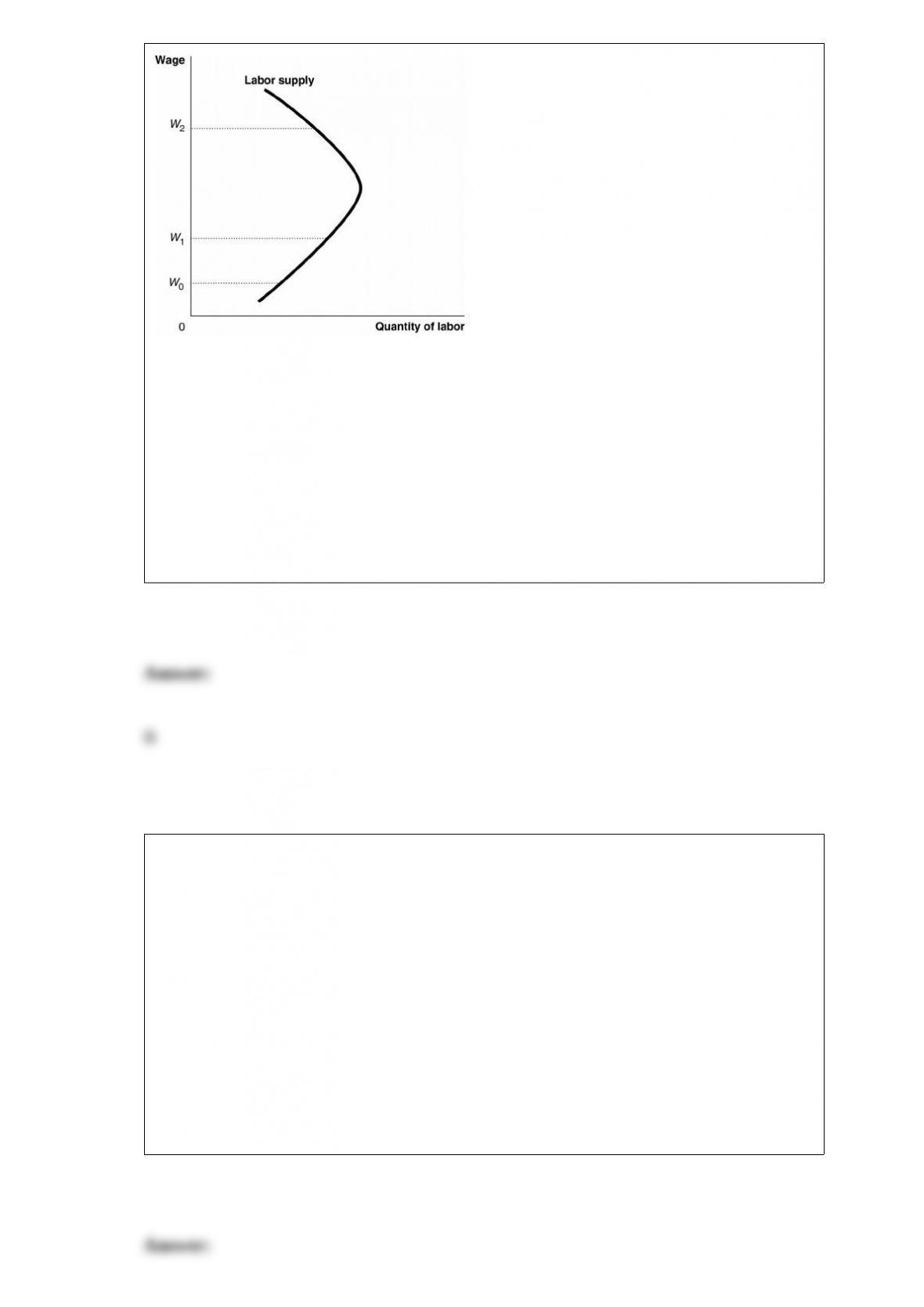
Which of the following is true at W0?
A) The income effect is larger than the substitution effect.
B) The substitution effect is larger than the income effect.
C) The income effect and the substitution effect are equal.
D) The supply curve is positively sloped.
How does an increase in a country’s exchange rate affect its balance of trade?
A) An increase in the exchange rate raises imports, reduces exports, and reduces the
balance of trade.
B) An increase in the exchange rate reduces imports, raises exports, and reduces the
balance of trade.
C) An increase in the exchange rate reduces imports, raises exports, and increases the
balance of trade.
D) An increase in the exchange rate raises imports, reduces exports, and increases the
balance of trade.

In the 1973 movie Save the Tiger, Jack Lemmon plays Harry Stoner, the CEO of a
clothing manufacturer whose business has fallen on hard times. In one of the key scenes
of the movie, Stoner tries to convince his partner that they should hire someone to burn
one of their buildings in order to collect on their insurance policy. Harry Stoner’s
actions are an example of
A) adverse selection.
B) moral hazard.
C) self-interest.
D) asymmetric information.
Economists played a key role in the development of merger guidelines by the
Department of Justice and the Federal Trade Commission in 1982. These guidelines
have three main parts. What are these parts?
A) concentration ratios; the Herfindahl-Hirschman Index; market standards
B) concentration standards; concentration ratios; competitive analysis
C) economic analysis; political analysis; dynamic analysis
D) market definition; measure of concentration; merger standards
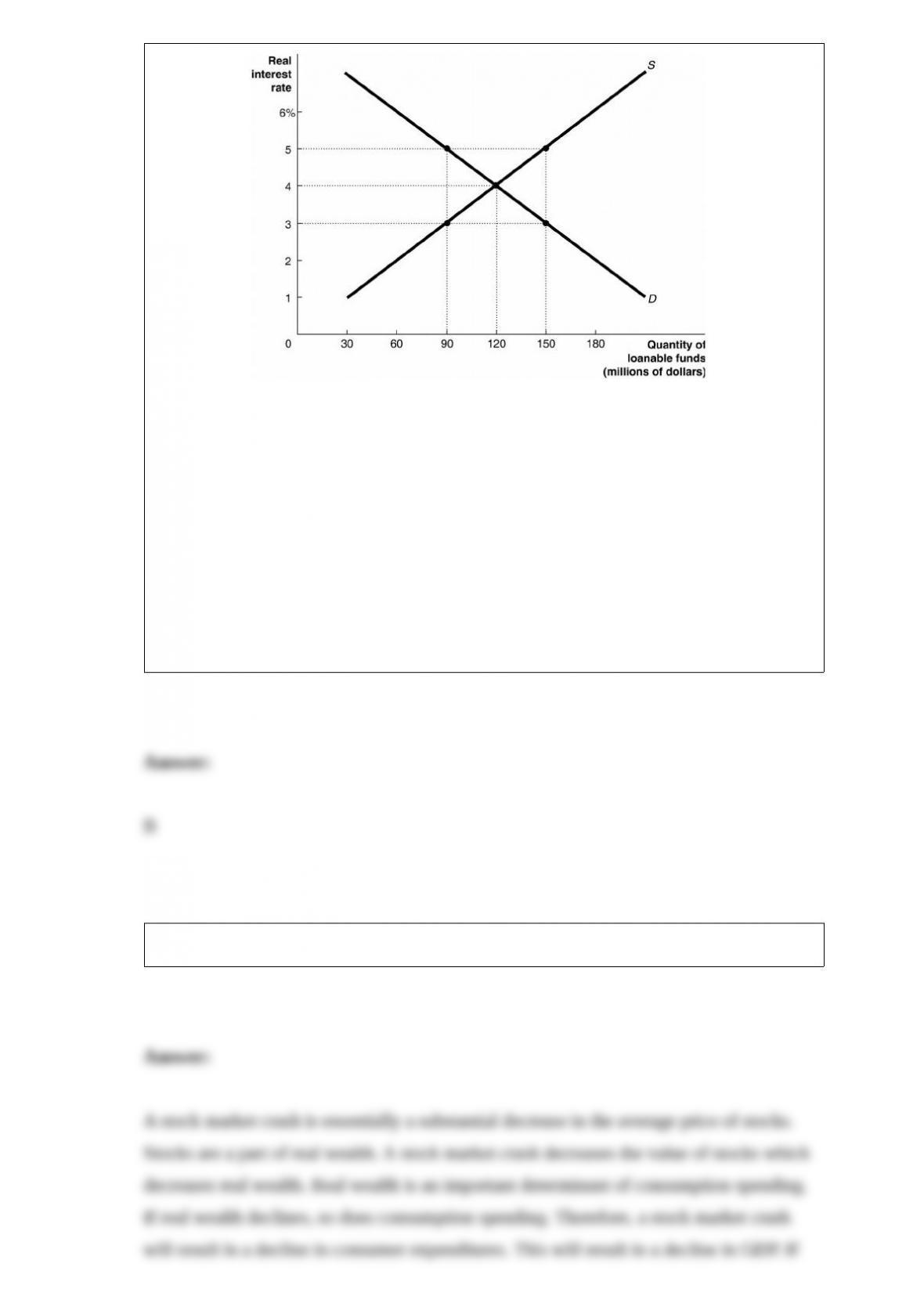
Figure 10-6
The market is in equilibrium. If the government budget deficit rises, which of the
following would you expect to see?
A) The quantity of loanable funds demanded by firms will rise above $120 million.
B) The quantity of loanable funds demanded by firms will fall below $120 million.
C) The budget deficit will have no impact on the quantity of loanable funds demanded
by firms.
D) The interest rate will fall below 4 percent.
Explain how a stock market crash has the potential to lead to a recession in an economy.
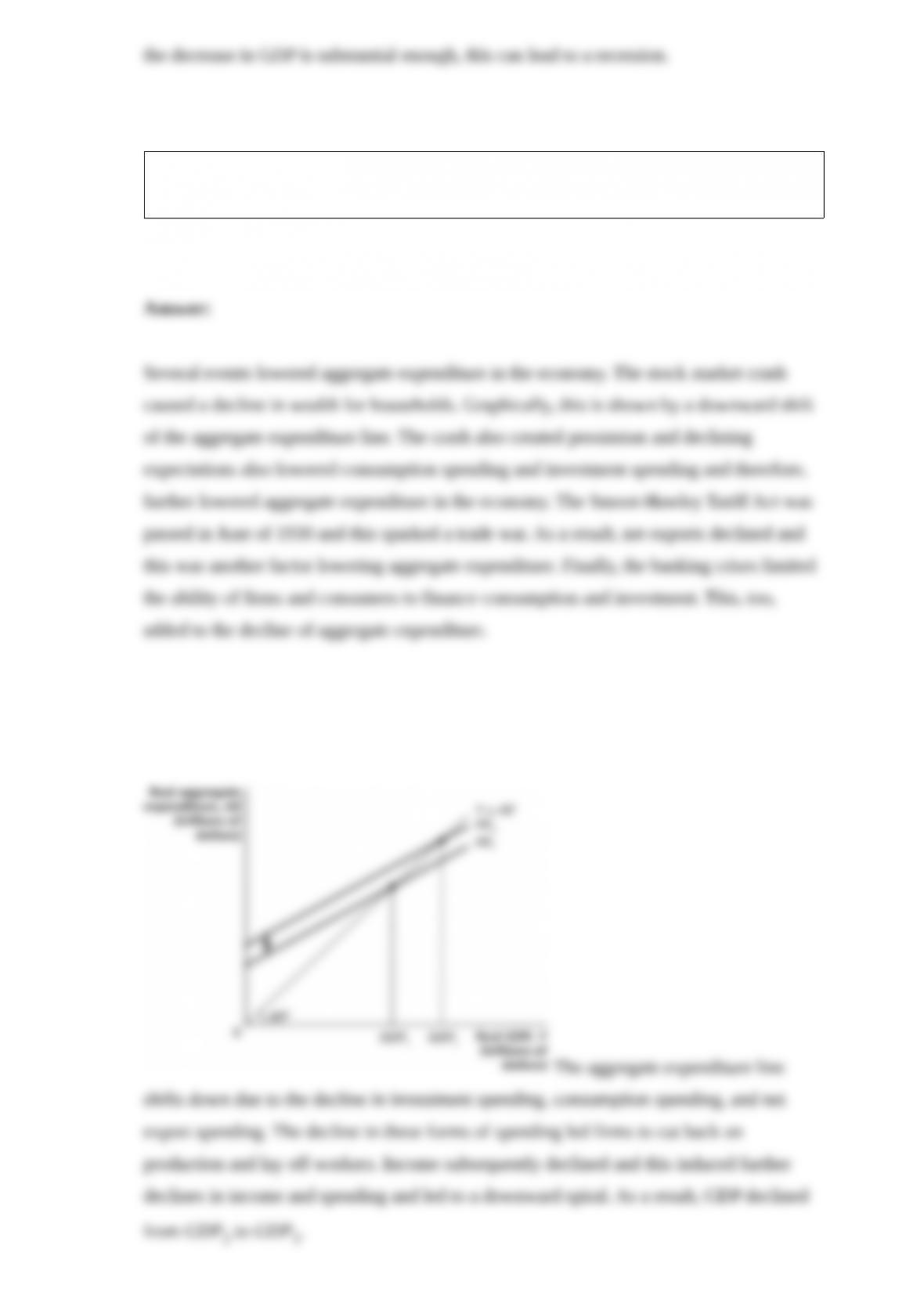
Discuss the leading causes of the Great Depression. Use the 45-degree line diagram to
show how they caused a decline in GDP.
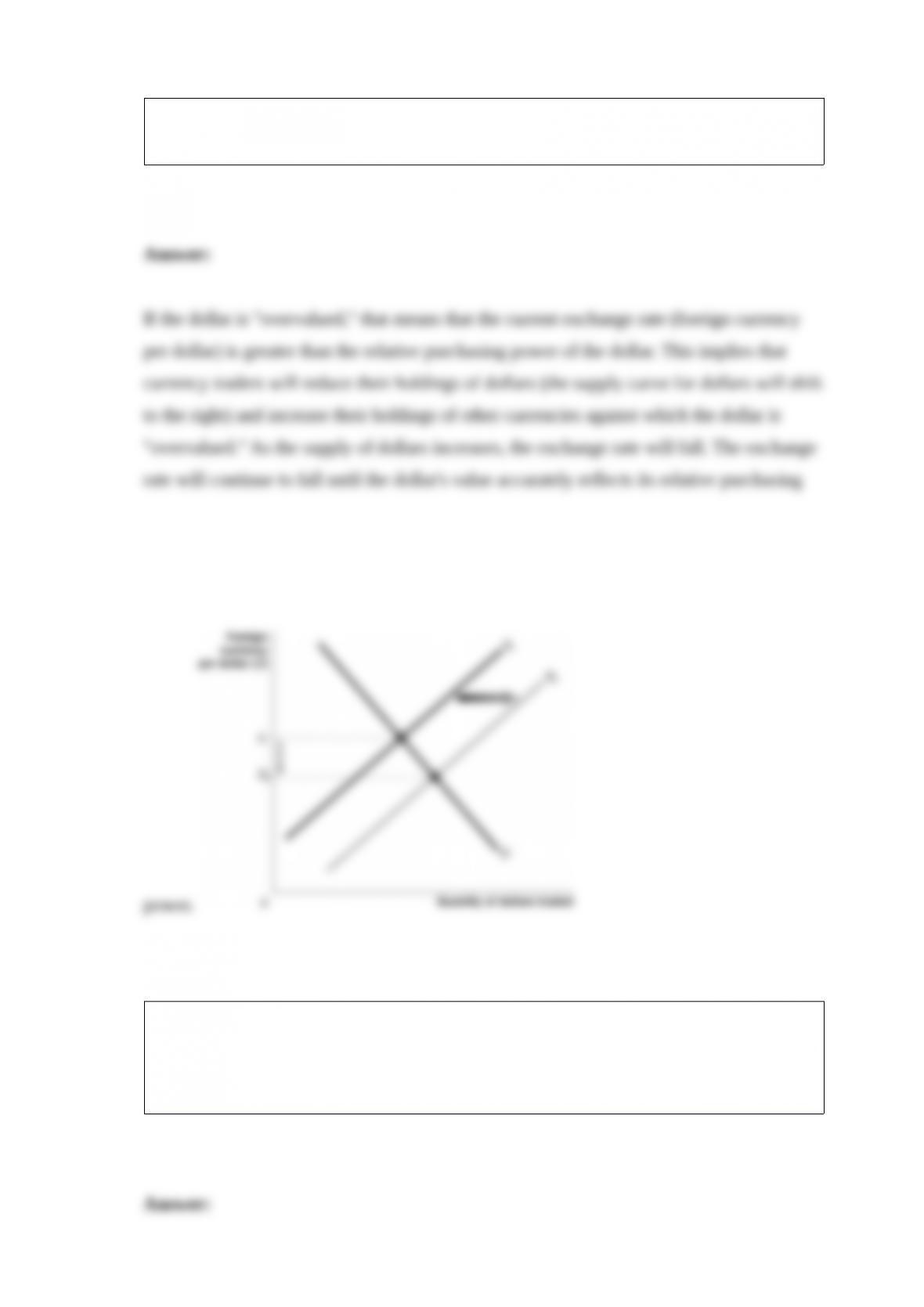
What do reports that the dollar is “overvalued” mean? How will foreign exchange
markets respond to this information? Support your answer graphically.
Explain how the market for opticians is affected as a result of the development of laser
technology which reduces the demand for glasses and contact lenses. In your
explanation be sure to show the connection between the market for glasses and contact
lenses and the market for opticians.
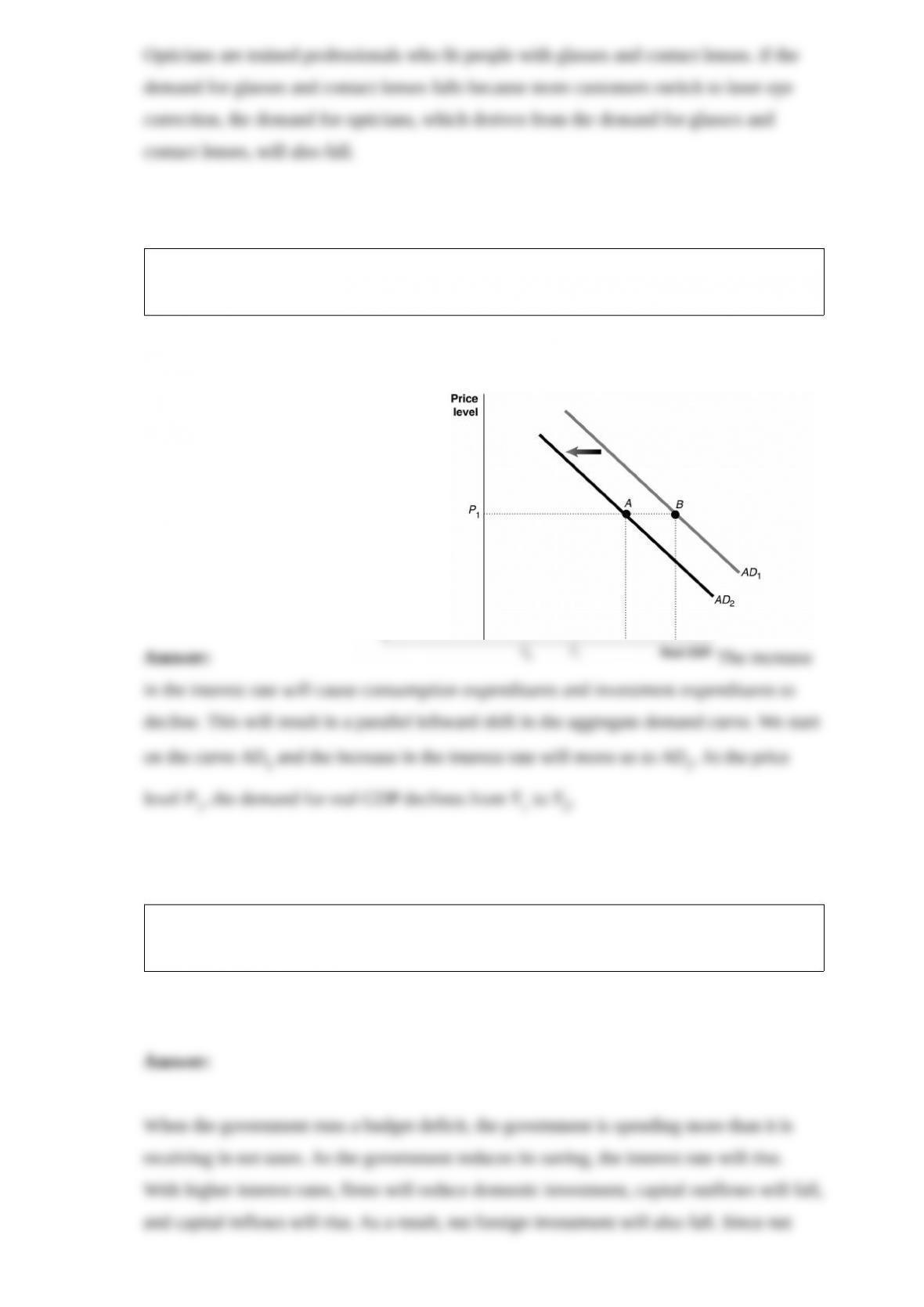
Using an aggregate demand graph, illustrate the impact of an increase in the interest
rate.
Explain why the budget deficit and the trade deficit are sometimes referred to as the
“twin deficits.”
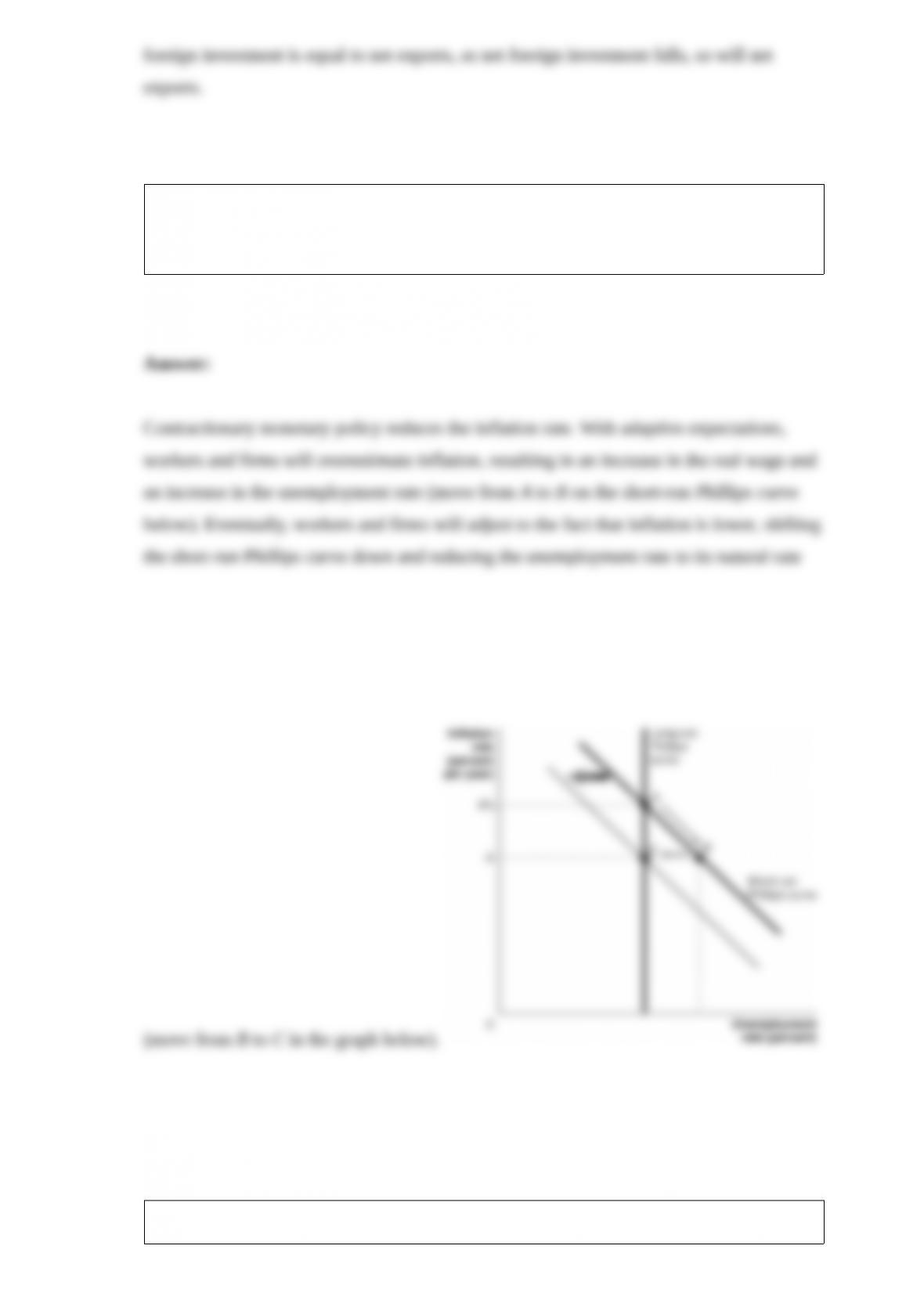
If expectations are adaptive, how will the economy adjust to a new long-run
equilibrium in response to contractionary monetary policy? Support your answer with a
graph of the Phillips curve.
Given Table 12-5 below, fill in the values for saving. Assume there are no taxes. Table
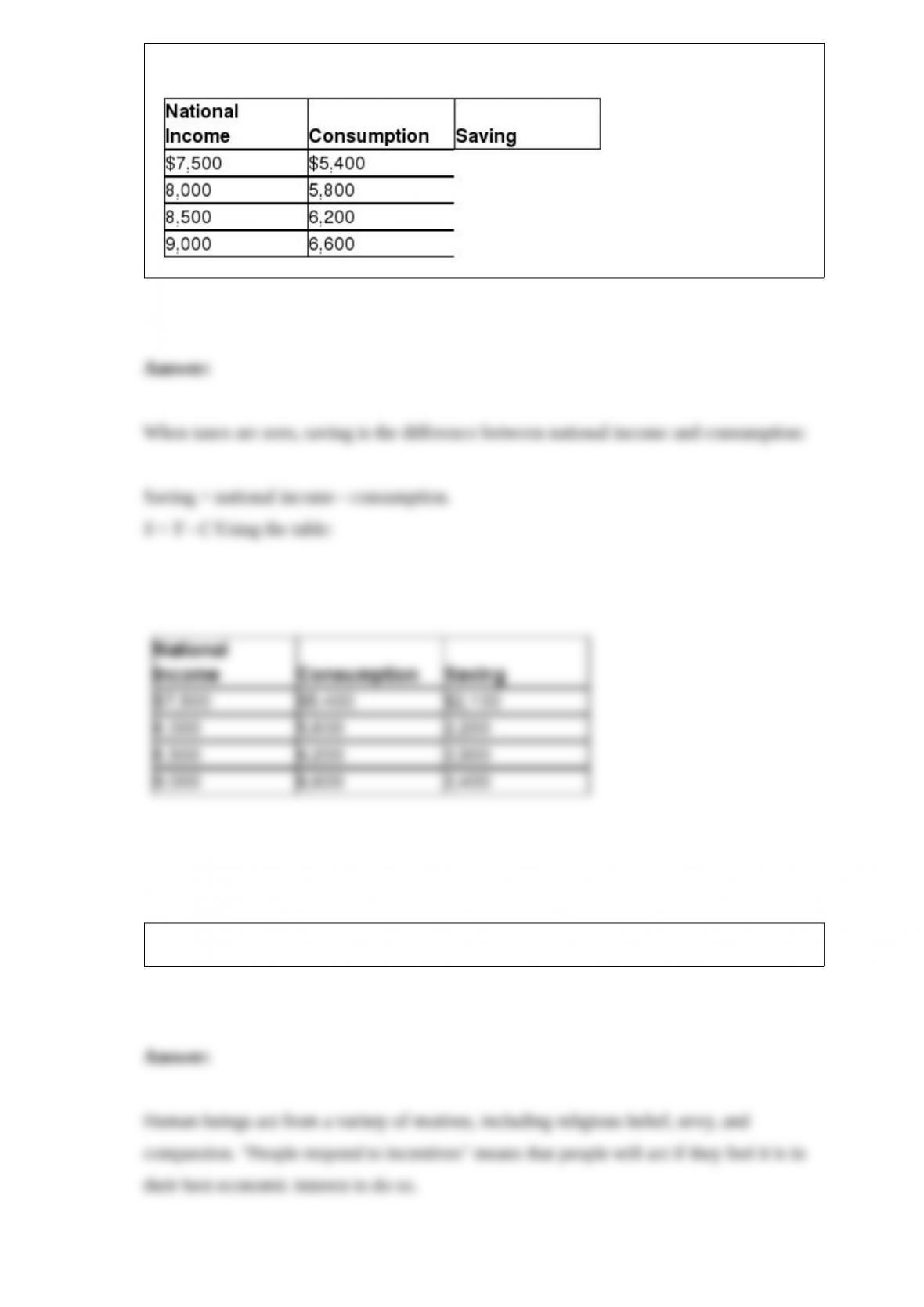
12-5
Explain the economic idea that “people respond to incentives.”

Explain the differences between total revenue, average revenue, and marginal revenue.