1) The field of economics that analyzes government decision making, politics, and
elections is called:
A.public finance.
B.public choice theory.
C.collective economics.
D.political economy.
2) if a purely competitive firm is producing at the mr = mc output level and earning an
economic profit, then:
a.the selling price for this firm is above the market equilibrium price.
b.new firms will enter this market.
c.some existing firms in this market will leave.
d.there must be price fixing by the industry’s firms.
3) The fact that international specialization and trade based on comparative advantage
can increase world output is demonstrated by the reality that:
A.the production possibilities curve of any two nations are identical.
B.a nation’s production possibilities and trading possibilities lines coincide.
C.a nation’s trading possibilities line lies to the right of its production possibilities line.
D.a nation’s production possibilities line lies to the right of its trading possibilities line.
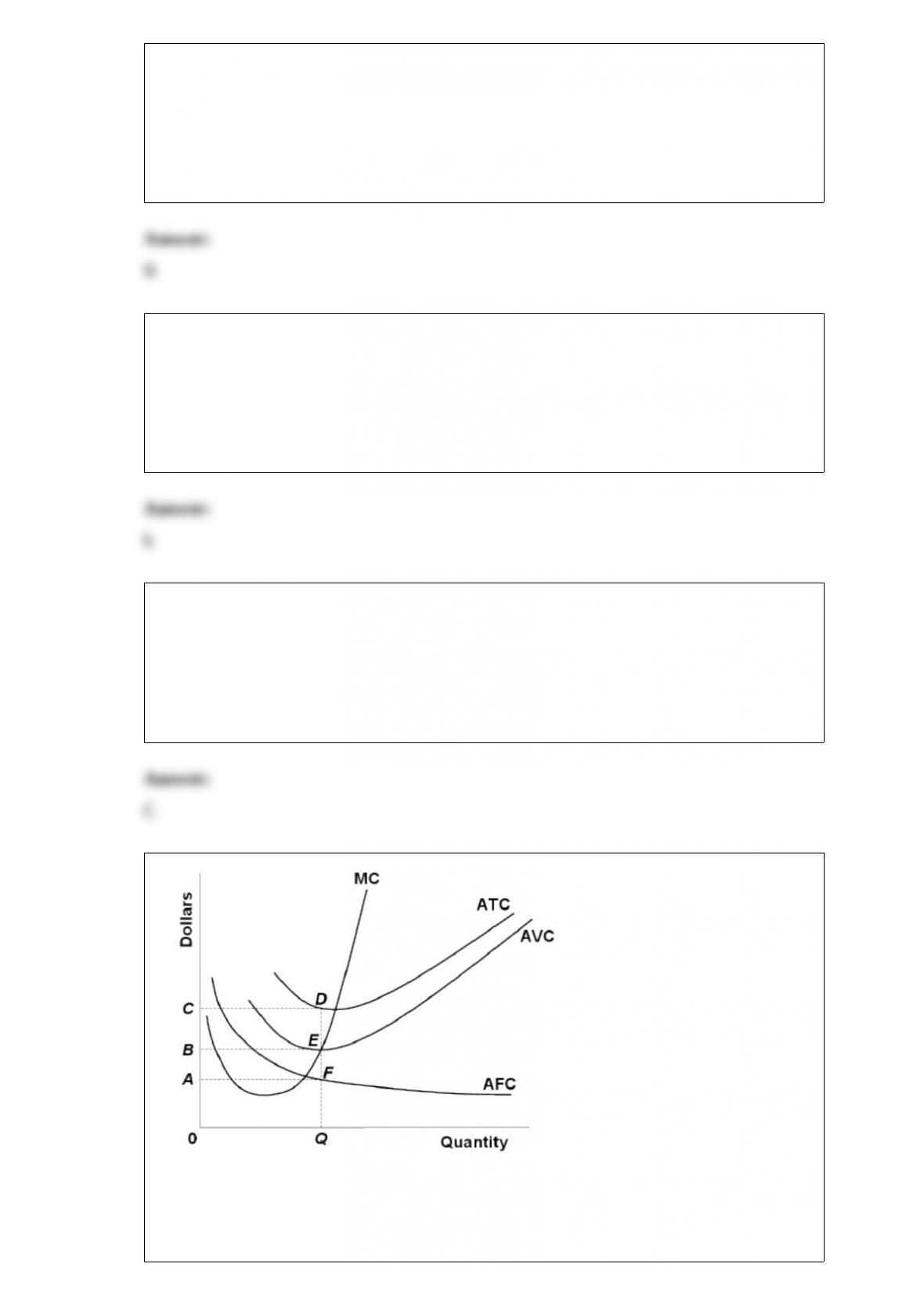
4)
refer to the above diagram. at output level q total cost is:
a.0beq
b.bcde
c.0beq plus bcde
d.0afq plus bcde
5) Which of the following is correct?
A.The rapid expansion of foreign incomes will reduce U.S. agricultural exports.
B.A decrease in the international value of the dollar will reduce U.S. agricultural
exports.
C.An increase in the international value of the dollar will reduce U.S. agricultural
exports.
D.Changes in the international value of the dollar have no effect on U.S. agricultural
exports.
6) price elasticity of demand is generally:
a.greater in the long run than in the short run.
b.greater in the short run than in the long run.
c.the same in both the short run and the long run.
d.greater for “necessities” than it is for “luxuries.”
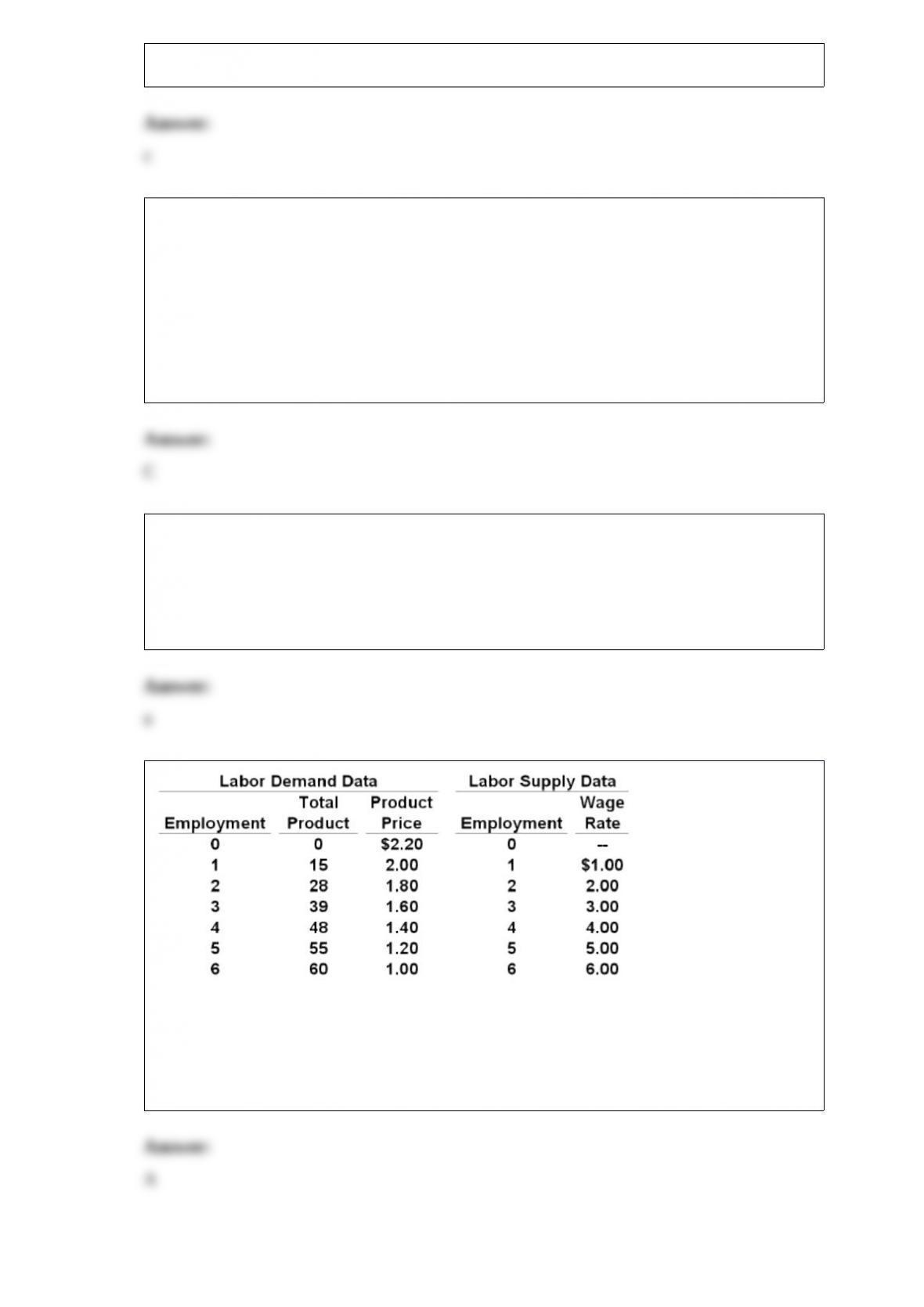
7) Refer to the above
data. How many units of output will this profit-maximizing firm produce?
A.39
B.48
C.55
D.60
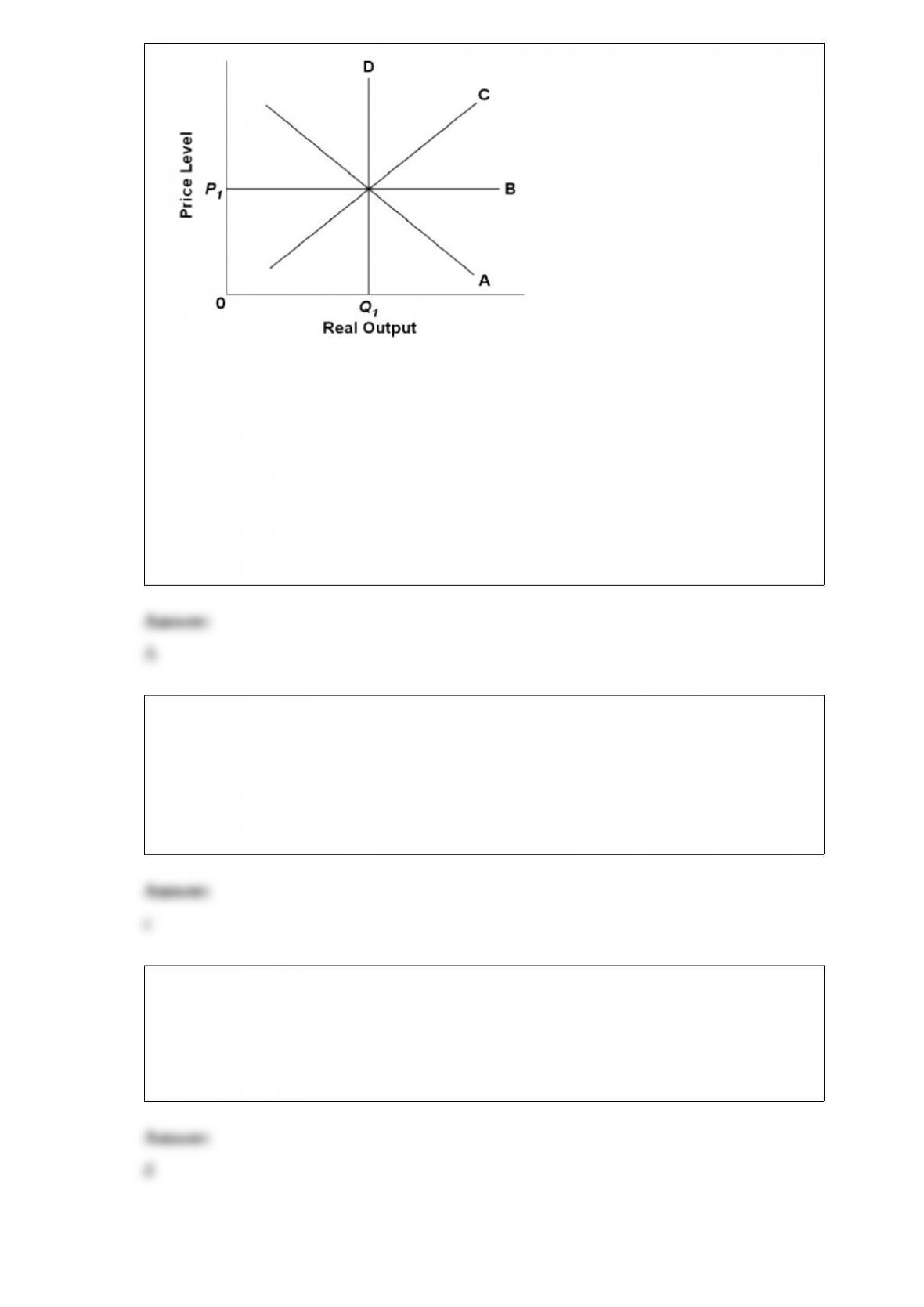
8)
Refer to the above diagram and assume that prices and wages are flexible both upward
and downward in the economy. In the extended AD-AS model:
A.demand-pull inflation would involve a rightward shift of curve A, followed by a
leftward shift of curve C
B.cost-push inflation would involve a rightward shift of curve A, followed by a leftward
shift of curve C
C.recession would involve a leftward shift of curve A, followed by a leftward shift of
curve C
D.recession would involve a rightward shift of curve D, followed by leftward shifts of
curves A and C
9) if the university chamber music society decides to raise ticket prices to provide more
funds to finance concerts, the society is assuming that the demand for tickets is:
a.parallel to the horizontal axis.
b.shifting to the left.
c.inelastic.
d.elastic.
10) the concept of price elasticity of demand measures:
a.the slope of the demand curve.
b.the number of buyers in a market.
c.the extent to which the demand curve shifts as the result of a price decline.
d.the sensitivity of consumer purchases to price changes.