
The marginal propensity to consume is consumption divided by disposable income.
A) True
B) False
Economists use the term equilibrium to describe when:
A) individuals are equal.
B) no individual would be better off taking a different action.
C) no individual has an incentive to change his or her behavior.
D) no individual would be better off taking a different action or no individual has an
incentive to change his or her behavior.
Economists usually assume that production is subject to increasing opportunity costs
because:
A) higher production usually results in more inflation.
B) not all resources are equally suited to producing every good.
C) individuals desire constantly increasing opportunities to make themselves better off.
D) if production is efficient, it is not possible to increase the production of all goods
simultaneously.
Diminishing returns to physical capital means that as more and more physical capital is
added to fixed amounts of human capital with a fixed technology, eventually real GDP
per worker declines.
A) True
B) False
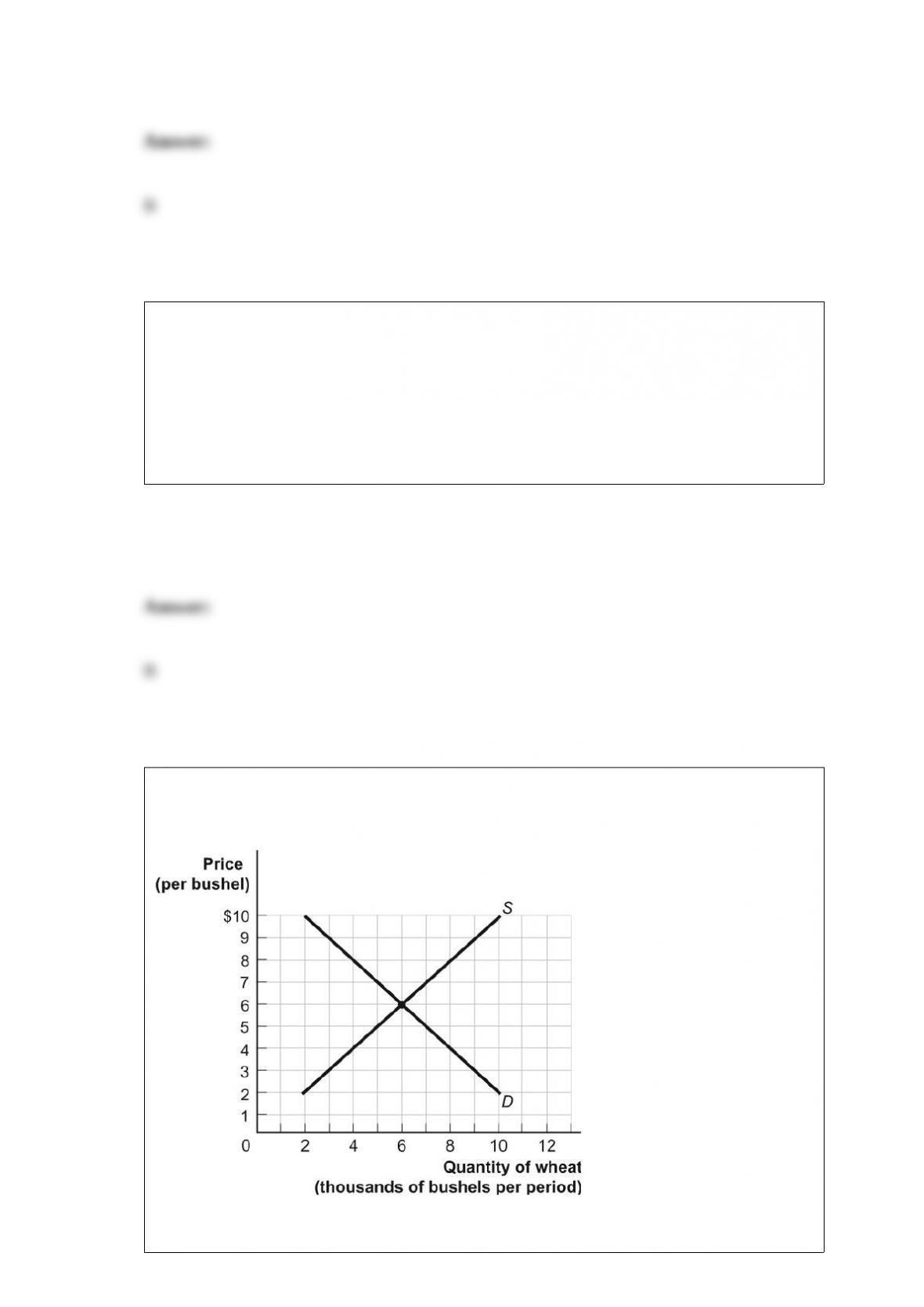
Figure: The Demand and Supply of Wheat
Look at the figure The Demand and Supply of Wheat. A temporary price of $2 in this

market would result in a _____ of _____ bushels.
A) surplus; 4,000
B) shortage; 8,000
C) shortage; 10,000
D) surplus; 10,000
Stock in a company is:
A) a share of ownership of the company.
B) an IOU that pays interest.
C) a portion of a firm’s profits paid to shareholders.
D) part of private savings.
The total income of households after taxes and government transfers is called:
A) disposable income.
B) private savings.
C) aggregate spending.

D) investment.
In the United States, only the U.S. Treasury can create money.
A) True
B) False
If policy makers want to increase real GDP by $100 billion and the marginal propensity
to consume is 0.75, they should _____ taxes by _____ .
A) decrease; more than $25 billion
B) decrease; less than $25 billion
C) increase; more than $25 billion
D) increase; less than $25 billion

Changes in unplanned inventory investment move the economy toward the
income”expenditure equilibrium.
A) True
B) False
A repo is:
A) a long-term loan.
B) a very short-term loan.
C) another name for a corporate bond.
D) government debt that it cannot repay.
The market price of airline flights increased recently. Some economists suggest that the
price increased because jet fuel is much more expensive than before. As a result, they
believe that in the market for flights:
A) supply increased.
B) supply decreased.
C) demand increased.
D) demand decreased.
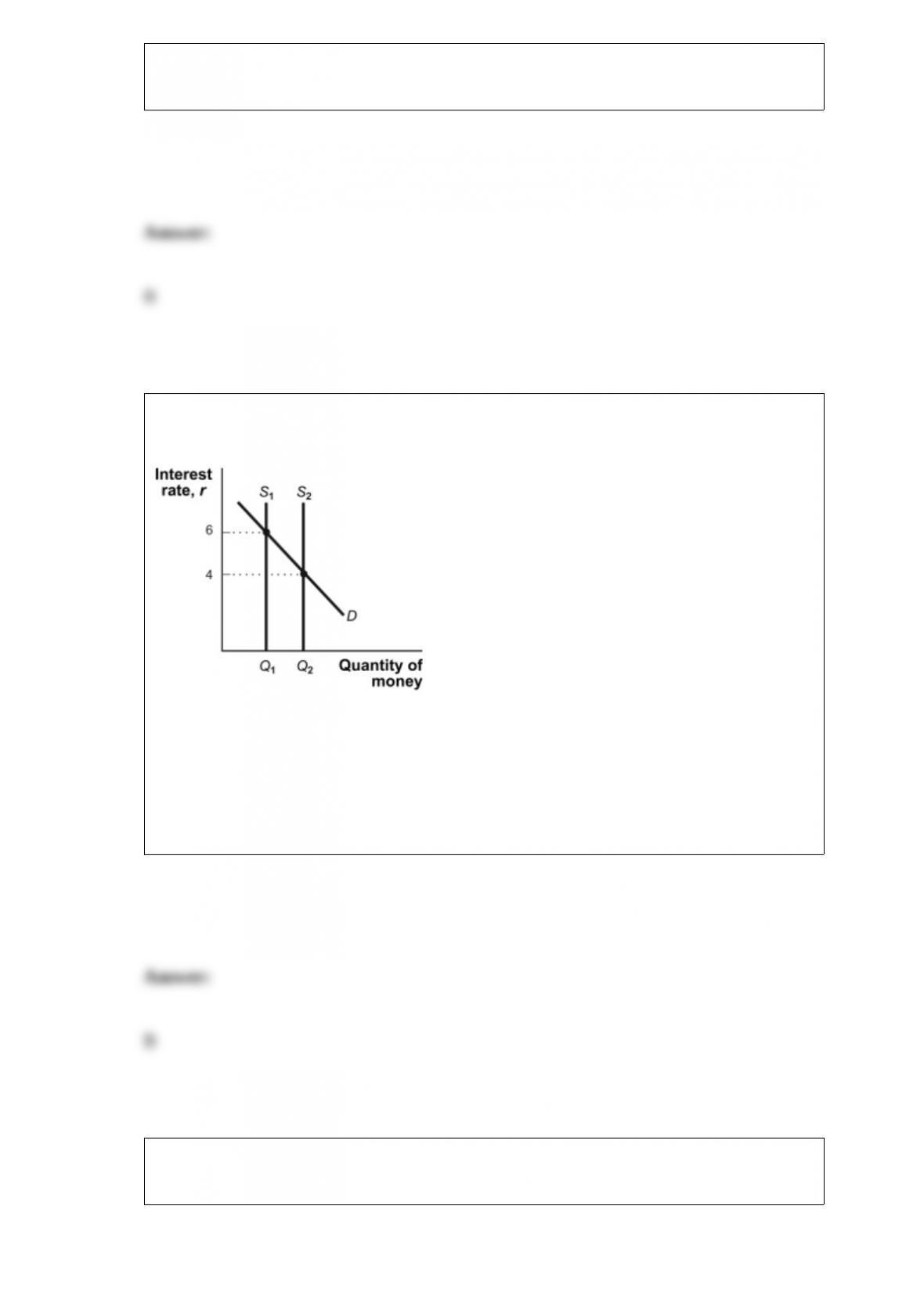
Figure: Changes in the Money Supply
Look at the figure Changes in the Money Supply. If the supply of money shifts from
S1to S2, the Federal Reserve must have _____ Treasury bills in the open market.
A) sold
B) bought
C) issued new
D) borrowed
Figure: Supply of Coconuts
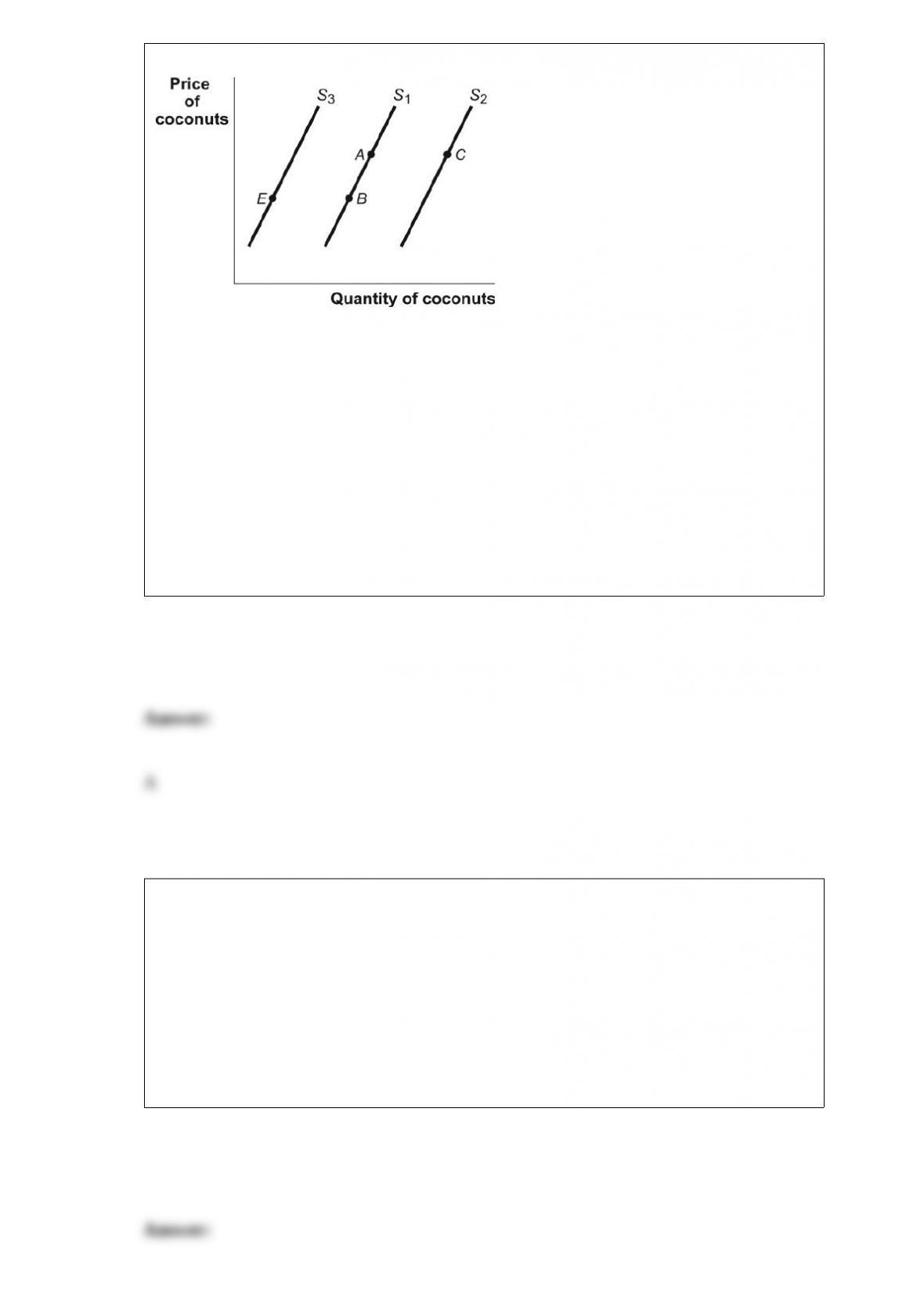
Look at the figure Supply of Coconuts. An improvement in the technology used to
harvest coconuts (e.g., a faster, less expensive coconut picker) would be represented in
the figure as a movement from:
A) A to C.
B) B to A.
C) C to A.
D) B to E.
The short-run aggregate supply curve is positively sloped because:
A) wages and other costs of production respond immediately to changes in prices.
B) profit is lower when prices increase, so output decreases.
C) workers are willing to work for lower wages rather than be laid off.
D) higher prices lead to higher profit and higher output.

When the demand for housing increased during the early 2000s, the demand for
loanable funds decreased and caused the interest rate to decrease.
A) True
B) False
If the economy is operating well below potential output, the cyclically adjusted budget
balance deficit is _____ than the actual budget balance.
A) smaller than
B) larger than
C) unrelated to
D) the same as
Which of the following is studied in macroeconomics?
A) the change in automobile sales due to a change in the price of automobiles

B) the effect of a tax reduction on the profits of an individual business
C) recessions
D) the unemployment of workers displaced by technological change in the typesetting
industry
In the 1970s and first half of the 1980s the U.S. economy had _____ inflation and
_____ unemployment.
A) high; high
B) high; low
C) low; high
D) low; low
Which of the following is an action of central banks and governments to lessen the
severity of a banking crisis?
A) maturity transformation
B) relaxing bank capital requirements
C) acting as a lender of last resort

D) opening a liquidity trap
The point on a business cycle when real GDP stops rising and begins falling is a(n):
A) peak.
B) trough.
C) expansion.
D) recession.
A soft-drink bottling firm is thinking of opening a new distribution center. The center
will cost $2.5 million to build today, and it will generate profits of $1 million one year
from now, two years from now, and three years from now. The firm should build the
distribution center if the interest rate is 9% or lower.
A) True
B) False

If the marginal propensity to save is 0.1, then the government spending multiplier has a
value of
A) 0.1.
B) 9.
C) 10.
D) 0.11.
Okun’s law finds that output gaps and unemployment rates are _____ related in a _____
ratio.
A) positively; one-to-one
B) negatively; less than one-to-one
C) positively; less than one-to-one
D) negatively; one-to-one
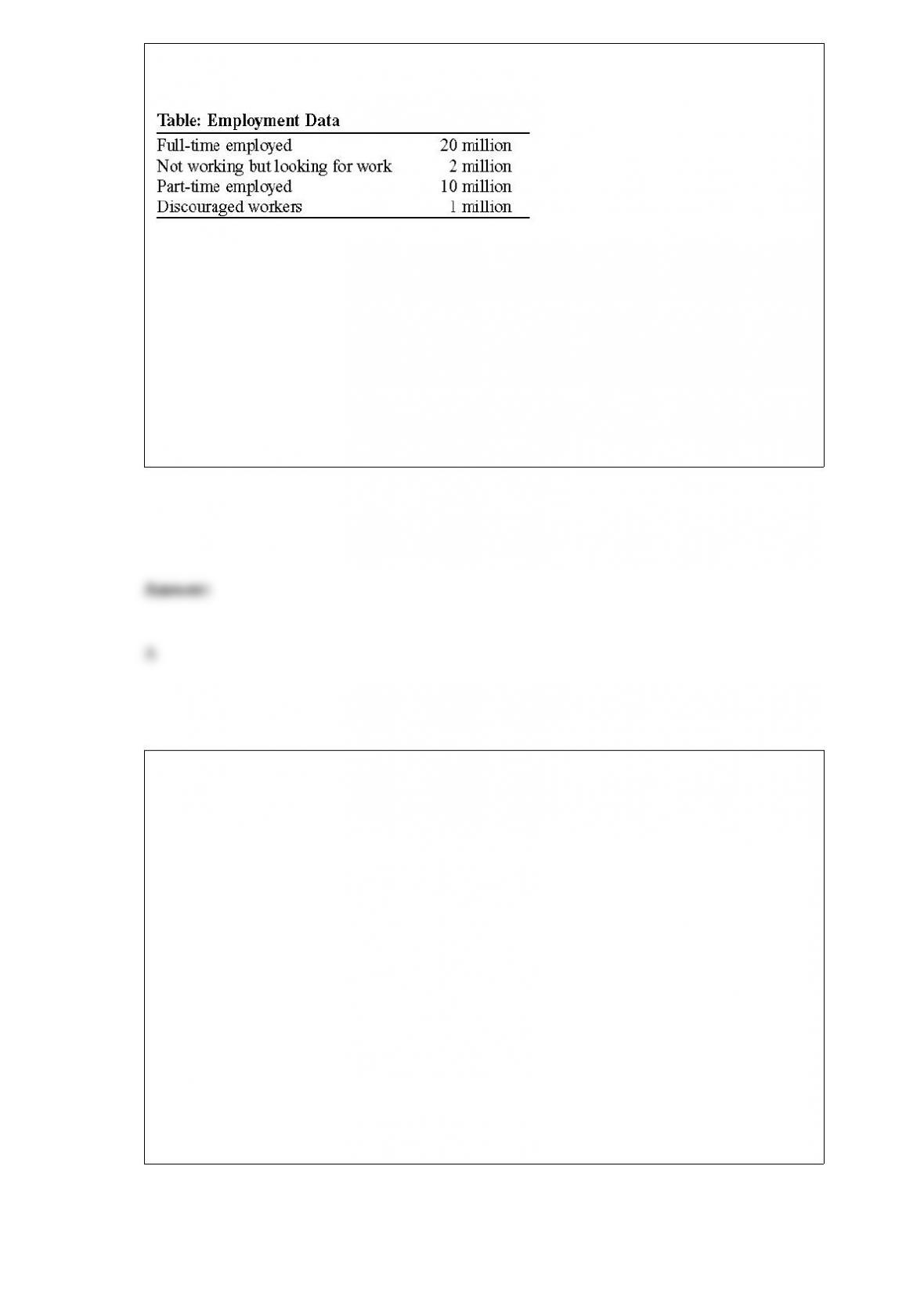
Look at the table Employment Data. The unemployment rate is:
A) 6.25%.
B) 6.45%.
C) 9.09%.
D) 9.37%.
Table: Disposable Income and Consumption
Disposable Income
(in Billions) Consumer Spending
(in Billions)
$ 0 $100
200 220
400 340
600 460
800 580
1,000 700
Look at the table Disposable Income and Consumption. Autonomous consumer
spending is:
A) 200.
B) 100.
C) 120.
D) 0.

The key factor explaining the poor growth performance in Africa is probably:
A) lack of domestic political stability.
B) lack of natural resources.
C) overpopulation.
D) the prevalence of military conflicts among neighboring countries.
Consider the demand for and the supply of the U.S. dollar. The exchange rate is
measured in terms of yen per dollar. If the demand for the U.S. dollar decreases, all of
the following will be true EXCEPT that:
A) the demand curve for dollars will shift to the left.
B) the Japanese will buy more U.S. goods.
C) Americans will buy more Japanese goods.
D) the exchange rate of yen per U.S. dollar will fall.

Recent declines in union membership are likely _____ the natural rate of
unemployment.
A) to increase
B) to decrease
C) not to affect
D) to alter unpredictably
Real GDP tends to overstate our economic well-being by including:
A) expenditures on crime prevention.
B) payments for cleaning up the environment.
C) repairs to structures destroyed by storms.
D) expenditures on crime prevention, payments for cleaning up the environment, and
repairs to structures destroyed by storms.
Suppose that the nominal rate of interest is 7% and the inflation rate is 3%. The real rate
of interest is:

A) 3%.
B) 4%.
C) 10%.
D) 7%.
In contrast to the conclusions drawn from microeconomics, many economists argue that
in macroeconomics, government:
A) control of rent prices increases overall economic activity.
B) intervention in markets usually leaves society as a whole worse off.
C) taxation of goods and services does not cause a deadweight loss of economic
welfare.
D) intervention in markets can prevent or reduce the effects of adverse events on the
macroeconomy.
Figure: The Aggregate Consumption Function and Planned Aggregate Spending
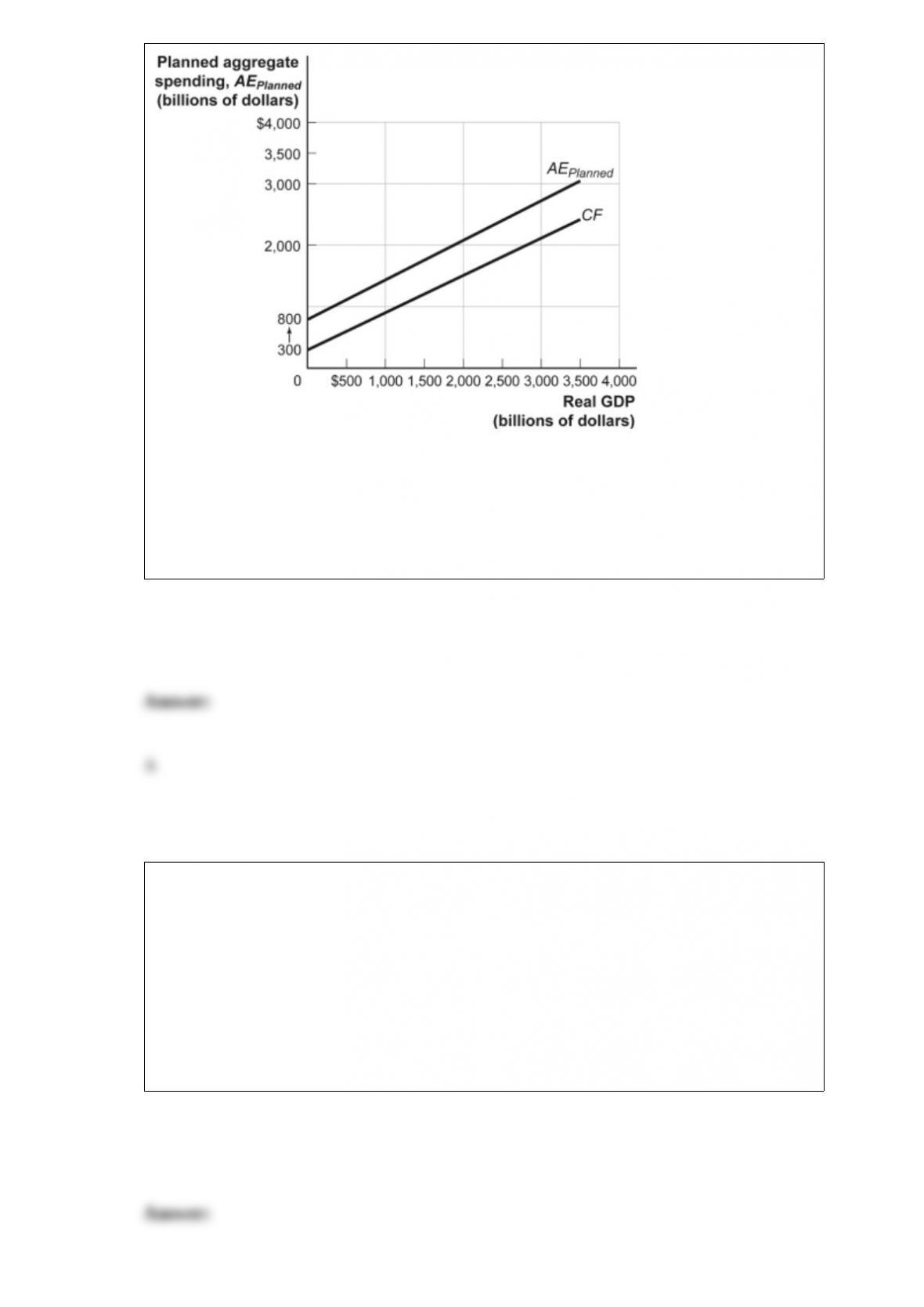
Look at the table The Aggregate Consumption Function and Planned Aggregate
Spending. If expecteddisposable income increases, then the:
A) aggregate expenditures curvewill shift up.
B) aggregate expenditures curvewill shift down.
C) economy will move upward along the aggregate expenditures curve.
D) economy will move downward along the aggregate expenditures curve.
The most important use of GDP is as a measure of:
A) the size of the economy.
B) the level of unemployment.
C) changes in the price level.
D) rates of return in financial markets.

Compared with autarky, international trade leads to _____ domestic production in
exporting industries and _____ domestic production in import-competing industries.
A) higher; lower
B) higher; higher
C) lower; higher
D) lower; lower