1) Suppose interest rates fall sharply in the United States but are unchanged in Great
Britain. Other things equal, under a system of freely floating exchange rates we can
expect the demand for pounds in the United States to:
A.decrease, the supply of pounds to increase, and the dollar to appreciate relative to the
pound.
B.increase, the supply of pounds to increase, and the dollar may either appreciate or
depreciate relative to the pound.
C.increase, the supply of pounds to decrease, and the dollar to depreciate relative to the
pound.
D.decrease, the supply of pounds to increase, and the dollar to depreciate relative to the
pound.
2) In which of the following U.S. occupations is the rate of unionization the lowest?
A.transportation workers
B.teachers
C.legal workers
D.sales workers
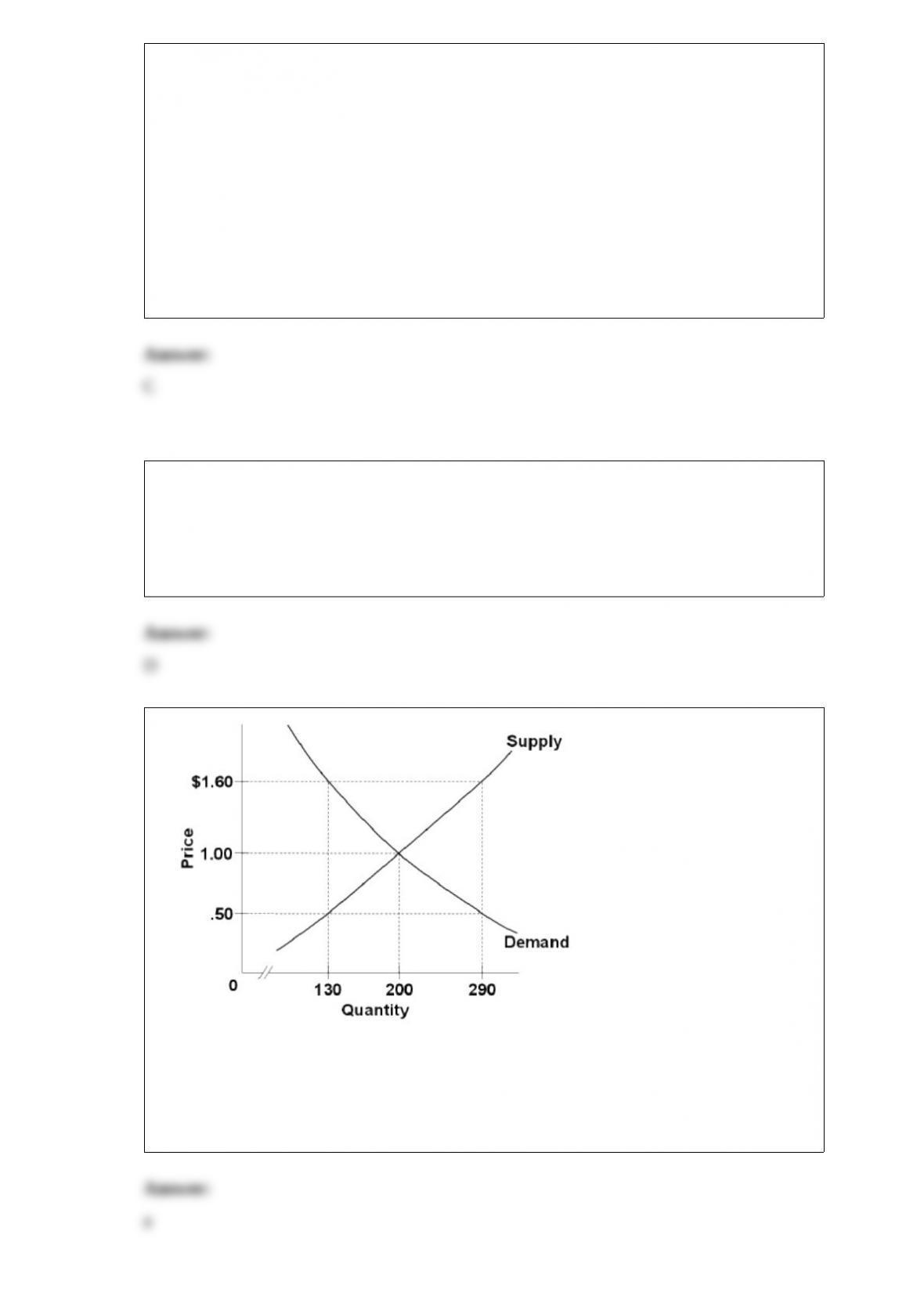
3)
refer to the above diagram. the equilibrium price and quantity in this market will be:
a.$1.00 and 200.
b.$1.60 and 130.
c.$.50 and 130.
d.$1.60 and 290.
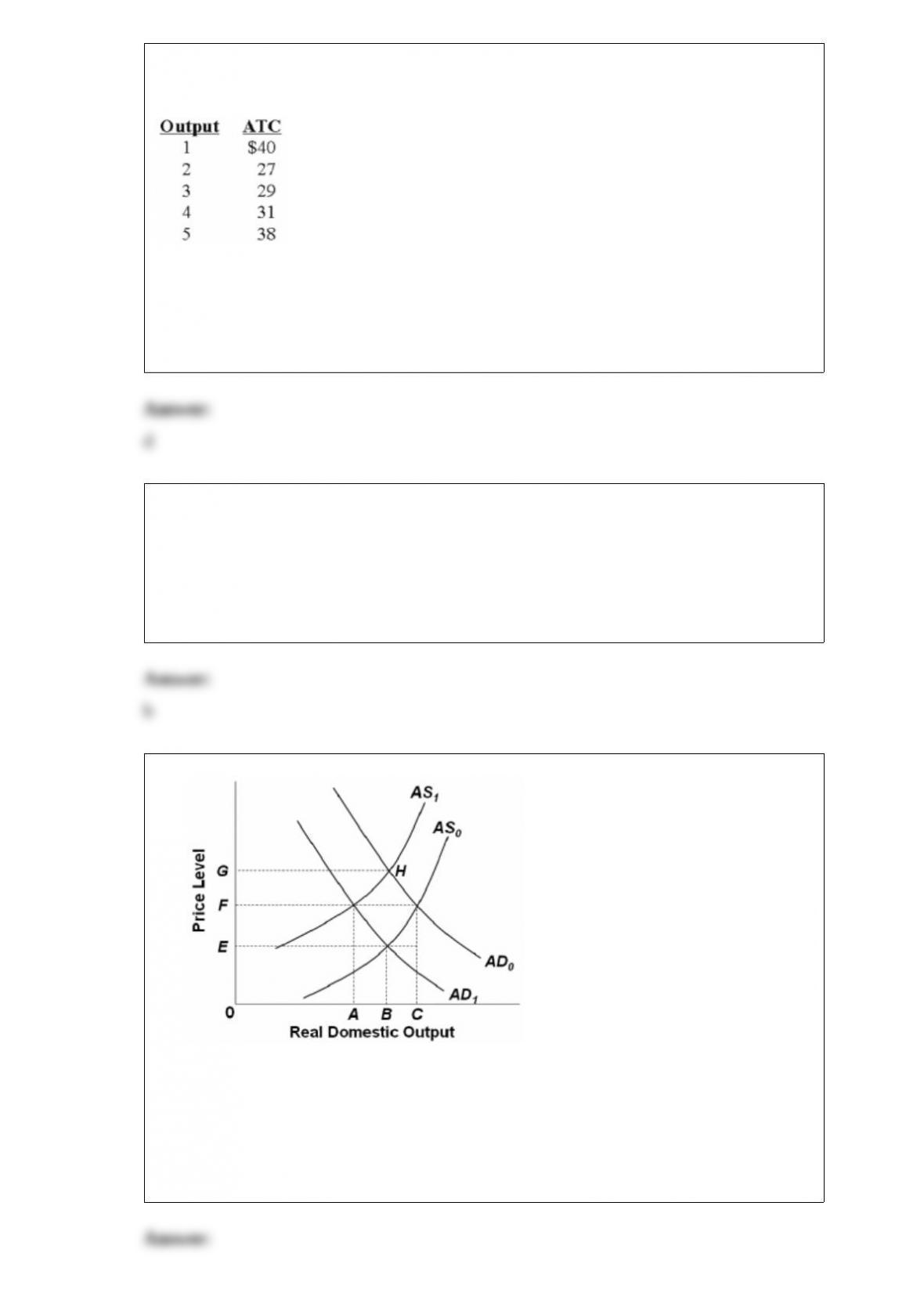
4) the accompanying table that shows average total costs (atc) for a manufacturing firm
whose total fixed costs are $10:
refer to the above data. the profit-maximizing level of output for this firm:
a.is 3
b.is 4
c.is 5
d.cannot be determined from the information given.
5) if the supply of product x is perfectly elastic, an increase in the demand for it will
increase:
a.equilibrium quantity but reduce equilibrium price.
b.equilibrium quantity but equilibrium price will be unchanged.
c.equilibrium price but reduce equilibrium quantity.
d.equilibrium price but equilibrium quantity will be unchanged.
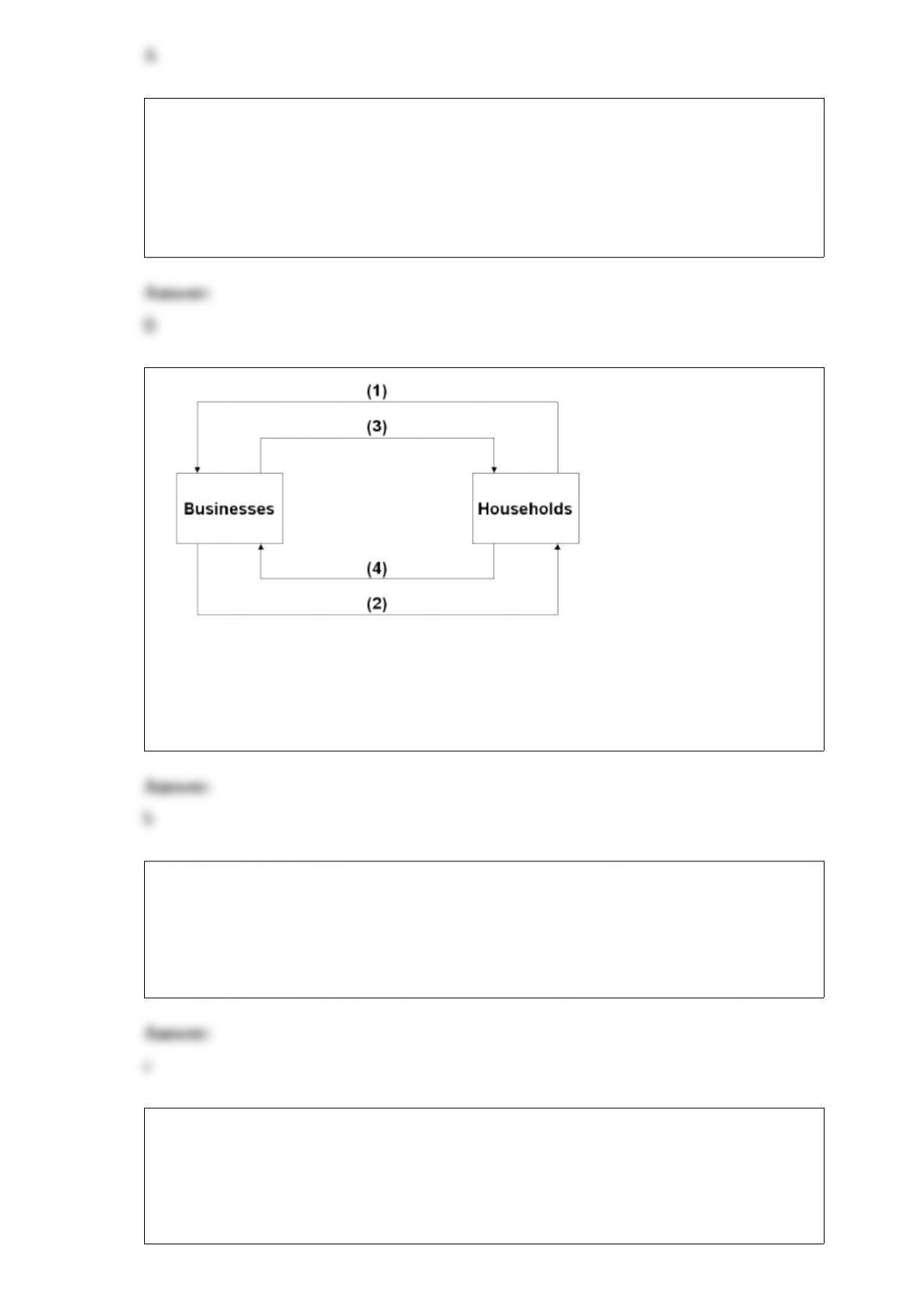
6)
Refer to the above diagram. Other things equal, a shift of the aggregate supply curve
from AS0 to AS1 might be caused by a(n):
A.increase in government regulation.
B.increase in aggregate demand.
C.increase in productivity.
D.decline in nominal wages.
7) Other things equal, the slope of the aggregate expenditures schedule will increase as
a result of:
A.a decline in the size of the inflationary gap.
B.an increase in the MPC.
C.an increase in the MPS.
D.a decline in the general price level.
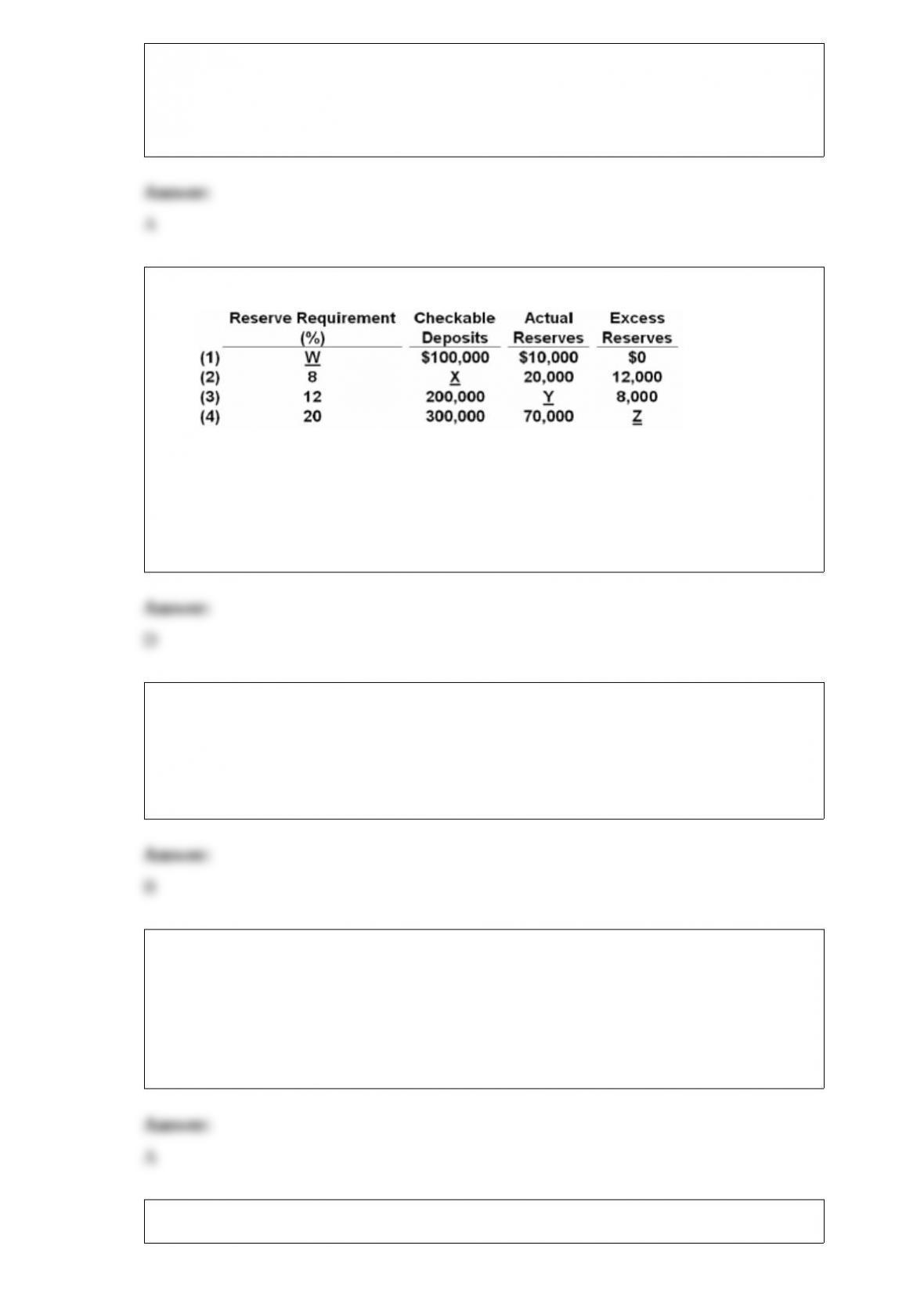
8)
refer to the above diagram. arrows (3) and (4) represent:
a.goods and services respectively.
b.incomes and consumer expenditures respectively.
c.resources and goods respectively.
d.consumer expenditures and income respectively.
9) the short run is characterized by:
a.plenty of time for firms to either enter or leave the industry.
b.increasing, but not diminishing returns.
c.at least one fixed resource.
d.zero fixed costs.
10) Suppose that real domestic output in an economy is 20 units, the quantity of inputs
is 10, and the price of each input is $4. Answer the following question(s) on the basis of
this information.
Refer to the above information. Given an increase in input price from $4 to $6, we
would expect the aggregate:
A.supply curve to shift to the left.
B.supply curve to shift to the right.
C.demand curve to shift to the left.
D.demand curve to shift to the right.
11)
Refer to row 2 in the above table. The number appropriate for space X is:
A.$20,000.
B.$60,000.
C.$200,000.
D.$100,000.
12) Other things equal, a reduction in income taxes would:
A.reduce productivity and reduce aggregate supply.
B.increase consumption and increase aggregate demand.
C.increase the supply of money and reduce investment.
D.increase government spending and increase aggregate demand.
13) The marginal revenue product (MRP) of land declines as more land is brought into
use. As a result the:
A.demand curve for land is downsloping.
B.demand curve for land is upsloping.
C.supply curve for land is downsloping.
D.supply curve for land is upsloping.
14) Why did the U.S. Congress establish the Federal Reserve as an independent
agency?
15) Why is the marginal revenue product schedule a demand schedule for the individual
firm in a purely competitive resource market and selling output in a purely competitive
product market?
16) Describe how the income shares of national income are distributed to labor and to
capitalists. How has this distribution changed since 1900?

17) Does it hold that ethical investing increases returns?
18) Why is the economic analysis of oligopoly so difficult? What two generalizations
can be made about the pricing behavior of oligopolists?
19) (Last Word) Give three examples of government failure in the news.

20) Why are savings and investment so important for economic growth? How do
savings and investment affect present and future consumption? Explain.
21) How does the supply of land differ from the supply of most labor? How will the
effect on price of an outward shift in demand for labor differ from the effect on price of
an equivalent shift in the demand for land?
22) What is the opportunity cost of unemployment for an economy? What social
problems have been linked to higher rates of unemployment?

23) What is the relationship between bank assets, liabilities and net worth?