
The only type of business that faces limited liability is a corporation.
For most goods and services, the burden of a tax is on the sellers.
One consequence of adverse selection in the market for used cars is that most used cars
sold will be lemons.
By the late 1950s, dollars held by foreign central banks exceeded the official dollar
value of U.S. gold reserves.

Consider a country that produces only two goods: pineapples and tractors. Suppose it is
possible for this country to increase its production of pineapples without producing
fewer tractors. In this case, its current output combination is inefficient.
An increase in the real interest rate will decrease consumption and investment.
Retained earnings are sufficient to finance a firm’s rapid expansion in a high-growth
economy.
A majority of people in the United States do not have private health insurance.

If aggregate expenditure is more than GDP, then inventories fall and GDP rises.
A series of bank runs in a country should have no effect on M1 as money simply moves
from checking deposits to currency.
Before 1980, U.S. investors rarely invested in foreign capital markets.
The nominal interest rate minus the inflation rate equals the real interest rate.

Monetary policy has a greater impact in an open economy than it does in a closed
economy.
In a closed economy with fixed or autonomous (non-income dependent) taxes, the
balanced budget government purchases multiplier is negative.
If planned aggregate expenditure equals GDP, the economy is in macroeconomic
equilibrium.
Alejandro expects the price level to rise from 105 this year to 108 next year. If the price
level rises to 110 next year instead of 108, which of the following will occur?
A) Alejandro’s real wage remains unchanged.
B) Alejandro’s real wage falls.
C) Alejandro’s real wage rises.
D) Alejandro’s real wage may rise or fall, depending on the unemployment rate.
Explain how each of the following events would affect the short-run aggregate supply
curve.
a. A decrease in the price level
b. A decrease in what the price level is expected to be in the future
c. A price level that is currently lower than expected
d. An unexpected decrease in the price of an important raw material
e. A decrease in the labor force
Figure 5-1
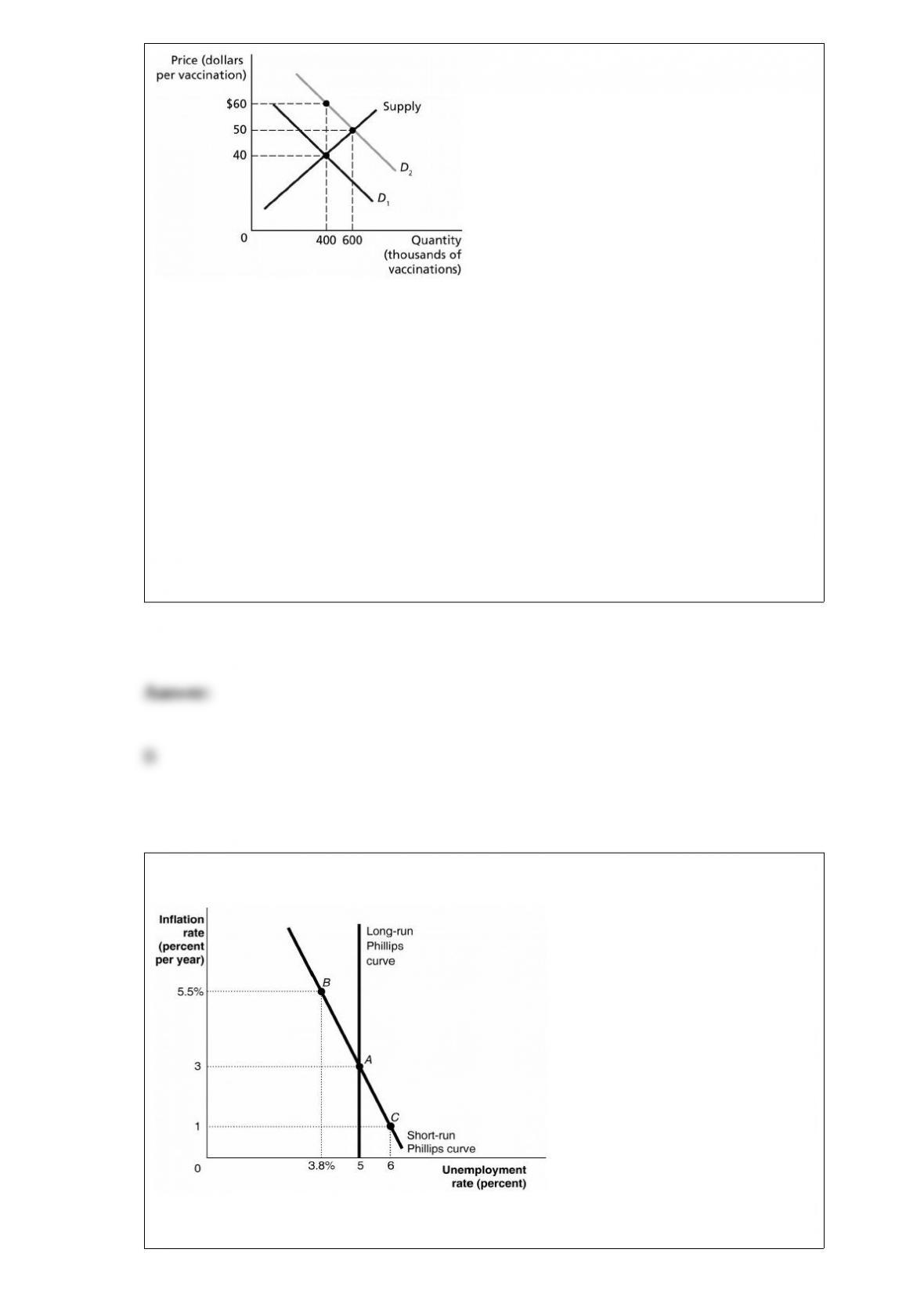
Figure 5-1 represents the market for vaccinations. Vaccinations are considered a benefit
to society, and the figure shows both the marginal private benefit and the marginal
social benefit from vaccinations.
Refer to Figure 5-1. Marginal social benefit is represented by which curve?
A) D1
B) D2
C) Supply
D) All of the above represent marginal social benefit.
Figure 17-2
Refer to Figure 17-2. Suppose the economy is at point A in the figure above. Which of
the following is true?

A) The short-run Phillips curve will shift to the right.
B) The short-run Phillips curve will shift to the left.
C) The long-run Phillips curve will shift to the left.
D) Actual inflation and expected inflation are the same.
E) The long-run Phillips curve will shift to the right.
The rapid growth of the Chinese economy should
A) benefit U.S. consumers as they have access to less expensive consumer goods.
B) make it more difficult for citizens of the United States to find a job.
C) not affect the mix of jobs available to citizens of the United States.
D) A and B
A quota is
A) a limit placed on the quantity of goods that can be imported into a country.
B) a tax imposed by a government on goods imported into a country.
C) a subsidy granted to importers of a vital input.
D) a health and safety restriction imposed on an imported product.

Which of the following takes place in the direct finance market?
A) Firms borrow funds from banks.
B) Deposits from savers are accumulated and loans made to borrowers.
C) Ownership in corporations is sold in the form of preferred stock.
D) Banks offer savings accounts to customers.
Which of the following describes what the Fed would do to pursue an expansionary
monetary policy?
A) use open market operations to buy Treasury bills
B) use open market operations to sell Treasury bills
C) use discount policy to raise the discount rate
D) raise the reserve requirement

The aggregate demand curve shows the relationship between the ________ and
________.
A) inflation rate; quantity of real GDP demanded
B) real interest rate: quantity of real GDP supplied
C) nominal interest rate; quantity of real GDP demanded
D) price level; quantity of real GDP demanded
Paul Romer, an economist at Stanford University, is most closely associated with what
economic theory?
A) new growth theory
B) labor productivity theory
C) the process of creative destruction
D) the Communist Manifesto
Figure 4-1
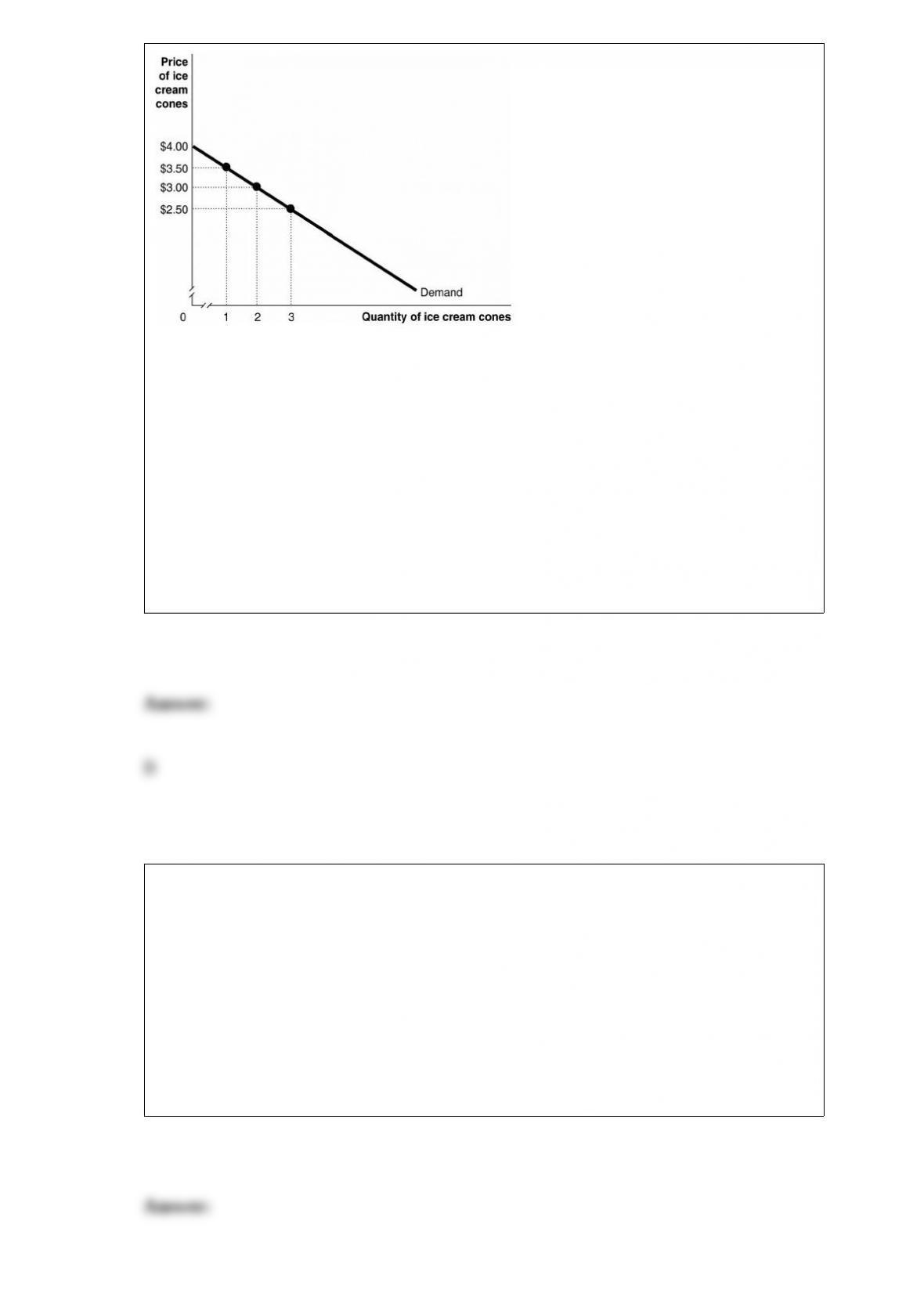
Figure 4-1 shows Kendra’s demand curve for ice-cream cones.
Refer to Figure 4-1. If the market price is $2.50, what is the consumer surplus on the
first ice cream cone?
A) $0.50
B) $1.00
C) $3.50
D) $9.00
If a German firm produces cars in the United States, that production should count
towards
A) U.S. GNP.
B) German GDP.
C) U.S. GDP.
D) both U.S. GNP and German GDP.

Where does the short-run Phillips curve intersect the long-run Phillips curve?
A) at the point where the rate of inflation and the unemployment rate are equal
B) at the natural rate of inflation
C) at the point where actual inflation is equal to expected inflation
D) There is no intersection between the short-run and long-run Phillips curves.
If planned aggregate expenditure is less than total production,
A) actual inventories will equal planned inventories.
B) firms will experience an unplanned decrease in inventories.
C) GDP will decrease.
D) the economy is in equilibrium.
A fractional reserve banking system is one in which banks hold less than 100 percent of
________ in reserves.
A) loans

B) deposits
C) securities
D) shareholder equity
In an open economy, the current account balance equals ________. (Assume that the
capital account is zero and net transfers are zero.)
A) net foreign investment + domestic investment
B) net capital outflows
C) the financial account balance + net income on investments
D) net foreign investment
Suppose there is some unemployment in the economy and society decides that it wants
more of one good. Which of the following statements is true?
A) It is not possible to achieve this unless technology advances.
B) It can increase output without giving up another good by employing more resources.
C) It will have to increase resource supplies.
D) It will have to give up production and consumption of some other good.

The following equations represent the demand and supply for bird feeders.
QD = 35 – P
QS = -5 + 3P
What is the equilibrium price (P) and quantity (Q – in thousands) of bird feeders?
A) P = $10; Q = 25 thousand
B) P = $35; Q = 20 thousand
C) P = $20; Q = 20 thousand
D) P = $5; Q = 30 thousand
Given the equations for C, I, G, and NX below, what is the equilibrium level of GDP?
C = 1,000 + 0.8Y
I = 1,500
G=1,250
NX = 100
A) $3,080
B) $3,850
C) $6,930
D) $19,250
If national saving increases, ________. (Assume that the capital account is zero and net
transfers are zero.)
A) the sum of domestic investment and net exports must decrease
B) the sum of domestic investment and foreign investment must increase
C) the sum of domestic investment and foreign investment must decrease
D) foreign investment must decrease to cover the gain
Suppose that the required reserve ratio is 10 percent and you withdraw $25,000 from
Comerica Bank. What is the deposit multiplier? What is the total decrease in deposits in
the banking system? What is the change in the money supply?
When a government has a budget deficit, it must issue (sell) government bonds to
finance the deficit. Does it matter for the rate of inflation if the government sells the
government bonds to the public or sells the government bonds to the central bank?
Explain why it does or does not matter.
What is the difference between fiscal policy and monetary policy?
What are the key differences between how we illustrate a contractionary fiscal policy in
the basic aggregate demand and aggregate supply model and in the dynamic aggregate
demand and aggregate supply model?
What is the difference between retained earnings and dividends?
What is a mortgage? What were the important developments in the mortgage market
during the years after 1970?