
Between 1910 and today, the number of farmers in the United States _____________
dramatically as a result of ___________________ in farming in the twentieth century.
a. dropped; technological improvements
b. rose; technological improvements
c. dropped; technological declines
d. rose; technological declines
A perfectly competitive market is initially in long-run competitive equilibrium. Then,
market demand increases. By the time all adjustments have been made, price will be
__________ its original level if the industry is a(n) __________ cost industry.
a. below; constant
b. above; increasing
c. at; decreasing
d. at; increasing
e. above; decreasing
The cost of building a new interstate highway system is reported to be high at $25
billion. Does it necessarily follow that the interstate highway is not worth building?
a. Yes, because it is better to spend $25 billion on ending poverty than on building
another interstate highway system.
b. No, because building a new interstate highway system promotes economic growth,
which helps everyone.
c. No, because the benefits of building a new interstate highway system may be greater
than $25 billion.
d. Yes, because the benefits of building a new interstate highway system may be greater
than $25 billion.
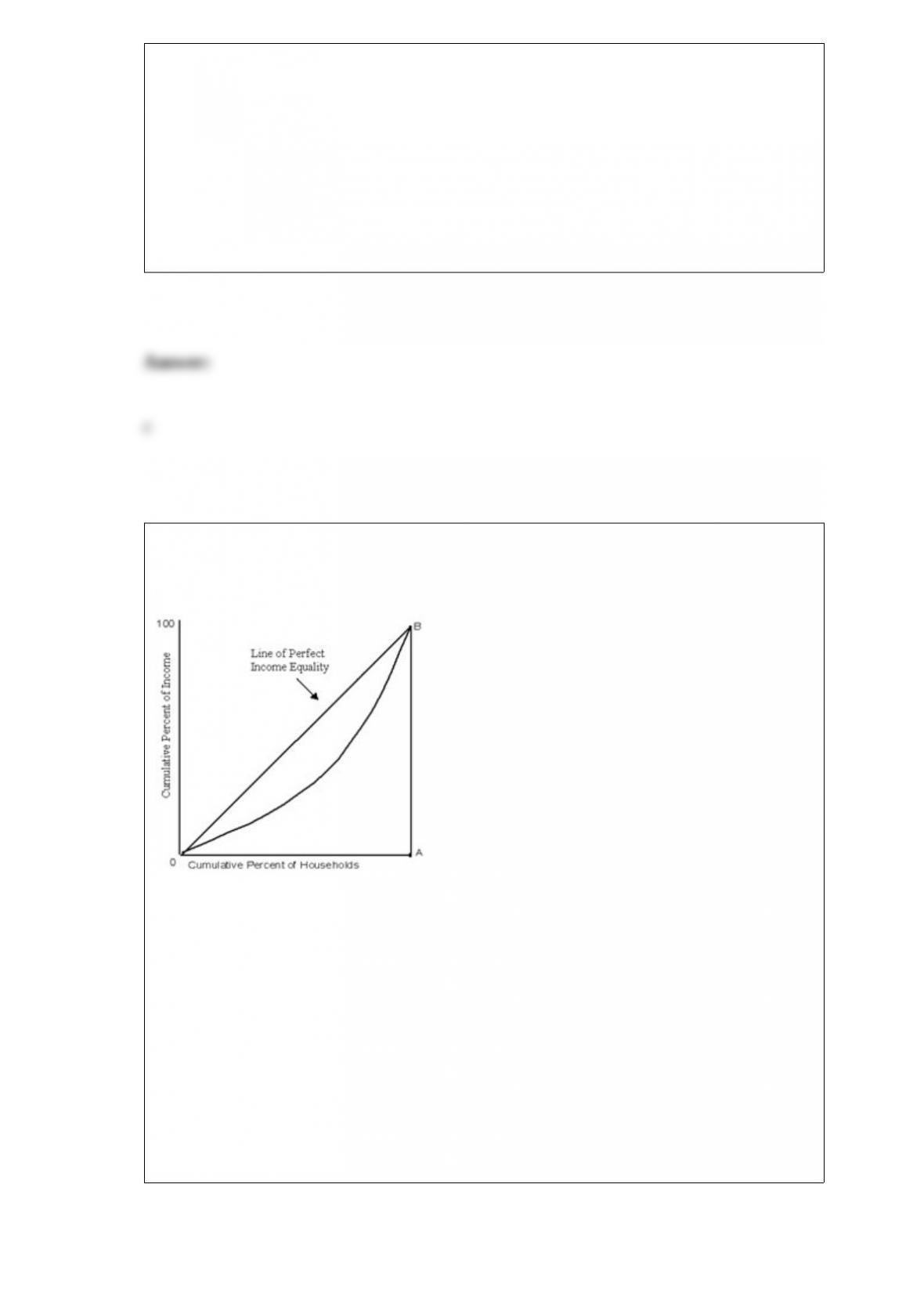
Exhibit 29-1
If the Gini coefficient is some number greater than 0, but less than 1, then the Lorenz
curve could be
a. line AB.
b. line OB.
c. the curve connecting point O to point B.
d. the horizontal axis from 0 to A and the line AB.
e. point B.

As the interest rate (price for loanable funds) decreases, businesses will
a. find it less profitable to invest in capital goods, because the lower interest rate means
that they will earn a lower return on their investments.
b. find it less profitable to invest in capital goods, because their costs of production will
be higher.
c. increase their borrowings of loanable funds, because the cost of borrowing has
declined relative to the benefits of borrowing.
d. decrease their borrowings of loanable funds, because there will now be cheaper ways
to produce goods than to employ roundabout methods of production.
e. b and c
According to the traditional theory of marginal utility as presented in the textbook, as
more units of a good are acquired, the consumer’s marginal utility
a. always continues to rise.
b. diminishes.
c. remains constant.
d. may diminish at first, but it must eventually rise.
e. may rise at first, but it must eventually become constant.
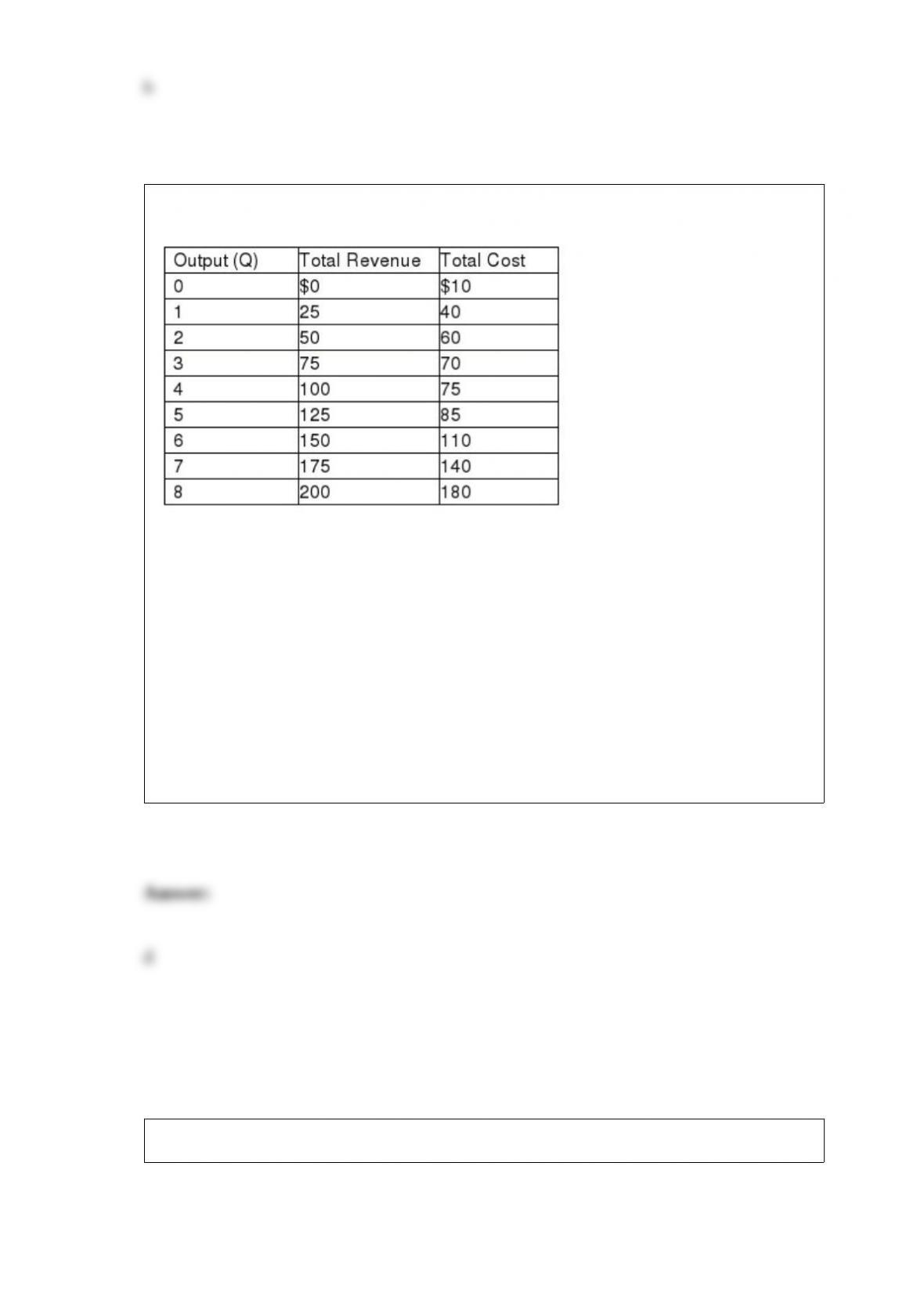
Exhibit 23-10
What is the marginal revenue and marginal cost, respectively, of the 7th unit of output?
a. $25 and $25
b. $30 and $20
c. $25 and $15
d. $25 and $30
e. There is not enough information to answer this question.
Exhibit 23-2

What quantity of output does the profit-maximizing (or loss-minimizing) firm produce?
a. Q1, where marginal cost is less than marginal revenue.
b. Q2, where marginal cost is equal to marginal revenue.
c. Q3, where marginal cost is greater than marginal revenue.
d. Q4, which maximizes the difference between marginal cost and marginal revenue.
Profit helps to indicate where resources are best allocated.
a. True
b. False

A good can have high total utility and low marginal utility.
a. True
b. False
The national defense argument for trade restriction holds that
a. the president should have the authority to erect trade barriers in case of war or
national emergency.
b. free trade is a danger to the national defense because open borders increase the
likelihood that spies will get into the country.
c. a country should produce those goods necessary for national defense purposes even if
it doesn’t have a comparative advantage in them.
d. if your enemy erects trade restrictions, so should you.