1) The crowding-out effect of the public debt may be dampened if the
investment-demand curve is shifting to the right.
2) the entrepreneur’s sole function is to combine other resources (land, labor, and
capital) in the production of some good or service.
3) When economist John Maynard Keynes said “In the long run we’re all dead!” he
meant that there was no point in the government engaging in stabilization policy.
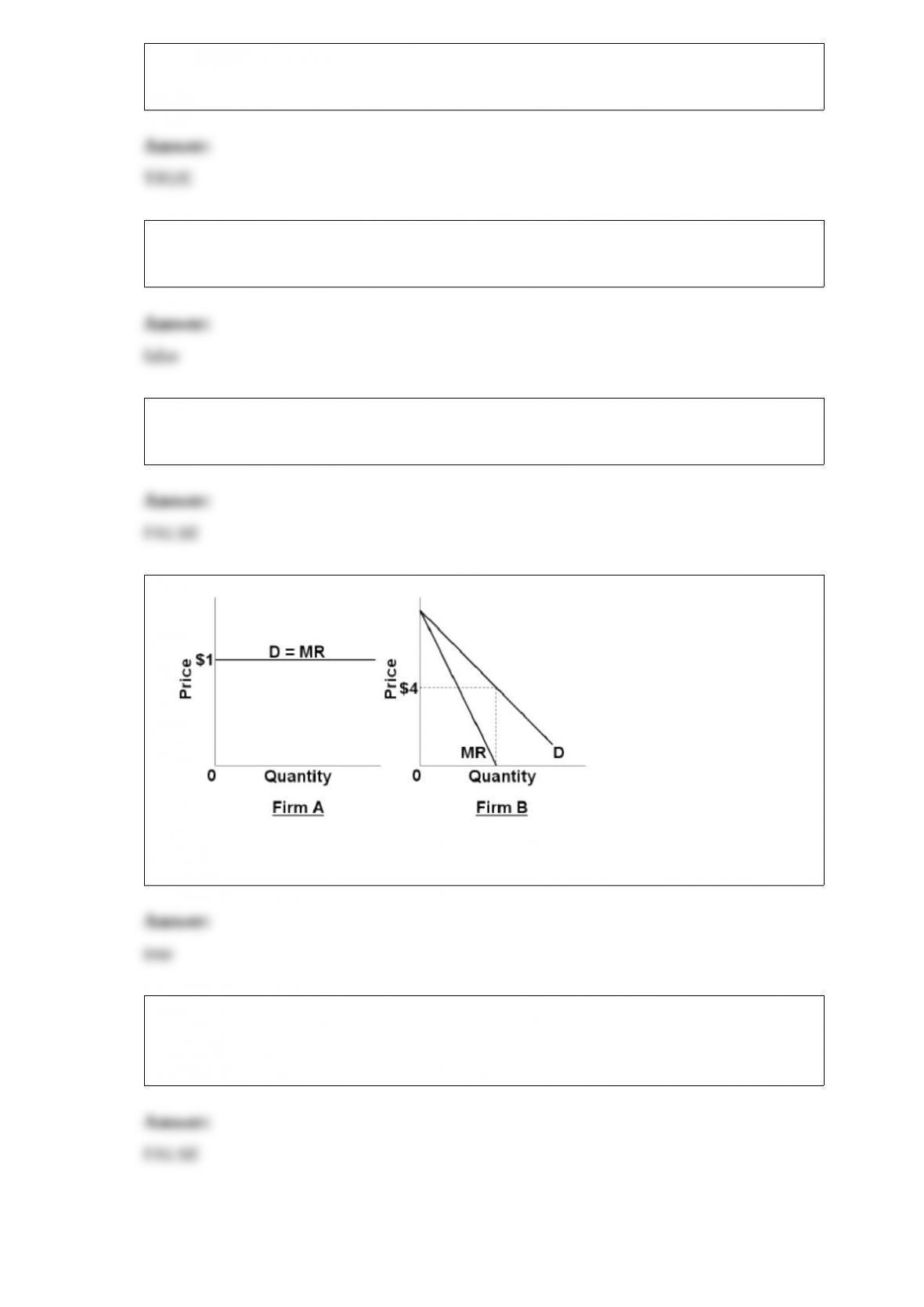
4)
refer to the above diagrams. the demand for firm b’s product is inelastic at all prices
below $4.
5) Under the international gold standard, exchange rates fluctuate without restraint to
correct any international disequilibrium by affecting the relative attractiveness of
domestic and foreign goods.
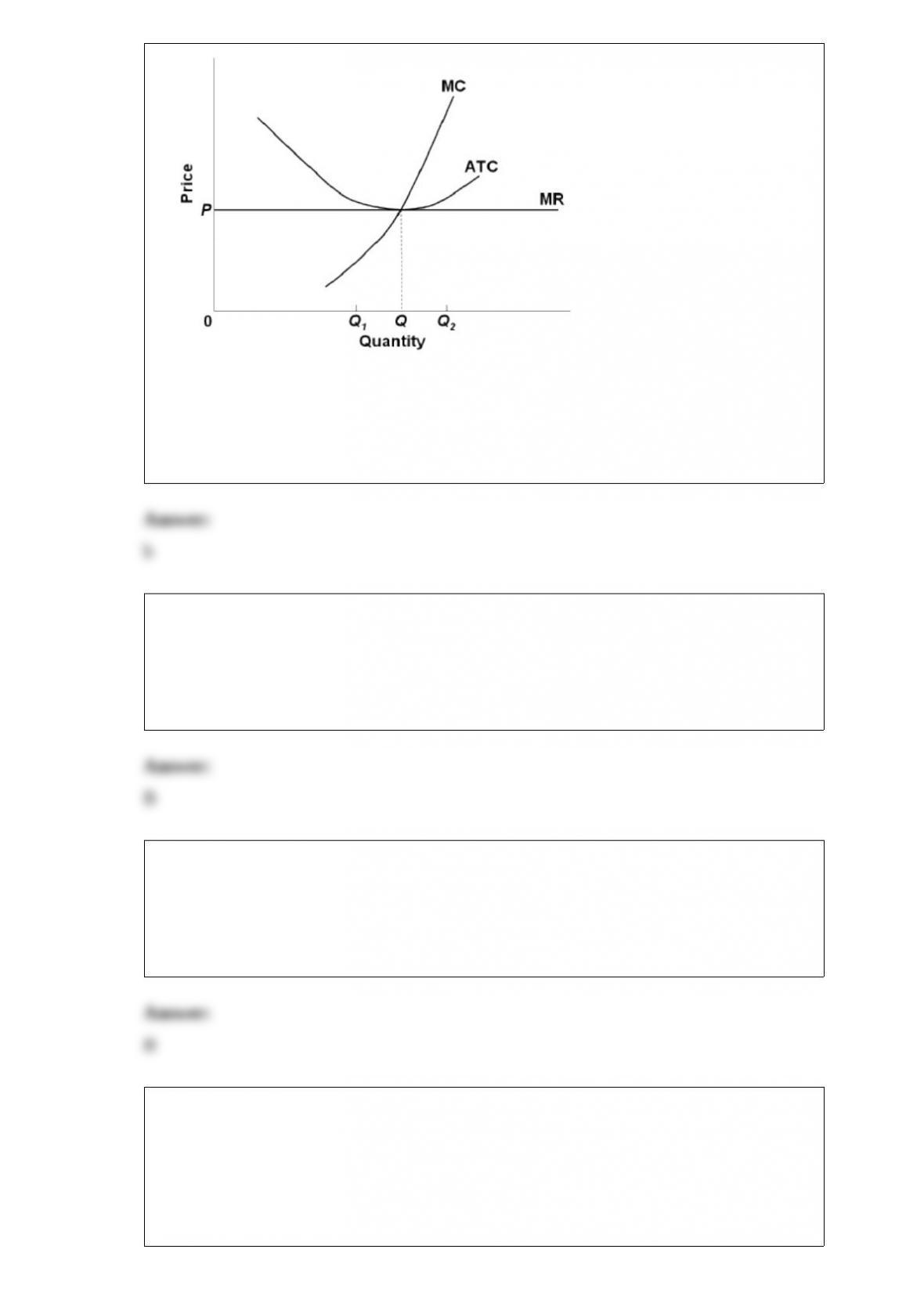
6)
refer to the above diagram. at output level q1:
a.resources are overallocated to this product and productive efficiency is not realized.
b.resources are underallocated to this product and productive efficiency is not realized.
c.productive efficiency is achieved, but resources are underallocated to this product.
d.productive efficiency is achieved, but resources are overallocated to this product.
7) The MRP curve for labor:
A.intersects the firm’s labor demand curve from above.
B.is the firm’s labor demand curve.
C.lies below the firm’s labor demand curve.
D.lies above the firm’s labor demand curve.
8) In the equation of exchange V indicates the:
A.value or purchasing power of the dollar.
B.number of times per year the average dollar is spent.
C.quantity of real output.
D.reciprocal of the price level.
9) the following is cost information for the creamy crisp donut company:
entrepreneur’s potential earnings as a salaried worker = $50,000
annual lease on building = $22,000
annual revenue from operations = $380,000
payments to workers = $120,000
utilities (electricity, water, disposal) costs = $8,000
value of entrepreneur’s talent in the next best entrepreneurial activity = $80,000
entrepreneur’s forgone interest on personal funds used to finance the business = $6,000
refer to the above data. creamy crisp’s implicit costs, including a normal profit are:
a.$136,000.
b.$150,000.
c.$94,000.
d.$156,000.
10) Suppose Anne borrows $500 at an interest rate of 7%, which she will pay off in 5
years. Answer the following questions.
(a)How much will she owe at the end of the 5 years, assuming the interest is
compounded?
(b)If Anne is planning to invest her loan in an asset that she hopes to turn a profit on,
what is the minimum rate of return she needs to earn?
(c)Suppose Anne is able to pay off her loan in 3 years. What is the size of the repayment
she will owe? What rate of return will she have to earn now to at least break even?
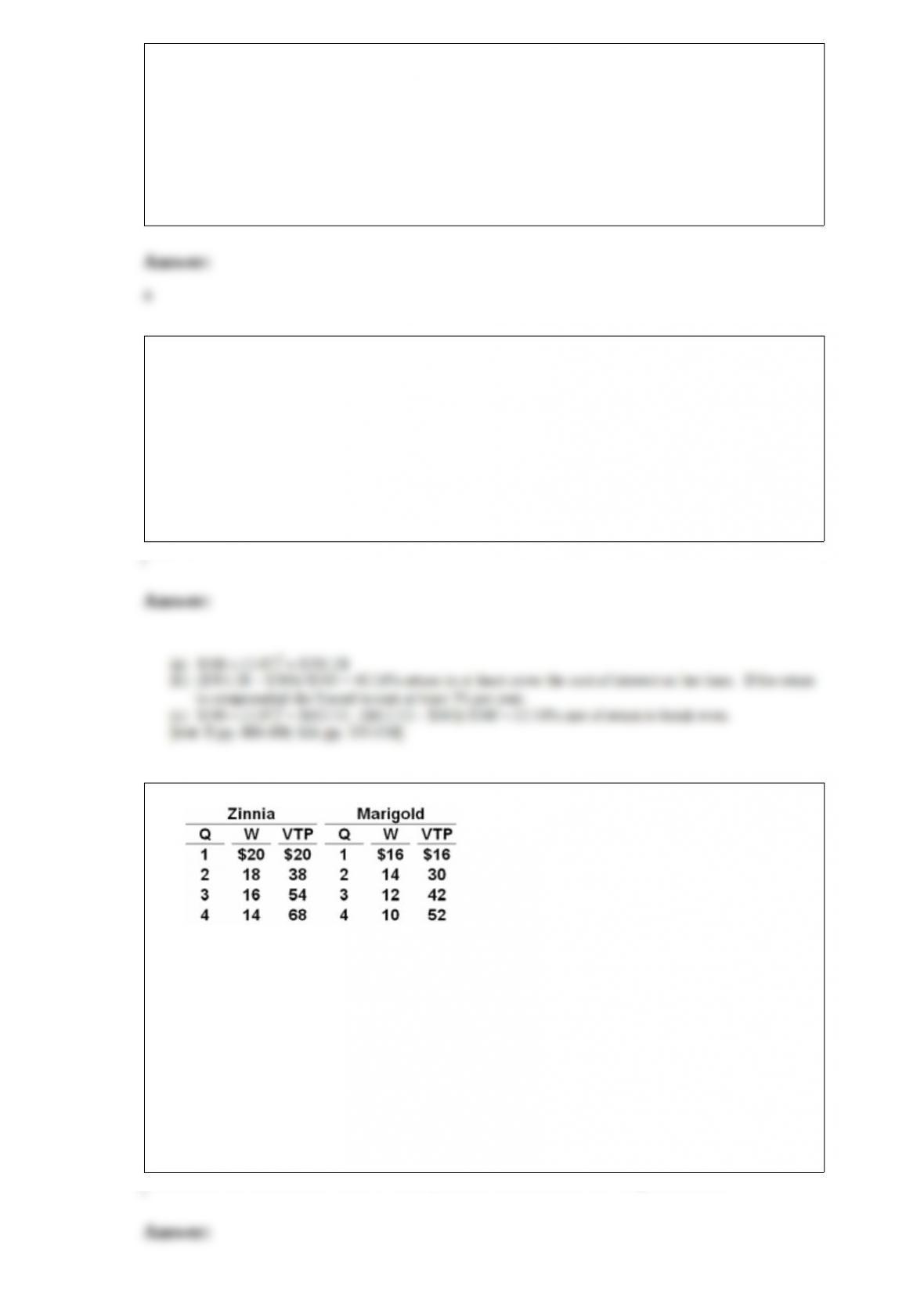
11)
symbols: q = number of workers demanded; w = wage rate; and vtp = value of the
cumulative total product (output) of the particular number of workers.
assumptions: (1) the current wage in zinnia is $20 and the current wage in marigold is
$12; (2) full employment exists in both countries.
refer to the above data, symbols, and assumptions. migration of workers will:
a.increase the combined value of total product but reduce the wage in zinnia.
b.increased the combined value of total product but reduce the wage in marigold.
c.reduce the combined value of total product but increase the wage in marigold.
d.reduce the combined value of total product but increase the wage in zinnia.
12) listed in descending order of total numbers, the business population is comprised of:
a.sole proprietorships, corporations, and partnerships.
b.sole proprietorships, partnerships, and corporations.
c.partnerships, corporations, and sole proprietorships.
d.corporations, partnerships, and sole proprietorships.
13) The populations of the developing nations are growing:
A.at about 5 percent per year.
B.at about the same rate as those of the industrially advanced nations.
C.slower than those of the industrially advanced nations.
D.faster than those of the industrially advanced nations.
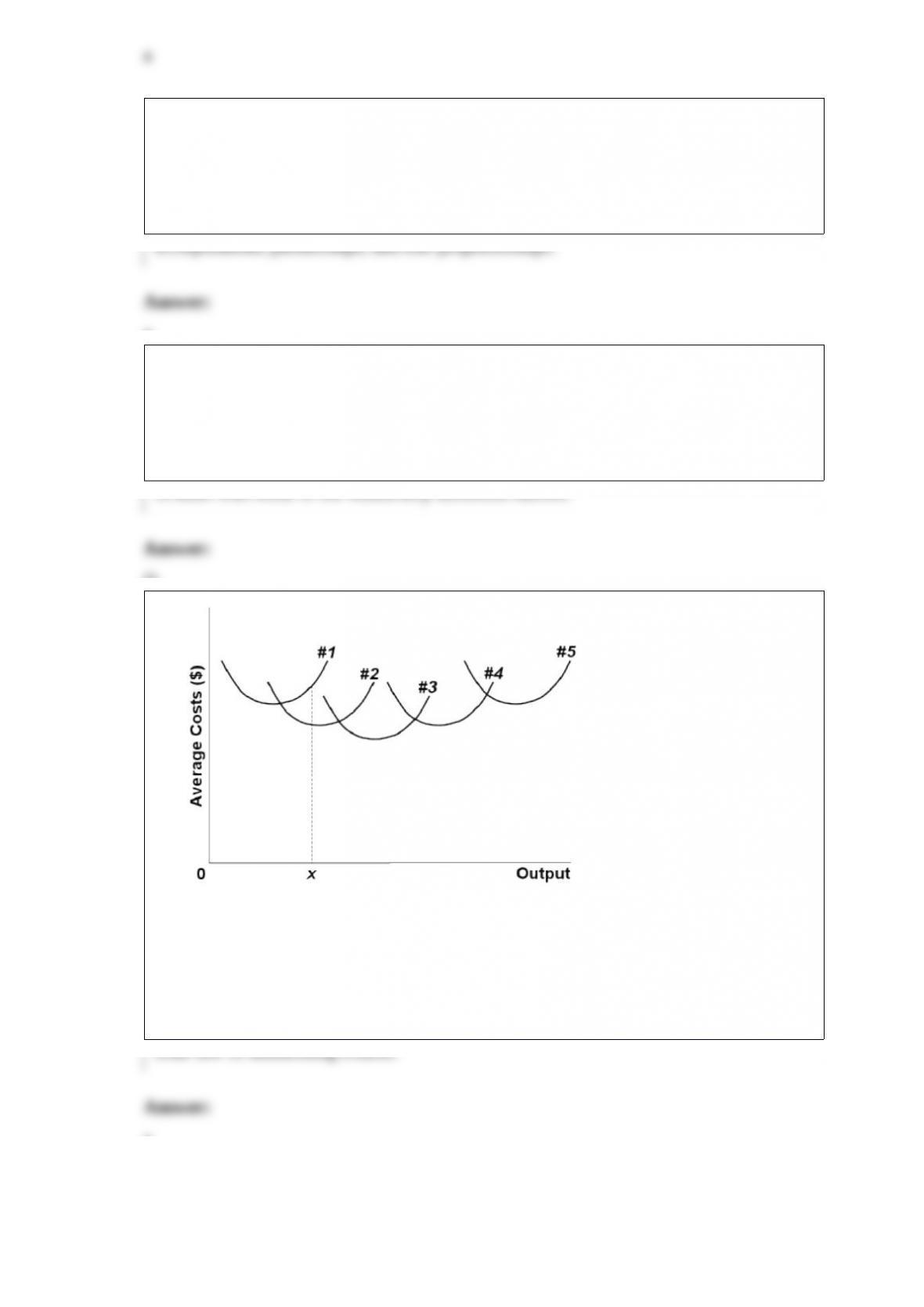
14)
the above diagram shows the short-run average total cost curves for five different plant
sizes of a firm. the position of these five curves in relation to one another reflects:
a.economies and diseconomies of scale.
b.the effect of fixed costs on atc as output increases.
c.the law of constant costs.
d.the law of diminishing returns.
15)
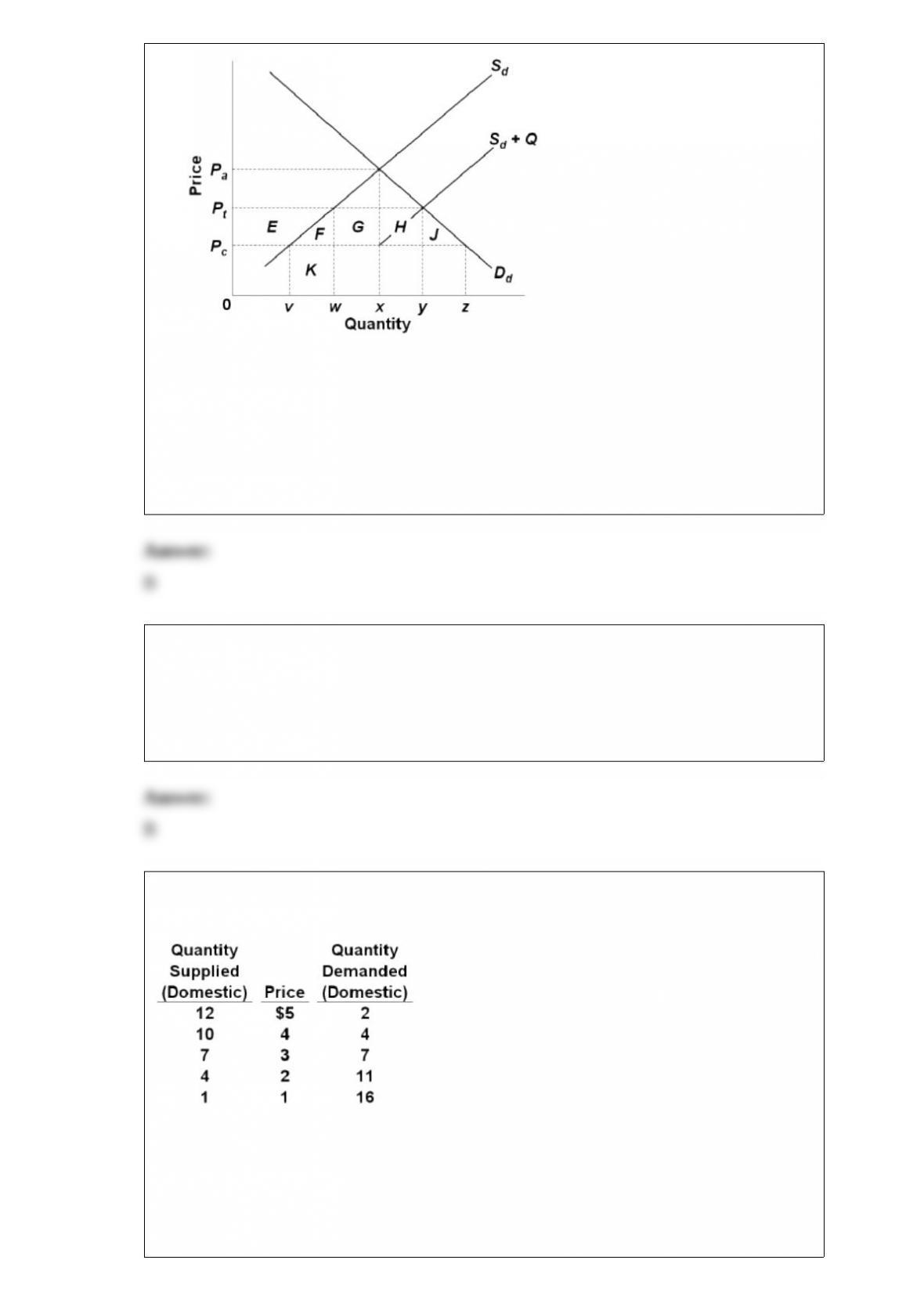
Refer to the above diagram, where Sd and Dd are the domestic supply and demand for a
product and Pc is the world price of that product. Sd + Q is the product supply curve
after an import quota is imposed. A tariff of Pc Pt will:
A.lower domestic price and increase domestic consumption.
B.increase the revenues of domestic producers by areas E + F + K
C.increase the revenues of domestic producers by areas G + H
D.increase the revenues of domestic producers by areas E + F + G + H + J
16) In the context of labor markets, shirking refers to:
A.the nonmonetary disadvantages of certain jobs.
B.the neglecting or evading of work.
C.the elimination of monitoring costs.
D.any scheme where pay is directly related to worker output.
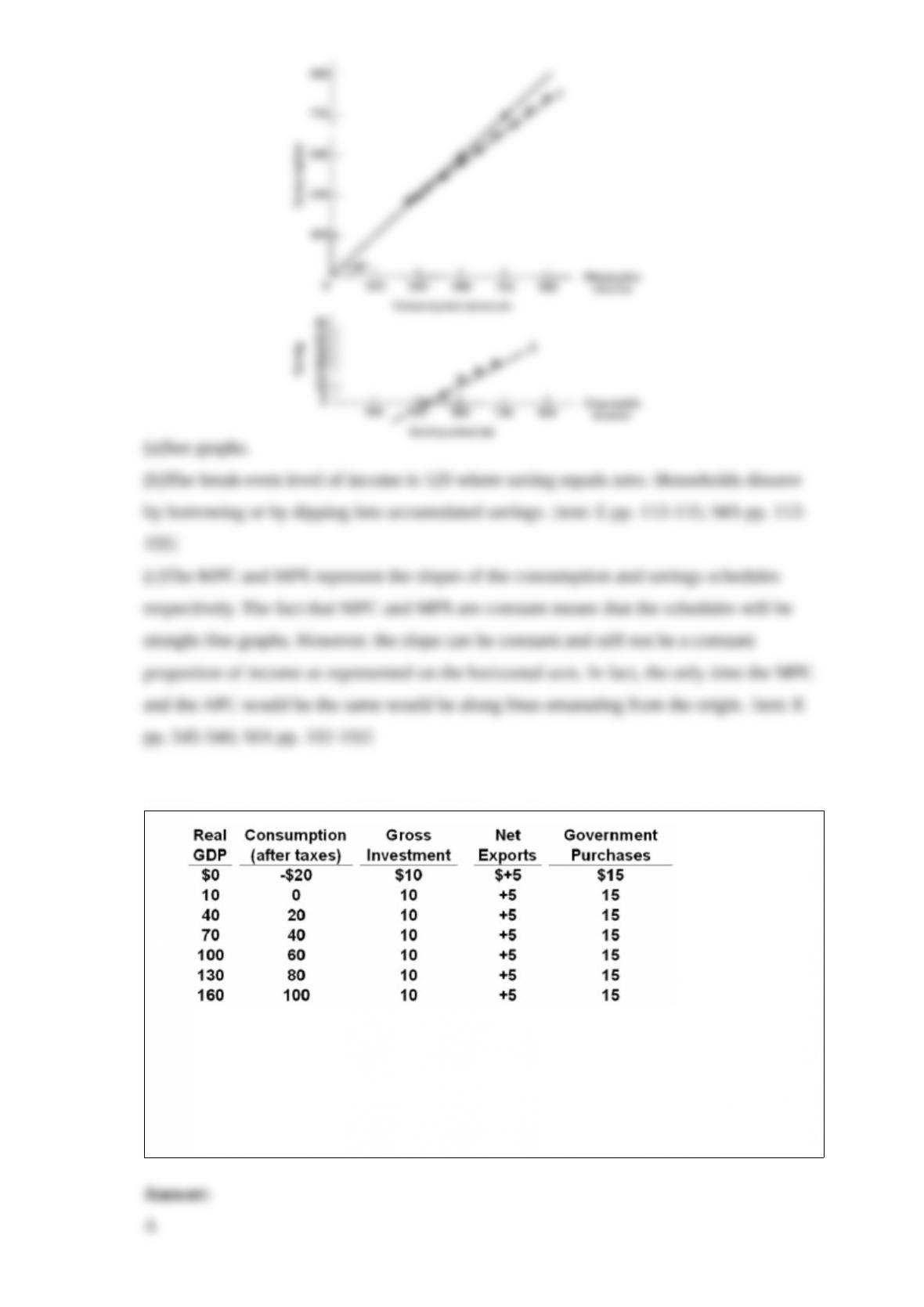
17) The following domestic supply and demand schedules for a product. Suppose that
the world price of the product is $1.
Refer to the above data. With a $1 per unit tariff, the quantities sold by foreign and
domestic producers respectively will be:
A.1 unit and 15 units.
B.7 units and 4 units.
C.11 units and 4 units.
D.indeterminate.

18) The standardized budget refers to:
A.the inflationary impact that the automatic stabilizers have in a full-employment
economy.
B.that portion of a full-employment GDP that is not consumed in the year it is
produced.
C.the size of the Federal government’s budgetary surplus or deficit when the economy
is operating at full employment.
D.the number of workers who are underemployed when the level of unemployment is 4
to 5 percent.
19) the physical export of motorcycles from the united states to mexico best illustrates
a:
a.trade flow.
b.resource flow.
c.financial flow.
d.technology flow.
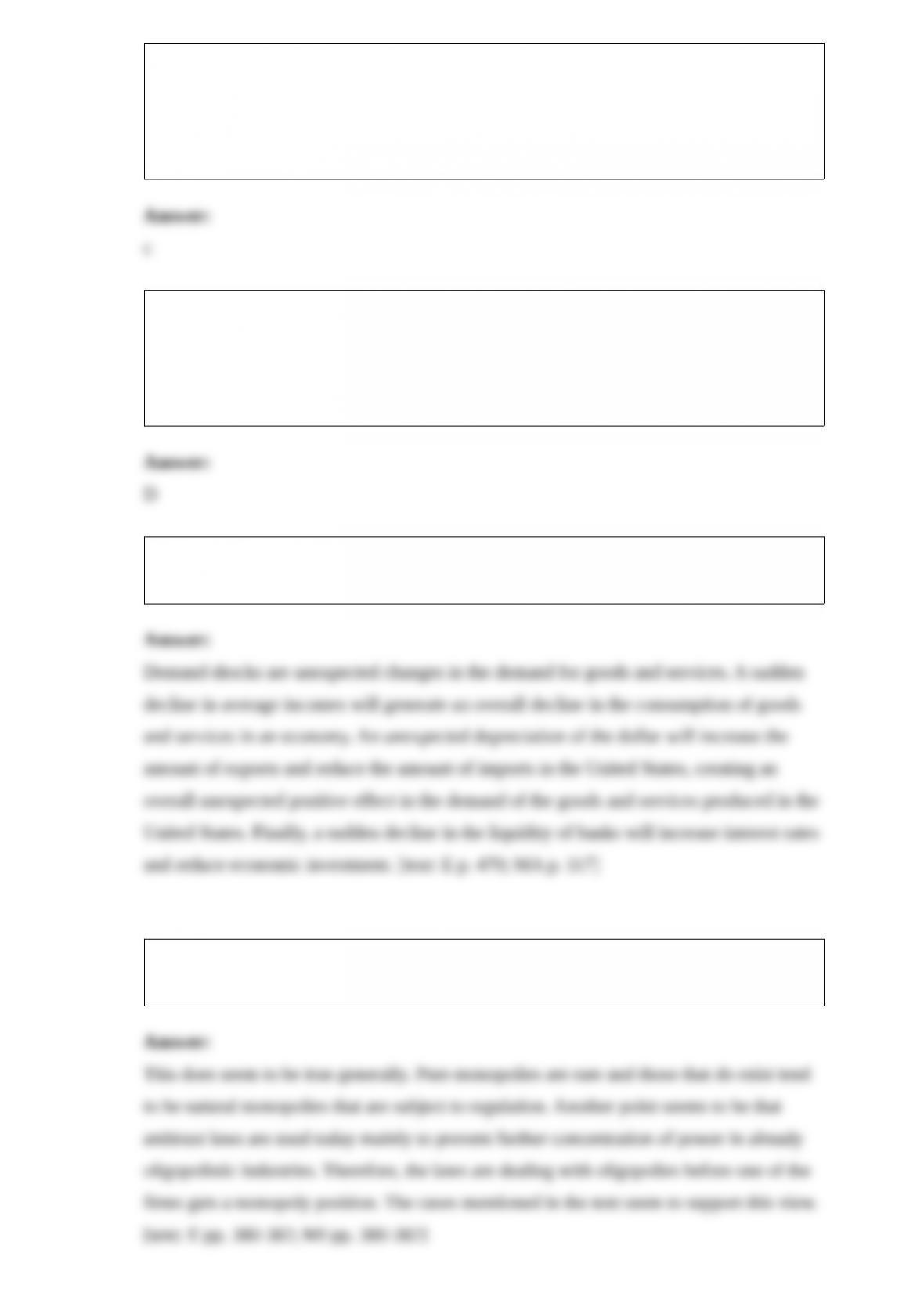
20) Complete the accompanying table.
(a)Using the below graphs, show the consumption and saving schedules graphically.
(b)Locate the break-even level of income. How is it possible for households to dissave
at very low income levels?
(c)If the proportion of total income consumed decreases and the proportion saved
increases as income rises, explain both verbally and graphically how the MPC and MPS
can be constant at various levels of income.
21)
Refer to the above table. Exports might be ____ and imports ____.
A.$10; $5
B.$10; $0
C.$0; $5
D.$5; 10
22) inflation means that:
a.all prices are rising, but at different rates.
b.all prices are rising and at the same rate.
c.prices in the aggregate are rising, although some particular prices may be falling.
d.real incomes are rising.
23) Which of the following represents the most contractionary fiscal policy?
A.a $30 billion tax cut
B.a $30 billion increase in government spending
C.a $30 billion tax increase
D.a $30 billion decrease in government spending
24) What are demand shocks? Give an example of a positive and a negative demand
shock.
25) In practice the antitrust laws deal more with oligopolies than with pure monopolies.
Is this true?
26) What are four types of labor market discrimination?
27) Explain the idea of creative destruction as championed by Joseph Schumpeter.
What are the objections to that idea?
28) What are the two key factors that determine the strength of demand? How do they
determine whether a good is in high demand or low demand?