1) If the marginal propensity to consume is 0.9 in a private closed economy, a $20
billion decline in investment spending will decrease:
A.GDP by $20 billion.
B.GDP by $100 billion.
C.saving by $20.
D.consumption by $200 billion.
2) Fiscal policy refers to the:
A.manipulation of government spending and taxes to stabilize domestic output,
employment, and the price level.
B.manipulation of government spending and taxes to achieve greater equality in the
distribution of income.
C.altering of the interest rate to change aggregate demand.
D. fact that equal increases in government spending and taxation will be contractionary.
3)
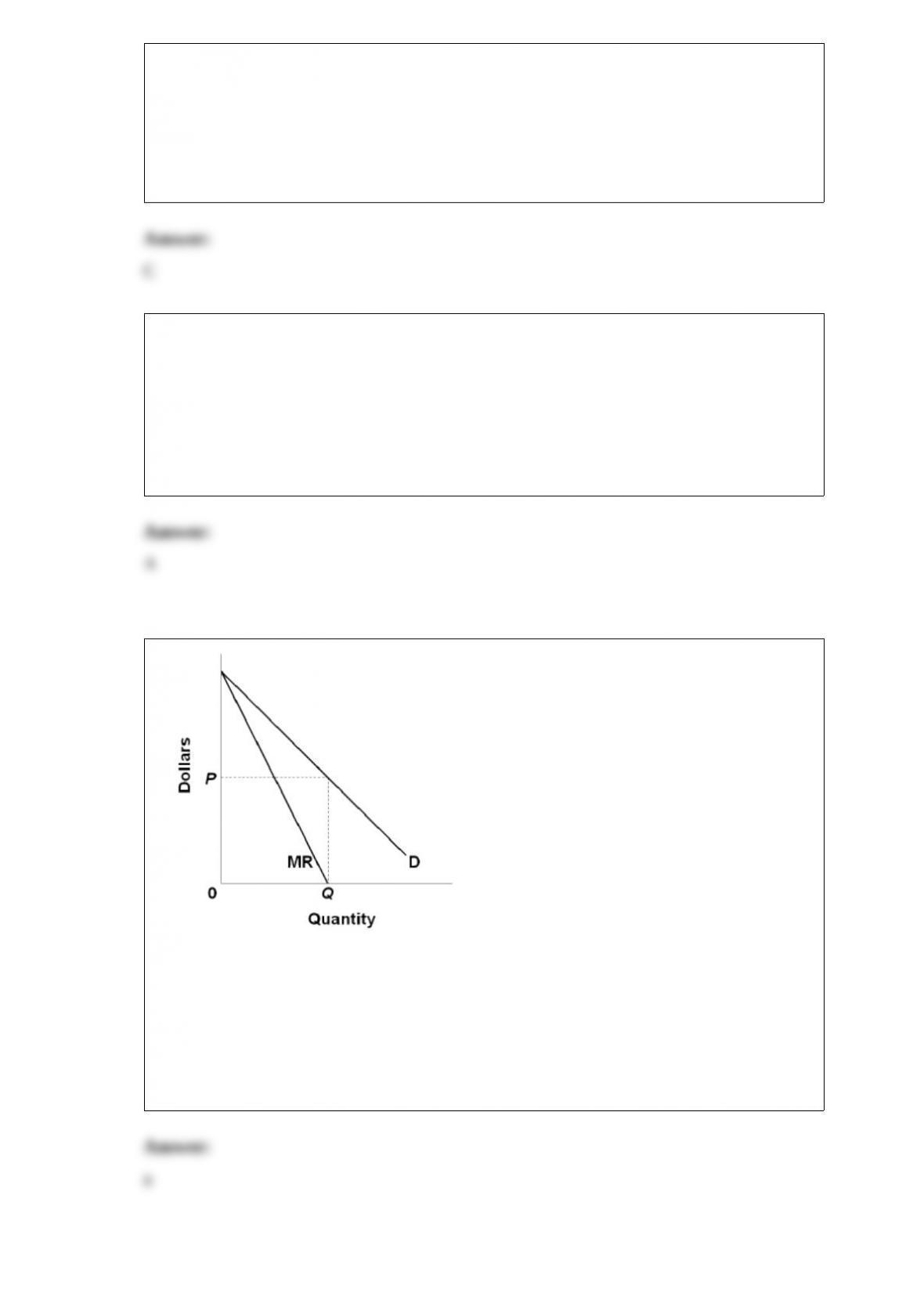
assume a pure monopolist is charging price p and selling output q as shown on the
above diagram. on the basis of this information we can say that:
a.if marginal costs were somehow zero, the firm would be maximizing its profits.
b.if marginal costs were positive the firm would increase profits by reducing price and
selling more output.
c.the firm is producing where the price elasticity coefficient is less than one.
d.the firm is a “price taker.”
4) The following information about the cost ratios for two products-fish (F) and chicken
(C)-in countries Singsong and Harmony. Assume that production occurs under
conditions of constant costs and these are the only two nations in the world.
Singsong: 1F = 2C
Harmony: 1F = 4C
Refer to the above information. Which one of the following would not be feasible terms
for trade between Singsong and Harmony?
A.1 fish for 2 chicken
B.1 fish for 3 chicken
C.1 chicken for 1/5 of a fish
D.1 chicken for 1/3 of a fish
5)
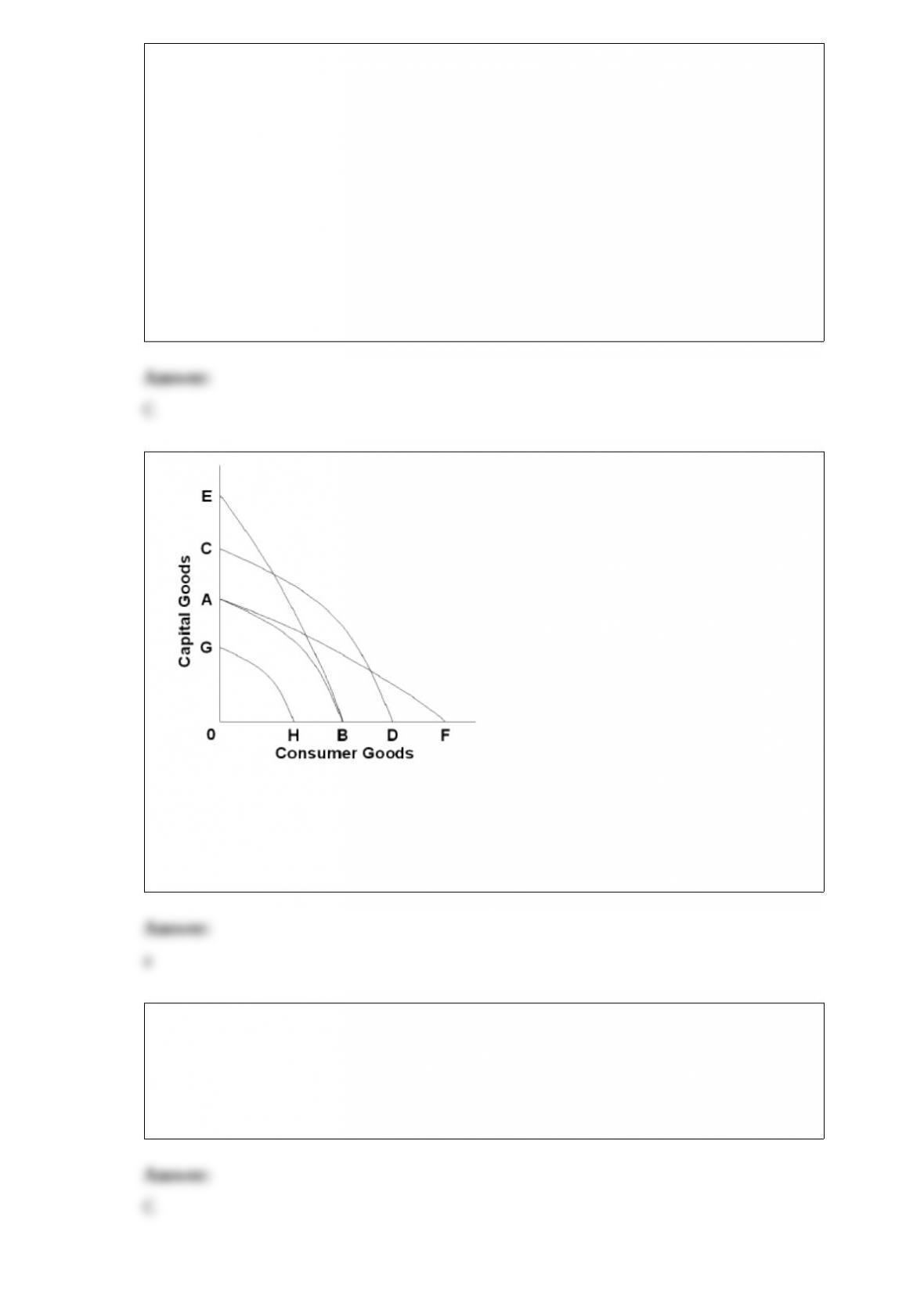
refer to the above diagram. an improvement in technology will:
a.shift the production possibilities curve from pp1 to pp2.
b.shift the production possibilities curve from pp2 to pp1.
c.move the economy from a to c along pp1.
d.move the economy from a, b, or c on pp1 to d.
6) Which of the following does not correlate positively with economic growth?
A.output per capita
B.life expectancy
C.the percentage of the population engaged in agriculture
D.the literacy rate

7) What percentage of the average firm’s costs are accounted for by wages and salaries?
A.40
B.60
C.75
D.85
8) the social security program (excluding medicare) in the united states is projected to:
a.grow from 4.2 percent of gdp today to 6.2 percent of gdp in 2030.
b.grow from 1.0 percent of gdp today to 4.2 percent of gdp in 2030.
c.decline from 4.2 percent of gdp today to 1.0 percent in 2030.
d.stay relatively constant at 3 percent of gdp into the future.
9) in which of the following instances will the effect on equilibrium price be dependent
on the magnitude of the shifts in supply and demand?
a.demand rises and supply rises.
b.supply falls and demand remains constant.
c.demand rises and supply falls.
d.supply rises and demand falls.
10) Congressional representatives have called for extensive ergonomics regulations to
reduce strains and injuries from repetitive activities by workers. Such regulation, if
passed, would be a good example of:
A.industrial regulation.
B.the principal-agent problem.
C.the free-rider problem.
D.social regulation.
11)
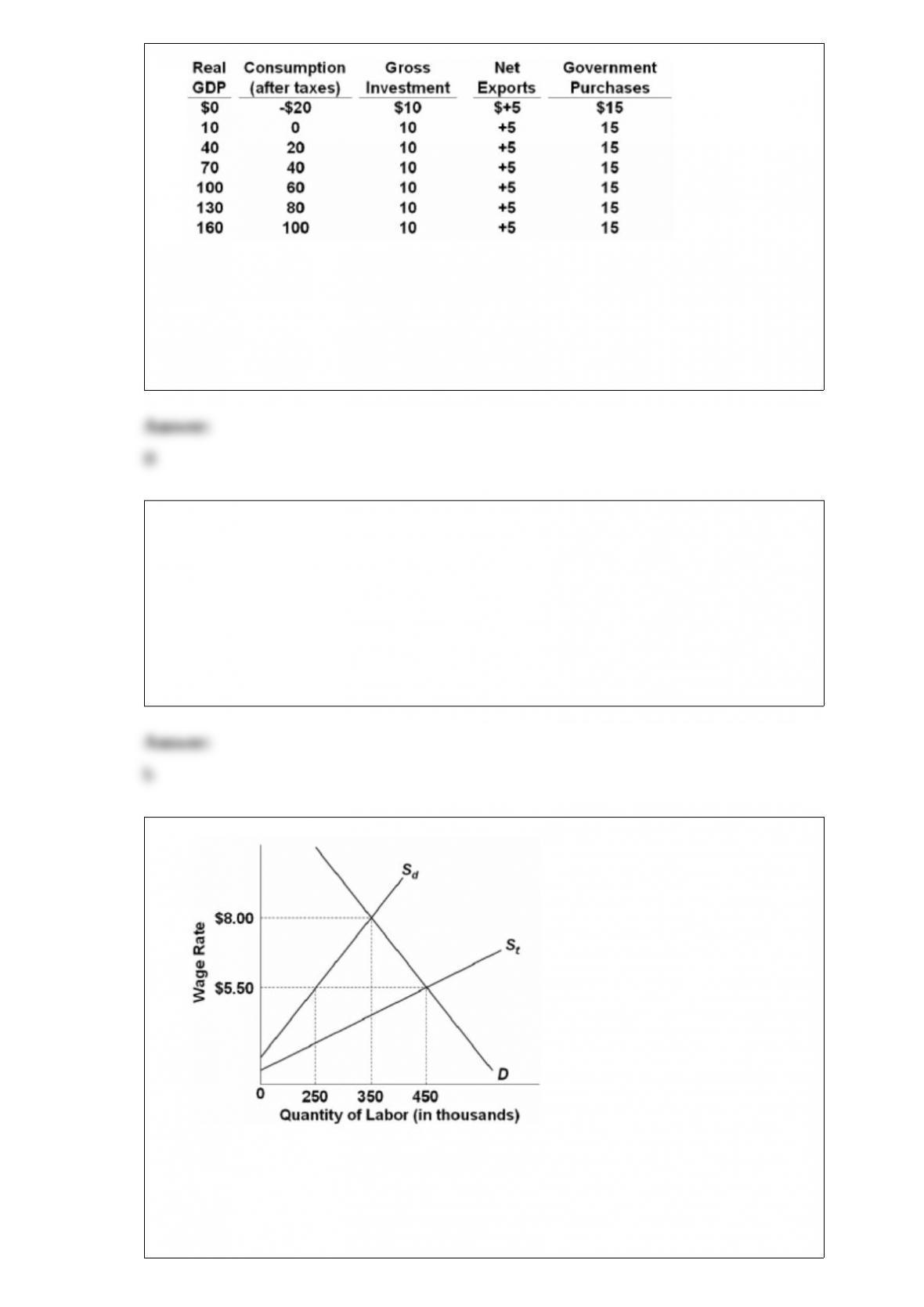
Refer to the above table. Equilibrium GDP is:
A.$40.
B.$70.
C.$100.
D.$130.
12) kara was out jogging and despite being tired, decided to run one more mile. based
on her actions, economists would conclude that kara:
a.must be an avid runner.
b.decided that the marginal benefit of running one more mile would outweigh the cost
of the additional mile.
c.decided that the marginal cost of running one more mile would outweigh the benefit
of the additional mile.
d.was not very tired, so the marginal cost of the extra mile was very low.
13)
assumptions: 1) employers in this market are willing and able to ignore minimum wage
laws; 2) sd represents the supply of domestically-born (and legal immigrant) workers;
3) st represents the total supply of workers in this labor market (sd plus illegal
immigrants); and 4) unless otherwise stated, illegal immigration is not effectively
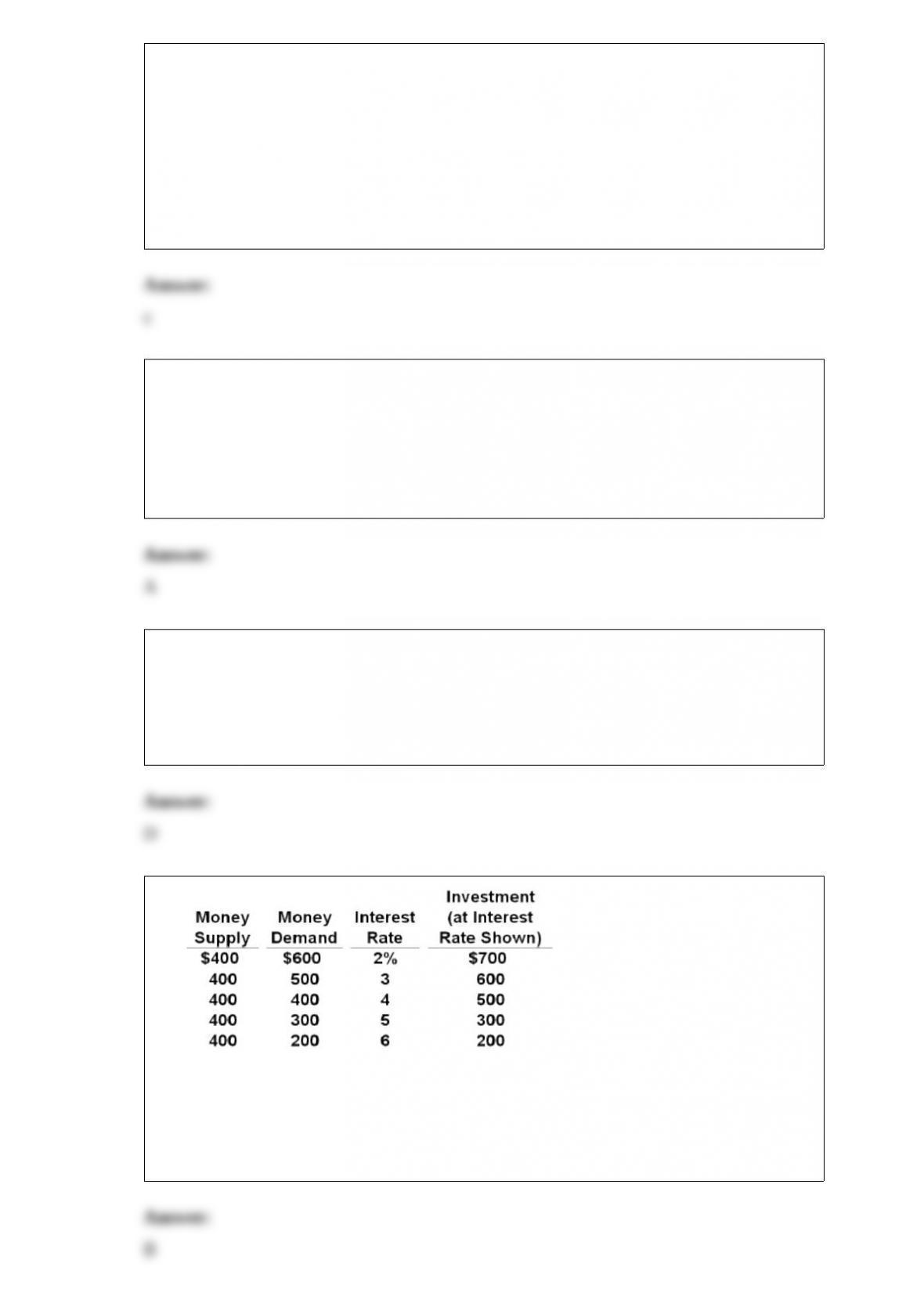
blocked by the government.
refer to the above figure. if the government effectively prevents illegal immigrants from
working in this labor market, the equilibrium wage and level of employment are,
respectively:
a.$5.50 and 250,000
b.$5.50 and 350,000
c.$8 and 350,000
d.$5.50 and 450,000
14) Which of the following terms describes a system of subsidized health insurance
available to the aged?
A.Medicare
B.Supplemental Security Income (SSI)
C.Medicaid
D.TANF
15) All of the following contribute to low investment spending in DVCs except:
A.low rates of saving.
B.inadequacy of public capital goods (infrastructure).
C.political instability.
D.expensive labor.
16)
Refer to the above table. The equilibrium interest rate in this economy is:
A.3 percent.
B.4 percent.
C.5 percent.
D.6 percent.
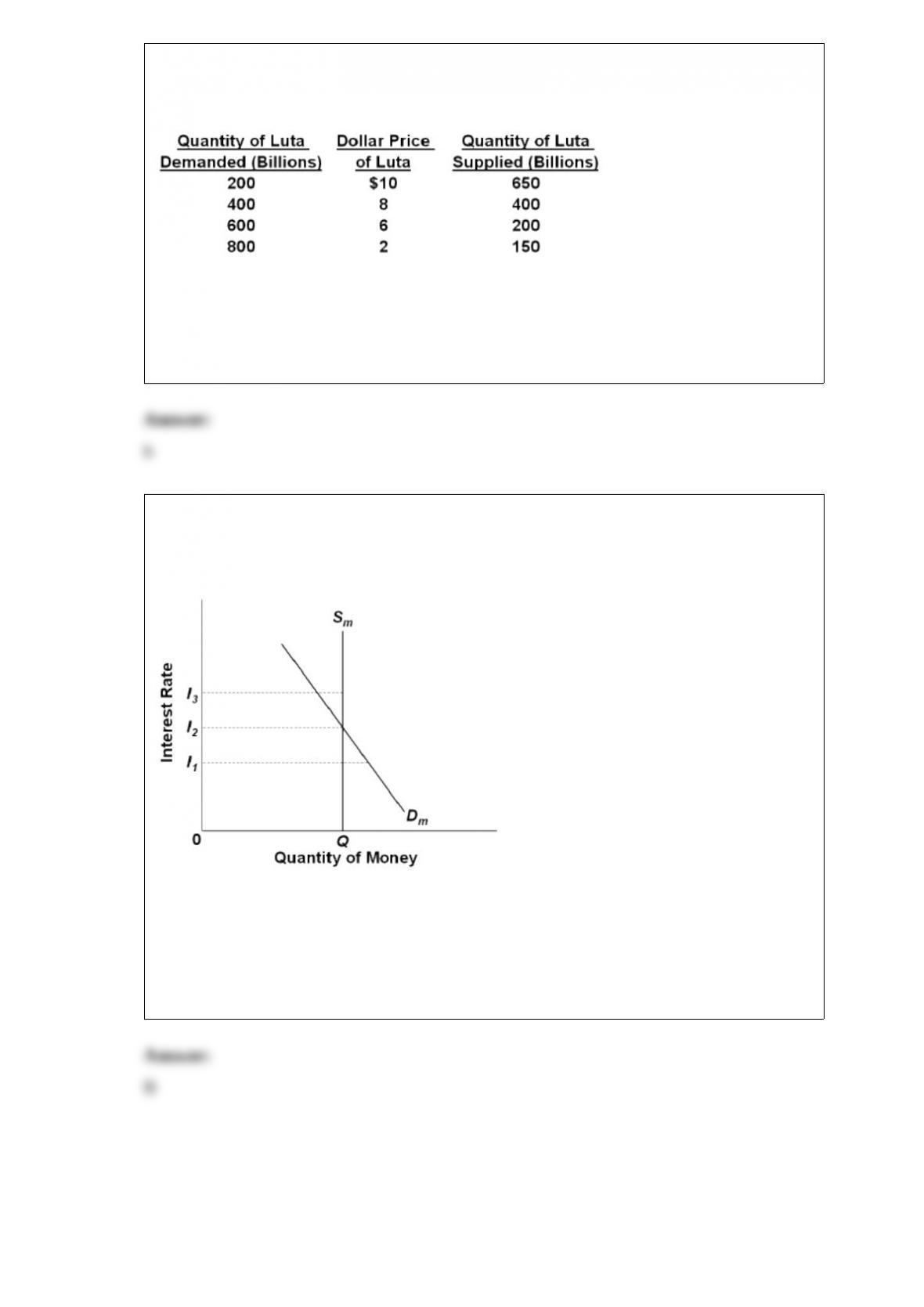
17) the following table which indicates the dollar price of luta, the currency used in the
hypothetical economy of luteland:
refer to the above table. the equilibrium dollar price of luta is:
a.$10.
b.$8.
c.$6.
d.$2.
18) Answer the next question(s) on the basis of the following information for a bond
having no expiration date: bond price = $1000; bond fixed annual interest payment =
$100; bond annual interest rate = 10 percent.
Refer to the above information. If the price of this bond increases to $1250, the interest
rate will:
A.fall to 9 percent.
B.fall to 8 percent.
C.rise to 11 percent.
D.rise to 12 percent.
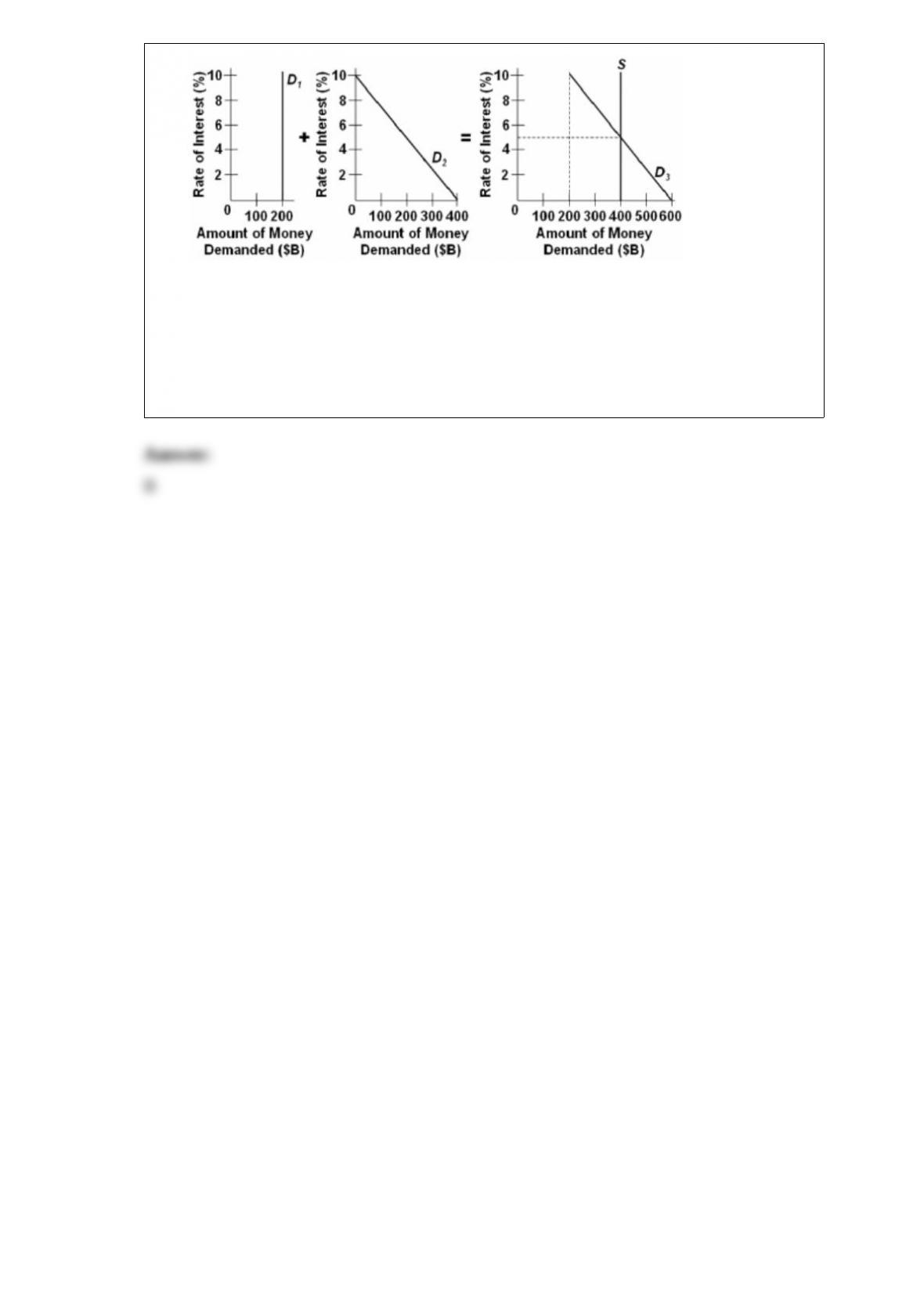
19)
Refer to the above market for money diagrams. The asset demand for money is shown
by:
A.D1.
B.D2.
C.D3.
D.S.