From 1983-2013, net exports for the United States
A) grew and then declined.
B) were negative.
C) were positive.
D) increased as exports rose above imports.
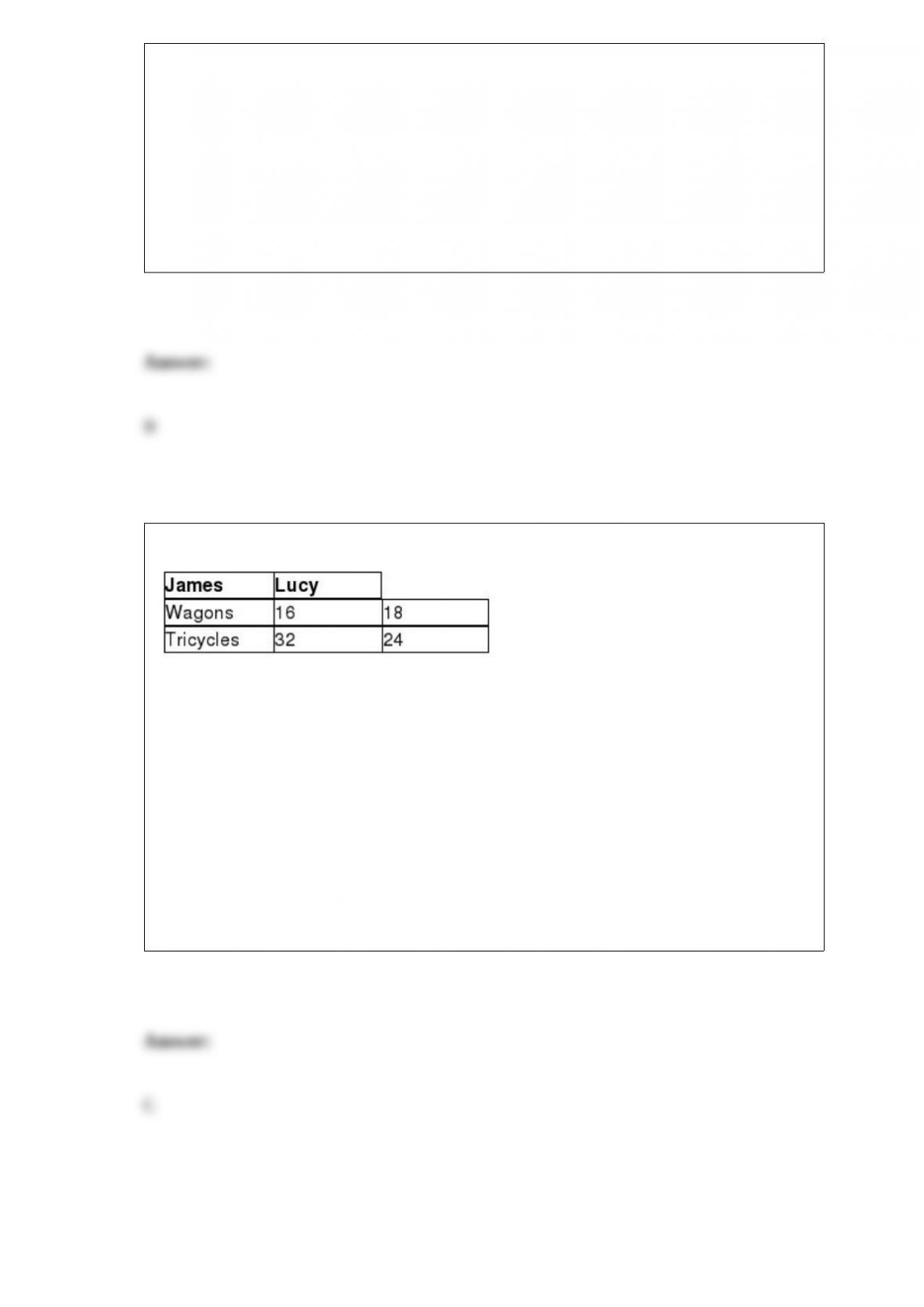
Table 2-17
Table 2-17 shows the output per week of two people, James and Lucy. They can either
devote their time to making wagons or making tricycles.
Which of the following statements istrue?
A) Lucy has a comparative advantage in making both products.
B) James has a comparative advantage in making both products.
C) Lucy has a comparative advantage in making wagons and James in making tricycles.
D) Lucy has a comparative advantage in making tricycles and James in making wagons.
The demand for labor depends primarily on the additional output produced as a result of
hiring an additional worker and
A) the additional revenue received from selling the output produced as a result of hiring
an additional worker.
B) the payment made to the worker for producing the additional output.
C) the elasticity of demand for the output produced by the worker.
D) the number of workers willing to produce the additional output.
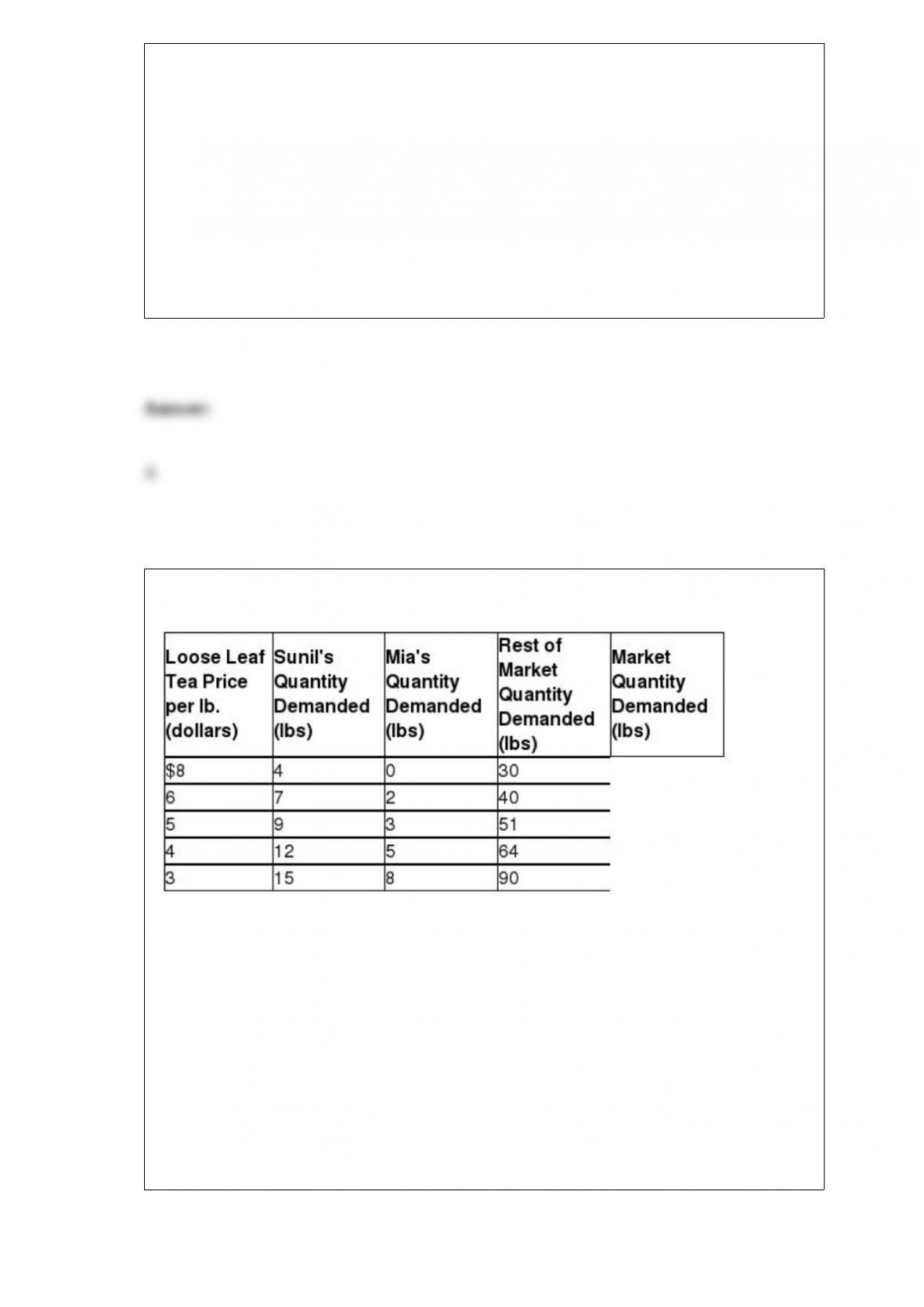
Table 3-1
The table above shows the demand schedules for loose-leaf tea of two individuals
(Sunil and Mia) and the rest of the market. If the price of loose-leaf tea rises from $3 to
$4, the market quantity demanded would
A) decrease by 32 lbs.
B) increase by 64 lbs.
C) increase by 32 lbs.
D) decrease by 64 lbs.
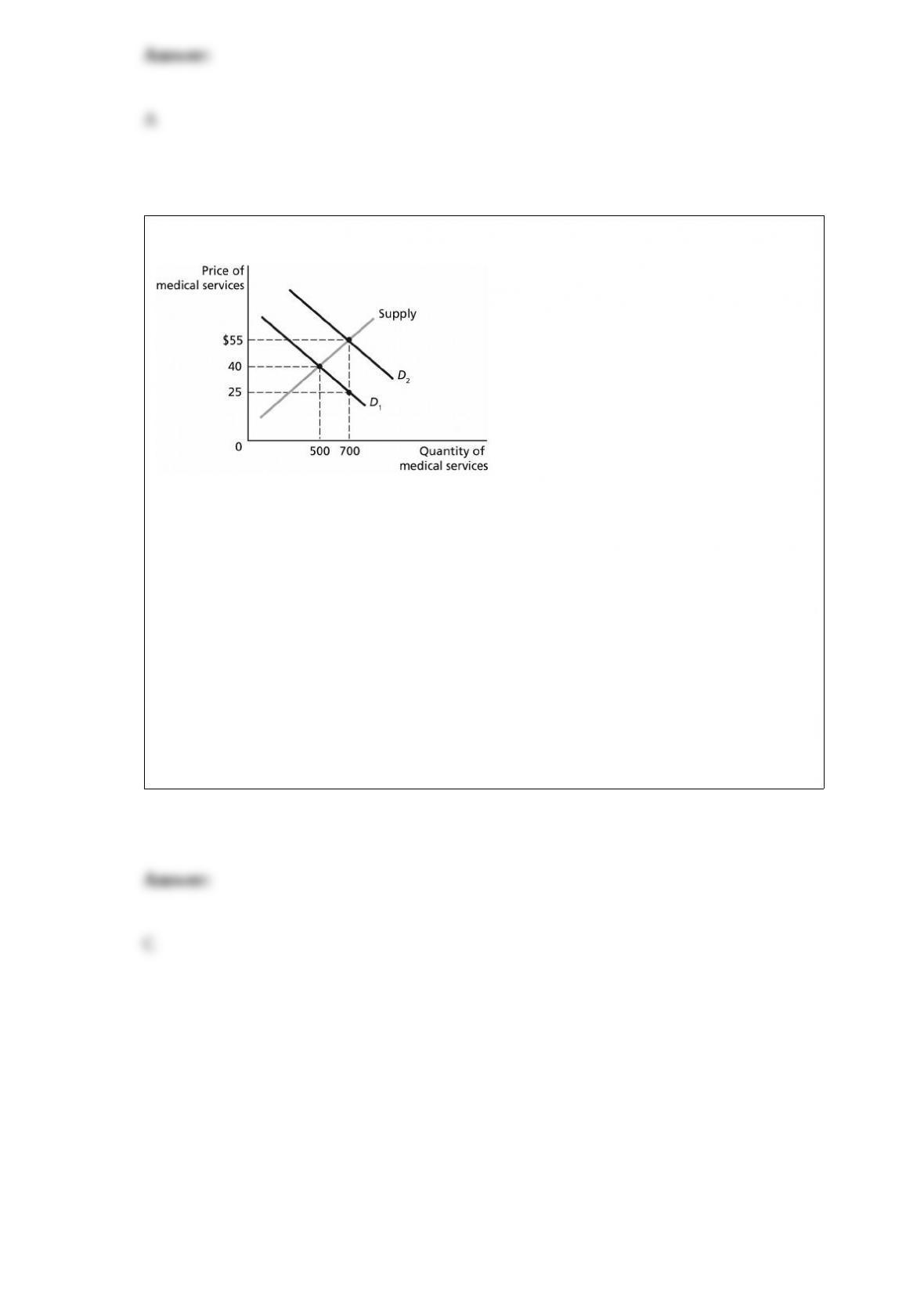
Figure 7-2
Figure 7-2 represents the market for
medical services with and without insurance, and the effect of a third-party payer
system on the demand for medical services.
With insurance and a third-party payer system, the equilibrium quantity of medical
services is
A) 200.
B) 500.
C) 700.
D) >700.
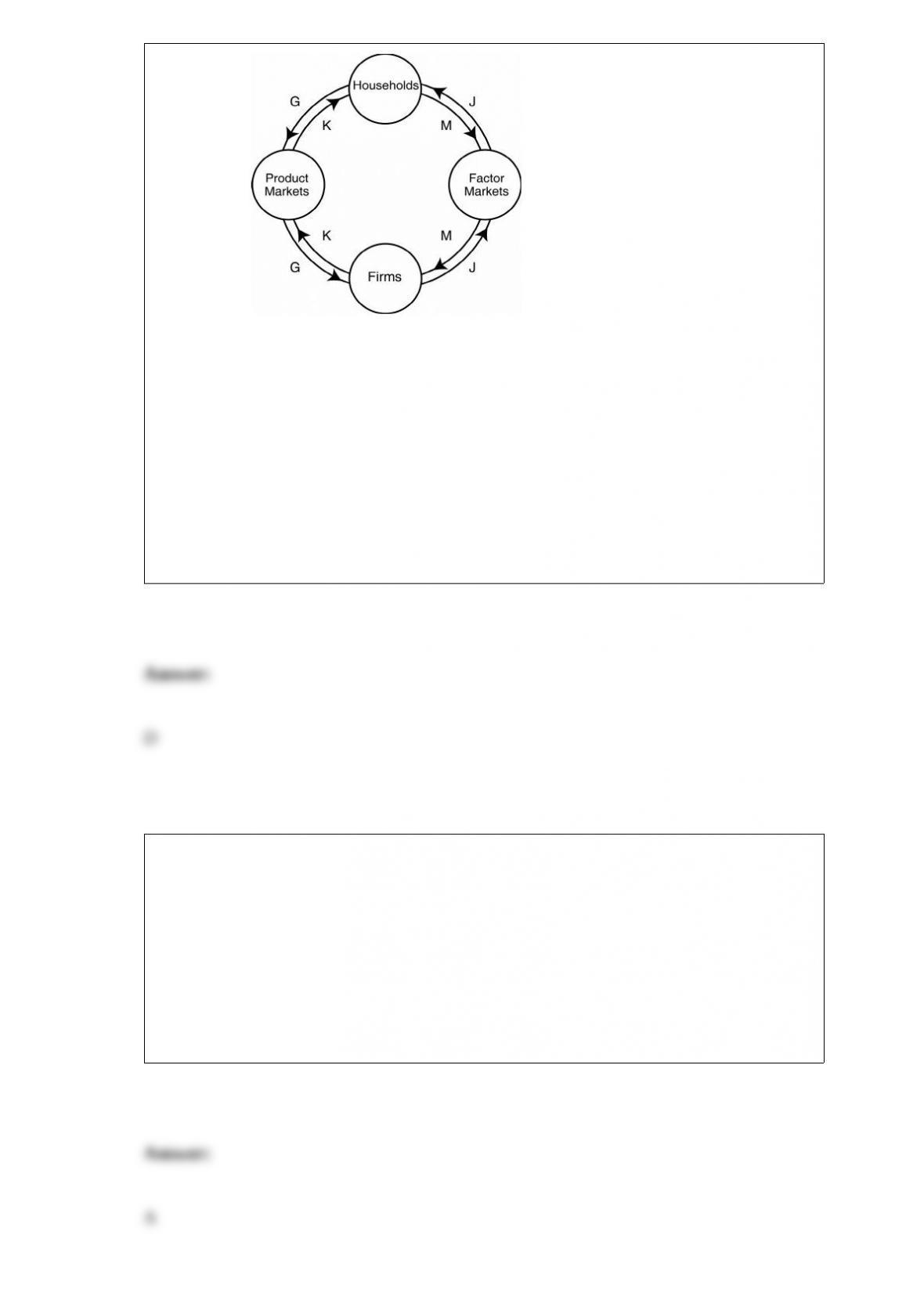
Figure 2-19
Which two arrows in the diagram depict the following transaction: Stanley purchases
the novel Night of Sorrows for his summer reading pleasure.
A) J and M
B) J and G
C) K and M
D) K and G
Most recessions in the United States since World War II have begun with
A) a decline in residential construction.
B) a rapid increase in the price level.
C) a substantial number of bank failures.
D) a stock market crash.
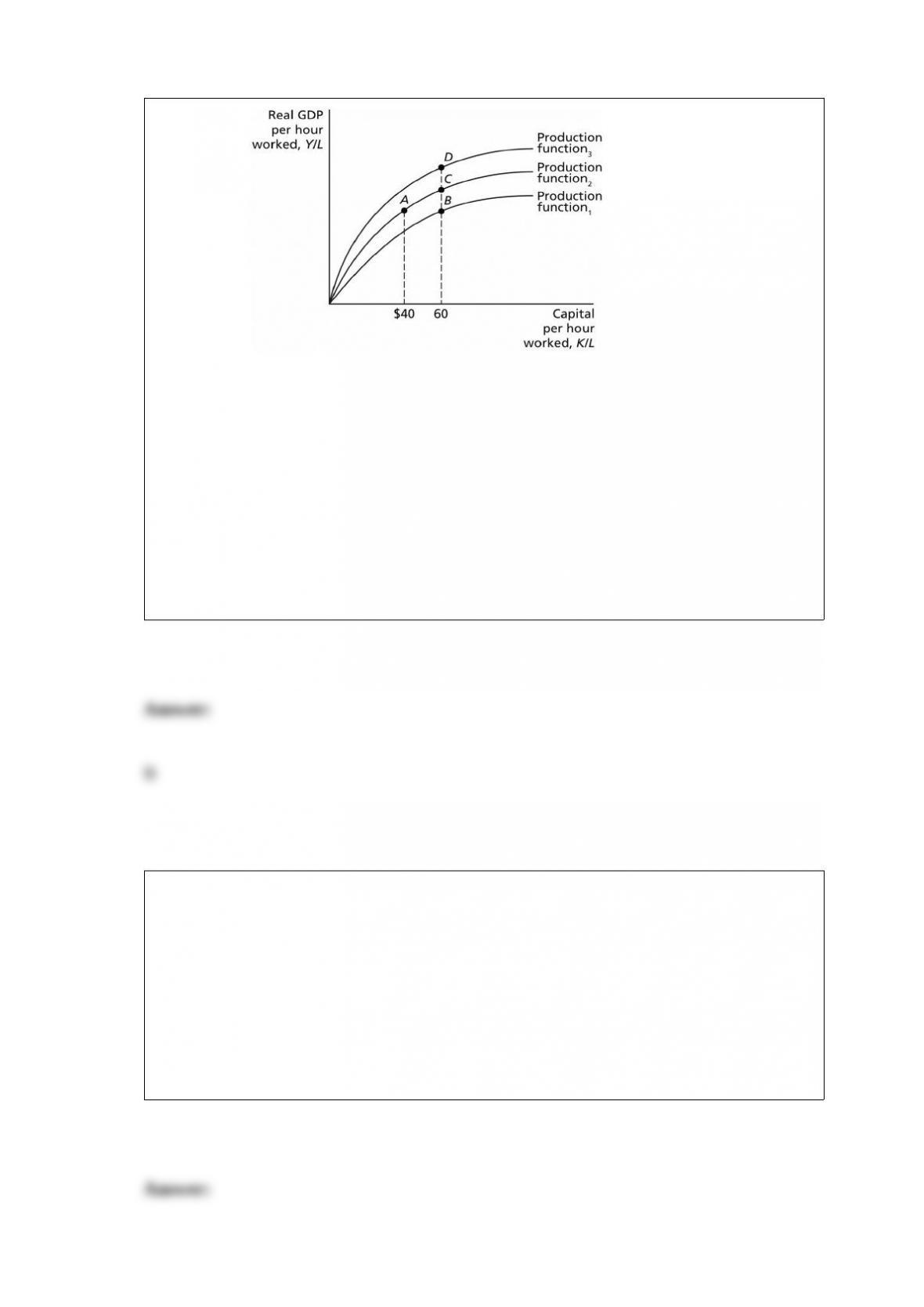
Figure 22-1
Technological change is illustrated in the per-worker production function in the figure
above by a movement from
A) A to B.
B) B to C.
C) B to A.
D) D to C.
A price-discriminating firm charges the highest price to
A) the group with the largest demand.
B) the group with the most elastic demand.
C) the group with the least elastic demand.
D) the group with demand that is unit-elastic.

Typically, a bank’s largest asset is its
A) reserves.
B) holdings of securities.
C) deposits of its customers.
D) loans.
The rapid growth of China’s economy relative to the United States has benefitted U.S.
consumers because
A) competition from China has made jobs harder to find in the United States.
B) U.S. consumers can purchase more lower-priced goods made in China.
C) the United States has comparative advantage in more goods than China does.
D) goods made in China are always of higher quality than goods made in the United
States.
Suppose China decides to sell a vast majority of their large holdings of U.S. Treasury
bonds. If you are thinking of refinancing your house, how would China’s action affect
your decision to refinance?

A) You would want to refinance as soon as possible as interest rates should rise.
B) You would want to wait to refinance as interest rates should rise.
C) You would want to wait to refinance as interest rates should fall.
D) China’s actions should not affect your decision to refinance in any way.
Positive technological change in the production of LCD televisions caused the price of
LCD televisions to fall. Holding everything else constant, how would this affect the
market for Blu-ray players (a complement to LCD televisions)?
A) The supply of Blu-ray players would increase and the equilibrium price of Blu-ray
players would decrease.
B) The demand for Blu-ray players would increase and the equilibrium price of Blu-ray
players would increase.
C) The demand for Blu-ray players would decrease because consumers could afford to
buy fewer LCD televisions and Blu-ray players.
D) The demand for Blu-ray players would increase and the equilibrium price of Blu-ray
players would decrease.
With which of the following statements would a “real business cycle” theorist most
closely agree?
A) “Monetary policies have greatest impact on real GDP when they are anticipated.”

B) “Expansionary monetary policy allows the central bank to control inflation and
unemployment simultaneously.”
C) “Wages adjust slowly to changes in inflation as long as expectations are formed
rationally.”
D) “Technological shocks to the economy explain deviations of real GDP from its
potential level.”
Which of the following is a problem inherent in centrally planned economies?
A) There are no problems and everyone, including consumers, is satisfied.
B) There is too much production of low-cost, high-quality goods and services.
C) Production managers are more concerned with satisfying government’s orders than
with satisfying consumer wants.
D) Unemployment is too high.
Facing stiff competition, Hendrix College, a small liberal arts institution in Conway,
Ark., decided two years ago to bolster its academic offerings, promising students at
least three hands-on experiences outside the classroom, including research, internships
and service projects. Although it raised tuition and fees by 29 percent, enrollment in the
freshman class rose by 37 percent.
Source: Jonathan D. Glater and Alan Finder, “In New Twist on Tuition Game,
Popularity Rises With the Price,” New York Times, December 12, 2006 Based on the
information above, the demand for Hendrix College education is
A) unit-elastic.

B) perfectly elastic.
C) relatively inelastic.
D) More information is needed to answer the question.
The bargaining power of suppliers increases if
A) the cost of switching suppliers is relatively low.
B) there are only a few competitors to the supplier.
C) the input in question is not a critical component of production.
D) the input supplied is relatively standardized.
Article Summary. In what is being called a “bail-in,” the finance ministers of the
17-nation Eurozone agreed to step in to assist the banking system in the nation of
Cyprus. With this arrangement, the banks receive an infusion of capital, but
depositors are being changed a special bank levy of up to 10% on deposit accounts.
Like in the United States, Cyprus does have deposit insurance which guarantees
deposits up to a certain level, but the size of the debt owed by the Cypriot banks
was so large that agreeing to the special bank levy and ignoring the deposit
insurance seemed necessary to get support from the European Union. Some
analysts have also stated that the levy may have been needed to prevent bank runs
on foreign-owned accounts, which have been estimated to make up one-third of the
total deposits in Cypriot banks. Source: Megan McArdle, “After Cyprus Bank
Bailout, Depositors Race to Withdraw Their Cash. Is the Rest of Europe Next?”
Daily Beast, March 17, 2013.

In 2013, the European Union agreed to essentially bail out the banks in the nation of
Cyprus. In doing this, the EU was, in effect, acting as a
A) shadow bank.
B) conductor of open market operations.
C) private equity firm.
D) lender of last resort.
In 2008, the Treasury and Federal Reserve took several actions in response to the
deepening financial crisis. One action was the Treasury’s move to have the federal
government take control of
A) the Federal Deposit Insurance Corporation (FDIC).
B) Fannie Mae and Freddie Mac.
C) JPMorgan Chase.
D) Lehman Brothers.