Goodyear’s sales are now greater outside the United States than inside the United
States.
The value of the price elasticity of supply depends primarily on how quickly firms can
acquire inputs to increase quantity supplied when price increases.
In face of rational expectations regarding changes in monetary policy, the short-run
Phillips Curve may be vertical.
Supply is elastic whenever the elasticity value for supply is positive and greater than 1.
Inflation targeting, typically, has been accompanied by lower inflation.
If the multiplier is 5, the marginal propensity to consume must be 0.8.
The United States has a closed economy.
The only type of business that faces unlimited liability is a sole proprietorship.

If the growth rate of real GDP rises from 3% to 4% per year, then the number of years
required to double real GDP will decrease from
A) 23.3 years to 17.5 years.
B) 28.0 years to 21.0 years.
C) 11.2 years to 10.8 years.
D) 23.3 years to 20.6 years.
Assume a closed economy with fixed taxes and the marginal propensity to consume is
equal to 0.9. What is the government spending multiplier?
A) 10
B) 9
C) 5
D) 1
Which of the following is a factor of production?
A) an oven in a bakery
B) a share of General Motors’ stock
C) a credit card
D) a $500 Treasury bond
The crowding out of private spending by government spending will be greater the
A) less sensitive consumption, investment, and net exports are to changes in interest
rates.
B) more sensitive consumption, investment, and net exports are to changes in interest
rates.
C) less sensitive consumption, investment, and net exports are to changes in the price
level.
D) more sensitive consumption, investment, and net exports are to changes in the price
level.
Which of the following is explained by the law of diminishing marginal utility?
A) The marginal utility of Isabel’s second bottle of Coca-Cola is greater than the
marginal utility of her third bottle of Coca-Cola.
B) The marginal utility of Isabel’s second bottle of Coca-Cola is greater than the
marginal utility of her third pretzel.
C) The marginal utility of Isabel’s second bottle of Coca-Cola is greater than the
marginal utility of her friend Margie’s third pretzel.
D) The total utility of one bottle of Coca-Cola is greater than the total utility of two
bottles of Coca-Cola.

An economy that does not have interactions in trade or finance with other economies is
referred to as
A) an open economy.
B) a closed economy.
C) a trade-balanced economy.
D) a net foreign investment economy.
When there is a negative externality, the private cost of production ________ the social
cost of production.
A) is greater than
B) is equal to
C) eliminates
D) is less than
The Congressional Budget Office estimates that the payments to settle malpractice
lawsuits and the premiums doctors pay for malpractice insurance account for ________
of health care costs in the United States.
A) between 20 and 30 percent
B) roughly half
C) less than 1 percent
D) a vast majority
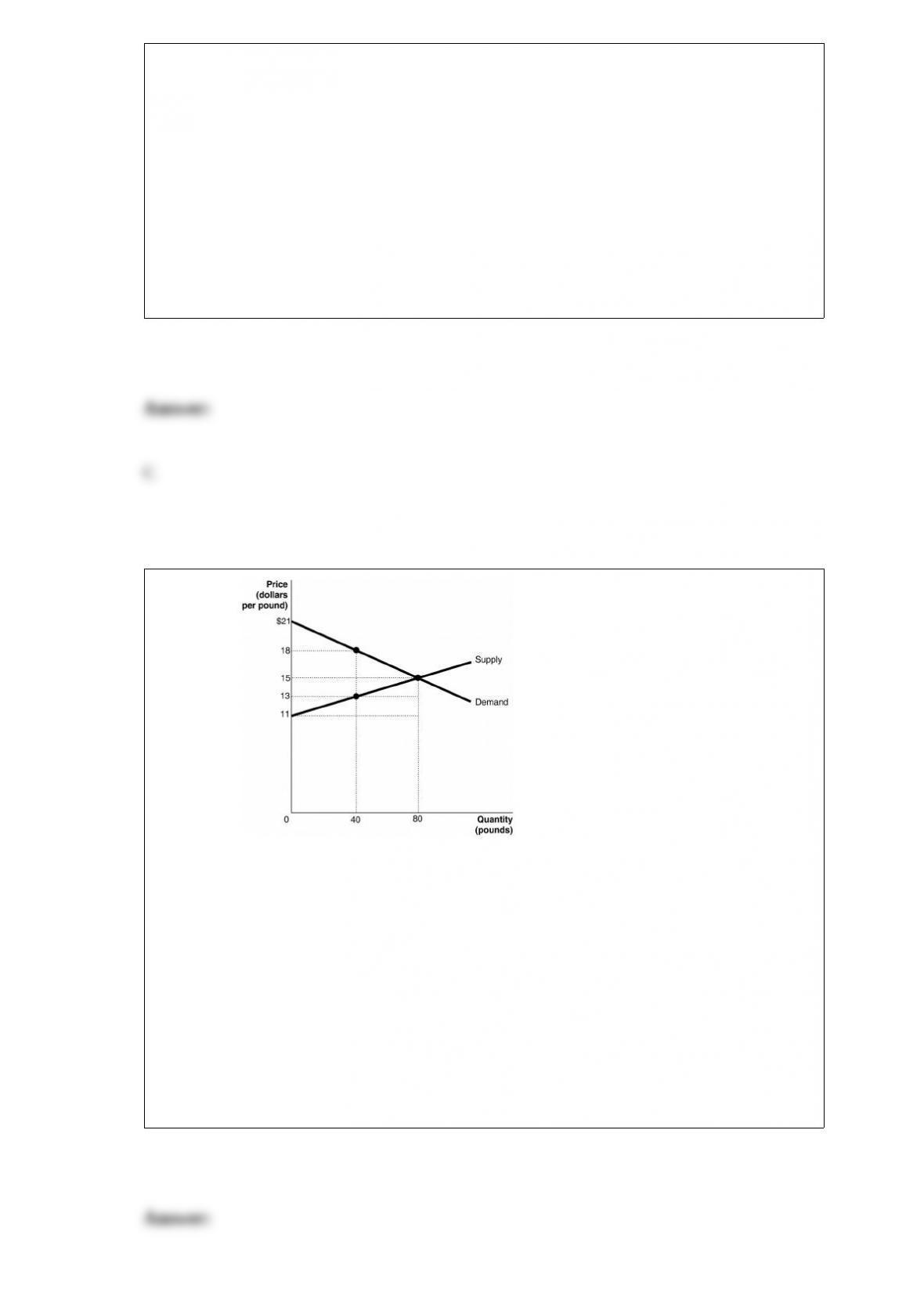
Figure 4-4 Figure 4-4 shows the market for tiger
shrimp. The market is initially in equilibrium at a price of $15 and a quantity of 80.
Now suppose producers decide to cut output to 40in order to raise the price to $18.
What is the value of the deadweight loss at a price of $18?
A) $100
B) $180
C) $660
D) $1,040

Along a downward-sloping linear demand curve
A) the marginal utility from the consumption of each unit of the good and the total
utility from consuming larger quantities increase.
B) the marginal utility from the consumption of each unit of the good and the total
utility from consuming larger quantities remain constant.
C) the marginal utility from the consumption of each unit of the good falls and the total
utility from consuming larger quantities increases.
D) the marginal utility from the consumption of each unit of the good rises and the total
utility from consuming larger quantities remain constant.
An asset is
A) anything of value owned by a person or a firm.
B) a payment by a corporation to its shareholders.
C) a nonmonetary opportunity cost.
D) anything owed by a person or a firm.
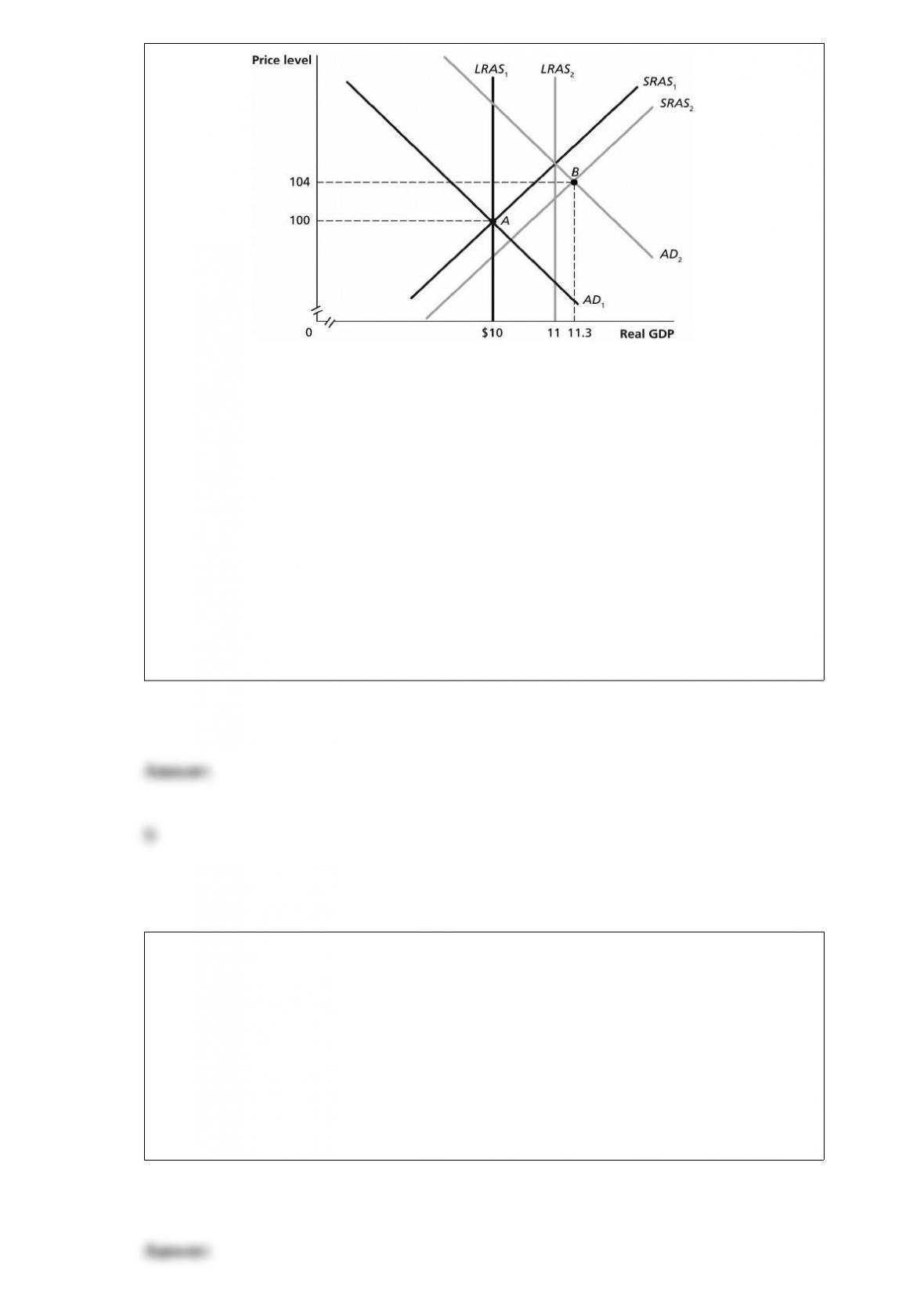
Figure 16-6
In the dynamic model of AD–AS in the figure above, if the economy is at point A in year
1 and is expected to go to point B in year 2, Congress and the president would most
likely
A) increase the money supply and decrease the interest rate.
B) increase taxes.
C) increase government spending.
D) increase oil prices.
E) raise interest rates.
A guild is
A) a group of independent producers competing with each other.
B) an organization of producers that limits the amount of a good produced.
C) a group of nations who agree not to compete with each other.
D) a nation that is a free market benchmark.
Use the dynamic aggregate demand and aggregate supply model and start with Year 1 in
a long-run macroeconomic equilibrium. For Year 2, graph aggregate demand, long-run
aggregate supply, and short-run aggregate supply such that the condition of the
economy will induce the president and the Congress to conduct contractionary fiscal
policy. Briefly explain the condition of the economy and what the president and the
Congress are attempting to do.
Why is the U.S. trade deficit almost always larger than the U.S. current account deficit?
Does the money demand curve have a positive slope or a negative slope? Why does it
have this slope? Explain why an increase in the variable on the vertical axis of the
money demand curve causes either an increase or a decrease in the variable on the
horizontal axis of the money demand curve.
Explain the effect of price elasticities of supply and demand on tax incidence.
What is the difference between aggregate expenditure and consumption spending?
What are the differences between national income, personal income, and disposable
personal income?
How were exchange rates determined under the gold standard? How did the Bretton
Woods system differ from the gold standard?
What is a sequential game? How are decision trees used to analyze sequential games?
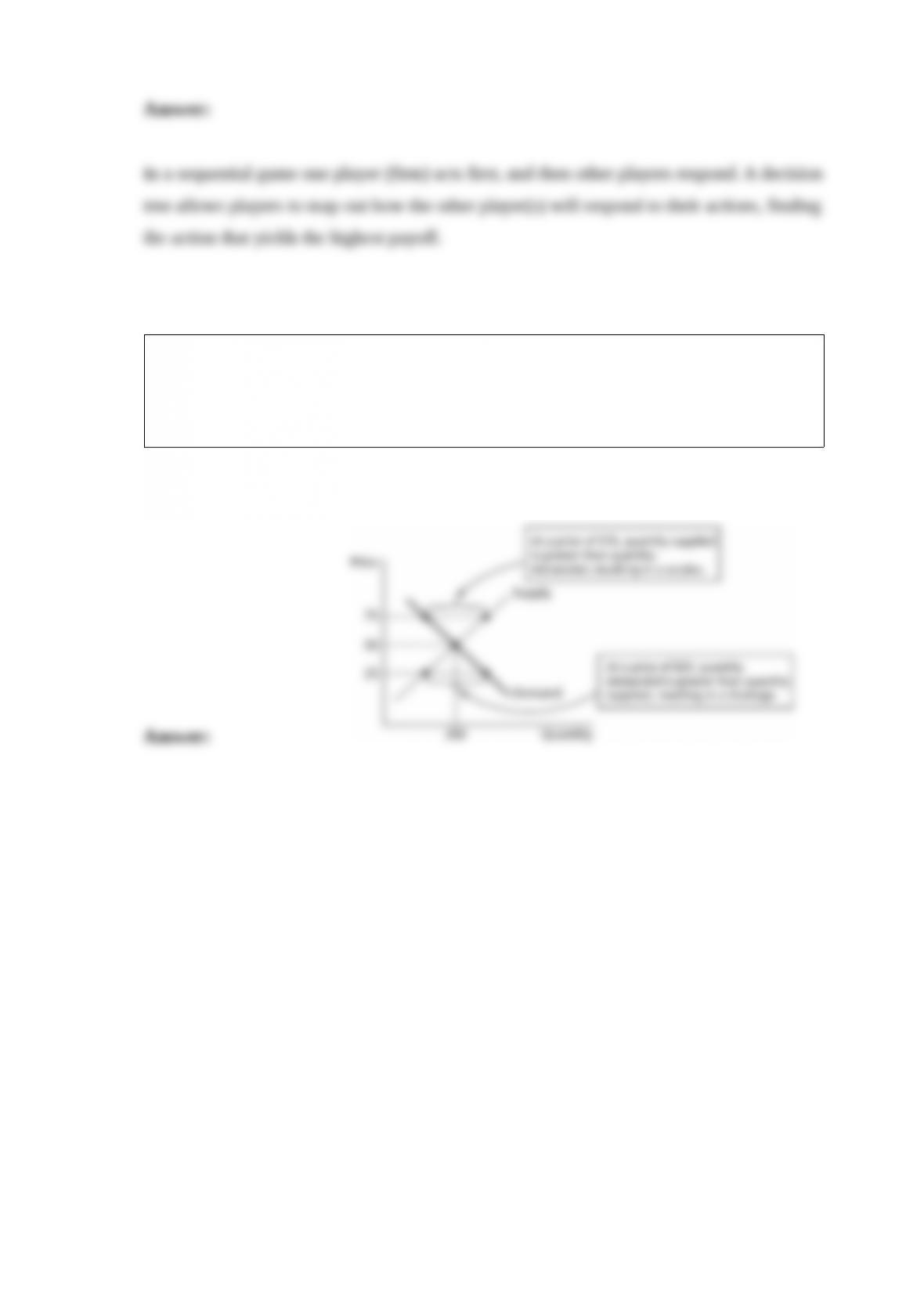
Draw a supply and demand graph showing an equilibrium price of $50 and an
equilibrium quantity of 200 units. Explain what would happen if the selling price was
$75, and illustrate this on the graph. Explain what would happen if the selling price was
$25, and illustrate this on the graph. Be sure to label each axis and curve on the graph.