1) When commercial banks use excess reserves to buy government securities from the
public:
A.new money is created.
B.commercial bank reserves increase.
C.the money supply falls.
D.checkable deposits decline.
2) a market externality refers to:
a.economic costs and benefits of market activities that go to those who are not directly
involved in the market transaction.
b.the impact of legal and institutional forces on market behavior.
c.any unanticipated change in market price or output.
d.any noneconomic force, for example, political disruption of the flow of middle east
oil, which has market effects.
3) Since 1950, farm productivity has:
A.advanced twice as fast as in nonfarm sectors of the economy.
B.lagged behind productivity advances in the nonfarm economy.
C.almost exactly matched productivity increases in the rest of the economy.
D.doubled.
4)
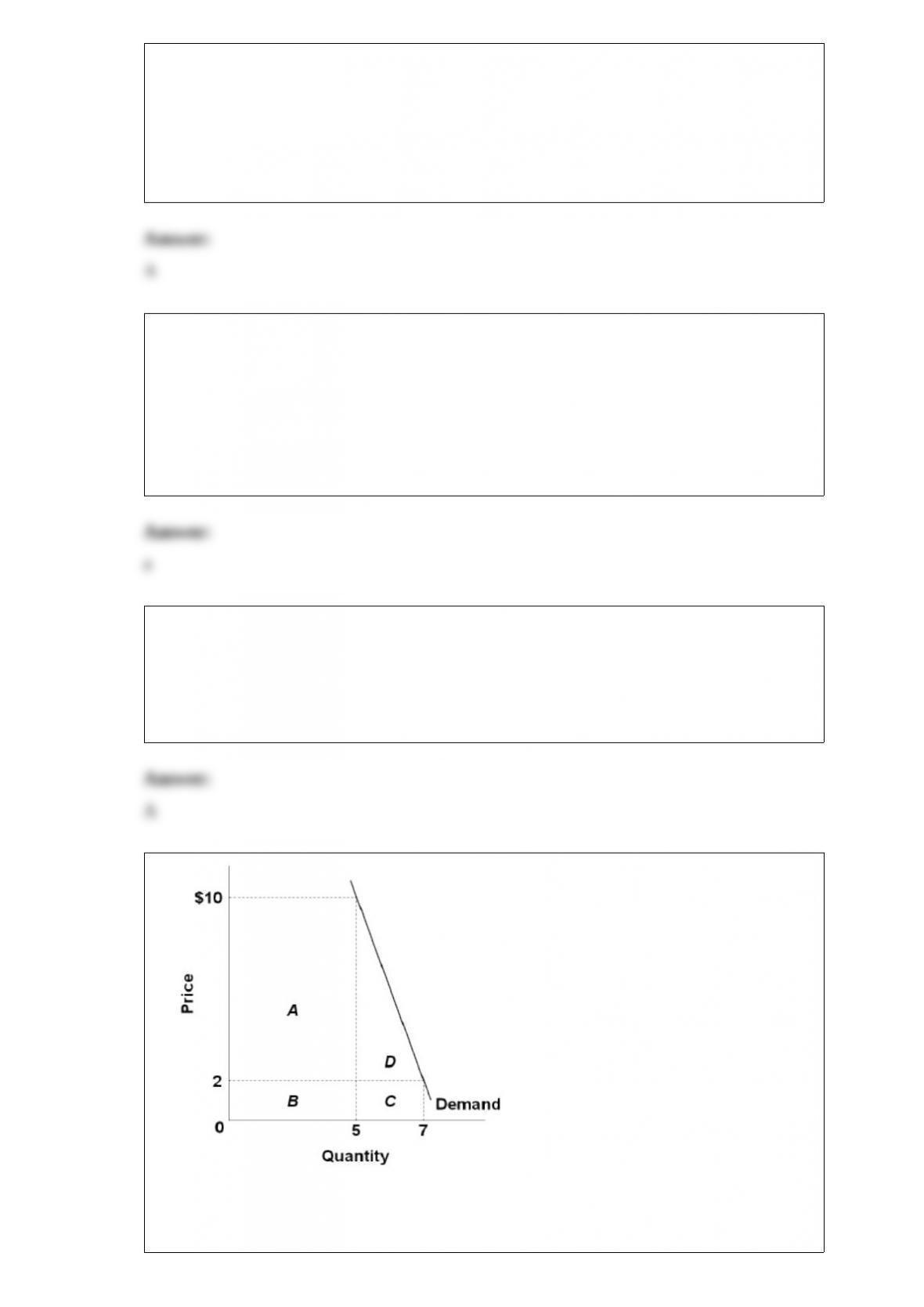
refer to the above diagram and assume that price declines from $10 to $2. the
coefficient of price elasticity of demand (midpoints formula) relating to this change in
price is about:
a..25 and demand is inelastic.
b.1.5 and demand is elastic.
c.1 and demand is unit elastic.
d..67 and demand is inelastic.
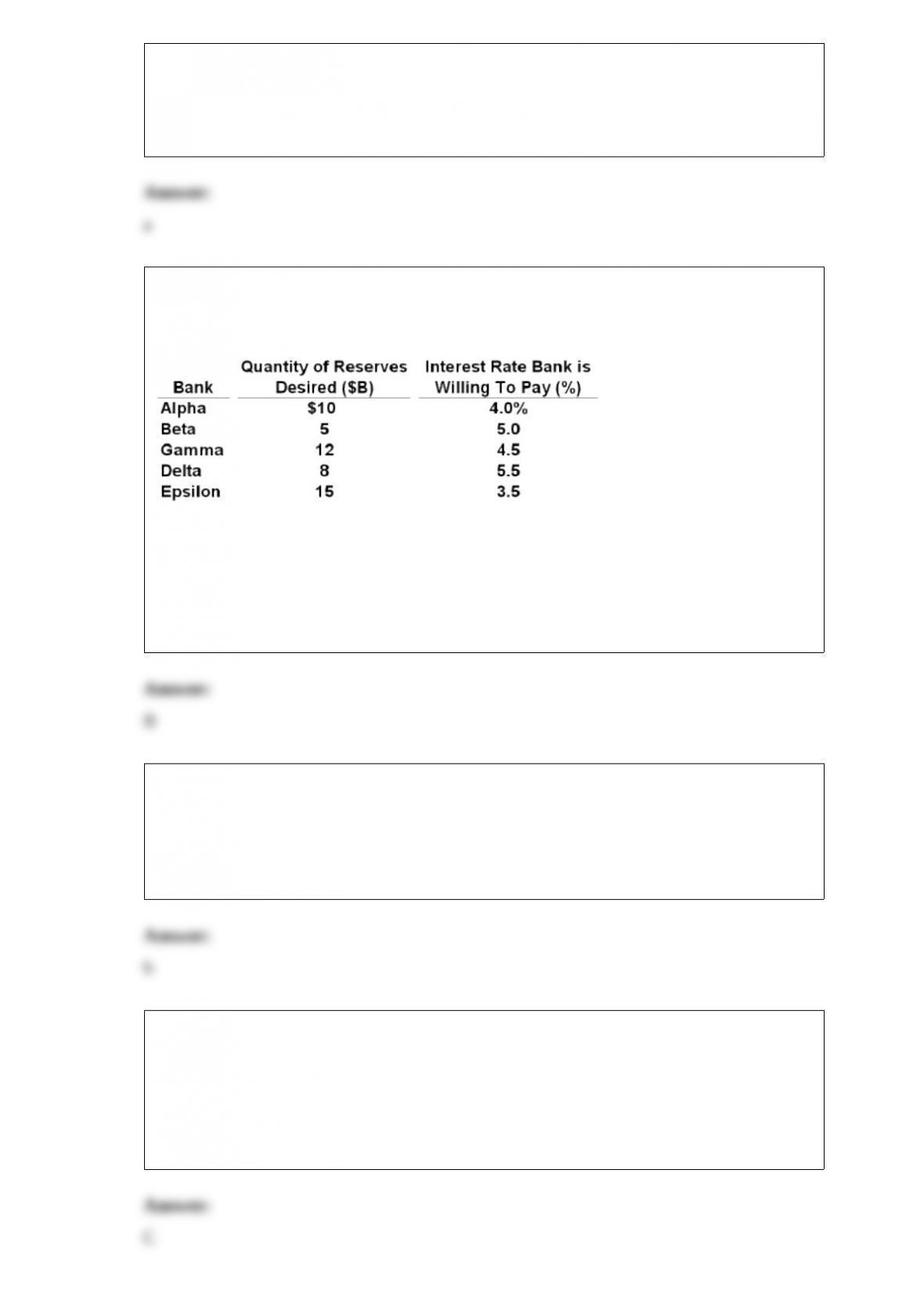
5) The following information: The Fed is going to auction $30 billion in reserves using
the term auction facility. It receives the following bids:
Refer to the above information. As a result of the auction, how much and at what
interest rate will Alpha bank borrow?
A.$10 billion; 4 percent
B.$5 billion; 4 percent
C.$10 billion; 3.5 percent
D.$10 billion; 5.5 percent
6) which of the following is correct?
a.when ap is rising, avc is rising.
b.when ap is rising, avc is falling.
c.when ap is rising, ap exceeds mp.
d.there is no relationship between ap and avc.
7) The traditional Phillips Curve suggests that, if government uses an expansionary
fiscal policy to stimulate output and employment:
A.unemployment may actually increase because of the crowding-out effect.
B.tax revenues may increase even though tax rates have been reduced.
C.inflation may result.
D.the natural rate of unemployment may fall.
8) The price of a bond having no expiration date is originally $8,000 and has a fixed
annual interest payment of $800. A fall in the price of the bond by $3,000 will provide a
new buyer of the bond an interest rate of:
A.10 percent.
B.12 percent.
C.14 percent.
D.16 percent.
9) By reducing labor turnover, unions may increase productivity because a lower
turnover rate:
A.results in a less-experienced work force.
B.increases the incentive for firms to provide training to their workers.
C.allows firms to employ a greater number of younger, more energetic workers.
D.increases the incentive for firms to substitute labor for capital in the production
process.
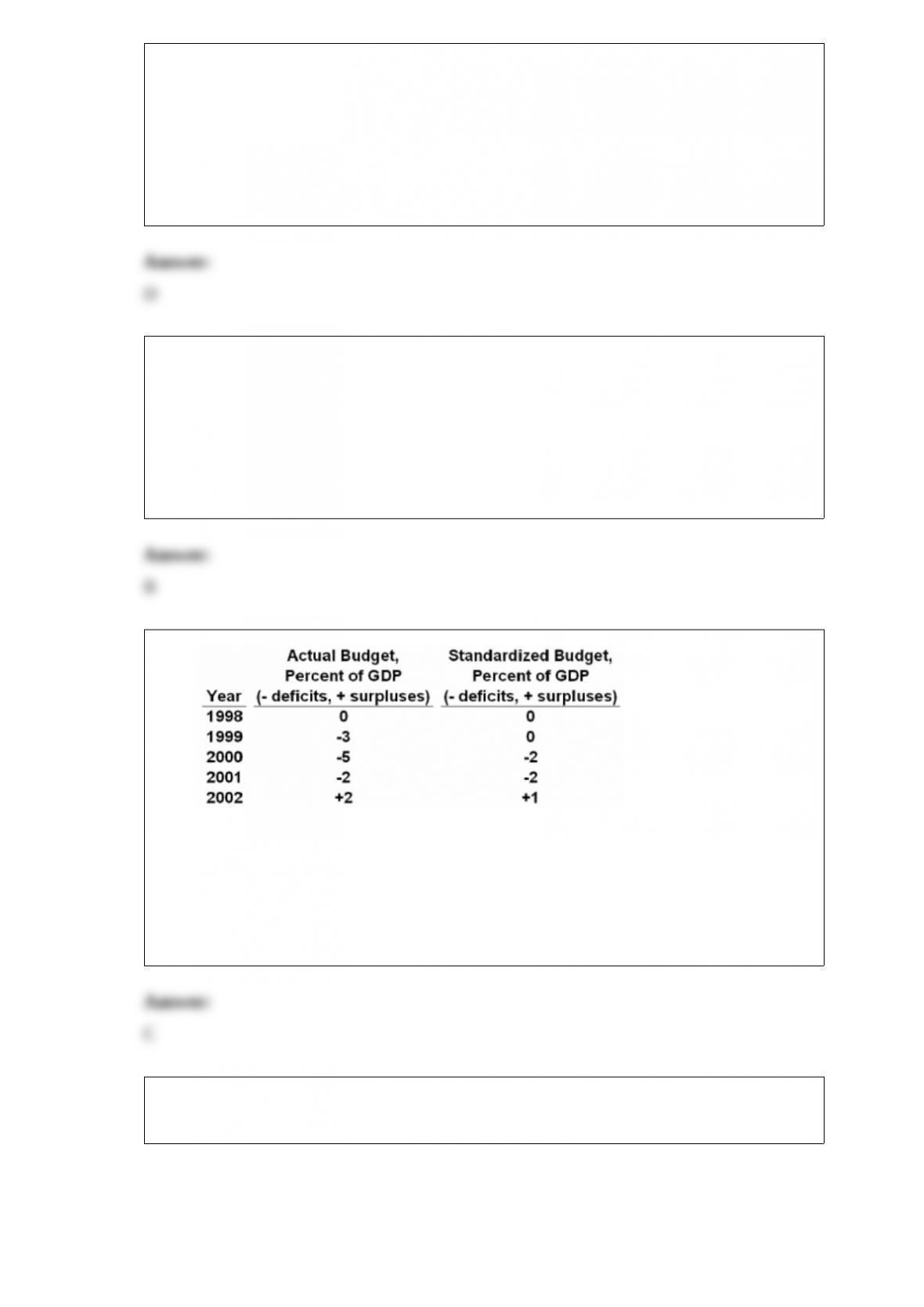
10)
Refer to the above data for a fictional economy. The changes in the budget conditions
between 1998 and 1999 best reflect:
A.demand-pull inflation.
B.an expansionary fiscal policy.
C.a recession.
D.a contractionary fiscal policy.
11) The following information for the Moolah Bank.
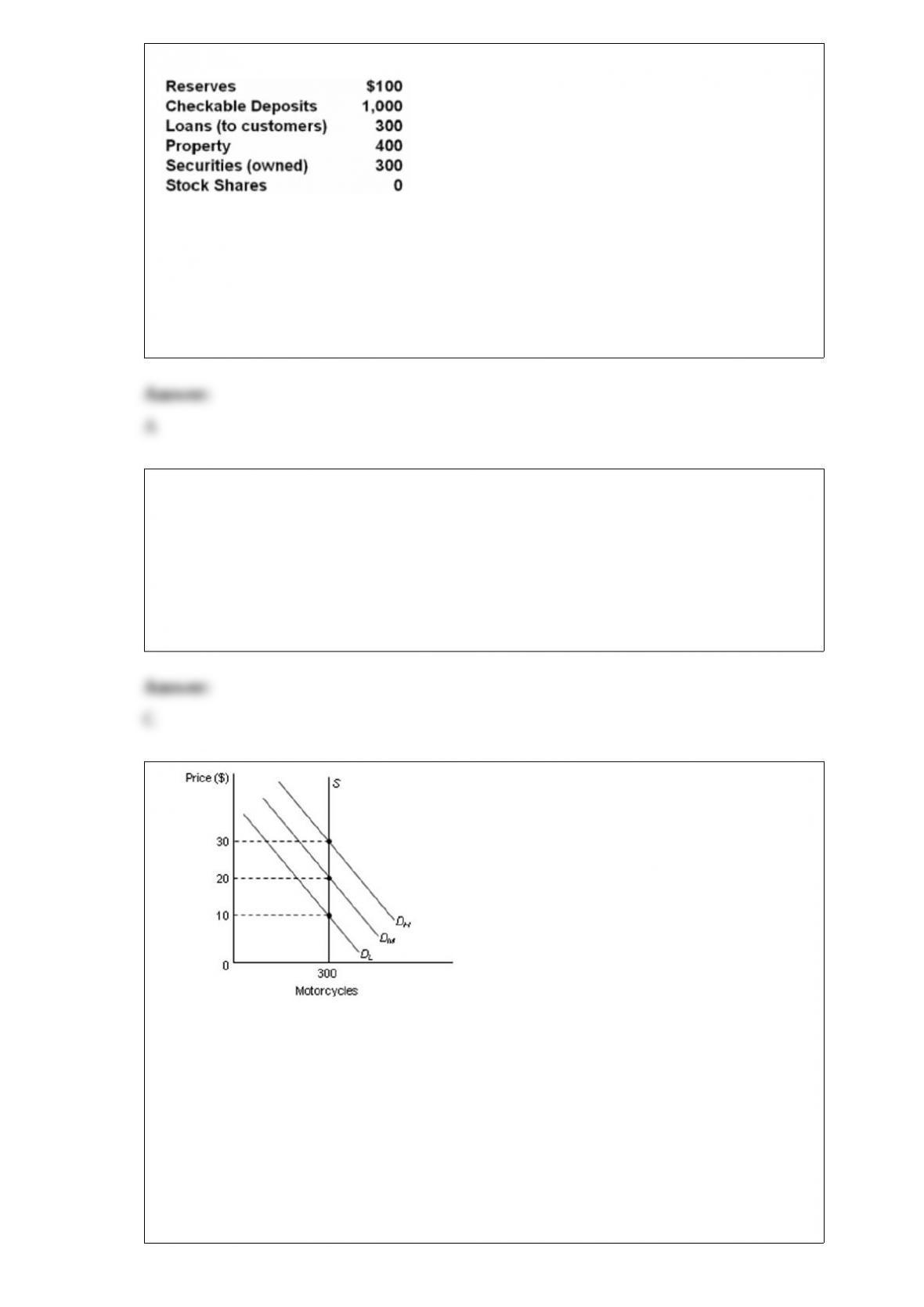
Assume that the listed amounts constitute this bank’s complete set of accounts.
Moolah’s:
A.assets are $1100.
B.liabilities are $1100.
C.net worth is $300.
D.profit is $1000.
12) The Federal income tax is consistent with the __________ principle of taxation,
whereas an excise tax on sporting event tickets is consistent with the ___________
principle of taxation.
A.benefits-received; ability-to-pay
B.benefits-received; pay-as-you go
C.ability-to-pay; benefits received
D.ability-to-pay; pay-as-you-go
13) Answer the next four questions based on the
following demand and supply model for a business firm producing motorcycles.
Assume that 300 motorcycles is the optimal and most profitable level of production for
the firm. All dollars are in thousands.
(a)What are the equilibrium price and quantity at the medium level of demand (DM)?
(b)What will be the equilibrium price and quantity if there is a demand shock that
unexpectedly lowers demand (DL)?
(c)What will be the equilibrium price and quantity if there is a demand shock that
unexpectedly increases demand (DH)?
(d)What can you conclude will happen to prices and output when this model is shocked
by changes in demand?
14) Alex, Kara, and Susie are the only three people in a community and Alex is willing
to pay $20 for the 5th unit of a public good; Kara, $15, and Susie, $25. Government
should produce the 5th unit of the public good if the marginal cost is less than:
A.$25.
B.$15.
C.$60.
D.$300.
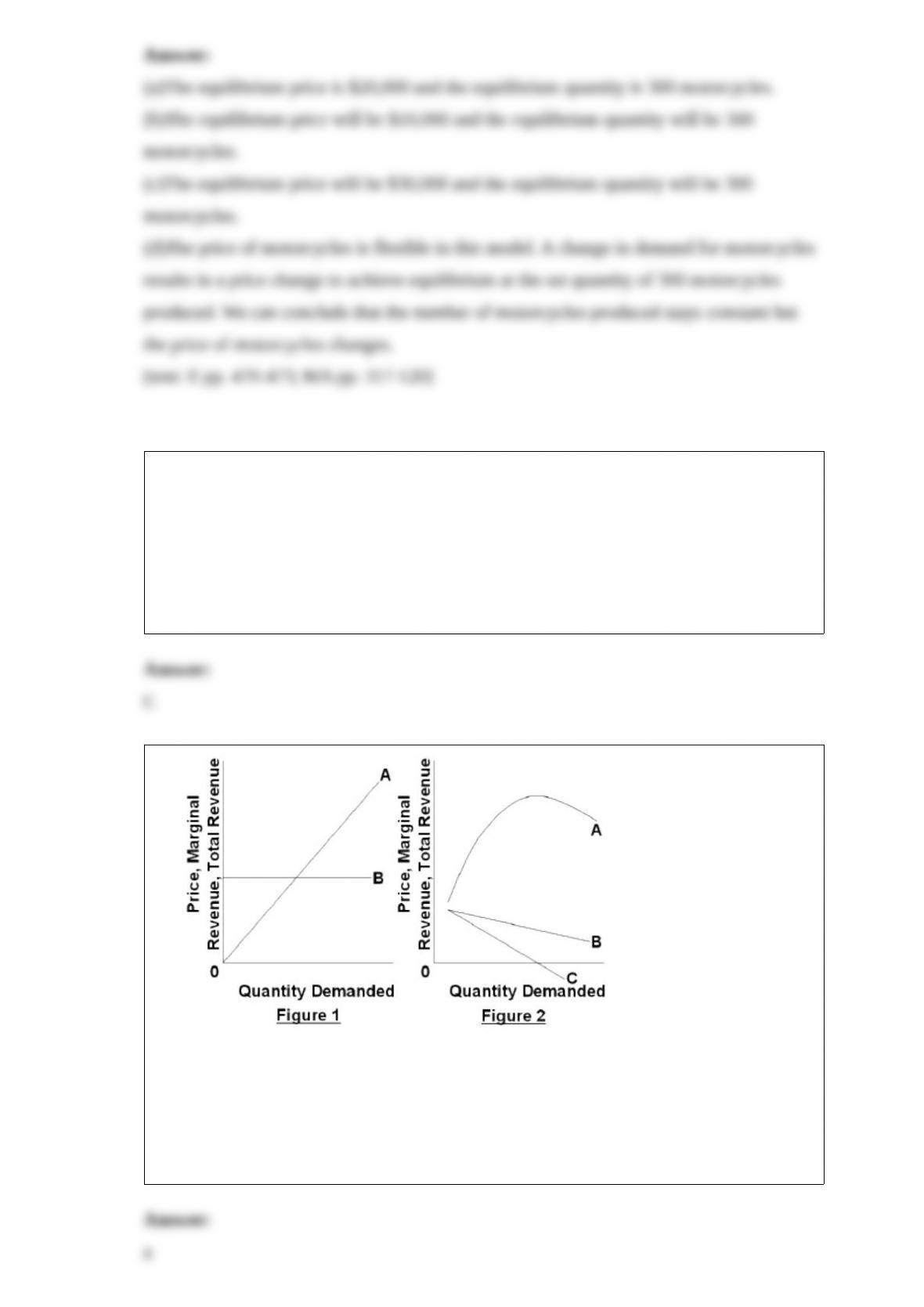
15)
refer to the above two diagrams for individual firms. in figure 2 the firm’s demand and
marginal revenue curves are represented by:
a.lines b and c respectively.
b.lines a and c respectively.
c.lines a and b respectively.
d.line b

16) When the market for money is in equilibrium:
A.the quantity of money demanded equals the quantity of money supplied.
B.the interest rate is increasing.
C.bond prices are falling.
D.the interest rate is declining.
17) Assume the Apex Manufacturing Company is purely competitive in both the hiring
of labor and in the sale of its product. Apex’s labor demand curve would be:
A.vertical at the current level of employment.
B.horizontal at the “going” wage rate.
C.upward sloping.
D.downward sloping.