1) The U.S. demand for euros is:
A.downsloping because, at lower dollar prices for euros, Americans will want to buy
more European goods and services.
B.downsloping because, at higher dollar prices for euros, Americans will want to buy
more European goods and services.
C.downsloping because the dollar price of euros and the euro price of dollars are
directly related.
D.upsloping because a higher dollar price of euros makes European goods and services
more attractive to Americans.
2) Which of the following occupations is among the ten projected fastest growing U.S.
occupations in terms of percentage increases?
A.personal financial advisors
B.file clerks
C.desktop publishers
D.textbook authors
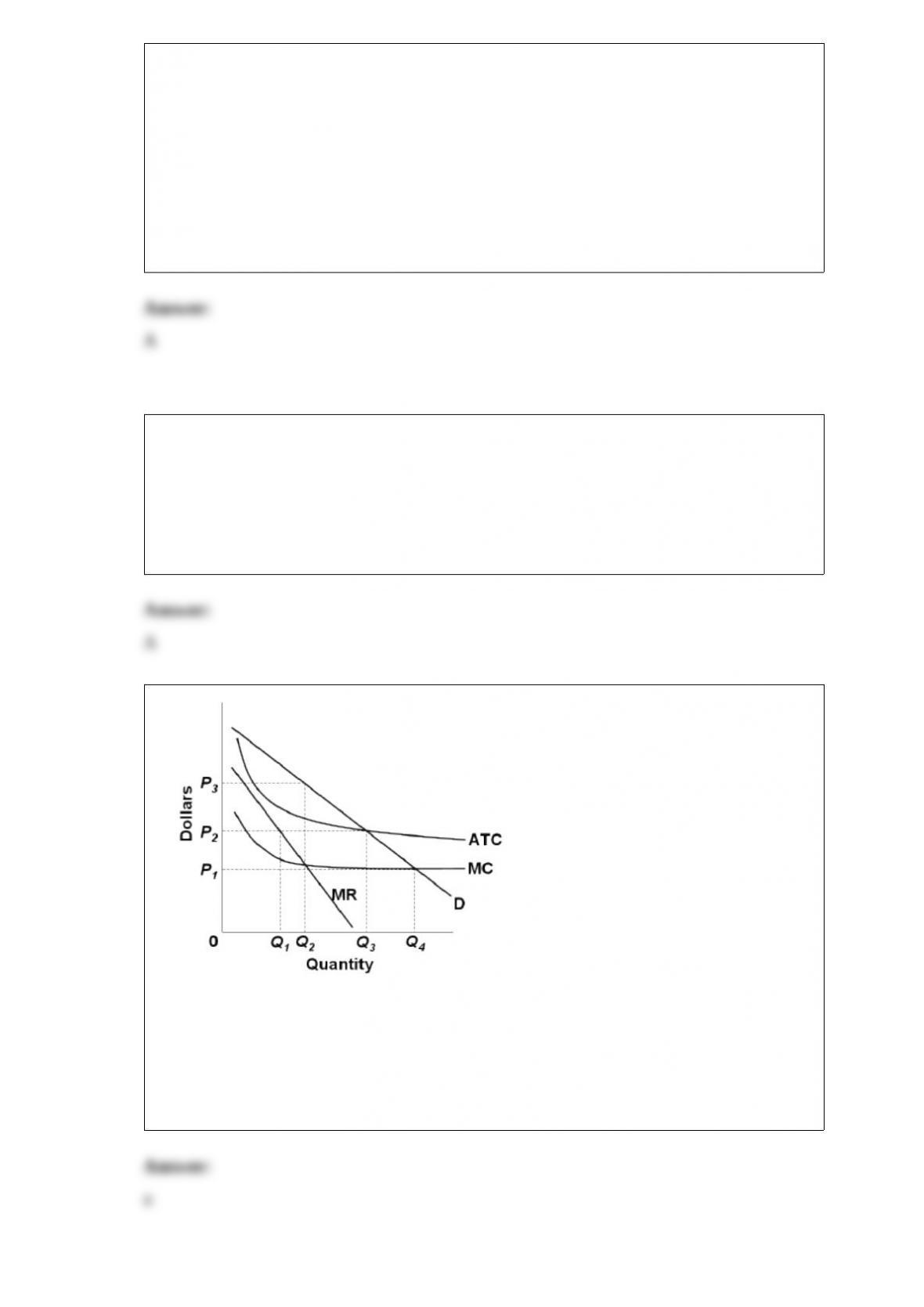
3)
refer to the above diagram for a natural monopolist. if a regulatory commission were to
set a maximum price of p3, the monopolist would:
a.maximize profits.
b.increase output beyond the profit-maximizing level.
c.reduce output below the profit-maximizing level.
d.be unable to make a normal profit.
4) between 1950 and 2007, u.s. real gdp grew at an average annual rate of about:
a.2.3 percent.
b.3.5 percent.
c.5.1 percent.
d.8.6 percent.
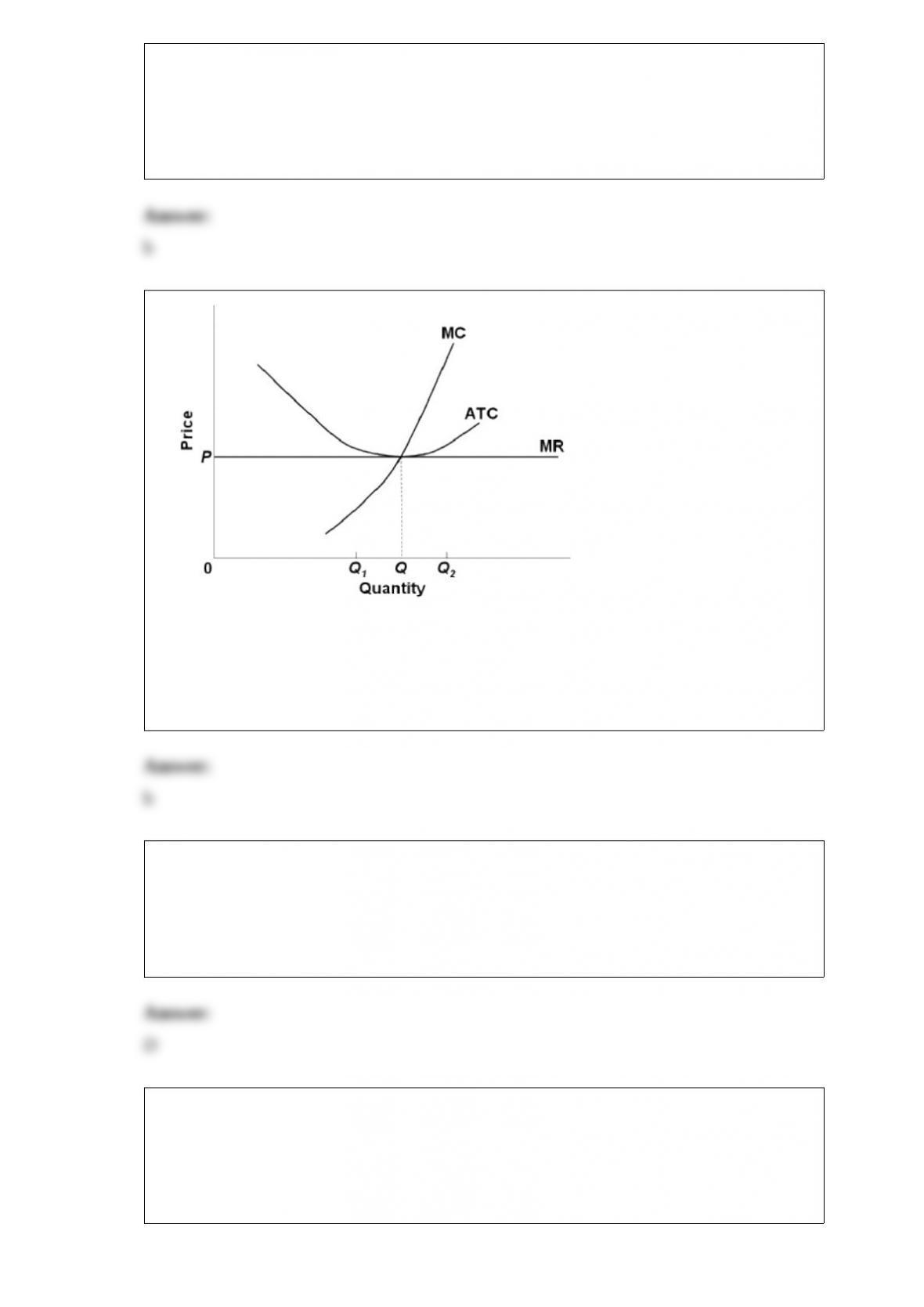
5)
refer to the above diagram. by producing output level q:
a.neither productive nor allocative efficiency are achieved.
b.both productive and allocative efficiency are achieved.
c.allocative efficiency is achieved, but productive efficiency is not.
d.productive efficiency is achieved, but allocative efficiency is not.
6) In which of the following U.S. industries is the rate of unionization the lowest?
A.transportation
B.mining
C.manufacturing
D.finance
7) In the extended analysis of aggregate supply, the long-run aggregate supply curve is:
A.vertical and the short-run aggregate supply curve is horizontal.
B.horizontal and the short-run aggregate supply curve is vertical.
C.horizontal and the short-run aggregate supply curve is upward sloping.
D.vertical and the short-run aggregate supply curve is upward sloping.
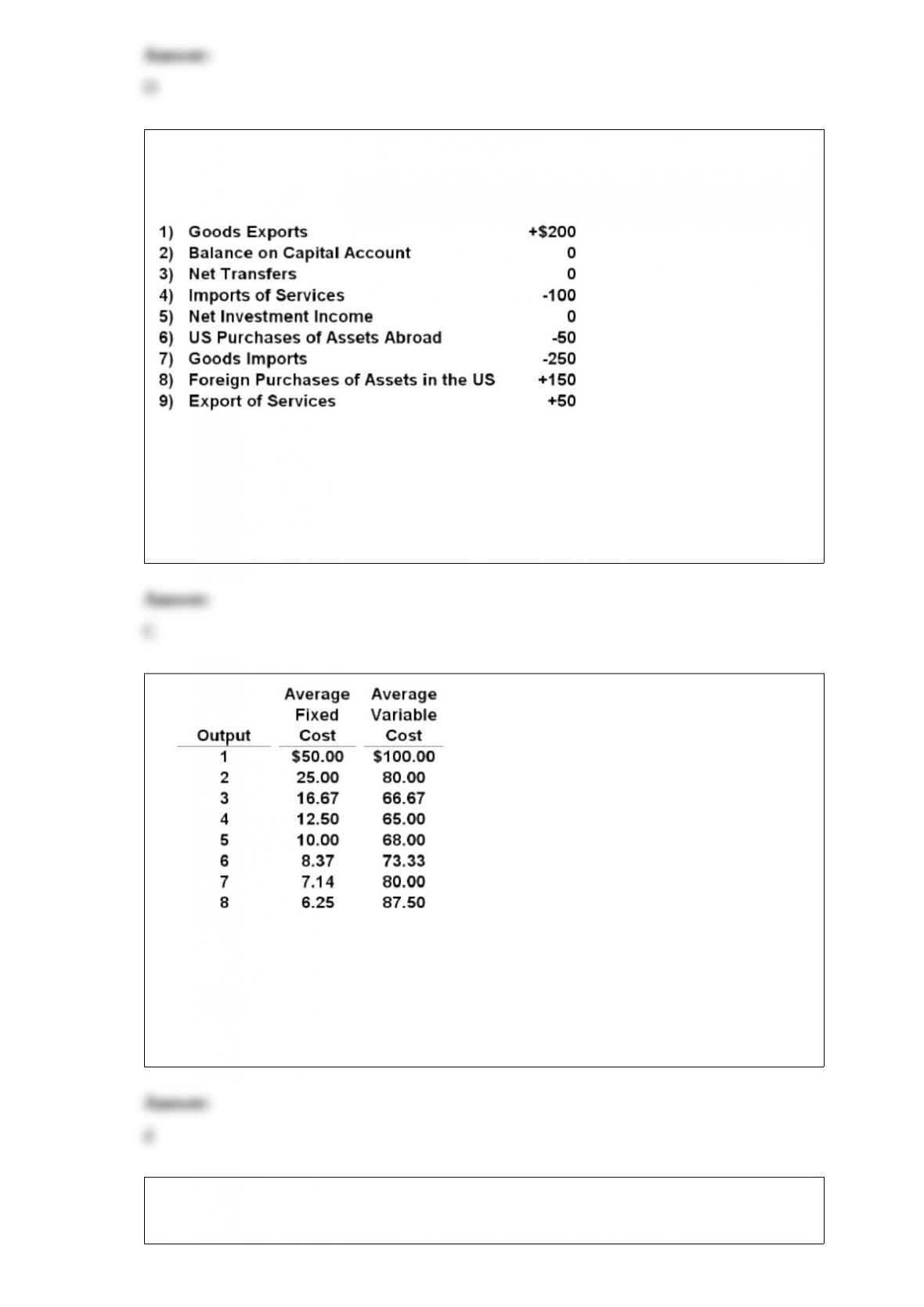
8) The plus items below are “export-type” entries and the minus items are “import-type”
entries in the balance of payments for the hypothetical country of Zippo.
Refer to the above information. On the basis of its balance of payments position, and
other things equal, we can expect the international value of Zippo’s currency to:
A.increase.
B.decrease.
C.remain constant.
D.gyrate up and down.
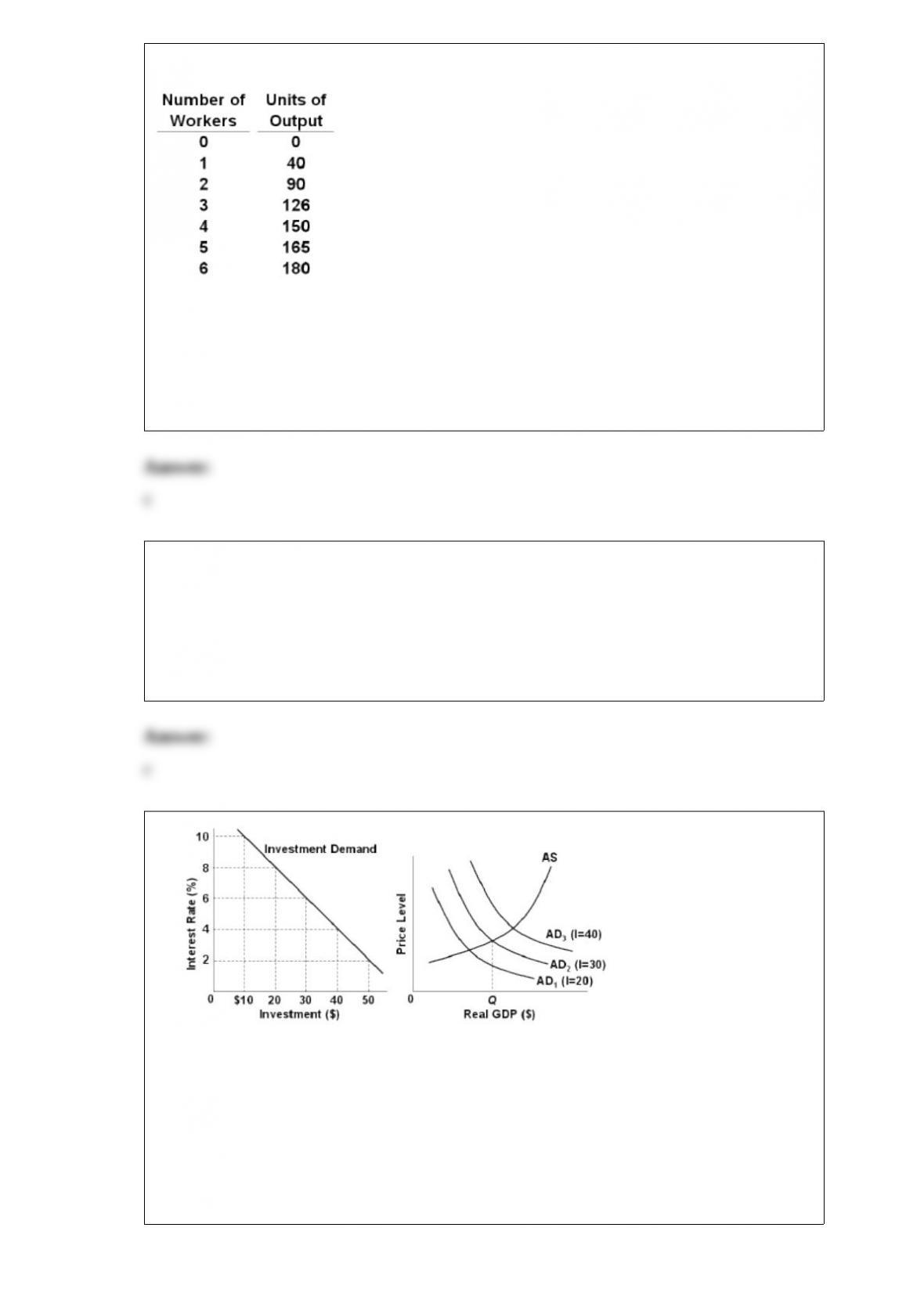
9)
refer to the above data. if the firm decided to increase its output from 6 to 7 units, its
total costs would rise by:
a.$87.14.
b.$80.00.
c.$6.67.
d.$120.00.
10) the following output data for a firm. assume that the amounts of all non-labor
resources are fixed.
refer to the above data. diminishing marginal returns become evident with the addition
of the:
a.sixth worker.
b.fourth worker.
c.third worker.
d.second worker.
11) a purely competitive firm is precluded from making economic profit in the long run
because:
a.it is a “price taker.”
b.its demand curve is perfectly elastic.
c.of unimpeded entry to the industry.
d.it produces a differentiated product.
12)
Refer to the above diagrams. The numbers in parentheses after the AD1, AD2, and AD3
labels indicate the levels of investment spending associated with each curve,
respectively. All numbers are in billions of dollars. If the interest rate is 6 percent and
the goal of the Fed is full-employment output of Qf, it should:
A.increase the interest rate from 6 percent to 8 percent.
B.decrease the interest rate from 6 to 4 percent.
C.decrease the interest rate from 6 to 2 percent.
D.maintain the interest rate at 6 percent.
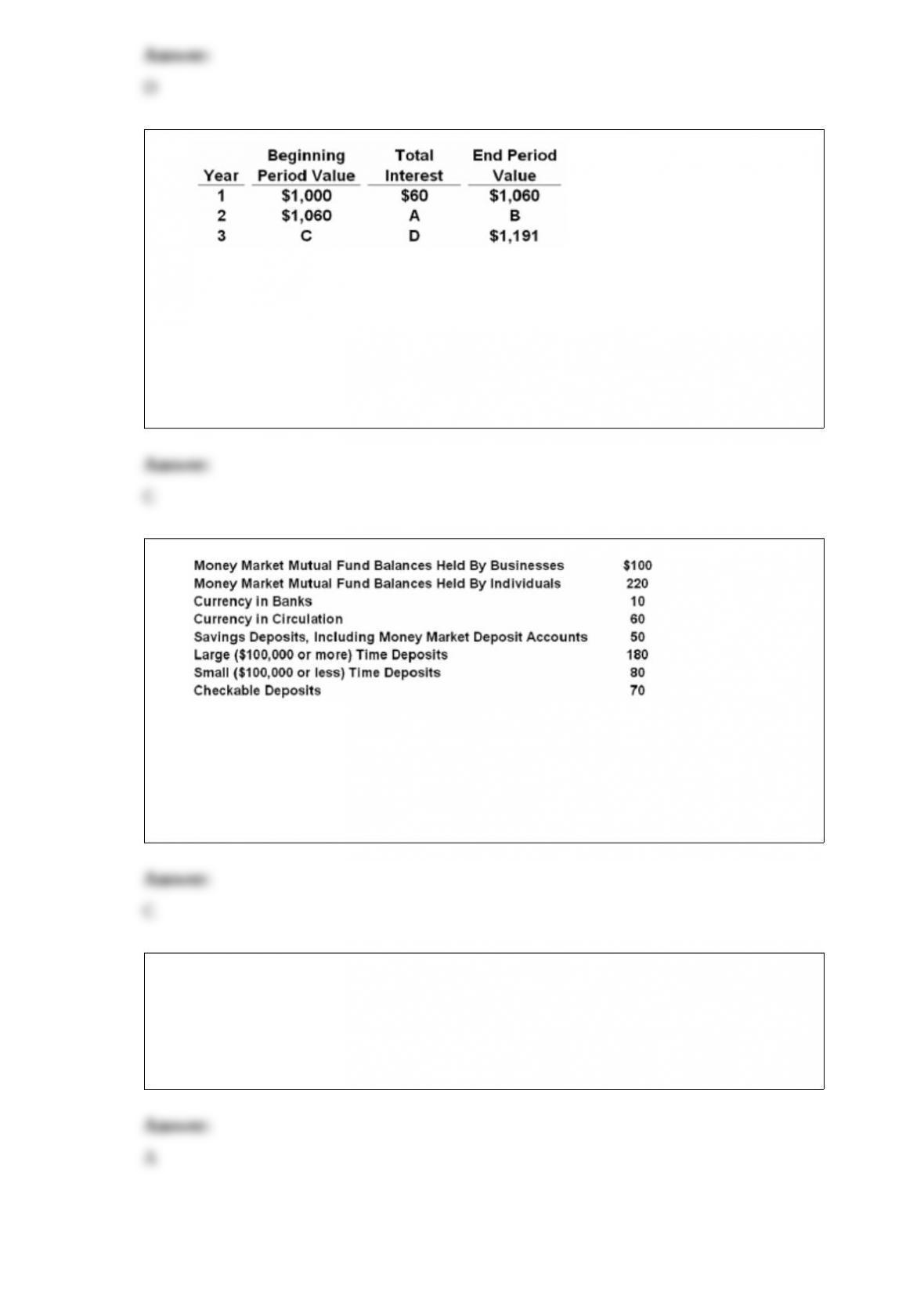
13)
Refer to the above table representing Darcy’s bank account. Assuming that $1000 was
deposited into her account at the beginning of year 1, and no further deposits or
withdrawals were made, the $1191 value at the end of year 3 represents the:
A.discounted value of the $1000 deposit made at the beginning of year 1.
B.present value of the $1000 deposit made at the beginning of year 1.
C.future value of the $1000 deposit made at the beginning of year 1.
D.present value of the interest earned over the three-year period.
14)
Refer to the above information. Money supply M1 for this economy is:
A.$60.
B.$70.
C.$130.
D.$140.
15) Under an international gold standard:
A.a nation sacrifices an independent monetary policy.
B.gold flows between nations would always promote macroeconomic stability.
C.exchange rates would fluctuate with changes in demand and supply.
D.balance of payments imbalances would be magnified.
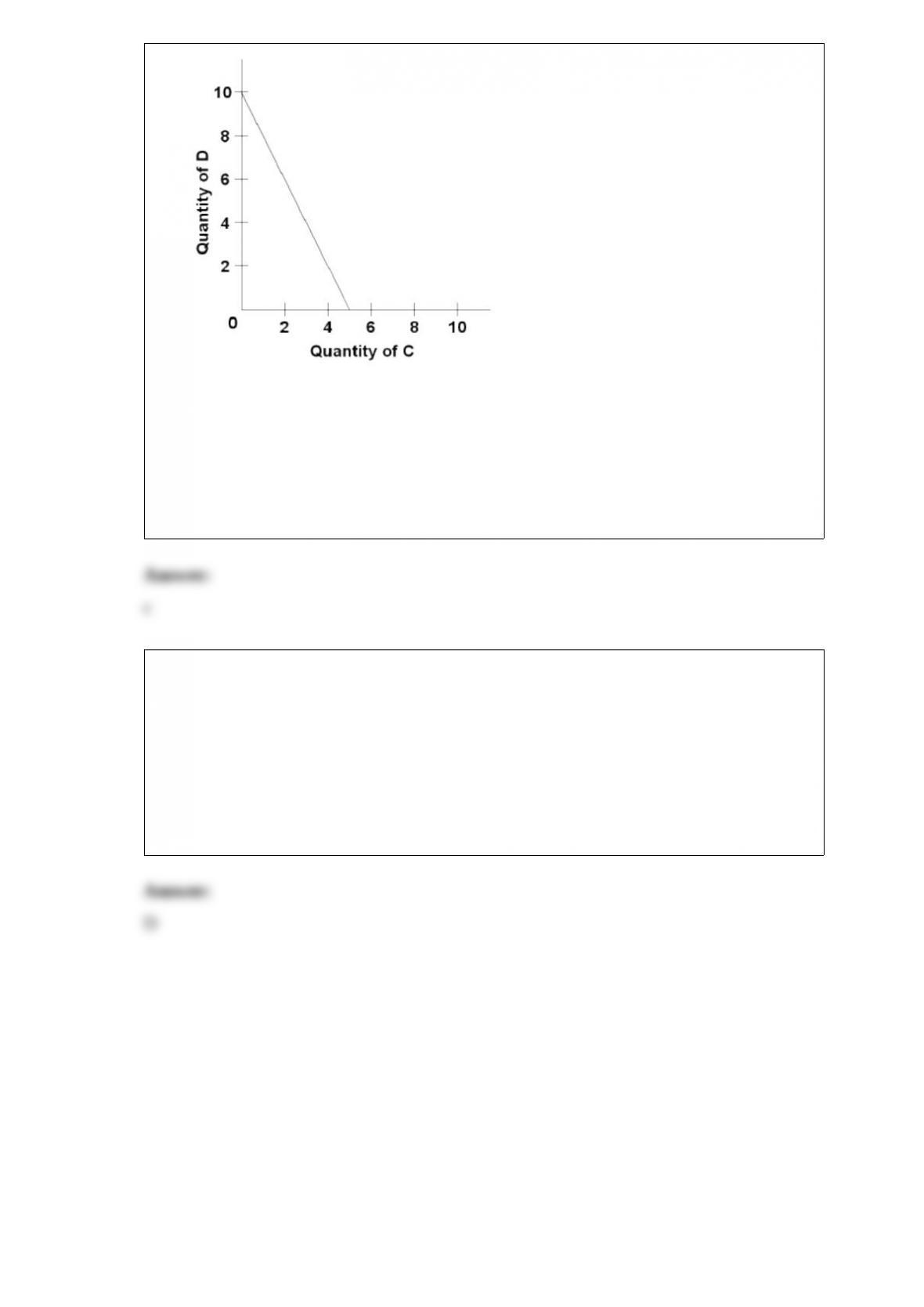
16)
refer to the budget line shown in the diagram above. given the same money income,
reductions in the prices of both products c and d will:
a.shift the budget line outward on the horizontal axis, but leave it anchored at “10” on
the vertical axis.
b.shift the budget line to the left.
c.shift the budget line to the right.
d.have no effect on the budget line.
17) Other things equal, an increase in an economy’s exports will:
A.lower the marginal propensity to import.
B.have no effect on domestic GDP because imports will change by an offsetting
amount.
C.decrease its domestic aggregate expenditures and therefore decrease its equilibrium
GDP.
D.increase its domestic aggregate expenditures and therefore increase its equilibrium
GDP.
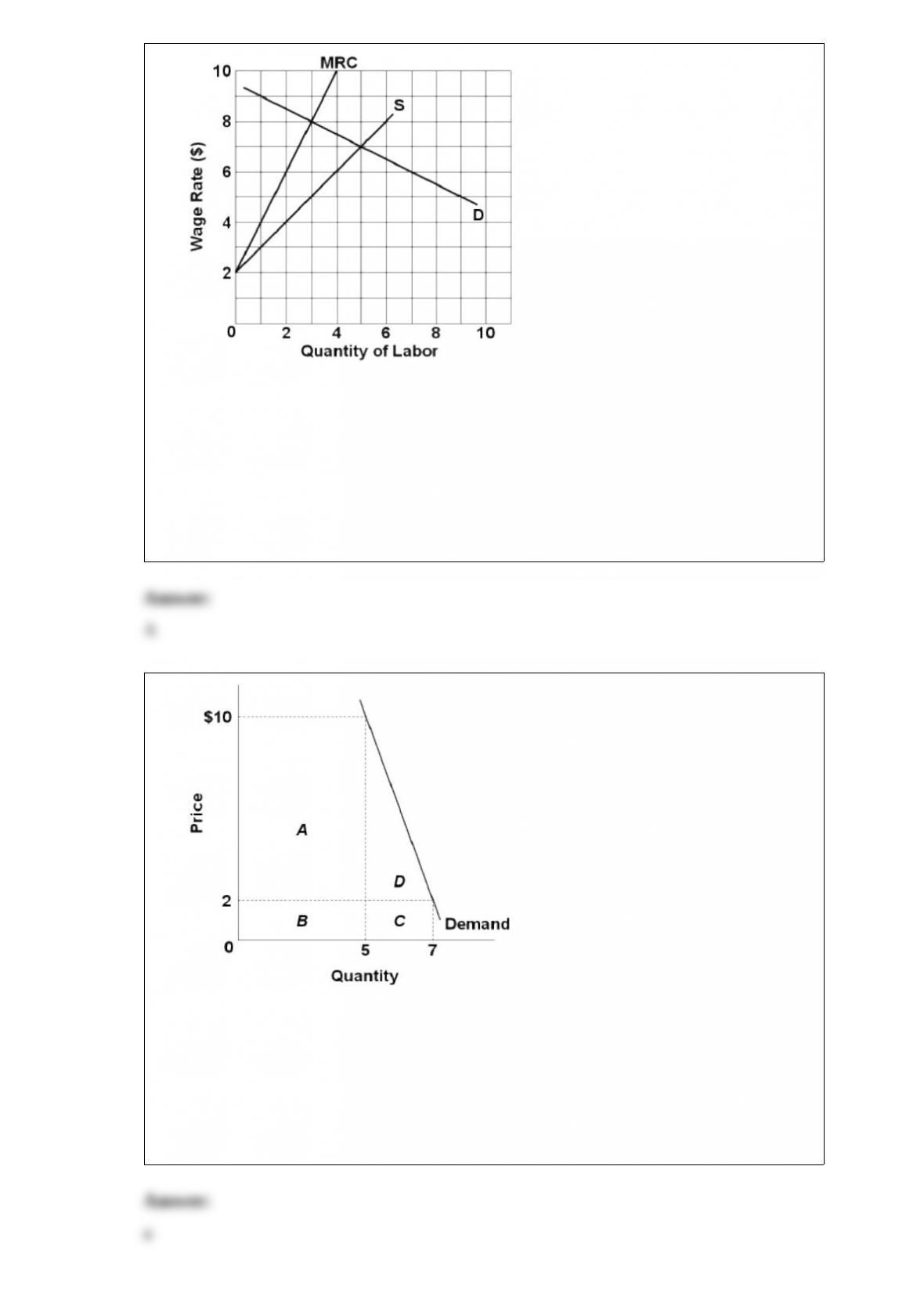
18)
Refer to the above labor market diagram where D is the labor demand curve, S is the
labor supply curve, and MRC is the marginal resource (labor) cost curve. If this were a
monopsonistic labor market, the equilibrium wage rate and level of employment would
be:
A.$5 and 3 respectively.
B.$6 and 4 respectively.
C.$7 and 5 respectively.
D.$8 and 3 respectively.
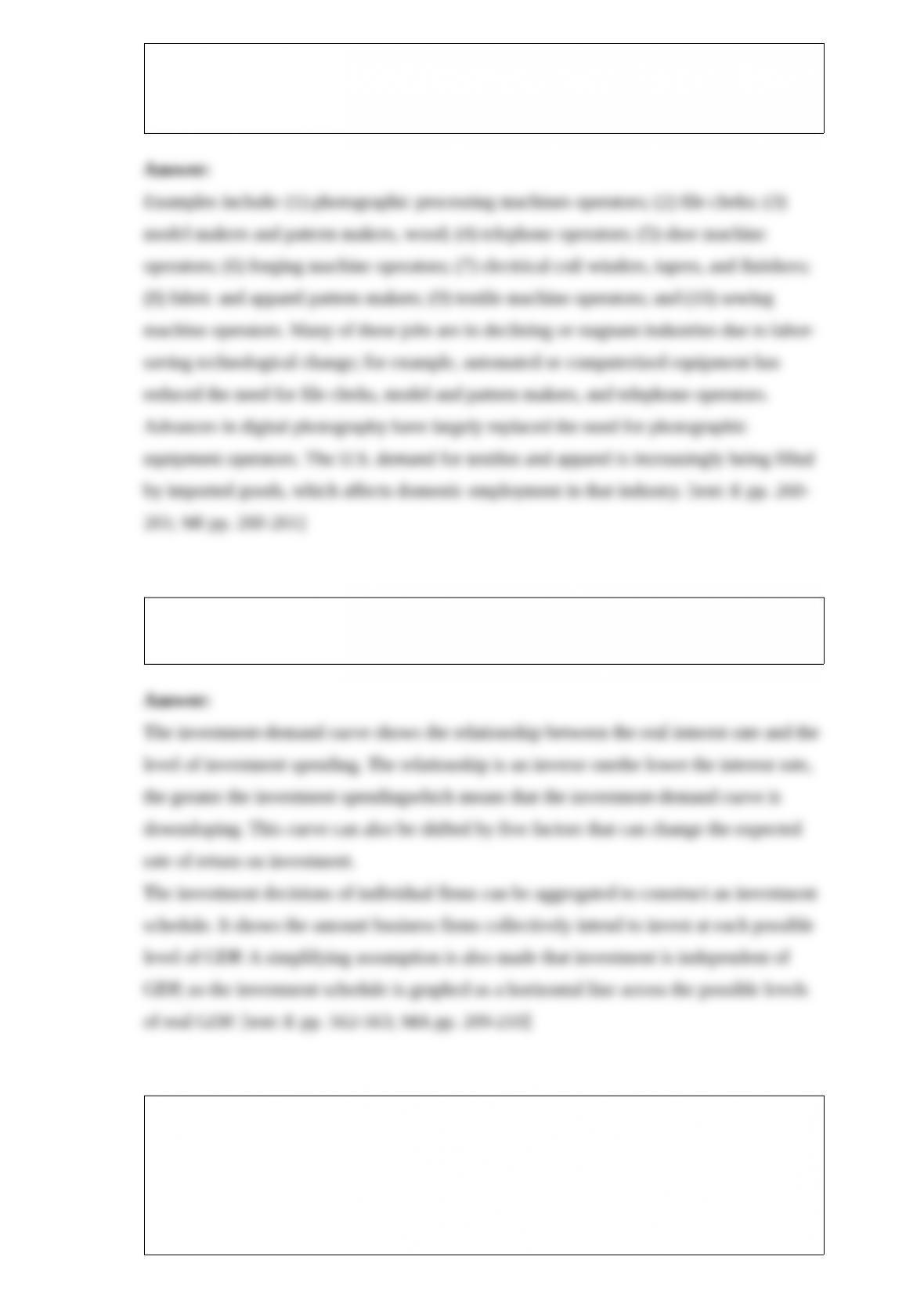
19)
refer to the above diagram and assume that price increases from $2 to $10. the
coefficient of price elasticity of demand (midpoints formula) relating to this change in
price is about:
a..25 and demand is inelastic.
b.1.5 and demand is elastic.
c.1 and demand is unit elastic.
d..67 and demand is inelastic.
20) What are three examples of occupations that are expected to experience a rapid
decline in employment from 20062016? Why are these occupations likely to experience
this decline?
21) What is the difference between the investment-demand curve and the investment
schedule for the economy?
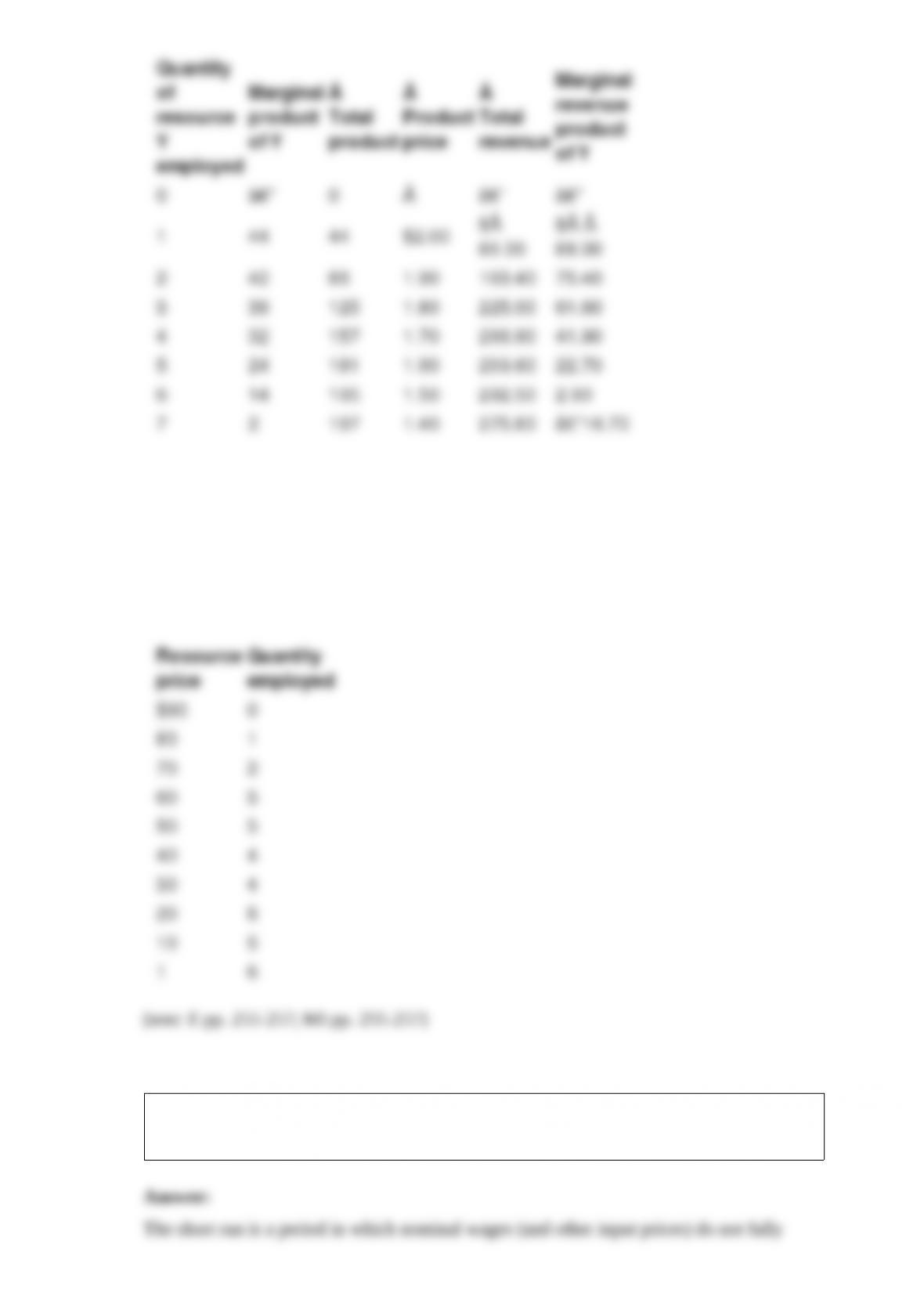
22) In the table below are the marginal product data for resource Y. Assume that the
quantities of other resources employed by the firm remain constant. Compute the total
product (output) of the firm for each of the seven quantities of resource Y employed and
enter these figures in the table. Assume that the firm sells its output in an imperfectly
competitive market and that the prices at which it can sell its product are those given in
the table. Compute and enter in the table total revenue and the marginal revenue
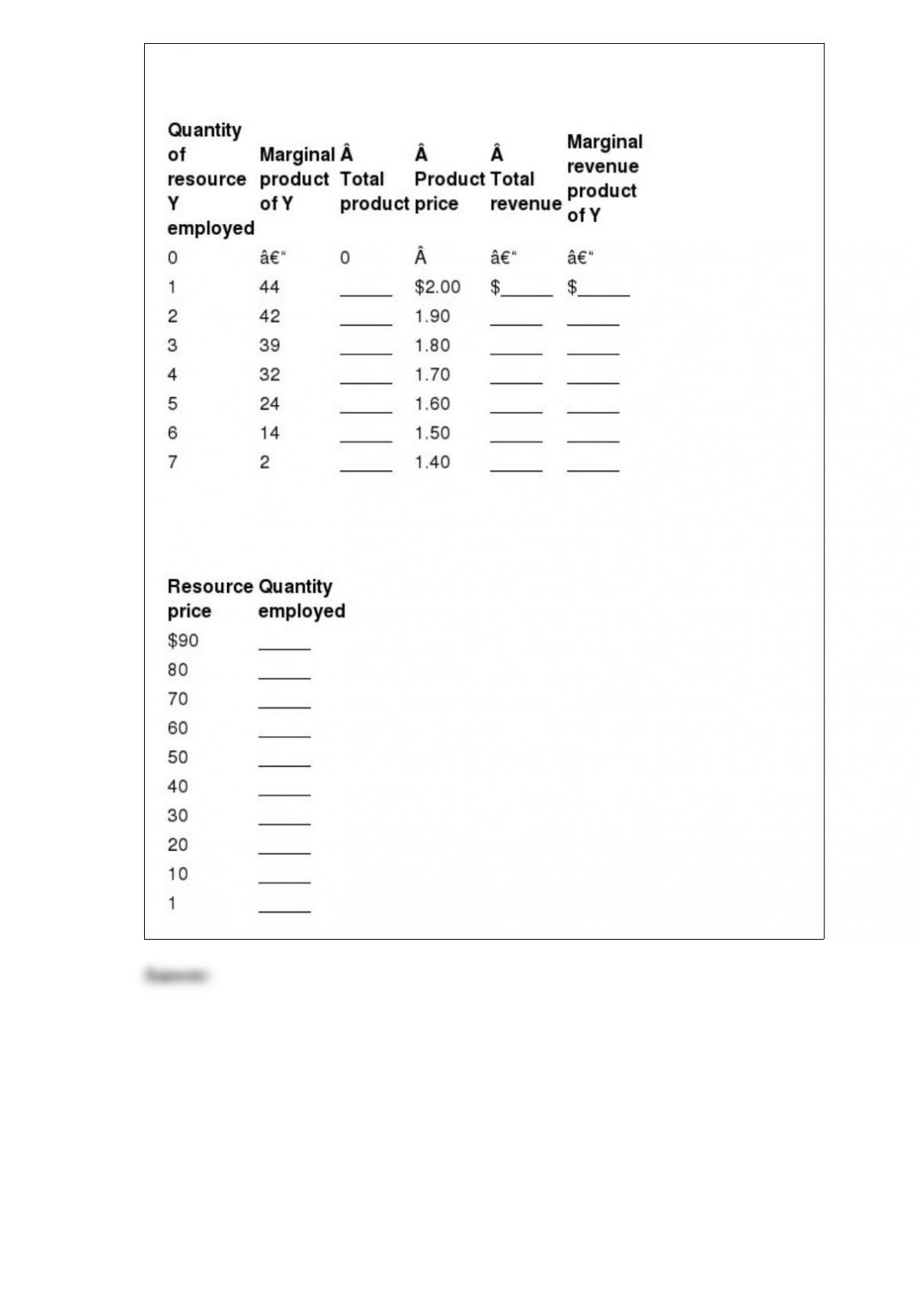
product for each of the seven units of resource Y.
How many units of resource Y would the firm employ at each of the following resource
prices?
23) What is the basic difference between the short run and long run as these terms relate
to macroeconomics? Why does this difference occur?

24) Distinguish between discretionary monetary policy and monetary rules. How do the
mainstream economists and monetarists differ on their recommendations for the use of
rules or discretionary policy?
25) What are some measurement issues involved in accurately measuring poverty?

26) List four factors that could shift the consumption schedule.