
Table 7-6 Production and
Consumption Production
Without Trade With Trade
Estonia and Morocco can produce both swords and belts. Table 7-6 shows the
production and consumption quantities without trade, and the production numbers with
trade. If the actual terms of trade are 1 belt for 1.5 swords and 70 belts are traded, how
many swords will Morocco gain compared to the “without trade” numbers?
A) 5
B) 45
C) 105
D) 150
A tax rebate, which is expected to be offered in this and all future years, will
A) have a small positive effect on consumption and aggregate demand.
B) have no effect on consumption and aggregate demand.
C) have a significant positive effect on consumption and aggregate demand, with
aggregate demand growing by a multiple of the tax rebate.
D) increase aggregate supply and aggregate demand.
Adam Smith’s invisible hand refers to
A) the government’s unobtrusive role in ensuring that the economy functions efficiently.
B) property ownership laws and the rule of the court system.
C) the process by which individuals acting in their own self-interest bring about a
market outcome that benefits society as a whole.
D) the laws of nature that influence economics decisions.
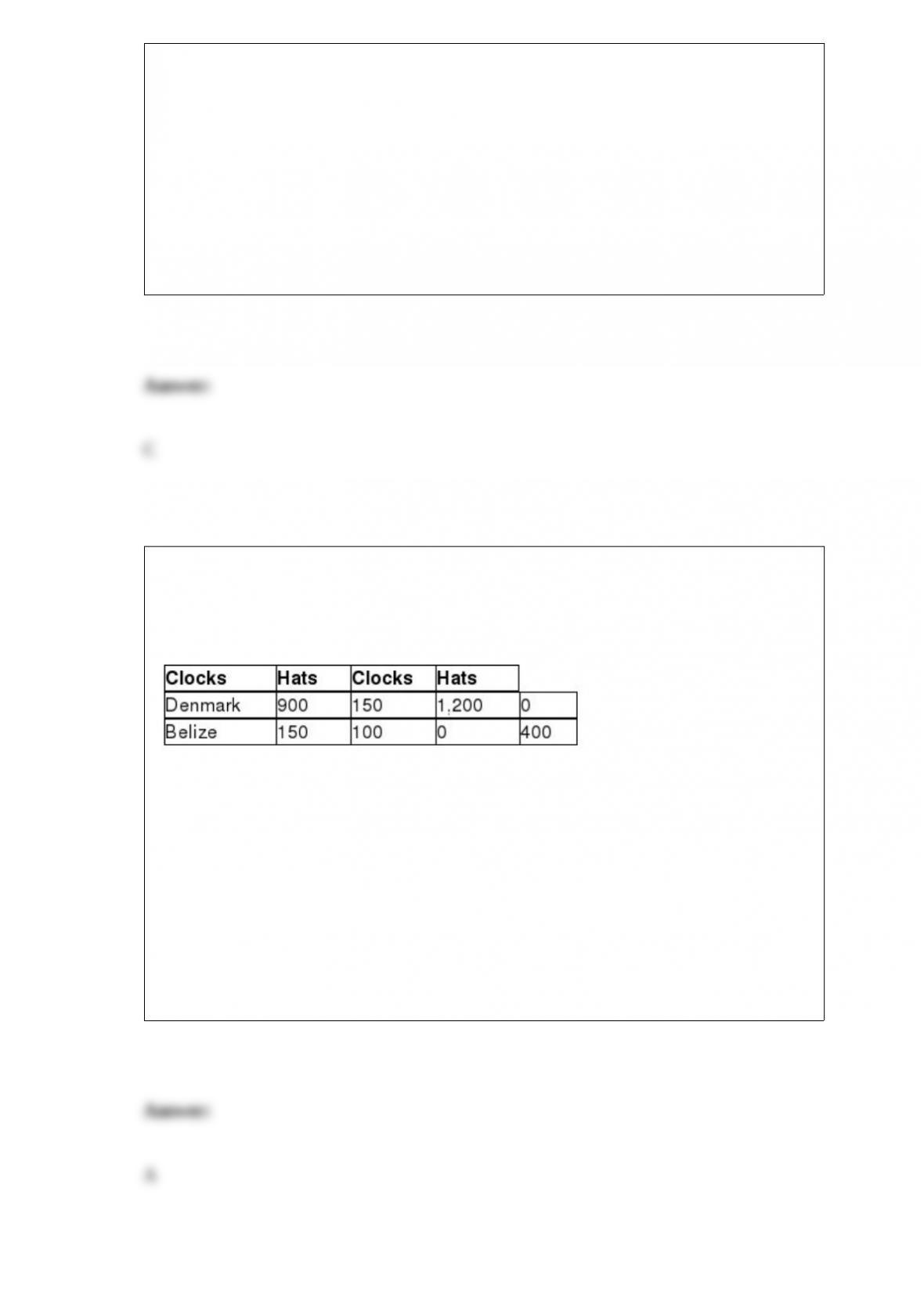
Table 9-6
Production and
Consumption Production
Without Trade With Trade
Denmark and Belize can produce both clocks and hats. Table 9-6 shows the production
and consumption quantities without trade, and the production numbers with trade. Prior
to trade, what was the opportunity cost to produce 1 clock in Denmark?
A) 1/6 of a hat
B) 2/3 of a hat
C) 1.5 hats
D) 6 hats

If changes in inflation are higher than expected,
A) the short-run Phillips curve will be positively sloped, but not vertical.
B) the short-run Phillips curve will be negatively sloped.
C) the short-run Phillips curve will be vertical.
D) the long-run Phillips curve will be negatively sloped.
A situation where a member of Congress votes to approve a bill in exchange for
favorable votes from other members on other bills is called
A) rent seeking.
B) logrolling.
C) regulatory capture.
D) special interest legislation.
John Maynard Keynes argued that if many households decide at the same time to
increase saving and reduce spending,
A) this will increase investment spending in the short run and expand the economy in
the long run.
B) the economy will benefit in the short run but the effect will not last into the long run.
C) this will have a major negative impact on the economy in both the short run and in

the long run.
D) they may make themselves worse off by causing aggregate expenditure to fall,
thereby pushing the economy into a recession.
Which of the following describes how output changes in the short run? Because of
specialization and the division of labor, as more workers are hired
A) output will first increase at an increasing rate, then output will increase at a
decreasing rate.
B) output will first decrease at an increasing rate, then increase at a decreasing rate.
C) the marginal product of labor will first decrease, then increase at a decreasing rate.
D) the marginal product of labor will first be negative and then will be positive.
Who receives the most of what is produced in a market economy?
A) lawmakers and other politically favored groups
B) those who are willing and able to buy them
C) everyone receives an equal amount
D) people who earn the highest incomes

Table 15-5
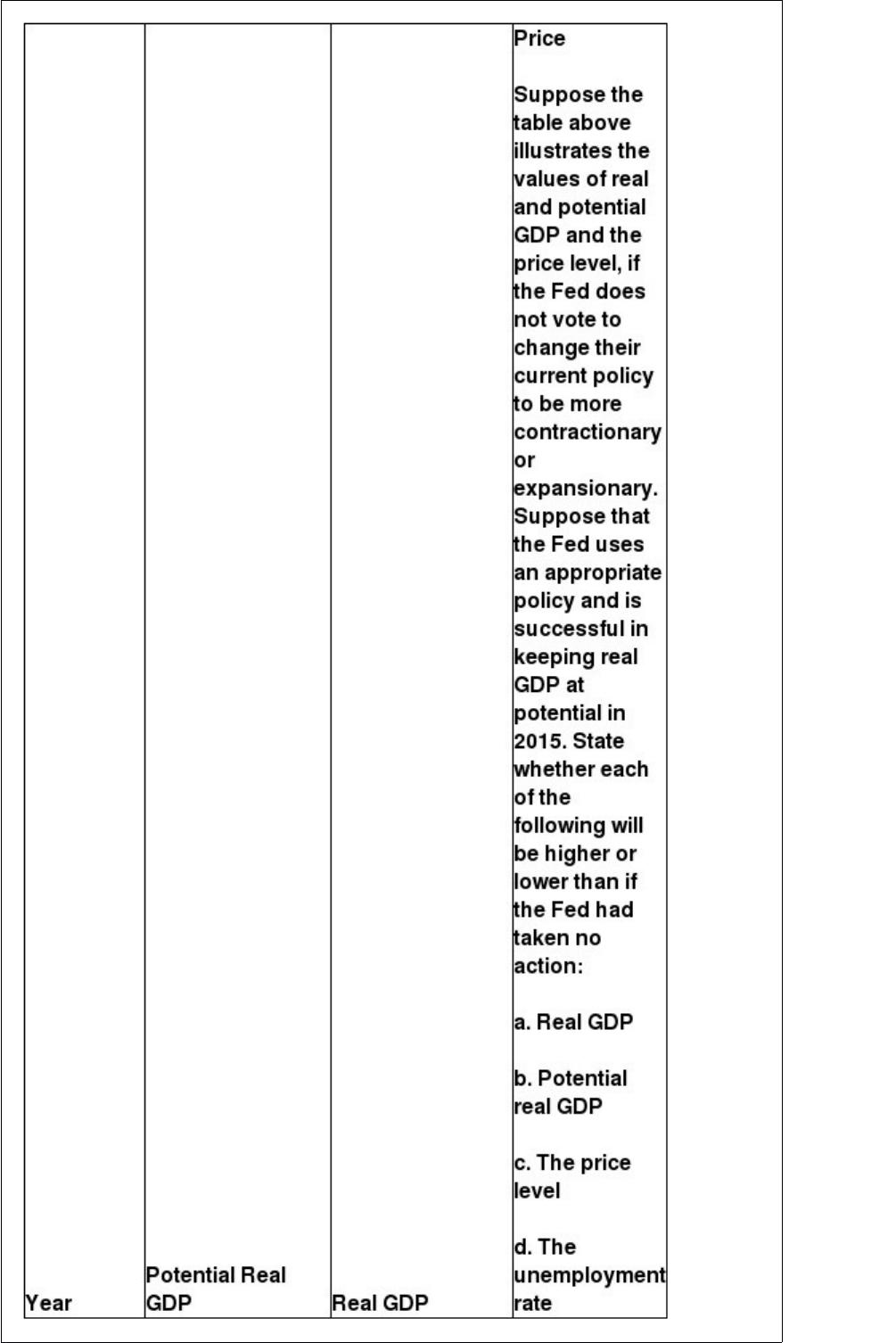
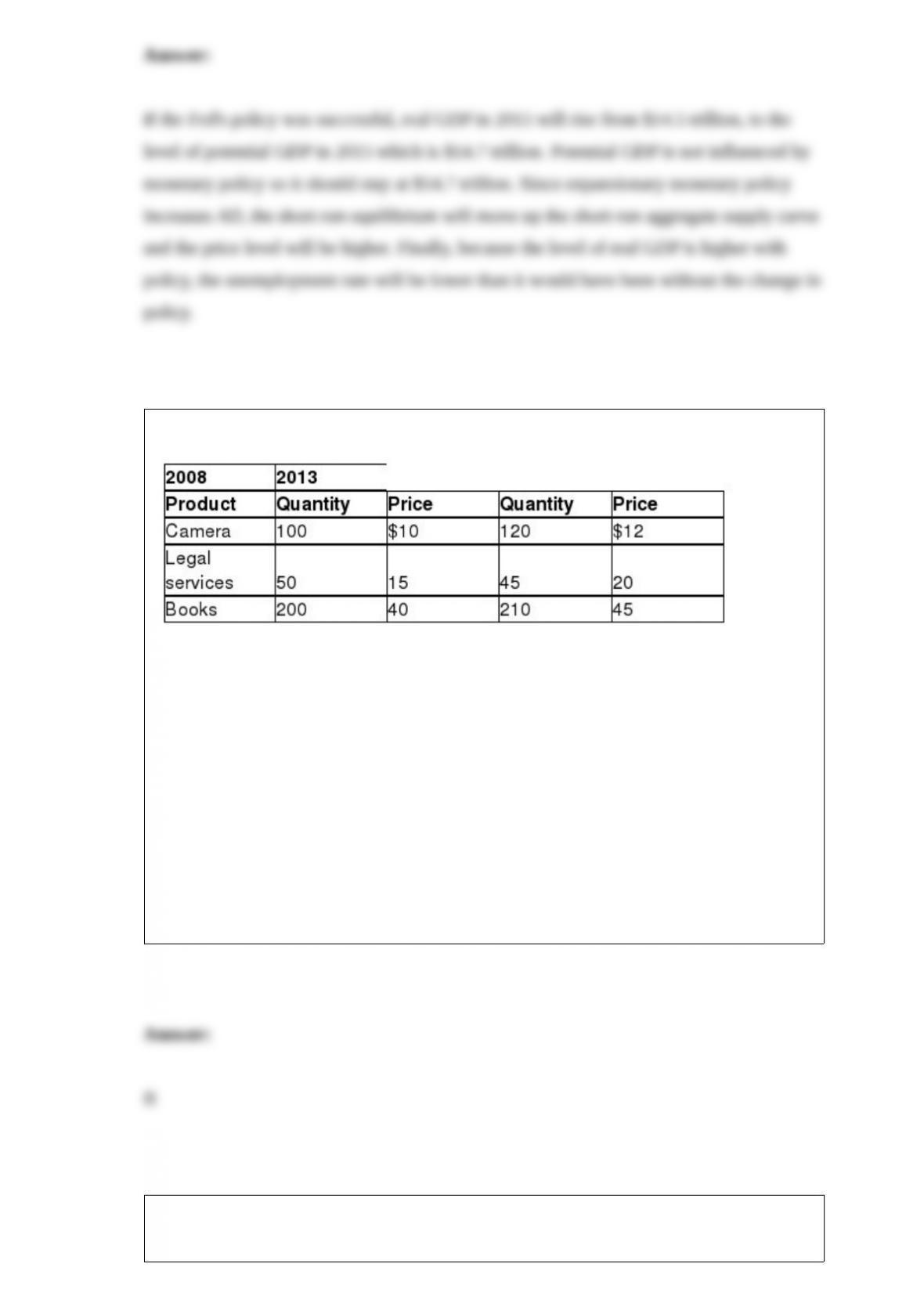
Table 8-18
A very simple economy produces three goods: cameras, legal services, and books. The
quantities produced and their corresponding prices for 2008 and 2013 are shown in the
table above.
What is nominal GDP in 2013 when 2008 is the base year?
A) $28,885
B) $11,790
C) $11,200
D) $10,275
Consider the following actions undertaken by a firm:
a. charging the same price for products of different quality
b. charging different prices to different consumers for the same product when the
variation cannot be explained by cost differences
c. charging different prices for products of different qualities
d. charging a lower price to match a competitor’s price Which of the above will be
considered price discrimination?
A) a, b, c, and d
B) a, b, and d only
C) b and d only
D) a and b only
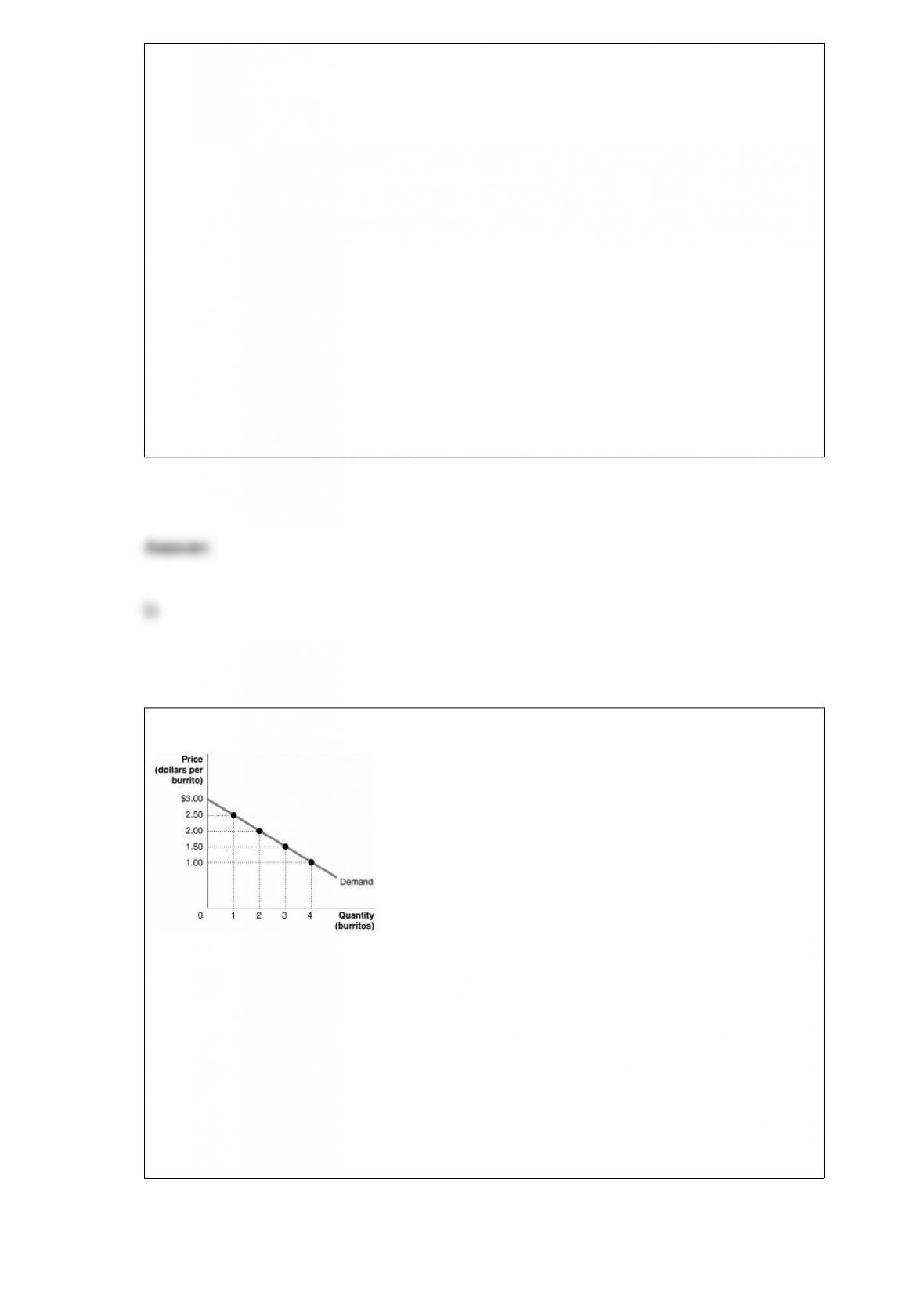
Figure 4-1
Figure 4-1 shows Arnold’s demand curve for burritos.
Arnold’s marginal benefit from consuming the second burrito is
A) $1.00.
B) $1.50.
C) $2.00.
D) $4.50.
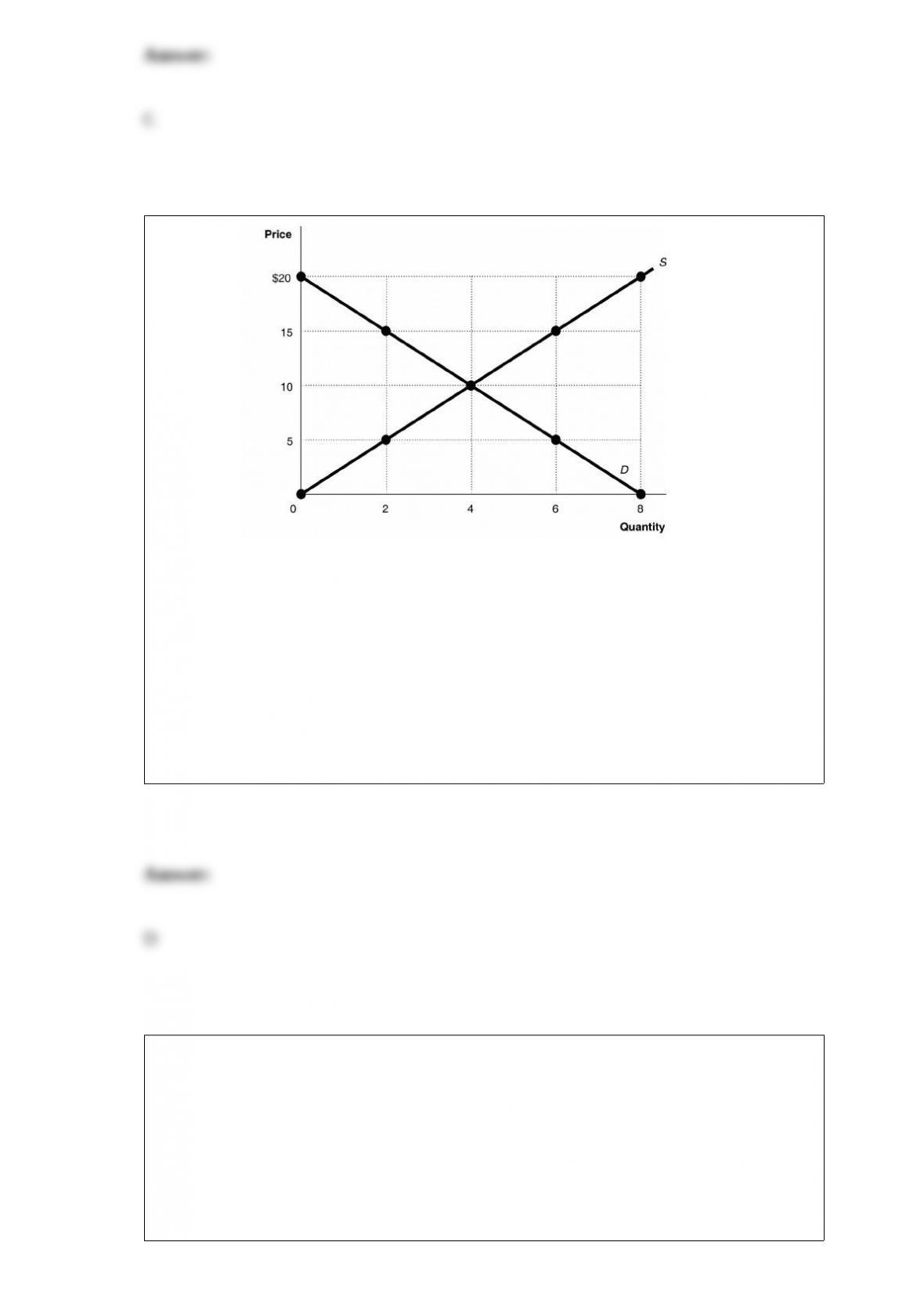
Figure 3-5
At a price of $0,
A) there would be a surplus of 8 units.
B) there would be a surplus of 0 units.
C) there would be a shortage of 0 units.
D) there would be a shortage of 8 units.
If workers and firms expect that inflation will be 5 percent next year, and real wages are
not changing over time, by how much will nominal wages increase?
A) 5 percent
B) more than 5 percent
C) less than 5 percent

D) depends on actual inflation for next year
In the past two decades the United States lost its comparative advantage in automobiles
to Japan. What factor was most responsible for the development of Japan’s comparative
advantage in automobiles?
A) Japanese firms excelled in process technology.
B) Japan has abundant supplies of labor.
C) Japanese firms benefited from external economies.
D) Japan has abundant supplies of natural resources needed to produce automobiles.
Zane’s Vanes is a service that restores old weather vanes. Zane has just spent $125
purchasing a 1920s era weather vane which he expects to restore and sell for $500 once
the work is completed. After having spent $125, Zane realizes that he will need to spend
an additional $200 on materials to complete the restoration. Alternatively, he can sell
the weather vane without restoring it for $200. What should he do?
A) He should sell the weather vane now to make the most profit.
B) It does not matter what he does; he is going to take a loss on the project.
C) He should finish the restoration and then sell the weather vane.
D) He should sell the weather vane back to the party he purchased it from and cut his
losses.
Federal and state governments in the United States pay for ________ of health care
spending.
A) less than 10 percent
B) approximately 34 percent
C) just over half
D) more than 80 percent
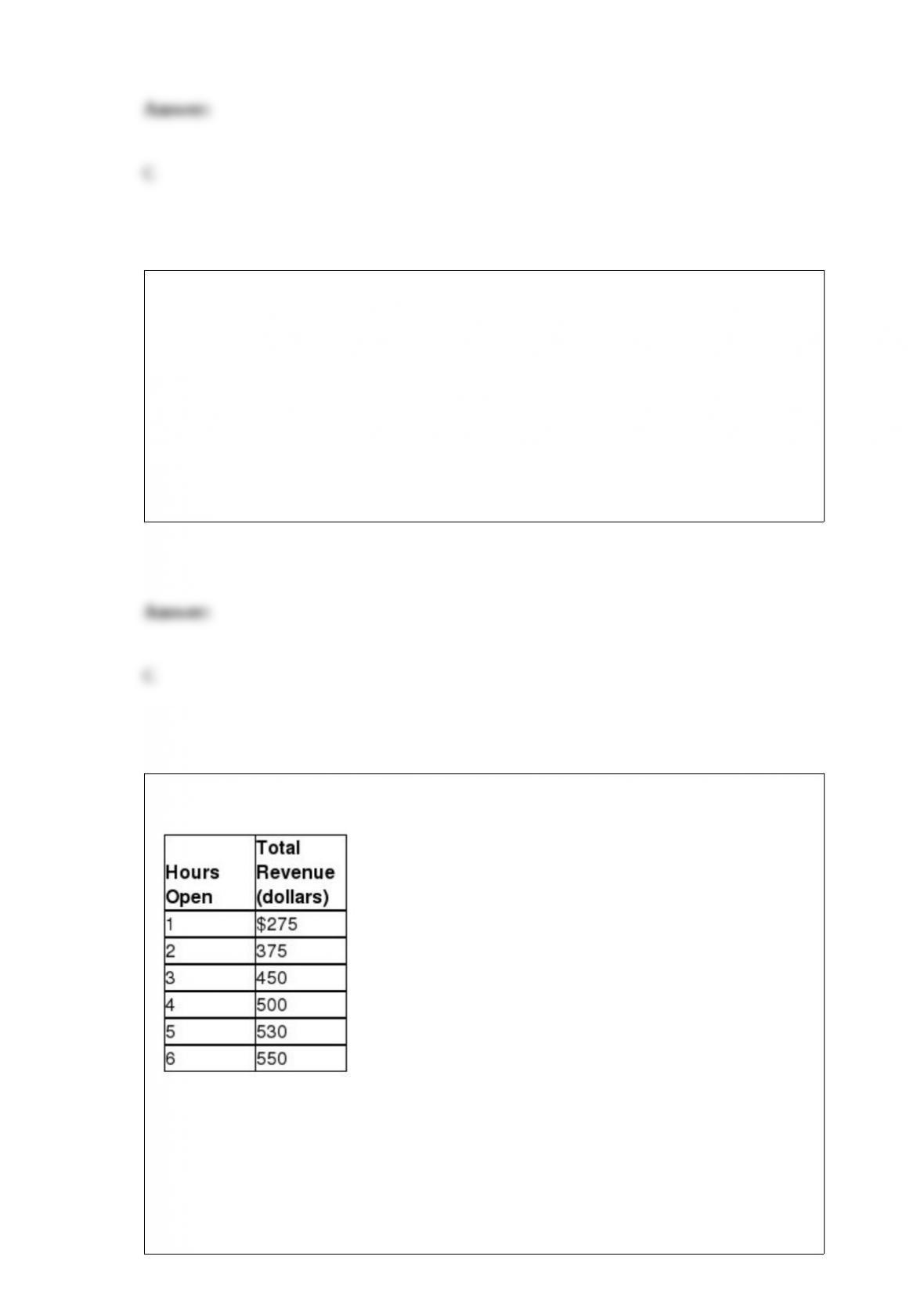
Table 1-3
Ivan runs a custom jewelry shop in Sparkle City. He is debating whether he should
extend his hours of operation. Ivan figures that his sales revenue will depend on the
number of hours the jewelry shop is open as shown in the table above. He would have
to hire a worker for those hours at a wage rate of $25 per hour. Using marginal analysis,
determine how many hours should Ivan extend his hours of operations?
A) 2 hours
B) 3 hours
C) 4 hours
D) 5 hours
E) 6 hours
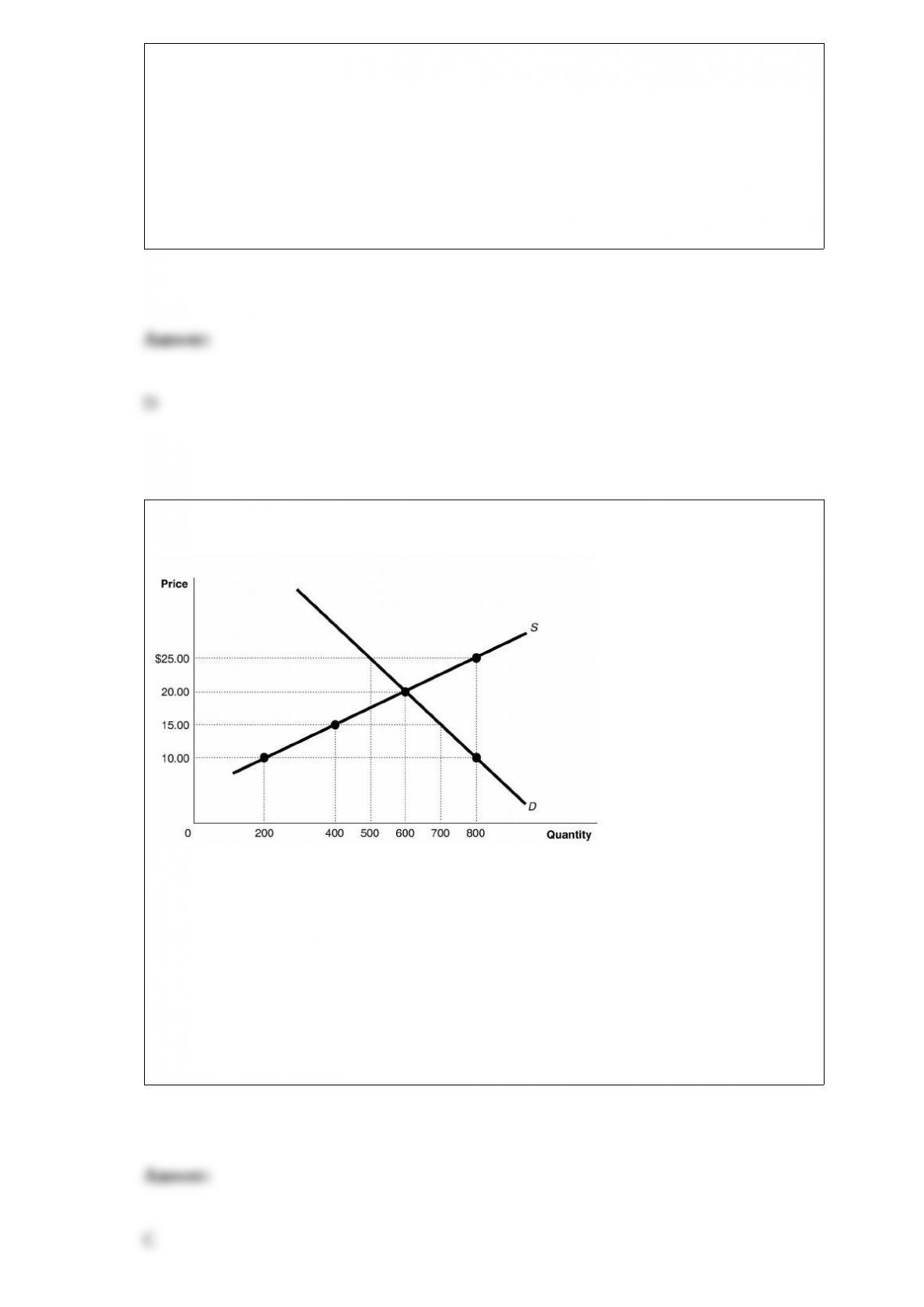
Figure 3-4
At a price of $20, how many units will be supplied?
A) 400
B) 500
C) 600
D) 800