
Which of the following allows you to provide information about the relationship
between two variables?
a. coordinate system.
b. pie chart
c. bar graph
d. timeseries graph
Table 510
Supply Curve XSupply Curve YSupply Curve Z
Price $5.00$7.00$5.00$7.00$5.00$7.00
Quantity Supplied200300300400400500
Refer to Table 510. Using the midpoint method, which of the three supply curves has
the most inelastic price elasticity of supply?
a. Supply curve X
b. Supply curve Y
c. Supply curve Z
d. There is no difference in the elasticities of the three supply curves.
Table 37
Assume that the farmer and the rancher can switch between producing meat and
producing potatoes at a constant rate.
Labor Hours Needed to Make 1 Pound ofPounds Produced in 24 Hours
MeatPotatoesMeatPotatoes
Farmer 6 4 4 6
Rancher 3 8 8 3
Refer to Table 37. Which of the following combinations of meat and potatoes could the
farmer produce in 24 hours?
a. 1 pound of meat and 8 pounds of potatoes.
b. 2 pounds of meat and 2 pounds of potatoes.
c. 1 pounds of meat and 5 pounds of potatoes.
d. 3 pounds of meat and 2 pounds of potatoes.
In conducting their research, economists face an obstacle that not all scientists face;
specifically, in economics, it is often impractical to
a. make use of theory and observation.
b. rely upon the scientific method.
c. conduct laboratory experiments.
d. find articles or books that were written before 1900.
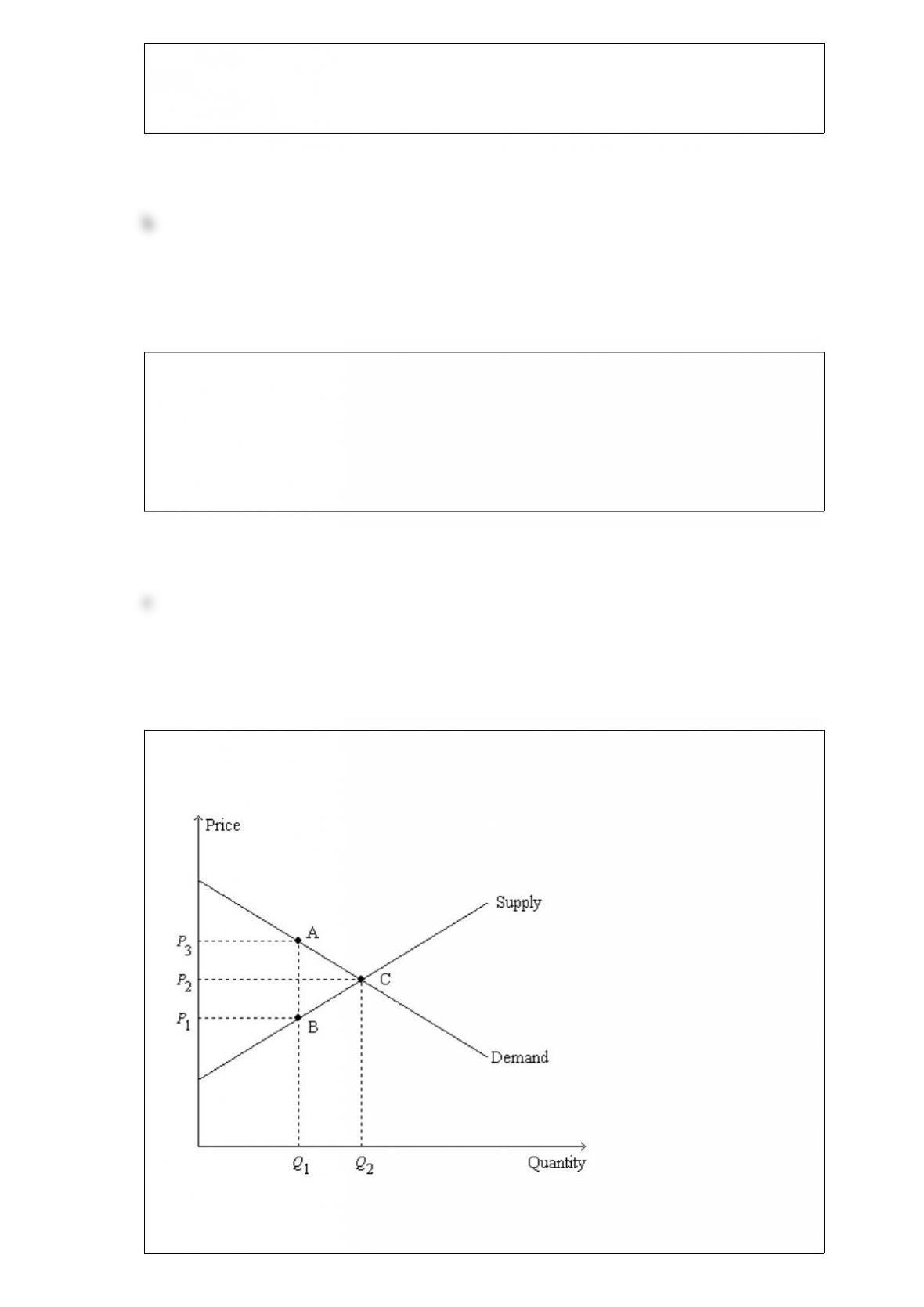
Figure 811
Refer to Figure 811. The price labeled as P1 on the vertical axis represents the price
a. received by sellers before the tax is imposed.
b. received by sellers after the tax is imposed.
c. paid by buyers before the tax is imposed.
d. paid by buyers after the tax is imposed.
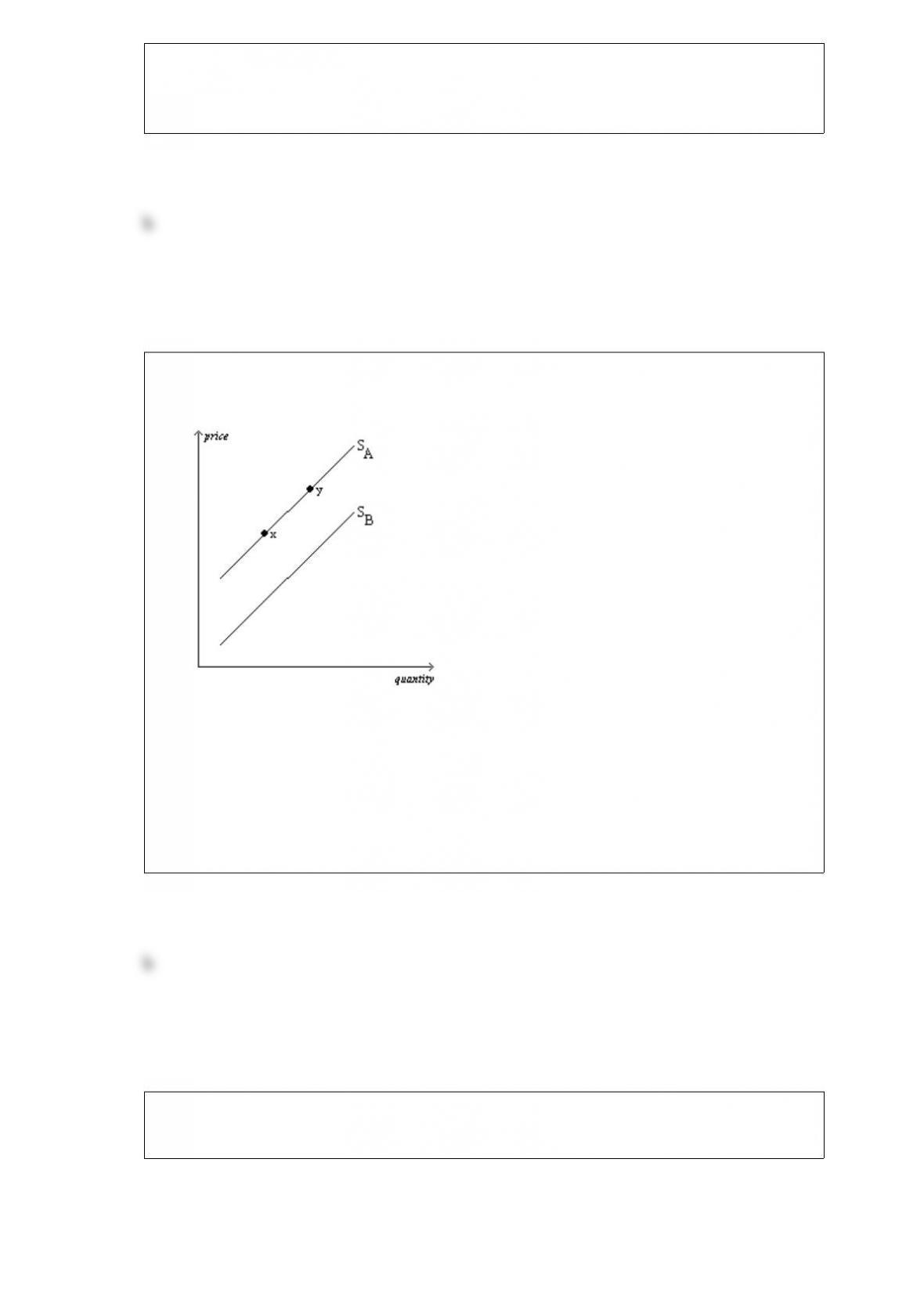
Figure 425
The graph below pertains to the supply of paper to colleges and universities.
Refer to Figure 425. All else equal, an increase in the use of laptop computers for
notetaking would cause a move from
a. x to y.
b. y to x.
c. SA to SB.
d. SB to SA.
Figure 91
The figure illustrates the market for coffee in Guatemala.
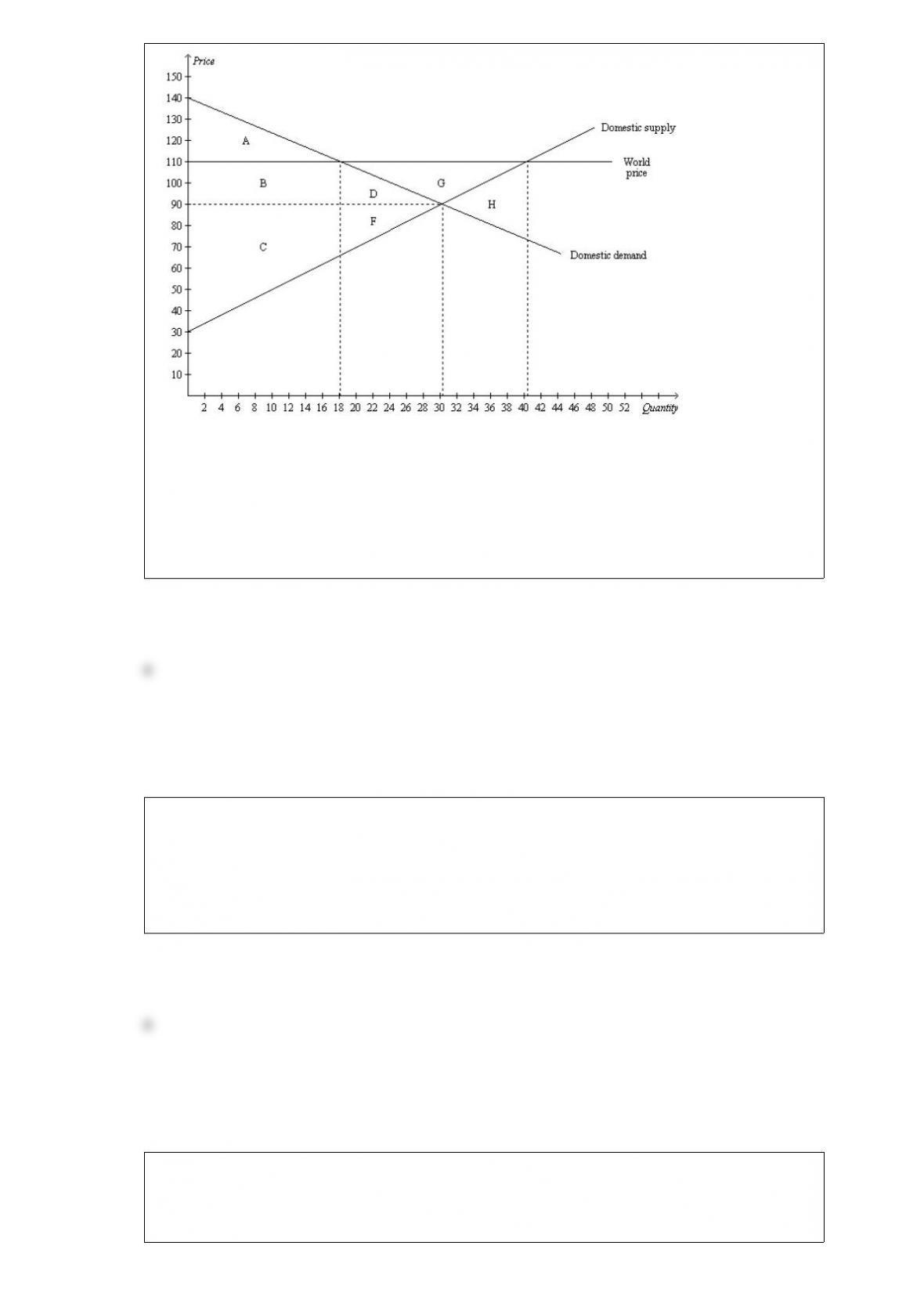
Refer to Figure 91. Relative to the notrade situation, trade with the rest of the world
results in
a. Guatemalan consumers paying a higher price for coffee.
b. a decrease in producer surplus in Guatemala.
c. a decrease in total surplus in Guatemala.
d. All of the above are correct.
Which of these activities will most likely result in an external benefit?
a. Ted purchases a dilapidated house and cleans up the yard and exterior of the house.
b. Tim purchases an iPhone and downloads new apps.
c. Terri purchases a new SUV and drives it to work every day.
d. Thomas purchases a suit and wears it on his interviews.
Which of the following is not held constant in a supply schedule?
a. production technology
b. the price of the good

c. the prices of inputs
d. expectations
When the price of a good is lower than the equilibrium price,
a. a surplus will exist.
b. buyers desire to purchase more than is produced.
c. sellers desire to produce and sell more than buyers wish to purchase.
d. quantity supplied exceeds quantity demanded.
Table 35
Assume that Aruba and Iceland can switch between producing coolers and producing
radios at a constant rate.
Labor Hours
Needed to Make 1
CoolerRadio
Aruba25
Iceland14
Refer to Table 35. Assume that Aruba and Iceland each has 80 labor hours available. If
each country divides its time equally between the production of coolers and radios, then
total production is
a. 28 coolers and 50 radios.
b. 30 coolers and 9 radios.
c. 60 coolers and 18 radios.
d. 120 coolers and 36 radios.

If the government were to intervene and set the price of a dozen eggs above the market
price, then we would expect, relative to the market outcome,
a. an increase in the number of eggs people want to buy and an increase in the number
of eggs farmers want to sell.
b. an increase in the number of eggs people want to buy and a decrease in the number of
eggs farmers want to sell.
c. a decrease in the number of eggs people want to buy and an increase in the number of
eggs farmers want to sell.
d. a decrease in the number of eggs people want to buy and a decrease in the number of
eggs farmers want to sell.
If the demand for light bulbs increases, producer surplus in the market for light bulbs
a. increases.
b. decreases.
c. remains the same.
d. may increase, decrease, or remain the same.
If a binding price floor is imposed on the market for eBooks, then
a. the demand for eBooks will decrease.
b. the supply of eBooks will increase.
c. a surplus of eBooks will develop.
d. All of the above are correct.
In the circularflow diagram, another name for goods and services produced by firms is
a. factors of production.
b. output.
c. inputs.
d. resources.
A tax on the buyers of cameras encourages
a. sellers to supply a smaller quantity at every price.
b. buyers to demand a smaller quantity at every price.
c. sellers to supply a larger quantity at every price.
d. Both a) and b) are correct.
Figure 719
Refer to Figure 719. At the equilibrium price, consumer surplus is
a. $100.
b. $200.

c. $50.
d. $450.
For which pairs of goods is the crossprice elasticity most likely to be negative?
a. peanut butter and jelly
b. celery and coffee
c. pens and pencils
d. iPods and iPads
Which of the following could be the price elasticity of demand for a good for which an
increase in price would increase revenue?
a. 0.3
b. 1
c. 1.8
d. None of the above could be correct.
To promote good economic outcomes, policymakers should strive to enact policies that
a. enhance productivity.
b. enhance individuals’ market power.
c. result in a rapidlygrowing quantity of money.
d. All of the above are correct.

In the simple circular flow diagram, the flow of money from the markets for goods and
services to the firms is called
a. spending.
b. revenue.
c. income.
d. wages, rent, and profit.
Table 716
PriceQuantity
DemandedQuantity
Supplied
$12.00036
$10.00330
$ 8.00624
$ 6.00918
$ 4.001212
$ 2.00156
$ 0.00180
Refer to Table 716. Both the demand curve and the supply curve are straight lines. If
the price is $4 but only 6 units are bought and sold, producer surplus will be
a. $16.
b. $18.
c. $24.
d. $26.
In the markets for factors of production in the circularflow diagram,
a. households provide firms with labor, land, and capital.

b. households provide firms with savings for investment.
c. firms provide households with goods and services.
d. firms provide households with revenue.
When markets fail, public policy can
a. do nothing to improve the situation.
b. potentially remedy the problem and increase economic efficiency.
c. always remedy the problem and increase economic efficiency.
d. in theory, remedy the problem, but in practice, public policy has proven to be
ineffective.
In the circularflow diagram,
a. firms are buyers in the markets for goods and services.
b. households are sellers in the markets for the factors of production.
c. firms are sellers in the markets for factors of production and in the markets for goods
and services.
d. dollars that are spent on goods and services flow directly from firms to households.
Which of the following arguments for trade restrictions is often advanced?
a. Trade restrictions make all Americans better off.
b. Trade restrictions increase economic efficiency.
c. Trade restrictions are necessary for economic growth.
d. Trade restrictions are sometimes necessary for national security.

Janine would be willing to pay $50 to see Les Misrables, but she buys a ticket for only
$30. Janine values the performance at
a. $20.
b. $30.
c. $50.
d. $80.
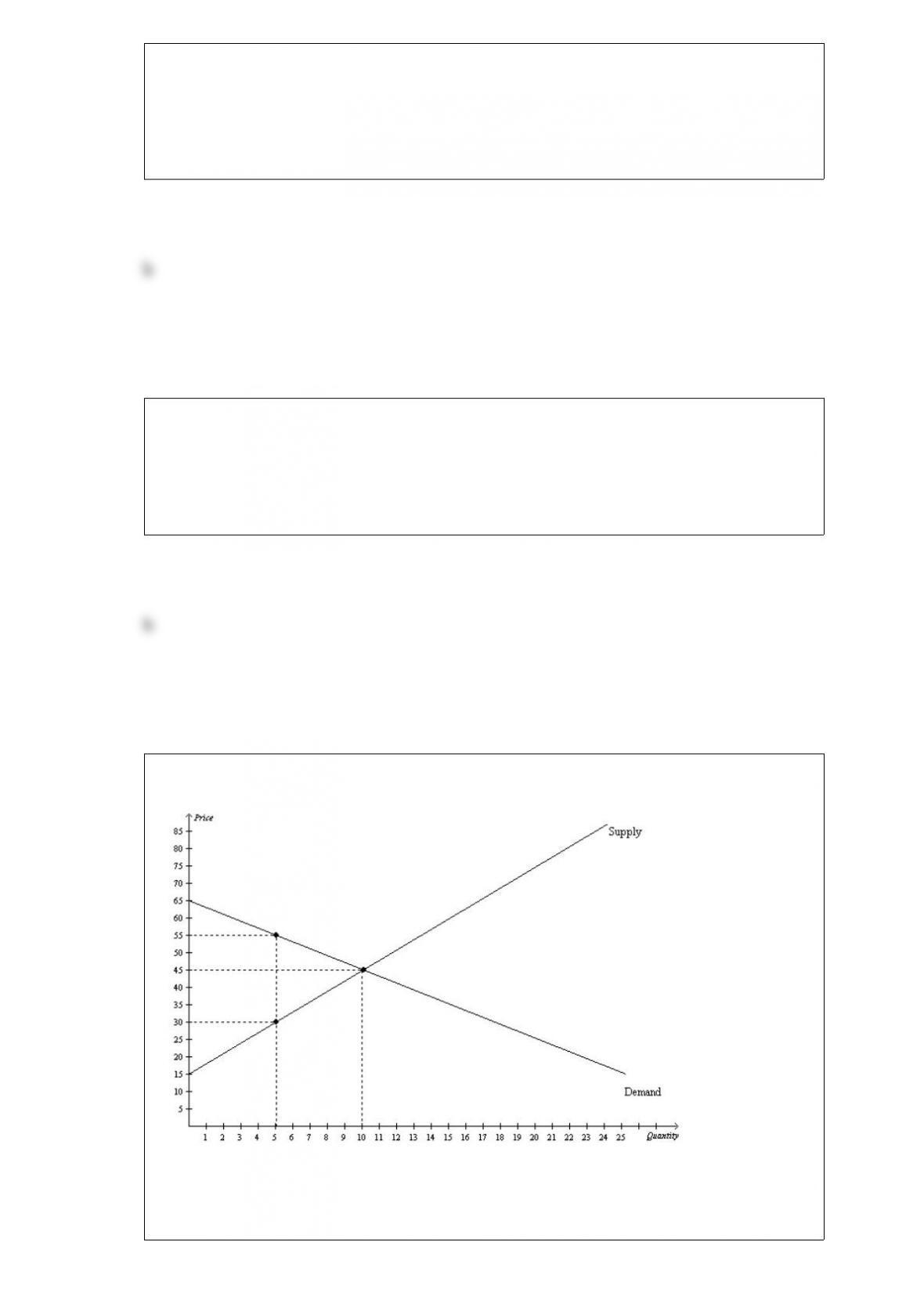
Refer to Figure 79. If the price of the good is $9.50, then producer surplus is
a. $3.00.
b. $6.50.
c. $10.50.
d. $8.50.
Figure 316
Hosne’s Production Possibilities FrontierMerve’s Production Possibilities Frontier
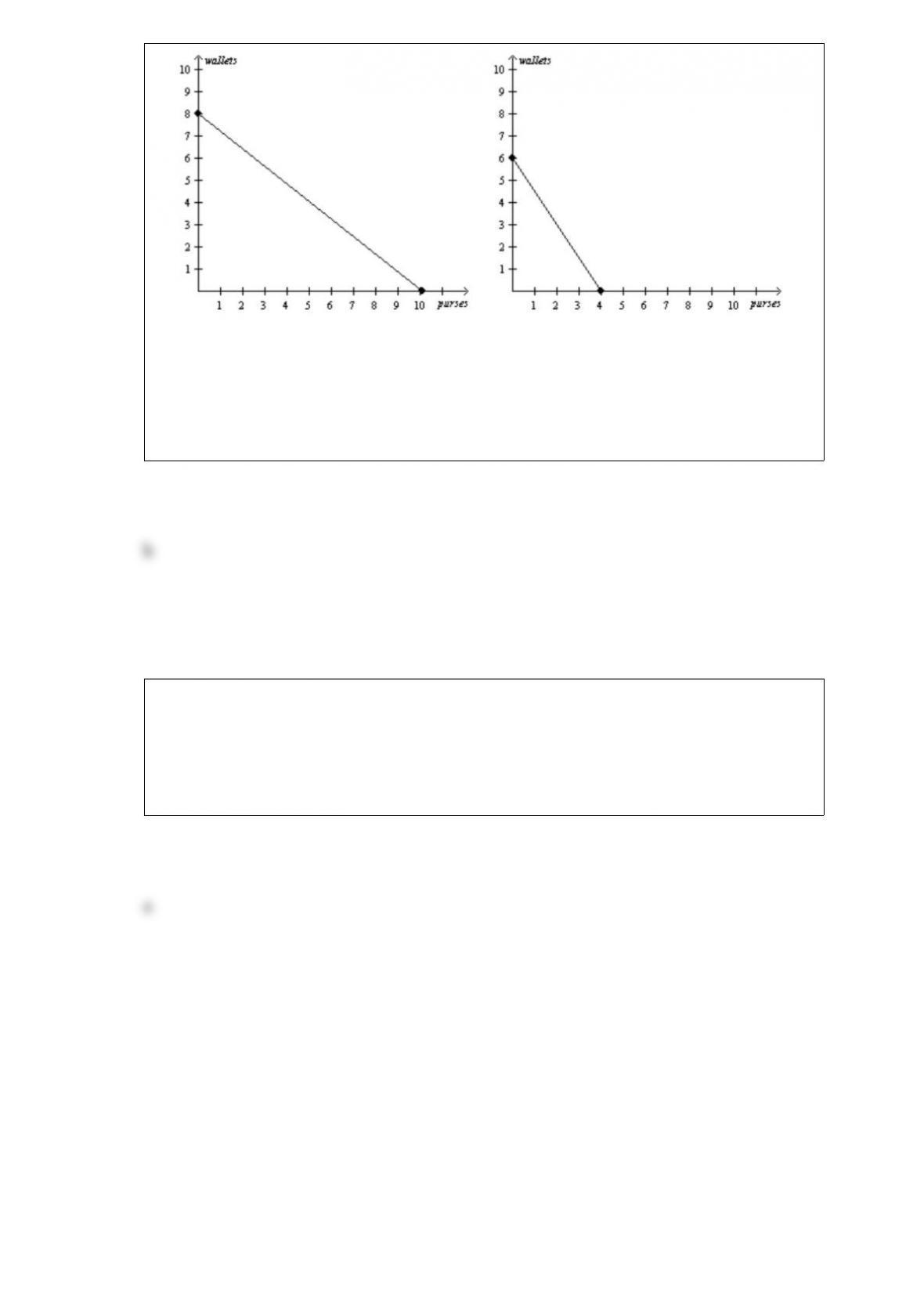
Refer to Figure 316. Hosne’s opportunity cost of one purse is
a. 4/5 wallet and Merve’s opportunity cost of one purse is 2/3 wallet.
b. 4/5 wallet and Merve’s opportunity cost of one purse is 3/2 wallets.
c. 5/4 wallets and Merve’s opportunity cost of one purse is 2/3 wallet.
d. 5/4 wallets and Merve’s opportunity cost of one purse is 3/2 wallets.
A seller’s opportunity cost measures the
a. value of everything she must give up to produce a good.
b. amount she is paid for a good minus her cost of providing it.
c. consumer surplus.
d. out of pocket expenses to produce a good but not the value of her time.