The public choice model can be used to examine voting models that contrast the
manner in which collective decisions are made by governments (state, local and federal)
and the manner in which individual choices are made in markets. Which of the
following descriptions is consistent with the difference between collective decision
making and decision making in markets?
A) Everyone who votes must agree with a decision made collectively through
government, but in markets individuals can make their own choices.
B) Individuals are less likely to see their preferences represented in the outcomes of
government policies than in the outcomes of markets.
C) The cost of a government policy is determined by a majority vote of members of the
public; decisions made in markets are based on individual willingness to pay.
D) Choices made through government policies are more important than decisions
individuals make through markets.
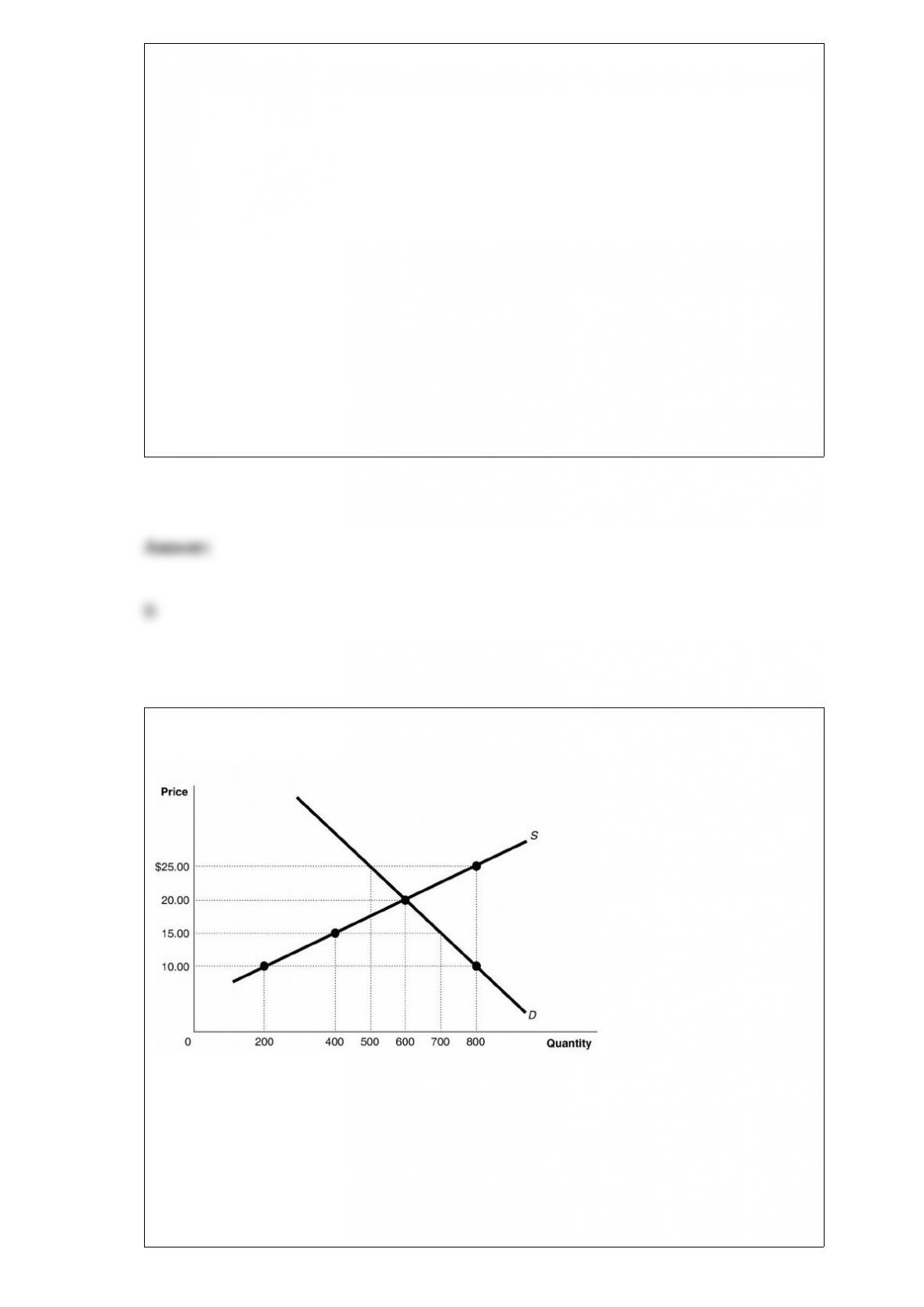
Figure 3-4
If the current market price is $15, the market will achieve equilibrium by
A) a price increase, increasing the supply and decreasing the demand.
B) a price decrease, decreasing the supply and increasing the demand.
C) a price decrease, decreasing the quantity supplied and increasing the quantity
demanded.
D) a price increase, increasing the quantity supplied and decreasing the quantity
demanded.
An equal increase in government purchases and taxes will cause
A) an increase in real GDP.
B) no change in real GDP.
C) an increase in the budget surplus.
D) a reduction in cyclically adjusted budget surplus.
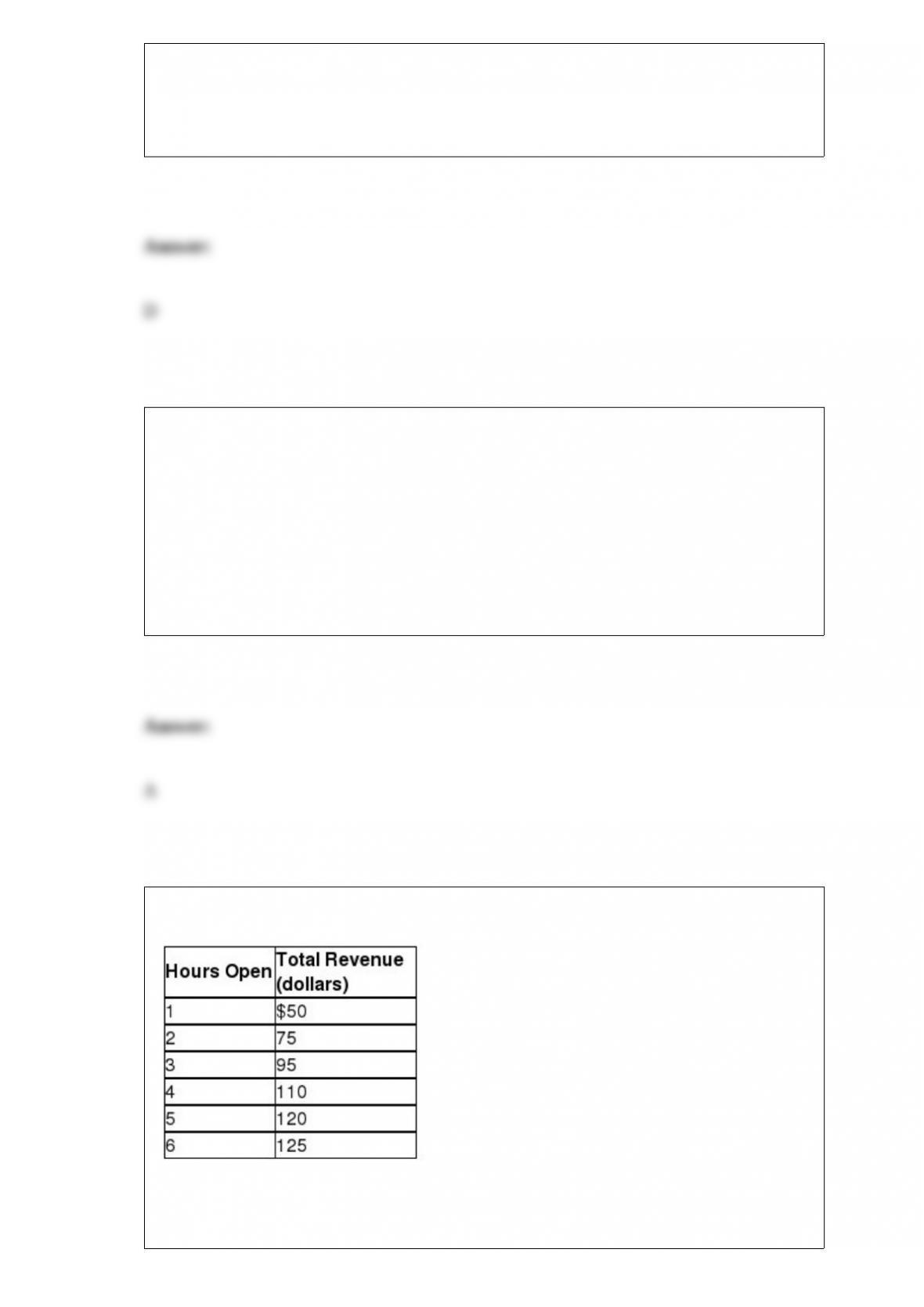
Table 1-1
Lydia runs a small nail salon in the town of New Hope. She is debating whether she
should extend her hours of operation. Lydia figures that her sales revenue will depend
on the number of hours the nail salon is open as shown in the table above. She would

have to hire a worker for those hours at a wage rate of $10 per hour.
What is Lydia’s marginal cost if she decides to stay open for two hours instead of one
hour?
A) $10
B) $20
C) $25
D) $40
In the United States, out-of-pocket spending on health care as a percentage of all
spending on health care has ________ since 1960.
A) slowly risen
B) steadily declined
C) more than doubled
D) remained stable
In the United States in 2013, the Bureau of Economic Analysis began counting
spending on research and development as ________, which counts as a part of GDP.
A) investment
B) consumption

C) depreciation
D) intermediate goods
A supply curve that is vertical
A) is perfectly elastic.
B) is perfectly inelastic.
C) is impossible.
D) has an elasticity equal to 1.
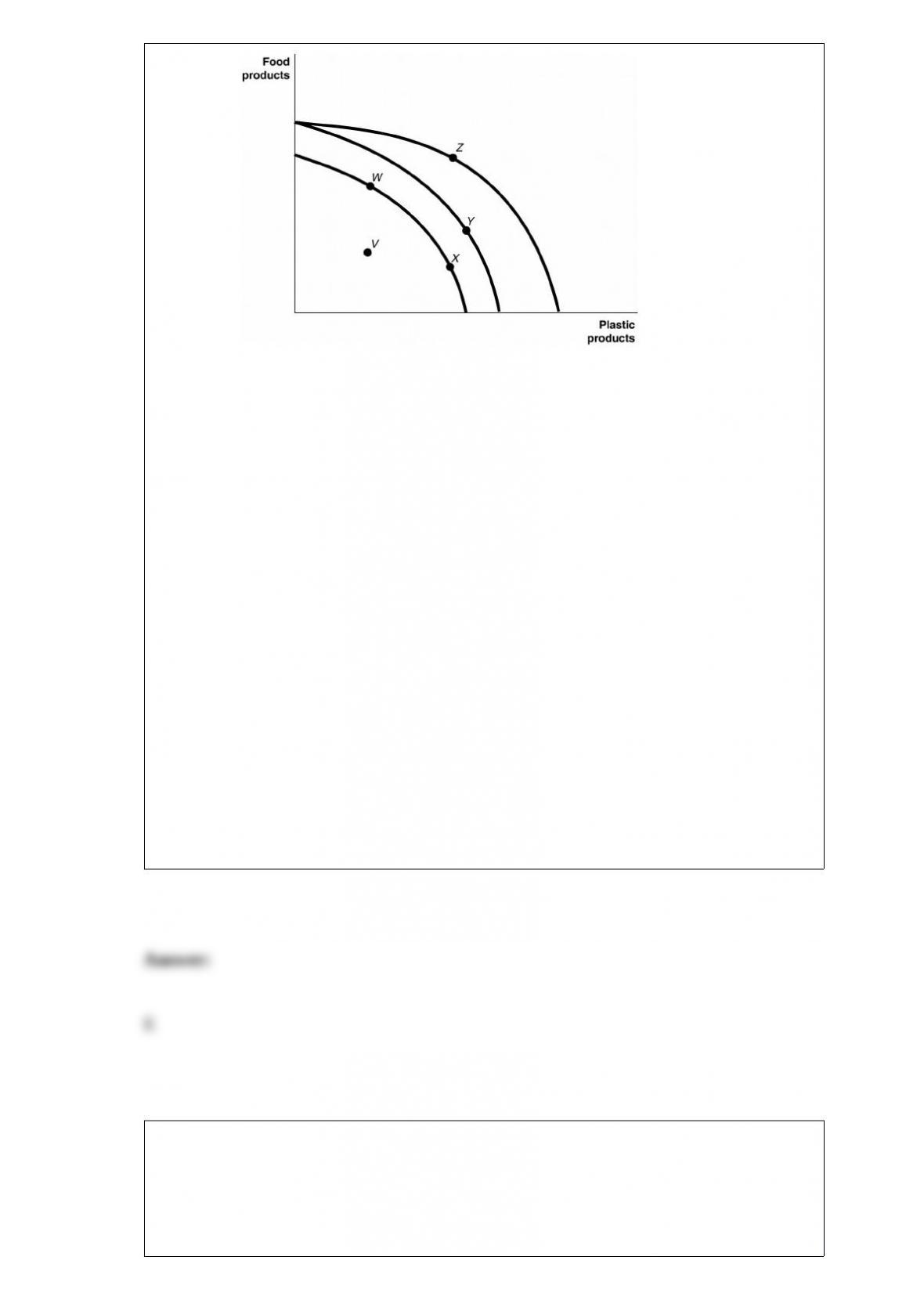
Figure 2-4
Figure 2-4 shows various points on three Different production possibilities frontiers for
a nation.
Consider the following events:
a. an increase in the unemployment rate
b. a decrease in a nation’s money supply
c. a war that kills a significant portion of a nation’s population Which of the events
listed above could cause a movement from Y to W ?
A) a, b and c
B) a and b only
C) a and c only
D) a only
E) c only
When an investor buys a corporate bond,
A) the investor becomes part owner of the corporation.
B) the principal of the bond is a loan to the corporation.

C) the interest made on the bond represents the bondholder’s limited liability in the
company.
D) the face value of the bond is equal to what the investor paid for the bond.
Which of the following could explain why there is an increase in potential GDP but the
equilibrium level of GDP does not rise?
A) SRAS shifted to the right by more than LRAS.
B) AD shifted to the right by more than SRAS.
C) AD shifted to the right by less than SRAS.
D) SRAS and AD do not shift.
A ________ curve shows the marginal cost of producing one more unit of a good or
service.
A) demand
B) supply
C) production possibilities
D) marginal benefit
If a country’s currency is determined only by the demand and supply for that country’s
currency, the country is said to have a
A) floating exchange rate.
B) fixed exchange rate.
C) gold standard.
D) managed float.
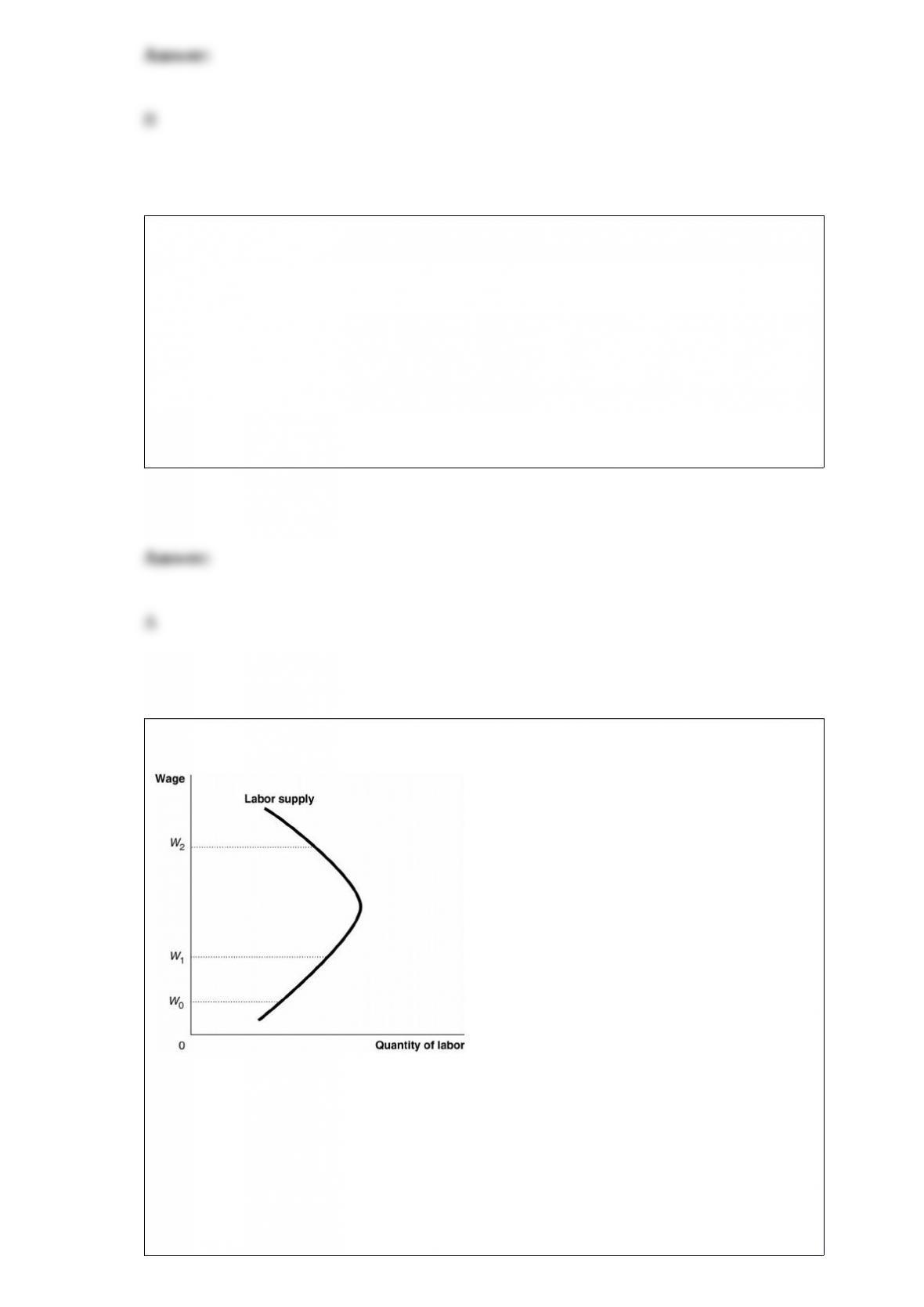
Figure 17-4
Which of the following is true if the wage rate increases from W1 to W2?
A) The income effect is larger than the substitution effect.
B) The substitution effect is larger than the income effect.
C) The income effect and the substitution effect are equal.

D) The supply curve is unit-elastic.
If a fire insurance company requires firms buying fire insurance to install automatic
sprinkler systems, the insurance company is trying to reduce
A) the problem of adverse selection.
B) the moral hazard problem.
C) sunk costs.
D) asymmetric information.
The sum of public and private saving in an economy is equal to
A) Y – C – T.
B) T – TR – G.
C) Y – C – G.
D) I – C – G.

Georg, a German citizen, just purchased 10 shares of stock in Microsoft, a U.S.
company. This purchase is an example of
A) foreign direct investment.
B) foreign public investment.
C) foreign portfolio investment.
D) contractual globalization.