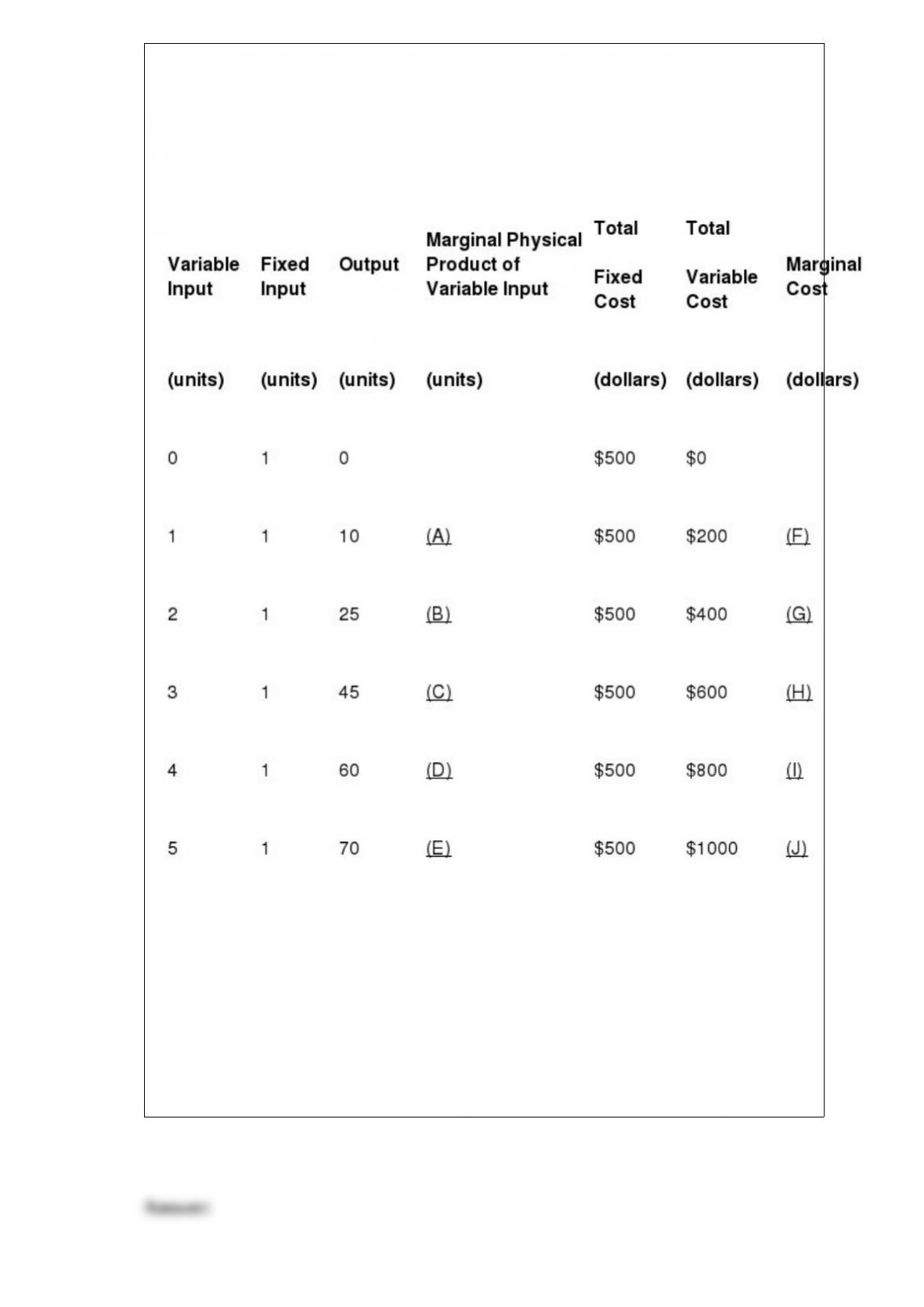
Refer to Exhibit 22-3. The marginal physical product figures in blanks (D) and (E) are,
respectively,
Exhibit 22-3
a. 10 and 10.
b. 10 and 15.
c. 15 and 20.
d. 20 and 15.
e. 15 and 10.
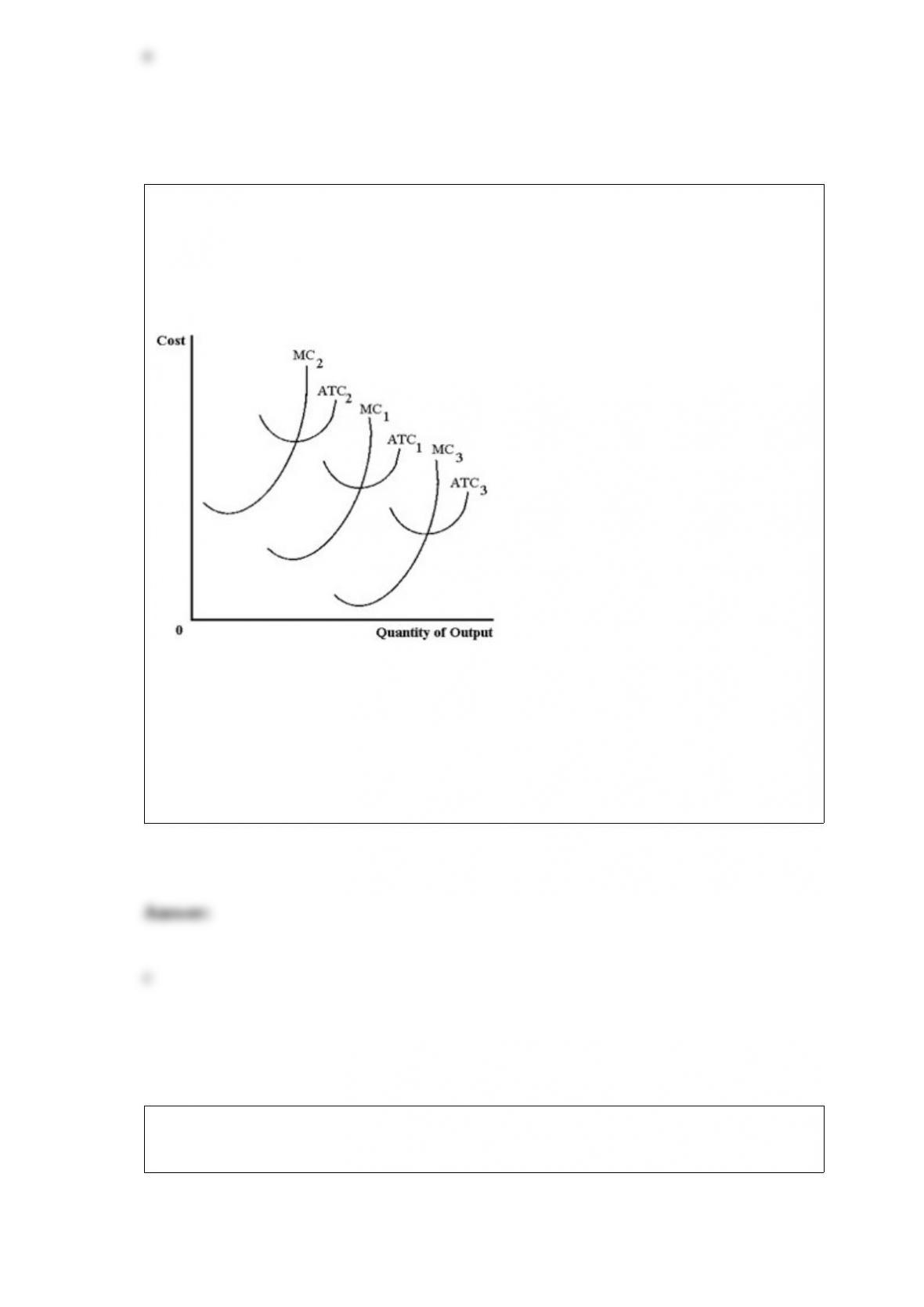
Refer to Exhibit 22-9. Let MC1 and ATC1 represent the initial cost curves of a peanut
butter producer. In which of the following cases is it most likely that the firm’s curves
will shift leftward to MC2 and ATC2?
Exhibit 22-9
a. The market price of peanuts decreases.
b. There is an improvement in technology in the production of peanut butter.
c. The government raises taxes paid by peanut butter producers.
d. a and b
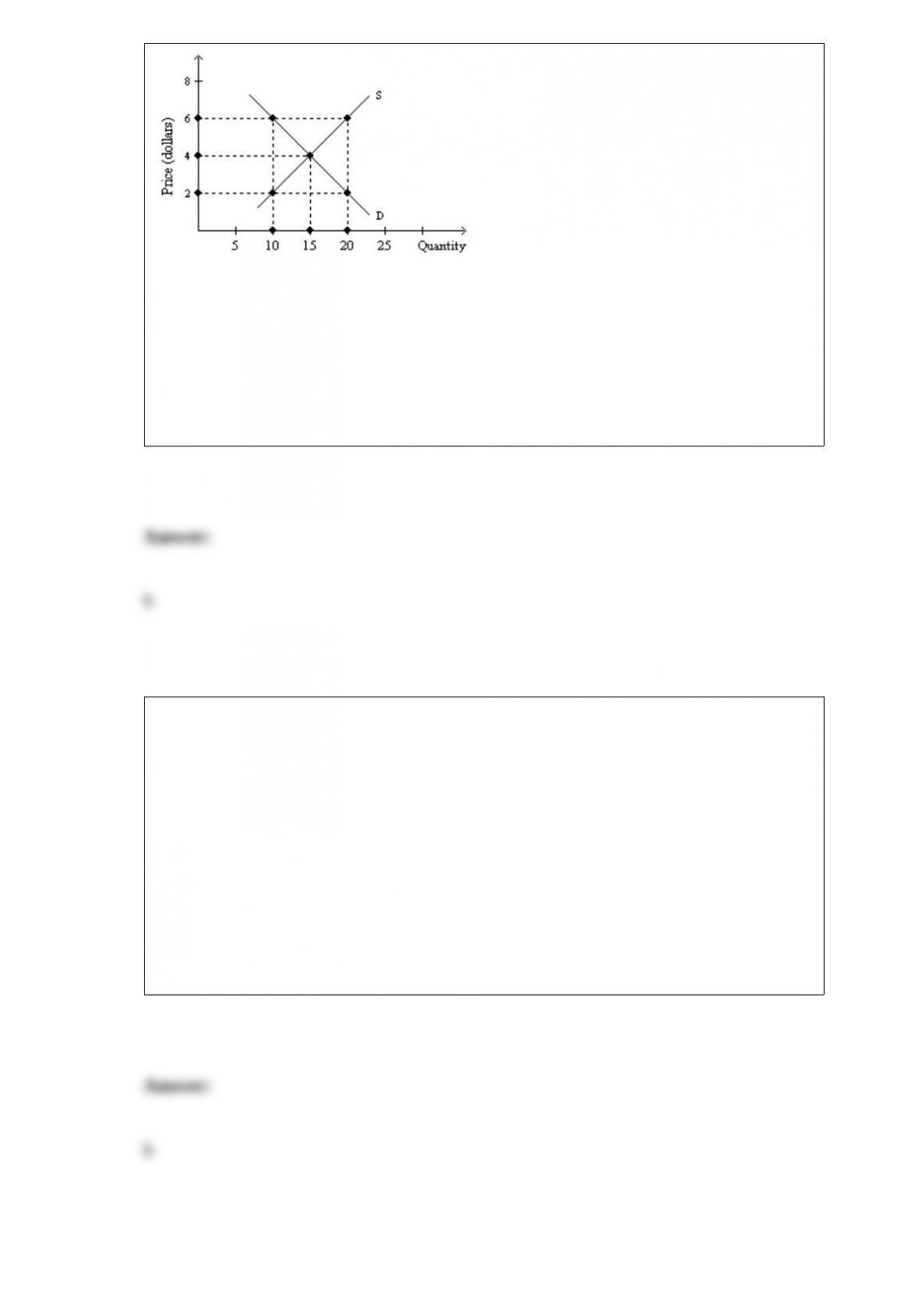
Refer to Exhibit 3-4. A price of $6 in the market will result in a
Exhibit 3-4
a. shortage of 10 units.
b. surplus of 10 units.
c. surplus of 5 units.
d. shortage of 5 units.
Which of the following statements is true?
a. When rents are real, competing for them uses resources in a socially unproductive
way.
b. The competition for real rents often increases supply and lowers price.
c. If Firm A is receiving artificial rents and Firm B is receiving real rents, then Firm B is
larger than Firm A.
d. If Firm A is receiving artificial rents and Firm B is receiving real rents, then Firm B
is smaller than Firm A.
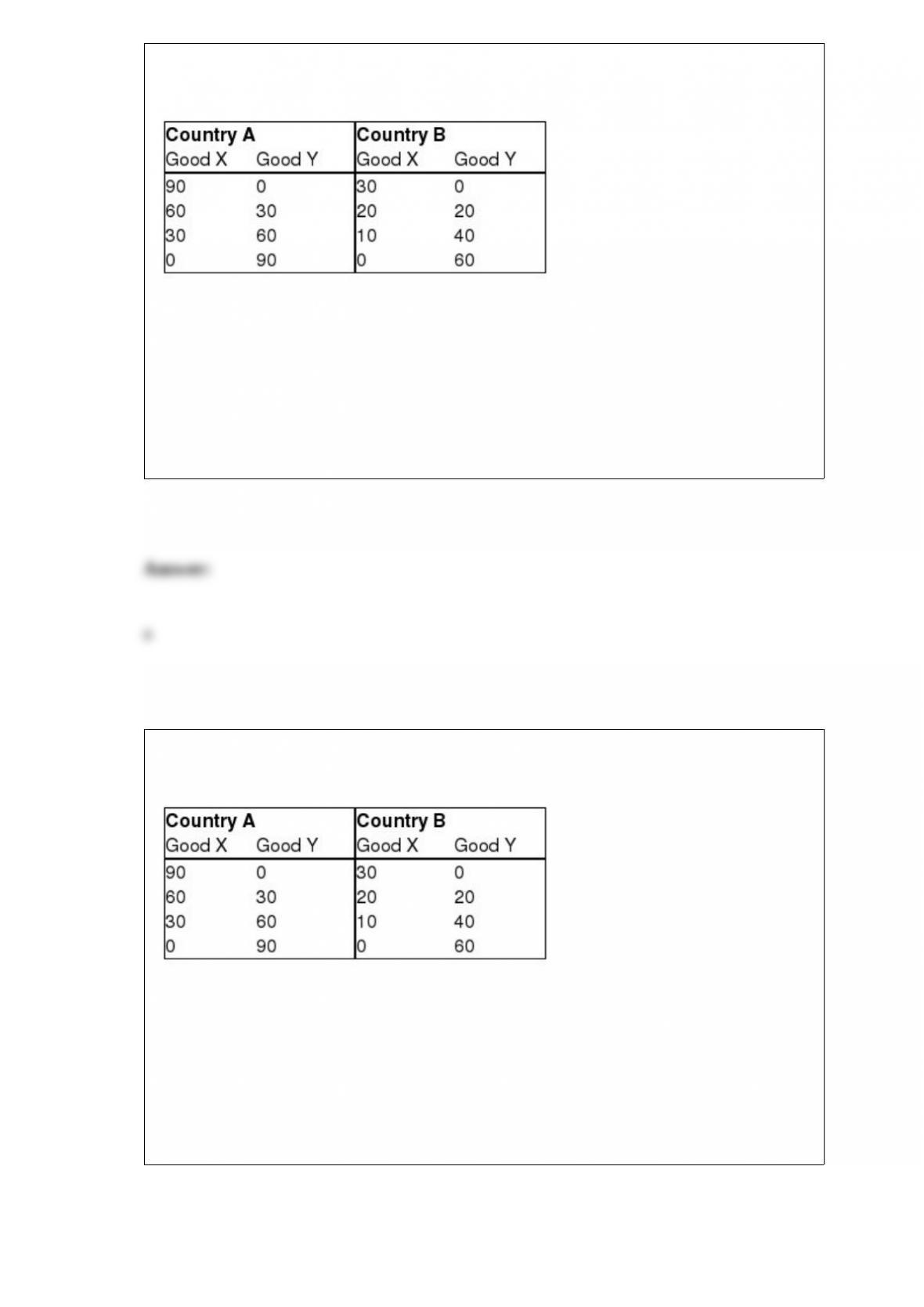
Refer to Exhibit 34-1. Country A is the lower opportunity cost producer of
Exhibit 34-1
a. good X.
b. good Y.
c. goods X and Y.
d. neither good X nor good Y.
Refer to Exhibit 34-1. The opportunity cost of one unit of Y in country A is
Exhibit 34-1
a. 1 unit of X.
b. 0.75 units of X.
c. 2 units of X.
d. 10 units of X.

If potential buyers of good X expect the price of good X will soon fall, then the current
a. demand for good X will rise.
b. demand for good X will remain unchanged.
c. demand for good X will fall.
d. quantity demanded of good X will fall.
e. quantity demanded of good X will rise.
Both a price taker and a price searcher maximize profits (or minimize losses) by
producing the quantity of output at which __________ equals __________.
a. total revenue; total cost
b. average total cost; price
c. average variable cost; marginal cost
d. marginal revenue; marginal cost
e. marginal cost; average fixed cost

A firm will maximize its profits by hiring factors up to the point at which
a. MR = MC, if the firm is a monopolist, monopolistic competitor, or oligopolist.
b. P = MC, if the firm is a perfect competitor.
c. MRP = MFC.
d. VMP = MFC, if the firm is a price searcher (monopolist, etc.).
e. a and b
If the MPP of the last unit of labor hired equals 6 and the MPP of the last unit of capital
hired equals 8, and the price of labor is $4 per unit and the price of capital is $4 per
unit, then the firm
a. is minimizing its costs with this combination of factors.
b. is maximizing its profits with this combination of factors.
c. should hire more labor and less capital in order to minimize its costs.
d. should hire more capital and less labor in order to minimize its costs.
e. a and b

A perfectly-competitive firm produces 2,000 units of a good during some period of
time. For the 2,000th unit, marginal cost is equal to marginal revenue. The difference
between marginal revenue and marginal cost is greater for the first unit the firm
produces than the second, and greater for the second than the third, and so on.
Furthermore, marginal revenue is greater than marginal cost for every unit from the first
to the 1,999th. It follows that the
a. marginal cost curve for the firm has a downward-sloping portion and an
upward-sloping portion.
b. marginal cost curve for the firm is downward-sloping.
c. marginal cost curve for the firm is upward-sloping.
d. marginal revenue curve is downward-sloping.
e. c and d
The economy can produce 15X and 15Y, 10X and 20Y, 5X and 25Y, or 0X and 30Y. It
follows that opportunity cost of 1X is ___Y.
a. 4.0
b. 5.0
c. 2.5
d. 1.0
e. none of the above

The Herfindahl index is obtained by
a. adding the squares of the market shares of each firm in the industry.
b. adding the market shares of the largest four firms in the industry.
c. finding the difference between the squares of the market shares of each firm in the
industry.
d. finding the difference between the market shares of each firm in the industry.
e. none of the above
A cartel is an organization of firms
a. dominated by one firm, which is usually referred to as the price leader.
b. that attempts to increase total (or industry) demand for their product.
c. that reduces output and increases price in an effort to increase joint profits.
d. that deliberately attempts to disrupt the market for political reasons.
The additional revenue generated by a firm by hiring one more unit of a factor of
production is the
a. MFC.

b. MC.
c. MR.
d. MRP.
e. MPP.
Refer to Exhibit 22-12 above. The numbers that go in blanks (A), (B), (C), and (D),
respectively, are
Exhibit 22-12
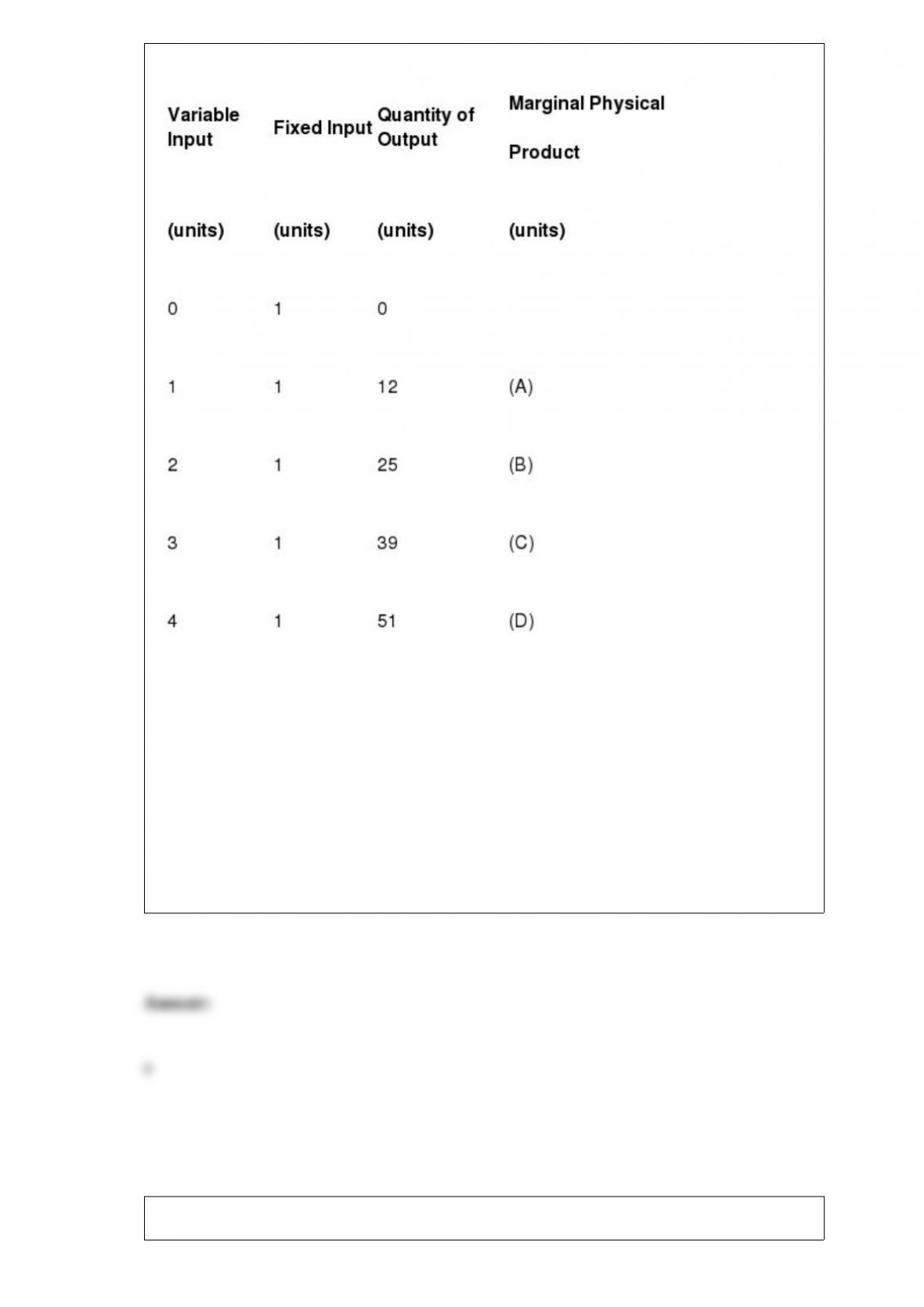
a. 12, 13, 14 and 12.
b. 12, 25, 39 and 51.
c. 12, 11, 10 and 9.
d. 12, 14, 13 and 11.
e. none of the above
Public choice is concerned with decision making by

a. consumers.
b. businesses.
c. government.
d. foreigners.
e. consumers and businesses.
In a monopolistic competitive market, which of the following factors probably does not
give rise to product differentiation?
a. packaging of the product
b. brand names
c. loyalty of customers to a particular producer
d. quality difference
e. the small number of sellers
Some of our farm fields are being left unused. Does this have any implications for the
economy’s PPF diagram (with agricultural products on one axis and all other products
on the other axis)?
a. No implications, because the PPF deals only with resources in use.
b. The PPF cannot be drawn if some resources are idle.
c. With unemployed resources, we are at a point below the PPF.
d. The PPF would be upward sloping.
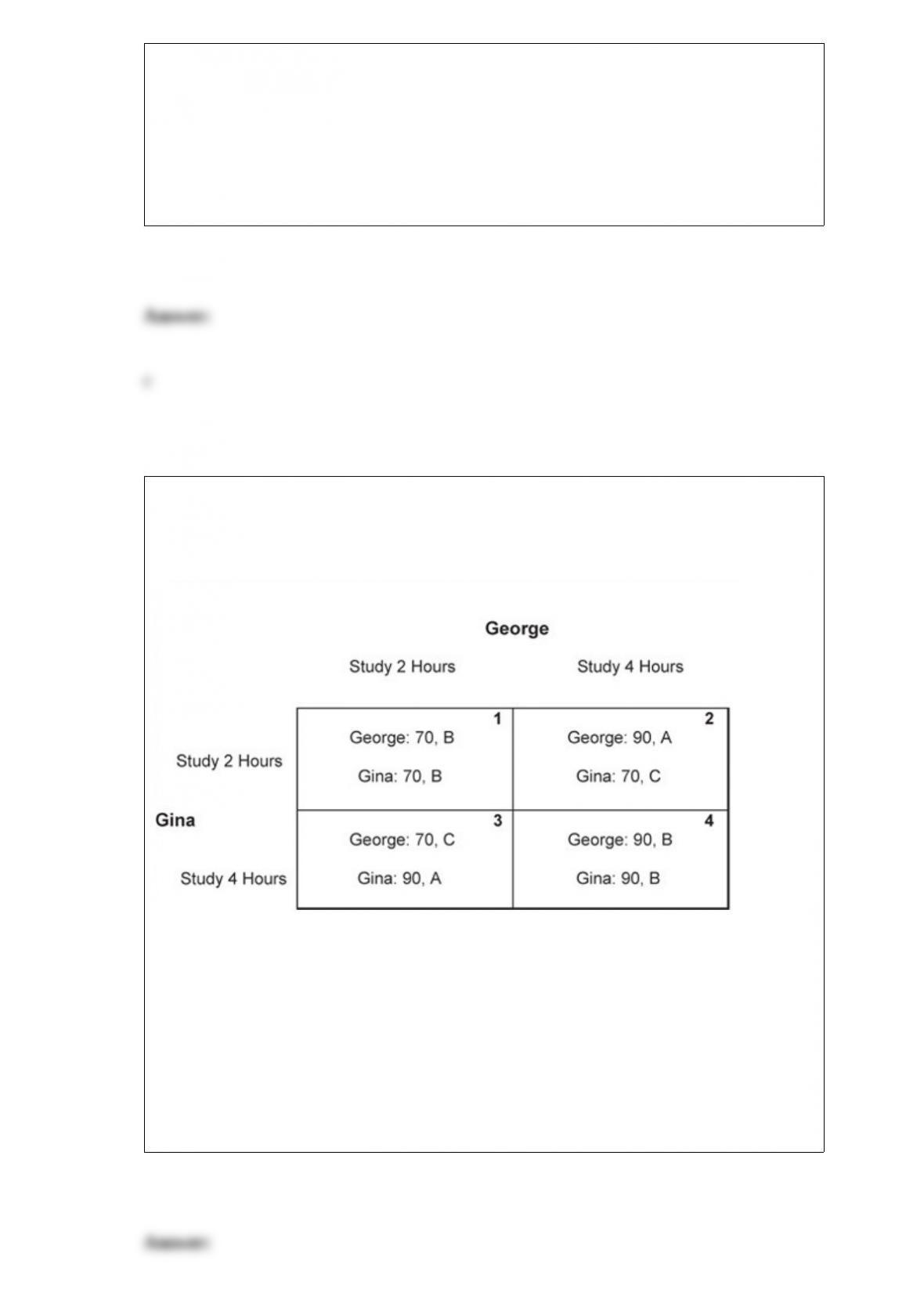
Refer to Exhibit 25-10.If George and Gina are in a prisoner’s dilemma setting, they are
likely to end up in box ___________ in the diagram.
Exhibit 25-10
Suppose that the letter grade earned on a test for each student in a class depends upon
how well he/she does relative to other students in the class. This exhibit shows a
prisoner’s dilemma setting for two representative students in the class, George and
Gina. a. 1
b. 2
c. 3
d. 4

If the Gini coefficient is equal to 2, we can conclude that
a. 2 percent of the households receive 100 percent of total income.
b. 2 percent of the households receive 50 percent of total income.
c. 50 percent of the households receive only 2 percent of total income.
d. b and c
e. None of the above, because the Gini coefficient cannot exceed 1.
An increase in the anticipated (or expected) rate of inflation will cause the nominal
interest rate to
a. increase by less than the change in the anticipated inflation rate.
b. increase by the same amount as the change in the anticipated inflation rate.
c. decrease by more than the change in the anticipated inflation rate.
d. decrease by the same amount as the change in the anticipated inflation rate.
e. stay the same.