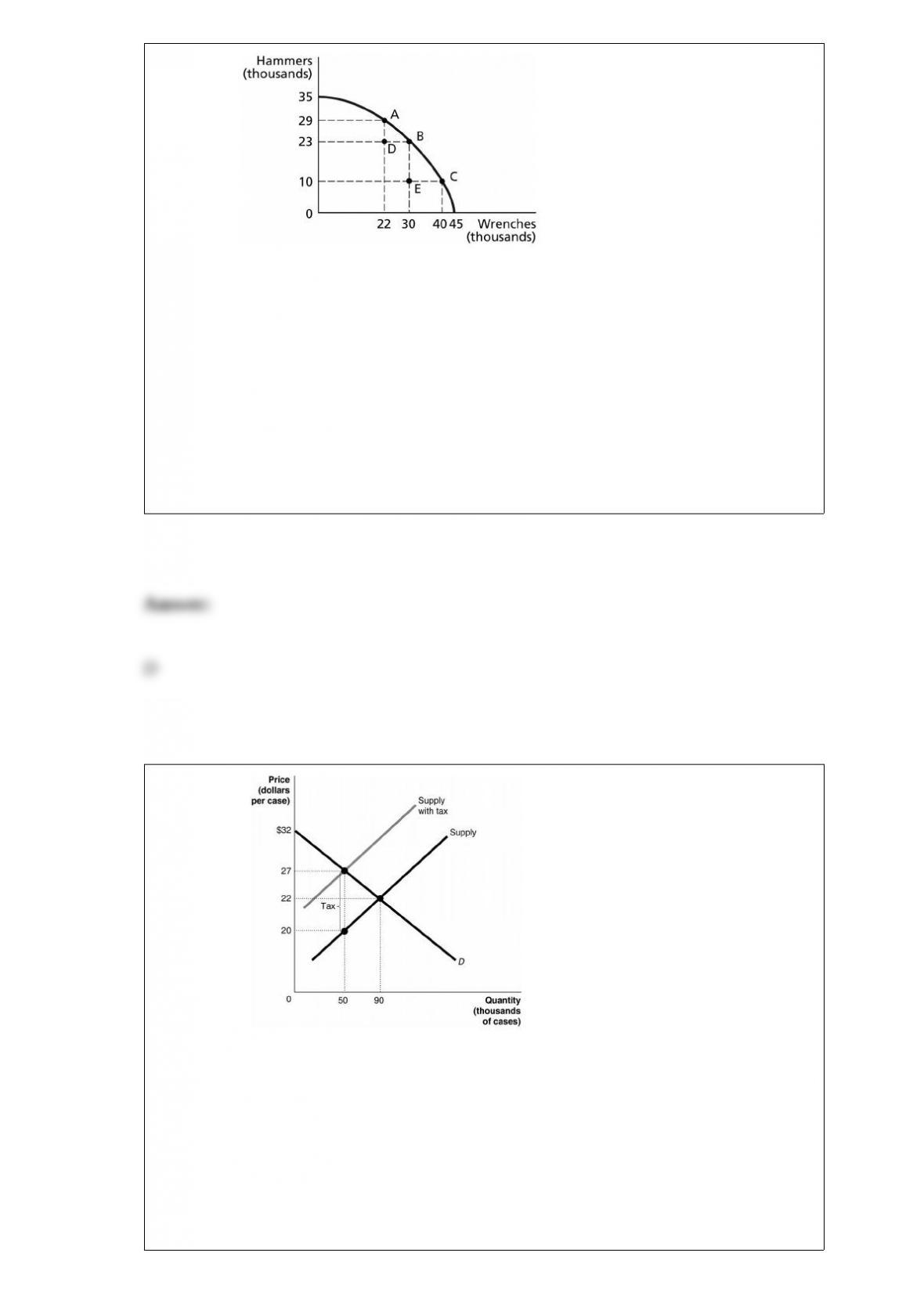
Figure 2-6
If the economy is currently producing at point E, what is the opportunity cost of moving
to point B?
A) 13 thousand hammers
B) 10 thousand hammers
C) 30 thousand wrenches
D) 0 wrenches
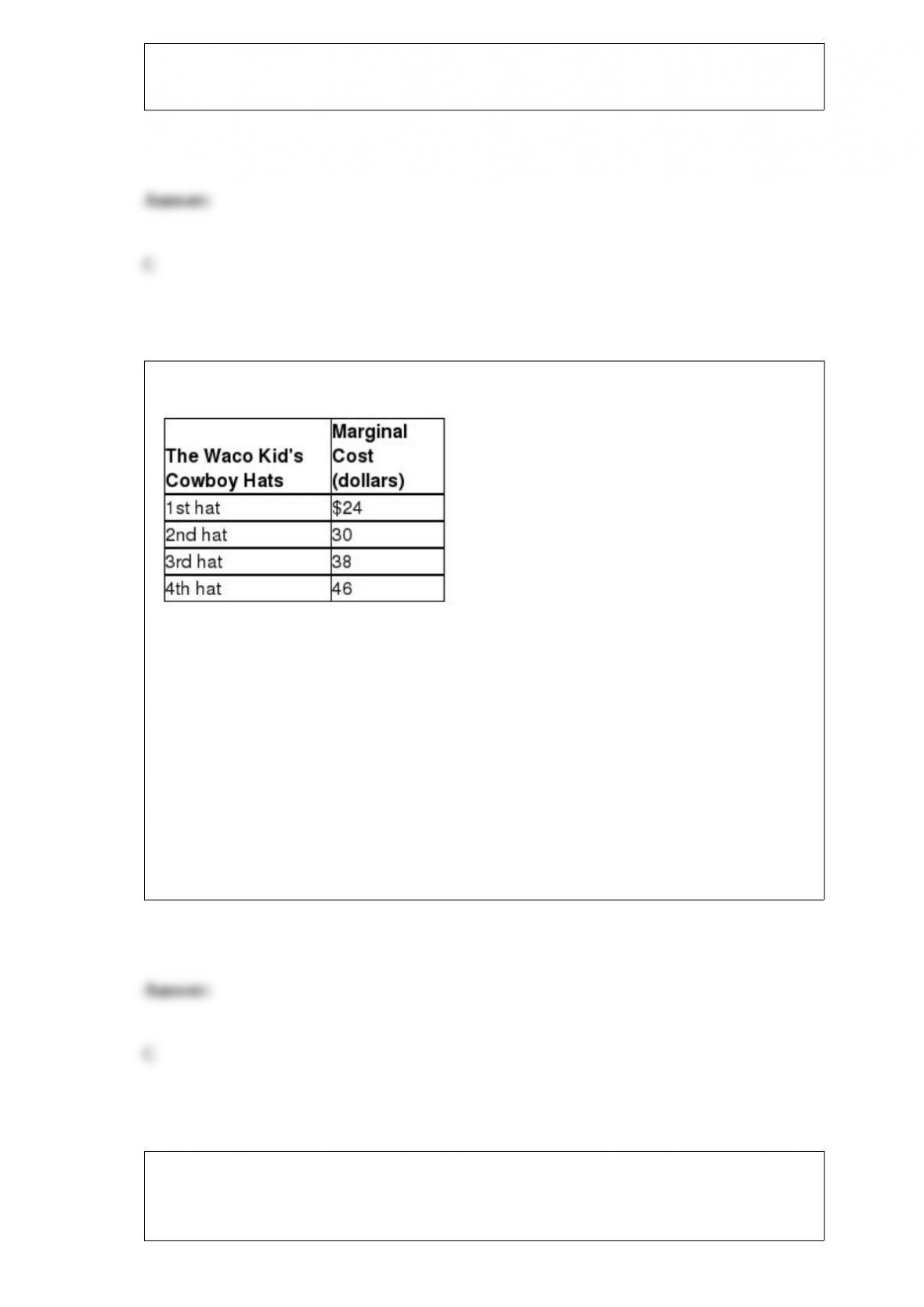
Figure 4-15 Figure 4-15 shows the market for
beer. The government plans to impose a unit tax in this market.
What is the size of the unit tax?
A) $2
B) $5
C) $7
D) $12
Table 4-3
The table above lists the marginal cost of cowboy hats by The Waco Kid, a firm that
specializes in producing western wear. If the price of cowboy hats decreases from $38
to $30
A) consumer surplus will rise by $6.
B) the marginal cost of producing the third cowboy hat will fall to $30.
C) producer surplus will fall from $22 to $6.
D) producer surplus will rise from $8 to $24.
The key to understanding the short-run trade-off behind the Phillips curve is that an
increase in inflation will decrease unemployment if the inflation is ________ by both
workers and firms.

A) unexpected
B) expected
C) perfectly predicted
D) ignored
Figure 5-2
Figure 5-2 shows a market with a negative externality.
The private profit maximizing quantity for the firm is
A) Qa.
B) Q.
C) Q – Qd.
D) Qd.

All of the following countries come close to the free market benchmark except
A) Canada.
B) North Korea.
C) Germany.
D) Singapore.
The Taylor rule predicted a federal funds rate which was ________ that set when Paul
Volcker was chairman of the Fed, and a rate which was ________ that set when Arthur
Burns chaired the Fed.
A) greater than; equal to
B) greater than; less than
C) less than; equal to
D) less than; greater than
The first discussion of comparative advantage appears in a book written by
A) Adam Smith.
B) Paul Samuelson.
C) David Portugal.
D) David Ricardo.
For each surfboard that Australia produces, it gives up the opportunity to make 25

boomerangs. New Zealand can produce 1 surfboard for every 15 boomerangs it
produces. Which of the following is true about the comparative advantage between the
two countries?
A) Australia has the comparative advantage in surfboards.
B) Australia has the comparative advantage in boomerangs.
C) New Zealand has the comparative advantage in surfboards and boomerangs.
D) New Zealand has the comparative advantage in boomerangs.
Is a monopolistically competitive firm allocatively efficient?
A) No, because it does not produce at minimum average total cost.
B) Yes, because it produces where marginal cost equals marginal revenue.
C) No, because price is greater than marginal cost.
D) Yes, because price equals average total cost.
What is the endowment effect?
A) the phenomenon that economic agents are endowed with different qualities and
abilities so that trade among individuals increase efficiency
B) the tendency for economic agents with abundant resources to consume a
proportionately greater quantity of goods and services

C) the tendency of people to be unwilling to sell something they already own even if
they are offered a price that is greater than the price they would be willing to pay to buy
the good if they didn’t already own it.
D) the tendency of firms to use celebrities endowed with good looks to promote their
products
Article Summary. Administrative overhead costs resulting from insurance
companies handling reimbursement claims is in large part the reason that health
care in the United States is much more expensive than in other countries. An
analysis on the administration costs of health care in the United States found that
roughly 30 percent of the costs of health care are administrative and that more
than 25 percent of health-sector employees work in administration. Health
insurance companies are often paid a fixed percentage of the claims they
administer, which gives them little to no impetus to increase efficiency and keep
costs down.
Source: Jeffrey Pfeffer, “The Reason Health Care Is So Expensive: Insurance
Companies,” Bloomberg Businessweek, April 10, 2013.
Even if insurance companies were more efficient and brought administrative costs
down, consumers would still pay less than the full cost of medical treatment. This
would result in the market equilibrium price of medical services being ________ than
the efficient equilibrium price, and the market equilibrium quantity of medical services
being ________ than the efficient equilibrium quantity.
A) greater; greater
B) greater; less
C) less; greater
D) less; less

Suppose you deposit $2,000 into Bank of America and that the required reserve ratio is
10 percent. How does this affect the bank’s balance sheet?
A) Reserves rise by $200.
B) Required reserves rise by $2,000.
C) Deposits rise by $1,000.
D) Excess reserves rise by $1,800.
The long-run aggregate supply curve shows the relationship between the ________ and
________.
A) inflation rate; quantity of real GDP demanded
B) real interest rate; quantity of real GDP supplied
C) nominal interest rate; quantity of real GDP supplied
D) price level; quantity of real GDP supplied
Expansionary fiscal policy involves
A) increasing government purchases or decreasing taxes.
B) increasing taxes or decreasing government purchases.

C) increasing the money supply and decreasing interest rates.
D) decreasing the money supply and increasing interest rates.
What is the natural rate of unemployment?
A) the unemployment rate that exists when the economy is at potential GDP
B) the unemployment rate that exists when the economy is at a trough in a business
cycle
C) an unemployment rate of 0%
D) any unemployment rate that is above the inflation rate