
Candidate A says, “Health care is too expensive in the United States. We need to do
something-and quickly-to develop a better, more responsive, less expensive health care
system.” Candidate B, who is running against candidate A in a two-person race, says,
“Health care is too expensive in the United States. We need to do something about it
and quickly. I suggest that we have the federal government develop a centralized system
for delivering health care in this country.” If you know nothing else about the two
candidates, it follows that
a. candidate A has taken polls and candidate B has not.
b. candidate B has taken polls and candidate A has not.
c. candidate B is smarter than candidate A.
d. candidate B has a higher probability of winning the election than candidate A.
e. candidate A has a higher probability of winning the election than candidate B.
Does a real-world market have to meet all the assumptions of the theory of perfect
competition before it is considered a perfectly competitive market?
a. No, probably no real-world market meets all the assumptions of the theory of perfect
competition. All that is necessary is that a real-world market behave as if it satisfies all
the assumptions.
b. Yes, if a real-world market does not meet the assumptions, then it cannot be
considered a perfectly competitive market.
c. Yes, unless it is a new market such as the computer market. New markets are not held
to the same assumptions as old, more established markets.
d. No, but it does have to meet the assumption of producing and selling a homogeneous
product. It does not have to fully meet the other assumptions.
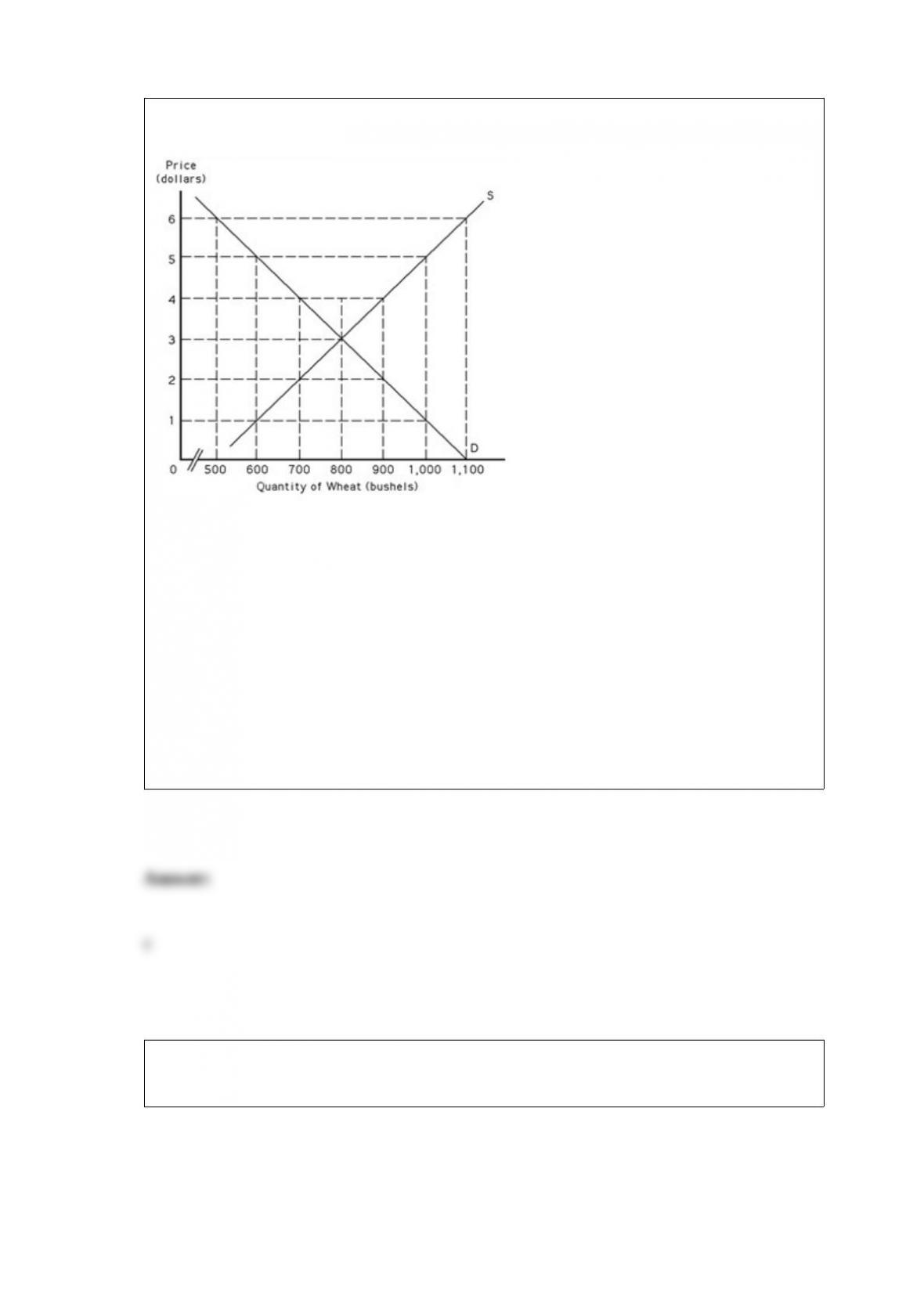
Exhibit 39-4
The price support of $6 per bushel would cost the government
a. $600.
b. $3,000.
c. $3,600.
d. $4,800.
e. $6,600.
Exhibit 22-10

Which of the students has the highest marginal productivity for the fifth hour of
studying?
a. Jose
b. Paul
c. Marisol
d. both Paul and Marisol
Research by H. Gregg Lewis shows that over the period 1929-1979,
a. the average wage of union members was 10 to 15 percent higher than that of
comparable nonunion labor.
b. the average wage of union members was 10 to 15 percent lower than that of
comparable nonunion labor.
c. labor unions increased productivity.
d. labor unions decreased productivity.
e. none of the above
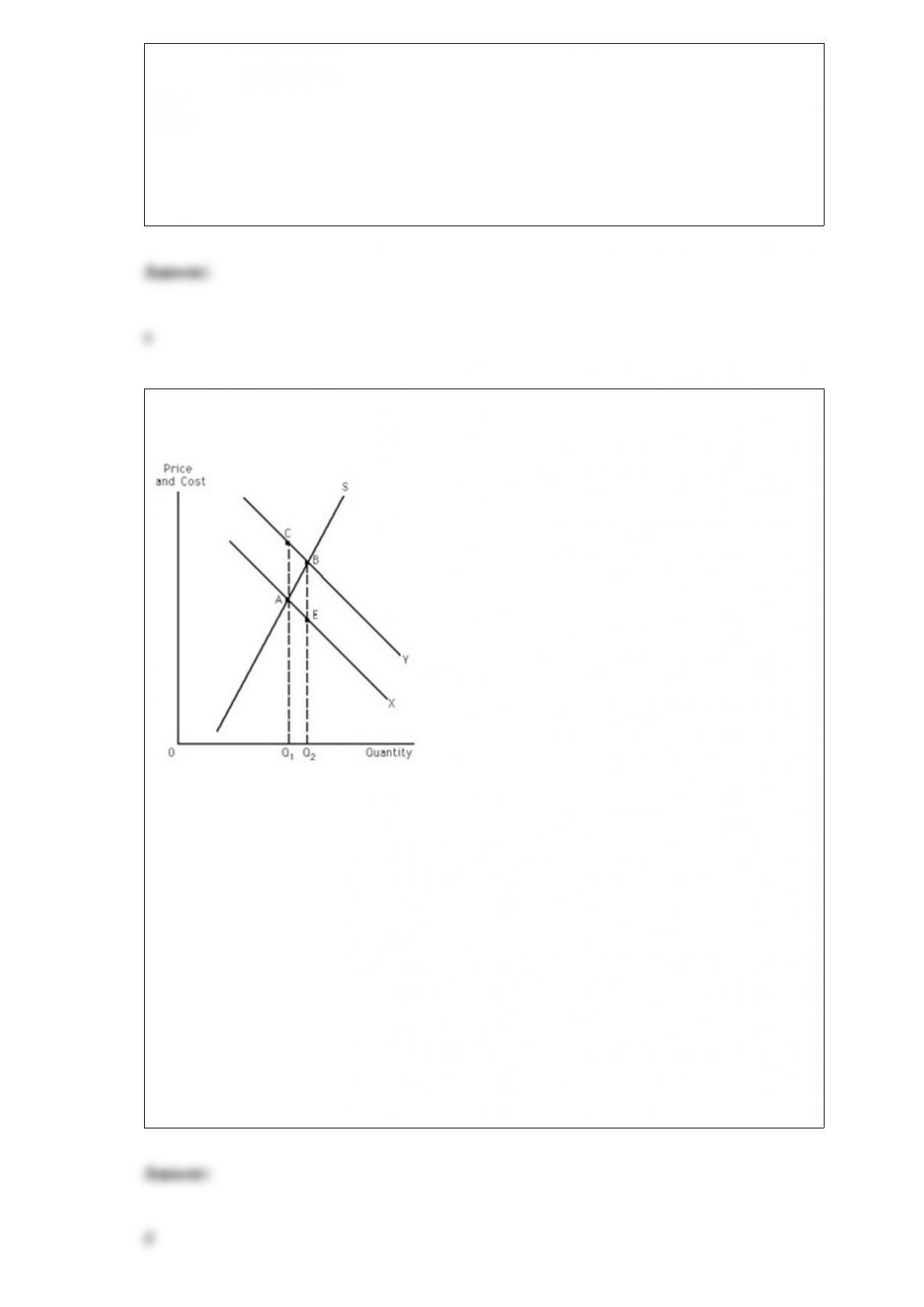
Exhibit 31-2
If Exhibit 30-2 exhibits a positive externality situation, then what is Q2?
a. It is the quantity of output at which marginal social benefits (MSB) equal marginal
private benefits (MPB).
b. It is the quantity of output at which MPB > MSB.
c. It is the market output-the quantity of output that exists if the external benefits
associated with the positive externality are not taken into account.
d. It is the socially optimal output-the quantity of output that exists if the external
benefits associated with the positive externality are taken into account.
e. none of the above
If suddenly a 4 percent inflation rate (instead of a zero percent inflation rate) is
expected by both suppliers and demanders in the loanable funds market, then
a. the demand for loanable funds curve will shift rightward, and the supply of loanable
funds curve will shift leftward.
b. the demand for loanable funds curve will shift leftward, and the supply of loanable
funds curve will shift rightward.
c. both the demand for loanable funds curve and the supply of loanable funds curve will
shift leftward.
d. both the demand for loanable funds curve and the supply of loanable funds curve will
shift rightward.
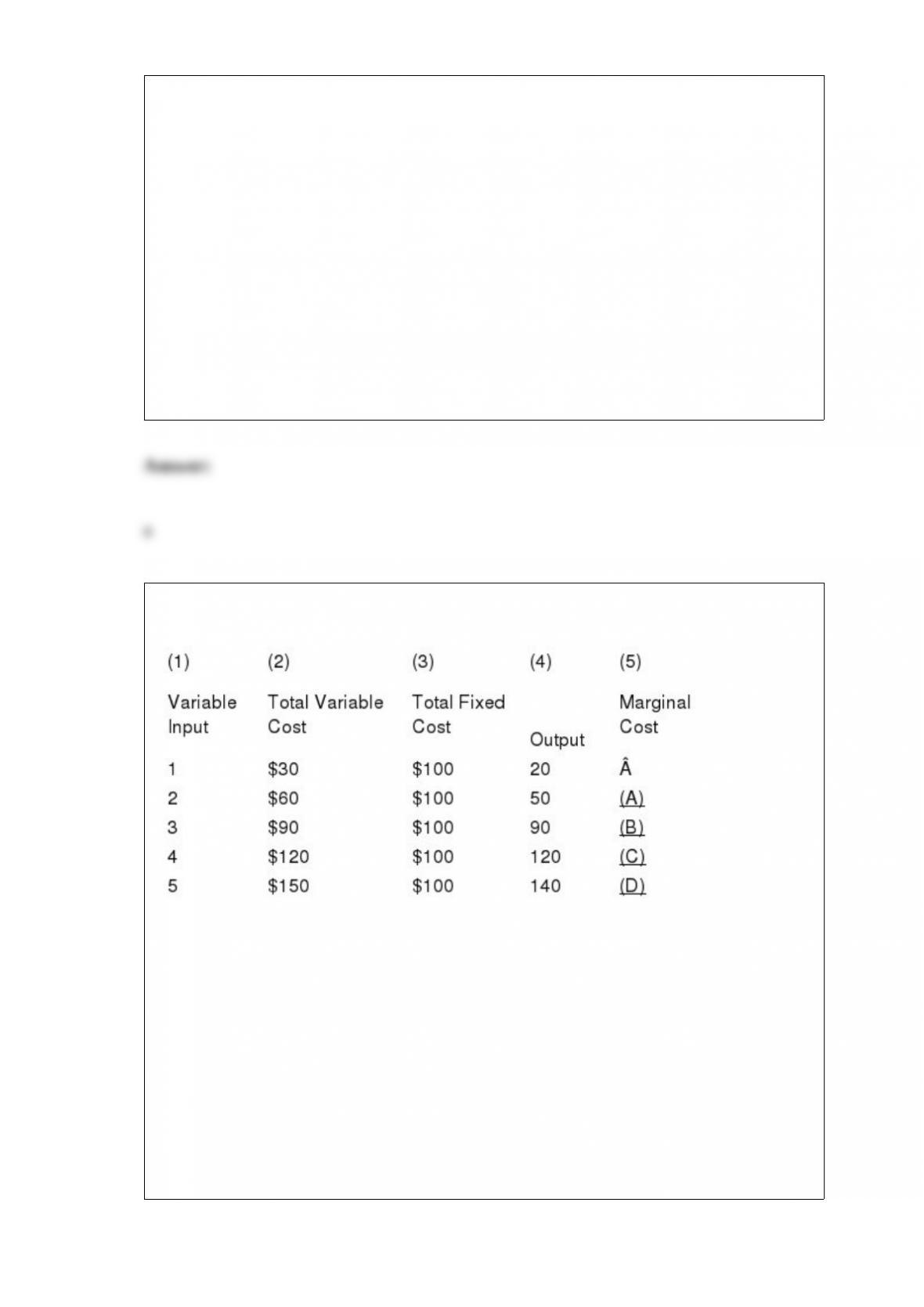
Exhibit 22-2
The dollar amounts that go in blanks (A) and (B), respectively, are
a. $30.00 and $40.00.
b. $3.33 and $2.50.
c. $1.00 and $0.75.
d. $10.00 and $10.00.
e. $6.67 and $5.00.

Is it possible for mandatory seatbelt laws to increase vehicle fatalities?
a. Yes, if the number of accidents increases by a greater percentage than the number of
deaths per accident decreases.
b. No, because wearing seatbelts decreases the number of deaths per accident.
c. No, because wearing seatbelts decreases the number of accidents.
d. There is not enough information to answer the question.
Cross elasticity of demand is the percentage change in the quantity __________ of a
good divided by the percentage change in __________.
a. demanded; the price of the good
b. supplied; the price of the good
c. demanded; the price of another good
d. supplied; the price of another good
e. demanded; income