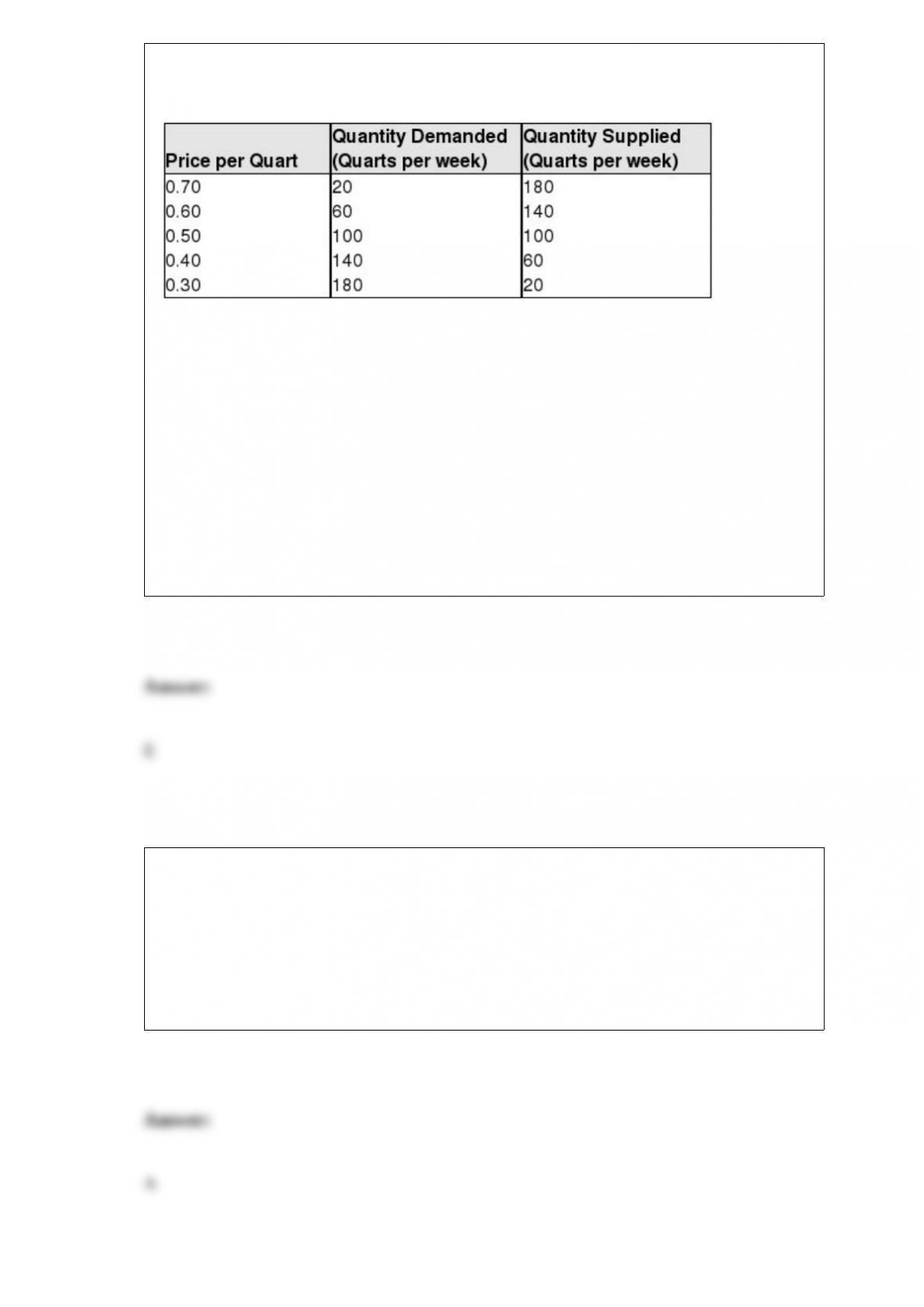
Exhibit 3-6 Milk market
In Exhibit 3-6, which of the following is true about the milk market?
a. At price 0.60 there is an excess demand of milk.
b. At price 0.40 there is an excess supply of milk.
c. At price 0.30 there is an excess supply of milk.
d. At price 0.50 there is an excess demand of milk.
e. At price 0.70 there is an excess supply of milk.
When quantities of two goods belong to the same indifference curve, which of the
following is true?
a. The combinations of the two goods along the indifference curve yield the same total
utility.
b. Prices of the two goods are equal.
c. Marginal utilities of both goods are equal.
d. The total utility of all combinations above the curve equal zero.

Economic profit is:
a. total revenues minus variable costs.
b. total revenues minus private costs.
c. total revenues minus explicit costs.
d. total revenues minus total costs.
Assuming steak and potatoes are complements, other things being equal, an increase in
the price of steak, will:
a. increase the demand for potatoes. c. increase the demand for steak.
b. decrease the demand for potatoes. d. decrease the demand for steak.
Payments to nonowners of a firm are called:
a. implicit costs.
b. accounting costs.
c. explicit costs.
d. economic costs.

Which of the following is the best example of a monopolistic competitor?
a. Wheat farmers. c. American Telephone and Telegraph.
b. Diet centers. d. General Motors.
A monopsony owner believes that hiring an additional worker would increase the
company’s revenue by $150 per day. We can conclude that the monopsony pays its
workers:
a. more than $150 per day.
b. exactly $150 per day.
c. less than $150 per day.
d. exactly $75 per day.
If the dollar appreciates:
a. imports to the United States become more expensive for foreigners
b. exports from the United States become more expensive for foreigners
c. imports become more expensive for U.S. citizens.
d. exports from the United States become cheaper
e. the dollar will exchange for fewer units of a foreign currency
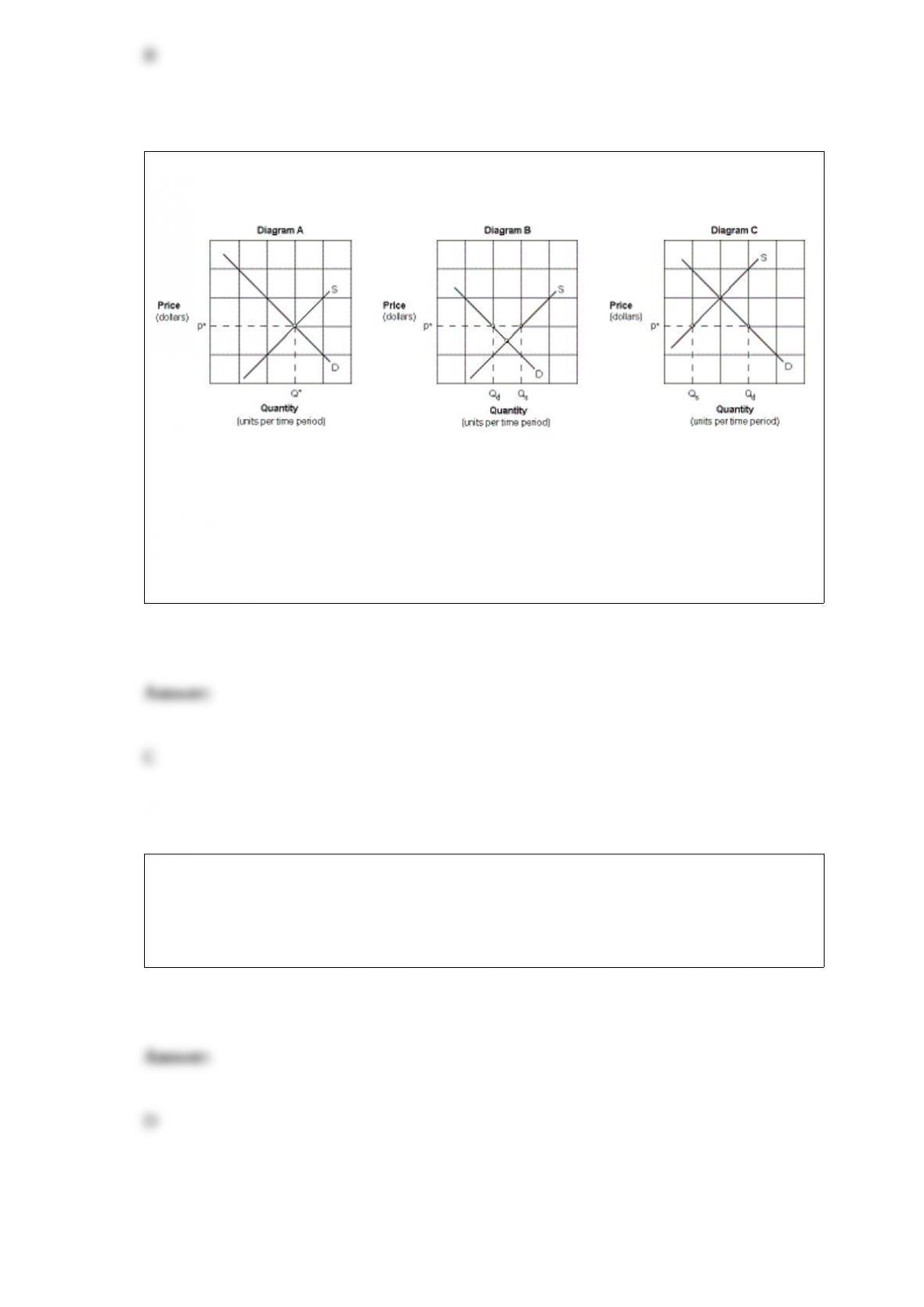
Exhibit 3-13 Supply and demand curves
Which of the graphs in Exhibit 3-13 illustrates a shortage exists at the indicated market
price?
a. Diagram A. c. Diagram C.
b. Diagram B. d. Diagrams A and B.
The “other things being equal” clause in the law of demand does not allow which of the
following factors to change?
a. Consumer income. c. Consumer tastes and preferences.
b. The prices of other goods. d. All of these.

Which of the following are implicit costs for a typical firm?
a. Insurance costs.
b. Electricity costs.
c. Opportunity costs of capital owned and used by the firm.
d. Cost of labor hired by the firm.
e. The cost of raw materials.
If an economy keeps increasing its capital stock, then over time its production
possibilities curve will:
a. not move.
b. shift to the left.
c. shift to the right.
d. disappear because scarcity ceases to exist.
e. demonstrate massive job loss for workers.
Using the rule that focuses on the marginal approach to maximizing profits, a
monopolist charges a price where the:
a. output sold is maximized.
b. ATC curve is minimized.
c. MR = MC.
d. MR = 0.
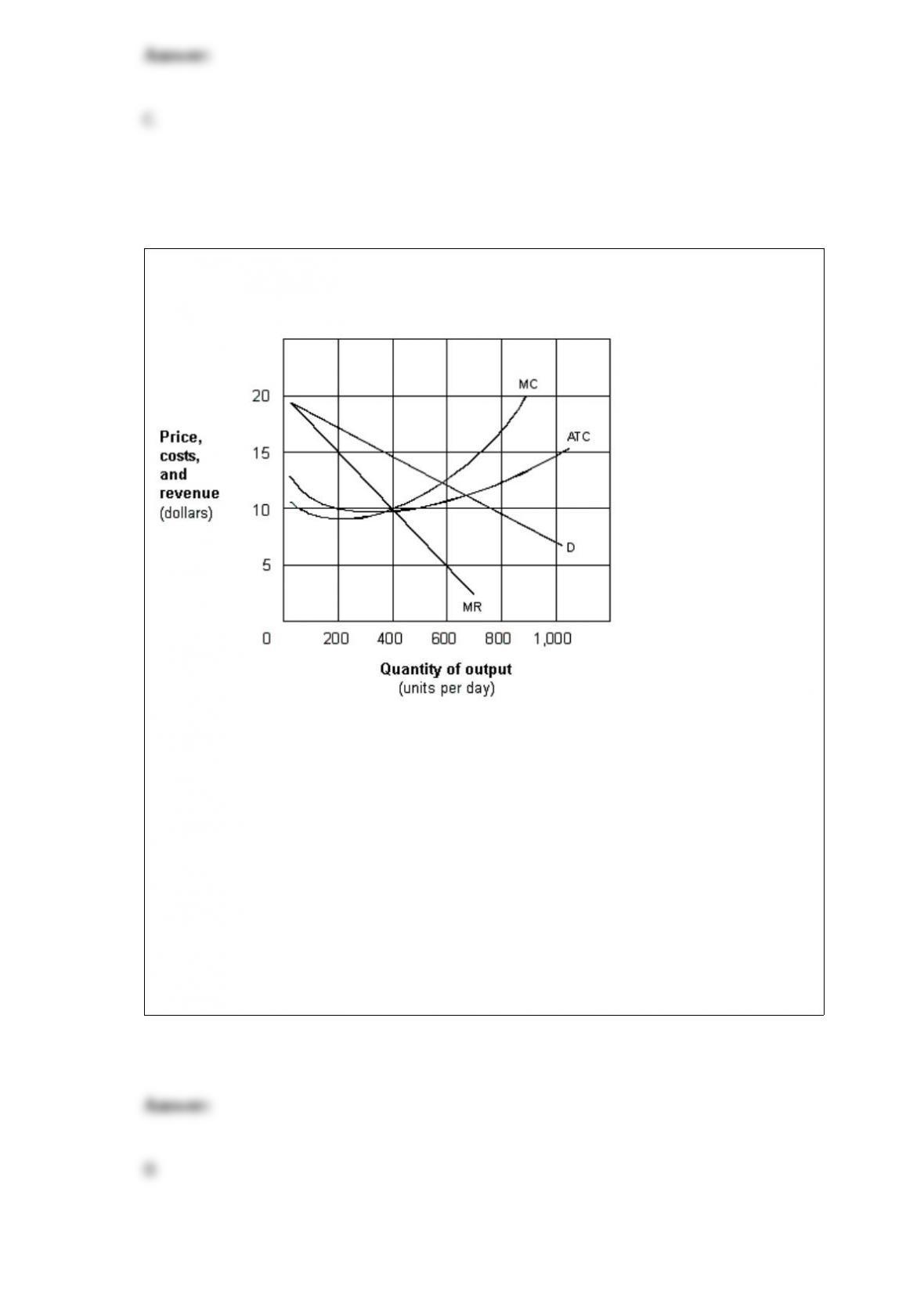
Exhibit 10-1 A monopolistic competitive firm
As presented in Exhibit 10-1, the short-run profit per unit of output for the monopolistic
competitive firm is:
a. zero.
b. $5.
c. $10.
d. $15.
e. $20.

Costume jewelry is produced in a monopolistically competitive market. One producer
finds that MR = MC = $3 when output is 700 necklaces. An economist studying this
information can conclude that:
a. the producer is charging a price of $3.
b. economic profit is $2,100.
c. the producer charges a price greater than $3.
d. new firms will want to enter.
e. this producer should produce more than 700 necklaces.
Which of the following will not cause a movement along the supply curve?
a. Changes in the sellers’ expectations. c. Advances in technology.
b. Increases in taxes per unit of output. d. All of these.
Exhibit 11-4 Supply and demand curves for food servers
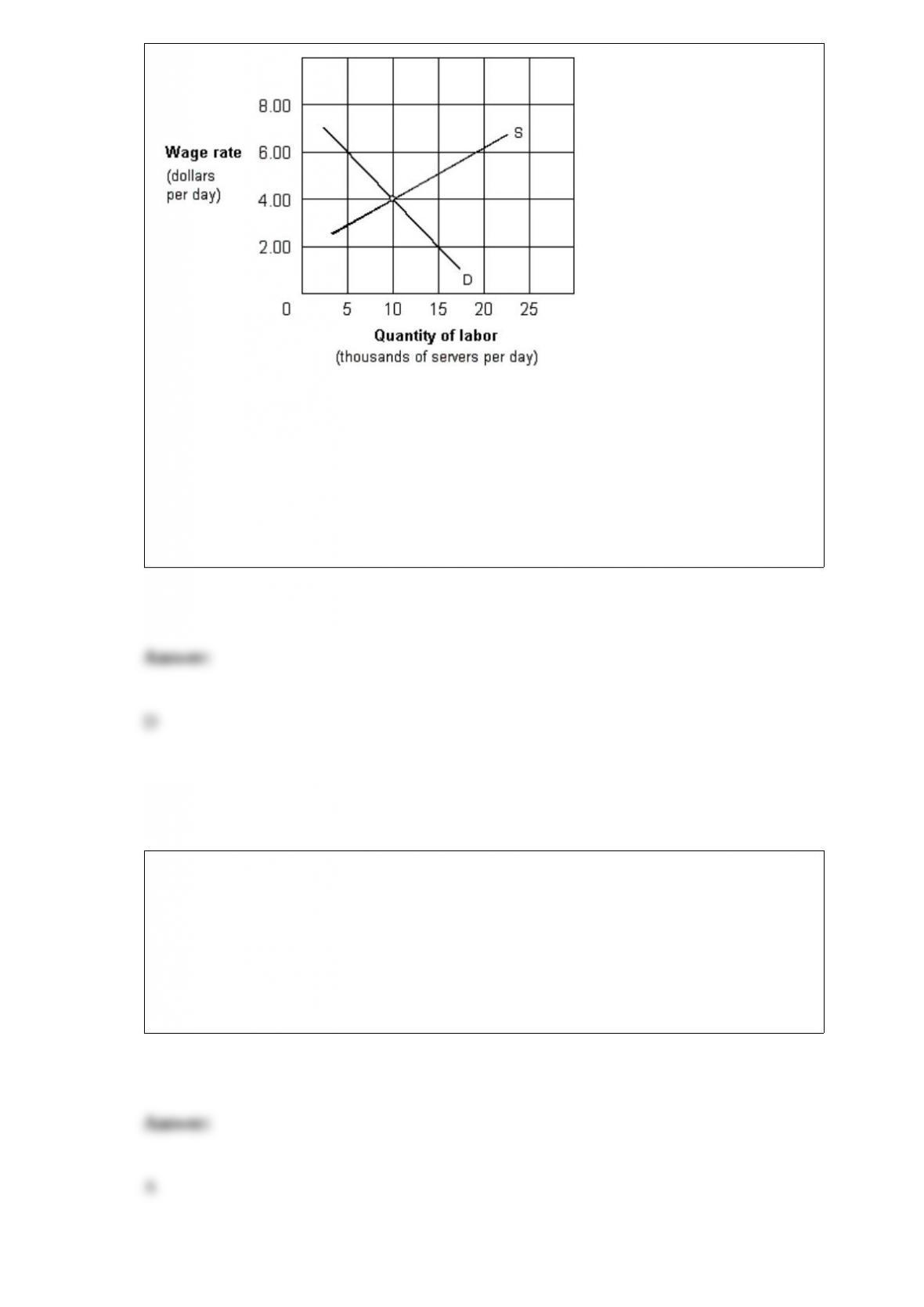
In Exhibit 11-4, assume that both input and output markets are perfectly competitive. If
one additional server increases the number of meals sold by four per day and each meal
sells for $10, each additional food server will be paid:
a. $16 per day.
b. $32 per day.
c. $36 per day.
d. $40 per day.
e. none of these.
Explicit costs would include:
a. rent.
b. the interest loss of the business owner on money withdrawn from his/her saving
account and invested in the business.
c. the loss of rent on a building the business owner owns and uses in his/her business.
d. the opportunity costs of the business owner’s time.
e. the use of tools owned by the business owner and dedicated to the business.
Both a perfectly competitive firm and a monopolist:
a. always earn an economic profit.
b. maximize profit by setting marginal cost equal to marginal revenue.
c. maximize profit by setting marginal cost equal to average total cost.
d. are price takers.
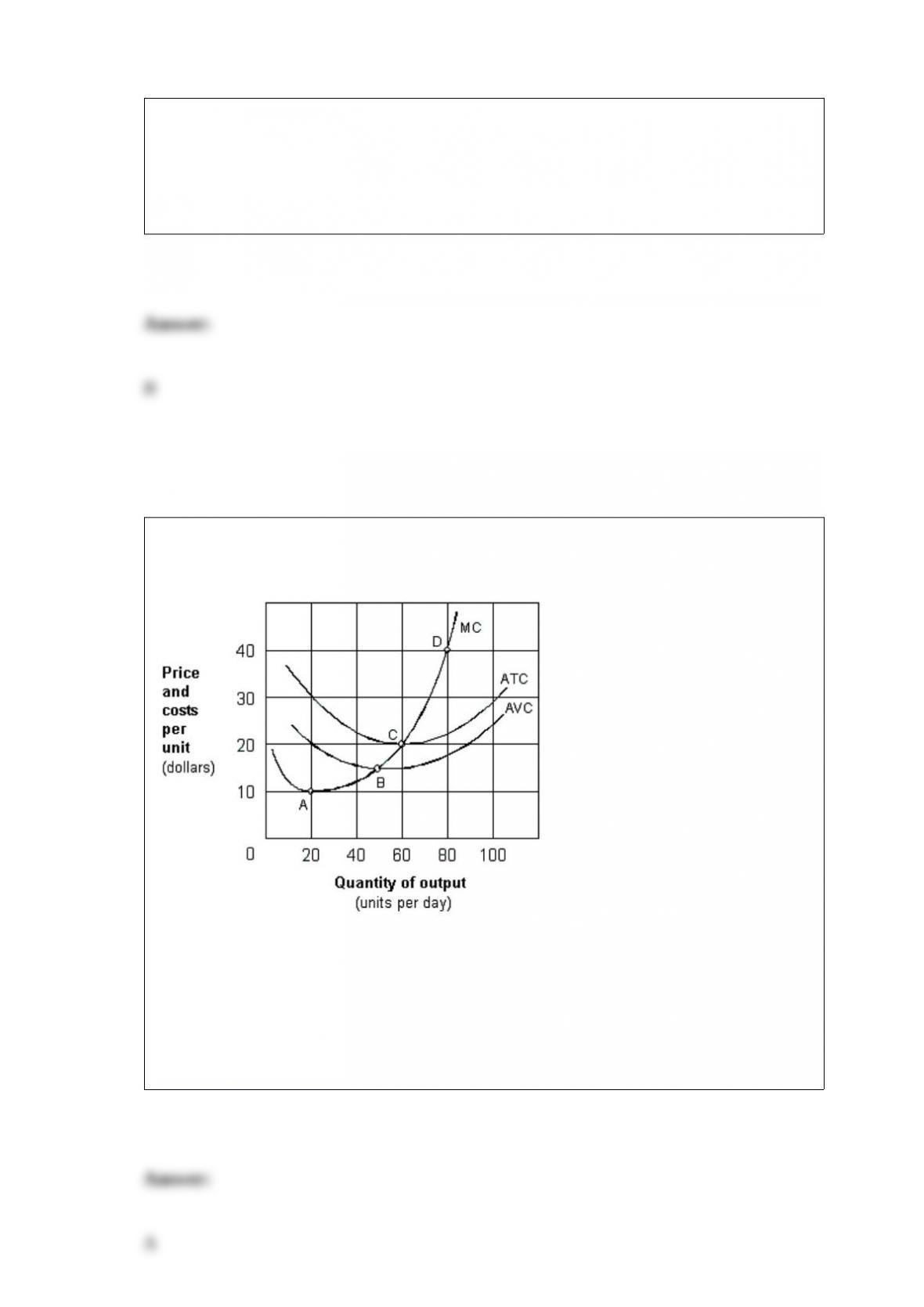
Exhibit 8-17 Marginal revenue and cost per unit curves
As shown in Exhibit 8-17, the firm will produce in the short run if the price is at least
equal to:
a. $10 per unit.
b. $15 per unit.
c. $20 per unit.
d. $30 per unit.
e. $40 per unit.
What can a nation do to increase its economic growth? Why is economic growth among
the major national economic goals of all countries?
All human wants cannot be satisfied because of the problem of scarcity.
An equilibrium price is unaffected by nonprice factors.
In the long run, all costs are considered variable.

Assume a price floor is set above the equilibrium price. The result is a surplus.
A monopolist will charge a lower price and produce more output than if it was
operating in a competitive market.
If the supply of a good is inelastic, a decrease in price must increase total revenue.

In determining the poverty level, the Census Bureau counts cash transfers, but not
in-kind transfers, thereby understating the actual amount of antipoverty transfers made.
Applying supply and demand analysis, other factors held constant, the steeper the
supply curve (more inelastic), the larger the burden of a sales tax that is borne by the
sellers.