1) The voice mechanism is important because it may:
A.reduce worker turnover and increase productivity.
B.increase worker mobility.
C.increase the number of strikes.
D.conflict with the Taft-Hartley Act.
2) Which of the following countries has the highest Gini ratio?
A.Italy
B.United States
C.Japan
D.Mexico
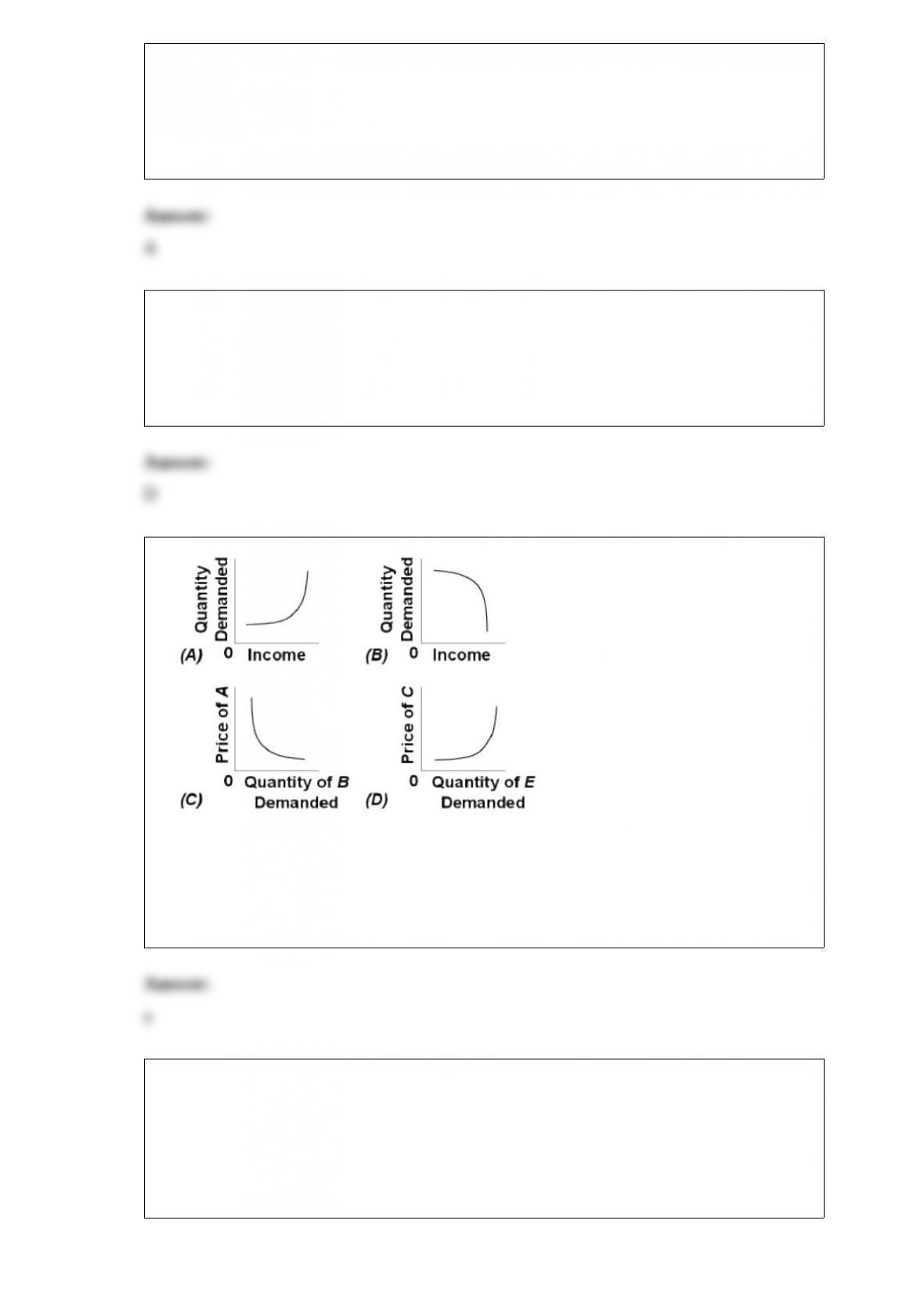
3)
refer to the above diagrams. the case of a normal good is represented by figure(s):
a.a.
b.b.
c.c.
d.d.
4) In 2007, the number of union members in the United States and the rate of U.S.
unionization were:
A.10.2 million and 7.8 percent.
B.15.7 million and 12.1 percent.
C.25.1 million and 19.4 percent.
D.32.6 million and 25.2 percent.
5) which of the following is an example of a sunk cost, as it relates to a firm?
a.an expenditure on raw materials used in the production process.
b.an expenditure on a nonrefundable, nontransferable airline ticket.
c.an expenditure to buy a delivery van.
d.an expenditure for a new factory.
6) In the quintile distribution of income, the term “quintile” represents:
A.5 percent of the income receivers.
B.10 percent of the income receivers.
C.20 percent of the income receivers.
D.25 percent of the income receivers.
7) firms seek to maximize:
a.per unit profit.
b.total revenue.
c.total profit.
d.market share.
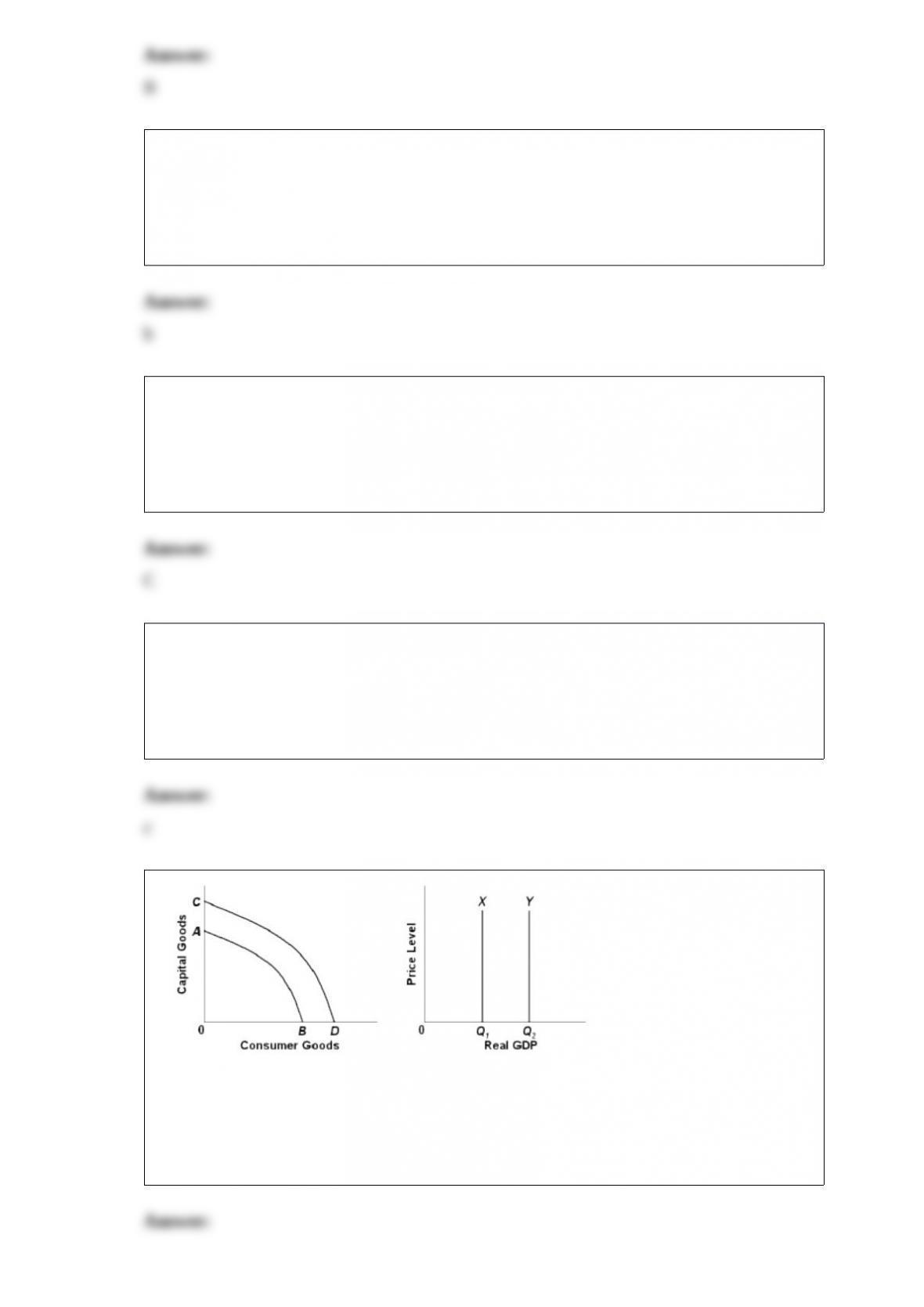
8)
Refer to the above graphs. Growth of production capacity is shown by:
A.the shift from AB to CD only.
B.the shift from X to Y only.
C.both the shift from AB to CD and the shift from X to Y
D.both the shift from AB to CD and the shift from Y to X

9) if the production possibilities curve is a straight line:
a.the two products will sell at the same market prices.
b.economic resources are perfectly substitutable between the production of the two
products.
c.the two products are equally important to consumers.
d.equal quantities of the two products will be produced at each possible point on the
curve.
10) The misallocation of resources associated with price supports:
A.affects both domestic and foreign economies.
B.affects only foreign economies.
C.affects only the domestic economy.
D.is fully offset by reductions in food prices.
11) most economists contend that:
a.noncash transfers are more efficient than cash transfers.
b.noncash transfers are less efficient than cash transfers.
c.noncash and cash transfers are equally efficient.
d.government can assess consumer preferences better than can consumers themselves.