Long-run macroeconomic equilibrium occurs when aggregate demand ________
short-run aggregate supply and they ________ the long-run supply curve.
A) equals; intersect at a point to the right of
B) equals; intersect at a point on
C) is greater than; intersect at a point to the left of
D) is less than; intersect at a point to the right of
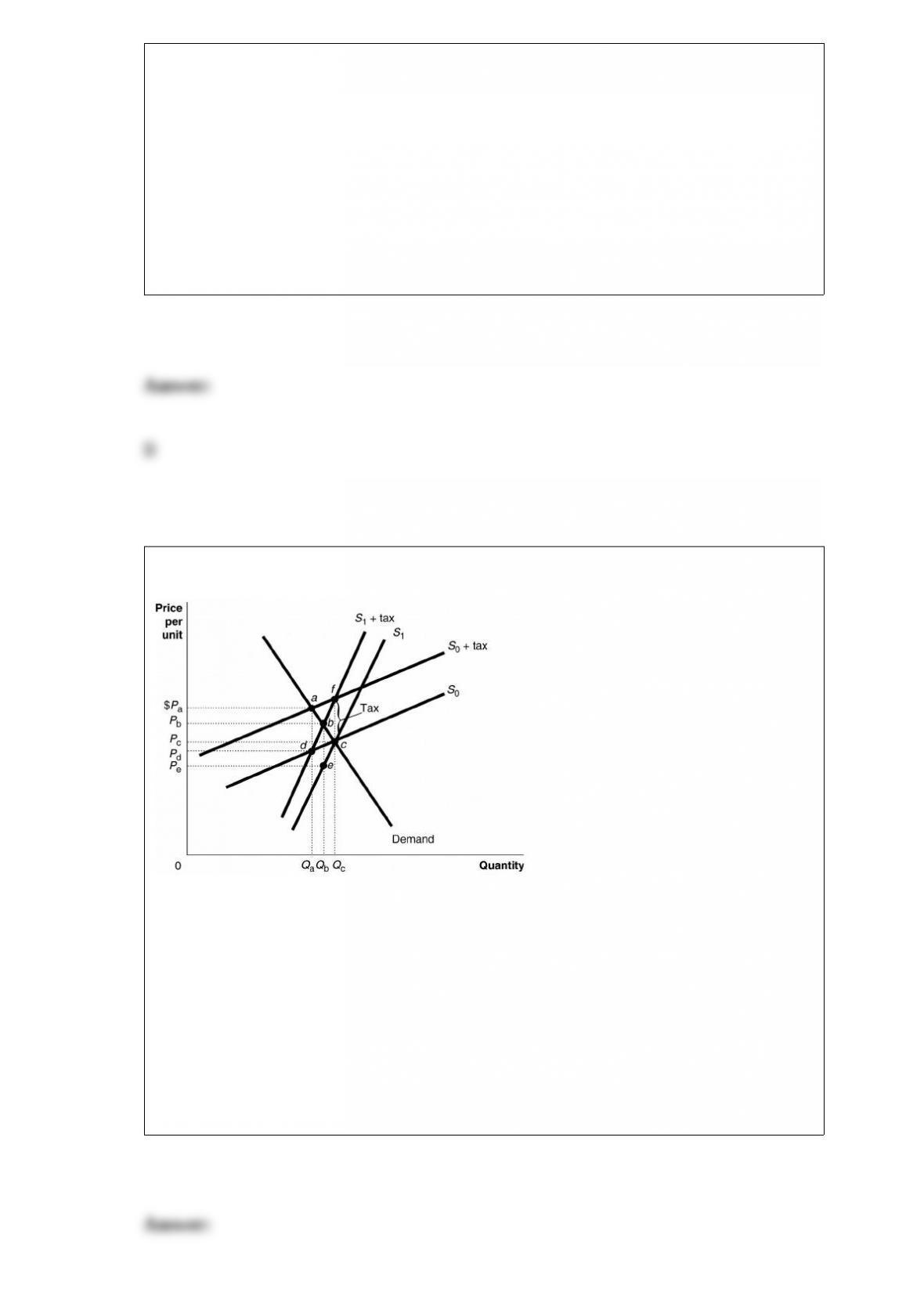
Figure 18-2
Figure 18-2 shows a demand curve
and two sets of supply curves, one set more elastic than the other. If the government
imposes an excise tax of $1.00 on every unit sold,
A) the deadweight loss is identical under either supply curve.
B) the deadweight loss is greater under the supply curve S1.
C) the deadweight loss is greater under the supply curve S0.
D) there is no deadweight loss since revenue raised is used to fund government projects.
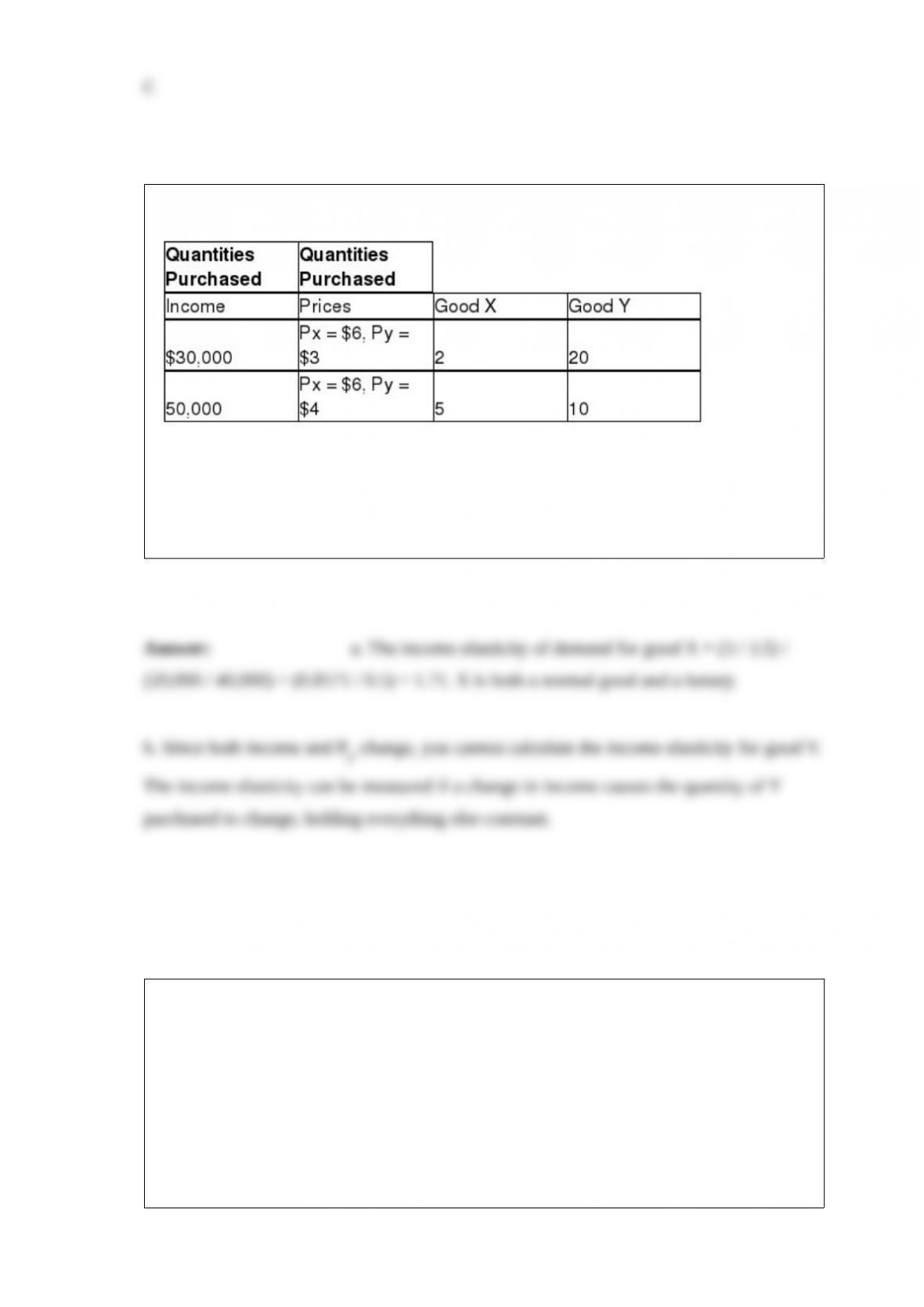
Table 6-6
a. Using the information in the table, calculate the income elasticity of demand for good
X and characterize the good. Use the midpoint formula.
b. Can you calculate the income elasticity of demand for good Y? If you can, show your
calculation and characterize the good. If you cannot, explain why.
What can be done to deal with the principal-agent problem?
A) threaten to liquidate the firm
B) link top manager salaries to the profits of the firm or the price of the firm’s stock
C) have the CEO be a rotating position
D) forbid managers from owning any company stock
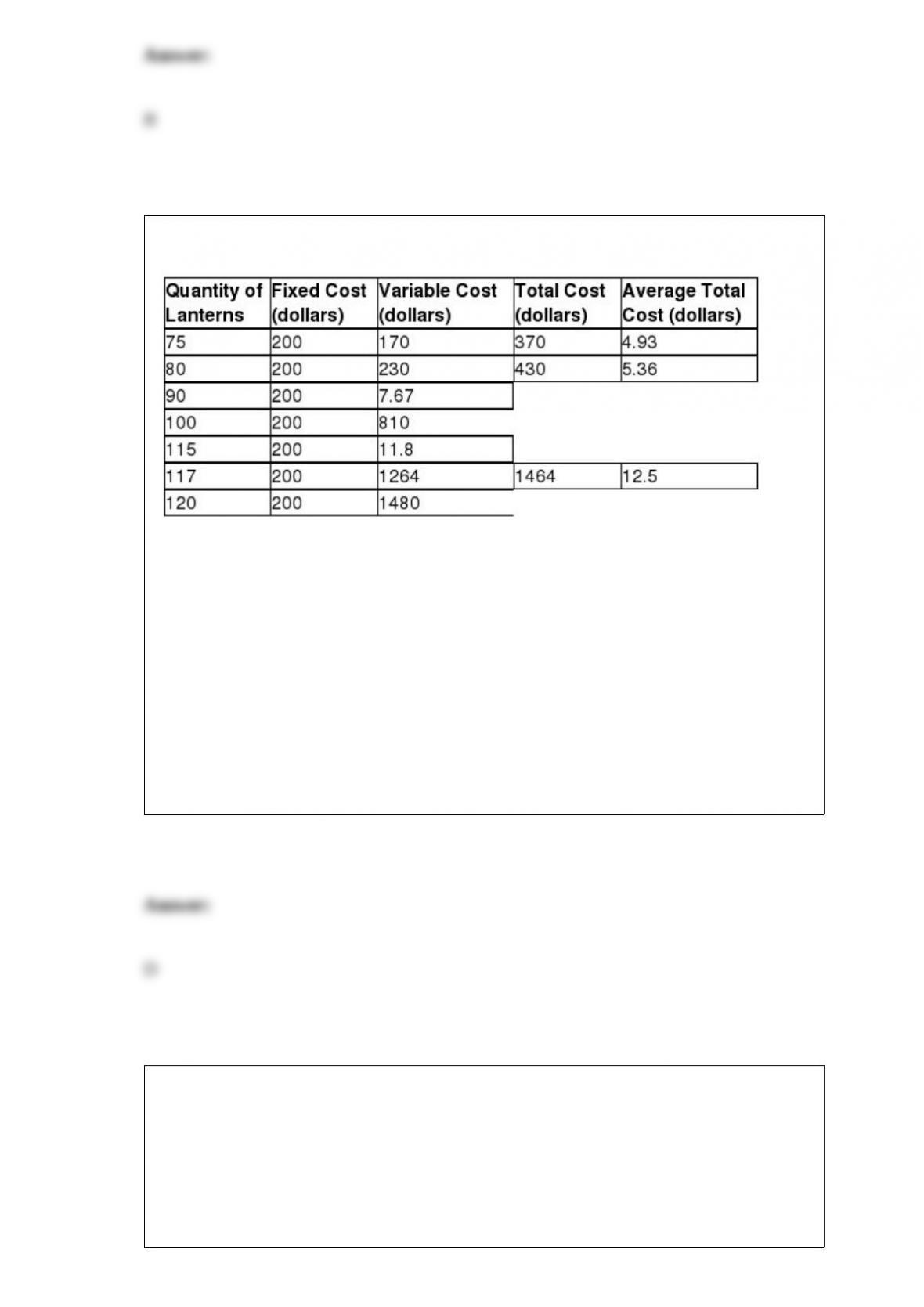
Table 11-7
Table 11-7 shows cost data for Lotus Lanterns, a producer of whimsical night lights.
What is the average variable cost per unit of production when the firm produces 90
lanterns?
A) $490
B) $33.67
C) $7.67
D) $5.44
To increase the money supply, the Federal Reserve could
A) raise the discount rate.
B) decrease income taxes.
C) raise the required reserve ratio.

D) conduct an open market purchase of Treasury securities.
E) lower transfer payments.
The Walt Disney Company is in a position to use a two-part tariff by charging for
admission and also charging for rides inside its two theme parks, Disneyland and
Disney World. Which of the following statements regarding Disney’s pricing strategy is
true?
A) At one time, admission fees were charged at both parks but all rides were free.
Disney has since changed its pricing policy; it earns higher profits by charging for both
admission and rides.
B) At one time, customers had to pay for admission and rides at Disneyland and Disney
World. Disney has since changed its pricing policy; it earns higher profits by charging
for admission but not for rides.
C) At one time, customers had to pay for admission and rides at Disneyland and Disney
World. Disney has since changed its pricing policy; it earns higher profits by charging
for rides but not for admission.
D) At one time, fees for admission and rides at both parks were set at their
profit-maximizing levels. Disney has since changed its pricing policy; it uses a
cost-plus pricing strategy for admission and does not charge for rides.
The balance of trade is defined as
A) the difference between the balance of the current account and the balance of the
capital account.
B) the difference between the value of the goods and services a country exports and the
value of the goods and services a country imports.
C) the difference between the value of the goods a country exports and the value of the
goods a country imports.
D) the difference between the balance of the current account and the balance of the
financial account.
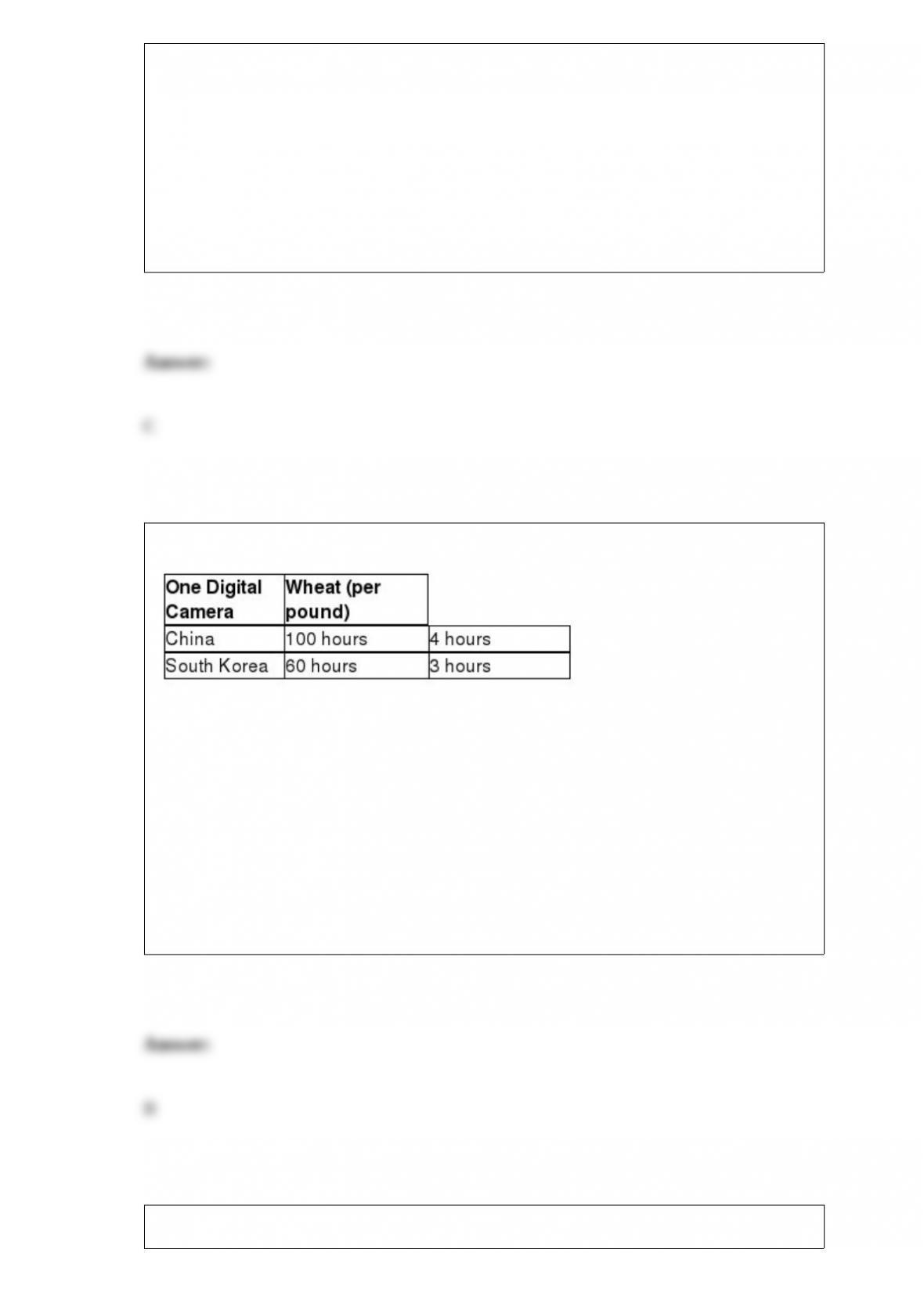
Table 2-8
Table 2-8 shows the number of labor hours required to produce a digital camera and a
pound of wheat in China and South Korea. South Korea has a comparative advantage in
the production of
A) wheat.
B) digital cameras.
C) both products.
D) neither product.
Producing a homogeneous product occurs in which of the following industries?

A) oligopoly, monopolistic competition and perfect competition
B) perfect competition only
C) oligopoly and perfect competition
D) monopolistic competition and perfect competition
If there is a change in the ability of a firm to produce a given level of output with a
given level of inputs, we say there is
A) human capital investment.
B) technological change.
C) an increase in labor productivity.
D) a movement along a given per-worker production function.
In 2012, the largest exporter in the world was
A) Japan.
B) Germany.
C) China.
D) the United States.

The profits a corporation keeps to finance future expansion are known as
A) retained earnings.
B) preferred stock.
C) dividends.
D) capital gains.
Which of the following statements is false?
A) An implicit cost is a nonmonetary opportunity cost.
B) Economic costs include both accounting costs and implicit costs.
C) An explicit cost is a cost that involves spending money.
D) Economists consider all costs to be implicit costs.

In the decade of the ________, A.W. Phillips plotted data for Great Britain which
revealed a relationship between rates of changes in wages versus unemployment rates.
Economists later discovered other “Phillips Curve” relationships between rates of
inflation versus unemployment rates.
A) 1930s
B) 1940s
C) 1950s
D) 1960s
The slope of an isocost line ________ and equals the negative of ________.
A) increases as we move down the line; the ratio of input prices
B) decreases as we move down the line; the ratio of the marginal products
C) is constant; the ratio of input prices
D) is constant; the ratio of the marginal products