
Damian shares a small food truck with his sister. His share of the expenses is $500 per
month. He has decided to get his own, newer food truck which he will not have to share
with anyone. His expenses for the newer truck are $1,400 per month. Damian is as
rational as any other person. As an economics major, you rightly conclude that
A) Damian cannot afford the newer truck and will have to go back to sharing a truck
with his sister.
B) Damian figures that the additional benefit of having his own truck (as opposed to
sharing) is at least $900.
C) Damian figures that the benefit of having his own truck (as opposed to sharing) is at
least $1,400.
D) the cost of having one’s own truck outweighs the benefits.
Vineyards can grow either red wine grapes or white wine grapes on their land. Which of
the following would cause the supply of red wine grapes to decrease?
A) an increase in the price of white wine grapes
B) a decrease in the price of white wine grapes
C) an increase in the demand for red wine grapes
D) an increase in the price of red wine

Which of the following statements about economic resources is true?
A) Economic resources include financial capital and money.
B) Economic resources are also called factors of production.
C) Economic resources are used only by businesses.
D) All economic resources are man-made.
Specializing in the production of a good or service in which one has a comparative
advantage enables a country to do all of the following except
A) engage in mutually beneficial trade with other nations.
B) increase the variety of products that it can consume with no increase in resources.
C) consume a combination of goods that lies outside its own production possibilities
frontier.
D) produce a combination of goods that lies outside its own production possibilities
frontier.
Globalization is criticized because it ________.
A) does not generate labor market flexibility in developing nations

B) prevents developed countries from outsourcing work to developing nations
C) creates fewer manufacturing jobs in developing nations
D) exploits workers in low-wage nations
Firms that are price takers
A) must lower their prices to increase sales.
B) are able to sell a fixed quantity of output at the market price.
C) can raise their prices as a result of a successful advertising campaign.
D) are able to sell all their output at the market price.
The corporate income tax is ultimately paid by all of the following except
A) owners of the corporation.
B) the corporation’s debtors in the form of lower rates of return on the corporation’s
bonds.
C) customers in the form of higher prices.
D) employees in the form of lower wages.

If Alan Shaw reduces his work hours when his salary increases, then
A) the income effect of his salary increase dominates the substitution effect.
B) the substitution effect of his salary increase dominates the income effect.
C) the income effect of his salary increase is completely offset by the substitution
effect.
D) leisure is an inferior good to Alan.
In the United States in 2012, the percentage of people with private health insurance was
about
A) 17%.
B) 29%.
C) 74%.
D) 83%.

Which of the following are implicit costs for a typical firm?
A) the cost of labor
B) the opportunity cost of capital owned and used by the firm
C) the cost of energy used in production
D) a business licensing fee
The approach economists use to analyze competition among oligopolists is called
A) marginal analysis.
B) game theory.
C) oligopoly theory.
D) competition among the few.
An example of a monopoly based on control of a key resource is

A) Major League Baseball.
B) the Paul Ecke Ranch monopoly on poinsettias.
C) Microsoft’s Windows operating system.
D) the U.S. Food and Drug Administration.
The order of the letters along the rows of computer keyboards could be changed to
allow users to type faster, but this would inconvenience the vast majority of people who
learned to type with the current keyboard layout. The costs of switching to a new layout
make this change unlikely. This is an example of
A) path dependency.
B) how social influences overwhelm the substitution effect of a price change.
C) how the elasticity of demand for typewriters has been affected by externalities.
D) how consumers sometimes do not behave rationally.
All games share three characteristics. Two of these characteristics are rule and
strategies. What is the third characteristic called?
A) competition
B) collusion

C) results
D) payoffs
College students and faculty members have a more elastic demand than the general
public for Apple’s iMac desktop computers. From this we can conclude that
A) Apple will charge college students and faculty members higher prices than it charges
the general public.
B) Apple will charge college students and faculty members lower prices than it charges
the general public.
C) the general public will earn arbitrage profits by buying iMac desktop computers
from Apple and reselling them to college students and faculty members.
D) Apple will earn economic profits from the computers it sells to the general public
but will break even on the computers it sells to college students and faculty members.
Figure 12-5
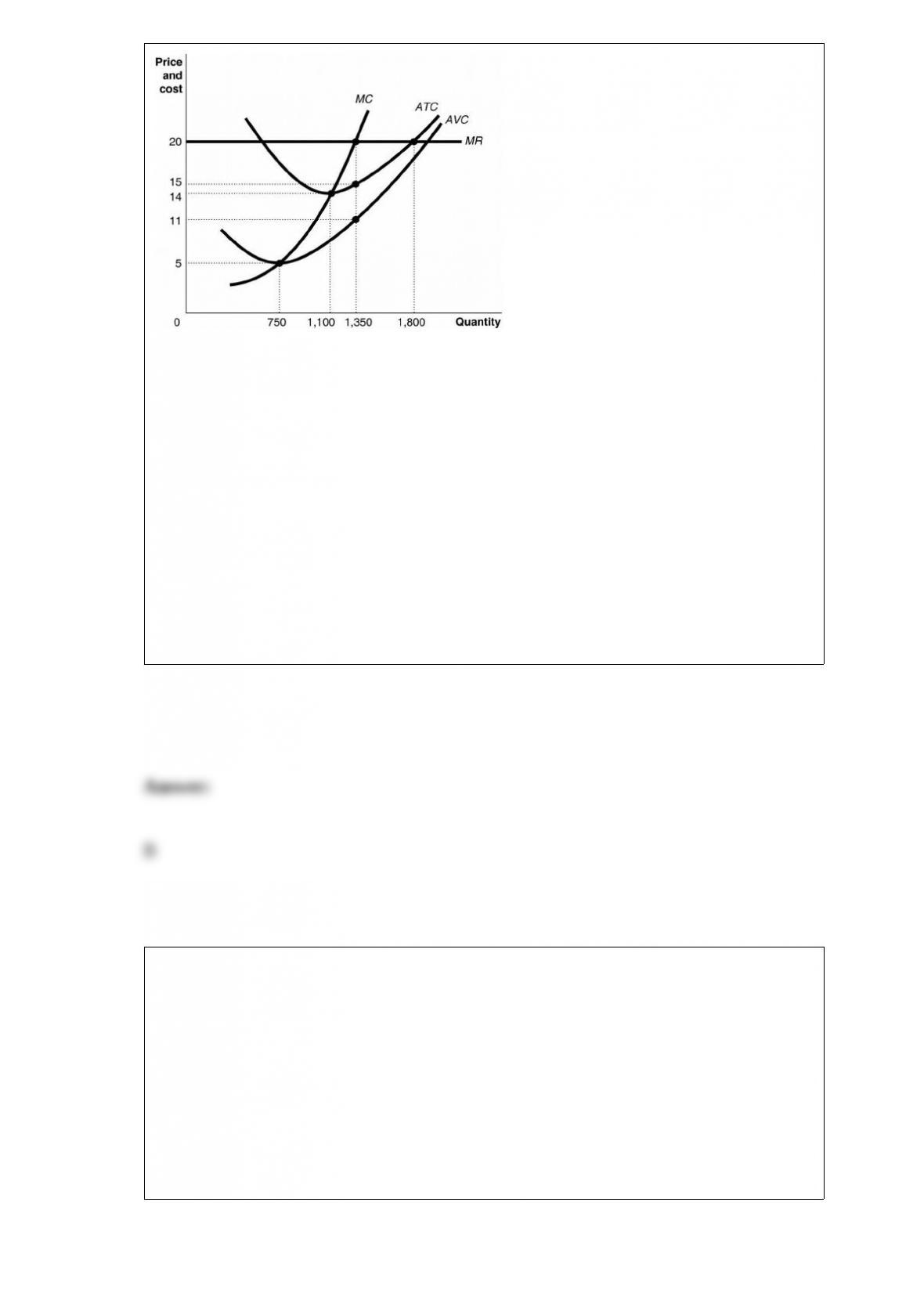
Figure 12-5 shows cost and demand curves facing a typical firm in a constant-cost,
perfectly competitive industry.
Refer to Figure 12-5. The firm’s manager suggests that the firm’s goal should be to
maximize average profit. In that case, what is the output level and what is the average
profit that will achieve the manager’s goal?
A) Q = 1,350 units, average profit =$5
B) Q = 1,100 units, average profit =$6
C) Q = 1,350 units, average profit =$9
D) Q = 1,800 units, average profit =$20
For a firm that is a price taker in the market for labor, the marginal revenue product of
labor equals the
A) marginal product of labor multiplied by the wage rate.
B) marginal product of labor multiplied by the product price.
C) marginal product of labor divided by the wage rate.
D) marginal product of labor multiplied by the marginal cost of production.

Firms use information on labor’s marginal revenue product to determine
A) how much to produce at each output price.
B) how many workers to hire at each wage rate.
C) how much marginal product to produce at each wage rate.
D) how much labor services to supply at each wage rate.
A free market fails when
A) there is government intervention.
B) there is an external effect in either production, consumption, or both.
C) firms that produce goods which create positive externalities go bankrupt.
D) firms that produce goods which create negative externalities earn high profits.

In 2004, hurricanes damaged a large portion of Florida’s orange crop. As a result of this,
many orange growers were not able to supply fruit to the market. At the pre-hurricane
equilibrium price (i.e., at the initial equilibrium price), we would expect to see
A) a surplus of oranges.
B) the quantity demanded equal to the quantity supplied.
C) a shortage of oranges.
D) an increase in the demand for oranges.
Suppose that some investors have decided that economic and financial uncertainty have
made the prospect of investing in domestic stock markets more risky than investing in
foreign stock markets, and therefore choose to invest in foreign markets. By using all
available information as they act to achieve their goals, these investors are exemplifying
the economic idea that
A) people are rational.
B) people respond to economic incentives.
C) optimal decisions are made at the margin.
D) equity is more important than efficiency.
Which of the following isnot an example of rent seeking behavior?

A) competition for subsidies
B) lobbying the government to impose tariffs on certain imported products
C) competition for the exclusive right to import a product
D) engaging in aggressive advertising that slams a competitor’s product
In recent years online bookseller Amazon.com has lowered its profits by offering some
of its customers free shipping and building more warehouses to hold its inventories.
Which of the following explains Amazon.com’s actions?
A) Amazon.com feared government regulation if its profits were too high.
B) Amazon.com took these actions to deter entry into its market by new online
booksellers.
C) Amazon.com took these actions to compete more effectively with existing online
booksellers.
D) Amazon.com was forced to take these actions because of the bargaining power of its
suppliers.
Goods and services bought domestically but produced in other countries are referred to
as

A) exports.
B) imports.
C) transfer payments.
D) foreign consumption.
Tanesha sells homemade candles over the Internet. Her annual revenue is $64,000 per
year, the explicit costs of her business are $17,000, and the opportunity costs of her
business are $22,000. What are the implicit costs of her business?
A) $17,000
B) $22,000
C) $39,000
D) $47,000
In the 1950s, Walt Disney began to plan the development of a theme park that would
eventually become Disneyland. Disney hired an economist to help determine whether
the park would be a financial success. This economist surveyed managers of existing
amusement parks for advice. Many of these managers
A) believed that a theme park would be very successful because the Disney name
created a market among children and parents who had watched Disney cartoons and

movies such as Snow White.
B) recommended that the theme park be located in California because population in the
state would increase greatly in the future. Disney followed this advice.
C) recommended that Disney not build the park and leave the amusement park business
to those who knew what they were doing.
D) recommended that Disney first build an audience for his park by offering the ABC
television network a weekly program that would feature Disney movies, cartoons and
original programming. Walt Disney followed this advice. Both the television program
and Disneyland were financial successes.
A monopolist faces
A) a perfectly elastic demand curve.
B) a perfectly inelastic demand curve.
C) a horizontal demand curve.
D) a downward-sloping demand curve.
Apple introduced its iPhone 3G in July 2008 and within a month sales had topped 3
million units. By April 2009, more than 25,000 apps for the iPhone 3G were available
in the iTunes store, an indication that in a competitive market

A) the ease at which a new firm can enter a competitive market is low.
B) the ease at which a new firm can enter a competitive market is high.
C) entry into the market is blocked.
D) entry into the market is restricted in the short run, but becomes easier in the long
run.
Which of the following best explains why unemployment rates are higher in the
European economies than in the United States?
A) More Europeans go to school fulltime and are therefore not able to participate in the
labor market.
B) Unemployment benefits are more generous in Europe than in the United States.
C) Workers in Europe are less productive than workers in the United States.
D) European industries pay a lower wage rate than industries in the United States.
In the United States, consumption per-person of carbonated soft drinks ________
between 2005 and 2013.
A) declined by more than 15 percent
B) increased by approximately 22 percent

C) fell by almost 80 percent
D) remained virtually unchanged
What is the relationship among the following variables in for a perfectly competitive
firm: the market price, average revenue and marginal revenue?
A) Average revenue is equal to the market price; average revenue is greater than
marginal revenue.
B) The market price is equal to both average revenue and marginal revenue.
C) Average revenue is equal to marginal revenue; average revenue is greater than the
market price.
D) As a firm lowers the market price to sell more output, marginal revenue and average
revenue will be less than the market price.
The amount of income a consumer has to spend on goods and services is known as
A) purchasing power.
B) effective demand.
C) a budget constraint.

D) wealth.
Which one of the following is not a possible barrier to entry high enough to keep
competing firms out of a monopoly industry?
A) The monopoly firm has control of a key resource necessary to produce a good.
B) There are important network externalities in supplying a good or service.
C) large economies of scale that result in a natural monopoly
D) a high concentration ratio