1) Suppose that the economy is in the midst of a recession. Which of the following
policies would most likely end the recession and stimulate output growth?
A.a Congressional proposal to incur a Federal surplus to be used for the retirement of
public debt
B.a reduction in agricultural subsidies and veterans’ benefits
C.a postponement of a highway construction program
D.a reduction in Federal tax rates on personal and corporate income
2)
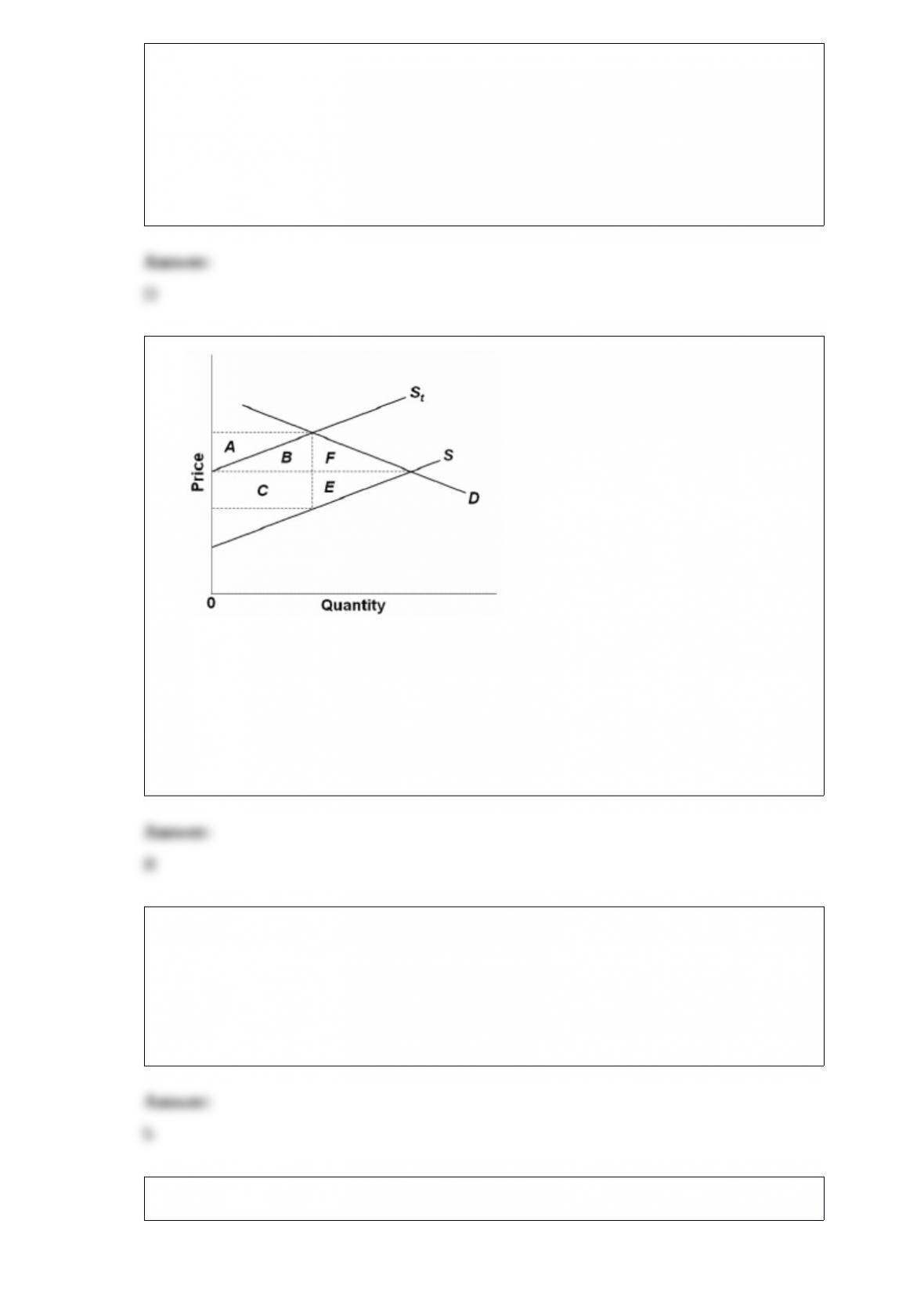
Refer to the above diagram in which S is the before-tax supply curve and St is the
supply curve after an excise tax is imposed. The total amount of the tax paid by
consumers is shown by area(s):
A.A + B + F.
B.A + B.
C.A + B + C.
D.E + F.
3) a firm finds that at its mr = mc output, its tc = $1,000, tvc = $800, tfc = $200, and
total revenue is $900. this firm should:
a.shut down in the short run.
b.produce because the resulting loss is less than its tfc.
c.produce because it will realize an economic profit.
d.liquidate its assets and go out of business.
4) Use the figures in the table below to answer the following questions.
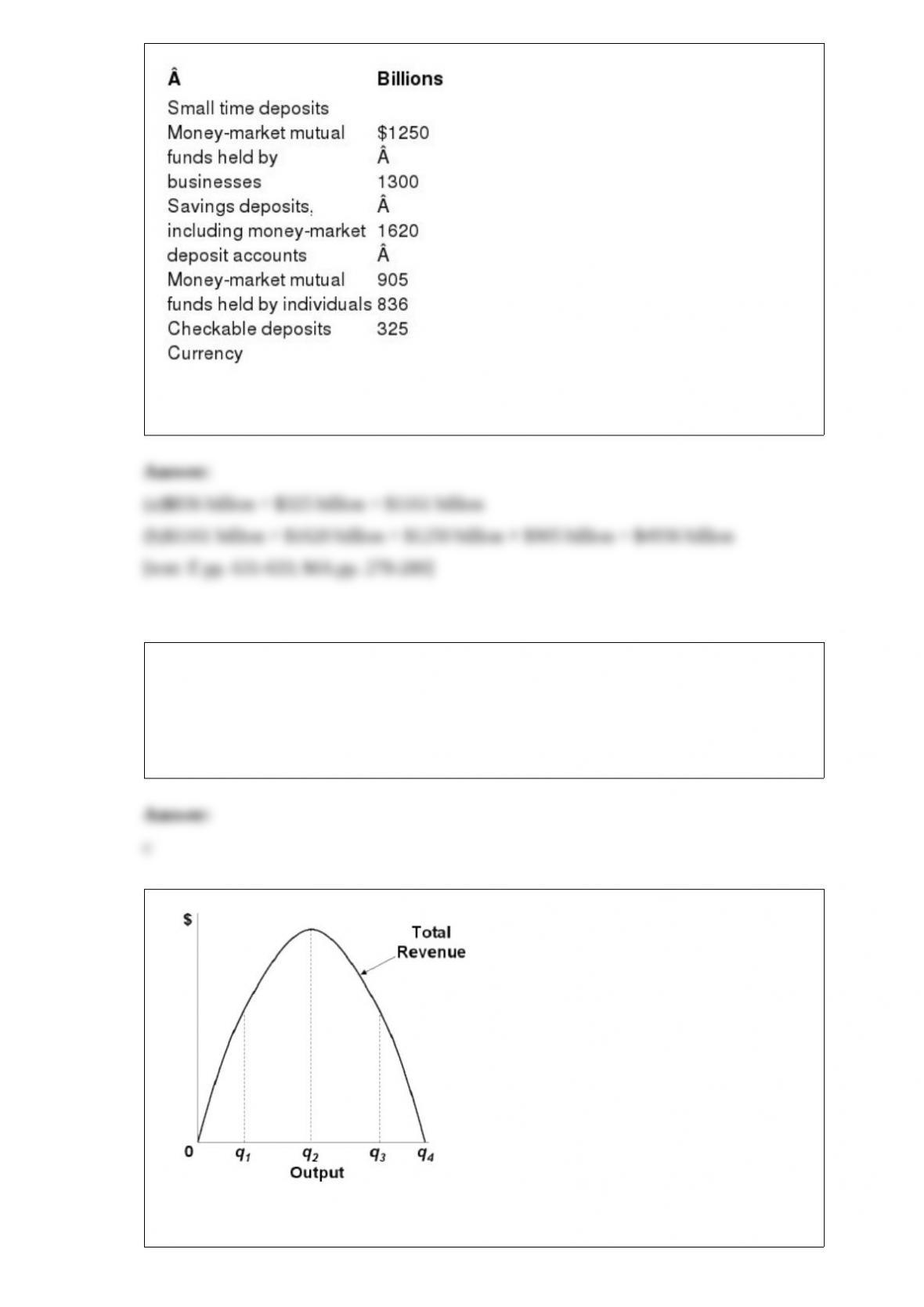
(a)What is the value of M1?
(b)What is the value of M2?
5) if products c and d are close substitutes, an increase in the price of c will:
a.tend to cause the price of d to fall.
b.shift the demand curve of c to the left and the demand curve of d to the right.
c.shift the demand curve of d to the right.
d.shift the demand curves of both products to the right.
6)
refer to the above diagram for a nondiscriminating monopolist. marginal revenue will
be zero at output:
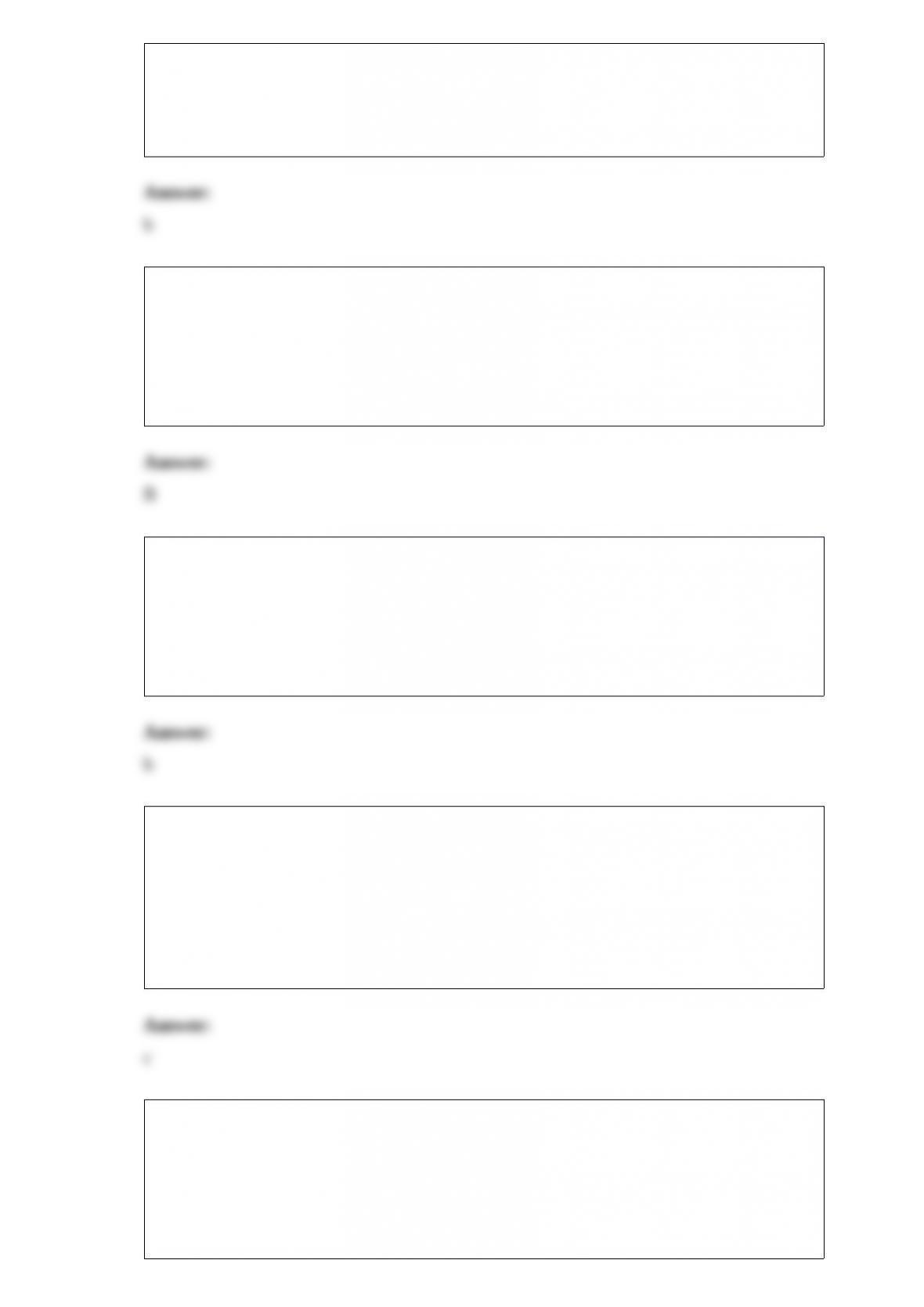
a.q1.
b.q2.
c.q3.
d.q4.
7) If the MPC is 2/3, the initial impact of an increase of $12 billion in lump-sum taxes
will be to cause:
A.a rightward shift in the investment demand schedule.
B.an $8 billion downshift in the consumption schedule.
C.a $4 billion upshift in the consumption schedule.
D.a $12 billion downshift in the consumption schedule.
8) in the second quarter (3-month period) of 2001, u.s. nominal gdp increased but u.s.
real gdp declined. we can conclude that:
a.nominal income declined by more than personal income.
b.the price level rose by more than nominal gdp.
c.real wages declined by more than real gdp.
d.the price level fell by more than real gdp.
9) (last word) the safest way for an individual to leave a burning theater is to run for the
nearest exit; it is therefore also the best means of escape for a large audience. this
assertion illustrates the:
a.”after this, therefore because of this” fallacy.
b.correlation fallacy.
c.fallacy of composition.
d.fallacy of limited decisions.
10) suppose a pure monopolist is charging a price of $12 and the associated marginal
revenue is $9. we thus know that:
a.demand is inelastic at this price.
b.the firm is maximizing profits.
c.total revenue is increasing.
d.total revenue is at a maximum.

11) A fishery is typically identified by:
A.location and size.
B.location and species.
C.species and size.
D.species and market value.
12) The assumption that the legal reserve ratio is 20 percent. Suppose that the Fed sells
$500 of government securities to commercial banks (paid for out of commercial bank
reserves) and buys $500 of securities from individuals, who deposit the cash in
checking accounts.
As a result of the above transactions, the supply of money in the economy will:
A.remain unchanged.
B.rise by $500.
C.fall by $100.
D.fall by $500.
13) Which of the following will likely accompany an expansionary money policy?
A.a higher prime interest rate
B.a lower Federal funds rate
C.a higher discount rate
D.higher income tax rates