
1) If a country has a total fertility rate of 1.8, then all else equal we would expect:
A.population in that country to rise over time.
B.population in that country to fall over time.
C.the replacement rate to also equal 1.
D.the population to remain stable over time.
2) implicit and explicit costs are different in that:
a.explicit costs are relevant only in the short run.
b.implicit costs are relevant only in the short run.
c.the latter refer to non-expenditure costs and the former to out-of-pocket costs.
d.the former refer to non-expenditure costs and the latter to out-of-pocket costs.
3) According to the paradox of voting:
A.public goods that cost more than the total benefits they confer may get produced
under majority voting.
B.trading of votes may either add to or subtract from economic efficiency.
C.the median voter decides what public goods all voters should have.
D.majority voting fails under some circumstances to make consistent choices that
reflect the community’s underlying preferences.
4) Some people argue that the three main television networks all have similar
programming. If true, this observation might best be explained by the:
A.paradox of voting.
B.median-voter model.
C.law of diminishing marginal utility.
D.ability-to-pay principle.
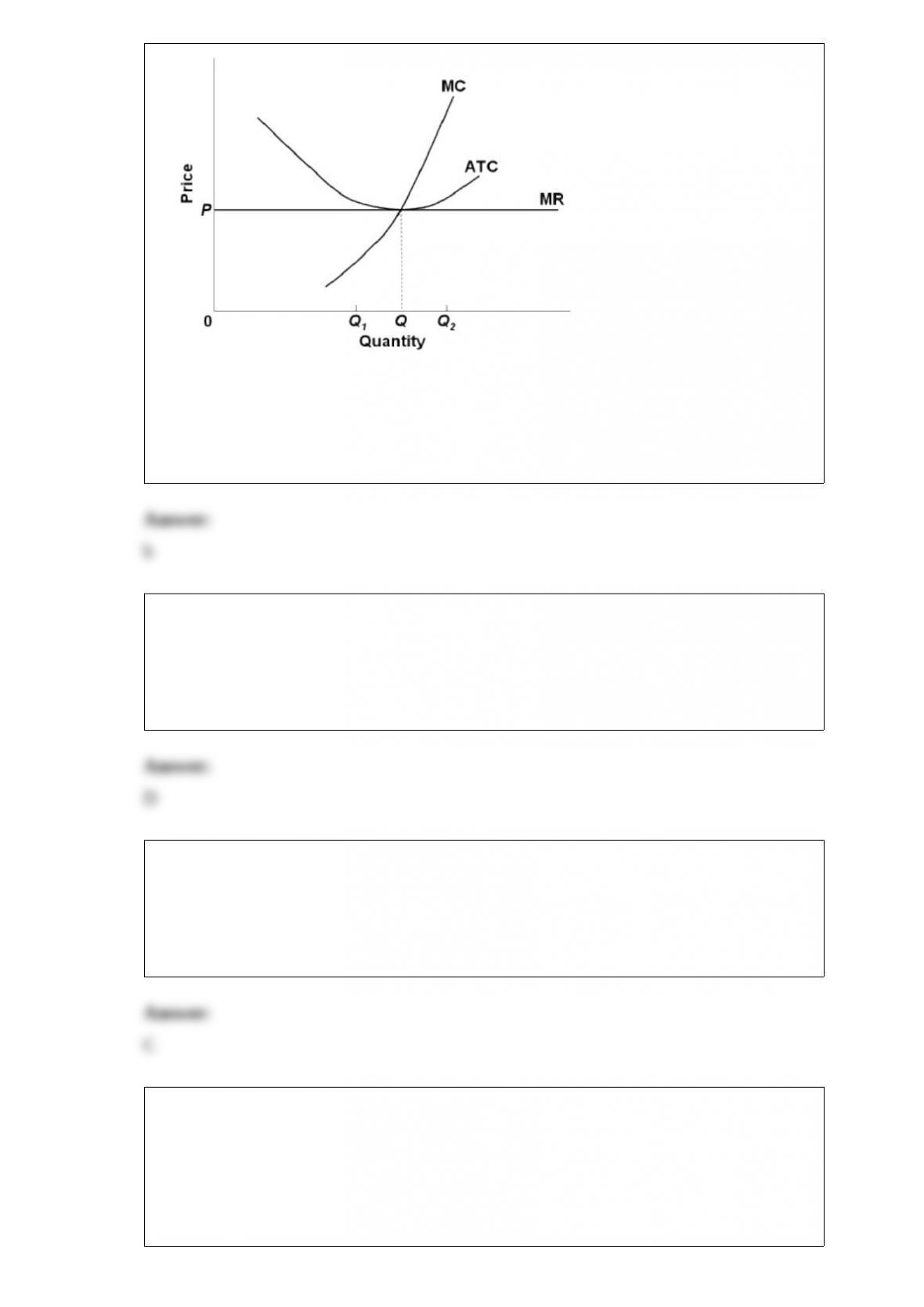
5)
the above diagram portrays:
a.a competitive firm that should shut down in the short run.
b.the equilibrium position of a competitive firm in the long run.
c.a competitive firm that is realizing an economic profit.
d.the loss-minimizing position of a competitive firm in the short run.
6) Mainstream economists question the new classical assumption that:
A.excessive growth of the money supply is a cause of inflation.
B.the price level is determined by aggregate demand and aggregate supply.
C.demand creates its own supply.
D.wages and prices are equally flexible upward and downward.
7) Which of the following allegedly contributed to the stagflation in the mid-1970s?
A.appreciation of the dollar
B.a sharp drop in the prices of farm products
C.a dramatic increase in oil prices
D.rising productivity in manufacturing
8) If in the market for money the quantity of money demanded exceeds the money
supply, the interest rate will:
A.fall, causing households and businesses to hold less money.
B.rise, causing households and businesses to hold less money.
C.rise, causing households and businesses to hold more money.
D.fall, causing households and businesses to hold more money.
9) If two resources are highly substitutable for one another:
A.a decrease in the price of one will increase unit costs of production.
B.an increase in the price of one will increase the demand for the other.
C.an increase in the price of one will reduce the demand for the other.
D.a decline in the price of one will increase the demand for the other.
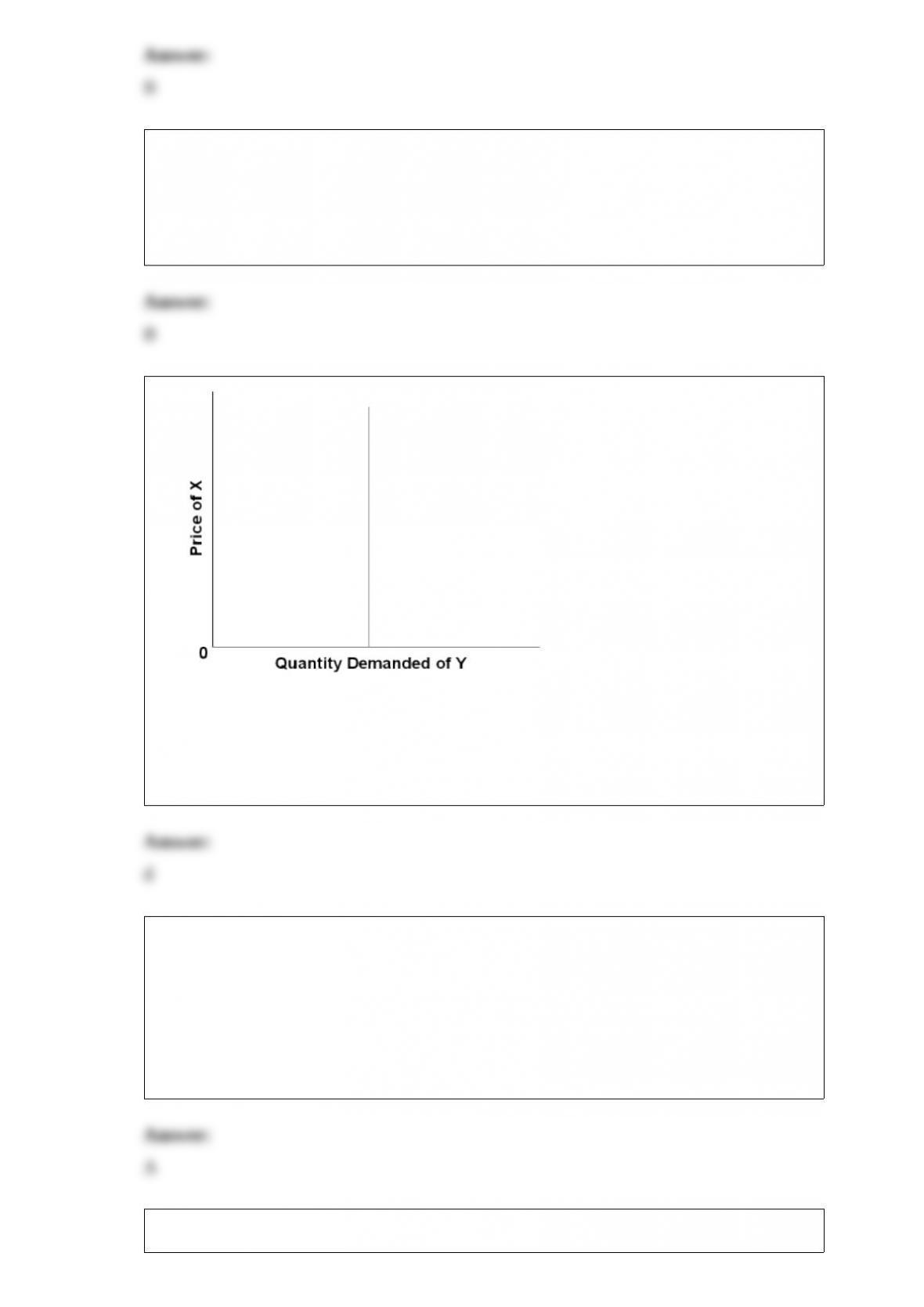
10)
the above diagram suggests that:
a.x and y are both inferior goods.
b.x and y are both normal goods.
c.x and y are substitute goods.
d.x and y are independent goods.
11) In the real business cycle theory:
A.declines in real output cause declines in the money supply and thus aggregate
demand.
B.decreases in long-run aggregate supply are fully anticipated and therefore do not
reduce real output.
C.technology is constant.
D.economic instability results from inappropriate monetary policy.
12) A government may be able to reduce the international value of its currency by:
A.selling its currency in the foreign exchange market.
B.buying its currency in the foreign exchange market.
C.selling foreign currencies in the foreign exchange market.
D.increasing its domestic interest rates.
13) elastic demand is analogous to a __________ and inelastic demand to a _________.
a.normal wrench; socket wrench
b.tight rubber band; loose rubber band
c.ace bandage; firm rubber tie-down
d.one-foot ruler; tape measure
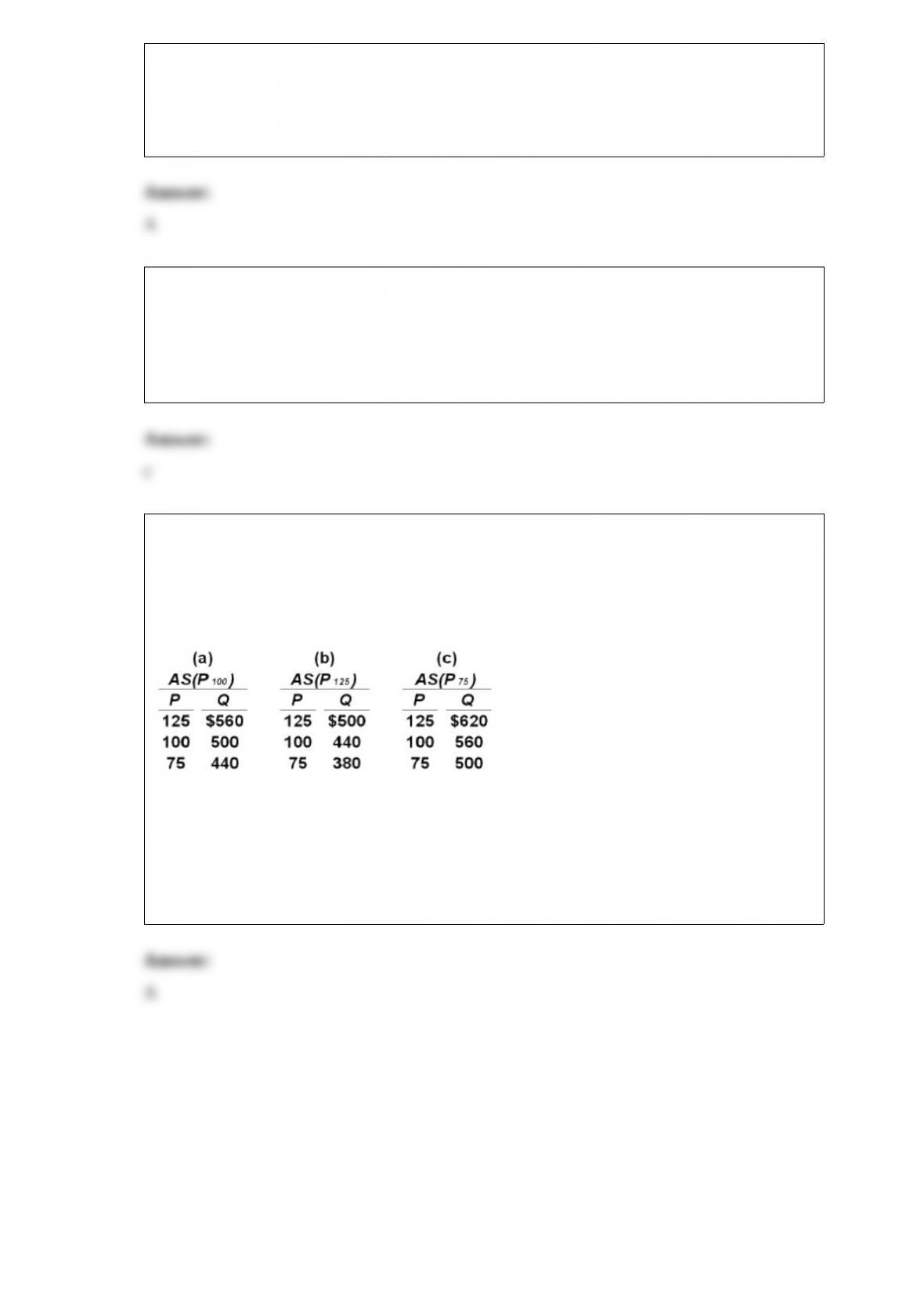
14) Suppose the full employment level of real output (Q) for a hypothetical economy is
$500, the price level (P) initially is 100, and that prices and wages are flexible both
upward and downward. Use the following short-run aggregate supply schedules to
answer the next question(s).
Refer to the information above. If the price level unexpectedly increases from 100 to
125, the level of real output in the short run will:
A.rise from $500 to $560.
B.fall from $500 to $440.
C.fall from $560 to $500.
D.rise from $440 to $500.
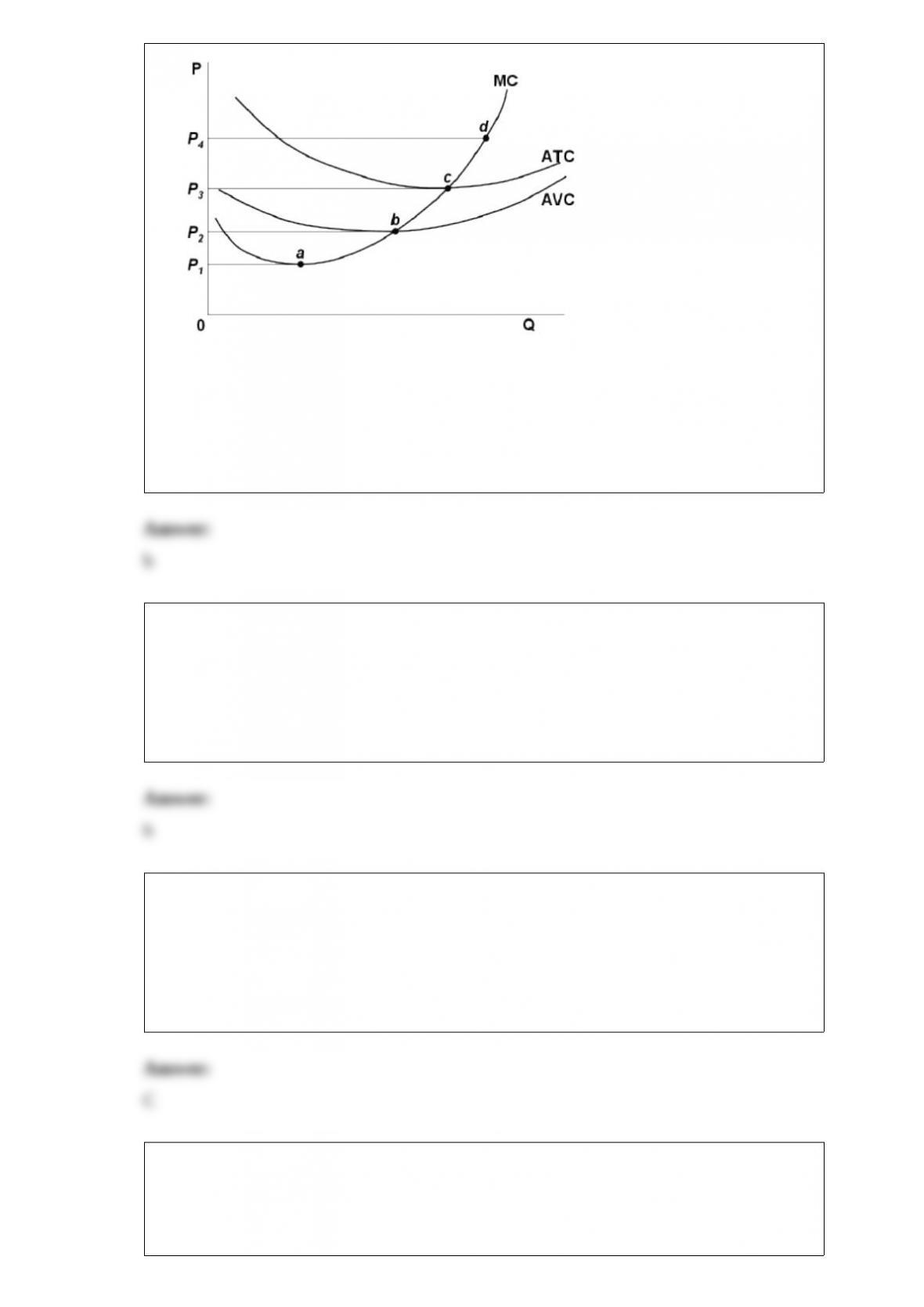
15)
refer to the above diagram for a purely competitive producer. the firm’s short-run supply
curve is:
a.the abcd segment and above on the mc curve.
b.the bcd segment and above on the mc curve.
c.the cd segment and above on the mc curve.
d.not shown.
16) the basic characteristic of the short run is that:
a.barriers to entry prevent new firms from entering the industry.
b.the firm does not have sufficient time to change the size of its plant.
c.the firm does not have sufficient time to cut its rate of output to zero.
d.a firm does not have sufficient time to change the amounts of any of the resources it
employs.
17) Which of the following statements best illustrates the concept of derived demand?
A.As income goes up the demand for farm products will increase by a smaller relative
amount.
B.A decline in the price of margarine will reduce the demand for butter.
C.A decline in the demand for shoes will cause the demand for leather to decline.
D.When the price of gasoline goes up, the demand for motor oil will decline.
18) The Federal funds market is the market in which:
A.banks borrow from the Federal Reserve Banks.
B.U.S. securities are bought and sold.
C.banks borrow reserves from one another on an overnight basis.
D.Federal Reserve Banks borrow from one another.
19) The United States’ most important trading partner quantitatively is:
A.China.
B.Canada.
C.Mexico.
D.Japan.
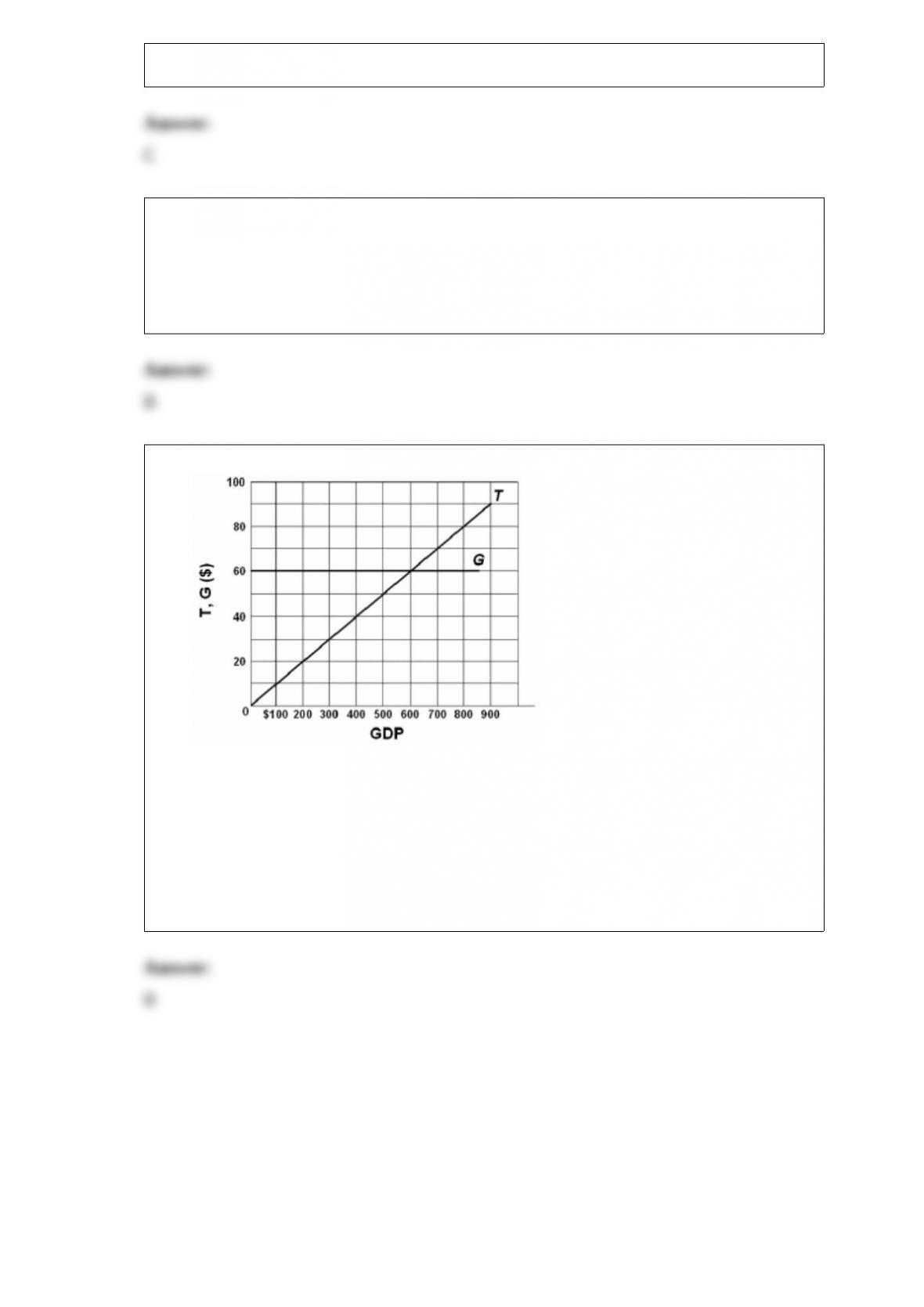
20)
Refer to the above diagram where T is tax revenues and G is government expenditures.
All figures are in billions of dollars. If the full-employment and actual GDP are each
$400 billion, government can balance its standardized budget by:
A.increasing T by $40 billion.
B.reducing G by $20 billion.
C.reducing T by $20 billion.
D.increasing T by $10 billion and reducing G by $20 billion.