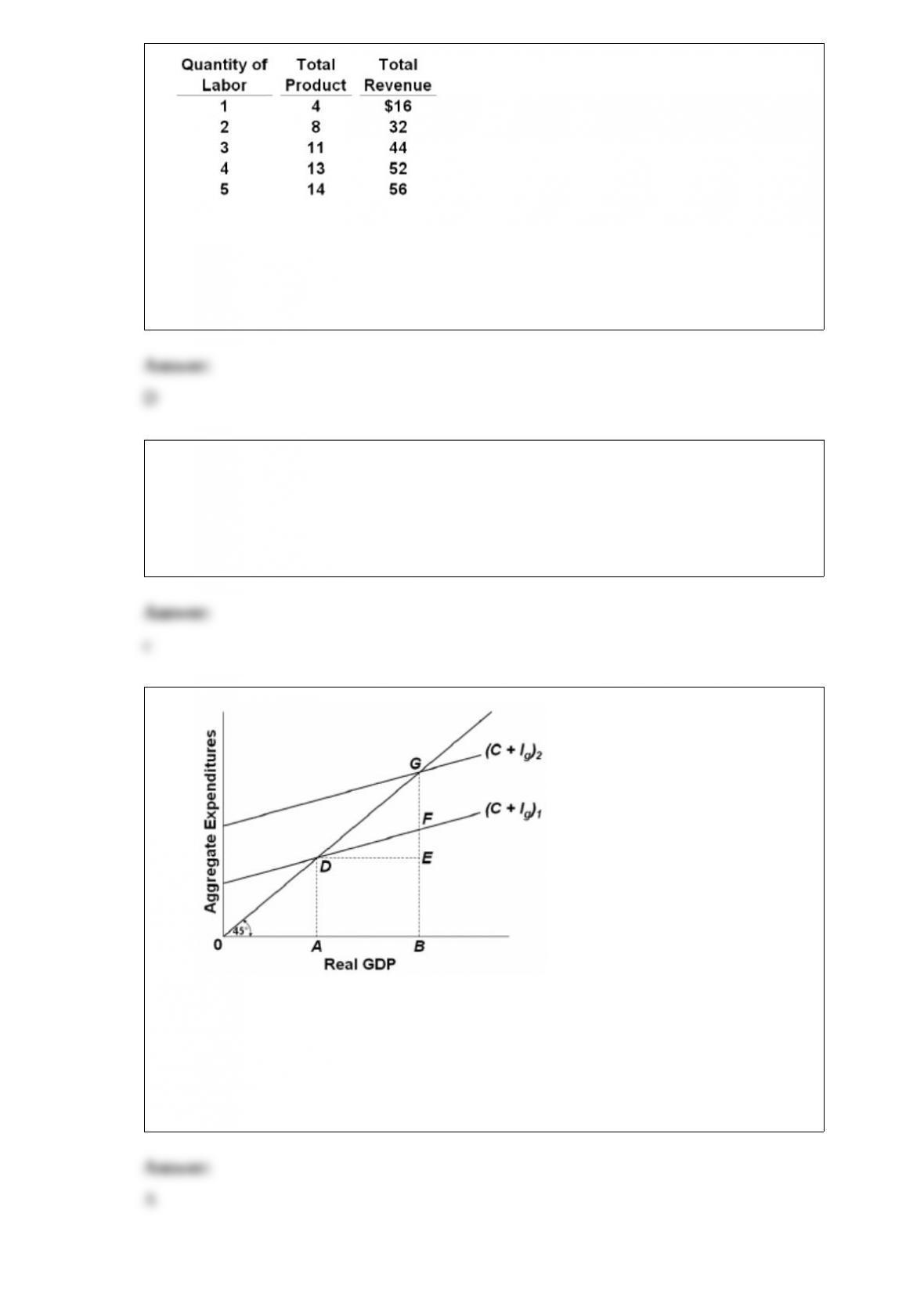
1)
Refer to the above data. We can conclude from the information given that this firm is a:
A.pure monopolist.
B.discriminating monopolist.
C.monopolistic competitor.
D.pure competitor.
2) when diseconomies of scale occur:
a.the long-run average total cost curve falls.
b.marginal cost intersects average total cost.
c.the long-run average total cost curve rises.
d.average fixed costs will rise.
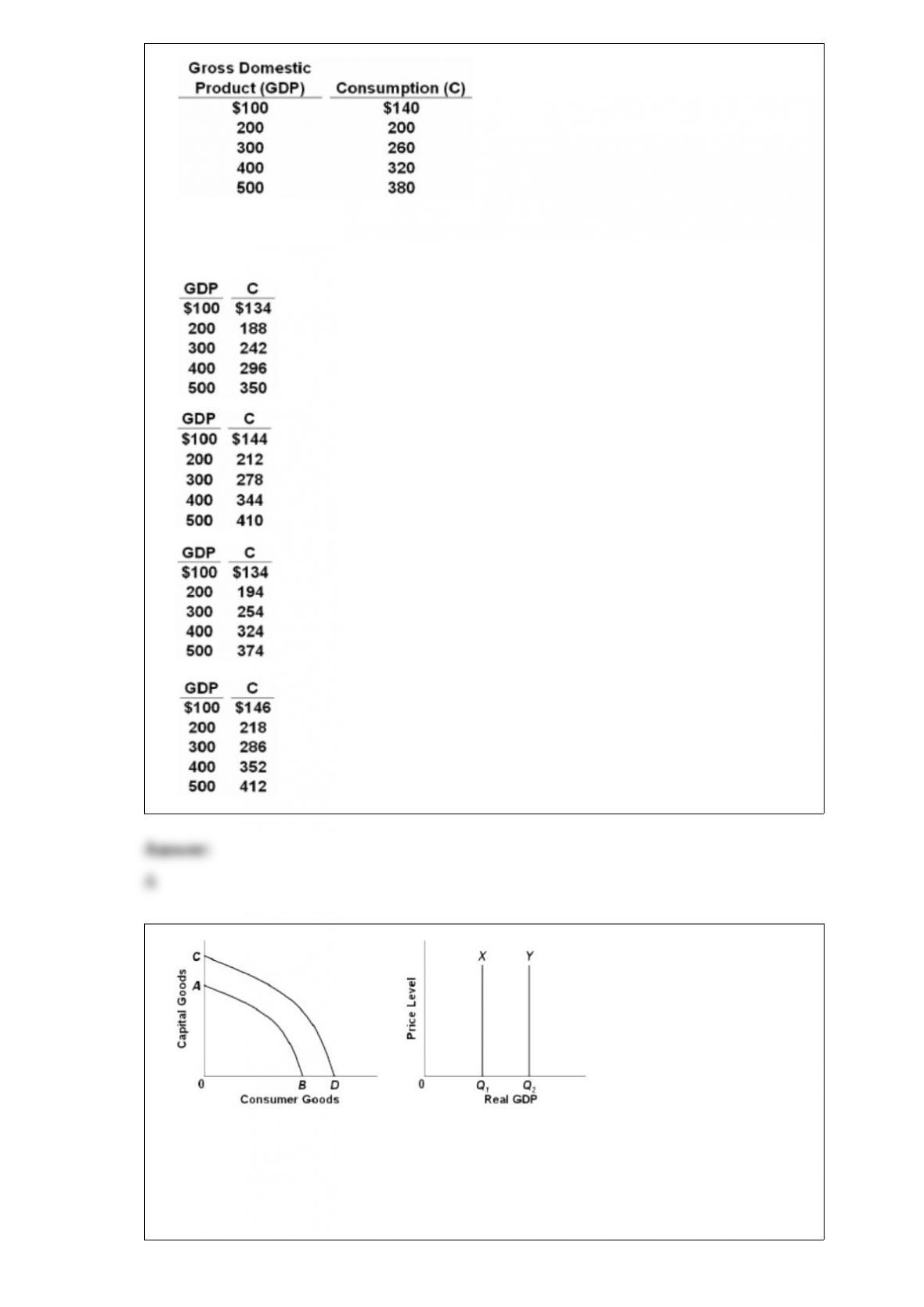
3)
Refer to the above diagram for a private closed economy. The upward shift of the
aggregate expenditures schedule from (C + Ig)1 to (C + Ig) 2 reflects:
A.an increase in investment expenditures.
B.a decrease in consumption expenditures.
C.an increase in the MPC.
D.an increase in the APS.
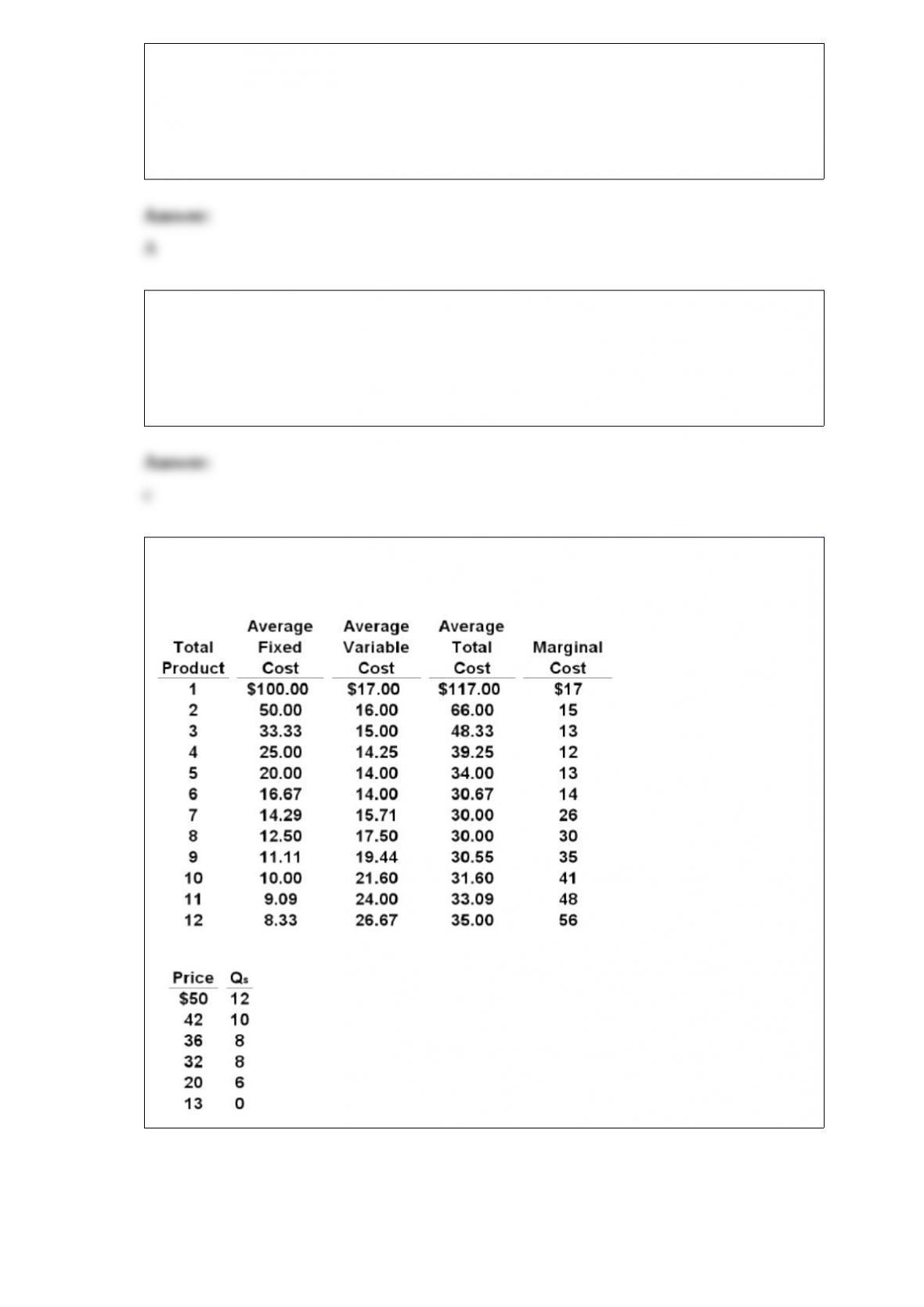
4)
Refer to the above data. If a 10 percent proportional tax on income is imposed, the
consumption schedule will now be:
A.
B.
C.
D.
5)
Refer to the above graphs. An increase in an economy’s labor productivity would shift
curve:
A.AB to CD and shift curve Y to X
B.CD to AB and shift curve X to Y
C.AB to CD and shift curve X to Y

D.X to Y while leaving curve AB in place.
6)
refer to the above information. if the mudhens’ management wanted to maximize total
revenue from the game, it would set the ticket price at:
a.$5.
b.$7.
c.$9.
d.$13.
7) The relationship between the elasticity of product demand and the elasticity of
demand for labor employed in its production is such that, other things being equal:
A.the more elastic the demand for the product, the less elastic the demand for labor.
B.the more elastic the demand for the product, the more elastic the demand for labor.
C.the elasticity of product demand only affects the elasticity of labor demand when the
product market is purely competitive.
D.if product demand is perfectly elastic, labor demand will be perfectly inelastic.
8) The discount rate is the rate of interest at which:
A.Federal Reserve Banks lend to commercial banks.
B.savings and loan associations lend to some builders.
C.Federal Reserve Banks lend to large corporations.
D.commercial banks lend to large corporations.
9) (Advanced analysis) Assume that the MPS is .33 in an economy that has an
aggregate supply curve with a slope of 1. An increase in investment spending of $10
billion will shift the aggregate demand curve rightward by:
A.$30 billion and increase real GDP by $15 billion.
B.$30 billion and increase real GDP by $30 billion.
C.$10 billion and increase real GDP by $30 billion.
D.$10 billion and increase real GDP by $10 billion.
10) more than half the growth of real gdp in the united states is caused by:
a.a falling price level.
b.the reallocation of labor from manufacturing to agriculture.
c.increases in the productivity of labor.
d.the use of fewer inputs of labor.
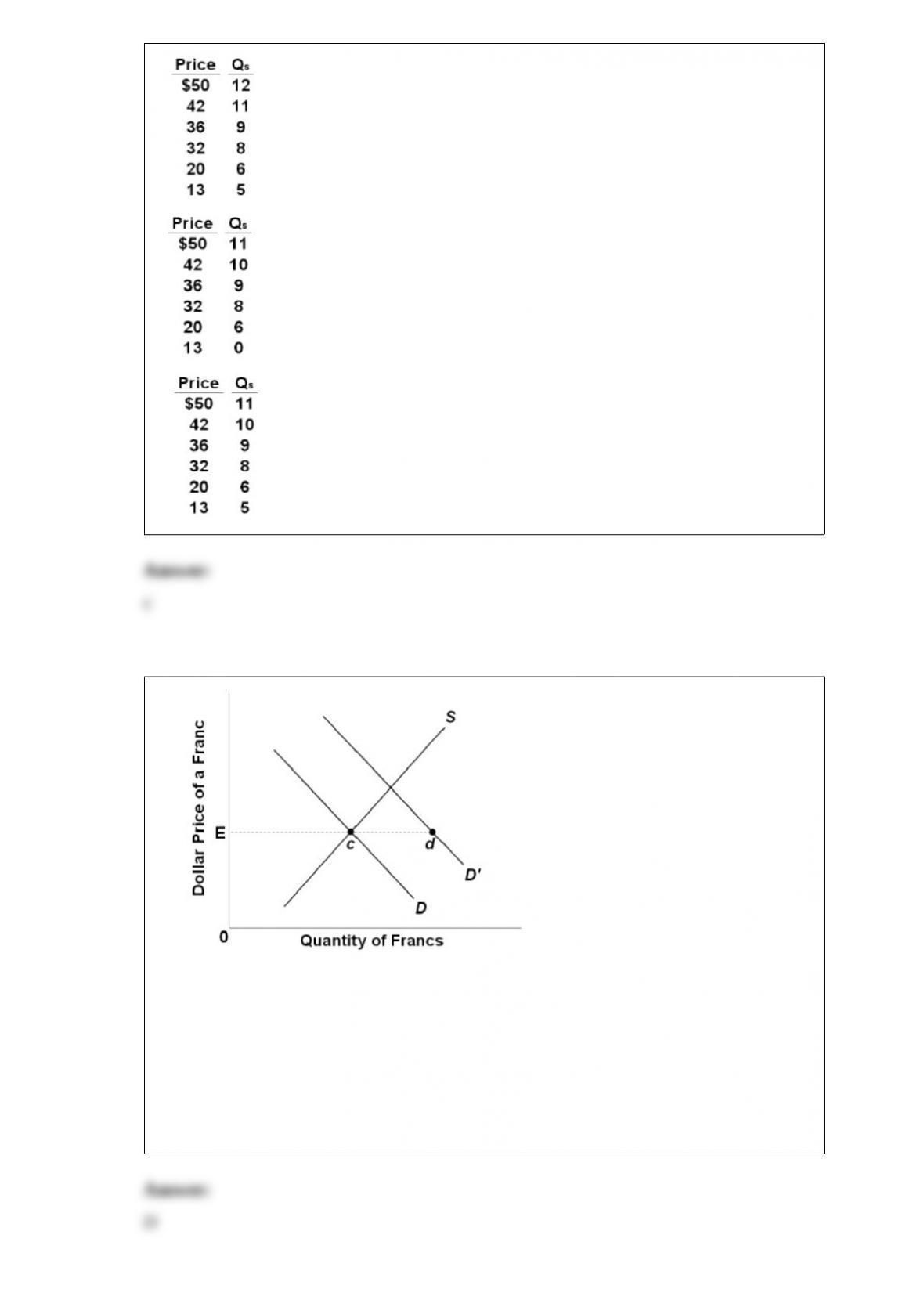
11) the following cost data for a firm that is selling in a purely competitive market:
refer to the above data. which of the following is the firm’s short-run supply schedule?
a.
b.
c.
d.
12)
Refer to the above diagram where D and S are the United States’ demand for and supply
of Swiss francs. At the equilibrium exchange rate, E, the United States’ balance of
payments is in equilibrium. Under a system of flexible exchange rates, the shift in
demand from D to D’ will:
A.ultimately reduce U.S. exports and raise U.S. imports.
B.cause the dollar to appreciate.
C.cause the Swiss franc to depreciate.
D.cause the dollar to depreciate.
13)
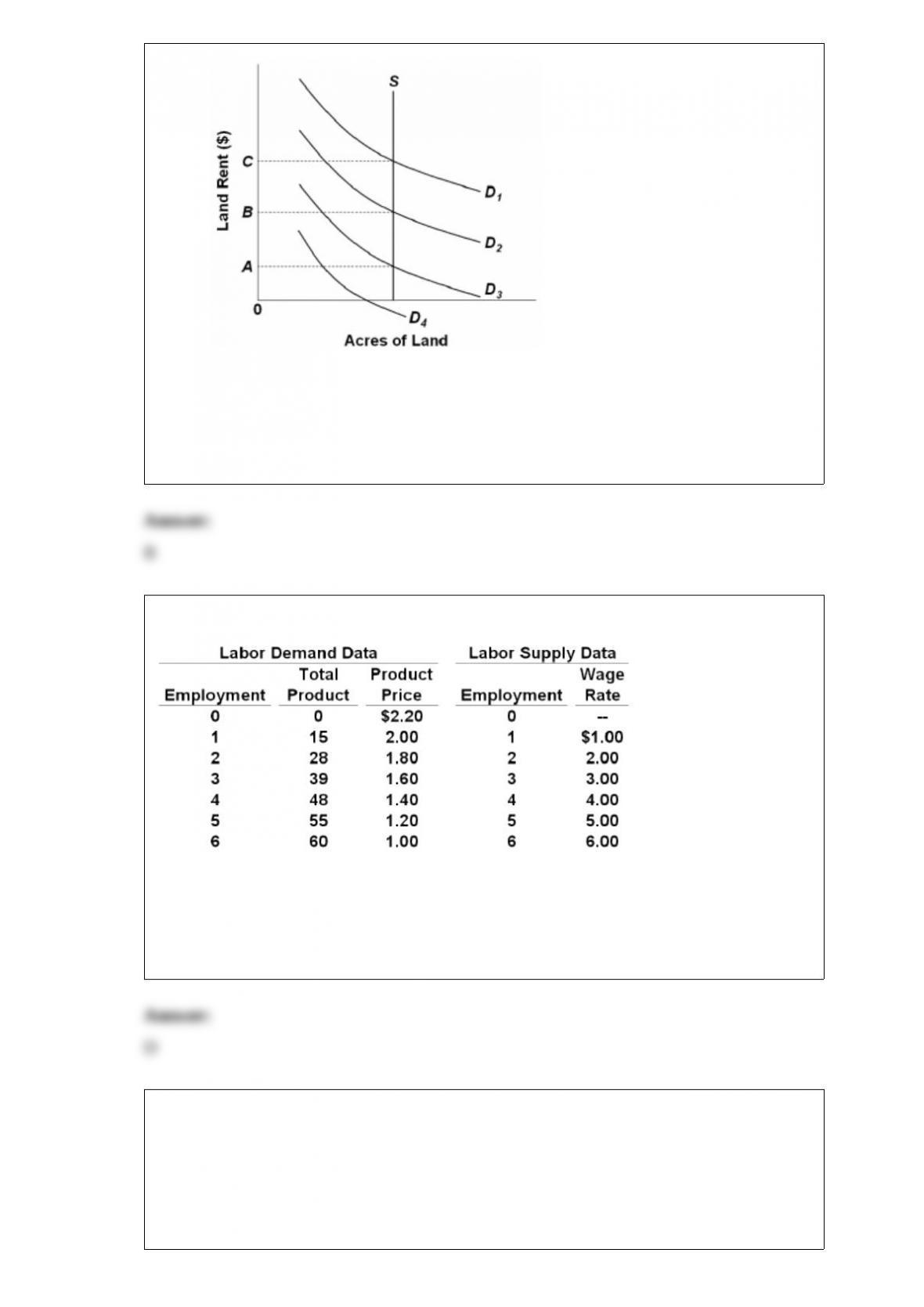
Refer to the above diagram. Land:
A.will cease to be used in production if demand falls below D4.
B.would be a free resource if demand is D4 or less.
C.would be an economic (scarce) resource in the case of all four demand curves.
D.would be a free resource in the case of all four demand curves.
14)
Refer to the above data. What will be the profit-maximizing wage rate?
A.$6
B.$5
C.$4
D.$3
15) the market system’s answer to the fundamental question “what will be produced?” is
essentially:
a.”goods and services that are profitable.”
b.”low cost goods and services.”
c.”goods and service that can be produced using large amounts of capital.”
d.”goods and services that possess lasting value.”

16) (consider this) since 1990, u.s. immigrants have founded ____ of every _____
public companies financed by venture capital.
a.1, 4
b.1, 3
c.1, 2
d.2, 5