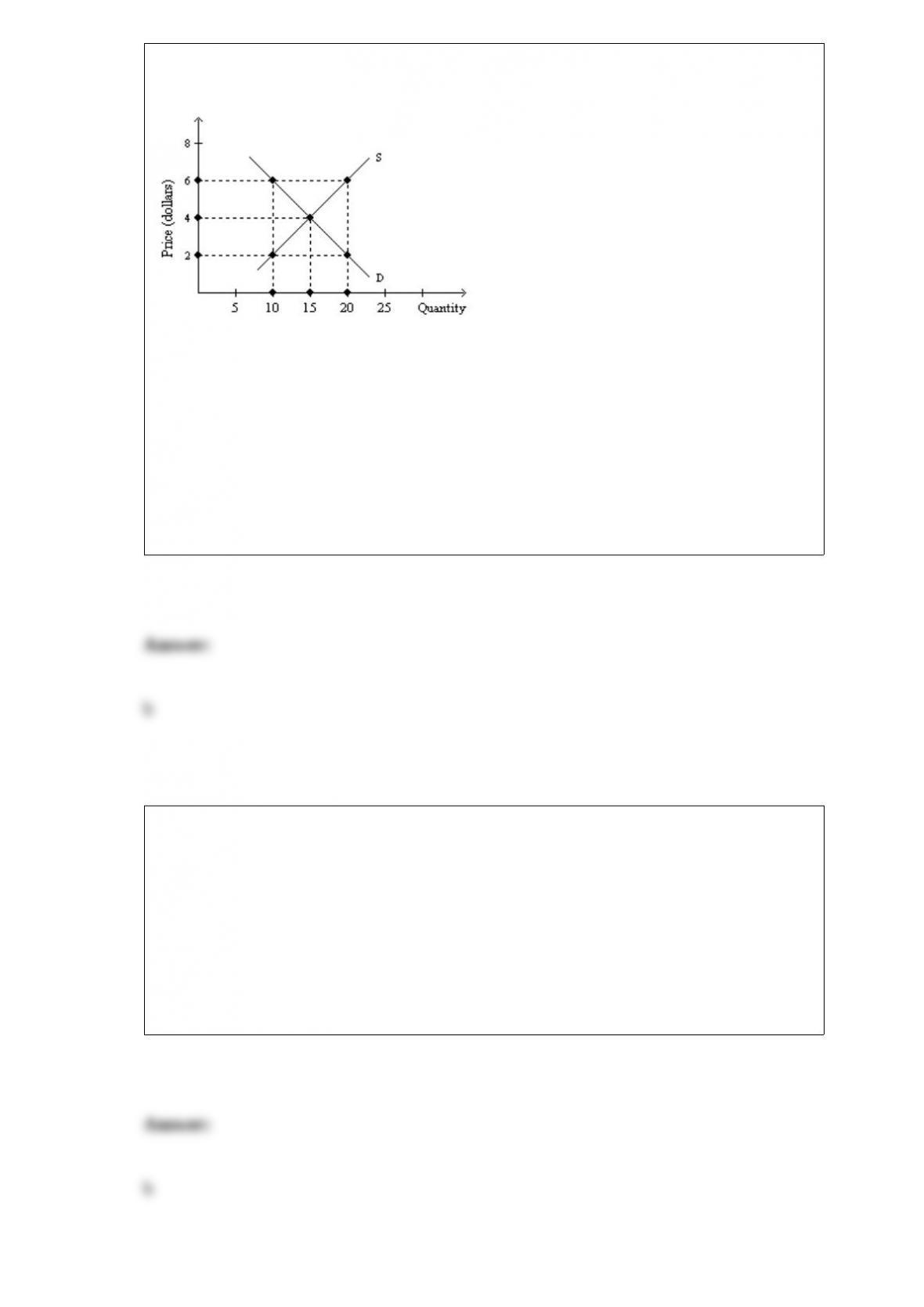
Refer to Exhibit 3-4. At a price of $2 _______________ units will be exchanged.
Exhibit 3-4
a. 5
b. 10
c. 15
d. 20
If the four-firm concentration ratio is 100 percent, this means that the
a. top four firms each hold 5 percent of the market share.
b. industry consists of no more than four firms.
c. top four firms necessarily each hold a 25 percent market share.
d. none of the above
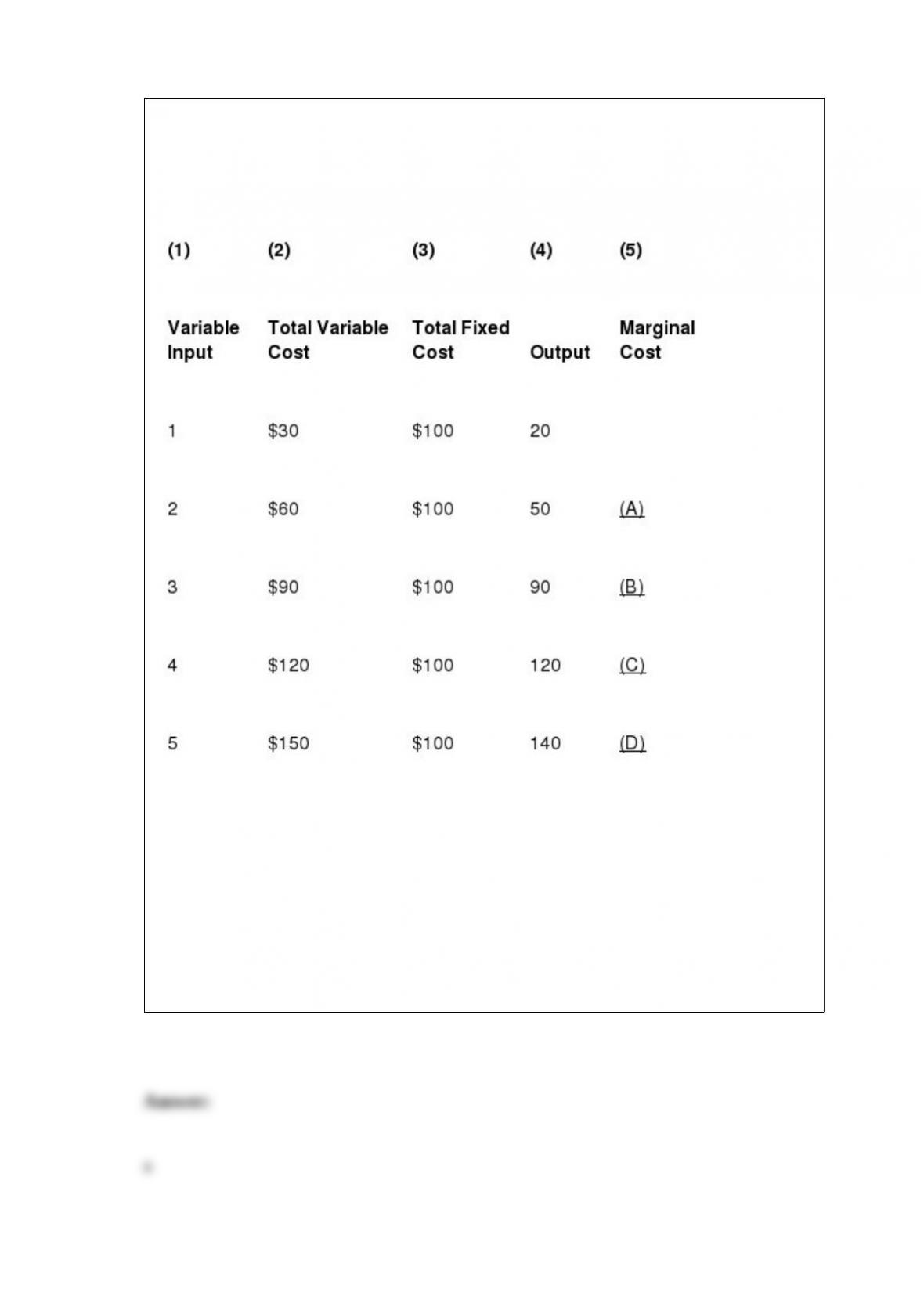
Refer to Exhibit 22-2. What is the average total cost of producing 140 units of output?
Exhibit 22-2
a. $1.79
b. $7.33
c. $4.23
d. $10.00
e. There is not enough information provided to answer the question.

Tobacco production is one of the more heavily subsidized industries in the United
States. Suppose that as a result of intense lobbying from health-related concerns,
Congress repeals the tobacco firms’ subsidies. Which of the following scenarios would
likely occur?
a. The tobacco firms’ supply curve would shift rightward, as it would now be cheaper to
produce each level of output.
b. The tobacco firms’ supply curve would shift leftward, since it would now cost more
to produce each level of output.
c. The tobacco firms would not experience any shift in their supply curves; subsidies
don’t affect output.
d. There would be a movement along the supply curve for tobacco, but the supply curve
would not shift.
At 100 units of output, total cost is $22,000 and total variable cost is $14,000. At 100
units of output, what is the value of average total cost, average variable cost, and
average fixed cost, respectively?
a. $22; $14; $8
b. $220; $140; $80
c. $740; $340; $400
d. $340; $740; $60
e. $400; $340: There is not enough information provided to determine the average fixed
cost.
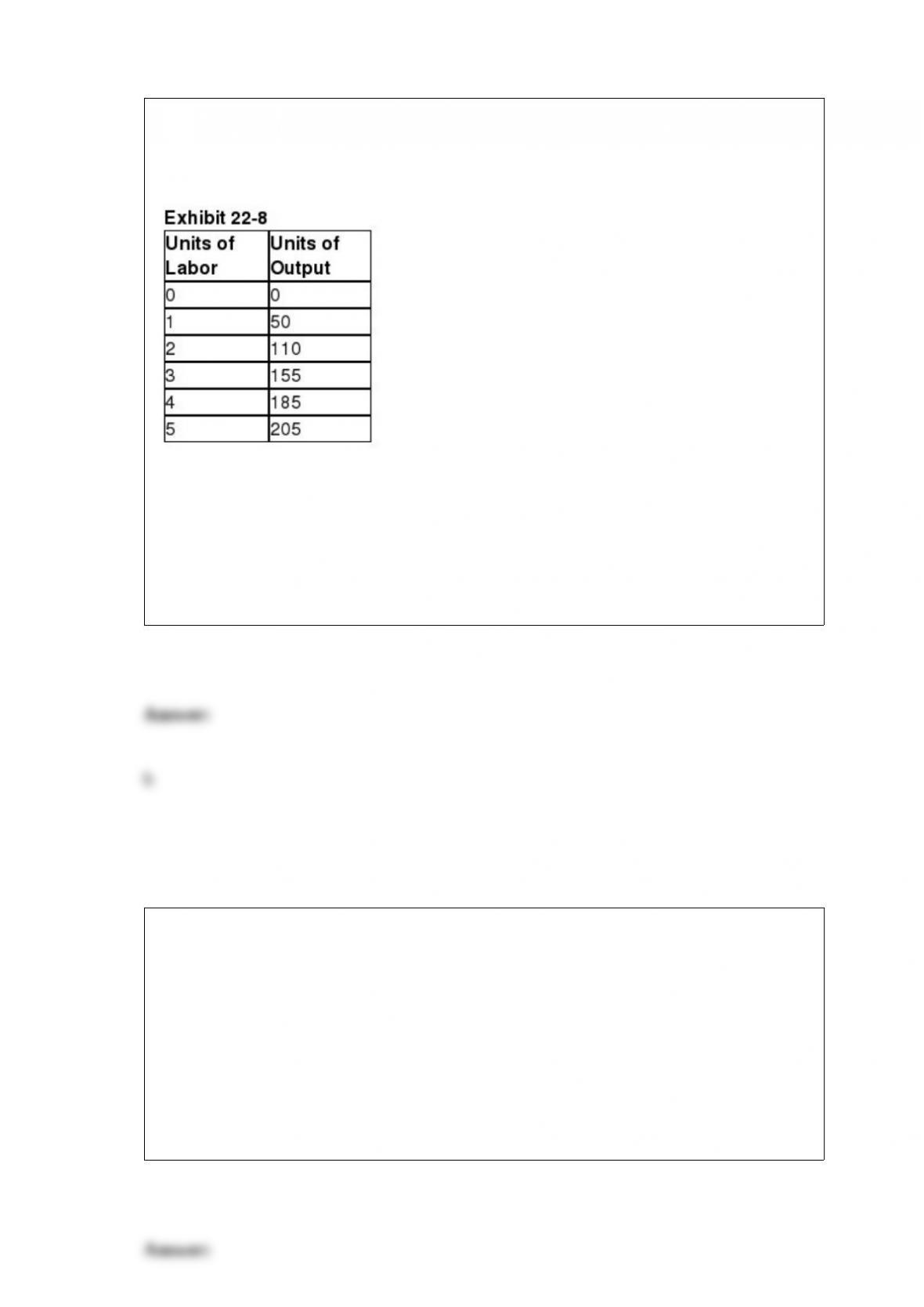
Exhibit 22-8 shows how output varies with the only variable input used in its
production. Marginal physical product of the fifth unit of labor is
a. 0.
b. 20.
c. 50.
d. 172.
Two variables are independent if as one variable __________, the other variable
__________.
a. rises; rises.
b. falls; falls.
c. rises; falls.
d. changes; does not change.
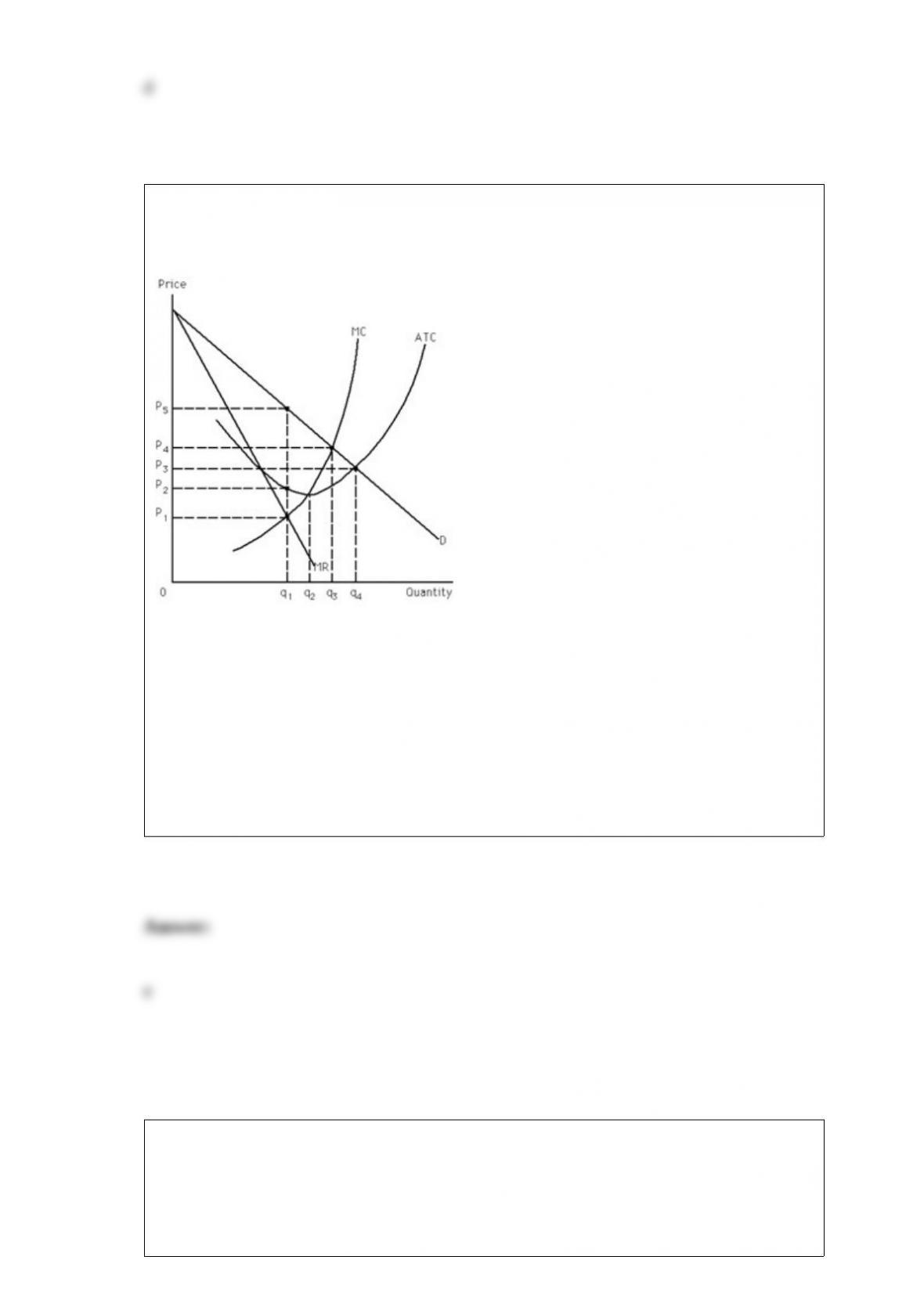
Refer to Exhibit 24-3. The profit-maximizing single-price monopolist charges price
Exhibit 24-3
a. P1.
b. P2.
c. P3.
d. P4.
e. P5.
Farmers can insure themselves against adverse price swings through the __________
market.
a. bond

b. stock
c. futures
d. food
e. none of the above
One of the criticisms of average cost regulated pricing of a natural monopoly is that the
firm
a. has no incentive to hold costs down.
b. must bear losses continually.
c. will retain positive economic profits.
d. produces more output than is resource-allocative efficient.
One of the ways in which monopolistic competitors differ from perfect competitors is
that
a. perfect competitors produce the quantity of output at which marginal revenue equals
marginal cost and monopolistic competitors do not.
b. perfect competitors produce a homogeneous product and monopolistic competitors
do not.

c. there is easy entry and exit for a perfect competitor, but not for a monopolistic
competitor.
d. a and c
e. b and c
A monopolist that practices perfect price discrimination has the same deadweight loss
triangle as the single-price monopolist.
a. True
b. False
Refer to Exhibit 28-7. The marginal factor cost of increasing employment from 20 to 30
workers
Exhibit 28-7
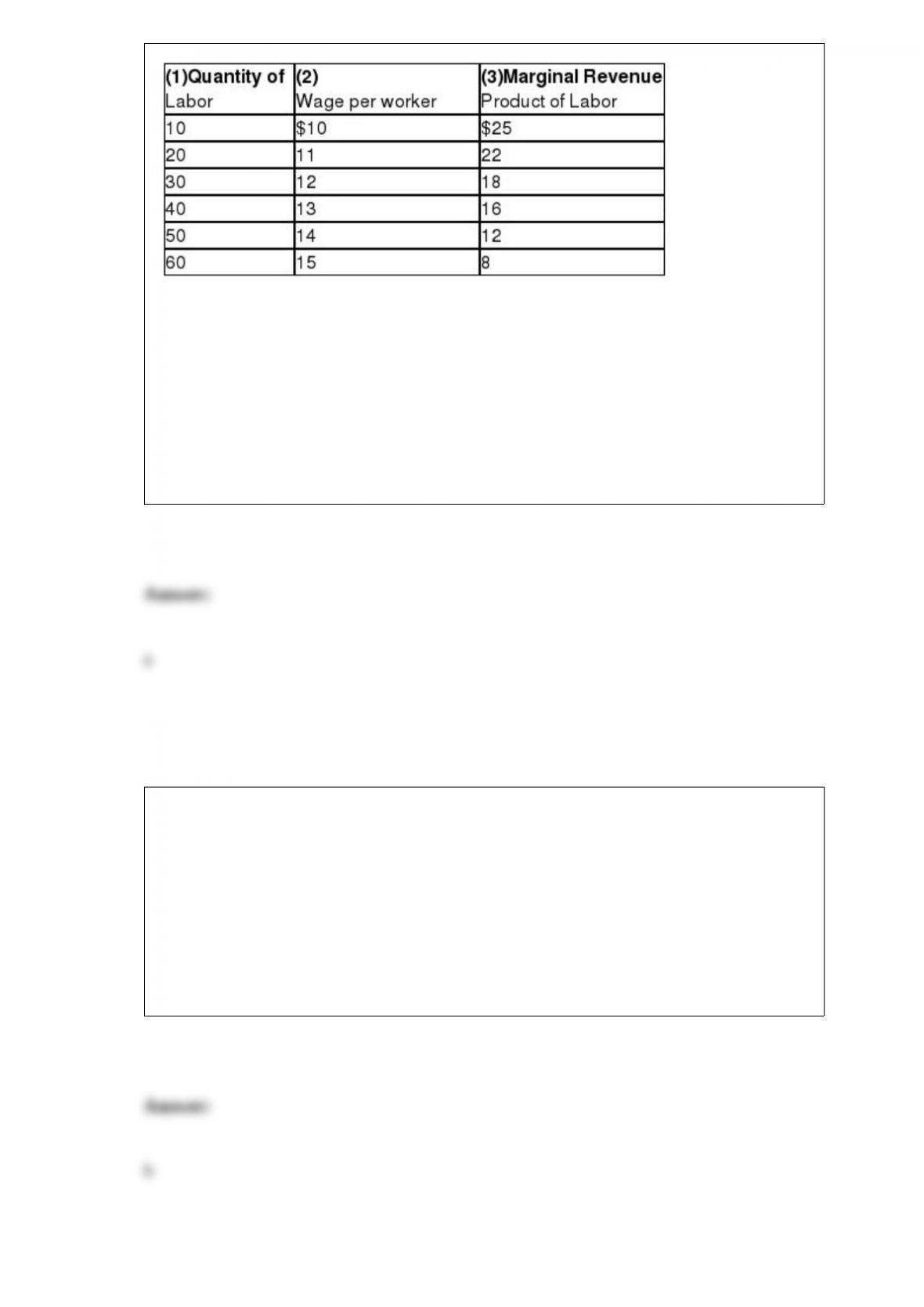
a. is $14.
b. is $8.
c. is $7.
d. is $120.
e. is $100.
Which of the following is not an example of a legal barrier to entry?
a. a public franchise
b. economies of scale
c. a government license
d. a patent
A product price searcher (monopolist, oligopolist, or monopolistic competitive firm)
will maximize its profits by hiring factors up to the point at which
a. MRP > MFC.
b. VMP > MFC.
c. MRP = MFC.
d. VMP = MFC.
e. c and d