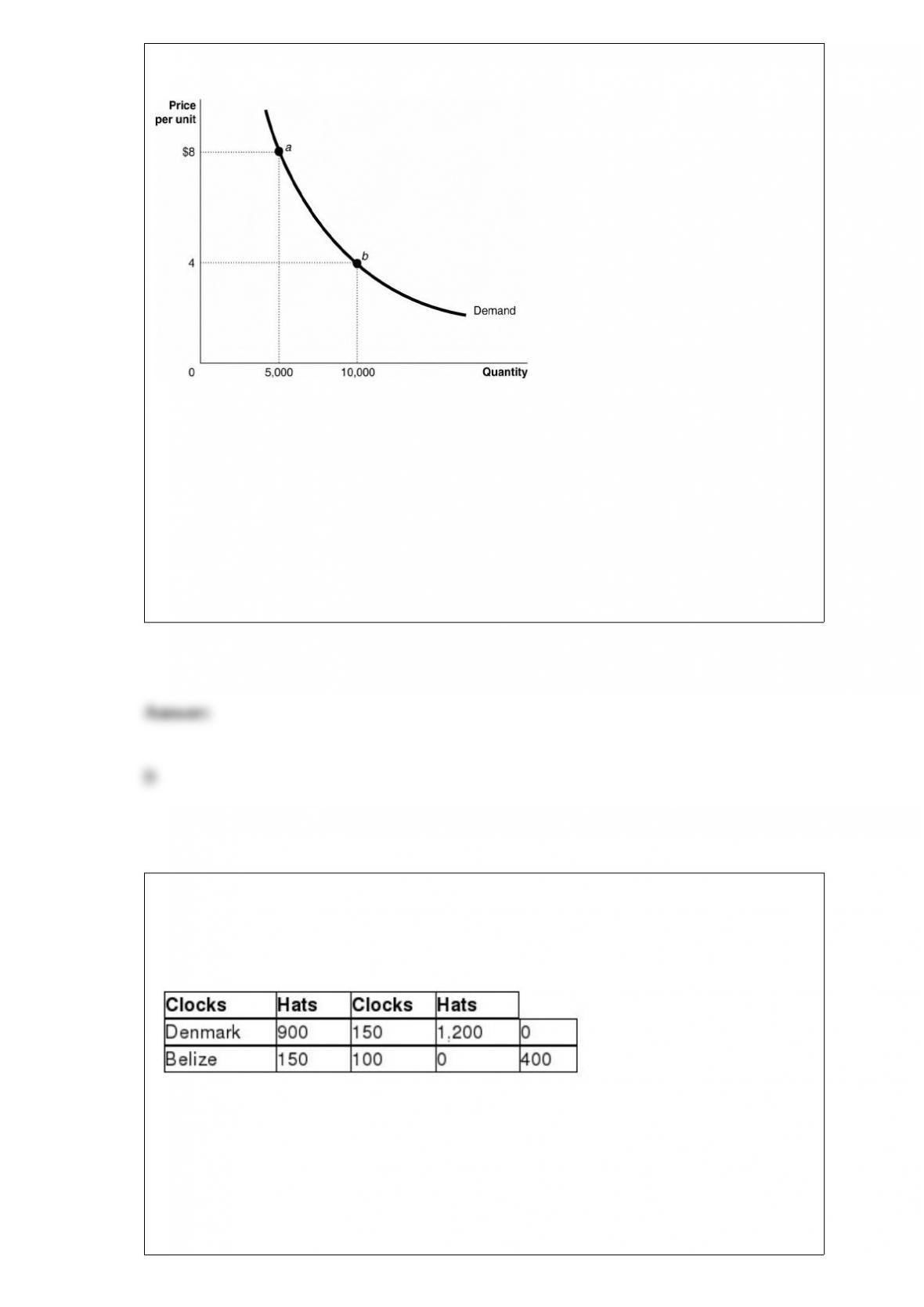
Figure 6-7
Between points a and on the demand curve, demand is
A) perfectly inelastic.
B) unit-elastic.
C) perfectly elastic.
D) elastic.
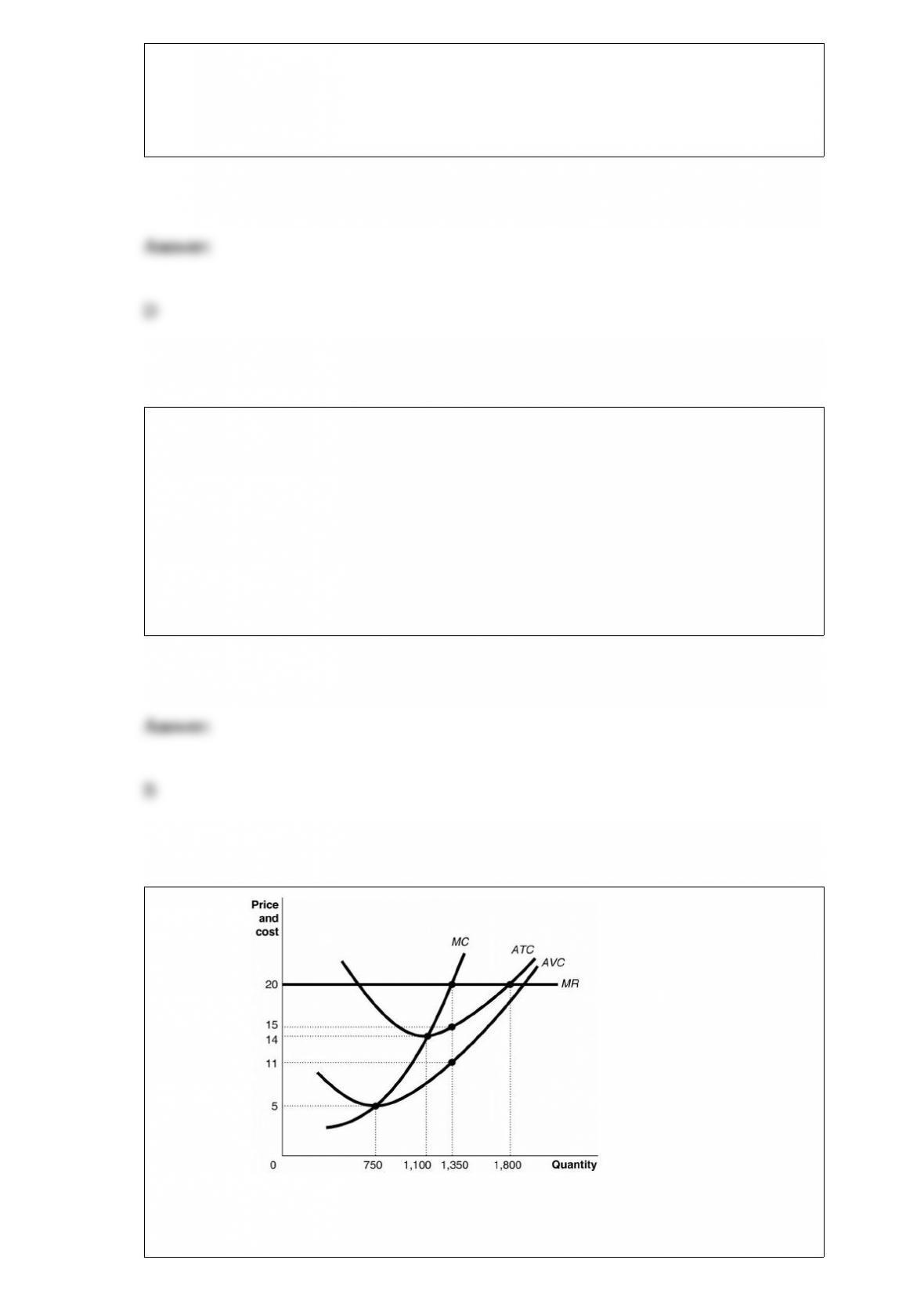
Table 9-6
Production and
Consumption Production
Without Trade With Trade
Denmark and Belize can produce both clocks and hats. Table 9-6 shows the production
and consumption quantities without trade, and the production numbers with trade. Prior
to trade, what was the opportunity cost to produce 1 hat in Denmark?
A) 1/6 of a clock
B) 2/3 of a clock
C) 1.5 clocks
D) 6 clocks
The law of demand implies, holding everything else constant, that as the price of yogurt
A) increases, the demand for yogurt will increase.
B) increases, the quantity of yogurt demanded will decrease.
C) decreases, the quantity of yogurt demanded will decrease.
D) decreases, the demand for yogurt will increase.
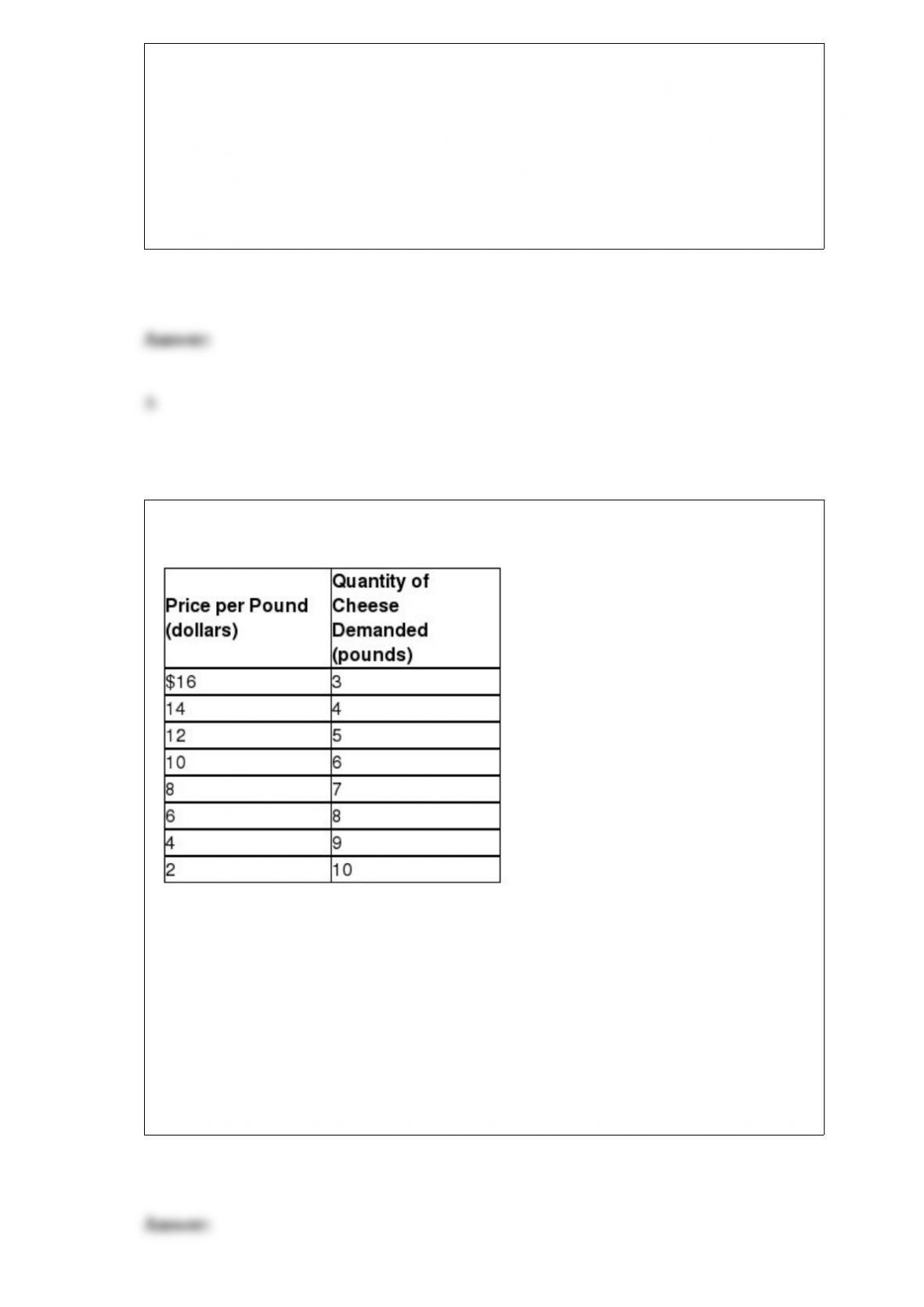
Figure 12-5 Figure 12-5 shows cost and
demand curves facing a typical firm in a constant-cost, perfectly competitive industry.
If the market price is $20, what is the average profit at the profit-maximizing quantity?
A) $5
B) $6
C) $9
D) $20
Table 6-3
Over what range of prices is the demand elastic?
A) over the entire range of prices
B) between $14 and $16
C) between $8 and $16
D) between $2 and $8

Caroline is an artist. She purchases canvas, paints, brushes, and accessories for $75. She
sells one of her original paintings to an art gallery for $1,500, which, in turn, sells it to
an art lover for $4,500. How much value does the gallery add?
A) $1,425
B) $1,500
C) $3,000
D) $4,500
Which of the following would increase disposable personal income?
A) a decrease in transfer payments received
B) a decrease in taxes paid
C) a decrease in personal income
D) All of the above would increase disposable income.
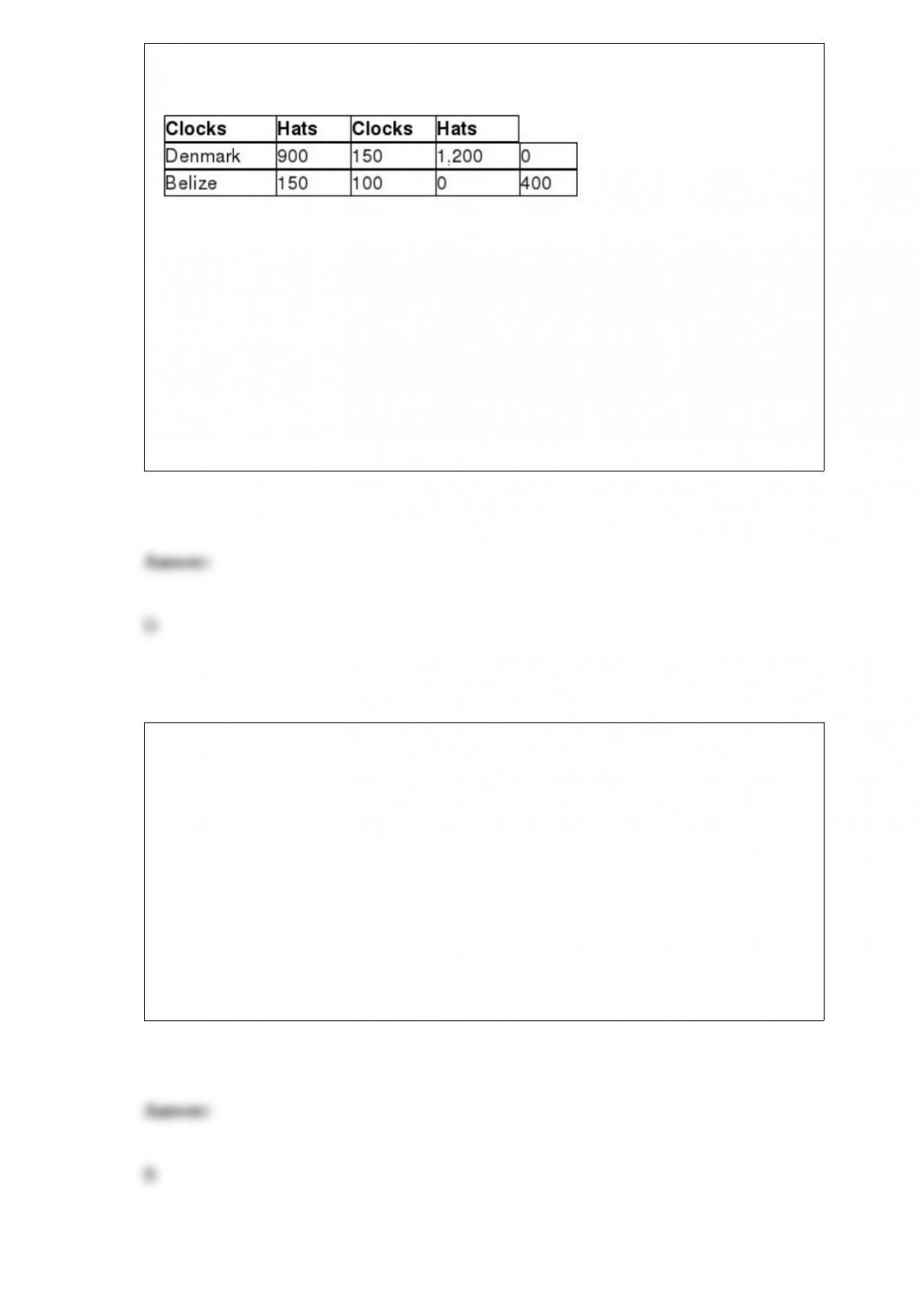
Table 9-6
Production and
Consumption Production
Without Trade With Trade
Denmark and Belize can produce both clocks and hats. Table 9-6 shows the production
and consumption quantities without trade, and the production numbers with trade. All
of the following are terms of trade that could possibly benefit both countries except
A) 1 hat : 2 clocks
B) 1 hat : 4 clocks
C) 1 hat : 5 clocks
D) 1 hat : 8 clocks
What is the main difference between a consumption tax and an income tax?
A) A consumption tax requires households to pay taxes only on the income they have
left after consumption, while an income tax requires households pay taxes on all earned
income before consumption.
B) A consumption tax requires households to pay taxes only on the income they spend,
while an income tax requires households pay taxes on all earned income.
C) A consumption tax always generates less revenue than an income tax.
D) There is no difference between a consumption tax and an income tax.

In preparing their estimates of the stimulus package’s effect on GDP, Obama
administration economists estimated a government purchases multiplier of 1.57.
Economist Robert Barro argues that during wartime, the government purchases
multiplier would be ________ the administration’s estimate, and economists Lawrence
Christiano, Martin Eichenbaum, and Sergio Rebelo argued that when short-term interest
rates are near zero, the multiplier would be ________ the administration’s estimate.
A) higher than; lower than
B) lower than; higher than
C) higher than; equal to
D) equal to; lower than
The primary purpose of ________ is to encourage the expenditure of funds on research
and development to create new products.
A) centrally planned economies
B) government-run health care
C) nationalizing oil companies
D) patents and copyrights
Economists John Cogan, Glenn Hubbard, and Daniel Kessler have estimated that
repealing the tax preference for employer-provided health insurance would
A) significantly reduce the effectiveness of the health care received by those enrolled in

these programs.
B) increase overall spending on health care as consumers would have to pay a higher
price for medical services.
C) drive up prices for health care coverage since insurance reimbursements to doctors
would be reduced.
D) reduce spending by people enrolled in these programs by 33 percent.
You lend $5,000 to a friend for one year at a nominal interest rate of 10%. Inflation
during that year is 5%. As a result, you will receive ________ at the end of the year, but
that money has a purchasing power of ________.
A) $5,050; $5,025
B) $5,100; $5,050
C) $5,500; $5,250
D) $6,000; $5,500